Feeds:
Posts
Comments

Posts Tagged ‘change’

“The irony of commitment is that it’s deeply liberating – in work, in play, in love. The act frees you from the tyranny of your internal critic, from the fear that likes to dress itself up and parade around as rational hesitation. To commit is to remove your head as the barrier to your life.” – Anne Morriss

My friend posted this quotation on Facebook the other day, and I’ve been thinking ever since about the relationship between commitment, fear, and change.

Commitment is, in a way, about leaning into the fear. Because once we become wholly committed to something, then we have something to lose in a way we didn’t before, and that can be really freaking scary. And commitment is about change, because even if it doesn’t cause any outward differences, it transforms what’s going on inside our minds and hearts. It alters our personal stories.

To commit fully is to feel naked and exposed. It is to drop any facade of insouciance or nonchalance. It is almost a confession, that this, this is something I’ve chosen to pour my heart, my energy, my time, and my passion into.

Commitment doesn’t come with any guarantees of success. If it did, it wouldn’t be nearly so interesting, so raw, so immersive in that which is vulnerable. But it does, as Anne Morriss says, remove our heads as barriers. It allows us to throw ourselves completely into our lives. It allows us to choose the kind of lives about which we can later sit down and write memoirs.

Photo Credit: thomas_sly via Compfight cc

When I think about my life, I realize that I couldn’t have followed through on the really hard things I’ve done without deep commitment. I couldn’t have gotten my college degree or had a senior recital. I couldn’t have moved to London. I couldn’t have started my own business. I couldn’t have become a writer. I couldn’t have engaged on a personal and emotional level with the people who are important to me. And I couldn’t have changed who I am and how I relate to the world.

All of those things involved risk and the chance of failure. All of them allowed the possibility of someone saying no, of things going wrong, of heartache and disappointment and mistakes, of me wimping out. All of them scared me.

When I arrived in London with my two gigantic suitcases, just out of college and with a freshly broken heart, a friend met me at the airport and helped me get to the place I was staying. And then he left, and I sat there, and I thought, “Oh my god, what have I done?” And then I cried. But the next morning I got out of bed and I left my flat and I explored London. Because I was committed to being there and having the richest experience I could, even though I was lonely and scared and didn’t know what I was doing.

There are so many times when I feel like I don’t know what I’m doing. Commitment helps me lean into the fear and discomfort of that feeling, and do it anyway. If we want to put ourselves out there in the world, if we want to try to do amazing things, I think that kind of commitment is necessary. The commitment gives us the permission we need to really go for it.

Commit and be free. I like that. It’s the kind of complex idea that requires a lot of thought to see the layers of truth it contains.
Read Full Post »

I didn’t write a blog post earlier this week because I have the flu, and I spent most of Monday sleeping, and most of the rest of Monday having such a high fever that all I could do was sit around and think strange thoughts. I haven’t been this sick for quite some time. But I am going to do my best to write something for you today.

I’m going to tell you a story. Sometimes now when I write I hear James Altucher in my head saying “Bleed on the page.” And I see the photo of Penelope Trunk’s bruise after she had a fight with her husband. And I say to myself, I could never do that. But today I have the flu, which means I can do things I sometimes think I can’t, so this is that kind of story, only Amy-style.

I was sixteen or seventeen, in drama class. My drama teacher was big on improvisation and on giving us assignments that required improv. I wanted to be handed a script and learn my lines and figure out blocking, but that’s not the way things were done in drama most of the time.

My group was doing a skit that showed a teenage girl finding out she was pregnant in the middle of a family dinner. I was supposed to play the girl’s big sister who offered sage advice in a touching sisterly scene later on in the skit. But my classmate who was supposed to play the pregnant teen had been out sick for a long time, and eventually we had to perform the skit without her for our grade. So at the last minute, I had to step in to play the part.

Afterwards, I thought it had gone about as well as could be expected, given the lack of rehearsal time. I sat with the rest of my class in the seats facing the stage, glad it was over, until the drama teacher began really tearing into my performance.

Was I aware, she said, that I had been smiling the entire time? How horrible and awkward it had been, and how amazing my fellow group members were for somehow managing to continue on in the face of such a poor performance. And then she came right up to me, in front of the entire class, and said, “Do you always smile when you’re sad? Do you?” She was insisting on an answer I couldn’t give her, and it was all the worse because the answer was yes. And I hadn’t even known it until that very moment.

To this day, when I think of this story, my heart hurts.

I can even smile when I have the flu. Now there's talent for you. :)

I can even smile when I have the flu. Now there’s talent for you. 

Sometimes conditioning runs so deep that we don’t realize what we’re doing, even when we’re working very hard to be mindful. I write in this blog about a lot of things I still struggle with. I’m still a perfectionist. I’m still sometimes a people pleaser. I tell you that your emotions are okay, but I don’t always believe that for myself. When something happens that is upsetting for me, my first instinct is to pretend everything is okay.

Once upon a time, it was extremely important that I be good at acting in a very specific way. One that didn’t go over well in drama class.

That story is over now. But I still smile sometimes when I’m sad.

Read Full Post »

A few weeks ago I got to have a conversation with a respected Buddhist teacher. I asked him if it ever got discouraging, working with people who are stuck in one place and seemingly unable to dislodge themselves. And I’ve been thinking about his answer ever since.

People change when they want to change, he told me. And if they don’t want to change, there’s nothing else to be done. Even when they do want change, the process is difficult and sometimes the desire alone is not enough. And sometimes people are so caught up in their own stories that they really don’t want to change. They’re comfortable in their suffering.

I know exactly what he meant, because I’ve been comfortable in my suffering in the past. It’s a strange way to think about things because of course, being comfortable in suffering is often vastly uncomfortable. The key is in its relativity: that however uncomfortable the suffering might be, it is less uncomfortable than the alternative. It is less uncomfortable than the prospect of what change might mean.

Photo by Graham.

However, it is not only fear of change that is a driver here. It is also an inability to imagine anything different. It’s so easy for us to become caught up in our worldviews to the point that we don’t remember that other worldviews even exist, much less have the possibility of being equally valid. It’s easy to become blinded to anything outside of our experience. It can be easy to expect the worst, and by expecting it, summon it into our lives. (And we might not even realize we’re doing this, because it might not feel like expecting the worst; it might simply feel like maintaining the status quo.)

We act based on what we know. So when we wish to change, we often must change not only what we are doing but also what we believe to be true. We must question what we believe to be within the range of possibilities for ourselves.

I believe in our capacity to change with an almost desperate fierceness. I have to believe in it that way because I’m right in the middle of it, and it’s hard, and I don’t want to falter in my resolve. I often feel like I’m working five times as hard as usual. This process rinses and repeats, often from the tiniest stimulus: how do I feel? where is that feeling coming from? is there a way I can think about this differently? is this part of the new me or the old me, the new world view or the old one? if it’s the old one, can I let it go? how can I use this to open more to the world?

It is quiet work. For the most part, the outside world remains unaware that it is happening. Sometimes a friend offers me a helpful hand. Sometimes that help is a distraction, the space to laugh at it all, or just the reminder, “Take some downtime, Amy.” Because while it may be quiet work, it is also tiring, making myself new.

But I’ll let you in on a secret. My imagination is working, and I can picture it now: where I want to go. Where I am going. And who I’m going to be. There was always that part of me imagining what I secretly wanted but thought could never happen. Only now I believe in it. That belief makes it almost close enough to touch. (Maybe I’m already touching.)

Whatever it is I’m doing, it’s no longer a comfortable suffering. Instead it’s something that reminds me what it feels like to be alive.

Read Full Post »

I screwed up last week. Multiple times.

Photo by Kate Sumbler.

Here’s what happened. I got really excited about that vulnerability TED talk, which you can probably tell by reading what I’ve written about it. And I decided I wanted to be vulnerable about All the Things…or at least several of the things. So I was pushing myself on multiple fronts at pretty much the same time, which meant two weeks in which so much was going on and so much of it was challenging and emotional exhaustion now.

Apparently this is called a vulnerability hangover, but to me, possibly because I was so enthusiastic, it felt more like a vulnerability OMFG eight car pile-up on the freeway. Fun times.

But there was a strategy behind my madness! Or you know, maybe I’m just incredibly skilled at finding the bright side of the lemonade in that strange-colored cloud over there. But as it turns out, one way of finding out what we most need to work on is to push ourselves to a failure point and then watch what happens. (I don’t necessarily recommend this, by the way; but if it’s happened anyway, you might as well learn something from it, right?)

So as it turns out, my failure point was not being assertive enough. And I didn’t fail at this once, oh no. I failed at it multiple times. Like at least three, and realistically probably more than three. So I know it’s something worth focusing on for the next however-many-months-it-takes. Interestingly, I’ve written an article for this blog entitled “How to Become More Assertive,” but upon re-reading it, I’m not finding it super helpful, so obviously I need to write a new article all about it in the not-too-distant future.

I don’t like writing this. I don’t like telling you how I failed. I procrastinated for a couple of hours before I could make myself type this up. I watch bloggers like Penelope Trunk and James Altucher who let it all hang out and write all about their often spectacular failures, and I’m completely riveted even while I’m thinking to myself, “Wow, I could never do that.” Even now I’m not giving any particulars, which I tell myself is to protect the innocent but in reality is mostly me being a wimp.

But here’s the thing. I want to write about what making change looks like. And change involves taking risks and making mistakes and failing, sometimes repeatedly. It’s not like a training montage in a movie, and it’s not like that moment of realization in novels when the protagonist figures out what is really important. It’s messier than that. And it takes a lot longer than five minutes and seven costume changes.

But it’s part of the process. I keep reading about how the bad and the good go together: how suffering can presage positive change, how failure leads to success, how we embark on the hero’s journey and come back wiser. How before we can rebuild, we have to tear down. Change is certainly interesting and rewarding, but it is not easy.

So I’ll begin thinking about assertiveness. And I’ll fail to be assertive a lot, in a variety of situations, in a myriad of different and creative ways. And gradually I’ll become better at it, and I’ll mess up less often.

This is what change looks like.


Read Full Post »

Whatever your feelings might be about Jeff Bezos, according to this article he said something very interesting at a Q&A recently: “He said people who were right a lot of the time were people who often changed their minds. He doesn’t think consistency of thought is a particularly positive trait.”

I love this insight because I change my mind all the time, and I think having some mental flexibility is very important. I’m not talking about fickleness here, as in not following through on commitments and responsibilities, or flip-flopping views for convenient or random reasons.

But changing your mind is a very natural thing to do. Perhaps you’ve had more time to think about an issue, or perhaps you’ve become more educated about it. Maybe something else has happened that has changed an issue’s ramifications. Or maybe you simply woke up one day and realized you were incorrect. It happens.

Photo by H. Kopp Delaney

I’m sure I don’t agree with everything I’ve written on this blog anymore, or have developed a more nuanced view. Often when I sit down to write an essay, I am learning and thinking as I type. And then I learn more from any discussion we have together in the comments. And then I think about it for a while. And then maybe I read something else that plays into all of that in some way. I often understand something better as a result of this process.

The problem with not changing our minds is that this rigidity makes it a lot more likely that we’ll get stuck. We’re less likely to think of creative solutions to our problems or different ways of seeing something. We’re more likely to remain ignorant because we don’t always get enough information right away, but if we can’t change our minds later, we’ll be stuck with whatever opinions we formed without sufficient data. We’re less likely to think for ourselves and more likely to hold onto unexamined beliefs that were instilled in childhood.

How can we live examined lives without being willing to change our minds when necessary? How can we really listen to what the people in our lives are telling us if we won’t allow even the possibility that those words will have impact? How can we live in a constantly changing world without allowing our minds to change along with everything else?

Of course, as with everything in life, finding a balance is necessary. In order to embrace the possibility of changing our minds, we have to put in the time and effort required to weigh different viewpoints and incorporate any additional data we may have learned. Sometimes we will come to the conclusion that we don’t need to change our minds, that our viewpoint is still working just fine for us. And sometimes the arguments presented to us don’t merit much (or any) investigation.

But pure long-term consistency of thought can sometimes show a lack of any actual thinking at all. Personally, I’d rather keep exploring, learning, and asking questions. Changing your mind doesn’t have to feel like failure; instead it can be seen as a victory.

Read Full Post »

I’ve written before about how travel can cause us to get to know people better. What I didn’t say was that travel can help us learn to know ourselves better.

This fact is perhaps why I care about travelling so deeply. Because all those things you can find out about your traveling companion? If you’re paying attention, you can also discover them about yourself.

Travel forces us to exist in liminal spaces, pushes us into in-betweens. We are no longer inhabiting our familiar landscapes, no longer in our comfortable personal worlds. We are past the comfort zone, pushing boundaries, encouraged to see what is around us with new eyes. Grocery shopping becomes glamorous and the tenth art masterwork we’ve seen today becomes mundane.

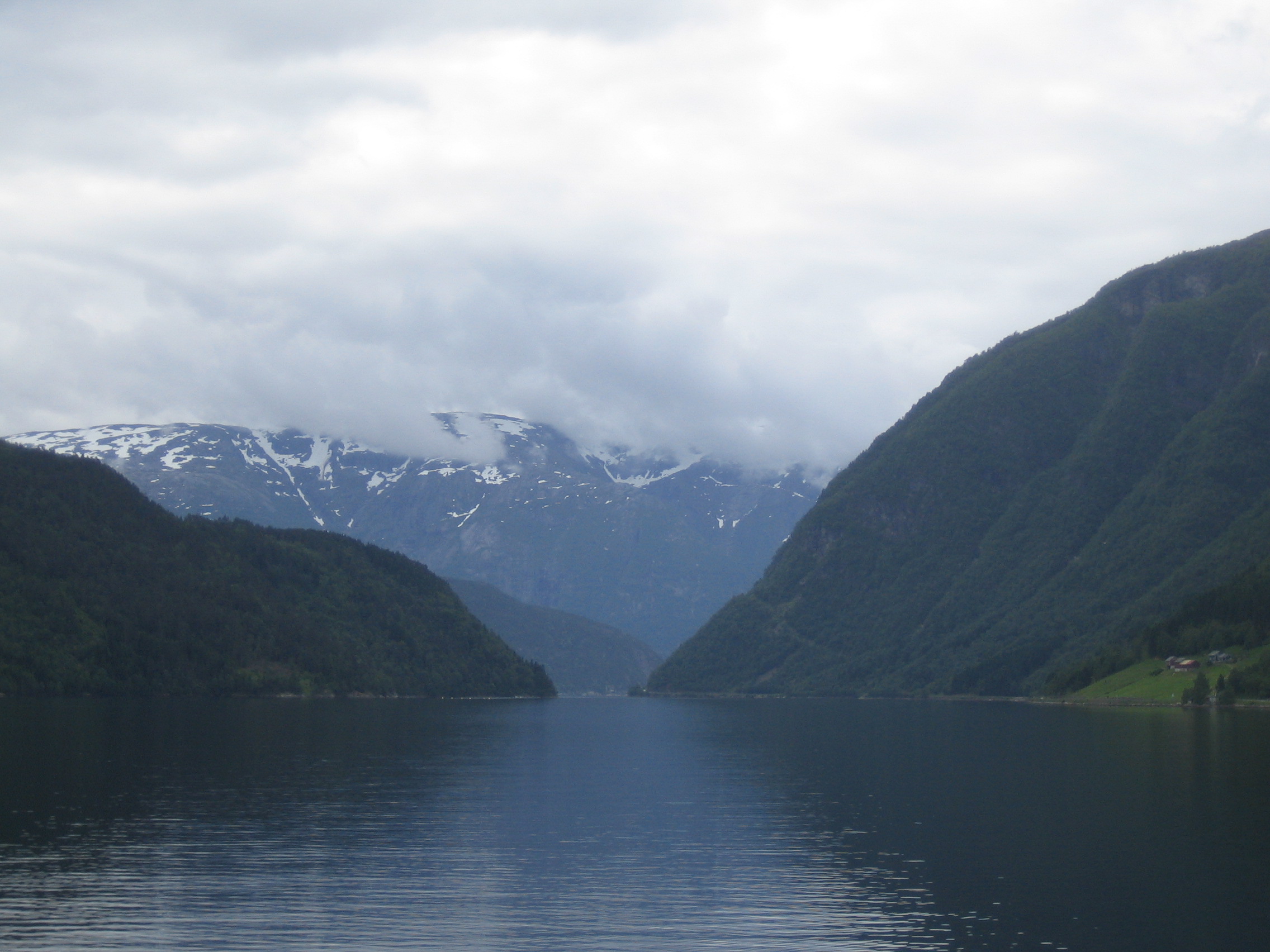
A fjord in Norway

Travel is taxing. We are often tired from long sits on airplanes, the passage of too many time zones, making our way from point A to point B in stifling heat or numbing cold. Our bodily needs become complicated as we try to manage our hunger, our thirst, our exposure to the sun, or our aching feet. The food may be different. The language may be different. Things go wrong and fall apart, and we are left feeling simultaneously buffeted by a large, impersonal world and lifted up by strangers’ acts of kindness and generosity.

It is because travel can be so uncomfortable that it is so rewarding. We find edges we didn’t know existed inside of us. We run headlong into our assumptions. Many of our outer trappings are stripped away even while we experiment with creating personal narratives for the people we meet. And meanwhile we are surrounded by brain food or soul food or the seeds of creative inspiration, or all three at once.

Sometimes we lose ourselves, and travel is one way to begin searching. Sometimes we crave change, and travel is one way to explore the possibilities. Sometimes we need to remind ourselves that we are alive, and travel is one way to find peak experiences.

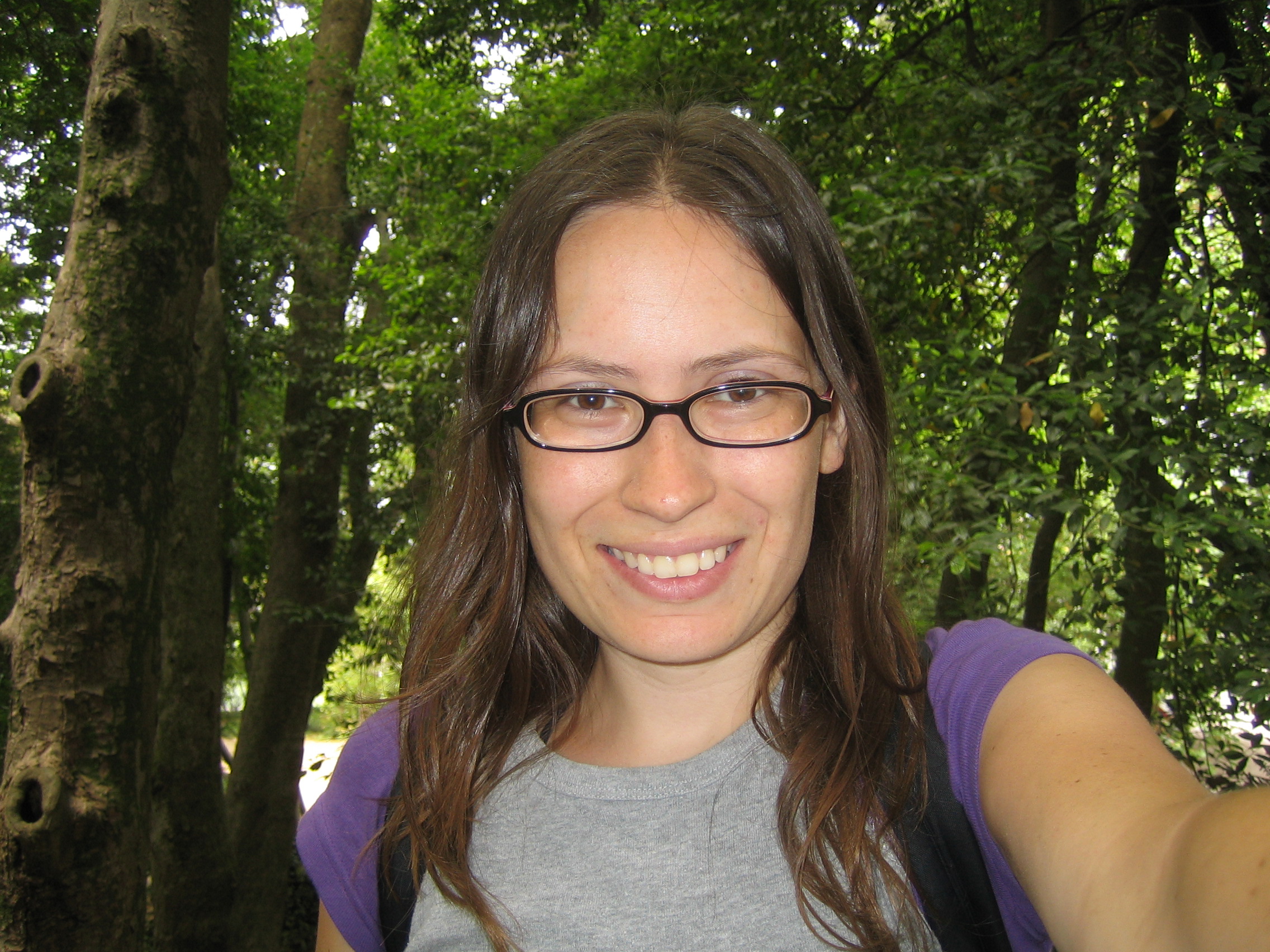
Exploring in Portugal

Travel is an active doing and a passive waiting. Travel is discomfort and pleasure, sublimity and boredom, a pain in the butt and the best time ever. Travel is flinging ourselves into the world and asking, Will you catch me? Which sometimes turns into, Can I catch myself?

We often think about travel as an exploration of the world. But it can also be an exploration of the self. In removing ourselves from our routines, our comforts, and our surroundings, we gain fresh perspective.

I had a friend ask, “By traveling, aren’t you running away from your problems?”

But sometimes traveling is running directly into our problems. We take ourselves wherever we go. The question is how serious we are about creating change. And traveling is one way to do just that.

Read Full Post »

It’s the end of April, April 26th, to be exact, and as always on this day, my thoughts are with my mom.

Her death at age fifty really brought home to me the reality of mortality. All things must end. We have a finite amount of time. It made me realize how important it is to prioritize, to make things happen now because there might not be a later, to fight against becoming stuck in a daily routine if it makes me unhappy.

Her death taught me the importance of shaking things up.

You want to know the truth? I don’t like shaking things up. It’s scary and uncomfortable. There tends to be a fair amount of risk involved, as well as failure and disappointment. It can be hard to decide when to shake and when to let things settle.

But when in doubt, I’d usually rather shake. I remember the finite life span of human beings. I remember my mom’s unhappiness, and how she couldn’t shake things up to make her life better. And then it was too late.


Could I be a writer if I didn’t believe in shaking things up? Could I be a blogger? I don’t know. I’m guessing I couldn’t be a blogger because blogs tend to shake things up. Any blogger worth her salt will have to occasionally offer up an opinion, and people will disagree. Shake, shake, shake. And without that extra push to make life happen for myself, would I have found the courage to spend so much time writing? To attempt a novel? To send stories out to be rejected? All these choices shake things up.

I worry when people my age (thirties) tell me how much they want to travel, but they haven’t been anywhere. I want to say, I hope you’re not serious. I hope travel isn’t actually that important to you. I hope it’s a nice dream that provides a pleasant thought diversion. Or else I hope you’re just being polite, like me when I say how amazing it would be to learn to knit (I don’t actually care if I learn to knit or not). Because otherwise, what if it never happens? What if you never shake things up enough to make it happen?

This is why priorities matter so much. So we can decide when it’s important to shake and when we can take a break, be laid back, and let things sort themselves out. It’s like my experience with Las Vegas. I live a short flight away from Vegas. People I know are going to Vegas all the time. It’s never been a real priority of mine to go to Vegas, so I sat back and figured it would happen when it happened. I chose not to shake things up.

And guess what? I’ve still never been to Vegas.

So in a way, today is about remembering my mom AND remembering the power of shaking things up. I don’t want to be a people pleaser anymore? Then bam, I’ll learn more about it, I’ll push myself to change, I’ll ruffle some feathers. I want to be a writer? Then bam, I’ll take risks with my writing, I’ll go out there and meet people in my industry, I’ll leave myself vulnerable, and I’ll commit myself fully even knowing failure waits right around the corner.

Hi, Mom. This earthquake is for you.

Read Full Post »

I haven’t been writing recently about being a people pleaser, or becoming more assertive, and other topics like that. You know why? Because it’s hard. It’s hard to change how you react to things. It’s hard to tear your life apart, examine it from every angle, and then slowly put it back together again. I often put pieces on backwards, or they just don’t fit right even though I’m hammering at them for dear life.

But then I read this essay by Penelope Trunk, who is, as you know, one of my favorite bloggers, and I realized I should write about it more. Here is what she had to say:

“It’s hard to know who to take advice from. But my instinct tells me that the best advice comes from the people with the most difficulties. Not in the past. But right now. Because that’s where you want to be: doing something difficult right this moment.”

So yeah. I’m doing something difficult right now, so maybe it is worth talking about, even though it’s dangerous and messy and I don’t have all the answers. I don’t want to give you advice as much as I want to illustrate that people can in fact do this–that people can change themselves, that people can look at themselves and say, I could be a lot happier than I am, and then take positive steps to make it so. Because I meet so many people who seem to think that almost everything is impossible, and that just isn’t true.

Here are two things that happen when you have actually made strides at changing your people pleaser tendencies: people will freak the hell out, and you will realize you have spent most of your life listening to very bad advice.

People will freak out because, even if they are actually decent people (and sadly, some of them aren’t), they are used to you being a doormat. You suddenly deciding you’re not a doormat is vastly inconvenient and confusing. It disrupts the normal patterns of all your relationships. Even the people who are generally supportive of this change will sometimes freak out, because oh my god change and where do they fit into this new picture?

As for the bad advice, it’s amazing how willing many people are to support you making decisions that are outright harmful for you. Society as a whole is quite okay with this notion too. There are two forces at work here. There are the people who are taking advantage of you in some way. It is obviously in their best interest to give you bad advice about continuing to be a doormat with everyone; they have a vested interest in you continuing to drink the Kool-aid. And there are the people who are doormats just like you, who don’t have good advice to give since they are in the same unfortunate position, and who wouldn’t give the good advice anyway because then it might force them to examine their own position, which they don’t want to do because of the chaos that would then ensue in their own lives.

Of course, once you have that lightbulb moment in which you realize how generally absurd most of this advice is (and wouldn’t that make a fun post one of these days?), there is no turning back. You have taken the red pill, and you begin to wonder: why was pleasing these people ever so important in the first place? So instead you sit back and watch them freak out, and you remember that you are worth it. And you keep resisting the gravitation pull of going back to the old comfortable ways that were holding you down.


Read Full Post »

I have the pleasure of announcing that my story “Forever Sixteen” is now up on Daily Science Fiction’s website. I’ve been very excited ever since I sold the story back in March, and I’m thrilled that it’s now available for everyone to read.


The main character is a girl whose aging and development has been arrested so that she remains sixteen years old (if you want to know why, you’ll have to read the story). What would it be like to stay sixteen forever? On the one hand, we live in a society that is obsessed with youth and appearance, so the idea of being able to retain that youth (and implied health) is quite attractive. On the other hand, would you really want to be sixteen for the forseeable future? I didn’t even have huge high school traumas and I’m still not overly enthusiastic at the thought of remaining a perpetual teenager.

Going wider, this premise can be seen as a metaphor illustrating the tension between the desire for stasis and the need for change. We live in a world that is constantly changing, and we’re constantly changing within it. It’s natural for us to want to impose our control on such chaos, to attempt to preserve the status quo. So many of us fear change (and I’m certainly no exception), even when the change is largely positive in nature. And yet, what if that potential for change was taken away from us? What if everything really did stay the same, even our own bodies and the hormone levels coursing through them? As much as I sometimes dread change, this story illustrates one of my true nightmares: the attempt to suspend change.

We’ve all heard the old saw about how the only sure things in life are death and taxes. But whenever I hear that, I always think that in reality, the only sure thing in life is change. Life may trundle along on an even keel  for a while, even for many years, but ultimately something will happen to disrupt its direction.  Sometimes we choose the change; sometimes it chooses us–like death, a natural disaster, or a shift in politics or the economy. Sometimes we have to fight for change, like the protagonist of my story. And sometimes change comes at a high price, at which point we are called upon to decide: how high is too high?

On a more personal note, this story is one of my own favorites. I don’t know if this is true of other writers, but I definitely have the stories I’ve written that are especially meaningful to me and stay close to my heart. Right now I have three of those special stories, and this is one of them (the other two are still looking for homes). The fact that my first pro sale was made with this story in particular makes me feel especially pleased.

So tell me: would you want to stay a teenager forever?

Read Full Post »

« Newer Posts