Feeds:
Posts
Comments

Posts Tagged ‘Backbone Project’

While I don’t often make New Year resolutions (except when I do), I like to stop and take stock of my life at the end of the year and set some goals for the year to come. After all, it’s hard to live your life according to your priorities if you don’t know what your priorities are!
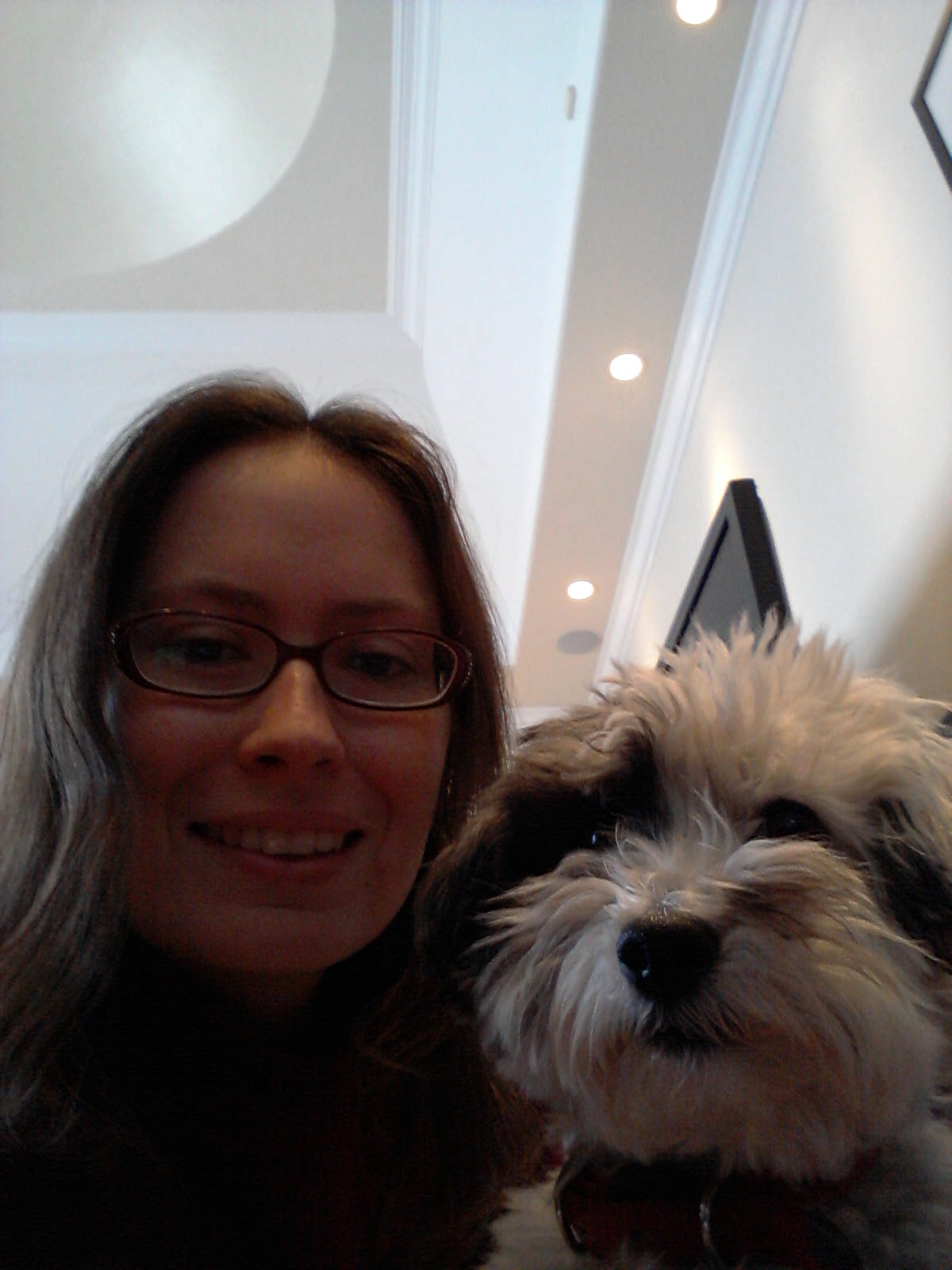
amy and nala christmas 2012

Writing:

In 2012, I had several more stories come out, and I qualified to become a full member of SFWA. I also sold my first (and second) science fiction stories. I spent the bulk of the year working on my YA novel The Academy of Forgetting.

My plan for 2013 is to query a large number of agents and complete another YA novel. I’d also like to participate in at least a couple weeks of Codex’s Weekend Warrior (writing flash fiction). And of course, I want to continue to increase my focus, improve my writing skills, and read a lot.

Health:

Well, given that I spent six months waiting for my foot to heal, this year was on the frustrating side. But I was able to stay focused on my writing through it all, which I am very pleased about. My tooth from the drama of 2011 rarely bothers me anymore. And since the fall I’ve definitely been in less overall pain than I have for the last few years.

My wish for 2013 is that I can continue this whole less pain trend. I’d like to begin gradually increasing my strength. What I wish for the most is that I can begin to reintroduce some activities that I love but haven’t been able to do the past few years. Like dancing! And hiking!

Travel:

I wanted to get out of the country in 2012, and that didn’t end up happening. I mean, I went to World Fantasy in Toronto, but given that I pretty much only saw the hotel, I don’t think that really counts. However, I fell in love with Seattle, got to see Chicago for the first time, and faced down a hurricane in New York, so the year wasn’t without its adventures. I attended seven writing events, including three I’d never done before, and had a truly fabulous time.

So my wish for 2013 will be the same as last year’s: that I leave the country. And actually SEE and EXPERIENCE stuff while abroad. I’m considering trying to travel somewhere in Europe pre-World Fantasy in Brighton, which seems the most likely way to make this happen this year. I’ve already mostly planned out which writing events I’ll be attending for the year, although a few remain up in the air.

Personal Growth:

Oh, 2012. I cannot sum it up in one paragraph. I learned a lot, I changed a lot, I made progress towards becoming the person I want to be. My understanding of myself and the world around me is clearer than it’s ever been.

My wish for 2013? To take a loooong vacation. Ha! But seriously, 2013 is going to be a year of external change, when I get to put my clearer understanding into practice. I anticipate a fair amount of trial and error, so that should be … exciting. I’ll build on what I’ve been working on for the past two years, continue to practice my own definition of assertiveness, and look to create good habits so I can conserve energy.

Have any goals for 2013 you’d like to share?

Read Full Post »

1. Assertiveness is not the same as decisiveness. Some of my friends disagree with me on this one, but I actually feel very strongly about it. Sometimes the most assertive thing to say in a situation is “I don’t know.” Maybe you need more time or more information before you can form an opinion or make a decision. Not being assertive would mean allowing someone else to push you into a decision before you are ready, possibly in the name of “decisiveness.” Assertiveness also doesn’t close the door on changing our minds, which is something else I feel strongly about.

2. Assertiveness is stating your opinion and showing yourself to the world. Even though you might be wrong. Even though you aren’t perfect. Even though people might not care or want to hear what you have to say. Even though everyone won’t agree with you. I think the courage to do this in a strong but balanced way comes from a sense of self worthiness.

3. Assertiveness is asking for what you want/need. Even when doing so is scary. Even when it might make the person you’re talking to think less of you, or not like you, or feel emotions. Maybe especially then.

4. Assertiveness is being okay when someone says no. Which, if you’re asking for what you want on a regular basis, is definitely going to happen. Emotions might happen when someone says no, and that’s fine…as long as you don’t act on them and instead deal with them in a mature way that works for you.

That is one assertive apple. (Photo by Fernando Revilla)

5. Assertiveness is gathering information. Maybe some people aren’t okay with you being assertive. Maybe some people repeatedly say no, don’t do what they say they’re going to do, or behave towards you in ways that you’re not okay with. This sucks. But it’s good to know so you can make decisions based on reality instead of what you wish was true. The kind of fabulous people you want in your life aren’t going to be trampling all over your boundaries all the time like it’s some kind of sport.

6. Assertiveness is allowing other people to have their own feelings and their own issues instead of taking those on as your own. The more I pay attention to this, the more I realize hardly anything that happens is actually about me. It’s about the mood someone else is in, or they’re worried about xyz that has nothing to do with me, or they want something so much they’re not even paying attention to me, or they’re behaving in this bizarre way because of some childhood trauma or the way they were raised or because they’re been compelled to do so by the power of Cthulu. At a certain point, it doesn’t matter why. Our job is to take care of ourselves by asking for what we want, sometimes saying no, and dealing with our own emotions. Our job is not to take on everyone else’s stuff.

7. Assertiveness is embracing the awkward and the uncomfortable. Change is sometimes awkward. Saying no can be awkward. Being honest can be awkward. Being vulnerable can be awkward. Letting someone know how you feel can be uncomfortable. Letting someone know they’ve behaved in an inappropriate way can be uncomfortable. I’ve grown very skilled at making people feel comfortable over the years, which is fabulous when you’re teaching voice lessons. However, assertiveness sometimes requires allowing those awkward moments and uncomfortable silences to happen instead of smoothing them over.

8. Assertiveness is respecting yourself. There is that old truism about how you can only truly help other people after you’ve taken care of yourself. I completely agree with this statement, but I also think it’s a way to dance around the truth so people pleasers might actually listen. That truth? Respecting and caring for yourself is inherently important and valuable. It means you have healthy self esteem and can go rock the world with your own personal brand of awesome.

A year and a half later, and look at the Backbone Project go!

Read Full Post »

I’ve been thinking a lot lately about the difference between being nice and being kind.

I was having a conversation with a friend of mine who also used to be a people pleaser. (There are few things more encouraging than finding and talking to people who used to be people pleasers and now are completely not that way at all.) He told me how he felt that in some ways, in order to change who he was and stop being a people pleaser, he had to swing to the other extreme for a time. But now he was at the place where he was hoping to become kinder and more generous.

A few days later Justine Musk posted her brilliant piece on nice vs. kind that does a great job defining terms, and everything clicked together for me.

Since I know not all of you are going to read her essay, I’ll quickly define the difference. Nice is doing things because you’re supposed to, because you feel you have to, because it’s expected, because you’re being pressured into it in some way, because you don’t feel you have the option to say no. Kind is doing things because you want to: you want to help, you want to be there for someone, you want to give of yourself.

Photo by Martina K

When you’re a people pleaser, when you’re nice all the time, you have trouble telling the difference between nice and kind. And forcing yourself into constant niceness erodes the capacity to be kind. Why? Because you are tired. Because you have nothing left to give.

In order to stop being a people pleaser, you have to start saying no. You have to pay conscious attention to the difference between nice and kind, and it’s difficult, and it takes a lot more energy than it would usually take. And my friend was correct. You swing over to the other side, because you’re saying no to being nice, but you haven’t yet built up your reserves to the point that you can be kind as often as you’d like.

I know because this is where I am right now. I want to be kind. But sometimes I can’t. And sometimes I’m accidentally nice, and sometimes I don’t have the energy NOT to be nice. Because as exhausting as it can be, nice is what I’m used to. Nice is my default setting, and as such, it’s what I tend to fall back on when I’m stressed or tired or in any way not one hundred percent.

Resetting a default, I’m finding, takes a lot of time and patience and mistakes and experimentation.

But I’m making progress. Understanding how kind is different than nice is a part of that progress. I am a lot less nice than I used to be. I say things that people don’t want to hear. I allow people to be uncomfortable instead of automatically smoothing things over. I say no and take care of myself instead.

Nice is something I’m happy to leave behind. Kindness is what I have to look forward to.

What about you? Do you have trouble telling the difference between nice and kind? What kind of balance do you try to strike between kindness and taking care of yourself?

Read Full Post »

“I spend way too much time worrying about whether I’m okay enough for people.” – An anonymous friend

Right now I’m feeling angry. I’m angry that it can be so easy to feel the way my friend feels right now. I’m angry because I’ve felt that way before. I’m angry because now I understand how many people encouraged me to feel that way.

Jim Hines published a brilliant blog post yesterday about boundaries. Please please please, if you have ever liked anything I’ve written on this blog, go read what he has to say. Go right now. I’m serious. Go even if that means you won’t finish reading this.

No. No no no no no.

I grew up being taught, both implicitly and explicitly, that it wasn’t okay for me to say no. I drew a few lines in the sand, but now it pains me to think of how few, and how much inner turmoil I suffered to stand up for them.

A bit more than a year and a half ago, a person I was close to finally pushed me too far. And I started saying no, the way I wish I had done many years before.

This person tried to punish me for saying no. He didn’t want there to be a problem, so he simply ignored it. He pressured me to pretend everything was fine, to be okay with what had happened, to once more make a huge sacrifice for his own convenience. He sent me manipulative emails and the most passive aggressive birthday card imaginable. He took something he knew I cared about and tried to use it to force me to see him against my will.

I only talked about this as it was happening to a few people. Because I believed that not only did this person think it was not okay for me to say no, but that everyone else–society as a whole–would agree with him. I still think that’s true to a certain extent. Many people are not okay with the idea of boundaries, that we have the right to decide what we will and will not do in relation to other people. I’m sure many people would tell me to suck it up, to be the nice girl, the good girl, and preach the power of forgiveness. Even though they aren’t even involved in any way, they would tell me to go back to being a doormat. (Why? Why does me having power have to threaten the entire world order? I have no idea.)

As an old friend of mine used to say, that’s bullshit. I no longer want anybody in my life who is not okay with me saying no. Full stop. I have drawn my line in the sand and this time it runs all the way down to the earth’s core.

It is okay to say no. Even when people react with anger, hurt, and pique, it is okay to say no. Even if it means people will no longer like you, it’s okay to say no. (These are not the people who will love and cherish you and have your back and support you through good times and bad in any case.) It is okay to take care of yourself, and you deserve to be surrounded by people who will support you in doing that.

Never let anyone tell you differently.

Read Full Post »

On Tuesday I read a blog post in which a female blogger made a list of people in her acquaintance she’d put in charge of governing society if she was a monarch. All the people on her list were male. When called on this fact in the comments, she mentioned one woman she knew who she felt was “awesome,” but then proceeded to say she’d listed people she knew who were “wicked smart” and that offhand, she couldn’t think of any other women she’d put in that category.

Typing that just now makes me want to yell and scream and possibly hurt my foot by kicking something unexpectedly hard.

As a woman who is “wicked smart,” let me explain something to those of you who haven’t thought about such things. High-IQ women often do not present in the same way as high-IQ men. That doesn’t mean they’re not just as smart; they just behave differently, in ways that are not typically identified with high intelligence.

For starters, smart women often work very hard to fit in. We blend. We spend a lot of time listening to other people talk. We don’t always put ourselves forward, even when we have expertise or insight about a certain topic. We are not as likely to offer or even form opinions, since we are supposed to be nice and agreeable. We are not as likely to argue. We deliberately choose topics of conversation that don’t show off our intelligence, partly because being an intelligent woman is somewhat fraught in our society and partly because if we want to have a real conversation instead of expound, it often works better to choose a topic in which intelligence doesn’t matter as much. We do much of this unconsciously because it tends to get us better social results, ie people like us more.

Women in general are also not encouraged to be as ambitious as men. We get more flak about being ambitious. People patronize us and tell us we have delusions of grandeur. In many professional arenas, we have to adopt masculine behaviors in order to realize our ambitions, not to mention deal with sexism. We also have to do better than men at the same positions in order to be recognized. And then people will minimize our accomplishments and say catty things about our appearances and personalities. Not to mention, women who want to have kids know they’ll end up with more of the work involved, even if they have full-time careers as well. So high-IQ men are often very “successful;” they might be wealthy or have a fast-track career or a top-notch reputation in academia. High-IQ women don’t always have any of these things because we either chose not to follow ambition in the classic sense or because we felt we should not.

Finally, our society privileges the sciences over the humanities and the arts, and factual knowledge over both raw intelligence (which is more about speed and ability to learn, understand, and synthesize) and emotional/social intelligence. And yet, women are less likely to go into the sciences, less likely to offer up their knowledge in conversation, and more likely to be encouraged to focus on emotional intelligence. And for those of us who have focused  on synthesis as opposed to factual memorization, our talents are often entirely overlooked.

The secret land of intelligent women?

My husband and I are a great example of this. By both our assessments, we are more or less equally intelligent. He has a PhD in physics, an important job at Google, and impressive amounts of knowledge on a variety of intellectual subjects. I’ve spent most my time pursuing music and writing and focusing on personal growth and interpersonal issues. It is not uncommon for people to tell me my husband is one of the most intelligent people they’ve ever met. No one ever tells him the same thing about me. He presents himself very differently in social situations, has many of the expected achievements, and studied string theory instead of music, so this doesn’t come as a big surprise.

I didn’t want to talk about this subject because we as a society seem to have a deep discomfort with intelligent women, and talking about it leaves an opening to be personally attacked or categorized as stuck up. I can hear it now: “She’s not as intelligent as she thinks she is, and her husband is just playing up to her big ego.” Admitting to intelligence, at least here in the United States, is not the best way for a woman to gain friends and influence people. And ironically, gifted people tend to be more sensitive, more likely to be perfectionists, and more likely to hold themselves to impossibly high standards…all while suffering from impostor syndrome. But I’m so tired of the misconceptions that abound, and I don’t hear enough women speaking out on this subject, so I felt I had to say something.

There are plenty of very smart women in the world. You might just not realize who they are. So the next time you are listing off smart people you know, think again and consider whether you can add some women to your list.

Read Full Post »

I haven’t been writing recently about being a people pleaser, or becoming more assertive, and other topics like that. You know why? Because it’s hard. It’s hard to change how you react to things. It’s hard to tear your life apart, examine it from every angle, and then slowly put it back together again. I often put pieces on backwards, or they just don’t fit right even though I’m hammering at them for dear life.

But then I read this essay by Penelope Trunk, who is, as you know, one of my favorite bloggers, and I realized I should write about it more. Here is what she had to say:

“It’s hard to know who to take advice from. But my instinct tells me that the best advice comes from the people with the most difficulties. Not in the past. But right now. Because that’s where you want to be: doing something difficult right this moment.”

So yeah. I’m doing something difficult right now, so maybe it is worth talking about, even though it’s dangerous and messy and I don’t have all the answers. I don’t want to give you advice as much as I want to illustrate that people can in fact do this–that people can change themselves, that people can look at themselves and say, I could be a lot happier than I am, and then take positive steps to make it so. Because I meet so many people who seem to think that almost everything is impossible, and that just isn’t true.

Here are two things that happen when you have actually made strides at changing your people pleaser tendencies: people will freak the hell out, and you will realize you have spent most of your life listening to very bad advice.

People will freak out because, even if they are actually decent people (and sadly, some of them aren’t), they are used to you being a doormat. You suddenly deciding you’re not a doormat is vastly inconvenient and confusing. It disrupts the normal patterns of all your relationships. Even the people who are generally supportive of this change will sometimes freak out, because oh my god change and where do they fit into this new picture?

As for the bad advice, it’s amazing how willing many people are to support you making decisions that are outright harmful for you. Society as a whole is quite okay with this notion too. There are two forces at work here. There are the people who are taking advantage of you in some way. It is obviously in their best interest to give you bad advice about continuing to be a doormat with everyone; they have a vested interest in you continuing to drink the Kool-aid. And there are the people who are doormats just like you, who don’t have good advice to give since they are in the same unfortunate position, and who wouldn’t give the good advice anyway because then it might force them to examine their own position, which they don’t want to do because of the chaos that would then ensue in their own lives.

Of course, once you have that lightbulb moment in which you realize how generally absurd most of this advice is (and wouldn’t that make a fun post one of these days?), there is no turning back. You have taken the red pill, and you begin to wonder: why was pleasing these people ever so important in the first place? So instead you sit back and watch them freak out, and you remember that you are worth it. And you keep resisting the gravitation pull of going back to the old comfortable ways that were holding you down.


Read Full Post »

It’s been a good year here at the Practical Free Spirit. I’ve garnered much enjoyment from writing for this blog, and as I gain more experience, the essays often come easier. I’m becoming clearer about what I care about writing about, and I’ve had some great conversations with many of you.

In terms of traffic, the blog is growing slowly but steadily. I’m happy to say that December 2011 has recently become the highest-traffic month in the blog’s history. It’s a satisfying way to close out the year.

Photo by Ray Wewerka

The Backbone Project:

This summer I ran the very successful backbone project, in which I committed to writing three essays on subjects about which I was nervous to write. Not only did I get some much needed practice in being assertive and brave, but I got to hear about so many people’s experiences and opinions, all of which enriched my own. All of the backbone project posts landed in the list of top 10 read posts this year.

The Backbone Project: Help Me Become Less Wishy-Washy
You are not a Weenie if a Critique Makes You Cry
Where is my Geek Cred?
The Teetotaler Manifesto, or Why I Don’t Drink

Most Popular Posts:

Being an Introvert is Awesome!

Like it or not, people in our society are very worried about being introverts, due to the false association between introversion and lack of social skills.

Loneliness and Social Media

The popularity of this article makes me realize that this is another issue that many people are concerned about. Does social media connect us more or make us feel more isolated?

Living Free From Regret

This one is mostly popular because of the awesome photo, but the message is inspiring too.

10 Things I Wish I’d Known 10 Years Ago

This recent post has the distinction of being the second most read post ever on the site on the day of its publication.

My Personal Favorites:

Writers are Super Heroes

This essay gives me an extra dose of “go get them” energy when I need it.

Problem Competition: Who is Worse Off?

How comparing our problems pushes us farther apart instead of bringing us together.

Will You Change the World?

I hope the answer is yes!

The Stories of Our Lives

“We are all leading ladies and men. And we each get the privilege of creating the stories of our lives.”

All together, it’s been a great year. Here’s to another year of interesting thoughts and engaging conversations!

Read Full Post »

At this time of year, I always feel like I’m straddling the flow of time. Half of myself is looking backwards and evaluating what has gone on before, while the other half is looking forward to what the next year may hold for me. I don’t make New Year’s resolutions per say because I prefer a continuous evaluation process, but thinking in terms of units of time can be helpful when trying to look at the bigger picture of my life.

So, without further ado, here are a few reflections on 2011 and few wishes for the year to come.

Cute little Nala and me

Writing:

2011 was an exciting year because it was the first year I had something published, thus realizing a dream I have cherished since I was seven years old. Hooray! In fact, I had three short stories published this year, one of them to a pro market. I was also able to join SFWA as an associate member.

My wish for 2012 is that I am able to use the lessons I learned this year to increase both my productivity and my enjoyment in writing. (Being greedy, I also wish for more sales.)

Health:

The first half of 2011 was dominated by crazy dental problems. While that silly crown still often aches, the level of pain has subsided to the realms of the tolerable. I also had more ankle problems. But on the plus side, my knees continued to improve in a most pleasing fashion. I also began to eat more healthily, trying to limit my consumption of saturated fats in particular, and have done fairly well with it (although not when traveling. Eating healthily when traveling is ridiculously hard).

My wish for 2012 is to keep growing stronger so I have less overall aches and pains, and to continue following my moderate diet.

Travel:

2011 was the first year in a long time that I didn’t leave the country. Various health concerns dampened my travel ambition somewhat, and I mostly stayed close to home. My favorite trip of the year was my first time in Washington D.C. in March. I would definitely return there for a follow-up visit someday. We also attended the Shakespeare Festival in Ashland, Oregon, visited Disneyland with friends, and relaxed over Thanksgiving at our favorite Maui vacation spot.

I was able to attend five writing conferences and conventions, two local and three an easy traveling distance: Potlatch, FogCon, SCBWI LA, WorldCon, and World Fantasy. I particularly enjoyed attending the inaugural FogCon and moderating my first two panels, and catching up with my wonderful writer friends (and making new ones) at the larger conventions was fabulous as usual.

My wish for 2012 is to leave the United States. We’re thinking either Japan or certain favorite Western European locations…

Personal Growth:

I wrote about the two most important lessons I’ve learned this year last week. I feel like I’ve made a fair amount of progress on the people pleaser front and have developed a stronger backbone. I’m more likely to stand up for myself and less likely to take responsibility for everyone else. So, yay!

My wish for 2012 is to continue tackling my vicious perfectionist streak and to do further work towards trusting myself and my abilities. I’d also like to be able to reach out more to other people.

Happy upcoming New Year, dear readers! What are your wishes for 2012?


Read Full Post »

Some of my astute readers might have noticed that I initiated a massive life re-haul and personality shift this year. I have written a fair amount about being a people pleaser, developing a backbone, and being a perfectionist because these were things that were on my mind. I decided, somewhere in the haze of extreme tooth pain, that I needed to change, and I set about doing just that.

I’m still in the middle of it. It has already been completely worth it.

It is one of the hardest things I’ve done.

Here is what I have learned: You have to respect yourself. You have to believe that you are worth it. And you have to do whatever it takes to convince yourself you are worth it, even if it means muttering silly mantras to yourself and being glad you work at home so no one suspects you are crazy.

I have spent my entire life believing that if only I was good enough (oh, hey perfectionism), people would love me, respect me, and treat me well. I really wish this were the case, but I was flat-out wrong. The truth is, if you are willing to let something happen, the odds are that it will happen. If you are willing to tolerate being lied to, then people will lie to you. If you are willing to let people ignore you, then they will. If you don’t take a stand against bad behavior towards yourself, then that bad behavior will continue. The world doesn’t give you a voice, you have to demand it.

And in order to demand the respect you deserve, you have to give it to yourself first. You have to believe you are worth it.

Photo by Anita Hart

This self-respect is not the same as thinking you are perfect and infallible and can’t possibly make a mistake. Therein lies another problem (oh, hey narcissism). And it doesn’t preclude feeling compassion for people, even (and especially) the ones who are in the middle of making your life difficult.

What self-respect does give you is the ability to empower yourself. It gives you the choice of surrounding yourself with people who will lift you up instead of pulling you down. It gives you the chance to speak up. It gives you permission to refuse to take on every single problem as your own, when so many of them aren’t really yours at all. It gives you the strength to confront the parts of yourself that you don’t like. It gives you the space to say “No.”

No, I am not your bitch. But thanks for asking.

Remember that you are worth it. That is what I have learned this year.

Read Full Post »

I’m freshly back from the World Fantasy Convention in San Diego, where, as expected, I had a lot of conversations about writing. And even some conversations about writing YA (aka teen fiction). At one point, I said, “One of the most critical things in a YA novel is to get the voice right.” And my friend said something to the effect of, “Oh, I’m pretty sure I got it right. My protag is a whiny teenager.” The conversation quickly moved on to other subjects.
However, this reminded me about one of my pet peeves regarding would-be writers of YA. Why is it that so many of them assume that all (or even most) teens are so easily characterized as consistently whiny? And inevitably, if they’re not whiny, they must be snarky. Or ideally both whiny AND snarky.

Why, if these writers have such a low opinion and one-dimensional idea of teenagers as whiny butts, are they writing teen characters for a teen audience? Why? Please explain, because I fail to understand how this would be fun for either the writer or their prospective readers.

Yes, teenagers can be whiny. Some teenagers whine a lot. But you know what? Sometimes adults whine a lot too. Believe me, I’ve listened to them. Sometimes even I whine more than I should. But some teenagers rarely if ever whine, and some teenagers only whine sometimes, and some teenagers whine mostly to their parents. So if you want to write a teenage character who happens to be a very whiny person, fine, but that doesn’t mean you’ve nailed the elusive teen voice. If anything, it means that you’re going to have to be careful that your character doesn’t become really annoying to your readers. Because guess what? Teenagers can be annoyed by whining too.

As for snark, well, I like it as well as the next person. It’s entertaining, it’s funny, and a snarky character can be very engaging and likeable. But not all teenage characters have to be snarky. Depending on their backgrounds, their environments, and the stories you want to tell about them, it might even be impossible for them to be snarky. And adding more snark is not necessarily the way to go either (a lesson I have learned the hard way). Too much snark and a character might just be plain mean. Not to say that you can’t have mean characters, but you want to write a character mean because you’ve decided they’re going to be mean right then, not accidentally because you’re piling on the snark in an effort to be funny or edgy or have “an authentic teen voice.”

Perhaps these terms are mere shorthands that we fall back upon when trying to communicate about our writing. But I’d encourage writers who are trying their hands at YA (and more and more of them are, given its hotness in the book marketplace) to develop a more nuanced view of the teenagers they are writing for and about. I’ve worked with a lot of teens over the years, and you know what? Some of them are super sarcastic, or complain a lot, or are scattered and irresponsible. And some of them are brilliant and talented and working really hard and rising to the challenge of coping with difficult circumstances. All teenagers have some combination of positive traits and drawbacks, just as all adults do. But when they think about themselves, do you think the first word that pops into their heads is “whiny?” I doubt it, but perhaps they would be justified if the first word they think about adults is “condescending.”

Our job as YA writers is not to condescend but to understand. And in my mind, that’s a very big difference.

Disagree with me in the comments, or chime in and tell me that I’m not the only writer who thinks this way.

Read Full Post »

« Newer Posts - Older Posts »