Feeds:
Posts
Comments

Archive for the ‘Life’ Category

One of my most popular posts is one I wrote back in September of 2012, entitled “Nice vs. Kind.” And this week I received a note about it from a person I recently met, so I thought it would be interesting to provide an update to you all.

In the post, I talked about the distinction I perceived between being nice and being kind, and I talked about how, while I was making the shift, it could sometimes be difficult for me to be kind at all, because then I’d just fall right back into being nice instead, which was something I was trying to change.

What I neglected to say was it was also difficult to be kind because I was so angry from the decades of not getting most of my needs met and receiving repeated messages of how unimportant I was. In other words, I had to learn to be kind to myself before being able to easily be kind to other people too.

Fast forward almost three years, and it has definitely become easier for me. I’ve created a kind of checklist for dealing with situations that feel fraught and involve setting boundaries. (Because honestly, the rest of the time, it’s not very hard for me to be kind.) This thought process has become mostly habitual at this point.

Photo Credit: a.drian via Compfight cc

Photo Credit: a.drian via Compfight cc

Step 1: Figure out what I need/want.

If I really don’t care, then I get to be laid back, which is lovely.

If I don’t know, then I usually need some time. I’ve gotten better at simply saying I don’t know and getting the time I need to figure things out. Sometimes, when I’m really confused or emotional, I also need to talk things over with one or more friends to understand what it is I really need.

Step 2: Be clear and firm.

Step 3: Be kind.

Steps 2 and 3 are in that order for a reason. They reflect my priority, which is to be clear and firm FIRST, and kind SECOND. This helps prevent me from accidentally falling into niceness and wishy-washy-ness. It also reminds me not to soften or change what I need in order to be nicer, which is pretty much always an idea that crosses my mind at some point. (The Step 1 checking in with friends part is pretty helpful for this too, as it helps me not be too nice to begin with and builds in some accountability.)

I should note that if for some reason Step 3 is not possible, that doesn’t give an automatic pass to being UNkind. In general it is possible to be clear and firm without decimating someone in the process. To me, the main drawback of not being able to engage with Step 3 is it can feel a bit…robotic, but if that’s what necessary to express myself clearly and firmly, well, it’s not so bad. And luckily it doesn’t come up very often.

I should also note that following these steps doesn’t instantly solve all my interpersonal problems. The fact is, if someone wants something and I decide I don’t want to give that thing, then sometimes no amount of clarity or firmness or kindness is going to change the fact that the person isn’t going to be happy.

Still, each of these qualities serves its purpose. I practice clarity so I can get my actual point across with, I hope, fewer misunderstandings. I practice firmness so I’m less likely to have to revisit the same conversation and issue repeatedly or have someone try to change my mind. And the kindness? I believe it is ultimately helpful to the other person, and also, it’s simply the way I want to be.

“Be firm but kind, Amy.” This is the advice that runs through my head now. It isn’t foolproof, but it helps me remember how I want to be.

Read Full Post »

Things are going really well.

But Amy, didn’t you write last week about how you have a sprained toe?

Well, yes. I still have a sprained toe. That is not so great. It hurts. It is hard for me to get places. I can’t dance, which is awful. Nala’s routine is screwed up, so she’s having some trouble.

But.

Even the sprained toe is going really well. Not because it’s healing miraculously fast (I mean, I think it’s healing, but it’s slow going), but because of everything around the toe. Because the support system…it’s actually working. Blow me over with a feather.

People are feeding me. I love being fed even when nothing is wrong. But when something is wrong, and I’m tired and in pain and getting restless from sitting around all the time, it’s even better. And people have been visiting me. And checking in with me to see how I’m doing. And offering to help. And keeping me entertained.

And meanwhile they are giving me this opportunity to deepen our friendships.

It is so much easier to remain cheerful when you are getting what you need.

The support network is working exactly the way I supposed it might, too, which is to say, unpredictably. And that is lovely, and sometimes surprising in the best possible way. I’m getting to see my friends shine, and that makes me happy for both them and myself. Meanwhile, I’m not having to tap out any one person.

There are so many interesting aspects to living through big change. I’ve talked about the relief and the gratitude. I’ve talked about the testing, about the developing mindfulness, and the backward slides.

And now, here when everything is going well, there is also this: fear.

One night last week, I began to cry because everything was going so well, and things were continuing to improve, and it felt weird, and what if it all went away again? Because I like all the changes. I want to keep them.

I’m pretty sure the Buddhists would call this attachment.

I think that’s why it can be so difficult to change the status quo: it has a hard reality that all other possibilities lack. We know the status quo; we have come to trust it. Even if it sucks.

Whereas when we’re dealing with change, we’re exploring. We don’t know what we’ll find. We don’t know what will happen. We are steeped in uncertainty. And it can feel unreal, like a carriage that will melt back into a pumpkin at midnight.

That doesn’t mean it isn’t real, of course. It merely means we need to become better acquainted, perhaps even intimate enough that we create a new status quo.

This fear of mine, it’s definitely from the old status quo. It comes from decades of shoes raining from the sky. Enough shoes fall on your head and you become trained to expect them. And thinking about shoes falling on your head is scary.

But maybe in my new status quo, there are no shoes. Maybe we can all go barefoot instead.

And meanwhile, while I look up at the sky watching for shoes…things are still going really well.

Barefoot! (And ready to dance.)

Barefoot! (And ready to dance.)

Read Full Post »

Some months ago I decided to do a deep dive into shame. Inspired by the work of Brene Brown, I began to look at everything in my life that had to do with shame. Any shame about who I was, about my weaknesses, about my past, about my decisions, about things as trivial as my sleep schedule and as loaded as my divorce. It was all fair game.

I feel uncomfortable talking about shame. That is because shame thrives best in the dark places, in the crooks and crannies, in secrets and things left unsaid. Shine a light on it, and it writhes and squirms and hurts like the devil. And begins to shrink or dissipate like it’s allergic to the sun.

Shame feels like the kind of thing we’re not supposed to talk about. Shame breeds shame breeds shame. Shame encourages us to keep that big bright light far away from it. Shame has a strong survival instinct.

Photo Credit: LisiaolongFuko via Compfight cc

Photo Credit: LisiaolongFuko via Compfight cc

I feel uncomfortable talking about shame, but I have had such positive results from looking at it and working with it, and I want to share that with you. Especially because now that I’m looking for it, I see shame around me all the time. Shame about how we look physically. Shame about how “successful” we are. Shame about mental illness and chronic illness. Shame about lifestyle choices. Shame about not being good enough. Shame about needs and boundaries. And on and on.

Shame is different from other emotions that we typically think of as negative. Sadness, fear, anger, these are challenging emotions with dark sides, but they also have positive functions. Sadness honors the losses we suffer. Fear reminds us to watch over our safety. Anger can give us the energy we need to set boundaries or fight injustice.

But shame? Shame feels deeper to me, and more toxic. I haven’t found any positive functions of shame. Shame keeps us isolated and lonely, and it’s the source for astonishingly cruel self-talk. It fights against the sense of worthiness that I think is an essential component of inner peace. It keeps us from being with ourselves, and it keeps us from sharing ourselves.

We learn shame from our families, especially dysfunctional ones, and even if we get lucky there, we learn shame from our society. We also learn shame from individuals, people who are often struggling with shame themselves. And so shame marches forward.

Doing a deep dive into shame is…well, it’s unpleasant. It takes a lot of energy and a lot of courage. It requires looking at the things we don’t want to look at, talking about the things we don’t want to talk about, acknowledging the painful emotions and behavior of both ourselves and others. And it also calls for a lot of compassion because otherwise, honestly, it would be too hard. Once I started, it was amazing to me how much muck there was to clean out. More of it kept bubbling up.

I hesitate to use the term life-changing because it sounds like hyperbole, but in this case I think it is merited. Cleaning out shame has been life-changing. Those of you who have been following the blog for a while know it’s become something of a chronicle of personal change that started with me wanting to stop being such a people pleaser. That simple goal has taken me on a journey I never could have anticipated, and shame feels like it’s the very root of the problem. Finally. Here we are, performing a root canal on my psyche.

And the results? Well, this is a process, not a one-time fix and then it’s over. But over the last month or so I’ve been seeing the effects of the deep dive, and so far, this is what I can tell you.

I feel lighter. Everything feels different. My friends have been telling me things like “It seems like you have really found yourself” and “You seem a lot happier” and “Your choices seem to have really paid off.” I’m more likely to call bullshit, and when I do, I’m much more likely to think it’s stupid and much less likely to buy into it. I am slowly easing out of my protective shell because I don’t have as much need for it anymore. I am talking casually about things I didn’t use to talk casually about, if at all. I am being more direct, and I am being more authentic.

This isn’t a cure-all. I still feel uncomfortable sometimes (like talking about shame, for example). I still have attacks of writer angst. I still have emotions, I can still be disappointed, I still cry. I still sometimes dither, I still sometimes worry. I still have trouble sometimes saying no, or asking for help, or not apologizing, or remembering my needs are important.

But imagine shame as a heavy stone in the pit of your stomach. Imagine it weighing you down, getting heavier year after year, until you can barely walk from the burden. And then imagine realizing it’s there and chipping away at it. Imagine throwing it out of your body and far, far away, piece by painful piece.

It feels fucking incredible.

It feels like freedom.

Read Full Post »

Well, nothing like a little bit of crisis to give yourself perspective.

On Saturday morning I tripped on a plastic bag on the floor of my closet and bent back my big toe. It hurt. A lot. And turned bright red. I swore. A lot. And Nala looked concerned. I put some ice on it while I talked to my friend on the phone, and I took some Ibuprofen, just to be safe. Then I carried on with my day.

It wasn’t until several hours (and several miles walked) later that I realized something was wrong. I’d gotten back to my car after attending Wesley Chu’s reading at Borderlands, and I realized my toe really hurt. It hurt so much I felt queasy. It hurt so much that as I was driving the hour home, I had to take deep breaths and use lots of willpower to not cry.

So there I am, driving home, doing some deep breathing, in terrible pain, starving, exhausted because I’d had insomnia the night before (which, incidentally, is probably why I’d tripped in the first place), and what do I think? Maybe it’s not so bad. I don’t want to tell people I’m hurt. How can I make this easier for other people?

I wish I was making that up, but I’m not. But even in my I-want-to-sink-into-a-puddle-of-tears-on-the-couch state, I reined myself in. Nope, I told myself. You need to take care of yourself. That’s all you have to manage.

This is a fairly radical thought for me to have at such a time. This injury, then, became an opportunity.

But oh, it is so hard! I hate asking for help. I hate it so much. It feels like willpower in that after I’ve asked a certain number of times for help, I feel like my ability to ask is completely depleted, and I must do the things myself. I must! Who cares about pain? Who cares about RICE? I must put this paper towel in the trash can, goddamnit.

You know what else is hard? Not apologizing. I want to apologize so badly. Especially when I’m asking for help. But I’m determined not to because I know it’s ridiculous. Even more ridiculous is my irrational certainty that people will be angry at me for being injured. You know how many people have actually been angry? ZERO. Because that would be really weird.

Be that as it may, I do see progress. The last time I had a sprained ankle, I remember sitting in my easy chair seriously panicking. I had no idea how I would manage. My mind raced from solution to solution, and they all pretty much sucked, and no matter how long I thought about it, they didn’t improve. In the end, my solution was not-so-good.

But this time there was no panic. There was physical pain, sure, along with significant mental gymnastics about the whole not-apologizing and asking-for-help thing. But I knew it would work out. I knew I would be okay. I knew people would be there for me.

Not bad for a year-and-a-half.

Then on Sunday night I had to rush Nala to the emergency vet. I left my crutches at home. I didn’t care about my crutches. I didn’t care about my toe. All I cared about was my little dog in danger.

And that was right too because it was a genuine emergency.

Anyway, we’re both fine now. Nala is in good health, and I am spending a lot of time elevating my toe. This weekend’s crises were the normal kind of blips that show up from time to time. Stressful, but manageable.

See? Both fine.

See? Both fine.

And since I’m not allowed to say sorry, I’ve been trying to say thank you a lot instead. It’s amazing how the words we choose can change an experience from one of helplessness to one of gratitude and appreciation. It’s amazing how the words we choose can change the focus from our own pain to the generosity of others.

It’s amazing how much change is possible.

Read Full Post »

I love Disneyland.

I have not been to Disneyland since 2011 (which I think is tragic), but I’m confident I still love Disneyland. I love the surge of excitement that comes to a peak when I pass through the gates and pass under the tunnel into Main Street. I love mapping out my plan of action. I love riding the same rides I have been riding since I was a baby, or seven, or ten. I love riding the same rides over and over again.

I love how the entire park is like a gigantic show. I love the secret nooks. I love the churros. I love how light I feel, and I love how even when I’m soaking wet from Splash Mountain and I’m kind of cold and uncomfortable, I’m still happy because I am HERE, in this magical place. I love the continuity of history; I love the old rides and I love the new rides and I love remembering the rides that used to be here.

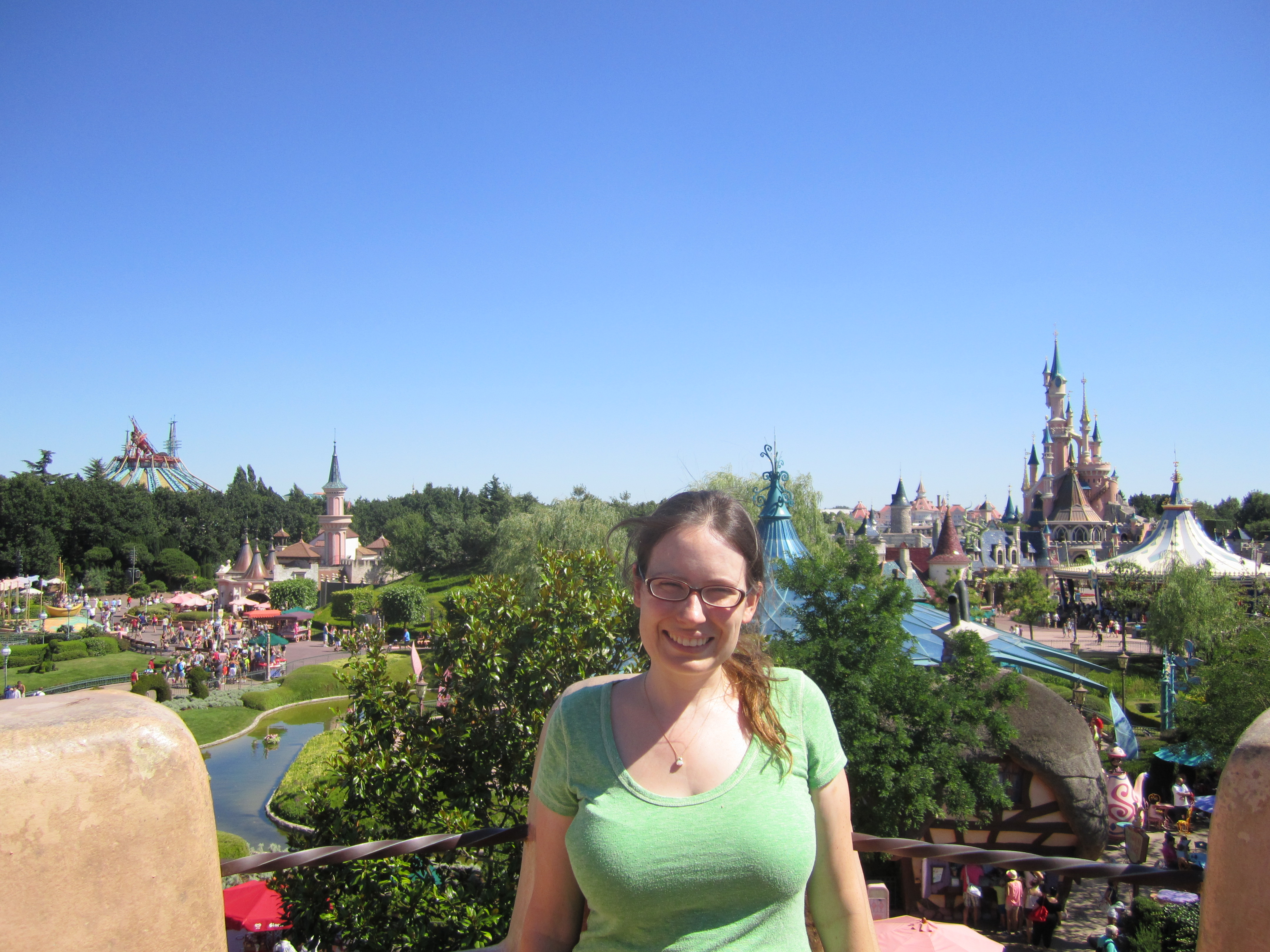
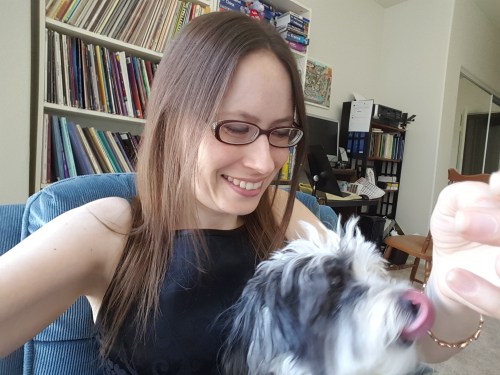
I can't find a photo of me at Disneyland, but here, have a photo of me at Disneyland Paris instead.

I can’t find a photo of me at Disneyland, but here, have a photo of me at Disneyland Paris instead.

I’ve created a Disneyland in my mind, with help from the actual one in existence, that reminds me how joy feels. The uncomplicated, pure joy that I felt when I was six years old pretending to steer a car next to my mom.

Don’t get me wrong, I am all for growing up and being an adult. I like being able to make my own decisions. I like being able to protect myself. I like making my own priorities and choosing how I am going to create meaning.

But I also like that childhood joy and wonder, and it is something I strive to hold onto. Retaining a connection with that spark of magic makes my life…well, flat-out better. Looking forward to things is fun. Cultivating enthusiasm makes the same experiences more exciting. And all of this encourages gratitude.

And if you look at many of the things I feel most strongly about today, many of them are markers for that joy. They are reminders of that wonder. They are evolutions of things I have loved for a very long time. We’d play pretend Disneyland in the backyard as kids, we loved it so much. There’s a video of me, maybe four years old, “dancing” to music by walking around in a circle. I sang as soon as I could talk. I wrote as soon as I could read fluently. Once I could read, I inhaled twelve books every two weeks from the library, and then I’d start in on the Reader’s Digest condensed books that lined our bookshelves. Christmas was the most magical time of year. Getting a puppy when I was six was like a dream come true. I climbed Vernal Falls in Yosemite every year of my childhood starting when I was, what, age four? Age five? The Mist Trail, with its rainbows and delicate barriers of condensation, was as close as I could get to the fairyland of the fairy tales I read in bulk.

I’m glad I grew up, but part of the reason I feel glad is because I didn’t have to give up the essence of what mattered to me back then. I didn’t have to give up the excitement of what the next day might bring. I didn’t have to give up the wholehearted love I felt for the world around me. I didn’t have to give up the feeling that we live in a world of wonders.

Instead, I got to learn that I get to choose. It’s not that I don’t see the hard realities of the world. It’s not that I don’t see suffering, or feel it for myself. It’s not that I’m not afraid of disasters and warfare and hatred, of sickness and pain and death. It’s not that I turn a blind eye to the problems and injustices that surround us all.

I see the difficulties, the pain, the ugliness, where we fall short. But even so, I can also tap into that joy. I can remember the parts of the world, and humanity, that make improvement worth fighting for.

I can feel the hush of the evening the night before Christmas, when the tree lights shine and my heart is full and the anticipation of tomorrow hangs over me like a mantle. I can feel the love well up inside of me when I look down at the little dog, who is once more lying completely upside down with her legs sticking straight up. I can feel the full rightness of moving my body to music or singing the notes to a favorite song.

And I can visit the wishing well outside the Disneyland castle, and I can believe that magic, of a kind, can still be found all around us.

Read Full Post »

I care very deeply about documenting the process of change.

Whenever I think about change, I think about the montage scene. Actually, I think of one specific montage scene: the one in Dirty Dancing when Jennifer Grey learns, through much trial and error, how to ballroom dance well enough to fill in for a professional. That is my quintessential montage scene.

But as useful as the montage scene is, it fails on some fundamental level to reflect the reality of change: that it is slow, and it is hard, and it is filled with doubt and confusion and setbacks, and it hurts. If you’re learning how to dance, it really hurts. Your thighs hurt, and your calves hurt, and your low back hurts because your posture kind of sucks, and your weak ankle aches, and the morning after your first time dancing, you can barely crawl out of bed, it hurts so bad.

The montage scene doesn’t really show the pain, and it doesn’t really show the duration, either. Change takes so much time. Even once you get it, or at least think you do, you often have to realize it all over again a month later, or six months later, or two years later. And each time, there’s this “Aha” moment, and each time it feels important, and each time you move forward, and each time there is still further forward that you could go.

Which is to say, I feel incredibly proud of the personal change I’ve been able to accomplish, symbolized by the tweet Ferrett made back in February. I am proud of it the way I’m proud I started a business. I’m proud of it the way I imagine I’ll be proud when my first novel hits the shelves someday. It is a major accomplishment for me.

And yet. There is still further forward for me to go. I am not magically finished, not suddenly foolproof at the art of not giving a fuck. No, what has happened is that I’ve made visible progress, and that is awesome. Meanwhile the work continues.

Last week I talked about feeling tired in dating. And a lot of that fatigue is tied up, for me, in the act of presentation. Which is all tied in to me still being invested in things of which I’d rather let go. I’ve got this act down. I am tactful, I am diplomatic, I can listen to a subject for half an hour without expressing an actual opinion. If I sense any discomfort in the other person, I act instantly to defuse it. I smooth, I smile, I charm, and I would certainly never admit to what I’m saying in this paragraph right now. Except maybe as a little joke that would probably fly under the radar.

Here’s the thing, you guys. I have taught myself over this last three years to rein this set of skills back when I’m with my trusted friends. I am so much more likely now to tell my friends how I really feel, what I really think. But when I am nervous or uncomfortable or, I don’t know, dating, it is so easy to turn it all back on without even thinking about it.

It feels easier. It isn’t though. Over time, it becomes exhausting. It feels heavy. It keeps me awake at night.

It doesn’t work.

20150708_193540

And it’s not even real. That’s not how I feel anymore. I don’t want a relationship that begins in such a lopsided way. I don’t feel like I need to apologize for who I am or what I like or what has happened in the past. I don’t even feel bad about the boundaries I’ve needed to set. If people don’t want to like me for those things, that’s their prerogative. I don’t need to convince them otherwise. I just want to be me.

And I can. How beautiful is that?

So I was on the phone with this guy who was asking me on a date. And we were chatting because we hardly know each other. And I chose not to flip that stupid switch. And at one point he said, “It’s funny that I called to ask you on a date and now here we are chatting about our divorces.”

And I said, “Well, you know, I’m trying something new. I’ve decided to do my best to be straightforward and open about things. How do you think it’s going so far?”

It was a good conversation. And you know what? I wasn’t exhausted at the end.

This here is another piece of change, clicking into place.

Read Full Post »

Sometimes dating can be an exhausting endeavor.

Photo Credit: Introppia via Compfight cc

Photo Credit: Introppia via Compfight cc

*

I joined Coffee and Bagel for two reasons: you (theoretically) only get one match a day, solving the “Who the hell has time to online date?” question; and I thought I could probably blog about it later.

I embarked on a text conversation with a guy, and I thought, “Oh look, we’re already having a back-and-forth conversation. This is good!” But then he told me how video games are the future and did I ever think about writing for games, with the heavy implication that novels were…I’m not sure what exactly, but definitely not all that. And then I was done.

The highlight of my first month on Coffee and Bagel was a week-long stint of texting a guy who was sick (so we couldn’t meet in person), culminating in a random text he sent after midnight, apropos of absolutely nothing, that simply stated, “anger.”

Oh, dating. You can’t make this stuff up. And I’m sure it will shock no one to learn that we never did meet.

*

I hesitated to write this blog post. We are all so fond of being presented with the positive spin, and talking about how tiring dating can be dodges this requirement.

Buck up, I am told, there are many fishes in that metaphorical sea. I have met a lot of those fishes. I know there are a lot of them because occasionally they swarm, and you have to graciously say no to one or more people while never letting on that you have recently been in tears over another.

It’s all part of the game, right? At least until you put your foot down and refuse to play by other people’s rules.

*

It’s interesting to date as a recovering people pleaser. I still overwork. I still forget sometimes that my needs are important. I still tend to be a bit too nice, a bit too ready to extend the benefit of the doubt.

But I reach the point of recognition much more quickly. The “oh wait, this is complete bullshit” moment. The “huh, no matter how I spin this, there is something uncool going on right now” moment.

And my friends keep me honest. Once I have the moment, I make myself tell them about it. Not because I actually think I will waver, but just to be safe. And because they will usually be kinder to me than I would be to myself, and I think that helps to balance things.

*

One of the problems of changing old patterns is that they feel familiar. They feel right. They are what you are used to. It is sometimes hard to even consider the possibility of them being different. Imagination can fail when what you’re attempting to picture is so foreign to your model of how the world works.

One of the amazing things about having a support system is that I have surrounded myself by people who treat me well. For quite some time I was nonplussed by this notion. It seemed weird. Uncomfortable. Stressful, even, like I’d have to figure out ways to live up to it. Or like it might be taken away again at a moment’s notice.

And then I began to settle in. I began to become used to being treated well. I began to think I deserved it. I began to be able to be more authentically me, to allow myself to express more affection and more emotion in general.

I even began to demand it.

*

When I experience an “oh, this is bullshit” moment in dating, it can be more exhausting than it might be for a person not trying to change old patterns. My body kicks into fight or flight mode. It sometimes feels like my survival is at stake. I have to remind myself that things are different now because suddenly they don’t feel so very different.

This is why I prefer not to be alone at such times. Having a friend there, whether in person or on the phone, is a tangible reminder that yes, things really are different. That yes, the support system really exists and there are people out there who care about me and will treat me well. I hate needing this reassurance. I hate the vulnerability of it. And I am so grateful to receive it.

*

Here, then, is a dilemma with dating. It takes time and effort. It can definitely be absurd enough to make me laugh. Sometimes it also makes me very tired. And in the meantime, I am surrounded by people who love me. I threw myself into making my life as awesome as possible, and it worked better than I thought it would.

What this means is that a lot of dating simply doesn’t measure up to what I already have. Believe it or not, this is actually a good thing. Because what I want is the dating that does measure up.

Let’s hope I know it when I see it.

Read Full Post »

Five years ago today, I published this blog’s first post.

Five years. FIVE YEARS.

And this is my 516th post. Can you imagine? I have sat here typing like this 515 times before this time.

*

Let’s think about this blog for a minute. Why do I do it? Why have I sat down every Monday and Wednesday for the past five years of my life and written a post?

It’s not a wildly successful blog, after all. I don’t get thousands upon thousands of hits. This is no Whatever, no Bloggess, no MarkManson.com. I don’t get nominated for awards for my work here. Sometimes I write what I believe to be an important post, and it sinks to the bottom of the pond without leaving a single visible ripple in its wake.

I make no money from the blog. I don’t run ads that give me a kick-back. I don’t participate in marketing schemes. I don’t even have an affiliate Amazon link.

And yet. Five years. For five years I have shown up.

*

The blog is not always easy on a personal level either.

Occasionally, people believe it is okay to discuss personal and private issues they have with me in the public comments section of a public blog. (Note: This is not okay.)

Occasionally, I use an anecdote to help illustrate my point, and people I care about get worried they might have inadvertently hurt my feelings. (Note: I probably wouldn’t have chosen that anecdote were that the case.)

Occasionally, people in my personal life read a post of mine and think I am talking about them when I am not. Or they think I am talking specifically TO them, and I am not. Or they make a personal choice I may or may not agree with, and say, well, I did it because of what you said on your blog. And I look down at my open hands, and I think, I don’t want that kind of power. I want to make you think, yes, but then the decision is yours.

Occasionally, people misunderstand me. Sometimes this is because of projection. Sometimes this is because I didn’t do a very good job writing my post. Sometimes it is both.

Sometimes I don’t know where the line is. I don’t know what to write about and what not to write about. I don’t know what to tell you and what not to tell you. Sometimes this confusion ends up leaving you confused too.

Five years.

*

So then, why? Why am I sitting here struggling over these sentences?

Part of it is that I believe in creating for creating’s sake, and art for art’s sake.

But perhaps more of it is because I believe in my One Reader.

My One Reader reads my post and has an Aha! moment.

My One Reader reads my post and feels less alone.

My One Reader reads my post and decides to go on fighting another day.

My One Reader reads my post and loves herself a little bit more than she did before.

My One Reader reads my post and thinks about something in a new way.

My One Reader reads my post and feels a little lighter.

My One Reader reads my post and thinks, I thought that was just me! And a little bit of the guilt or shame or self-disparagement dissipates.

My One Reader reads my post and later on when he is lost, he remembers it and he comes back and reads it again, and it is a small light in what might have otherwise been complete darkness.

My One Reader gets a kick out of seeing yet another Nala photo.

20150626_165241

My One Reader reads my post and a connection is created, and maybe we see each other a little more than we did before.

I don’t know who my One Reader is on any given day. But I believe he or she is out there. And I believe he or she matters.

*

Five years. Here’s to you, One Reader. And here’s to the Practical Free Spirit.

Read Full Post »

Last year at this time, I was feeling uncomfortable about my age.

Am I 5 or 50? Hmm....

Am I 5 or 50? Hmm….

One reason I was feeling uncomfortable about my age was that I was dating someone who was some years younger than me. Six, to be precise. I had my moment of discomfort, and then I caught myself and said, “No, this is not going to be what I’m doing. I am fine with myself at exactly the age I am.”

But after this, he managed to bring up my age several more times in the short time we were dating. This sucked. I felt uncomfortable. And then I felt frustrated with myself about feeling uncomfortable about something over which I had precisely zero control. We can’t pick how old we are. We can’t pick when we were born.

My birthday is on Saturday, and this year I’m feeling fine with the age I’m turning. Occasionally I feel the ghost of this age discomfort. But if someone has a problem with my age, there is absolutely zero I can do about it. So I’ve mostly stopped caring.

No, this year I’ve been feeling uncomfortable about different things.

But what I’ve realized is that this discomfort doesn’t stem from where I thought it did. I’m okay with who I am. In fact, I’m happy about it. I’m okay with where I’ve come from. I’m okay with my emotions. I’m okay with me. All this discomfort is actually coming from one place. True to my empathetic, people pleaser roots, I am still worrying about what other people will think of me. I am still worrying about smoothing things over. I’m still worrying about keeping things from becoming awkward.

Just as I felt uncomfortable about my age even though I’m actually perfectly happy being the age I am, and always have been.

That’s it. That’s all it is.

Of course, now that I’ve recognized this, I have a choice. I can remain bogged down in the discomfort, and instead of accidentally giving “people” this power over me, I can continue to give it to them consciously. Or….

Instead I can say, “Actually, this is very silly.” This is where I come from. This is how I feel. This is what I want. This is what I’m doing. Sometimes I feel a little uncomfortable about some of these things, and that is just another part of how I’m feeling.

I can remember that I don’t really care what people think of my past, or what I’m doing with my life, or how I feel. That what they think doesn’t change anything, doesn’t steal away any validity or value or inherent truth.

I can think about how vulnerability is not about the response I receive. It’s about accepting who I am and where I am, and about sharing these things when I choose. It’s about having a choice in the first place.

Well then.

Actually, this is very silly.

How’s that for a birthday epiphany?

Read Full Post »

That’s great you have a support system, Amy, but how did you get here?

I’m going to write about how I built up my support system in the last three or so years, but I need to begin with a caveat: Your mileage will vary. A lot of factors can affect building a support system: personality traits, geographic location, age, whether or not you have kids, financial/work situation, etc. What I’m going to talk about is what worked for me.

Begin with what you’ve got. I didn’t begin completely from scratch. When I realized things were really bad, and I’d need a support system to weather the storm, I sat down and took stock of what I had. The answer was: Nala, a loose sprinkling of local acquaintances from the last ten or so years, the writing community, game night, one non-local friend I had opened up with, two local friends I thought I could bear to open up with, a couple of professionals. This is what I had to build from. It wasn’t great, but it could have been a whole lot worse.
Friendship.

Friendship.

Find your professional supports, if possible. These are the people who form part of support systems professionally. Often you will pay them, Sometimes you will not. These are your therapists, body workers, teachers, coaches, ministers/priests, trainers, sponsors if you’re doing AA-related stuff, doctors, hospice workers, etc.

The great thing about these people is that providing a certain type of support is their job (be it paid or volunteer). This simplifies the relationship in some ways. The downside is that not all professionals are created equal, and it can be a fair amount of work to find the ones that work the best for you.

Up your self care and communication skills. This way you’ll have a much better idea of what you need. And then you can ask clearly for what you need, which gives you a lot better chance of receiving it.

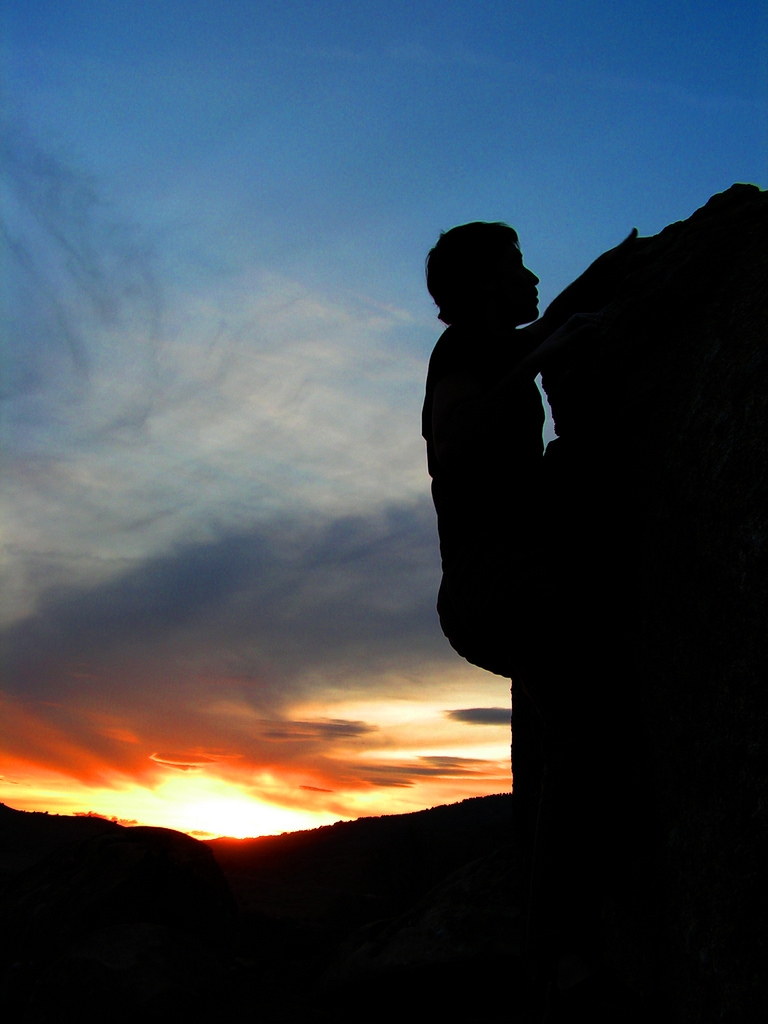
Okay, now we’re going to move to the life mountain metaphor, which I love and first talked about here. Summary: Each of us stands on the peak of our own mountain. Our closest friends are on the top of the mountain with us, then our friends, then our kind of friends, with our acquaintances at the bottom. Got it?

More is better on the mountain. Why is this true? Well, when you’re building a support system, you ideally want a lot of layers and fail-safes built in. After all, you want your support system to hold some load. You want more people because: 1. you can spread the load out over more people, 2. if life happens to some of your key support people, you have other options, and 3. when change happens (as it inevitably will), you can potentially move some of the people who are lower down the mountain up.

But it should be a good more, not a desperate more. If people are repeatedly treating you badly or if you just don’t get along well with them, they probably shouldn’t be on your mountain at all, or else be at the very bottom.

It takes time. And when I say time, I mean both time to spend with these people who populate your mountain, and a longer timeframe to develop these relationships with strong foundations of mutual respect and trust. You can’t build a support system overnight.

(Exception: If you participate in an intense experience that is specifically organized to bond people, then you can become very close very fast. I tend to be slightly suspicious of this though because you’re away from your regular life and often a lot of possibly important information and context is omitted. Not that I don’t think this can’t work, but I’d use caution.)

Learn to be okay with rejection. Learn to walk away. Not all people you invite to various tiers of your mountain will want to be there. Usually these people won’t reject you outright; they’re more likely to be vague and/or very busy and/or noncommittal. Let them go. Some people will want to be there, and it will turn out they’re really not good for you. Let them go too. Sometimes you will want certain people to be higher up on your mountain, but no matter what you try, they never rise above a certain tier. Let them stay where they are. Find different people to bring higher. (Which, yes, takes even more time.) Do whatever you need to do to learn to be okay with all of this.

Find hubs and communities. This does speed up the meeting process a bit. Hubs are people who seem to know “everyone” and enjoy connecting people. They are often hard to get close to themselves, but they are gold to know. Communities tend to have regularly recurring events, which makes forming friendships easier. And communities often provide a form of support in and of themselves.

“Friend” everyone you meet. Especially local people. I’m a big believer in weak ties. You never know which ones might turn into actual friends. You can use Facebook to communicate with them and potentially develop the friendship. And you will receive a lot more invitations this way, and you can meet more potential friends at these events. (Yes, this is all also great for dating.)

Say yes. The more you participate, the more friends you’ll meet, the more populated your mountain will become. Say yes when you can. Say yes even if it’s a little outside your comfort zone. (Say no too, of course, for self care.)

Learn to stay in touch. A little can go a long way. The random text message. A short IM chat. A tweet, Facebook comment, or even a like. An invitation to a party or event. A bit of extra effort made for friends you like who are visiting from out-of-town, if possible. Or even (cough) a blog, so people feel they have some idea what’s going on with you.

You have to be the one to reach out first. Yeah, I know, this is totally unfair, but also the most effective. People are busy and used to their own routines. You have to be the one to show interest, to extend that first invitation, to check in. Once the friendship is more established, this will balance out to a more equal distribution of effort (not always, but often). When it doesn’t balance out, what tends to happen is that as you fill your mountain with other people who do balance the effort, the friends who don’t will naturally move further down the mountain.

When I started, it was really hard for me to issue that first invitation. Now it seems like a completely normal thing to do. Practice pays off. It also gets easier to…

Find the “excuse” to hang out. Yes, it should be something you’d like to do, but you have to have something you’re inviting a potential new friend to do. Usually this will revolve around either participating in a common interest or talking about that interest. If it’s going to be primarily talking, it also commonly revolves around food and/or drink. I have friends that started as writing friends, theater friends, dancing friends, board game friends, movie friends, foodie friends (which can simply mean that you both love pie), etc. Over time, this might expand to encompass all kinds of subjects and activities (and might even eventually not have anything to do with how you first bonded), but at the beginning, you just need that first excuse.

For example, one of my closest friends and I met at game night. So we had board games in common. One game night he mentioned Japanese curry was one of his favorite foods. I had never had Japanese curry. He mentioned it one or two more times, and then I asked him if he’d like to go to curry with me so I could try it. And that was that: the beginning of a beautiful friendship.

Open up trial and error. At some point in the friendship, in order to move a friend up the mountain, you have to open up to them. This can be terrifying, and it’s not all in your head. It is an actual risk, and you must take it. And sometimes it will end badly. Sometimes you will realize you cannot discuss a certain subject with a certain person. Sometimes you will realize you cannot discuss anything sensitive with a certain person. Sometimes people will judge you harshly. Sometimes people will give you really obviously bad advice, very sincerely. Sometimes people will be unkind. Some of these people should not be allowed to progress to the top of the mountain.

With practice, much of this can be weeded out ahead of time. But you can never know for sure until you’ve done it. It gets a bit easier when you have other friends you trust. But when you’re starting out, well, it’s like jumping from a plane.

Recently when I did this, here is what I said: “So…we’re about to either become better friends or have an awkward moment. You game?”

He was game. We are now much better friends.

Learn what kind of support you can successfully ask for from different friends. Friends have different strengths and weaknesses. Ideally when asking for support you can play to their strengths. Some friends are great for when you’re in tears. Some friends give great romantic advice, others give great career advice. Some friends are perfect for giving you a distraction. Some friends excel at connecting you to other people. Some friends are great listeners. Some friends get you out of the house. Some friends are great for logistical issues. Some friends make great soup when you’re sick. Asking people for what they’re good at giving makes both of you happy and brings you closer together.

For example, I am horrible at being asked for rides. There are a few exceptions, but really, I’m often just no good at this. And I’m not great at non-emergency last-minute practical favors either. But I’m good in an emergency, and I’m good at listening, and I’m okay at distracting.

Finally, know this is not easy. It takes lots of time and effort. There may be setbacks, sometimes major ones. There may be discouraging days. There may be times when you need large chunks of alone time. There is nothing wrong with you if it feels like an uphill climb.

It certainly felt like an uphill climb to me. And I’m sure there will continue to be bumps and obstacles. All I can tell you is what I told myself: Yeah, maybe you’ve failed. Maybe you’ll fail again. But keep trying anyway. Take a break if you need to, but never completely give up.

This is how I got to where I am right now.

Read Full Post »
« Newer Posts - Older Posts »