Feeds:
Posts
Comments

Posts Tagged ‘positivity’

I don’t really like pain, and I don’t like to feel uncomfortable. Sometimes I daydream about my ideal life, when I have fixed all my problems, have everything I want, and am exactly where I want to be in my career.I will never achieve that ideal life. And thank goodness, because if I did I’d be bored stiff…in which case I would have a problem, wouldn’t I?

Seth Godin published an insightful post last week entitled “Trading in your pain,” in which he outlines two common problems we can have due to our relationship with pain.

The first is the “if only” syndrome. We think if only something (fill in the blank) happens, then everything will be great and we won’t feel pain/discomfort/ uncertainty anymore. If only I meet the right person. If only I buy the right house. If only I remodel. If only I get an agent. If only I sell my first novel. If only my sales figures exceed a certain golden number. If only I win this award or make that bestseller list. If only I get this promotion. If only I was better or had more or …

That’s not generally the way things work, though. Whatever “if only” you’re hoping for (and I’m holding out for several myself), even if it happens, it will open the way to new challenges, new problems, new if only’s, and new pain as you strive. That’s okay. It doesn’t mean you’re not doing well. It doesn’t mean you’re not good enough. It’s just life.

The second is the “fear of change” syndrome. We sometimes become comfortable with a certain flavor of pain or discomfort, and we hold onto it really tightly so we won’t have to deal with another, unknown flavor instead. We become frozen. Stagnant. Afraid of success and the new problems success will bring us. Afraid of a different failure mode and how that will make us feel.

Behind the GateWriters who don’t write are having this second problem. They are used to dealing with the failure mode of “I suck because I’m not writing” and don’t want to address whatever issues might come up if they actually did write: “I suck because I’m not selling” or “I suck because I’m not selling enough” or “I suck because now I have to make business decisions” or whatever.

But I see this problem everywhere, not just in writers. We make ourselves at home with a certain problem, and settle in for keeps. And in the process, we get stuck. We can’t move on; we can’t grow.

Our identity and our personal narrative become entwined with our pain. I’m the girl whose mother died when I was only nineteen. That’s not who I am anymore. It is, however, who I could have been. It is who I was for a period of years. And then I let go and moved on. Instead I’m the girl who loved her mother very much.

Pain can be your friend. It will be lurking nearby for your entire life, and that’s okay. It means you’re alive, and it reminds you that you care what happens. It can push you forward instead of holding you still. It can give you focus instead of causing you to scatter. It can make our priorities clear to us.

If you could shed one “if only” or do one thing that makes you frightened, what would it be?

Read Full Post »

‘Tis the season to notice gratitude, and several of the blogs I read have been recently doing just that. John Scalzi started it off with his Thanksgiving Advent Calendar (the first post of which, incidentally, makes a nice companion piece to my own post on not drinking). My friend Marie Brennan decided to follow his lead and do a month-long thankfulness project as well (and by the by, also wrote this very Amy-approved post, if you’re looking for more reading). James Van Pelt chimed in with some gratitude of his ownjust yesterday.I’ve been really enjoying reading these posts. It’s so refreshing to get a little dose of positivity every day as these writers think about the various aspects of their lives that increase their quality of existence. After all, I’m never one to shy away from optimism, and one component of that is to appreciate what you already have. So here’s my list of random happy things in honor of Thanksgiving:1. A variety of fresh fruit and vegetables: Because in the past, you could usually only eat what was locally grown. Granted, I live in California, where many fruits and vegetables can be locally grown, but I’m still grateful for this.

2. Living in the United States: Okay, it’s true that the right of habeas corpus referenced in the Constitution seems to be on a permanent holiday, and apparently we’re not allowed to protest peacefully anymore either. But even though there are a lot of things I think need to be fixed, that doesn’t change the fact that I enjoy many benefits from living in the United States. My standard of living is higher than it would be in many, many other countries; I have access to useful infrastructure; and I don’t generally have to worry about my country being obliterated in the near future. These are benefits that I very much appreciate.

3. Corrective Vision Technology: Without any technological assistance, I am very, very nearsighted and couldn’t function normally in the world. Not only do I have access to glasses with light-weight lenses that don’t make me look at the world through Coke bottle glass, but if they break I can get them fixed locally and promptly. Plus, if I get sick of them, I can opt for contact lenses that aren’t painful like the old ones used to be or get corrective eye surgery. Yay for being able to see!

4. The Internet: My life would not be nearly as rich without the increased access the internet has given me, both to a wide variety of people and to a huge collection of data. When I was a kid, if I wanted to know something I’d look it up in our set of World Book encyclopedias and hope there was a relevant entry; if there wasn’t, I’d have to make a trip to the library or just settle for not knowing. Can you imagine settling for not knowing anymore? I can’t. And if you wanted to stay in touch with someone who didn’t live in your town, you wrote letters…which meant you couldn’t stay in touch with a very large number of people. Nowadays that’s gotten a lot easier.

5. My blog: For as long as I can remember, I’ve had a lot to say. However, if you meet me in person, you might not realize this is true, because I have this ingrained habit of asking questions and listening…which means I don’t always get around to the saying what’s on my mind part. Getting to share what’s going on up there in my head with you all is a great privilege…and a significant pleasure.

6. My car: This one is a little embarrassing. I had to replace my car early this year, and I’ve been surprised at how much I appreciate the new one. Sometimes it’s the little things: I push the ignition button and it ACTUALLY STARTS. Every single time, even. Wow, do I feel grateful to not have to worry about getting from point A to point B anymore. (P.S. The seat warmers don’t hurt either.)

7. Libraries: Until the last few years, buying a book (and probably a Mass Market paperback, at that) was an extremely big deal for me. The rest of the time, I supported my reading habit by frequenting my local library. I can’t imagine what I would have done my whole life without libraries, and I’m incredibly grateful that I was given the means to live the kind of literary life that would have otherwise been outside of my grasp.

8. My family: I know I sound like a broken record, but my husband and my dog probably make the biggest difference in my life on a day-to-day level. They make the good days better and the bad days not quite as grim. Any list of happy things doesn’t feel quite complete without mentioning them.

Please tell me a few of your own happy appreciative things, or write your own post and make sure to tell me about it!

I hope you all have a very happy Thanksgiving! I’m taking next week off from blogging for the holiday, so I’ll see you again the week after next.

Read Full Post »

I’ve recently stumbled over a conversation in SF circles about the dearth of positive written science fiction, in spite of the demand for such stories from readers. Not that this is a brand new conversation in the genre; while attending my first Worldcon in Montreal back in 2009, I met Jetse de Vries, who was in the process of pitching the idea of his anthology of near-future optimistic science fiction stories.

I don’t seek to disagree with the argument in favor of positive stories but instead to offer a more nuanced view. I think there is plenty of room within science fiction for optimism and stories of a basically positive nature. I also emphatically agree that the demand for such stories is high; we have but to look at Analog, which has the highest circulation numbers of the Big 3 science fiction magazines and the most prominent focus on more upbeat endings for stories, to see the popularity of positivity. And if we take a peek at novel-length science fiction, we see many of the genre’s favorite writers who take a generally positive tone (or at the very least, not excessively bleak): Connie Willis, Lois McMaster Bujold, and John Scalzi come to mind, as do Charles Stross and Robert Sawyer, all authors who have been nominated for Hugos in the novel category in recent years. Indeed, my husband and I have often wondered if the recent upsurge of the steampunk subgenre is related to a general desire for nostalgia and shiny adventure stories decked out with amazing flashing gadgets and mad science.

On the other hand, I would be disappointed to see the hunger for positive stories lead to less ambiguity in modern science fiction and fantasy. Bryan Thomas Schmidt says he misses old-fashioned stories “where good people fought for good causes and came out ahead, making for a better world.” He argues that the wildly popular Song of Ice and Fire books by George RR Martin are gritty but feature “admirable heroes who fight against evil for good.” Perhaps it’s been too long since I’ve read these books, but I don’t remember any admirable heroes–what I remember are flawed human beings who make a lot of mistakes and get caught up in the throes of power in various interesting ways. While some characters are worse than others and there are exceptions (Jon Snow comes to mind as being more noble than most of the characters, and also one of my least favorite, although as I’ve said, it’s been a while), the reason I enjoy those books is because of the ambiguity, not the noble heroes…an ambiguity that equates more with how I view our own world. In fact, I have a problem reading many fantasy novels that have the obviously good guys (constructed of cardboard) fighting the obviously evil forces of darkness (made of a lesser grade of cardboard). I don’t object to novels where good people win in the end, but paint the villain too evil or the hero too saintly and good and the story loses a lot of its tension for me.

Meanwhile, my colleague Brad Torgersen states, “Yet a good deal of written sci-fi adores the “downer” ending, the anti-hero, the morally ambiguous and ultimately meaningless stories…” While you all know I love a good comfort read, I don’t find all science fiction that isn’t optimistic and upbeat to be meaningless, and I think describing dystopias and darker science fiction in such terms is doing the genre a disservice. Sometimes people fail. Sometimes moral questions have more than one answer depending on a person’s point of view. Sometimes downer endings and ambiguous stories show us more about ourselves and what we hold to be important.

Speaking as a reader, I didn’t discover science fiction through the optimistic Golden Age of science fiction. I didn’t read Asimov’s short story gems or Heinlein’s romping juveniles as an adolescent. My gateway drug, at age 11 or 12, was Ender’s Game, by Orson Scott Card, a novel I would not classify as particularly lighthearted. Sure, we get the fun zero-G and gaming bits, but we also get a faceful of child brutality, emotional isolation, and the morality of war and genocide (or xenocide, in this case). We follow our protagonist into dark places, and ultimately it is his nearness to perfection that damns him. I fell in love with science fiction not because of its ability to uplift (although nothing to sneer at) but because of its penchant for dealing with difficult questions of humanity.

Granted, Ender’s Game does end on a hopeful note. I find that overall, I prefer reading novels that do have some sort of hopeful or positive note at the end (although there are exceptions, 1984 being the first to come to mind). I don’t need a crystal-clear happy ending, mind you; I enjoy goals achieved but at a high price, or goals achieved that the protagonist then realizes weren’t what she wanted. I enjoy the bittersweet. But I do like some kind of positive salve to end with. Short stories, though, are a different beast altogether for me. They can end in an extremely dark place, they can devastate me and make me cry, and often I’ll like them better for it. I don’t tend to feel despair from a sad ending as much as I feel empathy and an increased understanding of the more painful aspects of being human. The more positive, romping short stories often (although again, not always) lose my interest as they don’t always seem to be about anything in particular, and they more often fail to make me think about things in a different way.

So my complaint of some positive stories is that they are not sufficiently challenging to satisfy me, while my colleagues’ complaint of some dark stories is that they’re depressing and overly pessimistic. All of this makes me suspect that the problem may not be nihilism so much as differing tastes of the reader. Some readers like happy stories; some readers like dark stories. Some readers like a nice variety. Readers will be depressed by different things, readers are looking for different experiences, and readers find meaning filtered through their own perspectives. Perhaps we have an imbalance of dark short sf fiction (in novel-length, I’m not seeing it as much), and if more writers begin to explore optimistic ideas in short form, I won’t be sad. But I’m also very glad there’s a place for experimenting with darkness, exploring the ugly parts of humanity, and shining a light onto those things we most fear.

Your turn to weigh in! Would you like to see more positive science fiction stories? What are your reading preferences (or writing preferences, for that matter)? Anything you’d like to add?

Read Full Post »
It’s really hard for me to write about aging. Hard enough that I’ve been procrastinating on the internet and thinking through what I want to say and then tearing it to shreds before I type a single word–not because it’s so bad, but because I’m trying to avoid writing about it. Which of course, given my obstinate nature, means that now I really have to.

Our culture gives aging a very bad rap. I mean, we live in a world in which it doesn’t sound completely unusual for someone to say that the best years of life were in high school, or college, and once you turn twenty-five, it’s all downhill from there. Whenever I hear that kind of thinking, I want to scream. I mean, sure, there were some good moments in high school, and college was a special time for me, but really? That’s as good as it gets? Fumbling around in the dark being confused and angsty and not understanding what was going on half the time is supposed to be the high point of my life? No, thanks.

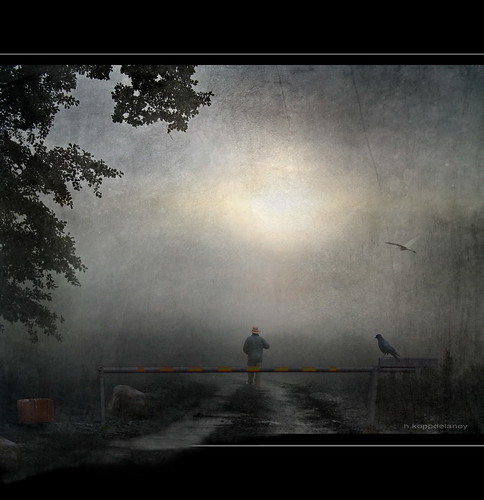
Photo by ezioman on Flickr

I’ve been thinking about aging a lot after that whole tooth debacle, which awakened me to the profound idea that I probably won’t keep all my teeth for my whole life. I know, I know, who hasn’t heard of dentures, but it shook me up all the same. And then I’ve been having all these bizarre health problems, and they make me feel old. For the record, none of these health problems are age-related. Let me repeat that. NONE of them are age-related. But it’s easy to slip into the sloppy thinking that maybe they are.

But really, what makes me think about aging is my epidemic of white hairs. I know, how superficial, right? My mother went gray at a fairly young age, and I remember kids thinking she must be a grandmother because of her hair…when she was around FORTY. Ever since that time I have associated gray hair with looking old, so I am ridiculously disturbed whenever a white hair intrudes upon my notice. It screams out at me with its little crispy voice, “Aha! You see me? You can’t even pretend to be in your twenties anymore. And your life might already be half over.”

I am choosing to reveal my neuroticism about aging (and I’m sure I’m not alone in how I feel) because it is all in my head. Yay society for helping me out with that, but ultimately I can choose for myself how I feel about aging. And what I choose will affect the rest of my life, quite literally. This study showed that people who thought about how aging might be affecting them performed worse on memory performance tests. So how I think about myself as I age will determine what I am able to achieve. Suddenly, developing a healthy relationship with aging seems a whole lot more important.

We tend to focus on the negative impacts of aging, but what about the many positive ones? I’ve become a much more developed singer and musician than I used to be, and I have the same maturation of my writing to look forward to in the future. I know and understand myself a lot better than I used to, which greatly improves the quality of my life. I am happier. I know more things and have more skills. I have perspective and experience, and I look forward to gaining more of both. I have more trust in myself.

Aimee Mann recently gave an interview all about aging (imagine, a famous musician actually daring to talk about her age!), and she said:

So that’s what aging probably means. You’ve got to be around long enough to try all the dumb stuff and then get sick of it and then kind of reach the conclusion of, look, I don’t care if this is cool or sounds cool, I want a life that works now, because I want to be creative, and it’s not being creative to be obsessed, anxious, depressed, trying to control other people, trying to control circumstances, and flipping out when stuff doesn’t go your way. But that’s what most people are. And you know, I don’t need to make cool my higher power. Cool doesn’t work.

Yes. I want to be creative in a way that works. And the closer aging can bring me to that, the more valuable it becomes.

Fundamentally, all of us will either age or we’ll die. Given my choice, I’d pick aging any day.

So, anyone else ever feel neurotic about aging? Got anything you are particularly looking forward to as you age, or have you already experienced some positive benefits? Please share.

Read Full Post »

Last week when I was schmoozing away at the SCBWI conference, I told my friend how much I love my blog. “I don’t know if it builds my audience or will help my career in any tangible way,” I said (paraphrasing alert!), “but I don’t really care. I love writing for my blog. It’s an important part of my life as a writer.”

My friend responded that she hardly ever heard those sentiments. The conversation moved on, but what I think she meant was that so many people don’t like to blog. They complain about blogging. They wonder if they can get away without blogging. Blogging is a duty, another item on the to-do list.

I don’t think it’s worth it. I read a lot of blogs, and I can tell which bloggers love it. It shines through in their posts. I begin to feel like I know them, even though I’ve never met most of them. They are often so passionate about blogging that they can’t help talking about it every so often, just like I’m doing right now. Their blogs ring with passion, with thought, and with genuine interest in their readers. These are the blogs I miss when I’m away from the internet.

I question whether that sort of commitment can be faked. I’ve been hearing a lot in the past year about the craving we as a society have right now for authenticity, to the point that it has become something of a buzz word among certain circles. But jargon or no, I think it’s relevant to the conversation. We can tell when someone cares deeply about what they’re saying or doing, and their authenticity draws us in.

We can talk about how much we love blogging all we want, but it is our actions that show  whether we’re being genuine. Do we post regularly or do we tend to find excuses to avoid it? Do we write about subjects that we obviously care deeply about? Do we engage in the comment section with thoughtful discussion? Do we approach the writing of a blog post as though it is one of the most important things we could be doing right now?

For those who don’t enjoy blogging, there are plenty of other ways to engage with others. Happily we live in a time rife with choices: Twitter, Facebook (and Facebook pages), Google+, podcasts, Goodreads, etc. If there’s one of these platforms that we connect with better than the others, that ease will reflect itself in our interactions.

I hate the thought of the dutiful yet miserable blogger. Of course, even the most passionate blogger will have his off days or her moments when the words just don’t flow. Sometimes I’d prefer to mess around on the internet instead of writing the next essay, or ideas fail me and I don’t know what to write about. But ultimately I’m working out of a sense of love, not duty. I remember how much blogging gives to me and I push through the laziness and the lack of inspiration.

I think we find authenticity when we do what we love.

Read Full Post »

Accidental Influence

Today is a frazzled sort of day. I’m leaving tomorrow (perhaps even as you’re reading this) to attend SCBWI’s summer conference, and the day before travel, even relatively easy travel, generally features me heatedly checking off to do lists and worrying that I won’t have time to complete everything. I have more travel coming up as well, so if I seem a bit less substantive or even (gasp!) miss a Tuesday or Thursday during the next few weeks, that is why. I am having trouble cohering because I keep getting distracted by the fact that my new “I have mutant teeth” sensitive toothpaste is too big to pass through security, or that I have to remember to pack my battered copy of The Phantom Tollbooth.

In between these logistical reminders to myself, I’ve been thinking a lot about influence–specifically on the influence we have over other people. Some influence we take for granted; if I were to tell you that my husband and I are huge influences on each other, I doubt you would be surprised. But when I think back over my life so far, I can come up with a list of names of people who have had a strong impact on me. Not all of them are related to me. Not all of them did I ever get to know well. Not all of them am I still in touch with today.

Some of these people have no idea of the role they played in my life. They may not even remember me. They are like stealth actors who dropped in to teach me something I really needed to know or show me another way of living before moving on. Some of them even died before I was born.

This is useful to remember when contemplating creating a life that allows us to teach, influence, change the world, increase awareness. We never know who we might reach. We never know when we might say the exactly right thing that gives another person an “aha!” moment. Sometimes we won’t learn of our own impact until years after the fact, or perhaps not even then. Many times we’ll have accidental influence–we’ll have no idea that someone will have taken our casually spoken words to heart. We won’t realize that by hearing about our lives, someone else will decide to do things differently. We just can’t always know. But the not knowing doesn’t mean it isn’t happening.

We all yield influence, whether we’re aware of it or not. So the question becomes not if, but rather what we want our contribution to be. And since we can’t always be aware of it when it’s happening, an even bigger question is this: how do we live our own lives in such a way that we can maximize our positive influence? I don’t know if I have a complete answer to that question yet, but it’s something I plan to think about in the upcoming weeks.

In the meantime, I feel a deep sense of gratitude to the people on my list, both because of what they taught me and because they’ve helped me realize how important every individual can be.

Read Full Post »

It is at times like these that I wish I had a book or movie review blog, or a recipe blog (ha! good one, Amy), or maybe even a tech blog. Then I could write up a topical essay instead of writing about what I’m about to write about. I could satisfy my current introverted yearnings and hide behind the text instead of infusing myself throughout the text. But, into the fray I go!

I want to talk about negativity, and more specifically, about how easily it spreads. Sometimes it feels like we are being hit by a constant bombardment of negativity: complaints, mean comments, subtle put-downs, defensiveness, bare naked insecurity, and reams upon reams of advice (the dreaded “shoulds”). Between our in-person social interactions and the pervasiveness of the internet, it can be hard to escape. All of this negativity becomes like white noise, this constant presence that we sometimes don’t even notice.

One problem with this negativity, aside from the obvious, is how easily it can rub off on us. Negativity is contagious. So when I’m spending time reading updates from writers who are, in various ways, freaking out about their writing in public, I will eventually start freaking out about my own writing without necessarily even realizing why. When I’m reading all this writing advice that appears to lay down rules from Heaven, even if I keep a skeptical mind, I will eventually start second-guessing my own process. If I hear enough complaints about Google+ and why would any normal person choose to use it instead of Facebook (and it’s always instead of, I notice), then I begin to worry about the long-term viability of Google+, even though I’m enjoying it a lot right now.

I get the impression that some people are able to shield themselves from this effect without much thought, but for the rest of us, it takes more care. Sometimes I have to take internet breaks. Right now I severely limit the amount of writing advice I read, especially on blogs, because I find that the advice hurts as often as it helps. I also try to avoid other writers’ word count posts. I make a mental note of the people within my acquaintance who are likely to let loose with the verbal zingers. I try to distance myself (and don’t we all have experience with that, given the amount of bad news we’re exposed to from the media alone?)

It’s a tricky line to walk. On the one hand, everyone needs to complain sometimes. And I certainly want to be supportive to my friends and colleagues. But on the other hand, if my work and/or mood is being materially affected, then something has gone wrong. Perhaps this is a side effect of living in the Information Age, when we are blasted by stronger streams of sharing than was previously possible.

But I confess that when I’m deciding what to share, I try (and granted, sometimes fail) to take this into account. It’s not that we should shy away from discussing the difficult things. Indeed, when a real discussion is taking place, I often feel more connected and less negative. Tackling difficult topics can educate, instigate change, and bring people closer together. Plus I truly believe it is rewarding to pursue authenticity and honesty when possible. But I also think it’s important to ask ourselves how we are affecting others. And if we are sharing with a large stream of people (as we so often do with social media), I think some relevant questions to ask are these: how am I contributing to these people’s lives by what I’m about to say? Am I helping to lift people up or accidentally bringing them down? Am I blasting out a burst of negativity to no purpose? It’s not that we need to represent ourselves as living under a permanent rainbow. But neither do we want to end up sharing life under a perpetual rain cloud.

As you can tell, I’m still grappling with these questions. So tell me, what do you think? How do you protect yourself from other people’s negativity? How do you decide what to share? Where is the line between being honest and spreading negativity?

Read Full Post »

Today is my birthday! I really love birthdays. I look forward to mine for months every year. And this year I’m prepared with a wider than usual selection of birthday books. So think of me lounging in the sun with one of these titles: Naamah’s Blessing, by Jacqueline Carey; The Wanting Seed, by Anthony Burgess; Flashback, by Dan Simmons (his Hyperion series is genius, by the way. Just saying.); or Bumped, by Megan McCafferty. Decisions, decisions!

To celebrate on the blog, I’m writing a birthday edition of five things that make me happy. In this case, I’m choosing five things from the last year.

1. Blog: First things first. This blog turns one year old later this week, sharing a birthday week with me. I thought that starting a serious blog sounded fun, but I had no idea how much I would enjoy it. Not only have I become a better writer as a result of blogging, but the blog gets me writing (and keeps me writing) even when pretty much nothing else can. I love having a platform to share my ideas and philosophies, and I adore that doing something so fun is part of my job. How awesome is that?

2. New Friends: When I think of all the new friends I have met in the last year, it feels almost unreal to me. To make myself even happier, I’m going to fudge and count my Taos Toolbox comrades in this number as well, even though I met them a year and a few weeks ago (although even without fudging, it’s been a truly amazing year in the friend department). I have been honored to meet and spend time with some of the most intelligent, thoughtful, kind, and interesting people this year. And I keep meeting more!

3. First Pro Sale: Yup, have to mention this, a big milestone in my writing career. I can’t wait till this story comes out, hopefully later this year!

4. Husband and Little Dog: Day in and day out, my husband and little Nala are always there for me. They celebrate my successes and they comfort me through the hard and painful times. They make it easy to be happy.

5. Becoming More Me:You guys have seen some of this here on the blog, with me writing about people pleasing and running the Backbone Project. Happily this is something that is happening even more offline than it is online. After years of plugging away at becoming more assertive, it’s finally happening! Granted, I have a lot more work to do, but I’m making fabulous progress.

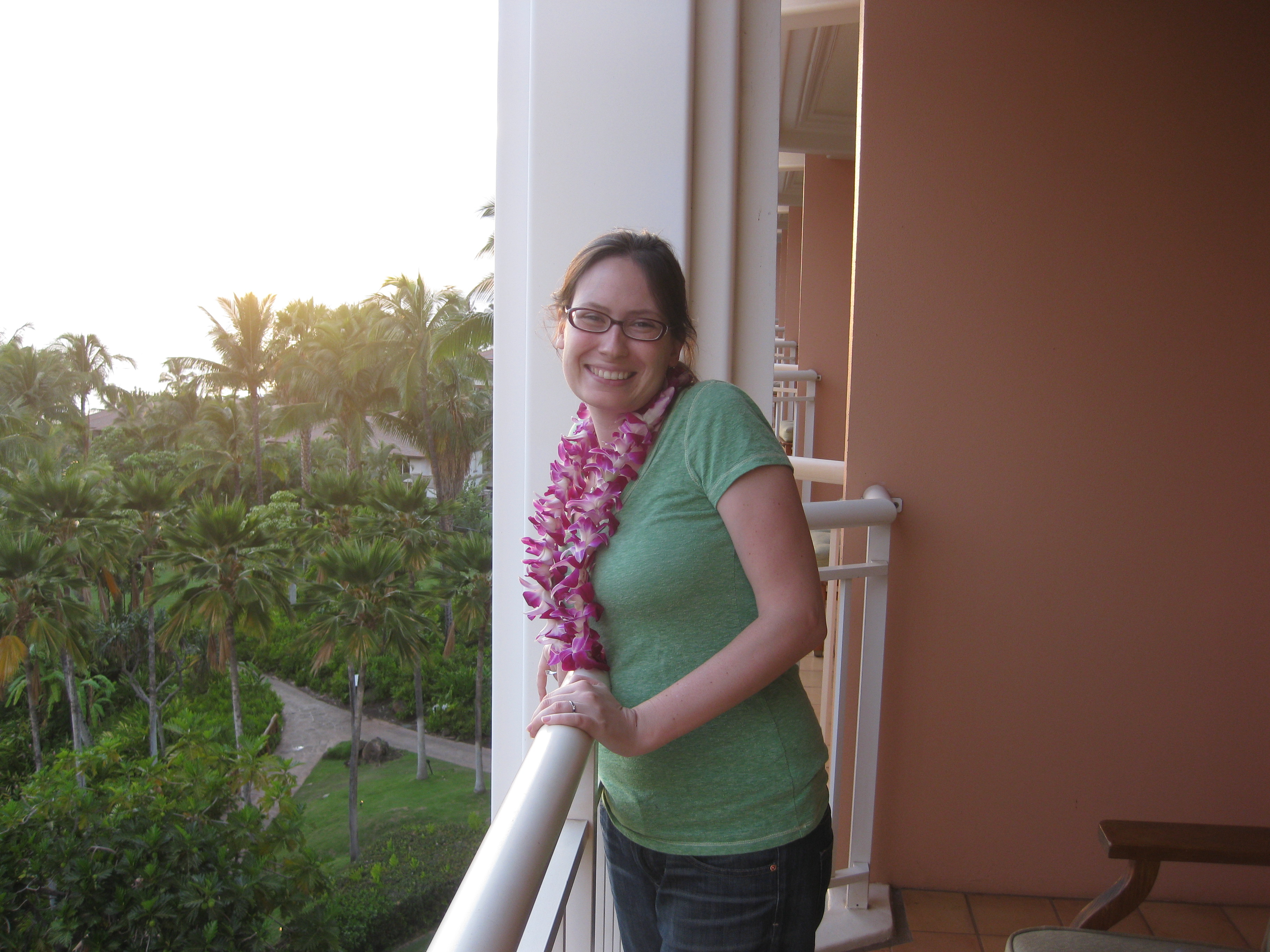
There sure are a lot of photos of me wearing a lei floating around....

So there you have it, five things that make me want to bounce up and down, wear bright colors, and sing while I brush my teeth. Here’s to another year featuring more of the same!

Read Full Post »

Many of you will remember my first backbone post in which I gave my own take on how critiques can go wrong. Now, I think that critiques can sometimes be an extremely helpful tool for writers, so I’d like to talk about my ideal critique. Before I begin, though, I’d like to emphasize that all writers are different. Thus, my idea of an ideal critique and your idea of an ideal critique may in fact be radically different. I’m not saying that my ideas are the only right ideas. There are several different styles of learning, so it follows that there are probably several helpful ways of critiquing. The trick is to figure out which one works for you. If what works for you is ignoring everything I’m about to say, more power to you!

For me, critiques are all about learning. When I’m receiving a critique, I’m doing so in order to learn more about writing and to improve my writing abilities. While it is lovely when critiques end up making my story stronger, that is not my primary motivation for seeking critiques. Instead, my goal is to continue to improve by gaining insight into what works and what doesn’t work. When I’m giving a critique, I’m doing the same thing: trying to teach the writer in question by pointing out what worked and didn’t work for me as a reader.

One thing I am not trying to learn from critiques is how to deal with rejection. I understand that others feel differently, but honestly, I get plenty of practice dealing with rejection by…getting rejected. There is no shortage of editors and agents happy to help me out in this regard, except with them, there is always at least the chance that they will instead decide to help advance my career and/or give me monies! Another thing I’m not looking for in critiques is warm and fuzzy validation that everything I write is awesome. If everything I wrote was awesome, I’d be getting warm and fuzzy validation from my fans, who would be–guess what!–paying monies to read my work. Yes, I know, again with the monies. Notice a trend?

I look at critique as a learning process between colleagues; therefore, my main focus is on how I can help the other writer, and this focus informs my delivery. My husband tells me that people get promoted into higher tiers of management partially because of their ability to deliver bad news. Delivering bad news well is hard! And yet this is, I believe, an essential skill in giving a good critique because almost every critique is going to include the bad news that our work isn’t perfect (and it might even be hanging together precariously with paper clips and duct tape).

Here are some guiding principles that I try to think about as I critique:

1. Mention the positives as well as the negatives. It is so tempting not to do this, and instead just focus on what’s broken. Sometimes, honestly, it’s hard to even think of any positives. But not only does this leave the writer more receptive to thinking about any criticism, it also shows the writer what she’s doing right, what she shouldn’t mess with, and what her strengths are (that she can showcase and allow to shine in future work).
2. Discuss what doesn’t work in a matter-of-fact and positive manner. Example A: “I can’t believe you used all those adverbs. There were just adverbs adverbs adverbs flying all over the place. Get rid of those goddamned adverbs, okay? It was just so bad how you used all those adverbs.” Example B: “I noticed you used a lot of adverbs. I’d suggest going back through and deciding which of them you actually need.” Example A makes people feel bad and stupid and discourages experimentation. But if you’re not experimenting as a writer and taking risks, how are you ever going to get better? (Note I am not actually advocating vast amounts of experimentation with adverbs in particular.) Example B or something similar is what I prefer.
3. State your points in a clear and concise manner. So often I hear people speak at length about one point of criticism that they could have easily expressed in a few sentences. In a verbal critique, using loads of examples to make your point is not required. Instead, mark them on the hard copy of the manuscript or in track changes, and summarize when you’re speaking. The writer can always ask questions later if something is not clear.
4. Use ditto freely. Another thing I hear a lot is several critiquers waxing long about the same point, one after the other. There is no need to do this. Instead, just say, “I ditto Katherine that the beginning seemed slow” and move on. My Taos crew were experts at doing just this, and it was amazing how much it sped critiques along…as did the two-minute time limit per person.
5. Decide what key points you wish to make verbally ahead of time. Prepare for the critique as you would for a lesson. (Can you see my teacher background here?) Consider typing up a summary sheet of your critique that you can give to the writer afterwards. I know a few writers who are masterful at doing this, and I always look forward to receiving critiques from them.
6. Help the writer by talking about their story, not yours. We all have the types of stories we like to read, and the types of stories we like to write. These types might not be the same for other writers! (I know, it’s shocking, but there it is.) Give feedback and suggestions while keeping in touch with the story you think the writer was trying to tell instead of figuring out what story you would be telling. The second rarely provides a useful learning experience since it mostly just reflects your own personal taste.
7. Critique with an eye towards making clear the promise and/or vision of the story. Benjamin Rosenbaum said something very intelligent in the comments of my critique backbone post. “I think detailed, specific positive critiques — not just cheerleading, but analysis of what worked — are actually more useful than negative ones which focus on what’s not working. Both are useful, but in the end you want to revise towards a vision, not away from problems. Doing the latter will result in a dead story — all rough corners smoothed away, with what’s left being something no one would object to, but no one is excited about either.” What he said. If we as critiquers can help the writer hone his vision, then we’ll leave him excited, both to potentially revise this story and to write in general.
8. Be encouraging. There is no reason for a writer to leave a critique feeling like a swollen and bloody rat. Honestly, I don’t care how bad the piece might have been. If a writer is regularly working and improving, there is something to be encouraging about, whatever the flaws. I’m not saying to lie and say this was the best story you’ve ever read, but a few kind words acknowledging that the writer has worked hard can go a long way. No, editors and agents won’t usually give these words. That’s why it’s even more important that they be given by supportive colleagues.

Of course, this list covers my ideal critique. In practice, I often fall short in execution, but it is what I strive for. I have been lucky enough to receive many fine critiques that have taught me both how to be a better writer and how to critique with an eye towards helping a writer learn instead of tearing them down.

What is your ideal critique? What are your guiding principles when you’re preparing a critique? What about giving a critique do you find the most difficult? Let me know!

Read Full Post »

My husband found this really fascinating paper entitled “If Money Doesn’t Make You Happy Then You Probably Aren’t Spending It Right.” Since I recently visited the topic of the connection between money and happiness here on this blog, I simply had to devour the entire article. It is, however, quite long, so I am going to choose a few salient points to discuss here.

Photo by Michael Porter

First off, the article says that people with more money aren’t that much happier than people with less, but that they are generally more satisfied. I found this distinction interesting because on first thought, I wouldn’t have thought the two states were really so different. But of course they are. We can have all the stuff we want, we can have the funds to take trips around the world, eat fancy food, and afford other experiences we desire, and be very satisfied that we can do and have all of this. It doesn’t follow, however, that this satisfaction will result in increased happiness, hence the stereotype of the poor little rich girl who has everything money can buy and yet is completely miserable. There are serious problems that have nothing to do with money.

Apparently happiness also depends a lot on our past and future relationship with a given expenditure. Anticipation greatly increases happiness, sometimes more than the actual purchase or experience. I’m going to climb out on a limb here and suggest this has something to do with positive reinforcement, ie I’m excited about my trip to Ashland, I’m thinking about it with excitement, and therefore I’m more likely to approach other aspects of my life in a positive way, which creates a happiness feedback loop. I can definitely experience a stress feedback loop (I’ll be feeling lots of stress and therefore everything seems more overwhelming, even things that would normally be no big deal, creating more stress, etc.), so why not a happiness one as well?

Fond memories of an expenditure will also increase overall happiness, which offers one explanation for why people love to show photos from their past travels and happy occasions. For example, I have wedding pictures and presents scattered throughout my living room that regularly remind me of that event. This is one reason experiences tend to trump material items in the happy-making: we’re more likely to think back to an amazing experience than to an item (to which we have grown more accustomed).

Another point the article brings up is the power of the little things to affect our happiness. The authors suggest making many small purchases instead of a few big purchases. I don’t completely agree with this point because, as we just discussed, often big purchases (trips, weddings, etc.) cause more anticipation and memory, both because we’re excited about them and because it takes longer to save up for a big purchase, increasing the anticipation even further. But scattering smaller purchases throughout our lives (a special coffee drink, a new favorite song or piece of sheet music, a massage, going to a movie) keeps us savoring the texture of life while offering much-needed variety. Of course, appreciating the small things affects happiness whether money is being spent or not, which is part of the beauty of it.

Ultimately what this article leads me to think is something I like to say anyway; namely, that we can contribute to our own happiness through learned strategies, introspection about our priorities, and being present to enjoy both the everyday moments of happiness and the rare, large thunderclaps of happy. Money takes away worries, but it doesn’t automatically bring happiness in their stead. That is something we have to do for ourselves.

What is something little that has made you happy today? For me, I’m wearing a scarf in this fabulous shade of purple that my husband bought for me on our trip to London last year and gave me for Christmas. So I have a warm neck, and every time I look down, I think, “What a great color. What a great husband. What a great trip. Christmas!”

Read Full Post »

« Newer Posts - Older Posts »