Feeds:
Posts
Comments

Posts Tagged ‘Amy Sundberg’

Sometimes my world feels very small.

I’ve been spending a lot of time in my house for the last three months, waiting for my foot to heal. The truth is, I usually spend a lot of time in my house, but there’s a difference between doing it by choice and doing it by necessity. When staying in by necessity, the entire structure seems to shrink and squeeze, and free time that would normally seem pleasant and relaxing slows down into something resembling tedium.

And then there’s the physical energy that has no real outlet, leaving my mind restless. I’m ready for action that my body cannot perform.

The most critical part of this kind of long-term healing isn’t the regularity of icing, or elevating, or taking Ibuprofen. It’s mood management. It’s keeping the spirits up so I don’t fall into a funk or give up in despair or become deeply depressed. It’s focusing on what I can do instead of what I can’t do. It’s dealing with the stress of constantly having to ask for help, and then doing without the help I can’t bring myself to ask for. And it’s letting go of the times when I make my physical limitations known and people ignore them and I wonder how many more days of healing this has added to the final recovery.

It’s also cherishing the moments when people help me take care of myself. When people sit down to talk to me instead of making snide comments about how sitting is bad for your health. When people give up a chair for me. When they go out of their way to drop me off right in front of our destination so I don’t have to walk as far. When they slow down their pace to match mine. When they think of an activity I can do to alleviate the sameness of my days.

We don’t talk much about what it’s like to have a slow-healing or chronic injury, do we? After all, I don’t want to be defined by my limitations. Even as I type this, I’m thinking about how there’s going to be somebody out there who thinks I’m whining or how so many other people are worse off (problem comparing for the win!) or who just isn’t going to get it. Because somehow whining has become equivalent to talking about things that are hard. So then we just don’t talk about it; it’s easier to be silent.

But this is my reality. And it feels a little strange not to talk about it.

What really helps with mood management is reminding myself that, however small my world might feel right now, it is actually big and rich and varied and dynamic. Sometimes I do this by imagining what I’d like to do in the future: travel to China, go to the Walt Disney Museum and the Academy of Sciences, go walk by the ocean, travel to London, travel to Morocco, travel travel travel. Make it to the park with my dog, even though it is a very, very long block away.
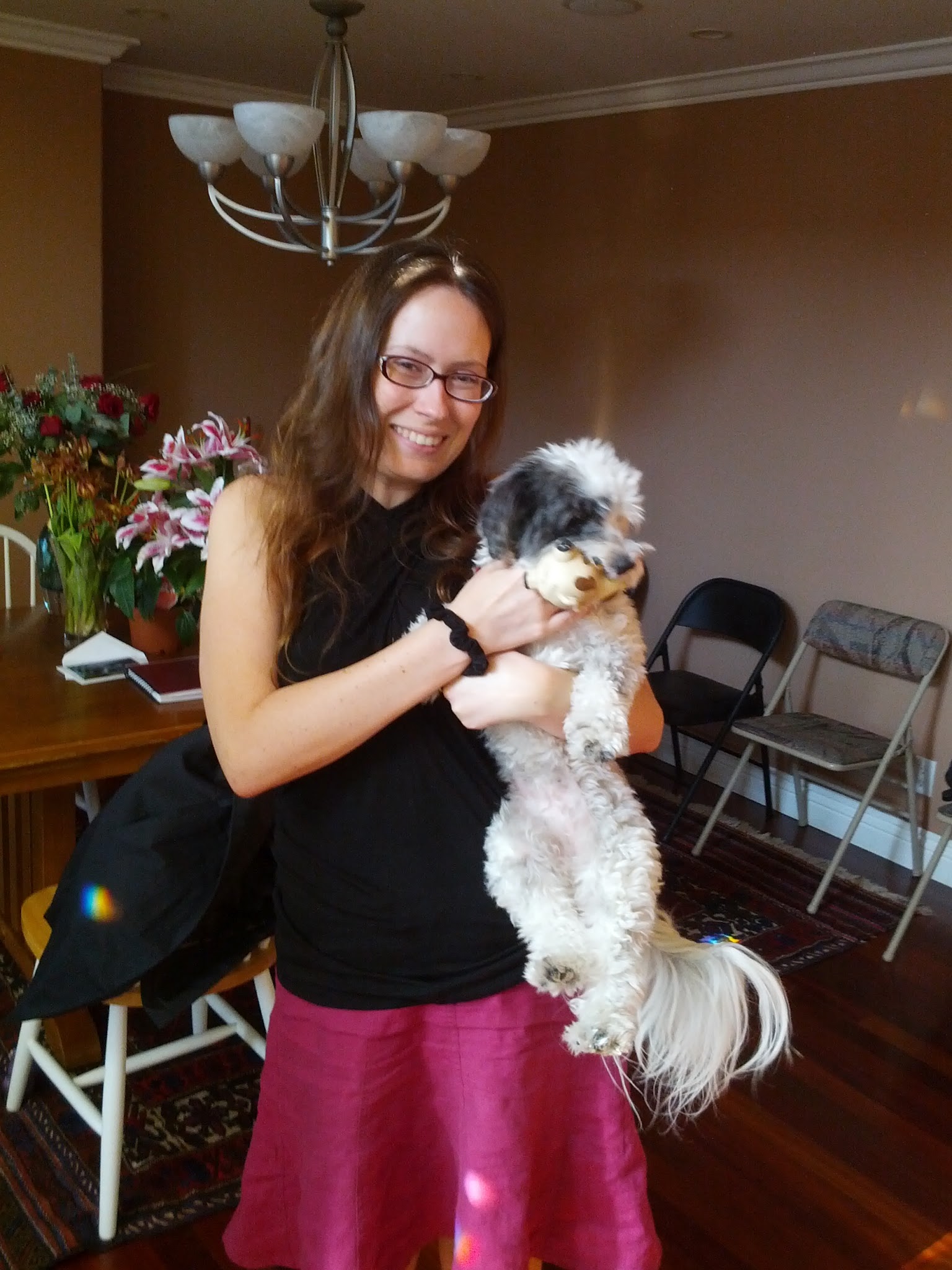
Little dogs are also very helpful for mood management. 🙂

Sometimes, though, thinking about the future doesn’t help because it feels like I’m never going to get there. So then I think about how I can enrich my life right now. I romanticize the idea of living a life of the mind. I take adventures and learn what it’s like to be other people through fiction: books, movies, TV shows. I write. I read about economics or neuroscience or Mars or feminism. I sing. I learn how to play new games. I enter into interesting conversations. I feel grateful for all the interesting people in the world who help to keep me entertained and engaged.

What about you? What do you do to manage your mood when times are tough? Have you ever experienced an illness or injury that you had to overcome? I’d love to hear your stories.

Read Full Post »

All people are the same, and all people are different.

I think sometimes we tend to get into trouble when we forget one (or both) of these statements. Holding both of these ideas in mind at the same time definitely exercises our ability to doublethink, but they are not as mutually exclusive as they might first sound.

Photo by Leo Reynolds

All people are the same.

We are born, we grow older, we die. We get hungry, tired, hot and cold. We feel pain, both physical and emotional.

We want. We want to be loved, we want to obtain safety. We want to stop feeling scared and uncomfortable. We want meaning, whether that be through myth, religion, stories, or science. (Or all of the above.) Some of us want stuff, some of us want intangibles, but most of us want something. And what we think we want and what we actually want is only sometimes the same.

All people are different.

We come from different backgrounds, geographical locations, religious beliefs. We have different bodies, different skin colors, different hair, and different health problems. We have different eccentricities, idiosyncracies, passions, likes and dislikes, loves and hates. We’re skilled and unskilled at different things. Our brains don’t all work exactly the same way either.

We have different memories, even of the same event. We have different ways of communicating. We have different opinions, different eating habits, different ways of conducting relationships. We have different needs and different desires and different ways of expressing ourselves. We have different tastes in style and pets and child-rearing and financial management and music and transportation.

We have different stories, different baggage, and different wounds. All of which lead to different life choices, some of which work for us and some of which don’t.

We are simultaneously the same and different.

When we forget we are the same, we may feel alienated or isolated. We may turn another person or group of people into the Other. We may think we’re better than everyone else, or that we’re not worth the air we’re breathing.

When we forget we are different, we may impose our own life choices on other people. We may become visibly judgmental. We may make inaccurate assumptions and stifle other people’s voices. We may forget there are other points of view.

There is a universality to the human experience, but the details are always different–sometimes very different and sometimes only a little different. We try to understand each other with mixed success. And we forget the following important truth.

You are not me. But we are both human together.


Read Full Post »

We don’t always live in a way that’s consistent with the things we know to be true.

I wrote this sentence on Monday when I was writing Tuesday’s blog post about making yourself a priority. It was the best sentence I wrote that day, but it didn’t fit the post, so I set it aside to use today instead. Take a minute and think about it.

We don’t always live in a way that’s consistent with the things we know to be true.

There are all kinds of reasons for this, of course. Maybe we’re being socially pressured to conform or live in a certain way. Maybe the truth is too painful to deal with. Maybe the truth calls into question our core beliefs, values, and what we hold dear. Maybe it has become so obscured we’re not even sure what it is. Maybe we’ve decided to bury the truth because it seemed necessary or because we were trying to be kind or because that was the only way we could see to move forward.

Life is messy, and sometimes truth and reality become misaligned.

I offer no judgments here. We’ve all done this, we’ll all probably do it again, and perhaps we’re doing it right now. We do it because we receive some kind of value in return. Something that we might really need.

But such a disconnect can also become malignant. It can worm its way inside of you, insatiable and bold, and it can hollow you out into an echoing emptiness. It can silence your voice. It can dull your vision. It can leave you in a dizzying state of confusion.

There is power to be found in the place where truth and reality intersect. The kind of power that creatives tap into to create the art that grabs you by the shoulders, kicks you in the gut, and never lets go. The kind of power for you as an individual to use to create a life story filled with meaning. It is not always a comfortable place, this intersection, but it is healing and challenging and ultimately uplifting.

This meeting place, where you live your truth, is where you can be the most authentic you. That you may not always be perfect or nice or happy or popular or responsible.

But that you is so blindingly beautiful all the same.

Read Full Post »

I just got back from L.A. and the annual SCBWI summer writing conference. I got to spend a lot of time with some truly incredible human beings, I got to hear Matthew Kirby be intelligent (if you ever have the opportunity to hear him talk, go!), I got to be inspired and fired up and reminded of a critical component of my own identity.

But I’m going to talk about something that was said at the conference that I disagree with. One of the keynotes given was “The Power of Quiet,” presented by Deborah Underwood. It was a good talk about, among other things, creativity, recent neuroscience research, the usefulness of daydreaming, and the importance of allowing for quiet time in our lives. But… Towards the end, Ms. Underwood basically said (and I’m paraphrasing here) that we don’t owe it to ourselves to make time for quiet, but rather that we owe it to the children who will read our books.

[Insert appropriate noise of pain and frustration here.]

Then today I was linked to an article by Amanda Craig in which she says, “Yet putting yourself last is one of the best things that can happen to a writer.” (This article, by the way, is a great way of inducing rage in yourself as it is one of the more misogynistic and offensive pieces of writing I’ve seen. Happily the commenters seem to agree with me, which does help prop up my hope for humanity.)

Both of these examples reference writers in particular, but I see this idea of selflessness, self sacrifice, and the deprioritization of self care all over the place. Our society propagates it, and while it is a popular idea, it can also be quite harmful. It is tempting to link it to our society’s issues with gender and the role of the female as the nurturing caregiver who puts everyone in front of herself, but actually I believe it’s a universal message that simply sometimes differs in presentation depending on gender.

This is not an idea I can support. Yes, it is good to be kind and treat each other well. It is good to help others. It is good to fulfill your responsibilities. Sometimes you have to compromise or put other people’s needs ahead of your own, particularly if you have children. Sometimes you have to juggle priorities and put important personal ones on the back burner for a while. Life happens.

But having needs is not only okay, it’s human. We all have needs. It is not necessary to put ourselves last in order to be virtuous or good writers or good family members or good citizens. It is not necessary to give ourselves permission to do something good for ourselves (and in this example, good for our careers as well) only because it might help other people down the line. It is not necessary to value ourselves so little. It’s as if we’re afraid that by giving ourselves permission to take care of ourselves, the ugly Selfish Monster will burst out of our foreheads and wreak havoc on the world.

Well, guess what? It takes a lot more for the Selfish Monster to show itself.

Putting yourself last is NOT the best thing that can happen to a writer. It keeps you from writing. It keeps you from feeding your creativity and inspiration. It keeps you weighed down on the floor instead of being able to fly. It encourages you to make poor business decisions. It keeps you from taking care of yourself, which means that stress and bad health are going to take their tolls…both on you and–shocking, I know–on your writing.

Give yourself permission to fly.

Putting yourself last is not the best thing that can happen to ANYONE. Sometimes it happens. But think about it. Putting yourself last literally means you’re putting the needs of every person you know, and society at large, and probably also random groups of strangers, in front of your own. All the time. How long is it possible to survive this way? Why do we valorize behavior that leads to unhealthy perfectionism, people pleasing behavior, and nervous breakdowns? How can you be the best possible version of you, which is on its own a huge service to the world, if you’re treating yourself so badly?

Someday I hope I’ll have the opportunity to give my own speech on this subject. But in the meantime, take care of yourselves. Cherish yourselves. Respect yourselves. Not just because you’re doing worthwhile, noble work (although that is awesome), but because you allow yourself, your life, and your experiences to have their own inherent and deeply personal value.

Please believe you’re worth it.

Read Full Post »

Dear Library,

I can’t remember the first time I stepped through your doors. In fact, my first time probably involved being carried, too young to walk. I didn’t realize then that I was visiting one of my lifetime homes.

What I do remember is visiting you without fail every other Saturday afternoon. Library Saturday, one of the high points of the week. I remember exploring the high stacks of the children’s section, what we might call Middle Grade today. My mom would linger by the new releases section, trying to pick out titles she thought I’d like, while I flung myself into the great sea of books.

Maud Hart Lovelace’s Betsy and Tacy books, Donald J. Sobol’s Encyclopedia Brown books, Frank Baum’s Wizard of Oz books. I checked out the first two Lord of the Rings books but not the third, and then nearly died waiting for the next Saturday to get the third…but it was too late, the magic was lost, and I never finished. The Mary Poppins books, getting T.B. White and T.H. White mixed up, and then I discovered E. Nesbit and the Mrs. Piggle-Wiggle books and Zilpha Keatley Snyder (oh, Below the Root).

I unearthed Beauty by Robin McKinley from your shelves, and it became my first long-lasting favorite book. I found the Pierces, Tamora Pierce and Meredith Ann Pierce, and devoured them. And when I needed a sure thing, I’d wander over to the other side of the room and choose a fat collection of fairy tales: one of the colored Fairy books, perhaps, or a collection of Grimm.

And then I graduated to Upstairs where the adult fiction lived, an endless stream of Piers Anthony and Anne McCaffrey and Andre Norton and Victoria Holt.

Photo by Thomas Hawk

Some of my happiest hours were spent browsing underneath your roof. I started my own little library at home, but it didn’t matter too much that I couldn’t afford all the books I wanted because I could always visit you and find something new to read that would transport me to a magical place. That would teach me what the world could be, what my place might be in it, and how to live.

And your guardians! The wise folk who spend their days roaming your halls and helping make your knowledge more accessible. They smiled at me when I checked out the maximum twelve books every time. I couldn’t help thinking that by spending so much time there, they were absorbing the essence of the place, a situation I deeply envied. Because who wouldn’t want to spend their time surrounded by books?

Oh, Library, I love you so. You are always there waiting for me, willing to give me the brain food I crave. You, with your multiple locations and quiet reading areas and musty smell and old books that have worn edges and yellowed pages and have been touched by who knows how many pairs of hands. You, who offer knowledge and adventure and magic and possibilities to anyone who enters. You, who played such a large role in who I am today and who I will become tomorrow.

I love you, Library. You will always hold a special place in my heart.

Your admirer, and perhaps even (do I presume too much?) your daughter,
Amy

Read Full Post »

In the wake of the sexual harassment at Readercon that is being discussed all over the internet, (and there is a petition you can sign if you wish to object to the Board’s handling of the case), I’ve been thinking a lot about sexual harassment. I’ve written about it a bit before, and I want to call up one of the comments that old post received, from Cyndi:

“As another post said, life isn’t fair. Get over it. Live your life, your way, and stop looking for ways to claim you’ve been oppressed/denied/overlooked. We all have been, in one way or another.”

What, you may ask, did I say in the post to elicit such a response? Was I whining or crying or talking about how unfair life is? Um, no. I wrote a calm and reasoned essay talking about what it meant to me to be a feminist, and bringing up, among other points, the existence of sexual harassment that women experience in their professional lives. Which, apparently, we are all supposed to just get over.

In fact, we’re not even allowed to talk about sexual harassment without being dismissed or being told that we’re looking for “special” treatment. Because apparently having one’s sexual and physical boundaries be repeatedly violated is par for the course, and we should lie down and take it without a murmur.

And then we wonder why feminists are sometimes angry.

Genevieve Valentine was incredibly brave, both in reporting the harassing incidents to the Readercon board and in publicizing what was happening. Both of these actions are ones that many women will choose not to do, for many reasons. Because we don’t want to be any trouble or cause a fuss. Because it is embarrassing. Because we might not be taken seriously or be believed. Because it might have future repercussions to our careers or to our very safety. Because we don’t want more confrontation with the person who has harassed us. Because we don’t want it to have happened.

But it IS happening. And it is not expecting special treatment or playing the victim card to bring it up, to talk about it, to ask that one’s basic expectations of safety while attending a convention be met. Not only was Genevieve Valentine harassed, but the same man who harassed her had previously harassed another woman to the point where she no longer felt comfortable volunteering. There was the infamous series of incidents at World Fantasy in 2011. I myself had an uncomfortable incident occur at Worldcon in Reno last year, which–guess what?–I did not report. And that is not the first such incident I’ve personally experienced in the field, either.

I firmly believe that this is not a problem for only the people who are harassed, but rather a problem that faces our entire community. And on a larger scale, a problem that faces our society. Because when we look the other way, when we say that this behavior isn’t so bad, then we are perpetuating the problem. When someone says, “Oh, but this has never happened to me,” that person is saying that because they haven’t experienced something personally, that means–what? That it’s never happened? That it’s not really a problem? That they don’t want to be bothered with dealing with something they aren’t forced to deal with?

Unfortunately, some of us don’t have a choice as to whether we’re going to deal with harassment.

Another quote from that old post of mine, this one from Jessica:

“Life isn’t fair, period. Only we can decide how to navigate through it & when we say we believe in equality perhaps we should consider what that word really means because it takes countless selfless acts & the removal of one’s own selfish needs to see what’s truly needed for a greater good.”

It sounds like she is saying that sexism in the workplace is needed for the greater good, and objecting to sexism and harassment is therefore selfish. And I’m sorry, I generally try to be respectful, but that is one of the stupidest ideas I have ever heard. It is not selfish to not want to be treated badly. It is not selfish to want to feel physically safe while working, whether at an office or at a convention. It is not selfish to want to feel physically safe period. It is not necessary for women to be selfless and allow men to paw them and make sexual jokes at the woman’s expense. Please. Next thing I’ll be hearing is that it’s selfish for a woman to not want to be raped…especially if she is wearing a low-cut top and a short skirt. Oh, wait. People say that kind of stupid thing, too.

Talking about the problem is the first step. I don’t know what the next steps look like. But I know that saying “get over it” isn’t one of them.

I’d love to hear from you: your experiences (at the workplace or not, as a writer or not, from any gender because I’m very aware that it’s not just women who get harassed), your thoughts about sexual harassment and the Readercon debacle in particular, etc. I am going to be wielding a particularly hefty mallet in the comments section for this post, because I want this to be a safe place for discussion of a difficult issue.

Read Full Post »

More publishing news! It’s been a busy summer. This time my contemporary fantasy story “The Dreamtime” appears online at Buzzy Magazine.

“The Dreamtime” is one of my older stories. I wrote it in the spring of 2010, and it was the story I submitted to Taos Toolbox for the first week critiques. Yes, I got fifteen critiques on this story during that first week at Taos, and almost everyone agreed on one thing: a crucial scene was missing. Yes, missing.

If anyone was looking for a testimonial on the effectiveness of Taos Toolbox as a workshop, I think I can honestly say I would never have sold this story without the revisions I did as a result of attending. I actually ended up adding two major scenes and one very short interlude, as well as deleting (well, combining with another, really) a scene. And the story is much better for all these changes.

Photo by Paul Bica

This story is also an illustration of the important role of persistence in being a writer. I finished the above revisions later that same summer, and as you see, the story is appearing two years later. It was purchased almost a year and a half after I started sending it out to markets. In fact, I was almost ready to give up and put it away for good, but I hated to do that since I still felt I could stand by it as a story. And then along came the new market Buzzy Magazine, paying pro rates and having an editorial focus that made me think “The Dreamtime” might be a good fit. I guess the editors agreed!

As for the story seed, I started out by thinking of the dreamtime as a metaphor for those moments when you begin thinking about someone in your past who you would really rather not think about. And yet there they are, waving at you from your own thoughts. But what if these people could do something similar of their own volition? A psychic phone call, if you will? From this idea was born the character of Mariah, still hung up on a crazy ex-love with the power to roam her dreams. In this way, this story is a twisted kind of love story that shows the emotional aftermath of a relationship gone wrong.

Some of my Taos classmates had trouble believing that a woman would find a man like O’Malley to be attractive since he is arrogant, dismissive, bullying, expects her to do what he wants. I have to respectfully disagree. Of course relationships like this exist in the real world. And even though these relationships are dysfunctional, that doesn’t mean it isn’t difficult for the parties involved to disentangle themselves. Love doesn’t disappear so easily. The question in my mind isn’t whether such relationships exist but rather whether the individuals involved (in this case, Mariah) can develop the personal strength to move on.

I hope you enjoy!

Read Full Post »

Last week Theodora Goss wrote about becoming more fearless, and she had this to say:

“Perhaps it’s when you come to the realization that the point of life isn’t to be rich, or secure, or even to be loved — to be any of the things that people usually think is the point. The point of life is to live as deeply as possible, to experience fully. And that can be done in so many ways.”

I love this so much. I love it not only because I agree with it, but also because it redefines what “success” is. It allows us to be kind with ourselves about the inevitable mistakes and confusion and decisions that didn’t turn out the way we thought they would. Because all of that, the laughter and tears, the messes and triumphs, they all become woven into the tapestries of our lives. And to value all of them seems to me to be celebrating life in a more complete way.

It’s not that the other things Dora lists aren’t important. Money is useful for obvious reasons (read: not starving to death). Security–that feeling that the earth isn’t going to shift underneath you at any moment–well, I think some of us crave security more than others, and for those of us who do crave it, not having it can produce inordinate amounts of stress. And love–we all learned from The Christmas Carol that love, both the personal kind and the more general goodwill towards humans kind, is more important than wealth. And indeed, love of all kinds can be a deeply enriching experience.

However, all of these things can be stripped away. Here today, gone tomorrow. Huge financial crisis, lay-offs at work, a medical crisis, and your money is gone. Career change, bad health news, a house fire, and security is gone. Death, divorce, drifting away, and the love might not be gone, but it has certainly altered. Because the fundamental truth of being human is that the world and our experience of the world are in constant flux, whether we want that or not.

Photo by Dave Morrow

This is why I like what Dora said so very much. Because living as deeply as possible, that does not have to change, at least not until death. “As possible” is key here; we may not get to live as we would choose, but we can still have as our goal to live as fully as possible given our circumstances. There are so many possibilities of what that could look like. Maybe I can’t travel to China this year (wouldn’t that be a fabulous trip to take?), but I can go to Seattle. And write a novel. And read beautiful books. The challenge then becomes creating something meaningful out of what you can make possible.

Living like this takes a lot of courage, I think (which makes sense, given that Dora was talking about fearlessness). It is hard to let go of specific ideas of what we want. It is hard to create meaning when circumscribed in various ways. It is hard to accept that things change when we were comfortable or happy with the way they were before. It is hard to cast ourselves on the winds of life and attempt to steer even though we might not know exactly where we are going. (And if we do know, we are often wrong.)

But when I lie on my deathbed, I think this is what will matter to me, this passionate living of life. I’ll care a bit about the physical comforts that money can bring me, sure. I probably won’t care much about security given that I’ll be dying. I’ll care a lot about the people I love and the time I have been able to spend with them. And I’ll care about how I spent the time I had. I’ll care that I lived with all my being, that I did courageous things, that I listened to Thoreau and sucked the marrow right out of life.

How do you want to spend your life?

Read Full Post »

This week I have a guest post up over at BookLifeNow: So You Want to Start a Blog. I go over different points to think about when you are either starting up a blog or trying to give your current blog a face lift. So if you enjoy reading me talking about social media, you might want to check it out.

And speaking of me talking about social media… I have a new project! And it’s way exciting! (Well, at least if you’re me.) I have started work on a nonfiction book about social media strategies for fiction writers.

Yes, there are already a few books on this subject out there. But not as many as you’d think. And the few I’ve seen start at a really basic level, geared towards people who don’t know how to or are uncomfortable using the internet. (For example: Here’s how you sign up for a Twitter account.)  That’s great and definitely needed, but it’s not necessary reading for all fiction writers. I also don’t agree with all the strategies that are presented. And much of the material you can find on the internet is either geared towards companies or nonfiction writers, or is also fairly basic.

So many options!

So what I’m writing is the book on social media strategy that I wanted to read. A book that is targeted for writers who already have basic internet skills. A book that is lean and not stuffed with extra padding so that you’re not wasting time. A book that goes into depth on the fundamental principles behind social media strategy and content creation as well as giving strategies for specific platforms. And while I am going to be specifically targeting fiction writers, I think much of what I’ll be talking about can also be applied to other creative professionals.

As you know, I write a fair amount about social media on this blog, and I’ve been thinking of writing this book since last year. What pushed me over the edge, however, was working on my guest post for BookLifeNow. I was originally writing an article on the different types of writer blogs, and it kept getting longer…and longer…and then I thought, this would be so much better if I could add a few case studies…. That’s when I realized that first off, what I was writing was not a blog post, and second off, I could no longer put off writing this book about social media.

My plans are still fairly fluid right now. I’m working on this book at the same time as I revise The Academy of Forgetting, which is taking priority (since otherwise I might just not do it). I don’t have a target release date yet, although you’ll all be the first to know when I do. I expect that I’ll be self publishing this book when I am finished with it, to get it out into the world in an efficient manner. My other option is Kickstarter, but I’m not confident I have enough of a base to make that work (feel free to tell me your thoughts about this!)

I’ve been avidly studying all things social media for the past few years, and I’m really looking forward to sharing what I’ve learned. My hope is that I can help fiction writers at all stages of their careers craft personal strategies that are both effective and enjoyable.

If you have any thoughts or ideas about what you’d like to see in such a book, please leave me a comment or drop me a line. I’d love to hear from you!

Read Full Post »

I’ve written before about how travel can cause us to get to know people better. What I didn’t say was that travel can help us learn to know ourselves better.

This fact is perhaps why I care about travelling so deeply. Because all those things you can find out about your traveling companion? If you’re paying attention, you can also discover them about yourself.

Travel forces us to exist in liminal spaces, pushes us into in-betweens. We are no longer inhabiting our familiar landscapes, no longer in our comfortable personal worlds. We are past the comfort zone, pushing boundaries, encouraged to see what is around us with new eyes. Grocery shopping becomes glamorous and the tenth art masterwork we’ve seen today becomes mundane.

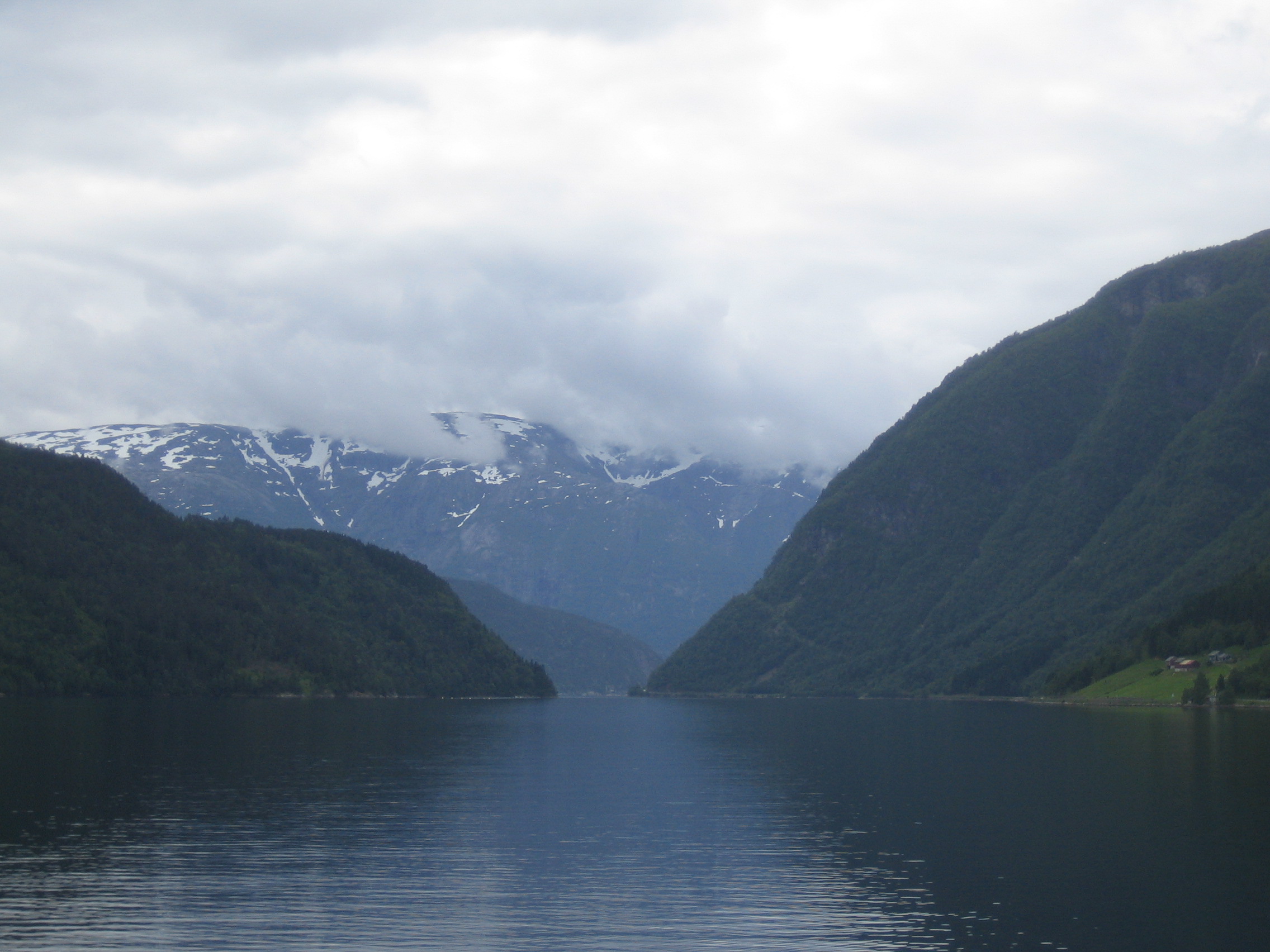
A fjord in Norway

Travel is taxing. We are often tired from long sits on airplanes, the passage of too many time zones, making our way from point A to point B in stifling heat or numbing cold. Our bodily needs become complicated as we try to manage our hunger, our thirst, our exposure to the sun, or our aching feet. The food may be different. The language may be different. Things go wrong and fall apart, and we are left feeling simultaneously buffeted by a large, impersonal world and lifted up by strangers’ acts of kindness and generosity.

It is because travel can be so uncomfortable that it is so rewarding. We find edges we didn’t know existed inside of us. We run headlong into our assumptions. Many of our outer trappings are stripped away even while we experiment with creating personal narratives for the people we meet. And meanwhile we are surrounded by brain food or soul food or the seeds of creative inspiration, or all three at once.

Sometimes we lose ourselves, and travel is one way to begin searching. Sometimes we crave change, and travel is one way to explore the possibilities. Sometimes we need to remind ourselves that we are alive, and travel is one way to find peak experiences.

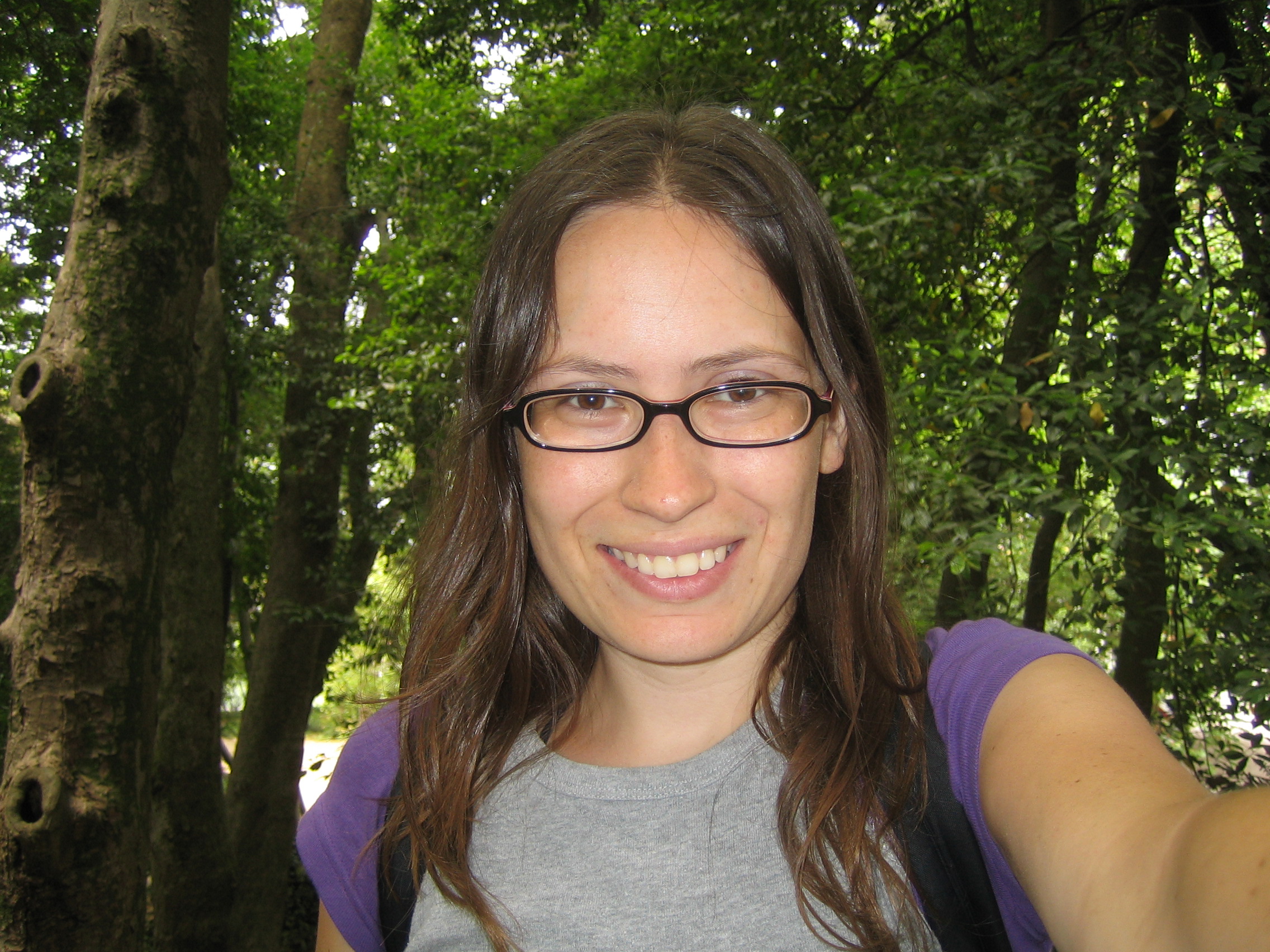
Exploring in Portugal

Travel is an active doing and a passive waiting. Travel is discomfort and pleasure, sublimity and boredom, a pain in the butt and the best time ever. Travel is flinging ourselves into the world and asking, Will you catch me? Which sometimes turns into, Can I catch myself?

We often think about travel as an exploration of the world. But it can also be an exploration of the self. In removing ourselves from our routines, our comforts, and our surroundings, we gain fresh perspective.

I had a friend ask, “By traveling, aren’t you running away from your problems?”

But sometimes traveling is running directly into our problems. We take ourselves wherever we go. The question is how serious we are about creating change. And traveling is one way to do just that.

Read Full Post »

« Newer Posts - Older Posts »