Feeds:
Posts
Comments

Archive for the ‘Life’ Category

Someone made a rather plaintive comment in this Google+ conversation, and it’s been stuck in my mind ever since: “So, again, what is the point of being smart if it does nothing for you? If you really are so smart, why can’t you get what you want?”

There are so many myths floating around about being smart and what that might mean. Even defining “smart” is full of pitfalls. I realized when I tackled the subject of intelligence a few weeks ago that it was a bit taboo, but I didn’t realize the full extent of it until I was reading other people’s reactions. So of course I had to write a follow-up.

A Few Intelligence Myths Exploded:

1. What is the point of being smart? There is no intrinsic point. It is not something you choose for yourself, just as you can’t choose to be naturally athletic or flexible or have perfect pitch (although I keep hearing rumors there are ways to train this) or be gifted with languages. There are things you can do to take advantage of any of these things (hard work and training), but not everyone will choose to use these skills or have the opportunities to do so. In the same vein, recent studies suggest it is quite possible to train yourself to be smarter if you are interested in doing so.

2. Smart people can get what they want. Ha! I wish. I don’t know if any studies have been done on this subject, but I haven’t read anything about how smart people are so much more happy than less smart people. Plus, what if a smart person wants something that requires additional skills besides just being smart (and most accomplishments do require additional skills)? And what if said smart person doesn’t have the right additional skills and fails (for whatever reason) to develop them? Or what if the smart person in question is on track to get what she wants and then is deterred by any of a host of reasons, including ill health (either hers or a loved one’s), economic realities, or her background? Or what if the smart person does get what she wants and it just doesn’t look like the societal norm?

3. Smart people look down on those who they perceive as less smart. First off, I mentioned before that many genius-level people (and perhaps particularly women) suffer from impostor syndrome, meaning they don’t believe they are as smart as they are. Secondly, I also mentioned the Dunning-Kruger effect  and the false consensus effect back in March: the idea that people who are above average (including having above average intelligence) tend to assume everyone is just the same as they are unless presented with quite explicit proof to the contrary, thereby often underestimating their own intelligence. How all these people who don’t even realize how intelligent they really are can be looking down on everyone else is beyond me.

Secondly, even if they do realize they are intelligent, that still doesn’t mean they feel superior. Sure, there are a few people who do, but just because you are smart does not mean you are automatically arrogant and non-appreciative of other people’s abilities. Which leads me to my next point…

4. A specific kind of intelligence is more important than anything else. Um, no. There are many kinds of intelligence, and basic IQ test-measured smarts are no more useful than a host of other mental attributes. These include emotional intelligence, charisma, experience, wisdom, empathy and insight, kindness, courage, determination, a strong work ethic, and leadership skills. For example, if a very intelligent person wants to complete a difficult project but is not willing to work hard to do so, they probably won’t do as well as someone who isn’t quite as intelligent but is willing to work her ass off. Ultimately what matters about our lives is what we choose to do with them, not whatever set of attributes we start out with. Intelligent people who realize the truth of this aren’t likely to be very arrogant at all.

Any other intelligence myths you can think of? (Besides the whole “women aren’t as intelligent” thing we already talked about.) I’d love to hear from you.

Read Full Post »

Okay, no, not really. What I really want to do is talk about ambition and different definitions of success.

I talk a lot about priorities, and ultimately our priorities hinge on our own personal definitions of success. In order to set priorities that work for you, you have to know what you want. Sometimes this directive becomes more complicated than it sounds.

We have ideas imbedded by our culture as to what constitutes success, and there are different degrees of success as well. Money, power, recognition, advancement, and a stable career are all possibilities we recognize and mark as successful. In the personal realm, success is often associated with being a spouse, a parent, and a homeowner.

Of course, we can hit our own personal mark of success without ever having a lot of money, or a lot of power in the business world, or the same steady job for twenty-five years. Success is subjective. Our definitions of it change over time. And yet, we are often influenced by the cultural ethos of what success means.

Dr. Horrible has his own unique definition of success...

Ambition gets all twisted up in these definitions as well. When we are going for what we want, pursuing our own success, then we are being ambitious, but we often limit our thinking about ambition to apply only to career-related goals.

For me, success has never been so much about money as it has been about being able to spend my time on things I find valuable and fulfilling. This is why I have, in the past, chosen time to do what I choose over more money. Some of the things I find valuable and fulfilling involve the outside world: teaching, for example, and helping people. Some creative endeavors might or might not reach the outside world. And some things I find of real inherent value even though they are just for me.

We as a culture also tend to buy into the idea that success will cause happiness. Sometimes this works out; when we figure out what will actually make us happy and prioritize accordingly, happiness and success can come hand in hand. But sometimes we assume success will bring us happiness without figuring out what would make us happy in the first place, only to suffer a rude awakening and realize we’re caught in a cycle of always wanting more: if only I had a bigger house, if only I made senior VP, if only I made #1 on the NYT bestseller list. Finding happiness within achievement without getting trapped in what we haven’t yet achieved can be an uneasy balance.

There are no right answers here; we have to make individual decisions about what’s important and how to define success for ourselves. We have to discover what it is that brings us happiness and personal satisfaction. And if the answer doesn’t meet the cultural norm, then we have to decide what we care about more: following the marked, tried-and-true road map to find success in other people’s eyes or venturing off the beaten path and making our own way. Either choice comes with its own difficulties.

What does success mean to you? Do you consider yourself to be ambitious?


Read Full Post »

On Tuesday I read a blog post in which a female blogger made a list of people in her acquaintance she’d put in charge of governing society if she was a monarch. All the people on her list were male. When called on this fact in the comments, she mentioned one woman she knew who she felt was “awesome,” but then proceeded to say she’d listed people she knew who were “wicked smart” and that offhand, she couldn’t think of any other women she’d put in that category.

Typing that just now makes me want to yell and scream and possibly hurt my foot by kicking something unexpectedly hard.

As a woman who is “wicked smart,” let me explain something to those of you who haven’t thought about such things. High-IQ women often do not present in the same way as high-IQ men. That doesn’t mean they’re not just as smart; they just behave differently, in ways that are not typically identified with high intelligence.

For starters, smart women often work very hard to fit in. We blend. We spend a lot of time listening to other people talk. We don’t always put ourselves forward, even when we have expertise or insight about a certain topic. We are not as likely to offer or even form opinions, since we are supposed to be nice and agreeable. We are not as likely to argue. We deliberately choose topics of conversation that don’t show off our intelligence, partly because being an intelligent woman is somewhat fraught in our society and partly because if we want to have a real conversation instead of expound, it often works better to choose a topic in which intelligence doesn’t matter as much. We do much of this unconsciously because it tends to get us better social results, ie people like us more.

Women in general are also not encouraged to be as ambitious as men. We get more flak about being ambitious. People patronize us and tell us we have delusions of grandeur. In many professional arenas, we have to adopt masculine behaviors in order to realize our ambitions, not to mention deal with sexism. We also have to do better than men at the same positions in order to be recognized. And then people will minimize our accomplishments and say catty things about our appearances and personalities. Not to mention, women who want to have kids know they’ll end up with more of the work involved, even if they have full-time careers as well. So high-IQ men are often very “successful;” they might be wealthy or have a fast-track career or a top-notch reputation in academia. High-IQ women don’t always have any of these things because we either chose not to follow ambition in the classic sense or because we felt we should not.

Finally, our society privileges the sciences over the humanities and the arts, and factual knowledge over both raw intelligence (which is more about speed and ability to learn, understand, and synthesize) and emotional/social intelligence. And yet, women are less likely to go into the sciences, less likely to offer up their knowledge in conversation, and more likely to be encouraged to focus on emotional intelligence. And for those of us who have focused  on synthesis as opposed to factual memorization, our talents are often entirely overlooked.

The secret land of intelligent women?

My husband and I are a great example of this. By both our assessments, we are more or less equally intelligent. He has a PhD in physics, an important job at Google, and impressive amounts of knowledge on a variety of intellectual subjects. I’ve spent most my time pursuing music and writing and focusing on personal growth and interpersonal issues. It is not uncommon for people to tell me my husband is one of the most intelligent people they’ve ever met. No one ever tells him the same thing about me. He presents himself very differently in social situations, has many of the expected achievements, and studied string theory instead of music, so this doesn’t come as a big surprise.

I didn’t want to talk about this subject because we as a society seem to have a deep discomfort with intelligent women, and talking about it leaves an opening to be personally attacked or categorized as stuck up. I can hear it now: “She’s not as intelligent as she thinks she is, and her husband is just playing up to her big ego.” Admitting to intelligence, at least here in the United States, is not the best way for a woman to gain friends and influence people. And ironically, gifted people tend to be more sensitive, more likely to be perfectionists, and more likely to hold themselves to impossibly high standards…all while suffering from impostor syndrome. But I’m so tired of the misconceptions that abound, and I don’t hear enough women speaking out on this subject, so I felt I had to say something.

There are plenty of very smart women in the world. You might just not realize who they are. So the next time you are listing off smart people you know, think again and consider whether you can add some women to your list.

Read Full Post »

Elizabeth Bear recently wrote an essay in which she stated her intention to try not to self-denigrate herself out loud. You should go read it because it is thought-provoking and also because she references Sondheim in an awesome way, and who doesn’t love that?

That being said, it was a painful essay to read, at least for me. Yes, a great step would be for people to keep those tenacious feelings of self loathing to themselves so they don’t model them for others. Perhaps without the vocalization and implicit validation of those feelings, they will even lessen over time. But I can’t help but see the tragedy that those feelings of self-hatred and self belittlement are so prevalent in the first place.

In the comments section for the post, there is some mention of bragging, and how terrible it would be if one were to accidentally brag. (Okay, that’s not actually what is said, but that’s how it translated in my own head.) I mean, really, didn’t you know the world will END if you brag? Especially if you are a woman. Heaven forbid that you actually appreciate something awesome about yourself and want to share it with others. Heaven forbid that you give yourself a public pat on the back like I did last week. (And yes, I felt fairly uncomfortable about doing that, which was a signal to myself that it was important to do.) Humility is a great trait to embrace, but according to a recent Psychology Today blog post, “humble people are not self-deprecating but rather accurate in how they regard and present themselves.” And that is a big difference indeed.

I see this kind of unproductive behavior all the time. I talked to a friend this weekend who knows she is under charging for her valuable services. This is not the first friend I’ve talked to with this problem. I’ve talked to award-winning writers who are convinced they suck. On Twitter, a friend was talking about her husband, and how he gets a fabulous performance review every time at work, and then within a week or so he’s already back to worrying about how he’s doing. So many of us have so much trouble embracing our strengths and talents and believing in ourselves.

I recently read some blogging advice that said that in every post, you should be revealing all of your own weaknesses and mess-ups and personal disasters because that is what people like to read. And it’s true, there is a certain appealing rawness to that sort of writing, and certainly it’s not always the most helpful or communicative (or honest) to set oneself up as perfect. But aren’t success stories also instructive? Do I really have to focus only on the parts of me I don’t like in order to engage an audience? We as a culture seem to have this idea that we aren’t allowed to acknowledge our own awesomeness. Instead we wallow in insecurity and resentment, and at our low point, we try to tear other people down because we can’t raise ourselves up.

Photo by Kate McCarthy

Well, screw that! I love that Elizabeth Bear shows how this kind of behavior doesn’t just hurt ourselves, it hurts the people for whom we are role models–it is particularly brilliant because it tricks people into healthier behavior by playing on their concern for others. But can we take it a step further? Let’s have this concern for ourselves. Let’s acknowledge when we do something well, or when we come through in a difficult situation, or when we face our fears and do important work anyway. Let’s acknowledge that we are allowed to have something to say, that we are allowed to have opinions, that we are allowed to value our own expertise. Let’s acknowledge that we are worth it.

And let’s all take a moment to brag and celebrate our own awesomeness. (Oh, the horror!) Leave me a comment and tell me something amazing about you. It can be something small, like the way you rocked your To-Do list yesterday, or it can be something large, like how you raised millions of dollars for charity. Tell me how great you look in that outfit, or how many books you read last year, or the amazing high score you got on your GRE/SAT/whatever test you want. Tell me about the awards you’ve been nominated for (or won!), or the way you totally helped someone out, or how you met one of your goals. The sky is the limit, and the only rule is, you have to brag. About yourself.

I’ll start us off. I sold six stories in my first year of selling anything at all. I am super smart. I have a great smile. I spend most of my time doing things that I love and/or really care about. I read thirty books in the past three months. I am a passionate and dedicated blogger. I am an intellectual bad ass.

Yeesh, that was uncomfortable. And now it’s your turn. Guilt-free bragging! Who’s with me?

I can’t wait to read about how amazing you all are.

Read Full Post »

I’ve been reading Bill Bryson’s most recent book, At Home, which I wanted for months and then received for Christmas (and even then, it took me another couple of months to get to it, which goes to show how out-of-control my to-read stack has gotten). Its subtitle is “A Short History of Private Life,” and its chapters are named by rooms of the house. Bill Bryson’s 19th century former rectory house, to be precise.

This is what my book looks like.

I thought the book was going to be full of anecdotes about each of the rooms: what activities were typically performed there, how those varied over time, how each would be furnished, etc. And there certainly is plenty of this information in there, but that’s only a beginning. With his typical charm, Bill Bryson supplies bucketfuls of mostly random (but still fascinating) facts that are often only tied to the room in question by the loosest of associations:

  • the building of the Crystal Palace for the Great Exhibition of 1851
  • the usefulness of bats as a species and how many are now in danger of extinction because of rabies myths
  • the building of the Eiffel Tower and how it is constructed of iron, not steel
  • how ice became a commodity
  • how very dark it used to be at night, and various techniques of lighting

Although I like this cover art better!

My main take-away from the book is that it really sucked to live in the West after the Roman Empire and before the twentieth century. It was dark and painful and exhausting and dirty, full of back-breaking daily labor for almost everyone. People would get sick all the time, sometimes even from the chemicals they used in the wallpaper and paint on their walls, and there was no anesthetic. Rats and mice would scurry over your bed, especially if you were a child sleeping in a trundle bed. And if you didn’t want your loved one’s body stolen by grave robbers, you had to keep it in your house until it went bad and began producing maggots. Yuck.

As a woman, it sucked even more. You either had to perform repetitive back-breaking labor (like laundry, which also involved chemicals that made people sick) or, if you were lucky, you had to sit around and be bored out of your mind while preserving your delicate sensibilities. Thank goodness music and art were considered appropriate activities for woman, but heaven forbid you read a novel. You were considered property and in England, at least, it could be quite difficult to get a divorce. Beating was commonplace and no grounds for leaving; it merely showed you lacked sufficient patience. Doctors would often dismiss your medical complaints because you were a woman. And you’d probably end up dying in childbirth anyway.

I am even more grateful than usual to be living now, in an age of antibiotics, safer childbirth, labor-saving devices, electricity, and more opportunities for women. If I could choose any time period to live in, which would I pick? I’d pick NOW, thank you very much. I like having teeth and the right to vote.

In any case, it’s a great book and I recommend it. And now I have to ask: if you could choose any time period to live in, which would you pick?

Read Full Post »

I really miss e-mail.

Before you look at me funny and silently consider whether I’ve gone off the deep end, let me add that I don’t miss all the e-mail I actually get: various sales communications from any store I’ve ever bought something from online, e-mail list digests, appointment reminders, notifications from Twitter, Facebook, Google+, WordPress, and let’s not forget bills and bank statements.

I miss the old days of e-mail when I didn’t get any of the above, and each e-mail I did receive was an electronic letter, worthy of excitement and anticipation. You can express so much personality in an e-mail. When I read a good e-mail, it almost feels like its writer is in the room with me. And the one-on-one nature of the communication means that e-mail builds relationships in an intimate way. These words were written for my eyes only–there is value in that.

I got my first e-mail account when I went away to college. My mom would print out the e-mails I sent her, and then she’d write a response and send it through snail mail. I tried my best to stay in touch with those friends who also had e-mail addresses. Those that didn’t…not so much. Mea culpa.

That first year, visiting the computer lab across the way to check e-mail was an event. We’d head over in our slippers in friendly camaraderie until we sat in front of those old glowing screens, at which point our focus was entirely on the act of checking e-mail. I spent so much time marveling at the wonder of e-mail, I made one of my best friends of freshman year in the computer lab.

E-mail was often my lifeline when travelling alone. I’d be meeting new people every day, but still spending hours at a stretch by myself. I learned how to eat by myself at a restaurant, but it was never a particularly joyful experience. When I got too lonely or felt too detached from anything permanent, I’d find an internet cafe and write to the friends who had become, whether they knew it or not, a kind of anchor. They reminded me of what it meant to have a home.

Nowadays I rarely receive this kind of e-mail. My inbox becomes clogged with messages that feel like work. I stay in touch with people via social media, a kind of communication that, while efficient, can also be impersonal. People “like” my statuses, but we don’t have the sort of conversations we’d have if we were discussing the same topic over e-mail. And too often it feels like the friendship is being held in stasis instead of being actively developed.

I do have one friend with whom I e-mail regularly, and it’s just as good as I remember. It’s also something of a miracle that we both managed to continue the correspondence, especially in the beginning. But I’m glad we did. If we had merely stayed in touch via Facebook and Twitter, we wouldn’t know each other half as well as we do now. We would only see the edges of each other’s lives instead of being able to go deeper. We might not even be friends at all.

Yes, I miss the golden age of e-mail. Do you?

Read Full Post »

I returned from Washington late Sunday night, only to find I had brought a bad cold back with me. This is the kind of cold that makes me feel like the distance between my neurons has doubled, so that any thinking I might wish to do happens… very… slowly. So even though I don’t usually talk about events much on the blog, because I think maybe that is very boring for anyone who wasn’t at said event, that’s all I’ve got in me today.

First, a few pictures. The location was truly gorgeous, right on a lake that tended to get misty in the mornings, with the rain forest on the hills behind the buildings. It rained a lot, not surprisingly, which was fine since I was supposed to be writing.

Beautiful Quinault Lake: what a view!

And here's the lake again through the trees.


There was lots of moss in the rain forest.

I was pleased with how much I wrote and found I was able to be more productive than my usual. I wrote until my outline broke. Of course, now I have to fix it before I can start again, and aforementioned neuron difficulties aren’t helping matters any. But figuring out how to fix broken outlines is actually one of the parts of writing I like best, even though I also enjoy complaining about it.

But really the best part of the trip was the people. No big surprise there, of course. Put me in a room full of writers, and the likelihood of me meeting someone who I find fascinating and nice increases exponentially. So do my chances of encountering a kindred spirit, and really, there isn’t much in this world that makes me more happy than making contact with that elusive breed. Except perhaps spending even more time with them. And writing.

I wonder if it’s a matter of depth, a trait all the kindred spirits I’ve met share. I don’t know if people who already have depth are drawn to writing, or if writing requires and develops depth in people. Or perhaps both? I don’t mean to imply that all people who aren’t writers don’t have depth (or contrariwise, that all writers automatically have it), as that is simply not true. But I do think the percentage of writers who have depth (or at least who express themselves in ways that reveal it) tends to be higher than average.

I think I’d like to write more about kindred spirits when my thought processes are in better working order. But in the meantime, I must conclude in order to consume liquids and lay on the sofa like a rag doll. Suffice it to say I thoroughly enjoyed my time in the Quinault Rain Forest.


Read Full Post »

Today I am away from home, attending the Rainforest Writer’s Retreat in Washington. Ah, the bliss of days on end in which I have no obligations except those of basic upkeep and writing, writing, writing! After which I get to converse with other writers to my heart’s content.

In other news, my husband and I are currently reading my old favorite The Phantom Tolbooth, by Norton Juster, at bedtime. This book is full of gems of word play and absurdity, as well as surprisingly profound insights on the nature of the world. Here is one of my favorite passages:

“…from here that looks like a bucket of water,” he said, pointing to a bucket of water; “but from an ant’s point of view it’s a vast ocean, from an elephant’s just a cool drink, and to a fish, of course, it’s home. So, you see, the way you see things depends a great deal on where you look at them from.

This passage struck me strongly when I read it as a child, and every time I re-read it, I am reminded again of what an important insight it really is. So much of the world depends on your point of view, doesn’t it? Not only does this help me keep perspective on my own life and problems, but it’s also helpful when trying to understand other people. We all see things in our own special way, and it continues to amaze me how very different those ways can be.

When one stops to consider how mutable memory is, this train of thought gets even more interesting. Let’s say I attend a small event with three other people. Each of us will perceive the event from our own perspective to begin with. So maybe Person A is really happy because she got good news earlier today and has been really looking forward to this event. Person B is trying to be chipper but is experiencing some RSI pain in his arms and shoulders. Person C is deeply annoyed because he wanted to go to Japanese food but the group consensus was for Italian and now he’s worrying about eating too many carbs. And Person D worked really hard today and is having trouble transitioning from work mode to social mode.

Already we can expect that each person will experience the evening differently. But then ask them all about it three months later, and the stories will be even more different. Each person will have personal details they remember and others they forget. Some of them will misremember. And if they’re remembering together, one them may say, erroneously as it happens, “Didn’t Person B order gnocchi?” and then another will say, “Oh, that’s right” and in such a way the erroneous memory will spread. Each person’s perspective will shift depending on what they remember.

Norton Juster got it right. It all depends on your point of view, and many more things are subjective than we might at first realize. I often think about that bucket of water and remember that today, I might be the elephant and you might be the fish.

Read Full Post »

I haven’t been writing recently about being a people pleaser, or becoming more assertive, and other topics like that. You know why? Because it’s hard. It’s hard to change how you react to things. It’s hard to tear your life apart, examine it from every angle, and then slowly put it back together again. I often put pieces on backwards, or they just don’t fit right even though I’m hammering at them for dear life.

But then I read this essay by Penelope Trunk, who is, as you know, one of my favorite bloggers, and I realized I should write about it more. Here is what she had to say:

“It’s hard to know who to take advice from. But my instinct tells me that the best advice comes from the people with the most difficulties. Not in the past. But right now. Because that’s where you want to be: doing something difficult right this moment.”

So yeah. I’m doing something difficult right now, so maybe it is worth talking about, even though it’s dangerous and messy and I don’t have all the answers. I don’t want to give you advice as much as I want to illustrate that people can in fact do this–that people can change themselves, that people can look at themselves and say, I could be a lot happier than I am, and then take positive steps to make it so. Because I meet so many people who seem to think that almost everything is impossible, and that just isn’t true.

Here are two things that happen when you have actually made strides at changing your people pleaser tendencies: people will freak the hell out, and you will realize you have spent most of your life listening to very bad advice.

People will freak out because, even if they are actually decent people (and sadly, some of them aren’t), they are used to you being a doormat. You suddenly deciding you’re not a doormat is vastly inconvenient and confusing. It disrupts the normal patterns of all your relationships. Even the people who are generally supportive of this change will sometimes freak out, because oh my god change and where do they fit into this new picture?

As for the bad advice, it’s amazing how willing many people are to support you making decisions that are outright harmful for you. Society as a whole is quite okay with this notion too. There are two forces at work here. There are the people who are taking advantage of you in some way. It is obviously in their best interest to give you bad advice about continuing to be a doormat with everyone; they have a vested interest in you continuing to drink the Kool-aid. And there are the people who are doormats just like you, who don’t have good advice to give since they are in the same unfortunate position, and who wouldn’t give the good advice anyway because then it might force them to examine their own position, which they don’t want to do because of the chaos that would then ensue in their own lives.

Of course, once you have that lightbulb moment in which you realize how generally absurd most of this advice is (and wouldn’t that make a fun post one of these days?), there is no turning back. You have taken the red pill, and you begin to wonder: why was pleasing these people ever so important in the first place? So instead you sit back and watch them freak out, and you remember that you are worth it. And you keep resisting the gravitation pull of going back to the old comfortable ways that were holding you down.


Read Full Post »

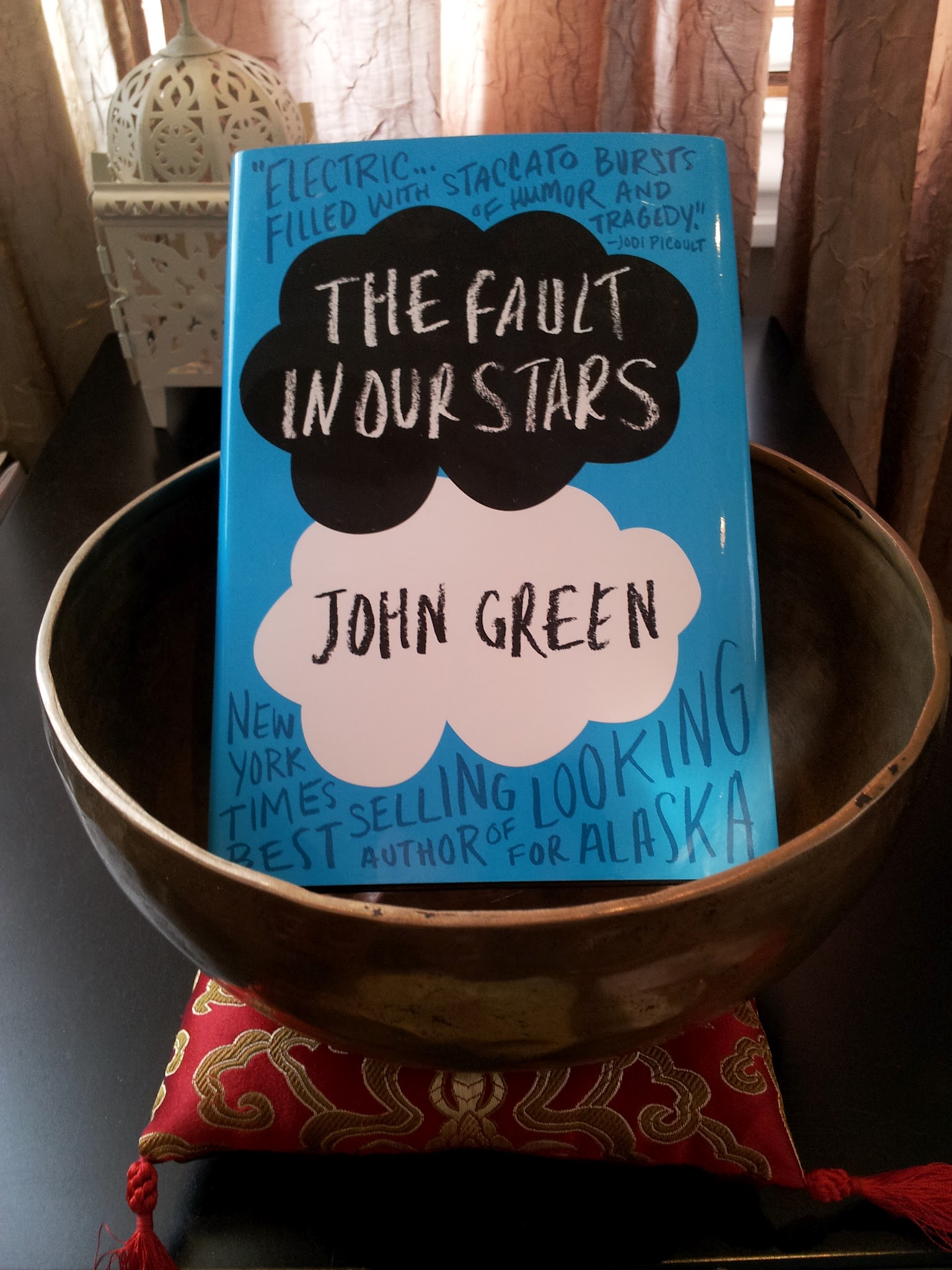
Last week I read John Green’s new novel, The Fault in our Stars.

This is not a review.

After I had read the first twenty-one pages, I told my husband this was going to be the best book I’d read all year.

A little while later I went to the bookstore and bought the hard copy because if Amazon ever disappears and I no longer have access to my e-books, not having this novel would be a particular tragedy. Also, I wanted to hold the tangible printed version in my hands.

When I was twelve, I started writing a novel from the point of view a girl about my age who had been diagnosed as HIV positive. I didn’t get very far with it, but it has lived on in my mind ever since. So when I heard the premise of The Fault in our Stars, I knew I had to read it. It is a novel from the point of view of a girl of sixteen who has terminal cancer. It is a heart sister to the novel I never wrote, that I couldn’t write, and the fact that it exists makes me breathe more freely.

This novel is not a sappy issue book that makes you want to yell at it as if it is conscious before you hurl it across the room and mope.

This novel is not an easy book to read. I can only imagine what it must have been like to write.

This novel is not perfect. Our protagonist says at one point that the movie V for Vendetta is a boy movie. I completely disagree. Of course, one could argue that this slight blemish makes the book even more perfect.

If you talk like either of the two main characters and/or think about the things they think about, I want to be your friend. We can go to a coffee shop every week and have deep existential conversations in between making ironic statements that have us internally rolling on the floor even though on the outside we only cue our mirth with a certain type of smile. If you don’t live nearby, you should move here. It will be worth it.

Also, when you worry about what your life means or may mean or may not mean, I will hold your hand, if you will hold mine.

In the meantime, enjoy this novel. Its construction is a miracle to behold. It has layers upon layers, a story within a story (and then some). It plays with language. It is a brave book. It talks about things that matter that maybe most people don’t want to talk about, like death and dying and illness and meaning and love that lasts through it all. It does not flinch away.

This book punched my heart even while it fed it. Or it filled it up till brimming even while it broke it.

Thank you, John Green.

Read Full Post »

« Newer Posts - Older Posts »