Feeds:
Posts
Comments

Posts Tagged ‘taking risks’

I’ve been somewhat injured the last week or two, so I’ve had some extra time on my hands. So I decided to poke around Kickstarter and see some of the awesome projects artists have in the works.

In case anyone doesn’t know, Kickstarter is a funding platform in which artists put up projects and how much funding they wish to receive, and then their fans and the interested public can pledge money towards those projects, usually for nifty rewards like art, books, tickets to live performances and screenings, etc.

What’s exciting about Kickstarter is it gives artists a viable alternative to get their amazing work out into the world while getting paid for it. Many creative projects require money up front in order to become realities, and Kickstarter allows the artist to get paid directly from their fans instead of finding corporate backing. It definitely works best when an artist already has an established fan base who can both support them financially and spread the word. For writers, a successful Kickstarter mimics the advance system of traditional publishing while allowing the writer to retain complete creative control. Which is all-around awesome sauce.

Here are some of the Kickstarters I decided to back last week:

Tropes vs. Women in Video Games, by Anita Sarkeesian

I’ve been watching all of Anita’s videos ever since she explained to me, complete with relevant examples, what the Bechdel test was. Now she’s taking on the portrayal of women in video games with a lengthy new series. I couldn’t resist backing this project, because this video series NEEDS to exist.

Fireside Magazine Issue Two, by Brian White

This looks like a promising new fiction magazine, with a lot of speculative heavy hitters in the line-up for the next couple of issues. But really I was sold by the opportunity to be drawn by my friend Galen Dara, who is an amazingly talented artist.

Amanda Palmer: the New Record, Art Book, and Tour, by Amanda Palmer

Amanda Palmer is in the process of revolutionizing the way musicians can interact with their fanbase and make a living while doing awesome things. How could I not want to be a part of this? Also, art books are cool.

Crossed Genres Publications, by Bart Lieb

I have a special place in my heart for Crossed Genres. While they weren’t my first sale, they were the first publication who ran one of my stories. Their Kickstarter has been so successful, they are now going to bring the magazine back (it folded recently), and they also have a few very interesting anthologies scheduled for publication in 2013.

I’m Fine, Thanks, by Crank Tank Studios

To make this independent documentary, the filmmakers toured the country and conducted lots of interviews. Their topic? Complacency and the pull to follow a pre-approved script instead of creating your own unique and individual path through life. Can you think of any subject of a documentary that fits in more with the spirit of this blog? Because I can’t. I am so excited a movie like this exists, and I can’t wait to watch it.

I can’t cover all the worthy Kickstarter projects out there in one blog post, so please help me out. What projects have you supported recently? What other cool things are artists out there doing?

Read Full Post »

Conventional blogging wisdom for fiction writers is that we should avoid talking about politics and religion. (Science fiction writers are perhaps the exception to this rule; see John Scalzi, one of the most prominent examples, and on the other side of the American left-right fence, Orson Scott Card.) The idea is that such views can be unnecessarily divisive and that by talking about them openly, we can alienate potential readers.

I have, for the most part, followed this advice. I don’t talk about religion on this blog or anywhere else, really. I rarely talk straight politics, although I couldn’t quite suppress my concerns about habeas corpus. But feminism keeps creeping in through the cracks of this blog and in the material I choose to share on the internet, and isn’t feminism at least partially a political issue? It certainly is a touchy one.

One result is that I’m been forced to rethink the conventional wisdom. I can say without a shadow of a doubt that it is easier not to blog about religion or politics or social justice. And I can understand the choice not to do so when it feels like a livelihood hangs in the balance of what we allow ourselves to discuss. Plus some of us find conflict to be very unpleasant. But at what point does talking about matters of importance become more of a question of conscience?

Does blogging give you a voice?

I’m not talking about being safe here. There’s this trend that happens in the science fiction blogosphere, wherein a few of the really big bloggers share their opinions of a current issue, followed by a quiet ripple of smaller bloggers chiming in with “Me too”s and “basically exactly what has already been said about this issue in almost the same words.” Because when we follow in the footsteps of the big guns, then we’re relatively secure. I’m not saying it’s bad to offer a show of support, but it’s not the same as pushing the discussion forward. The conventional wisdom is consunmately safe.

Let’s talk about danger instead. If, as a writer, we develop a greater reach, then we have to decide how to use that reach. We have a greater ability to help, and an equally heightened ability to harm. We can set the topic of conversation instead of merely echoing and reacting. We can affect the way people view the world, often subconsciously, through our stories and our words. We can decide whether to point something out as problematic or whether to be silent and let it float on in obscurity. And whether we like it or not, these abilities come with certain responsibilities.

We don’t have to blog about politics or religion, not if we don’t want to. We can choose to communicate exclusively through our fiction. But at some point, I think every artist has to ask, “What am I really trying to say here? What do I really need to say about human experience and about the world? What might I be saying by accident that I don’t actually want to be saying?”

But sometimes, we might be compelled to blog about something risky, about something uncomfortable. And sometimes we are willing to pay the price for having a voice. In which case, that conventional wisdom can go right out the window. There are times when safety is not the most important goal.

What do you think? Do you ever talk about politics or religion on your blog or over social media? Are there issues that you feel compelled to talk about, even though they lack an approved-for-fiction-writers (or approved-for-polite-conversation) stamp?

Read Full Post »

“Fear is the mind-killer.
Fear is the little-death that brings total obliteration.”

Dune, by Frank Herbert

I am afraid of so many things.

I am afraid of death, my own and others’. I am afraid of incompletion. I am afraid of bad health. I am afraid one day I’ll try to get out of bed and my knees will hurt so badly I won’t be able to leave the room. I am afraid I’ll crack more teeth and end up subsisting on gruel; forever, because most of my fears don’t allow room for the possibility of change. That’s what makes them extra scary.

I am afraid of being deeply alone. I am afraid I will discover a massive regret too late to do anything about it. I am afraid I’ll go crazy. I am afraid I will lose my sight or my hearing. I am afraid I’ll be attacked by a giant swarm of angry wasps. I am afraid of pain and grief and loss. I am afraid of the necessity of being brave.

I am afraid to fail. I am even more afraid to fail over and over and over.

Last week I had a particular scenario in my head that was causing me large amounts of worry (something that hadn’t even happened yet). This weekend, I read a blog post that talked about another person who was in a similar scenario, and how she was crippled with worry. The way it was written up, my first instinct was to think, oh, that’s silly, she’s not so badly off. It took a couple more beats for me to realize that meant my hypothetical wasn’t so bad either.

Because Frank Herbert got it right. Fear makes us stupid. It clouds our judgment. It squeezes us so we can’t breathe, can’t reason, can’t accept what’s happening. It transports us to fictional futures and makes them real in our minds, even though those futures may never become true in reality. It causes us to give up or settle or take the easy answer, even if it’s not the best answer.

Of course, we put ourselves in danger anyway. We become police officers and firefighters. We join the military. We bare our souls as artists, even while we’re embracing rejection. We fight to save lives. We deal with the up-and-down uncertainties of being entrepreneurs. We give away our hearts. We jump from airplanes, walk home in the dark, and swim deep underwater. We sing challenging arias in Italian in front of other people. Risk-taking is woven into the fabric of living.

Fear is difficult. Sometimes we face it and emerge stronger. Sometimes we become paralyzed and cannot move past it. Sometimes we don’t even realize what it is that we’re really afraid of.

I am afraid of so many things. All I can do is remind myself that in this present moment, I am okay. And if I am ever faced with a killer swarm of furious wasps, I’ll deal with that then.

What are you afraid of?

Read Full Post »

It’s the end of April, April 26th, to be exact, and as always on this day, my thoughts are with my mom.

Her death at age fifty really brought home to me the reality of mortality. All things must end. We have a finite amount of time. It made me realize how important it is to prioritize, to make things happen now because there might not be a later, to fight against becoming stuck in a daily routine if it makes me unhappy.

Her death taught me the importance of shaking things up.

You want to know the truth? I don’t like shaking things up. It’s scary and uncomfortable. There tends to be a fair amount of risk involved, as well as failure and disappointment. It can be hard to decide when to shake and when to let things settle.

But when in doubt, I’d usually rather shake. I remember the finite life span of human beings. I remember my mom’s unhappiness, and how she couldn’t shake things up to make her life better. And then it was too late.


Could I be a writer if I didn’t believe in shaking things up? Could I be a blogger? I don’t know. I’m guessing I couldn’t be a blogger because blogs tend to shake things up. Any blogger worth her salt will have to occasionally offer up an opinion, and people will disagree. Shake, shake, shake. And without that extra push to make life happen for myself, would I have found the courage to spend so much time writing? To attempt a novel? To send stories out to be rejected? All these choices shake things up.

I worry when people my age (thirties) tell me how much they want to travel, but they haven’t been anywhere. I want to say, I hope you’re not serious. I hope travel isn’t actually that important to you. I hope it’s a nice dream that provides a pleasant thought diversion. Or else I hope you’re just being polite, like me when I say how amazing it would be to learn to knit (I don’t actually care if I learn to knit or not). Because otherwise, what if it never happens? What if you never shake things up enough to make it happen?

This is why priorities matter so much. So we can decide when it’s important to shake and when we can take a break, be laid back, and let things sort themselves out. It’s like my experience with Las Vegas. I live a short flight away from Vegas. People I know are going to Vegas all the time. It’s never been a real priority of mine to go to Vegas, so I sat back and figured it would happen when it happened. I chose not to shake things up.

And guess what? I’ve still never been to Vegas.

So in a way, today is about remembering my mom AND remembering the power of shaking things up. I don’t want to be a people pleaser anymore? Then bam, I’ll learn more about it, I’ll push myself to change, I’ll ruffle some feathers. I want to be a writer? Then bam, I’ll take risks with my writing, I’ll go out there and meet people in my industry, I’ll leave myself vulnerable, and I’ll commit myself fully even knowing failure waits right around the corner.

Hi, Mom. This earthquake is for you.

Read Full Post »

It’s been a little over a year since I wrote my first Sit at the Table essay, although it feels like exactly a year since it was published the Thursday before FogCon, and guess what today is.

Last week I received word that I sold my story “Man on the Moon Day” to Daily Science Fiction, which was the same market to buy my first story a year ago. First off, hooray! I am really excited for this story to reach the reading public. The timing of the sale also made me realize that in about a year’s time, I’ve gone from having no sales of any kind to making six sales, four of which have paid professional rates. So this is me, taking a moment to pause and tell myself, “Not bad, Amy. Not bad at all.”

All of this has reminded me of sitting at the table, a surprisingly tenacious idea for me to still be contemplating a year later. It’s a powerful idea as well. It’s easy to lose sight of it given the undeniable role that random chance plays in events; so much is out of our control, it can be hard to focus on the parts that we can do something about. But that’s what sitting at the table is all about: being present to take advantage of opportunities as they arise.

Photo by Ben Raynal

Here are some of the things I’ve been doing to sit at the table this last year:

1. Submitting, submitting, submitting. If I don’t submit, there is absolutely ZERO chance of a sale. This is not to say I haven’t taken mental health breaks in my submitting process, because I totally have. But once I’ve enjoyed my breather, I’ve gotten back on that horse and submitted some more.

2. Behaving like a professional. And part of being a professional is believing in our work and our right to sit at the table in the first place. This doesn’t mean blowing up our achievements to encompass more than they do or refusing to accept needed criticism and editorial input. What it does mean is cultivating an inherent feeling that we belong, that we are writers, and acting that way.

3. Picking and choosing the industry-related events I attend, and being there 100%. Happily for me, I adore meeting people in my industry. But I’d be lying if I told you I don’t have moments alone in my hotel room when I feel like there’s no way I can navigate the social scene. I’ve learned to expect those moments, and I leave the room anyway. I feel so grateful to be at these events, I can’t justify giving less than 100%. This pays off in dividends, by the way. I’ve also learned I can’t do All The Things. I can only attend as many events as I have 100% energy to give out.

4. Creating space to write. If I don’t take my writing time seriously, no one else will either. So I’m being much firmer about defending this time. I’ve taken the myth by the horns that because I don’t have a typical job, that means I have loads of free time. Sadly, this is simply not true, and writing time has to come near the top of my list of priorities.

5. Continuous striving for improvement. And with it, embracing its inherent risk. I’m writing by far the most challenging novel I’ve ever written. This January I participated in a flash fiction contest, even though I knew nothing about flash fiction and honestly, my first two attempts were embarrassing. My third attempt sold to the first market to which I sent it. The last short story I wrote, I had specific writing issues of mine in mind that I tried my best to address and practice on. I picked up a few more writing books that I hope to work through in upcoming months. I am always trying to get better, and the more I learn, the more I realize I still have to learn. While this can at times be discouraging, it’s also an amazing realization: there will always be more to learn. And therefore, I can remain fresh and excited and hopefully avoid the enemy: Boredom.

Of course, there are ways in which I’ve failed to sit at the table as well. As in my writing skills, there is (and probably always will be) room for improvement.

How have you sat at the table in the past year? How would you like to sit at the table in the future?


Read Full Post »

I haven’t been writing recently about being a people pleaser, or becoming more assertive, and other topics like that. You know why? Because it’s hard. It’s hard to change how you react to things. It’s hard to tear your life apart, examine it from every angle, and then slowly put it back together again. I often put pieces on backwards, or they just don’t fit right even though I’m hammering at them for dear life.

But then I read this essay by Penelope Trunk, who is, as you know, one of my favorite bloggers, and I realized I should write about it more. Here is what she had to say:

“It’s hard to know who to take advice from. But my instinct tells me that the best advice comes from the people with the most difficulties. Not in the past. But right now. Because that’s where you want to be: doing something difficult right this moment.”

So yeah. I’m doing something difficult right now, so maybe it is worth talking about, even though it’s dangerous and messy and I don’t have all the answers. I don’t want to give you advice as much as I want to illustrate that people can in fact do this–that people can change themselves, that people can look at themselves and say, I could be a lot happier than I am, and then take positive steps to make it so. Because I meet so many people who seem to think that almost everything is impossible, and that just isn’t true.

Here are two things that happen when you have actually made strides at changing your people pleaser tendencies: people will freak the hell out, and you will realize you have spent most of your life listening to very bad advice.

People will freak out because, even if they are actually decent people (and sadly, some of them aren’t), they are used to you being a doormat. You suddenly deciding you’re not a doormat is vastly inconvenient and confusing. It disrupts the normal patterns of all your relationships. Even the people who are generally supportive of this change will sometimes freak out, because oh my god change and where do they fit into this new picture?

As for the bad advice, it’s amazing how willing many people are to support you making decisions that are outright harmful for you. Society as a whole is quite okay with this notion too. There are two forces at work here. There are the people who are taking advantage of you in some way. It is obviously in their best interest to give you bad advice about continuing to be a doormat with everyone; they have a vested interest in you continuing to drink the Kool-aid. And there are the people who are doormats just like you, who don’t have good advice to give since they are in the same unfortunate position, and who wouldn’t give the good advice anyway because then it might force them to examine their own position, which they don’t want to do because of the chaos that would then ensue in their own lives.

Of course, once you have that lightbulb moment in which you realize how generally absurd most of this advice is (and wouldn’t that make a fun post one of these days?), there is no turning back. You have taken the red pill, and you begin to wonder: why was pleasing these people ever so important in the first place? So instead you sit back and watch them freak out, and you remember that you are worth it. And you keep resisting the gravitation pull of going back to the old comfortable ways that were holding you down.


Read Full Post »

I love the end of the year. Not only do I adore Christmas (it is my favorite holiday), but I like that it’s cold and it gets dark early, both of which encourage me to snuggle up indoors and reflect upon the year that is coming to a close. I plan to spend a lot of time in the next two weeks doing just that, and this week I’m going to write about the two lessons I learned this year that were most helpful to me.

I’ve been struggling with my writing for most of the year–not, thank goodness, with my nonfiction writing, so the blog hasn’t suffered unduly, but with my fiction. I have spent A LOT of time thinking about why I’m struggling and trying various strategies to make the writing work better for me. Most of those strategies failed. But in the last few weeks, I’ve finally found one that feels right.

I was reading snippets from Ray Bradbury’s Zen in the Art of Writing when I had my Aha! moment. He gives this three-fold advice to writers: Work, relax, and don’t think. Work I felt I understood, so I began turning around the other two steps in my head. What would it look like if I relaxed while I was writing? What would it be like to stop thinking so frantically? What if I stopped trying to avoid all the objectionable components of writing, stopped being obsessed with not making any of the obvious and embarrassing mistakes? What would happen if I gave myself permission to write what I wanted to write? In short, what would happen if I trusted myself as a writer and gave myself free rein?

Photo by Paul Moody

I am cerebral sort of person, so it’s difficult for me to even imagine not thinking, but I’m also stubborn and I was determined to give it a try. I sat down and spent the next week and a half writing a short story without censoring myself. I looked forward to working on it, and the words came more easily. I even voluntarily worked on it on the weekend. Here was the joy I had somehow misplaced for so much of the year. When I finished it, I felt a sense of completion. Whether or not I had written something good, I had written something I felt connected to and could take satisfaction from.

I gave the story to my husband, my faithful first reader, without telling him I had been trying anything different. When he finished reading, he told me it was the best thing I’ve ever written.

In creative work, I think it’s important to strive. I believe in working to learn and improve, in tackling difficult themes and uncooperative characters, in experimenting to learn your craft (whatever it might be) to the best of your abilities. But what I didn’t realize until now is that there is a point when I have to let go. I have to trust that my writing knowledge will be there for me. I have to stop second-guessing every decision I make. I have to believe in my vision and voice as an artist.

And it turns out, I do have my own voice. It’s been there all this time, waiting for me to be willing to listen.

Relax. Don’t think. Trust yourself.

What lessons pertaining to your work, artistic or otherwise, did you learn this year?

Read Full Post »

Photo by Ali Leila

Some people know they can’t change the world. They are beaten and dreary, prone to complaining about things they know they can’t control just for the sake of complaining. The world is a hostile place, and these people are its victims. Nothing will ever be better for them, and nothing will ever change. They live in a haze of “can’t,” and therefore they spend their lives in a prison of impossibilities, devoid of hope.
Some people hope they can change the world. They realize there are a lot of things that could use some changing, and that many of the needed changes are on such a large scale they can’t even begin to fathom how they could make a difference. So instead they focus on what they can change. Sometimes these people start out small, with a smile or a twenty buck donation, or by educating themselves further so they gain a greater understanding of the world around them. These people understand that affecting one other person can have a ripple effect, therefore giving their actions meaning.

Some people think they can change the world. They have big ideas and even bigger dreams, and when they speak about these ideas, a certain brightness creeps over their features, serving as a beacon in the long, cold night of apathy. Not only do they have ideas, but they act upon them. They tend to try many things, and sometimes they fail. We might expect them to slink away after such failure, but inevitably they brush themselves off and either tackle the problem from a new direction or find another problem to address.

Some people are changing the world. Are you one of them? Do you want to be?

Read Full Post »

If you want to get to know someone, take a trip with them. If you really want to get to know them, don’t bring anyone else along, don’t take an all-inclusive guided tour, and either go somewhere that neither of you have been before or somewhere the other person truly loves.


Even deciding where to go together can be instructive. Do they want to go camping? On a cruise? On a beach vacation or to a theme park? Are they attracted to big cities or locations off the beaten track? Close by or international? Low key tourism or adventure travel? Or do they want to do all of the above? (This would be me, although it changes over time.) Are they willing to save up for a more expensive trip? Do they talk about how they’ve always wanted to travel but haven’t? Are they completely uninterested in leaving their region/state/country? Do they have a dream of someplace they’ve always wanted to go but haven’t visited yet?

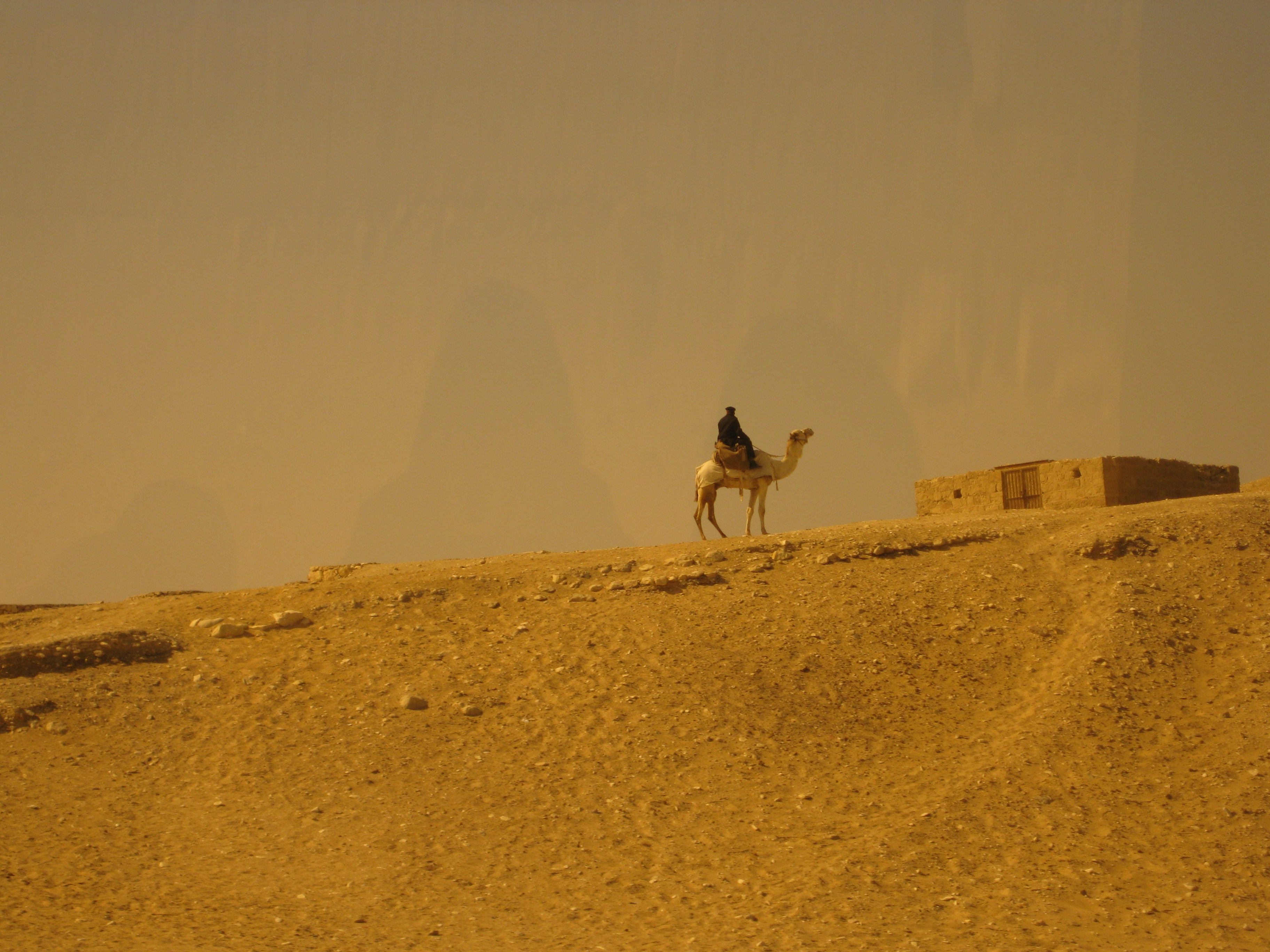
Egypt, outside of Cairo

The obvious reason that traveling with another person causes you to get to know them is the vast amount of time you’ll end up spending together. This is doubly true if the trip involves lots of travel time (by car, train, plane, bus) during which there aren’t many distractions and you don’t have much to do besides be together. You’ll probably end up talking a fair amount. You’ll see this person at all times of day and in many different moods (excited, tired, cranky, hungry, interested, relaxed, etc.). It’s harder to hold onto a public persona under these circumstances; the mask tends to slip.

You’ll discover, if you don’t know already, how they interact with the world around them. How do they respond to trying something new? What about something new that they’re trying just because you want to? What activities do they end up actually advocating for or spending time on? Which ones can they obviously not stand? How much downtime or quiet time do they need? How do they react to crowds? Discomfort? Fatigue? How engaged are they in what they’re doing?

Traveling also requires many decisions, and watching what someone decides, how they decide it, and how they try to communicate with you can also be very revealing. When and what are you going to eat? How are you going to find a restaurant? On what activities will you spend your time? What souvenirs do you buy? Even the timing of when you go to bed and when you get up in the morning can be a point of contention.

Iguazu Falls, Brazil

And then there’s that inevitable moment when things go wrong. And make no mistake about it, things almost always go wrong at least once during a trip. Often a lot more. These moments are among the most revealing of character and personality: how he deals with stress, what kind of fiber she’s made of, how resilient he may or may not be, how creative she is when thinking of solutions. And these are also the moments that can make or break a relationship, either throwing the two of you into conflict or bringing you closer together.

Of course, even if we can’t travel with a certain person, we can learn a bit just by spending some time asking them about their trip. What do they tend to talk about: the logistics? the food? the physical activities they did? the beautiful painting they saw? the people they met? Do they turn their trip into some kind of narrative through which they find insight or meaning? Do they dwell on what went wrong (the weather, bad food, lost luggage, etc.) or what went right (or maybe a bit of both)?

Traveling with someone is challenging, so don’t do it to keep the peace and maintain the status quo. I’ve heard stories of friendships ending during trips because they aren’t strong enough to bear up under the additional stress. But if the end goal is not to keep a friendship going at all costs but rather to know a person more deeply, then travel might give the insight we seek. We might not like everything we discover, but sometimes we’ll also find that we love that person anyway.

Your turn: Where would you like to visit? What aspects of a trip do you tend to talk about once it’s over?

Read Full Post »

I’ve been following a conversation on one of the forums I belong to about what works when blogging. You know, the type of discussion in which we talk about what engages the reader and what might increase a blog’s audience, while sharing do and do not tips and all the normal considerations of blogginess.

The estimable Ferrett shared a link on his post on how to get comments. There is much good advice to be had in this essay and the one about blogging that precedes it, but there was one sentence that particularly stood out for me. Ferrett says, “If you’re a conciliatory person by nature, writing a pleasant essay that excuses whatever it is that bugs you with a “But I guess that’s how people are” will not get comments either, because you’ll be so wishy-washy that nobody will be able to disagree with you.”

This sentence popped out at me because I had an instant “ouch” moment of recognition. Yeah. I went through the “Oh no, I probably do that” period to the “Oh God, I hate it when people are wishy-washy” phase to the “I need to stop doing that” realization. It was fun like having a root canal done is fun (and wow, do I now know a whole lot about that). And thus the idea of my newest project was born.

The fact is, I want to be a nice person. And I want you to like me. I don’t even know who you all are, but that doesn’t matter; I just de facto want you to like me. Which I hope you can see can be a bit crazy-making. I enjoy smoothing things over, keeping things calm, following the rules, being reasonable and fair-minded, and not stirring up the pot. Being a people pleaser is, in a way, very reassuring. It allows me to feel that I have some control over life. Never mind that I know intellectually that I have about as much control over my life as I do over the U.S. government (I vote, so there’s my tiny little sliver of control right there).

Unfortunately, there is such a thing as too nice, and sometimes I have trouble finding that line. Plus I definitely do not want to be wishy-washy (the horror!). Hence the project. I am going to write THREE blog posts that are not conciliatory. Well, at least I’m going to try very hard, and you can tell me how I’m doing. I’m planning to publish all three in a row if possible, but in any event I will publish them all in a timely manner. (Really I want to write only one, and then see how it goes, and then maybe write another one if it wasn’t so bad. Talk about wishy-washy! So that’s why I’m committing up front to three.)

I’m depending on you, my readers, to help me make this project a success. Here are some ways you can get involved:

  1. If you are also a people pleaser and a blogger, you can make your own commitment of writing x number of non-conciliatory posts. I will cheer you on, and we can provide moral support for each other!
  2.  You can tell me how I’m doing and call me out if I’m being too nice in spite of myself. I’m so used to doing it, I’m pretty sure I’ll do it sometimes without even realizing it. So I need your eyes.
  3. You can function as a part of my own elite cheerleading squad, telling me how great it is that I’m saying things people could disagree with.
  4. You can disagree with me. In public. Especially if you are a people pleaser too, but really no matter who you are. (Just no trolling. Trolling is not cool and will not advance the cause.)

Right. First post should come out on Thursday. Wish me luck, and feel free to share any last-minute tips (believe me, I’m going to need them).

Read Full Post »

« Newer Posts - Older Posts »