Feeds:
Posts
Comments

Posts Tagged ‘Amy Sundberg’

Does publicly stating our goals make us more accountable and therefore more likely to achieve them? According to some recent research, no, not as much as we may think. Apparently sharing a goal publicly sometimes actually decreasesour commitment to it. In addition, we feel we’ve made more progress towards the goal just through the act of sharing it, without taking any other action whatsoever, therefore making us more likely to feel complacent or like we don’t need to work as hard.I bring up this little tidbit of research because I’ve seen lots of advice saying the exact opposite. I’ve been advised that sharing my daily word count, both target and actual number, can help my productivity. I’ve seen people sharing their monthly fitness challenges and their target weight numbers. Even my routine of blogging twice a week is a public commitment of sorts. The tried and true advice seems to be that if you wish to finish a project, tell someone about it and that way if you don’t do it, you’ll feel bad–hopefully bad enough that you’ll actually push yourself through it.Yeah, and that works so well with New Year’s resolutions…

Increasing accountability can be a wonderful tool. I have many friends who take exercise classes or work with a trainer on a regular schedule to keep themselves exercising. Music lessons work in the same way; after we have paid the money and form a working relationship with our instructor/trainer, we have greater incentive to “get our money’s worth” and work harder for our instructor’s praise. Other people make their business goals public and are thus able to gain valuable PR, build tribes (aka fan bases), and raise capital. Sharing goals can also be a great way to bond with a community.

However, I question whether external validation, pressure, and support are enough. Perhaps they’ll give us a boost when we need one and help get us through the hard times. But we shouldn’t forget the importance of internal commitment. How highly do we value our goals, and do we value ourselves highly enough to see them through? What do we actually care about? How can we best support ourselves? And at what point do we need to reevaluate our goals and adjust as necessary?

I don’t think the answer is to eschew public goal-making altogether. Rather, I think it’s important to pay attention and make sure that stating our aims publicly is having the desired effect. If we realize that telling other people what we mean to do is making us feel like we’ve accomplished more than we have, we can compensate for that fact by giving ourselves “extra” to do. If we realize that we often share plans that we don’t follow through on, then we can stop sharing and see if there’s a noticeable difference. If we have systems in place that work well at increasing our accountability, then we can keep on doing what works.

We are not cookie-cutter creatives; we are not one-size-fits-all human beings. As a result, so much advice and so many rules turn out to be over-simplifications. When thinking advice over and deciding on a best course of action, here’s what I try to remember: do what works.

Read Full Post »

Photo by Ali Leila

Some people know they can’t change the world. They are beaten and dreary, prone to complaining about things they know they can’t control just for the sake of complaining. The world is a hostile place, and these people are its victims. Nothing will ever be better for them, and nothing will ever change. They live in a haze of “can’t,” and therefore they spend their lives in a prison of impossibilities, devoid of hope.
Some people hope they can change the world. They realize there are a lot of things that could use some changing, and that many of the needed changes are on such a large scale they can’t even begin to fathom how they could make a difference. So instead they focus on what they can change. Sometimes these people start out small, with a smile or a twenty buck donation, or by educating themselves further so they gain a greater understanding of the world around them. These people understand that affecting one other person can have a ripple effect, therefore giving their actions meaning.

Some people think they can change the world. They have big ideas and even bigger dreams, and when they speak about these ideas, a certain brightness creeps over their features, serving as a beacon in the long, cold night of apathy. Not only do they have ideas, but they act upon them. They tend to try many things, and sometimes they fail. We might expect them to slink away after such failure, but inevitably they brush themselves off and either tackle the problem from a new direction or find another problem to address.

Some people are changing the world. Are you one of them? Do you want to be?

Read Full Post »

For most of my life, I have bent over backwards to avoid disappointing anyone.

This is classic behavior for the dedicated people pleaser. We hate saying no (even when we force ourselves to say it anyway). We want to make people happy, avoid conflict, and live up to any and all expectations placed on us, even if said expectations are completely insane. As a result, many of us turn into perfectionists, and we drive ourselves up the wall with anxiety trying to live up to an impossible ideal.

So now I practice disappointment. I give myself permission to disappoint someone else if I believe it is the right thing for me to do. After years of putting everyone in front of myself, I practice putting myself first. I ask myself what I feel comfortable with. I ask myself what I feel like doing. I ask myself how I want to be treated. And I try to make my decisions accordingly. Not in the spirit of being unkind or selfish, but in the spirit of finally giving myself control over my own life.

Sometimes practicing is difficult. I had someone make a request of me a month or so ago. It was something to which I had already responded no earlier in the year, and something which, if I agreed to it, would undoubtedly make me very unhappy. I said no again, and the person wrote back to tell me how disappointed they were, and how everything was going to be much more difficult for them now. I, of course, felt like melting into a puddle and wallowing in my failure as a human being.

Instead I made it into an exercise. I thought of all the other nice things I had done for this person over the last year. I reminded myself that I also have a right to be happy. I didn’t ignore, as I usually do, the fact that this person has a habit of asking me for things while not being particularly nice the rest of the time. I realized that disappointment isn’t a big deal in the scheme of things–I am often disappointed myself, and yet somehow I carry on, so the odds were good that this person would be just fine. And somewhere near the end of my thought process, I knew that just because a decision of mine had caused disappointment didn’t mean it was the wrong one.

So now I sometimes disappoint people. I don’t always give the “right” answer. I don’t always hide my own feelings. I still endeavor to be tactful and kind, but I’m able to stand firm when I need to. And even when I fail, I’m much more likely to recognize what’s going on. For those of you who have always been able to do this, it might not sound like much, but for me it’s like living in an entirely different world.

A world in which I’m finally allowed to be me.

Read Full Post »

It’s time, my friends, for some housekeeping.

– I have a guest post up over at the Parking Lot Confessional entitled Own Your Creative Process. It’s about the dangers of overcomparing yourself to others and following advice that doesn’t work for you personally, two subjects that you probably know are close to my heart. Check it out!

– I realized that I forgot to mention on the blog when my story Breadcrumbs and Thighbones came out last month over at NewMyths.com. Anyway, it’s out! It’s a fairy tale mash-up of sorts and was very amusing to write. You can also read a fun interview with me if you click on my name on the story page.

– I have a new About page for the blog, now that I (possibly) have a better handle on what exactly it is that I’m doing here.

– By the way, it was brought to my attention last week that not everyone is aware they can subscribe to this blog via email. You can! See that email subscription box at the top of the right sidebar, right under my photo? If you click the Sign Me Up! button and input your email address, you will magically receive everything I do on this blog in your inbox. Mind you, I’m perfectly fine with you using an RSS feed, or clicking over occasionally from Google+ or Twitter or Facebook, or however it is that you got here. But if email happens to be convenient for you, just know that it is possible.

– Now that I have finished those massive posts on social media, I can turn my attention to something else for a while. What, I haven’t quite decided yet, so now’s your chance. If there’s something you’ve been dying to hear me talk about, please tell me about it. I can’t promise to take all suggestions, but I certainly will think about them.

And that’s all the housekeeping I have for now. I hope everyone has a great weekend. My husband and I are going to be celebrating our six-year meeting anniversary, so I’m already looking forward to it.

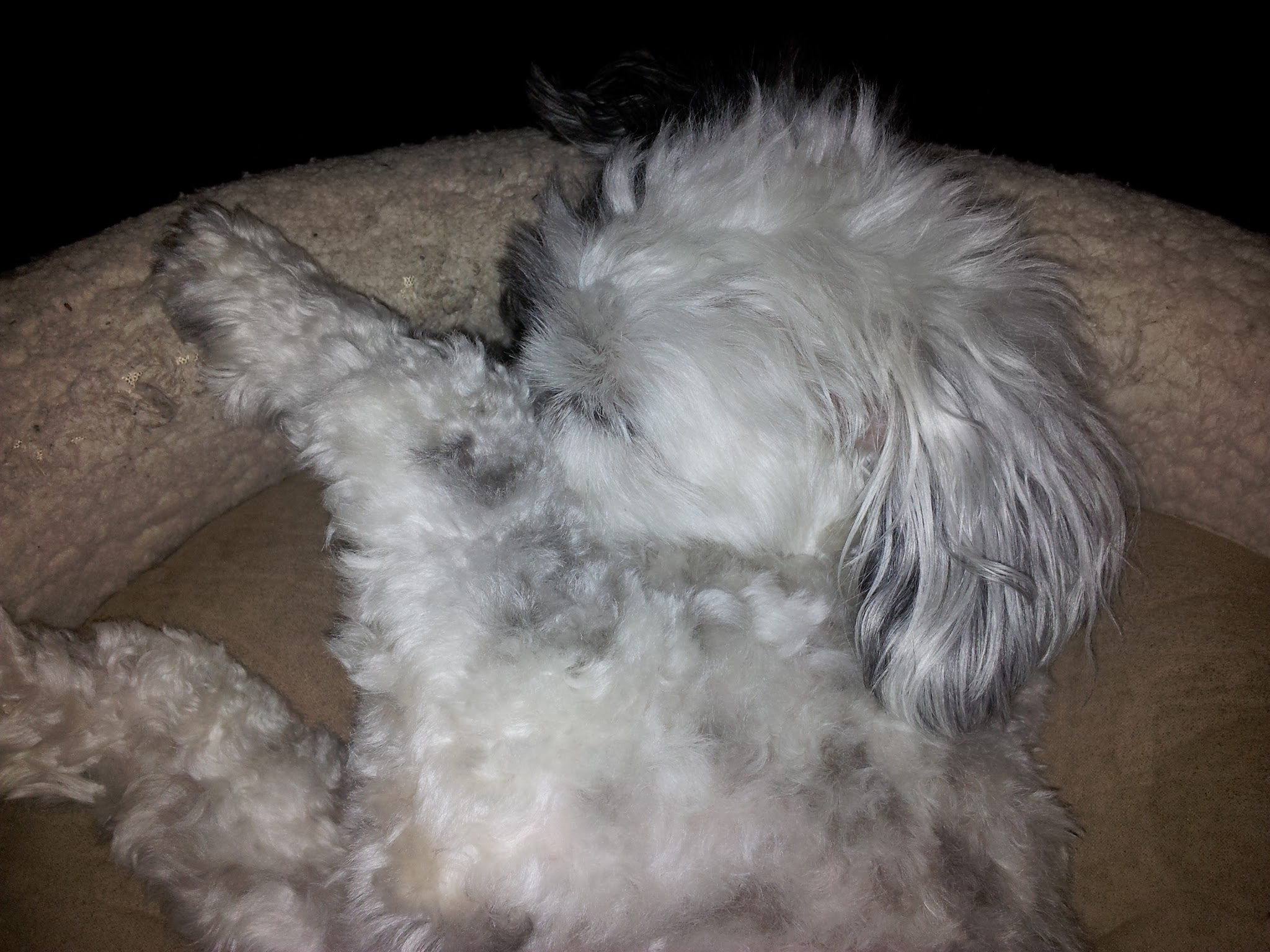
And now, for the obligatory Nala photo:

Nala feeling shy. Or maybe just sleepy. It's hard to tell.

Read Full Post »

So you’re a writer using social media. Either your agent or publisher has persuaded you to do it, or you’ve heard that new writers should start building a platform even before they have a deal on the table, or you’ve decided to take a greater role in publicity for your creative work. Whatever the initial motivation, a writer on social media has to answer the basic question: what am I going to talk about?

A lot of writers fall back on the obvious answer: well, we’ll talk about writing, of course. After all, that’s why we’re here interacting with strangers in the first place. And that’s what we’re passionate about, and what we think about all the time, and what we are closest to being an expert about. From this thinking arises the bottomless pit of word count stats, updates on the WIP, and pleas revealing writerly insecurities, not to mention the massive sharing of articles about writing.

This may come as a big surprise, but the nitty-gritty details of writing? NOT interesting to the average non-writer person. And guess who you’re trying to connect with via social media? Potential readers, many of whom will hopefully be non-writers. See the problem here?

I’m not saying we can never talk about our writing. Indeed, part of why social media is effective is because we can use it to promote our work, whether that be our latest book, short story, or blog post. We can also become more active in a writer community, through which we can learn information about craft and business and be supported by like-minded writers. This is all fabulous and useful. But we also want to be building a network of readers, people who theoretically might be willing to spend money to read our work, and if all we do is post how many words we’ve written today or that we’ve had a good or a bad writing day, these potential readers might get bored.

However, fear not. We are writers, and we are capable of writing engaging content, even if we secretly fear that we are boring. All we need to do is think about our audience (those potential readers I keep talking about), think about ourselves and our interests, and find a place where those two groups intersect. Easy, right?

I’ll use science fiction and fantasy as an example since those are the genres and audience most familiar to me. (YA, unfortunately, is a bit trickier, since the audience and the purchasers are not necessarily the same people.) Subjects to consider discussing via social media if you write sf/f include: books, movies, comics, etc. in the genre (or even outside of it); politics (after all, Lois Bujold says that speculative fiction novels are fantasies of agency, but be aware that discussing politics on the internet has its perils); history (esp. for writers of historical fantasy and alternative history); technology; futurism; science and advances in science; folklore; anthropology; geek culture; gaming (board gaming, RPGing, etc.); costuming; philosophy. The list goes on and on. Not that every writer should talk about every subject mentioned here; we each get to choose subjects that we like and feel comfortable talking about.

So in between posting about your newest story coming out and sharing a great article your friend wrote about writing, you can ALSO muse about some interesting strategy ideas you had during your latest game of Dominion and share an article about a recent awesomesauce scientific discovery or some recent photos from the Mars Rover. And if you’re being especially organized, you can share that great writing article with only your writer friends via your Writers circle on Google+ or your Writers list on Facebook.

And if you want to talk more accessibly about writing, think about what aspects are most intriguing to non-writers. However irritating you might find the oft-asked question about where your ideas come from, the reason that question pops up again and again is because people find it interesting. Think of the more “glamorous” aspects of a writer’s life and write about them: where ideas come from; strange facts you discovered while researching; travel due to conventions, conferences, and book tours. You can also take problems you’ve faced while writing and universalize them to apply to other creative disciplines or develop them into general life lessons.

Finally, the use of key words are essential. People find writers on the internet in a variety of ways, and perhaps the strongest of these is the network effect (aka word of mouth). But there are other ways to connect online. Let’s say I’m obsessed with Dominion and post about it once a week. And let’s say a reader who also happens to be obsessed with Dominion searches for it on Google+ and finds my posts. The reader might start following me not because I’m a writer but because they like to talk to me about Dominion. And then, months later, when I announce my next book is coming out, this Dominion friend of mine might decide to check it out. Why? Because now she knows me and wants to support me. Or she finds me interesting and thinks she might like the book. But this reader would never have found me if I didn’t make myself easy to find by using key words. If you’re talking about something related to psychology, make sure to use the word psychology somewhere in your post. If you’re talking about the Mars Rover, perhaps you can slip in the words “space exploration” into your post. Help people find you.

The community of writers needs its wonderful specialist blogs on the craft and business of writing, and the writers involved in these blogs are providing an invaluable service. Writers also need ways to communicate with and support each other, and networking with industry professionals can provide us with opportunities and expert insight. But when we think of the bigger picture of social media, we need to remember the non-writers too. Think of each social media platform as a cocktail party. We want to be witty, well spoken, and concise. We don’t want to be the prima donna who simply talks about herself all the time or the bore who drones on and on and on; instead we want to ask questions and discuss subjects that are interesting to more than just ourselves.

So ask yourself these questions: what am I interested in besides writing? what do I enjoy talking about? who is my audience? what do we have in common? (The most obvious answer here is, of course, a love of BOOKS. But then dig deeper.) We don’t have to be perfect on social media, and we can’t always be interesting to everybody, but a little bit of effort can make a huge difference.

Read Full Post »

Earlier this week we covered Facebook’s new direction, including both the potential large upside for writers and the accompanying privacy concerns. But what about Google+? Where does it fit into this picture? (Disclaimer: my husband, you may remember, works on Google+, so I’m not an uninterested party here. Apparently I also need to tell you explicitly that these are my opinions and not his. So yes, all mine. Especially the brilliant parts.)

Google+ has only been public for a little more than a week, and has only been live at all for the past three months. So we’re still in the very early days, which means there is still a lot of room for conjecture. First, let’s talk about a few differences between Facebook and Google+ (although with all of FB’s recent changes, there are less of them than there were). I was happy to have independent verification that Google+ is not doing the creepy cookie thing that makes me so concerned about Facebook and its privacy. There’s also less chance of accidentally posting information you don’t want posted, which is always nice. With its recent integration of Hangouts (group video chat) with new tools, especially Google Docs and screen views, Google+ lends itself well to collaboration in creative, business, and educational fields (and even recreational). The Google+ stream is not filtered the way Facebook is; you see all the posts being shared with you, although not in straight reverse chronological order as sometimes new comments will make an old post jump back higher in your stream. Google+ has garnered a reputation for hosting more in-depth discussions and conversations and for being a great platform for meeting new people.

I’m reluctant to talk about Google+’s real names policy because I know that many people feel passionately about it and I don’t want this conversation to center only on that. Regarding writers, I will say that I don’t think it’s Google’s aim to penalize those of us who write under pseudonyms. I personally expect that once Google+ has matured a bit more, this policy will lose its relevance, if for no other reason than that Google will find it impossible to enforce such a policy. For writers in particular, as long as your pseudonym looks like a standard American name (ie first and last), the odds are that you won’t have problems. But it is a concern that Google needs to address in some way so that users feel completely comfortable investing in the site.

A baby hedgehog with a lot of potential… (Okay, you’ve got me, I just wanted to include a hedgehog photo.)

Why might writers consider being on Google+ right now?

1. Hatred of Facebook. It happens, and now there’s an alternative for having an online presence that is more conducive for conversation with fans and communities. Twitter can also do this, but it feels more ephemeral in time and is difficult for communicating more complicated ideas or sharing links (since they are truncated and therefore very mysterious). So this may partly depend on your style of communication, and of course, carries the downside of not having the sheer number of users as Facebook.

2. Early adopter status. One of the main benefits of this is getting a head start. Users who are early adopters tend to have large follower counts, both because they’ve been doing it longer and because they are present at the beginning when more people are looking for interesting content for their streams. For example, I have well over 1000 people following me on Google+ after three months, whereas I have friends in the three hundreds on both Facebook and Twitter.

3. If you are an sf/f writer, being active on Google+ right now is a no brainer, because guess what? Your fans make up a large portion of the current user base. Google+ is known to be particularly popular with the high-tech crowd, many of whom enjoy science fiction and fantasy. So the potential for building your fan base is very good. Not to mention that the artist communities (comic book artists, photographers, and writers in particular) are well represented as well–hence why Google+ is great for collaboration and networking.

4. Positioning. Writers want to be in the best place to take advantage of whatever changes may benefit them. Keeping up to date with what’s going on with these social platforms and understanding the basics of how they work means greater speed in adapting and leveraging them to work for you.

What I am most excited about, though, is the huge future potential of Google+. Remember how I said that it is becoming known as a great place to meet new people? Well, guess what the point of having a social media strategy is in the first place. Yes, that’s right: meeting new people in order to build a fan base. On Facebook, the vast majority of my friends are people I’ve met in real life. On Twitter, the vast majority of my followers are newer writers like myself, indie writers, and social media professionals who use words like SEO in their personal descriptions. I certainly have a fair number of writers following me on Google+ as well, but I’m also being followed by lots of..wait for it… normal people! I know, right? Who knew that could happen? And these people are all potential readers who might like my work. Plus, for an added bonus, they’re really interesting to talk to. So while I stand by my assertion that Facebook is great for more established writers due to its larger reach, Google+ is great for writers actively trying to build a fan base before they even have a publishing track record. If you read a lot about social media and writers, you have doubtless read how we’re all supposed to start building a “platform” a few years before our first novel hits the presses. Google+ seems positioned to be a powerful tool to do just that.

With its new search feature that came out last week, Google+ became a tool for discovery. I can now search for posts about subjects I care about on Google+, which is a great way to meet people. With its release of shared circles, in which users can take a screenshot of a current circle and share it with their followers, we’ve been given the means to share groups of people who we know are interested in photography, or current events, or reading, or whatever topic we want, which will also facilitate discovery. My hope is that Google will continue to pursue this line of development and begin to offer more advanced and refined methods of finding other users with similar interests.

Next week I’m planning to discuss ways for writers (or anyone else) to be interesting and discoverable on social media. And then maybe I’ll be able to tear myself away from this topic for long enough to talk about something else.

Read Full Post »

There have been a lot of shifts in social media in the last few months. Google+ has entered the field and become known for its Hangouts (which can now even be broadcasted), its conversations, and its potential for collaboration. Facebook launches the rest of its redesign on or around September 30, including Timeline (the scrapbooking and record-keeping replacement of the profile and wall) and deep integration with applications, most notably media applications (music, movies, TV, news and articles, etc.).

First, a few more details about Facebook’s newest features. Its application integration will make it easy to automatically share information on the internet, from what article you’re reading to what recipe you’re cooking to what song you’re listening to. Once you give a certain app–whether that be Spotify, the Washington Post, or Hulu–permission to share your activities (you only need to give this permission one time ever per app), it will stream all your behavior directly to Facebook without you having to make additional clicks for each item you’re sharing. The idea is that this will make it easier for people to serendipitously discover media based on what their friends are doing, and there are already discussions about how this could be revolutionary for the music industry in particular (not to mention a possible savior of the faltering print news organizations). All of these application updates will be shown in the scrolling ticker box on the righthand side of your screen, as well as being recorded on your Timeline. (I’ve also already seen some of them creeping into the News Feed.) And speaking of the Timeline, you (and your friends) will be able to see anything and everything you’ve ever put up on Facebook.

What I’m interested in is how these changes will affect possible social media strategies for writers (although much of what I’m thinking may affect other creatives as well). First, Facebook. Honestly, it is difficult (although not impossible) to avoid strategies that don’t incorporate Facebook in some way, either through a personal account or through Facebook Pages, at least not for writers who have at least one novel published. Once you have fans, Facebook becomes logical since it has the largest user base, therefore making it much more convenient as a way for people to find you. The less of a niche market you’re targeting, the more important Facebook becomes. Having an author website and/or blog is great, but following a blog, whether through RSS, bookmarks, or email subscription, takes a greater level of engagement and commitment than simply liking an author page, and therefore Facebook gives writers a greater reach, allowing them to keep a larger fan base updated as to their activities and upcoming releases.

Once the changes to the Open Graph (aka the applications) roll out, Facebook offers even more advantages to the established writer. While I didn’t see Amazon, B&N, or Goodreads on Facebook’s truncated graphic of partners, that graphic by no means represents their complete list of media partners. Rest assured that one way or another, you’ll be able to share the books you’re reading through this system sometime in the not-so-distant future. Factor in the burgeoning e-book market, and it doesn’t take a social media expert to figure out that Facebook will play an even larger role in book marketing. The ticker feed, through which uses will share without even having to remember to do so beyond granting the initial permissions, has huge potential for increasing word-of-mouth on books people are reading, and word-of-mouth is among the very best of marketing that a book or business can receive. This is a big deal, dear writers, not just for the music and newspaper industries but also for the publishing industry. And hopefully you are beginning to see why I think refusing to be on Facebook as a writer carries a hefty cost. Granted, you’ll receive the ticker word-of-mouth regardless of whether you have an account, but how much better if a user finds you via Facebook and is then able to Like your page?

However, I do have serious concerns about the privacy implications of these new features, which seem to me to be ultimately much more about what’s good for Facebook and advertisers than what’s good for the users. Of course, this is all very new and not even rolled out for most users, but I’ve already had a friend who accidentally shared that he had read an article on a controversial subject. Not a great sign, and obviously Facebook users will have to stay really on top of their sharing. Plus there have recently been allegations that Facebook monitors everywhere you visit through your browser, even if you are logged out (through cookies, for those of you technically cognizant people), which means you could be sharing an awful lot of information with them (often without even realizing it). If this is true (it is certainly technically possible), there are measures that can be taken to minimize this while still using Facebook, like denying all apps access to your account, using an incognito window of the Chrome browser for Facebook and not opening any other tabs in that window, or using a dedicated browser for just Facebook (ex. if you use Firefox for your normal internet usage, you can download Chrome and use it for only Facebook). But I worry that these potential security problems and accompanying measures might be too confusing for many writers to understand and implement.

My other concern has to do with noise. If everyone on Facebook is sharing all their daily activities with everyone else, literally every movie, song, TV show, hike, meal, book, article, run, sleep cycle, etc., how effective will this be as a marketing strategy? Will significant numbers of people actually discover new authors and books through their tickers, or will any such discovery be drowned out by the sheer overwhelming volume of information? We will have to wait and see how sophisticated Facebook’s ranking abilities are–will they be able to skillfully filter and show users information that is actually of interest? Will they be able to choose your friends who have a similar taste in books to you? Possibly, but right now it’s anybody’s guess.

At the present moment, Facebook is a powerful tool enabling writers to reach their readers. I plan to continue to use it, while staying very aware of what’s going on with my privacy and taking measures to alleviate Facebook’s intrusion into my life. As skeptical as I am that I will find enjoyment hearing every detail about what my many Facebook friends are liking/reading/watching/eating/listening to, I am sure I can survive at least five to ten minutes per week to keep up a minimal presence on the site. However, I can’t find fault with those writers who are concerned enough about their privacy to opt out of using Facebook.

So where does that leave Google+? Tune in on Thursday and I’ll tell you what I’m thinking.

Read Full Post »

I read a lot of blogs. Some I read regularly, some I occasionally swoop down upon and catch up in a big glut of reading, some I read only once. Many of these blogs are writer blogs, and I’ve seen more than one post about Writer Envy.

What is Writer Envy? It’s that niggling feeling in the pit of your stomach when you hear that Jay Lake averages 2,500 words per hour. It’s the pang you feel when you hear someone’s broken into a market that you’ve been dying to get into. It’s the discouragement of feeling that maybe you’re being left behind as one by one, all your writer friends get agents and publishing deals and more and better sales than you think you are getting.

Does anyone know why we call it green with envy?

Well, guess what? I’m giving you permission to be jealous, whether with Writer Envy or because of your friend’s superior cooking or for any other reason. To envy is to be human. And, it turns out, it can even be good for you. Psychology Today recently ran an article citing a recent study about envy. The results are fascinating: it turns out that feeling the emotion of envy both causes us to focus more on the object of our jealousy and boosts our memories. Basically, jealousy allows us to more efficiently learn and remember how to achieve what we’re jealous of.

Therefore, instead of beating ourselves up when we feel it, we can begin to think of envy as a tool. We can use it to make ourselves better writers (or cooks, or car washers, or underwater basket weavers). We can harness that energy to motivate ourselves instead of to discourage.

Example: Let’s say my friend Beth makes a sale to Greatest Ever Magazine, which is the market that I most want to break into. I can wallow and feel terrible about myself because Greatest Ever Magazine still sends me form rejections. Or, I can use my desires and feeling of jealousy to motivate me. I can read Beth’s story and analyze why I think Greatest Ever Magazine liked it. Perhaps the subject matter is perfect for the market, or perhaps the market prefers upbeat endings like Beth’s. I can figure out the strengths of the story, and then compare it to my own recent work. Perhaps Beth’s story shows excellent use of setting, whereas I have too many under-described, white rooms in my recent work. Or perhaps Beth’s story has a twisty and exciting plot that drives it, while my recent stories have all been character-driven. I can learn from my friend Beth’s success where the weaknesses in my own work are and how I might get started on improving them. Beth might even be willing to share her own insights on Greatest Ever Magazine. Meanwhile, because I am jealous, I’ll be more likely to focus and remember what I’ve figured out.

(This can also work, by the way, with embarrassment. I was so embarrassed that I forgot the names of the two rivers of Mesopotamia in seventh grade social studies that I will probably remember that they are the Tigris and Euphrates for the rest of time.)

Of course, experiencing jealousy doesn’t mean we can’t also feel happy and pleased for a person who has succeeded. And it certainly doesn’t excuse any bad behavior on our parts. However, knowing that our brains are designed to feel jealousy on purpose to give us a better chance of survival can change our outlook. Instead of seeing jealousy as an embarrassing weakness, we can see it as another way to move forward towards our goals.

Read Full Post »

The Thailand Test

I doubt it will come as much of a surprise that back in my dating days, I was always very interested in how my boyfriends responded to travel. Were they excited about the idea or were they neutral? Where had they already been? When I suggested a trip, what would they say? So my first trip with my now-husband was a pretty big deal. (Why yes, it’s personal anecdote time.)

After much discussion and way more procrastination than I was comfortable with, we finally settled on taking a trip to Thailand. I had never been to Asia and I really wanted to go (thus getting one step further to my six continents by age 30 goal), and Thailand sounded like a truly magical place: Buddhist temples, cheap massage, great food, and elephants. It wasn’t easy, but eventually I coaxed Yony into going.

We arrived safely in Bangkok, where we got lost in a poor part of town and managed to avoid a scam artist while still being totally confused. The rancid smell alone was enough to make us grateful to head out into the countryside. It was perhaps our third day in Thailand when we took a guided adventure tour that was to include a waterfall hike, an elephant ride, and some kind of boat (maybe rafting?) trip.

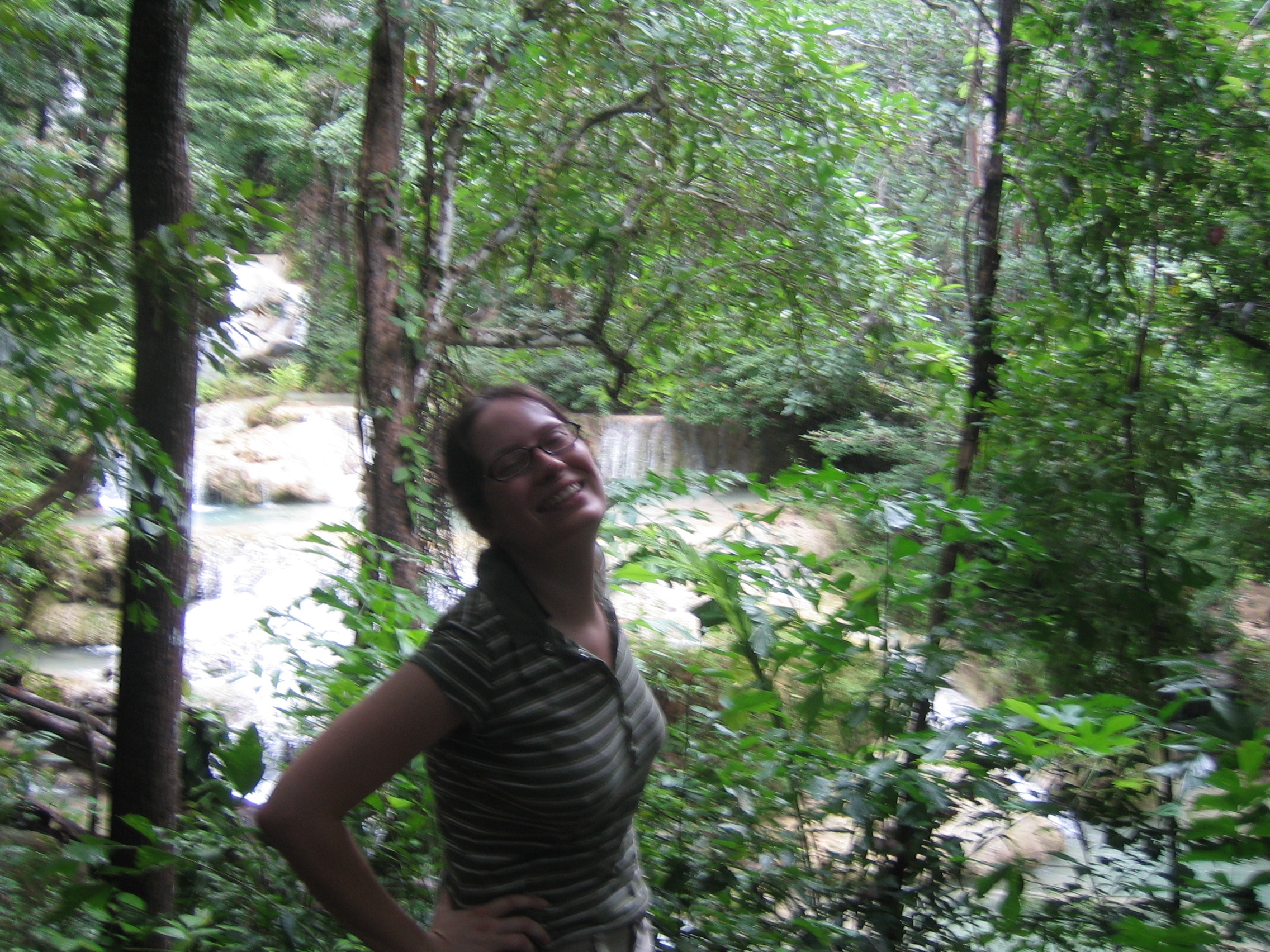
Me in the middle of the hike. Don't I look insouciant?

The trip began with the waterfall hike, which was a steep uphill climb through the mud on a hot, sticky day. The wise tourists stopped partway up at some pools where you could go swimming, but Yony and I were determined to reach the top, and I was trying with all my might and main to keep up with his faster pace. I was tired and uncertain of my footing, so I didn’t follow Yony to one of the viewing areas that looked difficult to reach. Because, you see, I was being careful. We eventually made it to the top and took some photos.

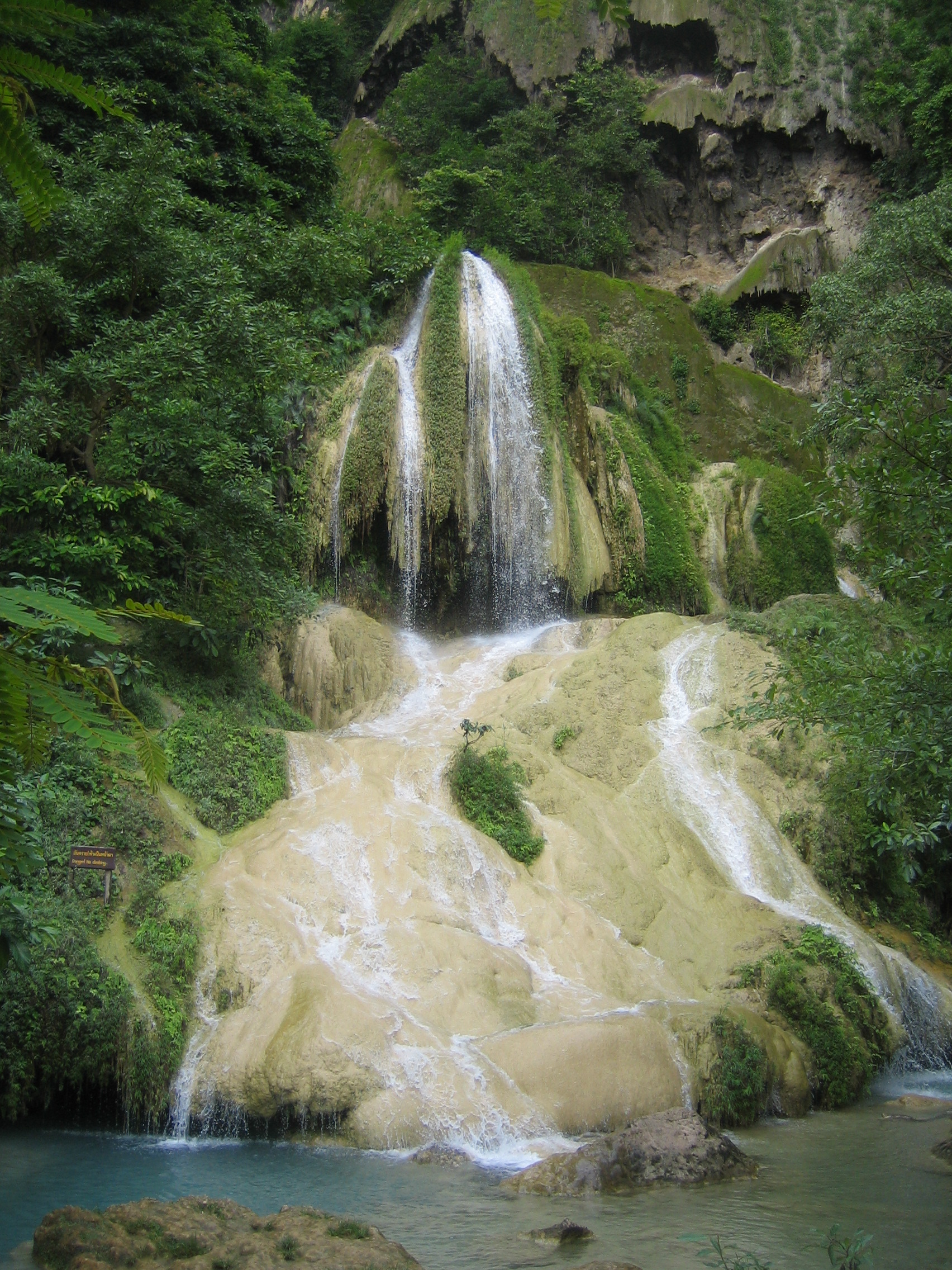
Beautiful view from the top

Soon after we started the climb down, I rounded a corner, slipped (whether on mud or slick rock, we will never know), and took a very bad fall down the slope. Yony was behind me, and from his perspective, I might as well have fallen off a cliff–I had fallen out of view and he had no idea how far I might have tumbled.

Luckily for me, I stopped at the bottom of that particular slope where the path veered to the right and didn’t continue on past the trail. Otherwise, I might not be writing this today. I was okay except for an extremely muddy backside…and a very injured ankle. And remember, we were still at the very top of trail, in Thailand where, as far as we knew, there was little chance of outside aid.

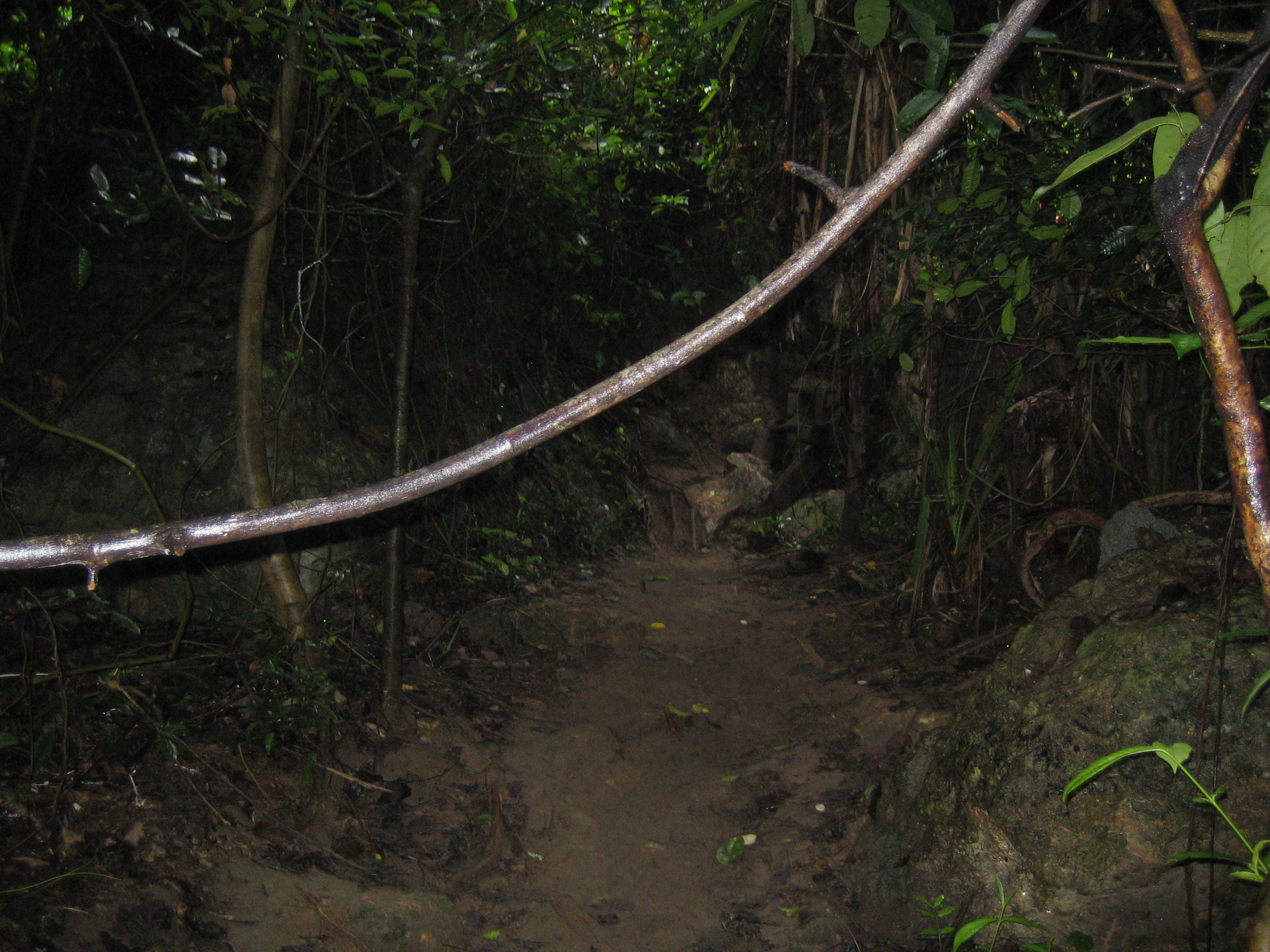
Some of the mud we had to hike down through.

We walked down that mountain together, Yony and I. He encouraged me onwards, he helped me past the narrow and slippery bits, I leaned on his shoulder as I limped downwards, every step sending pain shooting up my leg. I held it together for him, and he held it together for me, and after an endless walk, we reached the bottom.

When you travel with someone, you get to know them. Yony and I got to know each other better that day. He saw my levelheadedness in a crisis (one of the first things I did was to ask for the ibuprofen in our backpack), my determination, and my courage. I saw his devotion, his strength, and his patience. He realized how he’d feel if he lost me, and I learned how to trust him more than I had before. That day we became a team.

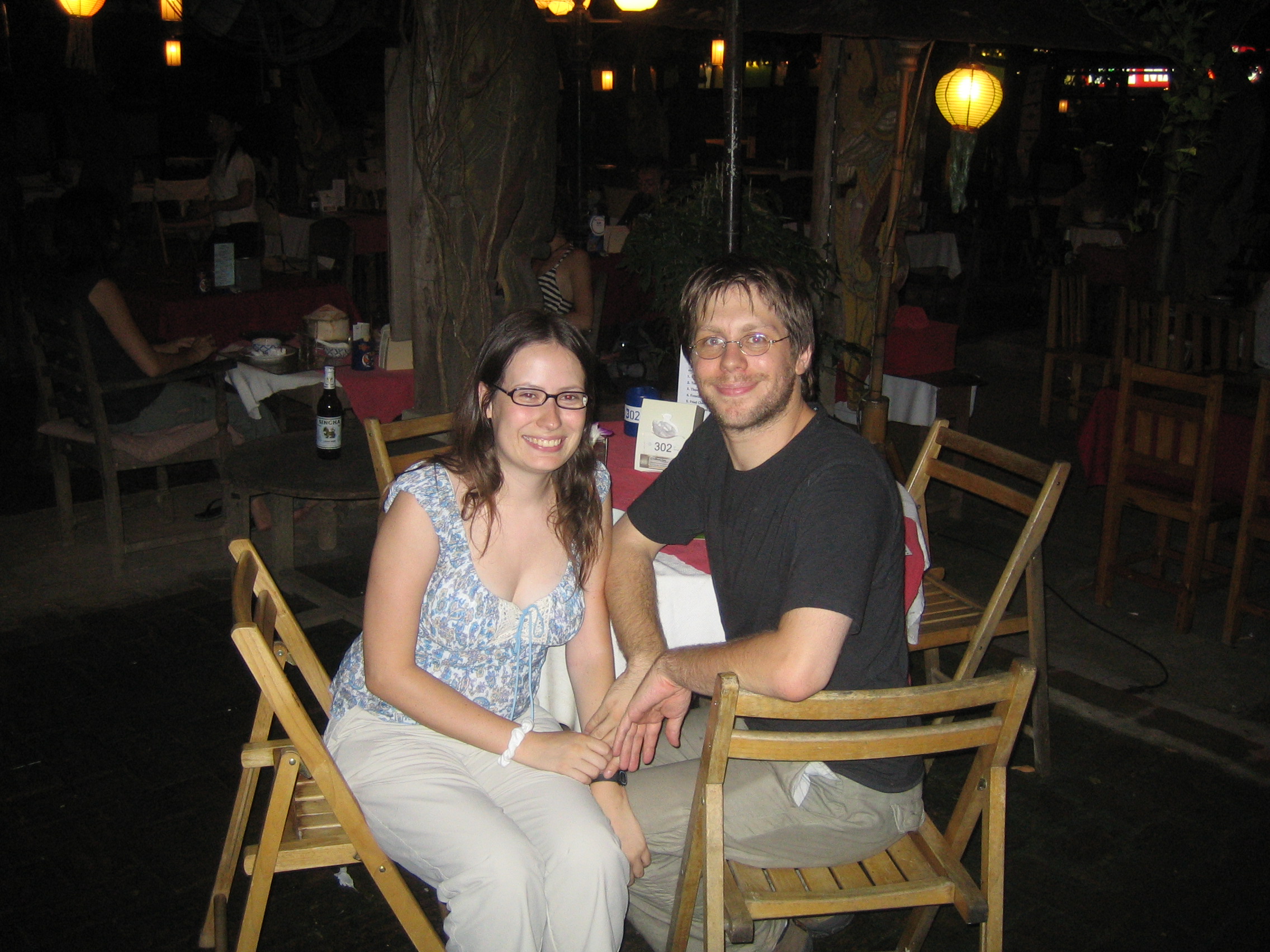
The Amy-Yony team

Of course, it’s not only through travel that we get to know people. We learn more about people by facing adversity together. Through grief and disappointment, hardship and disagreement, conflict and fear, we get to see deeper inside. We get to share the parts of a person that are weak, fearful, that make mistakes and have regrets. I said last week that travel can make or break a friendship, but in the bigger picture, it is those hard times and the hurt places within us that will test a relationship. And upon being tested, that relationship may fracture, fail, or grow stronger than ever before.

Read Full Post »

If you want to get to know someone, take a trip with them. If you really want to get to know them, don’t bring anyone else along, don’t take an all-inclusive guided tour, and either go somewhere that neither of you have been before or somewhere the other person truly loves.


Even deciding where to go together can be instructive. Do they want to go camping? On a cruise? On a beach vacation or to a theme park? Are they attracted to big cities or locations off the beaten track? Close by or international? Low key tourism or adventure travel? Or do they want to do all of the above? (This would be me, although it changes over time.) Are they willing to save up for a more expensive trip? Do they talk about how they’ve always wanted to travel but haven’t? Are they completely uninterested in leaving their region/state/country? Do they have a dream of someplace they’ve always wanted to go but haven’t visited yet?

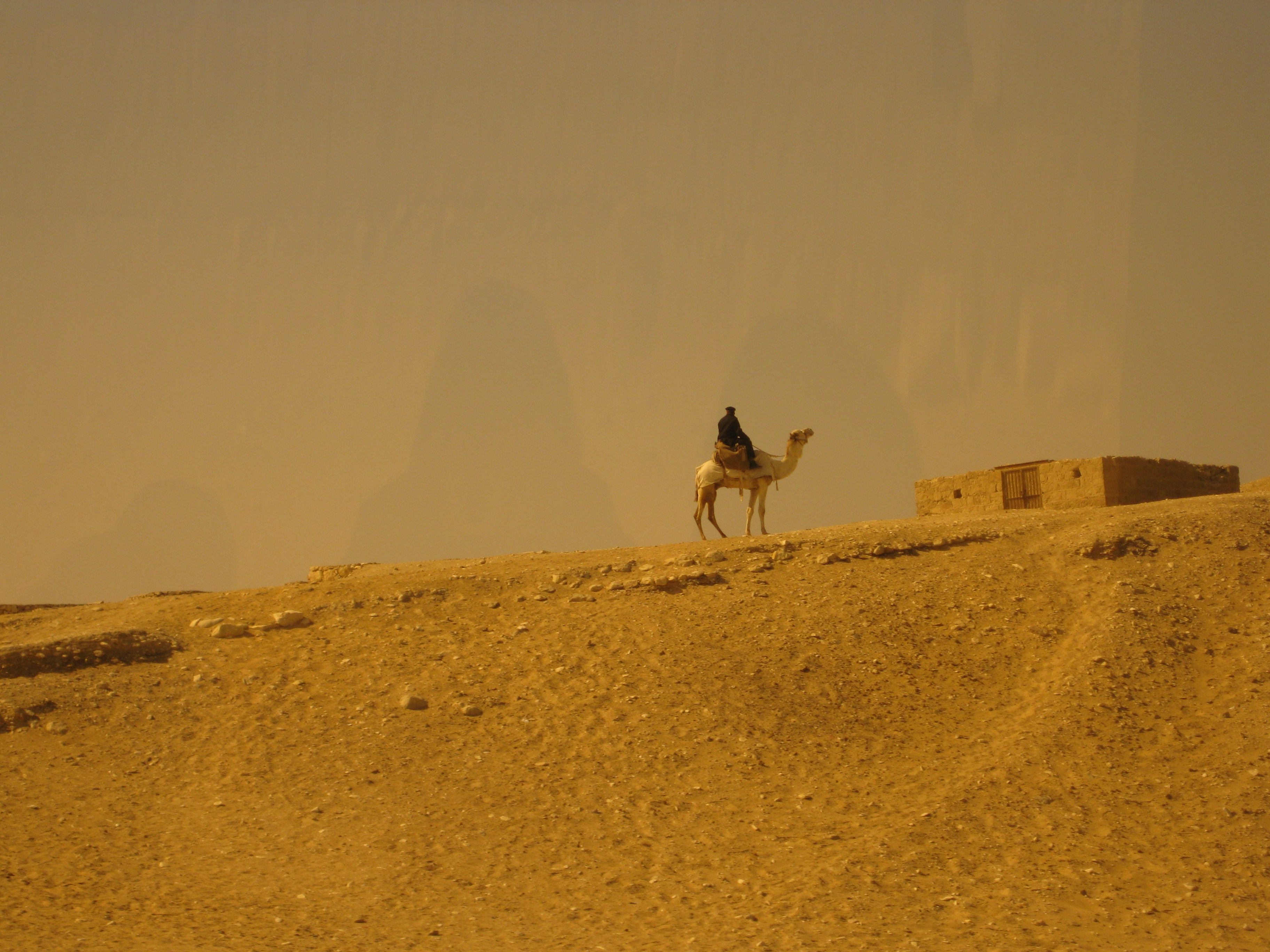
Egypt, outside of Cairo

The obvious reason that traveling with another person causes you to get to know them is the vast amount of time you’ll end up spending together. This is doubly true if the trip involves lots of travel time (by car, train, plane, bus) during which there aren’t many distractions and you don’t have much to do besides be together. You’ll probably end up talking a fair amount. You’ll see this person at all times of day and in many different moods (excited, tired, cranky, hungry, interested, relaxed, etc.). It’s harder to hold onto a public persona under these circumstances; the mask tends to slip.

You’ll discover, if you don’t know already, how they interact with the world around them. How do they respond to trying something new? What about something new that they’re trying just because you want to? What activities do they end up actually advocating for or spending time on? Which ones can they obviously not stand? How much downtime or quiet time do they need? How do they react to crowds? Discomfort? Fatigue? How engaged are they in what they’re doing?

Traveling also requires many decisions, and watching what someone decides, how they decide it, and how they try to communicate with you can also be very revealing. When and what are you going to eat? How are you going to find a restaurant? On what activities will you spend your time? What souvenirs do you buy? Even the timing of when you go to bed and when you get up in the morning can be a point of contention.

Iguazu Falls, Brazil

And then there’s that inevitable moment when things go wrong. And make no mistake about it, things almost always go wrong at least once during a trip. Often a lot more. These moments are among the most revealing of character and personality: how he deals with stress, what kind of fiber she’s made of, how resilient he may or may not be, how creative she is when thinking of solutions. And these are also the moments that can make or break a relationship, either throwing the two of you into conflict or bringing you closer together.

Of course, even if we can’t travel with a certain person, we can learn a bit just by spending some time asking them about their trip. What do they tend to talk about: the logistics? the food? the physical activities they did? the beautiful painting they saw? the people they met? Do they turn their trip into some kind of narrative through which they find insight or meaning? Do they dwell on what went wrong (the weather, bad food, lost luggage, etc.) or what went right (or maybe a bit of both)?

Traveling with someone is challenging, so don’t do it to keep the peace and maintain the status quo. I’ve heard stories of friendships ending during trips because they aren’t strong enough to bear up under the additional stress. But if the end goal is not to keep a friendship going at all costs but rather to know a person more deeply, then travel might give the insight we seek. We might not like everything we discover, but sometimes we’ll also find that we love that person anyway.

Your turn: Where would you like to visit? What aspects of a trip do you tend to talk about once it’s over?

Read Full Post »

« Newer Posts - Older Posts »