Feeds:
Posts
Comments

Posts Tagged ‘Amy Sundberg’

I thought I’d write today about self care, since I’m in the middle of a move, and moving is on that list of highly stressful life stuff, which means self care is something that I’ve been making extra effort to pay attention to right now. And it’s actually working; my stress levels are on the high side but not crazy high, and I have been having cheerful and happy times in spite of the move, and without that weird frantic edge that signals the presence of overwhelm.

So here are some self care things I’ve been doing:

1. I talk about the move. Whenever I want (within reason). This is huge because it means I’m getting emotional support during a high stress time. I’m getting to vent, I’m getting feedback about what’s going on, I’m getting comfort when I need comfort and celebratory time to help me remain positive about all the good things this move is going to bring. And it’s such a relief to have people know what’s going on with me.

2. I ask for help. This past weekend, my friends came over and helped me pack my entire place. In mere hours they completed a job that would have taken me days and days and reduced me to an incoherent, exhausted, and injured person. One of my best friends came with me to see the place I ultimately decided to rent to give me a second opinion. Other friends have been giving me information about the neighborhood and reaching out to give me doses of moral support. Feeling so supported and cared for definitely reduces the stress I’m feeling.

3. I fight the impulse to be frugal. When I know something is going to be expensive (like, say, moving), my first impulse is to do whatever it takes to save as much money as possible. This attitude puts a lot of additional stress on me, to put it mildly. And it’s so much easier to be frugal when you’re not in the middle of a mini-crisis. So I’ve been allowing myself to hire the movers who are slightly pricier than I feel completely happy with, and to pay for extra body work so I don’t fall apart physically, and to spend money to make problems less huge.

4. I make sure I have time for classic self care. Did I have a Gilmore Girls marathon, complete with frozen pizza and strange pie, a few nights ago? You bet I did, and I appreciated the energizing alone time. I’ve also been prioritizing sleep, walks and snuggle time with Nala, and hot tub time.

One of the pillars of my self care routine.

One of the pillars of my self care routine.

5. I take advantage of focus but rein in bigger ambitions. Things are going so well, I think to myself, perhaps I could up my daily word count, or query more agents, or do some more semi-stressful social things. And then I realize that no, instead I can appreciate that things are going well and keep the pace I set myself, while resisting the temptation to push myself too hard. I don’t have to do all the things right now. I can focus on my five top priorities and let the rest go. (For those curious, those are moving, novel, Nala, personal growth/care, and friends.)

6. I give myself a reward. When the move is completely over, I get to go to Seattle for a week. Thanks to frequent flyer miles and wonderful friends, I have an amazing trip to look forward to. So whenever I think, “Ugh, I hate moving,” I can then counter with, “But then I’m going to Seattle!” And then I can add on, “Plus my friends are fabulous! And I love the novel I’m writing!” Which makes it really hard to spiral into serious negativity. So maybe this one isn’t so much about giving myself a reward and more about feeling gratitude.

Of course, none of this would be as effective without this last one:

7. I clean up my life in the hopes that one crisis/setback won’t set off a chain reaction. I spend time with people who are good to me. I set and hold boundaries. I cultivate good things so it is easy to find gratitude.

Here’s to leveling up with my self care.


Read Full Post »

I was talking to an old friend this weekend about the meaning of life. You know, the way you do. It wasn’t even ridiculously late at night, and we didn’t take the morbid side path that’s usually an option in such conversations. The next day I happened to read Theodora Goss’s “Feeling Alive,” and so here we are, delving back into one of my favorite topics.

One of Dora’s main points is that there is the Frankl theory about meaning (projects, connections with people, and attitude) and then there is the Campbell theory that it’s more important to have the feeling of being alive than to know the meaning of life. (Does this make anyone else think of Sondheim’s song “Being Alive?”)

While there is an overlap between these two, many of the little things in life that I appreciate so much fall into the “Feeling Alive” category. Feeling alive can be a very physical experience, even hedonistic, whether we’re talking about having an amazing foodie experience or jumping out of an airplane or traveling around the world. Waking up after a good night’s sleep, sitting in the sun, hiking in the hills: all of these experiences remind me that I’m alive.

Photo Credit: Spencer Finnley via Compfight cc

And then there’s art, which in my experience falls squarely into both categories. Because art makes me feel more alive AND it is often through art (both creating and appreciating) that I find my own meaning. And I think those things that do fall into both categories have particular resonance for many of us.

What I don’t think is that every category like this is going to have the same resonance for everyone. And I also reject the notion that there is only way to find meaning for all of us. Finding meaning through art isn’t going to be right for everyone. Finding meaning through having kids and raising a family isn’t going to be right for everyone. Finding meaning through saving lives isn’t going to be right for everyone. (For example, I am sadly way too squeamish to ever have made it through medical school.)

But when we find something (whatever that something is) that works concurrently to make us discover our meaning and feel more alive in the process, then we’re onto something important.

I feel lucky because from a young age I realized art and meaning were intimately connected for me. For a long time I envied other people who had practical aspirations and knew what career they were going to pursue, especially when the career in question had a relatively straightforward path to success. Art isn’t like that. Art isn’t usually straightforward, and art is never a sure thing. But art has always been my personal pathway to fulfillment, and now I realize how precious that really is.

I’m saying art instead of writing because I was a musician before I started writing seriously, and my connection to my music felt much the same. I had a short period of time in my 20s in which I wasn’t engaged in any art whatsoever, and even though I’ve lived through much harder times, that period of time stands out in my memory for its relative bleakness. I realize now that is because that has been the only time I’ve been without much connection to meaning. I just kind of did things to do them, with most of the passion leached from them. Without my meaning, I also felt less alive overall. It was an eye-opening experience for me, and one I’m not eager to repeat.

What did I learn from it? That art makes me happy to wake up in the morning. Art inspires me and challenges me and keeps me from getting bored. As long as my relationship with art continues, I have meaning built into my life. It is a very intimate experience, one that both encompasses outside influences and all the people I’ve met and one that excludes them because the art goes on with or without them.

Which do you think is more important: finding meaning in life or feeling alive? Or are they linked, as they are for me?

Read Full Post »

Why I Need Beauty

Ever since Rahul wrote about beauty and how we don’t have the language to discuss it, I’ve been wanting to write about beauty. But it turns out he’s right, and it’s surprisingly difficult to talk about. For starters, beauty is measured so subjectively, and then I’m not used to saying anything about it except for, “Oh, isn’t that beautiful?” Which does not a blog post make.

But what I can talk about is what beauty means to me personally. Lately I’ve been thinking a lot of beauty as it pertains to my home, and how critical it is for my well-being to have some beauty in my surroundings. I felt silly about this too, I think because this is not something we normally talk about. This is not something I feel like I ought to expect or prioritize. Square footage or number and type of outlets or layout, no problem. But beauty? I feel spoiled for even considering it.

But as I thought about it more, I realized every place I’ve lived has had its beautiful aspects that I have loved. Most often, it’s about the trees. Redwoods grew right outside my windows in Santa Cruz, which I loved so much that whenever I’ve had the chance to live near redwoods, I’ve taken it. Another place had a beautiful bay window in the front, as well as this pleasant curving opening between the kitchen and the living room. One place had beautiful cherry flooring that shone in the sunlight. And another had quaint lace curtains that hung in the windows.

So in my recent search, I rejected place after place. They all had many additional problems, but the main problem as far as I was concerned was that they lacked beauty. There were no trees to love. They were dark, grimy, not cared for. They were in neighborhoods with chain link fences around each yard, or they smelled strange and I left with a sore throat, or they were in sterile communities where I wouldn’t feel happy walking Nala. After I left, I wasn’t thinking about this or that piece of beauty that had caught my imagination. Instead I was worrying about crime rates and how much water and garbage would cost and if I could impose enough of my personality on the place in spite of itself that I could be happy there.

Until I found my new place. Its main feature of beauty is a very tall window that pours light throughout the space. I fell in love with the sun, and that was that. I knew I could turn the place into a home.

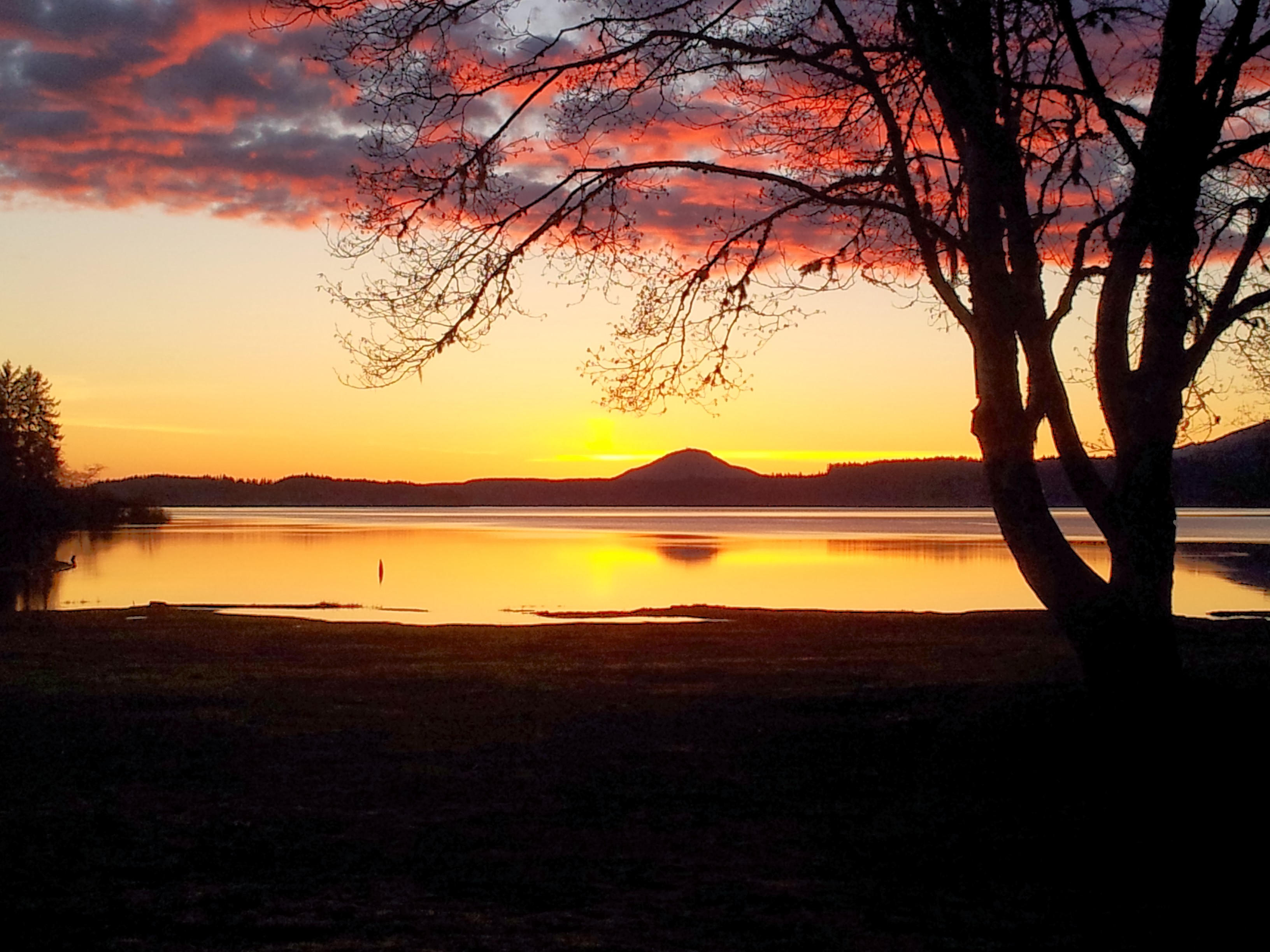
What beauty means to me. Photo by Amy Sundberg.

What beauty means to me. Photo by Amy Sundberg.

Why does beauty matter so much? Whenever I witness beauty, I feel an easing in my chest. When I’m happy, beauty adds to my sense of appreciation, and when I’m sad, beauty reminds me that all is not lost. The world cannot be a truly desolate place for me when I’ve just seen a hummingbird zoom by or watched the clouds being perfectly reflected on a still lake surface or looked at my copy of Leonardo da Vinci’s “Head of a Woman.” It is why, last year when I was under so much stress, I instinctively went to my study and stared out at the tree outside, the piece of beauty that had persuaded me to choose to live here.

Beauty reminds me that there is more than whatever is going on for me in this moment.

Of course, there’s a lot more to beauty than what I’ve said so far. But this is, at least, a beginning.

Read Full Post »

Definition of kindred spirit:

“A bosom friend–an intimate friend, you know–a really kindred spirit to whom I can confide my inmost soul. I’ve dreamed of meeting her all my life.” – Anne to Marilla in Anne of Green Gables, by L.M. Montgomerie

Theodora Goss recently wrote about soul mates, and when I read her post, I recognized what she was talking about. Her idea of the soul mate is my idea of the kindred spirit. And when we use either of these phrases, what we’re really talking about is connection.

I really like the idea of practicing being a kindred spirit, both to yourself and to others. Because if you are not a kindred spirit, how can you expect anyone else to be? And being your own best kindred spirit plays right into the idea of loving ourselves, which is incredibly important.

And there are so many different kinds of kindred spirit. One of the things I like about the Anne books is that we get to see Anne discover many different types as she grows up. There is the romantic kind, the kind we’re most likely to think of when we say soul mate. And there is the best friend kind, in whom we are perhaps most likely to confide. But there are many other kinds as well, just as there are many different ways to support and appreciate each other.

Some of them run deep, right through the core of who we are. Others (like Mrs. Josephine Barry in the Anne books) are closer to the surface but still marked by the hallmarks of a kindred spirit: a sense of understanding or kinship, along with a sense of appreciation for who the person is. What this sense of understanding revolves around and how widespread it is will vary from relationship to relationship.

It interests me that with many people, we never have the opportunity to share our entire souls, or even a large portion of them. But we often have the opportunity to share a piece of our soul, to shine a ray of ourselves or open one of a hallway of doors. Even if it’s a very little door, its opening still has meaning as it creates its feeling of connection.

I wonder if this is why we sometimes think it’s harder to make friends as adults. With old friends that you’ve known since childhood, we share the understanding created through a shared past. When we make friends in school, it is often also through a shared context and experience (taking place during a period of transformation, oftentimes), which can persist for the rest of our lives. When we’re adults, we have to work harder to find that shared understanding, but it is often still there if we decide to go looking for it.

Of course, now I know many kindred spirits with whom I’ve bonded because of writing. A shared passion can be a powerful magnet. Shared passions or interests, shared past experiences, shared personality traits, sometimes even shared social groups can be enough to light the first spark. I even have my blogging kindred spirits: Rahul Kanakia and Theodora Goss. I rarely get to speak with them in person, but I often talk about their posts here, sharing my own thoughts on their ideas.

One thing that most of my kindred spirits have in common is that they LISTEN. Some of them are better at it than others, but at least some listening on both sides is key. That is the only way to create the necessary understanding. It is the only way to actually get to know someone, and we can only truly appreciate someone if we know at least some part of them. Similarly, we can only be a kindred spirit to ourselves if we learn to listen to ourselves and pay attention to what we hear.

“Kindred spirits are not so scarce as I used to think. It’s splendid to find out there are so many of them in the world.” -Anne in Anne of Green Gables, by L.M. Montgomerie

What does being a kindred spirit mean to you?

Read Full Post »

I am not in a good mood right now.

I have spent the last few weeks dealing with my landlord and his real estate agent, both of whom act like they’re doing me huge favors by, say, not illegally breaking my lease or being willing to pay for professional cleaners to clean their property before their open house event. No acknowledgment is being made of the fact that I am the person in this situation who is hemorrhaging money and time and stress from the inconvenience.

Where is our compassion?

I am supposed to be appalled at how non-inclusive the science fiction community is becoming because of the recent hoop-la about this year’s Hugo host. Did things get out of hand? Yes. And ultimately both sides of this drama suffered. How terrible it must be to have to worry about having your win of a major writing award punctuated with a joke about your weight or gender. Can we stop for a moment and imagine what that would feel like? (Kameron Hurley has more to say about this, and it’s worth reading.) And how unfortunate that the con committee didn’t prepare Jonathan Ross for the current climate of SF&F and take more care in making and presenting their choice. Meanwhile, how ironic that this is being held up as an example of science fiction not being inclusive, when the circumstances from which this situation arose exist because of a backlash against science fiction not being inclusive.

Where is our compassion?

I recently had a conversation with a female writer, who also happens to be a mother, about how she was told that since she is a mother, she will never be as good a writer as either someone with no kids OR a man who is a father. How painful a comment that is, to tell a serious writer, “Nope, sorry, since you have reproduced, you’ll never live up to the rest of us. Oh, and by the way, if you were a man, this wouldn’t apply.” Painful, unnecessary, and untrue.

Where is our compassion?

Photo Credit: jorgempf via Compfight cc

Now that I try to be very mindful about setting boundaries and standing up for myself (go, Backbone Project, go), I notice it all the time, this lack of compassion. Some of it is simple thoughtlessness, and some of it is deeper and more troubling. Some of it is people who honestly feel if they can get away with taking advantage of somebody, then they should do it. I have been told there are entire cultures based on this principle.

There are two obvious choices when confronted by this problem:

Choice 1: Shut up, sit down, pretend everything is fine, blame everything on yourself, learn to believe your emotions aren’t valid or important, become used to being treated like there’s something wrong with you for having perfectly normal emotional responses to being treated badly, take what is given and be thankful for even that much, lose your voice if you ever had one to begin with, or else never learn to speak in the first place, let people trod all over you as you sink deeper and deeper into the muck and learn to value yourself as little as you’re being valued. In short, be a victim.

Choice 2: Stand up and demand respect. Value yourself. Protect yourself. Set boundaries and don’t allow yourself to be talked or shamed out of them. Be compassionate, but do not allow your compassion to be used against you. Trust people, but only when the trust is deserved. Love people, but do not try to save them because they’ll be perfectly happy to pull you down with them. Give yourself the compassion other people may not be willing or able to give you.

With the landlord situation, I picked Choice 2, and I am now going to be compensated for my time and inconvenience. This would never have been the result if I hadn’t spoken up. Loudly. More than once. And I’m prepared to do it again.

Where is our compassion?

It starts with ourselves.

Read Full Post »

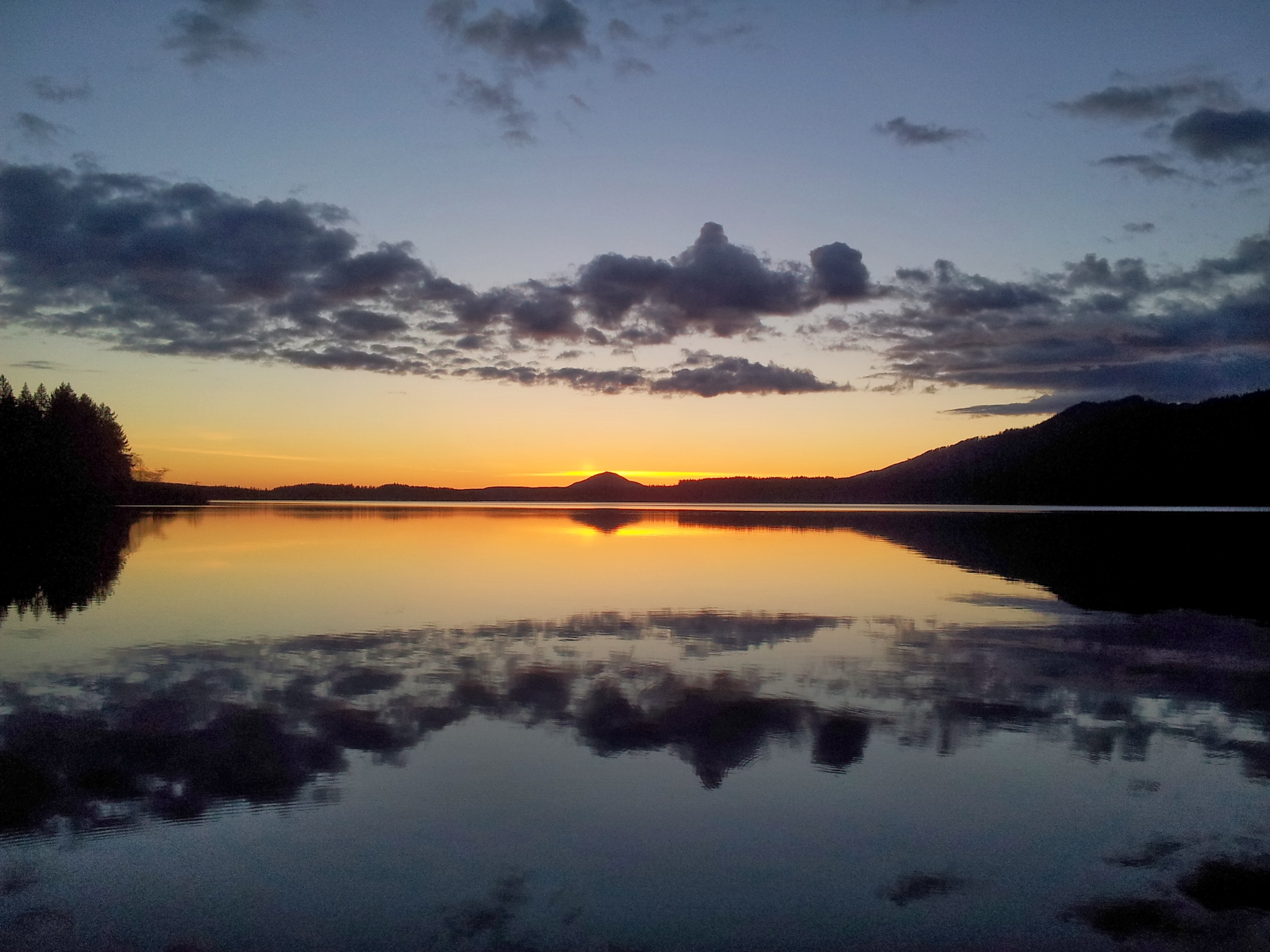
I’m back from the Rainforest Writers’ Retreat, and what a lovely five days I had! After all the hullaballoo of looking for a place to live, I was even more ready than normal to have time away from my cell phone and the logistics of my life. Whenever stress would intrude (say, from an e-mail from my current landlord), I’d go outside and look at the lake–sometimes rippling in the wind, sometimes a perfect mirror of the clouds overhead–and I’d feel much, much better.

It's hard to look at such beauty and not feel something loosen inside. Photo by Amy Sundberg (me!)

It’s hard to look at such beauty and not feel something loosen inside. Photo by Amy Sundberg (me!)

While my writing focus has been much improved this year compared to last year, I’ve been noticing as February progressed and the house search continued its grim plod that it was gradually worsening. It was taking me longer to get started writing every day, and I was taking more and more breaks. By the time I actually found my soon-to-be home at the beginning of last week, my focus was so shaky I had lowered my daily word count goal. So I went into Rainforest this year worried about my ability to produce.

I’m happy to say I was as productive as I hoped to be, which gave me food for thought. Why, I’ve been wondering, am I so much more productive and focused at Rainforest than at home? And is there any way to replicate any of Rainforest’s effects?

Factors that make Rainforest work so well for my productivity:

1. It’s remote, with no phones or cell reception, and very spotty internet connection. Without much communication from the outside world, it’s much easier to focus.

2. I clear the decks for the trip, which means for the most part I don’t have real world concerns intruding on my time or focus either. (Real concerns can range from daily dog care to doing my taxes to planning this social activity to going to appointments to doing chores.)

3. The word count board builds in accountability to my peers. This works better than an announcement on Twitter would because there’s a more tangible feeling of community and that we’re all in this together. I see people writing constantly, and conversation often revolves around how the writing is going that day.

4. I have extra motivation because of the resources used to take the trip, which ends up giving me the feeling that I’d better make this time count.

5. Because I have lofty (for me) daily word count goals, I tend to engage in less general shilly-shallying while ostensibly writing.

6. My writing day is more structured with meals and activities than it often is at home.

Some of these factors are hard to duplicate at home, most notably #2. I have to spend a certain amount of time each day dealing with life stuff, and sometimes that amount of time is much higher than I would ideally want it to be. So it goes.

Today, though, my first day back writing at home, I experimented with #5, otherwise known as the Shilly-shallying problem. And lo and behold, since I am now less accustomed to shilly-shally after a few days of better writing habits, I was able to cut down a great deal on the procrastinating that can accompany writing. And this on a day when I had a great many stressful life concerns piled up and demanding attention. Key to this, I think, was encouraging the belief that I could write my words in spite of what life was throwing at me, as well as remembering what it felt like to take those concerns and put them off to one side for a while and very deliberately doing that during my writing time.

I’m going to keep playing with that, and soon I’d like to experiment with #6 and see if adding a little more structure might help my productivity as well.

What has helped you become more productive?

Read Full Post »

“You can’t ever know in advance. Big decisions require faith.”

– from S., by J.J. Abrams and Doug Dorst

Today I decided where I’m going to live for the next year.

I’ve had to move many times in my life, and as I look for a place, what I’m always waiting for is a certain feeling. It’s a sense of rightness, a sense of “Yes, this is my home.”

There’s nothing mystical about this feeling. I think it happens when enough aspects of a place line up with what I want. I think carefully about I want ahead of time too: how much I’m willing to spend, what features are absolutely non-negotiable (pet-friendly, space for my piano), what features are exciting bonuses (walk-in closets, lots of light).

When I see enough of what I’m looking for, when all the little details filter through my brain, the feeling begins to wash over me. It’s a vision of a future where I can imagine myself being happy and safe, where I can imagine Nala being her usual happy doggie self, where I can see myself writing and making music and being surrounded by friends.

The most important part of home.

The most important part of home.

The build-up to this decision takes forever. Not only do I have to seriously think about what I want, I have to do lots of research, go see a bunch of places, and adjust my expectations according to what’s available. But the decision itself is easy. I just know. I’d decided to take my next home by the end of my tour. All that was left to figure out was the details.

Big decisions can be so overwhelming, because we can’t know. We can’t know how it’s going to work out. We can’t know for sure if we have all the information we need to make the best decision. We can simply try our best to learn the relevant facts and then take the leap.

When I look back, it’s amazing how many of the decisions I’m most happy with in retrospect are ones about which I just knew.

I just knew Nala was my dog.

I just knew I wanted to be a writer.

I just knew I wanted to go to school at UC Santa Cruz.

I’ve just known when I’ve met several of my friends that they were people I wanted to be in my life.

I just knew which writing project to work on right now.

That’s not to say these decisions didn’t also involve dithering. That’s not to say I had no doubts. I dither; it’s part of my process.

But when it came time to commit one way or another, I just knew. And that knowledge gave me the courage to take the necessary leap.

Looking back on your life, when have you just known?

Read Full Post »

Some of you will remember that after many tribulations, I decided to leave last year’s novel unfinished, at least in the short term. So a question that I’ve been necessarily invested in is this: What do you do after a failure? How do you move forward?

Luckily for me, I knew exactly what project I wanted to work on next, and I spent several weeks brainstorming, researching, and outlining. But making the leap to actually putting words of the novel on the page took a surprising amount of discipline.

So I was fascinated to read Megan McArdle’s recent article in the Atlantic entitled “Why Writers are the Worst Procrastinators.” While the article ends up waxing on parenting techniques, it also postulates that the reason writers procrastinate so much is because the fear of not meeting a deadline has to become greater than the fear of having the end product suck. Basically, we procrastinate because we’re afraid of failure.

I’ve definitely noticed that I’m more afraid of writing than I usually am. As a consequence, I’m allowing myself longer periods of time to get the writing done (building procrastination time into my schedule, as it were). I’ve also begun listening to music while I write. I’ve always preferred silence while writing, but now I’m trying to distract myself from worrying that the writing won’t go well, and music helps divert my focus from thinking about failure to thinking about the work.

The funny thing is, for all that I’m worried, the writing is actually going just fine. I’m writing a rough draft, so there are going to have to be many revisions, as always. But I finished the first act earlier this week, and so far I feel like I have a good handle on what I’m trying to accomplish. There is none of that feeling of floundering around in the dark that I had with last year’s novel, but instead simply a striving to write to the best of my abilities.

Apparently, this is the way to go, embracing the challenge instead of obsessing over how the end result will turn out. As with so many things in life, staying in the present seems to be a helpful idea to keep in mind.

What to do differently… Photo Credit: Mufidah Kassalias via Compfight cc

So what really happens after a failure? We figure out what went wrong. We decide how we want to go about the next attempt differently. And then we go for it, all the while knowing this could be a failure too, but trying to stay in the present and revel in the process.

Because this could also be the time that everything clicks together and we create something that works.

Read Full Post »

I recently took a couple of online personality tests (the Myers-Briggs and the IPIP-NEO), and my results have changed. I’m now coming out fairly firmly on the extroverted side of things instead of being almost exactly in the middle.

I want to leave aside, for now, the argument that introversion is not a personality trait. I also don’t want to delve deeply into the sometimes ignorant stereotypes and oversimplification that goes along with discussions of introversion and extraversion.

I have not been trying to change into more of an extrovert, but I think me doing so has been a side effect of another change I have been trying to make: namely, to develop a backbone, tone down the people pleasing, and learn to set boundaries.

As it turns out, it is exhausting to be around people when you are a people pleaser. Full stop. It doesn’t matter if you are an introvert or an extrovert. It doesn’t matter if you know how to make conversation or can be a good listener or are a generally pleasant person to be around.

It takes huge amounts of energy to be around people when you aren’t allowed to say no, don’t value your own opinions and feelings and desires, and won’t stand up for yourself. Because the people around you might ask you to do something that you can’t possibly or don’t want to do for them. Or they might (inadvertently or not) treat you without respect. Or they might disagree about how something should happen, and then there will be conflict, which is anathema to the people pleaser. Or they might do something that bothers you but to which you do not feel able to respond.

At some point, in order to protect yourself from this huge expenditure of emotional energy, you might begin to build a wall around yourself. You might find yourself wishing to be alone because being alone is the only time when you can truly relax and be peaceful. You might keep other people at arms’ length to minimize the requests and the conflicts and the fatigue. You might need a lot of time to recharge after socializing.

You might appear to be an introvert.

But as it turns out, with proper implementation of boundaries, there are possibilities! You can say no. You can set limits on the behavior you’re willing to accept. You can stand up for your opinions. You can have opinions in the first place. You can object. You can have emotions. You can leave if you’re not having a good time.

You can be a better friend because you no longer need to demand perfection from yourself or from other people. You don’t need perfection when you’re allowed to communicate and take care of yourself.

And at some point, being around people just doesn’t take up as much energy as it used to.

1622306_10152025564418821_1952270063_o

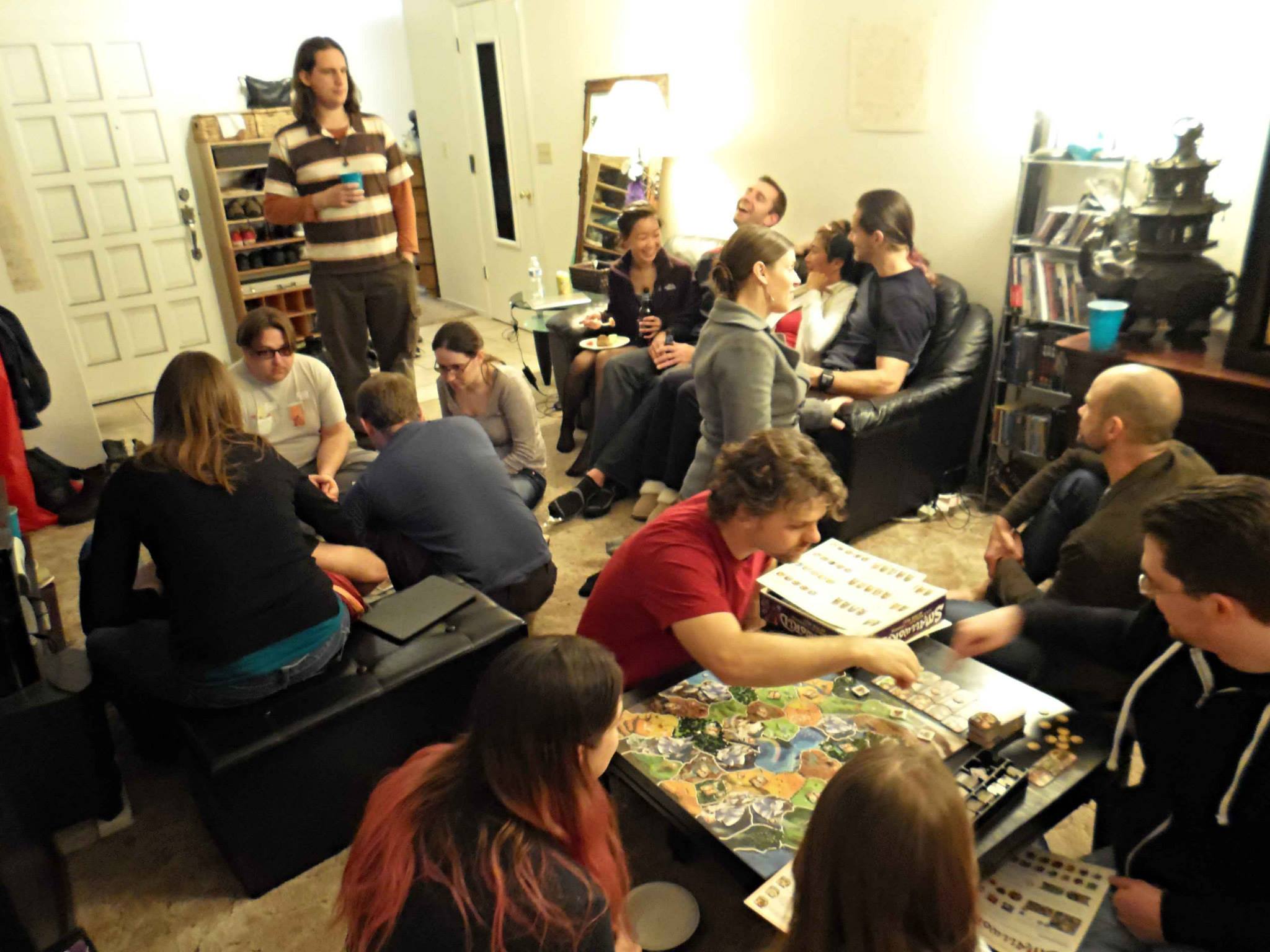
Where’s Amy? Photo by Yvette Ono, photographer extraordinaire.

Let me be clear. I don’t think all or even most introverts are people pleasers, and that this is why they are introverts. I put no value judgment on how much time people like to spend with other people or how much alone time people want. But I do think that being a people pleaser can mask or change parts of the personality. In my own case, being a people pleaser encouraged me to become more introverted. But as I have been focusing on becoming less of a people pleaser, I’ve also been changing my social behavior and my attitude towards it.

I like seeing markers of progress, even unexpected ones. And I like feeling more fully myself.

Read Full Post »

The theme of the week: the increased access to information that technology has granted us and how that has changed our lives in a real and fascinating way.

On Tuesday night I went to the first of a new salon series. (I will interrupt to say I’m so excited this is a thing right now! I’m all over the idea of regular salons.) One of the talks was about Didier compiling the encyclopedia, and how subversive it was to make all of this knowledge available to anyone who could read.

When I was a kid, my family made the investment of buying the World Book series of encyclopedias. They were royal blue, heavy (especially the popular letters), and took up two shelves in the hutch in the dining area. Every year the World Book people would send us an additional slim volume with all updates designated essential for that year, and then we would go through and put stickers in the main volumes so we’d know about the updates.

Stack of encyclopedias. Photo Credit: Horia Varlan via Compfight cc

The World Books were a big deal. Now I didn’t have to use the encyclopedias in the library anymore! Or at least not exclusively. If I wanted to know something, I could look it up right at home. Whenever a question arose, the only options were to use reference books (either that you were lucky enough to own or obtained from the library) or to ask someone you knew and hope they knew the answer. This was not a system that encouraged constant questioning (at least without a certain level of frustration involved), and yet, it was a great improvement from the time before encyclopedias, the time before more widespread literacy, and the time before the printing press.

Now we have the technological wonder that is the internet: the search engine, perhaps our most successful AI project to date, along with Wikipedia and platforms that make publishing and information curation simpler. I look up several things every day. Today I watched a video to find out what a burning house sounded like, I looked up photos of Mediterranean-style mansions, I watched clips about the upcoming Game of Thrones season and the upcoming Veronica Mars movie, I read some updates on the economy, and I looked at many real estate listings, including user reviews of apartment complexes. So much information at the tip of my fingers. (It’s almost enough to make me salivate.)

I was talking to a friend about travel, and this increased access to data has changed the way we do that, too. When I was in France this summer, every place I stayed offered free Wi-Fi that I could access with my iPad. It took fairly extreme discipline for me to avoid the Internet in the face of this accessibility. (While I succeeded at the spirit of my goal for the most part, eschewing email and Facebook, I did look up rail timetables, attraction information, and local restaurants.) My friend took a trip on which he didn’t bring a smart phone but a camera phone, on which he had stored photos of maps and key guidebook pages, so he didn’t have to struggle with folding and unfolding a map on random street corners. I can now travel with more books than I could possibly read while only having to haul around my Kindle.

The Information Age doesn’t always feel very flashy. For one thing, we’re already used to it, and for another, it doesn’t have the movie shine of flying cars or transporters or living in space. But when I think of the evolution of the dissemination of human thought–from the development of language and then writing, to the invention of paper and later the printing press, to the projects of assembling human knowledge in museums and libraries and encyclopedias, to the rise of computing, digital data storage, the internet, portable devices, and the Cloud, with so many other steps in between–the Information Age seems truly amazing. I’m very excited to be alive to see (and benefit from) this most recent chapter of technological change.

And I’m thrilled that I’m encouraged to ask even more questions.

Read Full Post »

« Newer Posts - Older Posts »