Feeds:
Posts
Comments

I’ve been trying to think of what other 2012 life lesson I should write about today. It’s problematic because I feel like I’ve learned so much, and I don’t want to choose only one thing. So I’m going to bypass this problem by making a list (and you all know how much I love lists).

Things I Have Learned in 2012:

  1. Being assertive is important.
  2. Ditto being open and authentic.
  3. I know how to make a mean cranberry sauce.
  4. Setting boundaries means I have more energy for being social.
  5. Chicago has a world-class art museum. I want to go back.
  6. Hurricanes can hit when you least expect them.
  7. First person point of view has a lot of nuances that are fun to play with. So do unreliable narrators. These two things are related.
  8. I am happier when I make my writing a top priority. I also accomplish a lot more.
  9. When you are confident, you hold your body differently. When you hold your body differently, you become more confident.
  10. Nobody is perfect. (This is quite a relief for all concerned.)
  11. Starbucks serves their pumpkin spice chai lattes all year round. Although I’ve yet to test this.
  12. People say wise things all the time if you pay attention.
  13. It doesn’t actually rain every day in Seattle.
  14. There is such a thing as too nice.
  15. Too much stress, and I’m in pain and/or sick.
  16. I’m better at making hard decisions than I give myself credit for.
  17. Life really is stranger than most fiction. Things happen that you could never get away with putting in a story.
  18. It’s okay to ask for help.
  19. New Year resolutions can sometimes be a very good idea.
  20. I like pie. (All right, I already knew this one.)
  21. Feeling an urgent need to succeed is something that happens at the beginning of the journey to mastery. Somewhere in the middle of the journey, I chill out and can focus more on the actual work.
  22. No matter how many books I have to read, I can always find more books I’d like to read, particularly if I venture into a bookstore.
  23. It can be useful to learn to embrace failure, since being okay with it allows you to take bigger risks and accomplish bigger things.
  24. Change takes time.
  25. People are infinitely adaptable.
  26. Seeing life through a lens of gratitude increases levels of happiness.
  27. So do little dogs. Probably also cats.
  28. So does loving yourself.
  29. Time keeps passing. And passing. And passing. No matter what happens or does not happen.
  30. Suffering and adversity can reveal great beauty.

What did you learn in 2012?

I generally don’t do New Year’s resolutions. For me, they conjure up the idea of things people kind of want to do but don’t have the commitment with which to follow through. They have a half-hearted, wistful kind of air that frankly, I find a bit depressing.

That being said, for 2012 I made a resolution. Only I called it an intention to make myself feel better.

What I wanted to do this year was to focus on my friendships. I wanted more friends, and I wanted friends with whom I could discuss the things that are important to me. And I made a specific but modest goal: that by the end of the year, I would have two close friends, at least one of whom lived locally, with whom I felt comfortable being really open.

There were times at the beginning of the year when I felt very discouraged about this goal. I thought I was going to fail. I want to be clear that this had very little to do with the people around me, and very much to do with myself. I knew I had closed myself off in various ways, and that was hard to change. I had to force myself to take uncomfortable risks. I had to be assertive. I had to jettison the “I must always appear fine and happy and perfect” messages I’d been taught in childhood.

And now?

Photo by Ferran Jorda

Now I am surrounded by the most fabulous group of people I could have ever imagined. Each one of them is different, with their own superpowers, their own weaknesses, their own ways of being a part of my life. They have fun with me, they teach me, they comfort me, and they laugh with me. They welcome me with open arms when I visit, and they text and email during hurricanes. They dress up with me for James Bond because I think it’s the best idea ever, and they feed me, and they give me another chance. They encourage my writing and offer to help and give feedback so I can become better. They celebrate with me, and they hug me while I cry. They talk to me, and they listen to me, and we swap advice. They let me into their lives, and I let them into mine. Some of them even laugh at my jokes.

Some of them have been in my life for a long time. Some of them I’ve met recently. Some of them I see all the time. Some of them I rarely get to see. I feel like I’ve known some of them much longer than I actually have.

All of them have something in common: they support me being myself, flaws and all, and they support my vision for my life and who I want to be and the changes I have been making.

I love my friends with all my heart. They make my world brighter and my smile bigger.

No doubt some of them are reading this. I hope they are because it gives me another chance to say thank you. You are awesome, and I’m so glad we get to spend some time in each other’s excellent company.

A piece of common wisdom states that you should surround yourself with the kind of person you want to be. In other words, you want to spend most of your time with people who lift you up instead of bring you down.

Thank you, dear friends, for your lifting. I only hope I can do the same for you.

Today I’m going to talk some more about books. What bliss!

Nonfiction:

At Home: A Short History of Private Life, by Bill Bryson
I wrote about this book here. Bill Bryson is talented at keeping me amused, what can I say?

How to Suppress Women’s Writing, by Joanna Russ
As a female writer, I found this book particularly fascinating. This book was published in 1983, but it certainly seems relevant today. I remember a certain comment on my post earlier this year about intelligent women, making the argument that women aren’t as intelligent as men because they haven’t created as many masterpieces–in literature, in music, in the visual arts. (Don’t bother looking for that comment, by the way. I deleted it. Life is too short for such stupidity.) If you are interested in why it seems that less of the literary canon was created by women, this book will help answer that question for you.

My Life in France, by Julia Child and Alex Prud’homme
I wrote about this book here. This book’s joy comes from the irrepressible personality of Julia Child. I don’t read a lot of memoir, but maybe I should.

Adult Fiction:

The Cloud Roads, by Martha Wells. Fantasy
Anyone who writes a book with somewhat dragon-like characters that doesn’t cause me to throw it across the rooms deserves a lot of credit. The plot is fun here, but what I really liked in this secondary world fantasy was the world building and learning more about the society of said dragon-like creatures. We learn about it through an outsider of the society, which makes the unfolding discovery seem natural.

The Beekeeper’s Apprentice, by Laurie R. King. Historical mystery
I asked Facebook for a recommendation for a mystery that had an eccentric woman genius as the detective, in the same mold as Hercule Poirot or Sherlock Holmes. One of my friends came through for me by recommending this book, the first of a series, about the female protegé of Sherlock Holmes. I’ve read several of these books, and I plan to read more. Mary Russell is a great character, and in addition to the mysteries, I love reading about her scholarship in religious history, which adds an extra dimension and depth to these books.

The Testament of Jesse Lamb, by Jane Rogers. Science fiction
Reading this book gave me a breakthrough on point of view for my own novel, The Academy of Forgetting, so I love it for that. I also like its slow pacing and build, its use of language, and its taking a familiar science fictional problem of fertility and making it intimate and deeply personal. (This book is also interesting because it was marketed as adult fiction, but it features a teenaged first-person protagonist. I’m guessing they chose to market it as adult because of the style.)

The House of Mirth, by Edith Wharton. Literary
This book took me awhile to read, and I was in love with it the entire time. It’s set in 1890s New York high society and has echoes of Jane Austen’s novels of manners, although this book contains a more overt social critique. In Austen, her heroines are forced to operate within the rules and strictures of society, but they are able to harness these rules into providing a “happy” ending for themselves, whereas this novel shows the tension between these rules and a woman’s desires and potential happiness, highlighting the society’s damaging attitudes about women and the price that is paid to follow society’s confining rules. So very fascinating. I’m also completely intrigued by Edith Wharton now. My thanks to Rahul Kanakia for the recommendation.

vN, by Madeline Ashby. Science fiction
I can sum up my enjoyment of this novel in one word: Robots! Robots are awesome, and the robots in this novel are no exception. The ending was a bit … strange, but overall, quick pacing, high stakes, and a fun plot made this novel quite entertaining.

Washington Square, by Henry James. Literary
I also have to thank Rahul for telling me about this novel (which means I should really tell you to go follow his blog, where he talks about all these fabulous books). What’s interesting about this book is that it’s about all these really awful people, and it draws viciously accurate portraits of their personalities. We also get to see the effects of living and dealing with really awful people on the heroine, Catherine, who is sadly not awful herself (she’d probably do better in that environment if she was). A well-done family drama, set in 1880s New York.

Shadow of the Wind, by Carlos Ruiz Zafon. Historical mystery w/ magical realism elements
I don’t really know the genre of this book. Also I have apparently been living under a rock because this book was really popular when it came out, but I only heard about it when my friend Bill Schafer mentioned it to me this year. And finally, I am reading this novel right now and am only halfway through, and I generally don’t recommend books until I finish them, because what if the ending doesn’t land? So we’re engaging in some risk-taking here. But it’s such a beautiful book so far that I feel it belongs on this list. I mean, it starts out with the “Cemetery of Forgotten Books.” What’s not to love about that? As a writer, I’m finding what Zafon is doing with first person POV (well, mostly 1st person) to be very interesting. As a reader, I am simply enchanted by the story and characters. Some poking around on the internet tells me that many people talk about it mainly as a mystery set in post-war Barcelona (which is such a rich setting, by the by), but I’ve been reading this as very much magical realism. The flirtation with the fantastic in this book is one of the parts that intrigues me the most.

All right, hit me with your own favorite reads of the year. I always like hearing about books that have made an impression. And if you have your own year-end book list, feel free to link to it as well.

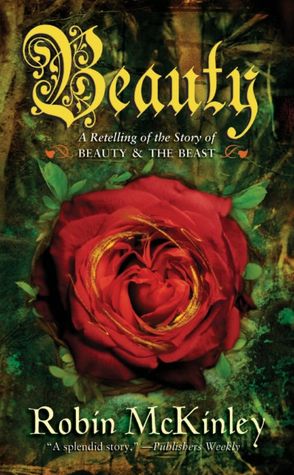
It’s that exciting time when I review the list of books I’ve read this year and share some of my favorites. Basically this is an excuse for me to talk about books I love, which is a particularly enjoyable activity. So enjoyable, in fact, that this year I’m going to write two lists: one of the Middle Grade and Young Adult books that I loved, and one of the adult books I loved.

Yes, it was a very good reading year, and I can’t narrow down any further than that.

Today I’m sharing my top list of YA and MG novels I’ve read for the first time in the last year. And it’s such a good list, it makes me happy just to contemplate it.

Honorable Mentions:

Legend, by Marie Lu. YA dystopia
Entertaining adventure story.

Daughter of Smoke and Bone, by Laini Taylor. YA fantasy
Very evocative writing, strong settings, enjoyable sense of wonder. I’m not generally a fan of long flashbacks, though.

My Top Ten:

The Skull of Truth, by Bruce Coville. MG fantasy
I heard Bruce Coville speak at a SCBWI conference, which motivated me to try his books. This one is probably my favorite so far. Clean, engaging writing, a fun plot, and I adore the skull character so much.

Chime, by Franny Billingsley. YA fantasy
What stands out in my memory about this novel is its unique voice and its strong sense of setting. Haunting.

Black Heart, by Holly Black. YA fantasy
The third book of a trilogy that always ends up on my year’s best lists. Holly Black brings her story to a close in a satisfying way, and the magic system continues to enchant me.

The Perks of Being a Wallflower, by Stephen Chbosky. YA contemporary
I read this for a book club, and I’m so glad I did. It’s a novel told in a series of letters sent to a stranger, and we get a deep look into the protagonist’s head and heart, cracks and all. It’s one of the best books I’ve read at catching the deep confusion of being a teenager.

Bitterblue, by Kristin Cashore . YA fantasy
This is a complex, layered novel about the recovery from trauma, both of a nation and of a teenaged girl. It doesn’t rush or skirt away from the hard questions.

Every Day, by David Levithan. YA fantasy
The writing is good, but what makes this novel is its central conceit: that every day, the main character (who is genderless) moves into a different person’s body. Fascinating exploration of identity, morality, and love.

The Fault in Our Stars, by John Green. YA contemporary
I wrote about this novel here. I am not the only person who thinks this book is brilliant.

Looking for Alaska, by John Green. YA contemporary
Oh, John Green. This book is also brilliant. The voice, the characters, the themes, the setting. This is a book that rips your heart out and makes you wiser because of it.

The Girl Who Circumnavigated Fairyland in a Ship of Her Own Making, by Catherynne Valente. MG fantasy
This book is both beautiful and clever. It reminds me a bit of the Oz books in terms of its narrative style (omniscient) and sense of wonder, but with more modern sensibilities and better plotting. And it really is so insightful and clever, with a heroine that I want to spend lots of time with. (In fact, I have the next book in the series, it’s a minor miracle I haven’t read it yet.)

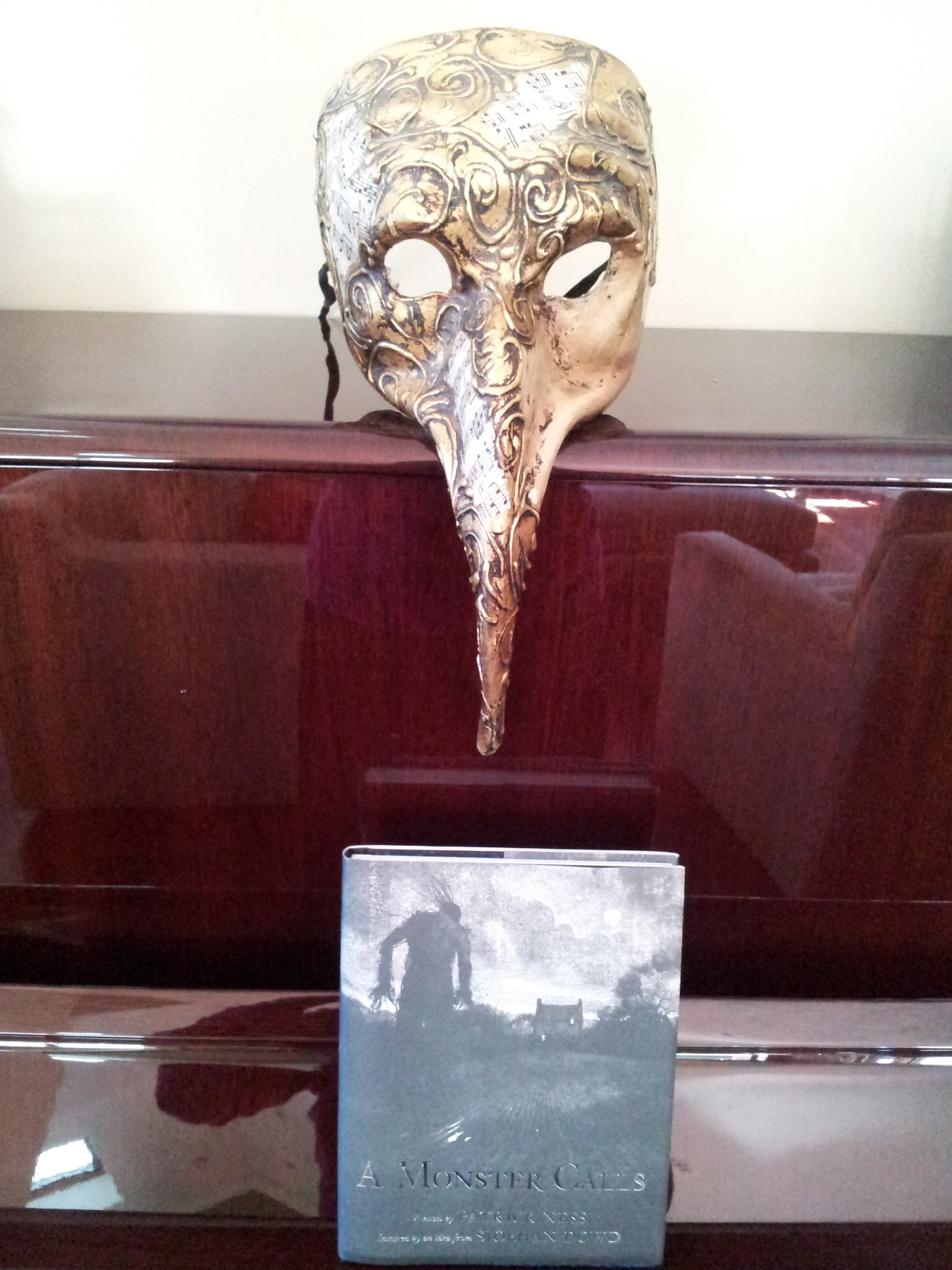
A Monster Calls and mask
A Monster Calls, by Patrick Ness. MG…contemporary w/ fantasy elements? You decide.
This book broke my heart. It delivered my most powerful emotional reading experience of the year. It uses the fantastic as metaphor in truly masterful fashion. You want to read the physical version of this book, not the electronic one, because of the beautiful artwork that really adds to the story.

What were your favorite YA and MG books you read this year?


1. Assertiveness is not the same as decisiveness. Some of my friends disagree with me on this one, but I actually feel very strongly about it. Sometimes the most assertive thing to say in a situation is “I don’t know.” Maybe you need more time or more information before you can form an opinion or make a decision. Not being assertive would mean allowing someone else to push you into a decision before you are ready, possibly in the name of “decisiveness.” Assertiveness also doesn’t close the door on changing our minds, which is something else I feel strongly about.

2. Assertiveness is stating your opinion and showing yourself to the world. Even though you might be wrong. Even though you aren’t perfect. Even though people might not care or want to hear what you have to say. Even though everyone won’t agree with you. I think the courage to do this in a strong but balanced way comes from a sense of self worthiness.

3. Assertiveness is asking for what you want/need. Even when doing so is scary. Even when it might make the person you’re talking to think less of you, or not like you, or feel emotions. Maybe especially then.

4. Assertiveness is being okay when someone says no. Which, if you’re asking for what you want on a regular basis, is definitely going to happen. Emotions might happen when someone says no, and that’s fine…as long as you don’t act on them and instead deal with them in a mature way that works for you.

That is one assertive apple. (Photo by Fernando Revilla)

5. Assertiveness is gathering information. Maybe some people aren’t okay with you being assertive. Maybe some people repeatedly say no, don’t do what they say they’re going to do, or behave towards you in ways that you’re not okay with. This sucks. But it’s good to know so you can make decisions based on reality instead of what you wish was true. The kind of fabulous people you want in your life aren’t going to be trampling all over your boundaries all the time like it’s some kind of sport.

6. Assertiveness is allowing other people to have their own feelings and their own issues instead of taking those on as your own. The more I pay attention to this, the more I realize hardly anything that happens is actually about me. It’s about the mood someone else is in, or they’re worried about xyz that has nothing to do with me, or they want something so much they’re not even paying attention to me, or they’re behaving in this bizarre way because of some childhood trauma or the way they were raised or because they’re been compelled to do so by the power of Cthulu. At a certain point, it doesn’t matter why. Our job is to take care of ourselves by asking for what we want, sometimes saying no, and dealing with our own emotions. Our job is not to take on everyone else’s stuff.

7. Assertiveness is embracing the awkward and the uncomfortable. Change is sometimes awkward. Saying no can be awkward. Being honest can be awkward. Being vulnerable can be awkward. Letting someone know how you feel can be uncomfortable. Letting someone know they’ve behaved in an inappropriate way can be uncomfortable. I’ve grown very skilled at making people feel comfortable over the years, which is fabulous when you’re teaching voice lessons. However, assertiveness sometimes requires allowing those awkward moments and uncomfortable silences to happen instead of smoothing them over.

8. Assertiveness is respecting yourself. There is that old truism about how you can only truly help other people after you’ve taken care of yourself. I completely agree with this statement, but I also think it’s a way to dance around the truth so people pleasers might actually listen. That truth? Respecting and caring for yourself is inherently important and valuable. It means you have healthy self esteem and can go rock the world with your own personal brand of awesome.

A year and a half later, and look at the Backbone Project go!

Last week I spent way too much time filling out the Locus 20th Century Poll. I had to make two lists: my top ten favorite science fiction novels from the 20th century, and my top ten favorite fantasy novels. (There were short fiction categories too, but I’m less well read in those categories. And the 21st Century poll, since it only covered twelve years, was not as time-consuming.) Locus provided a handy reference list of many eligible novels that I poured over.

What I found fascinating was the difference for me in creating the science fiction list versus the fantasy list. For the science fiction list, I had no trouble coming up with ten titles. In fact, my main problem was I kept coming up with ever more titles, and then I had to choose which ones to actually include in my final list, and in what order. And all the titles I was coming up with are books that I’ve adored, that have had a huge impact on me, that I could obligingly gush on about for some time.

And then I started working on my fantasy list. I eventually added Guy Gavriel Kay’s The Lions of al-Rassan and Robin McKinley’s The Blue Sword, both of which I am deeply enthusiastic about and neither of which was on Locus’s reference list. However, the other novels I listed, while entertaining novels and influential in the field, did not inspire the same gush-worthy feelings. I’ve always thought of myself as an equal lover of both science fiction and fantasy, so this surprised me. Which led me to consider the general pervasiveness of fantasy in my experience of story.

I fell in love with science fiction as an adolescent. I still remember exactly where I was when I finished reading Ender’s Game for the first time, and how I felt about it. I was twelve. And from then on, I swallowed science fiction novels from the library’s adult section upstairs in great gulps.

But fantasy has been with me from the very beginning. I didn’t call it fantasy back then. In my experience, it was a natural and inevitable part of the landscape of storytelling. It was my air. Even the picture books my mom read to me before I could read to myself involved talking animals and portal quests and magical items. And those titles in children’s literature that I now know are part of the fantasy genre? I can gush about them just as long and just as fervently as I can about Dune or The Handmaid’s Tale.

I grew up on fairy tales, so very many fairy tales. I loved them with a passion. My other two favorites? King Arthur stories and Robin Hood stories. I devoured so many of the children’s fantasy classics: Peter Pan; The Wonderful Wizard of Oz and all the other Oz books at the library; The Narnia Chronicles; the Roald Dahl books (I particularly adored The Witches); The Phantom Tolbooth; Mary Poppins; The Sword in the Stone; Tales from Shakespeare by Charles and Mary Lamb (I loved The Tempest and Midsummer Night’s Dream); Freaky Friday; The Dark is Rising series; the Black Cauldron series by Lloyd Alexander; Alice’s Adventures in Wonderland; Mrs. Piggle-wiggle’s Magic, The Princess and the Goblin; E. Nesbit’s novels; Diana Wynne Jones’s novels; The Ordinary Princess; The Hobbit. And eventually I was lucky enough to graduate to Tamora Pierce and Robin McKinley.

This was one of my two favorite books (along with Ender's Game) for almost a decade. Then I added many more.

This was one of my two favorite books (along with Ender’s Game) for almost a decade. Then I added many more to my favorites list.

So now whenever I am asked about my favorite fantasy novels, or my fantasy influences, or apparently when I try to make lists of fantasy novels, those books and stories from my childhood are what I remember. I remember them from a time before I knew fantasy was a separate thing (which means, of course, that it doesn’t have to be). And a lot of my gush-worthy fantasy feelings are focused there. (Several of my favorite new fantasy novels have also been YA or MG.)

This doesn’t mean I can’t appreciate adult fantasy novels, or even love them. But I do think I approach them with eyes and mind very much informed by children’s literature, those titles that were such a deep and early part of my love of reading and of story.

How about you? Did you read a lot of fantasy or science fiction as a child? How difficult would it be for you to make those two top ten lists?

You know that novel I’ve been talking about all year? The Academy of Forgetting, a riveting (I hope) YA psychological thriller set in the near future and full of awesomesauce?

Finished. Done. Kaput. Complete.

I’m having trouble believing it. But I am also very, very happy!

Celebratory pie! (Photo by Poppy Wright)

So what’s next, my non-writer friends ask me? Will we see your book on shelves soon? (Writer friends, bear with me here, as I’m sure you’ve received similar questions.)

The answer is NO. In fact, the book isn’t truly finished, as in it is not yet ready for publication. It is ready to be seen by agents, which means it is as good as I can make it. However, if an agent were to be interested, and if I were to sign with said agent, and then if said agent were to sell the book to a publisher, there would most likely be several more rounds of edits between the version on my computer right now and the version that would show up in bookstores.

This entire process can be remarkably time-consuming. And there are no guarantees at any particular step. The trick, I think, is to focus on what I can control, which is writing a novel that I can stand behind and be proud of.

So what’s next? I am updating my agent spreadsheet, I am working on short summaries for a potential book 2 and book 3 in the trilogy, and I am revising my query letter and synopsis. Then I will start sending queries to agents on the spreadsheet. And meanwhile, the fun will start:

A NEW NOVEL.

Which realistically means I will spend the month of December brainstorming and fleshing out various novel ideas. If I’m really, really lucky, I’ll also choose one of those ideas and outline it. If the brainstorming goes more slowly, though, I won’t be doing the outlining until January. If the brainstorming goes very slowly, I might squeeze a short story or two in there somewhere too. (And for those wondering, no, this new novel will not be book 2 to follow The Academy of Forgetting. I’ll only write that book if AoF sells. Or if I get an agent, and my agent believes that starting book 2 before selling could be strategic, and I agree with him/her. Or if I have another particularly compelling reason.)

I am very excited about this, and it also feels weird. It feels weird to get ready to let go of this novel project that I have focused so much of my life on for the past ten and a half months. It feels strange to contemplate starting something new, with characters I don’t know better than I know my real-life friends and no limits at all until I lay some down in the outline. Soon I’ll be having new entirely made-up adventures instead of the familiar old ones.

It’s also interesting to see how finishing this novel, my third, feels different from finishing the first two. When I finished my first novel, there was this sense of euphoria because until I crossed that finish line, I wasn’t completely one hundred percent positive I could actually write a novel. When I finished my second novel, there was a sense of relief that the first one wasn’t a fluke.

But with The Academy of Forgetting, I feel more of a quiet satisfaction that I was able to tell the story I wanted to tell and grow as a writer. I already knew I could write a novel. And I know I’ll be writing another novel in the not-too-distant future. This is my life now.

And that is a truly wonderful thing.

What Change Looks Like

I screwed up last week. Multiple times.

Photo by Kate Sumbler.

Here’s what happened. I got really excited about that vulnerability TED talk, which you can probably tell by reading what I’ve written about it. And I decided I wanted to be vulnerable about All the Things…or at least several of the things. So I was pushing myself on multiple fronts at pretty much the same time, which meant two weeks in which so much was going on and so much of it was challenging and emotional exhaustion now.

Apparently this is called a vulnerability hangover, but to me, possibly because I was so enthusiastic, it felt more like a vulnerability OMFG eight car pile-up on the freeway. Fun times.

But there was a strategy behind my madness! Or you know, maybe I’m just incredibly skilled at finding the bright side of the lemonade in that strange-colored cloud over there. But as it turns out, one way of finding out what we most need to work on is to push ourselves to a failure point and then watch what happens. (I don’t necessarily recommend this, by the way; but if it’s happened anyway, you might as well learn something from it, right?)

So as it turns out, my failure point was not being assertive enough. And I didn’t fail at this once, oh no. I failed at it multiple times. Like at least three, and realistically probably more than three. So I know it’s something worth focusing on for the next however-many-months-it-takes. Interestingly, I’ve written an article for this blog entitled “How to Become More Assertive,” but upon re-reading it, I’m not finding it super helpful, so obviously I need to write a new article all about it in the not-too-distant future.

I don’t like writing this. I don’t like telling you how I failed. I procrastinated for a couple of hours before I could make myself type this up. I watch bloggers like Penelope Trunk and James Altucher who let it all hang out and write all about their often spectacular failures, and I’m completely riveted even while I’m thinking to myself, “Wow, I could never do that.” Even now I’m not giving any particulars, which I tell myself is to protect the innocent but in reality is mostly me being a wimp.

But here’s the thing. I want to write about what making change looks like. And change involves taking risks and making mistakes and failing, sometimes repeatedly. It’s not like a training montage in a movie, and it’s not like that moment of realization in novels when the protagonist figures out what is really important. It’s messier than that. And it takes a lot longer than five minutes and seven costume changes.

But it’s part of the process. I keep reading about how the bad and the good go together: how suffering can presage positive change, how failure leads to success, how we embark on the hero’s journey and come back wiser. How before we can rebuild, we have to tear down. Change is certainly interesting and rewarding, but it is not easy.

So I’ll begin thinking about assertiveness. And I’ll fail to be assertive a lot, in a variety of situations, in a myriad of different and creative ways. And gradually I’ll become better at it, and I’ll mess up less often.

This is what change looks like.


I normally don’t write a post for Thanksgiving Day because I figure a lot of you will be too busy inducing food comas and hanging out with people to read any blogs. But some of you don’t celebrate Thanksgiving, and others of you might want a well-deserved five-minute break from all activities Thanksgiving, so this year, here I am.

And guess what. I’m not even going to be talking about gratitude. Revolutionary, I know.

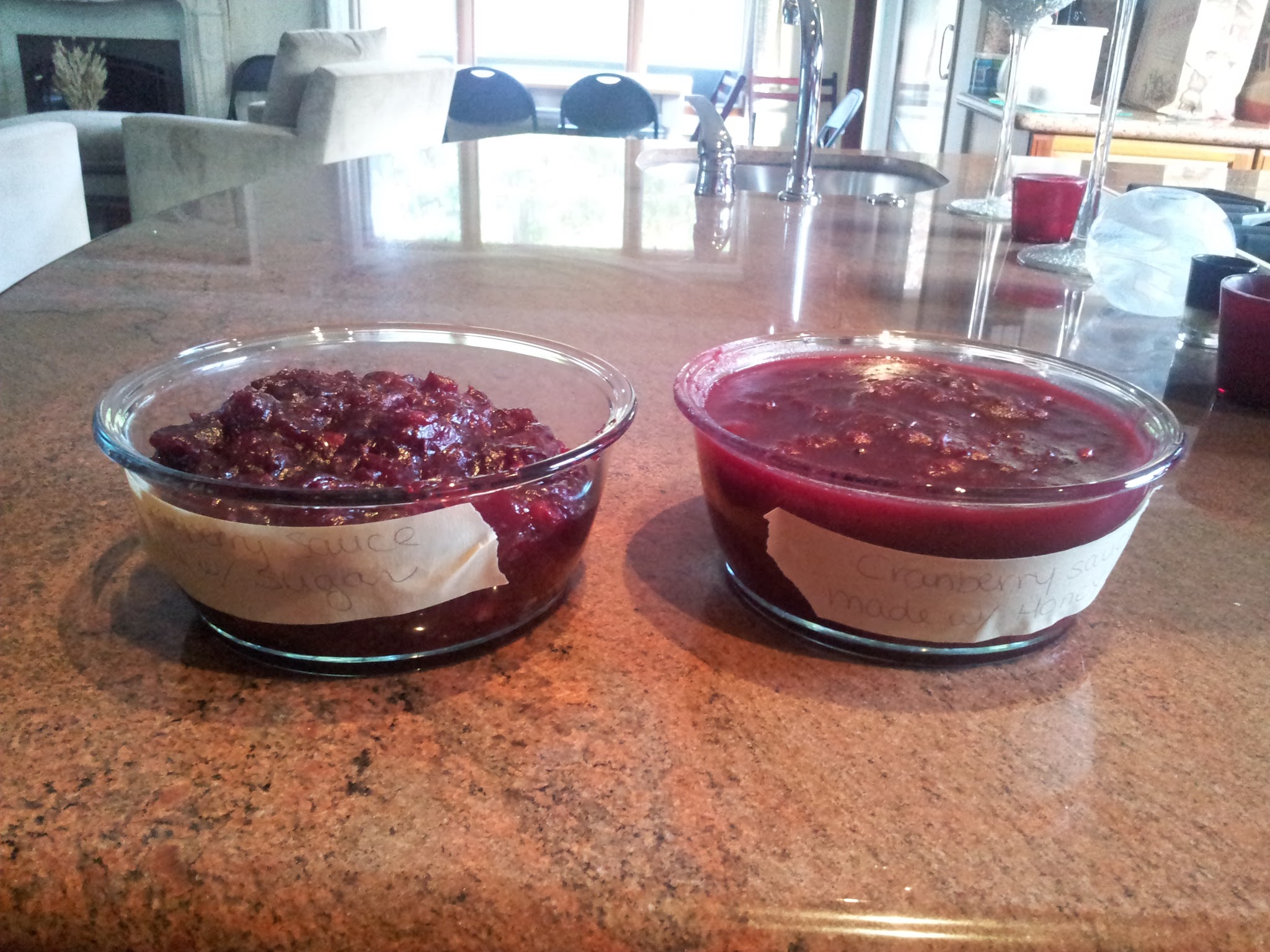
Although I will post a vanity pic of my first ever homemade cranberry sauce.

Instead, I want to talk about emotions. Our culture often puts certain value judgements on emotions. We have the “We must always be happy” myth. We also have the “tears are for wimps” myth. And we have the “Emotions are bad and must be suppressed–yay detachment!” idea.

I’m the first to agree that the ability to reframe and see the positive side of life is a great gift. Those of you who are regular readers have seen me write about that several times. Positivity helps with emotional resilience, and I think it tends to make people generally happier. All of which is fabulous.

But it’s fine when we have emotions besides happiness. It’s fine to sit there and admit to yourself that something really sucks. It’s fine to be frightened, or angry, or sad, or confused. It’s fine to be completely and utterly miserable. It’s fine to have a bad day. It’s fine if you don’t like Thanksgiving, or if your family is stressing you out, or if you’re worried that the mashed potatoes aren’t going to turn out. It’s fine if you feel shy because look and see all of these people you don’t know.

You don’t need my permission to feel however it is that you feel right now. You don’t need anyone’s permission. Go ahead and feel it. You don’t have to do anything about it, after all. A feeling doesn’t have to propel you into action. It can simply be.

We can repress and get down on ourselves when we aren’t feeling exactly what we’re “supposed” to feel. Or we can celebrate the fact that we’re alive right now and we get to feel the full spectrum of emotions. Some of them are tougher, for sure. Some of them we wish we weren’t feeling. But most of them happen to most of us at one point or another.

The idea that we must be constantly happy at all times is not particularly helpful. In fact, I find it downright exhausting. My favorite people are the ones that are okay with me however I happen to be feeling right then, even if I’m feeling cranky, or stressed, or really sad. The ones that need me to be happy all the time are not privy to the entireness of Amy, and I think that’s too bad. But regardless, I get to experience the entireness of Amy, just as all of you get to experience the entireness of who you are and how you feel. This is a beautiful thing. And it is part of being human.

Maybe there’s some irony in me being positive about not being positive and having emotions like sadness and fear and anger. But I don’t think we hear this message enough. It’s okay to feel how we feel. It’s okay if we don’t exist in an ecstatic cloud of happiness all the time.

It’s okay to accept the humanity of emotion.

I believe in paying attention to the small scale.

Mind you, I have nothing against big dreams and lofty goals. You want to revolutionize modern transportation? Please do. You want to become a regular on the stage of the Metropolitan Opera? Fantastic. You want to write the next big novel, or design the next big advance in computing, or find new treatments for cancer? I’ll be cheering you on.

You want to save the world? Well, sometimes aiming high gives you the room you need to accomplish something great.

But whether we have great ambitions or not, who we are, how we behave, what we communicate, and the choices we make on a day-to-day basis can also have real impact.

This has been particularly on my mind as I watch the impact that others have on me and my life. On two separate occasions recently, I’ve been engaged in casual conversation with someone who I don’t know very well, and they’ve said something that changed my outlook and deeply influenced decisions I have since made. I don’t think either one of them was making any particular effort to do so, but both of them said something that changed me and helped me to see more clearly.

Photo by Cristian Bernal

We never know when we might do the same, when we will share a thought or insight or ask a question and change someone’s life forever.

When I was in Toronto, I was talking to a friend of mine who is a police officer, and somehow we got into a conversation about attempted suicides. My friend told me he talked to one guy who jumped off a bridge and survived, who said that while he was on his way to the bridge, if a single person had stopped him and smiled at him and asked how he was doing, he wouldn’t have jumped. A single person. Sometimes that’s all it takes.

And haven’t we all experienced that? The email or phone call at the right time, a trip out for frozen yogurt, an invitation to spend the holidays. The teacher who taught us how to think critically or write the hell out of a thesis statement, or the person who believed in our potential even when we were struggling. The sharp kick to send us back in the right direction, delivered without judgement.

I think that’s one of the reasons I find writing this blog to be so valuable. I never know when something I write here might be exactly the thing one of you needed to read that day. But the possibility that I could help someone with these essays the way certain blog posts have helped me keeps me writing.

This week in the United States we spend time thinking about gratitude. I think of the people who have helped me become who I am today, the people who have given me knowledge, advice, and wisdom, the people who have listened to me and provided moral support, the people who have blown me away with their generosity, and it is easy to feel grateful. It is also easy to see how their actions, often small and seemingly insignificant, have taken on a greater meaning.

The small scale matters, and part of its nature is that we might never know how much it matters. We often don’t find out how our influence ripples outwards, what lives we affect, how those lives touch other lives, and what ends up being different because we exist. We don’t know when we’ll say something that makes all the difference.

Which is why I think it’s important to pay attention. Tomorrow might be the day you accidentally change, or even save, someone’s life without ever knowing it.