Feeds:
Posts
Comments

“I’m not interested in blind optimism, but I’m very interested in optimism that is hard-won, that takes on darkness and then says, ‘This is not enough.’ But it takes time, more time than we can sometimes imagine, to get there. And sometimes we don’t.”

Colum McCann (by way of Jonathan Carroll’s Facebook page)

I think this is important to remember. Hoping for the best without taking the time to educate ourselves is not particularly helpful. Blindly doing the same thing we’ve been doing over and over while expecting a different (and better) outcome is Albert Einstein’s definition of insanity. Looking at silver linings to the extent that we’re blinded to reality and won’t look for changes we can make to better our situations keeps us stuck in one place.

But taking a real look at our lives and making change, real change, takes optimism as well. Optimism allows us to believe we’ll be okay whatever is happening. Optimism allows us to think change is possible for us. Optimism allows us to create a vision of a better future. Optimism gives us courage. And optimism gives us a greater capacity for both kindness and happiness.

The trick, then, is in being able to tell the difference between the optimism that holds us down and the optimism that lifts us up.

Photo Credit: Ira Gelb via Compfight cc

“…Pursuing an artistic career gives you permission to divorce your sense of self-worth from the economic marketplace.” – Rahul Kanakia

I was raised in a household that tied together self-worth, the value of any given activity, and finances. Being able to be financially independent was seen as the pinnacle of achievement. Education was important, but primarily as a means to an end, the end being making money. (Why my maintaining a 4.0 grade point average was so important therefore becomes a bit of a mystery, since my family couldn’t afford to send me to a prestigious university, student loans were frowned upon, and being able to get all A’s has very little to do with earning money outside of school. But I digress.)

I remember the revelation my senior year of high school when I met a musician who made ends meet with a variety of accompaniment gigs and modeling for art students. I had no idea that was a choice people could make: that money, instead of being the entire goal, could merely be the means to an end, the end in this case of being an artist. My whole conception of what my life could be changed.

But even so, the insidious feeling that the financial returns of an activity and its worth were linked persisted. In my father’s eyes, I didn’t feel like my music was terribly important until it became my means of supporting myself. I was forbidden from even considering pursuing a BM (Bachelor of Music) in college instead of a BA in case it affected my future job prospects.  (As it turns out, it wouldn’t have made any difference.) I always had doubts as to whether I was a real musician until I opened up my music studio and it became successful.

Photo Credit: StGrundy via Compfight cc

Of course, that was all very silly. Being a musician is much more about attitude than it is about money. Many musicians never make any money at all through their music. Similarly, being a writer is more a state of mind than anything else. It has to do with discipline and dedication, time spent and patience to practice, and the personal importance of it. The identity of being a writer has very little to do with money.

At this point, I have, as Rahul puts it, divorced my sense of self-worth from the economic marketplace. I am grateful that I was taught the skills to be financially responsible, but I don’t believe who I am and how I feel about myself should have anything to do with where my money comes from or how much money I have.

Ultimately, attaching our self worth to anything outside of ourselves is a risky business. The kind of self esteem that endures through the ups and downs of life comes from inside. The outside will disrupt it, of course, but so often that interference turns out to be only noise.

Being an artist is useful not so much for finding a substitute to tie to self worth (a recipe for unhappiness in the tumultuous world of rejections, revisions, and critics). Instead, being an artist can inspire us to ask questions that allow us to make different choices about our relationships with ourselves.

What is your relationship with money? How much does it affect how you feel about yourself?

Hello again! Long time no see.

I spent most of my month’s absence in France, eating delectable cuisine, soaking up sun, exposing myself to different experiences, and reading many, many books. And not once during my three and a half week trip did I check my email or log onto Facebook or read any blogs. (I did look up some travel information and Wikipedia pages on the internet, and that was about it.)

I hadn’t unplugged myself so thoroughly for quite some time, and I found quite a lot of value in it. Space to just be. Time to think about whatever I wanted to think about. Permission to be in my own present moment, whatever that happened to look like. And perhaps most refreshing, a break from most external stress.

Sometimes that’s what we want from vacations: a break from our regular lives and some of our ongoing problems, giving us a chance to recharge. Sometimes this leads to personal epiphanies, and sometimes it leads to a chance to rest. Both are valuable.

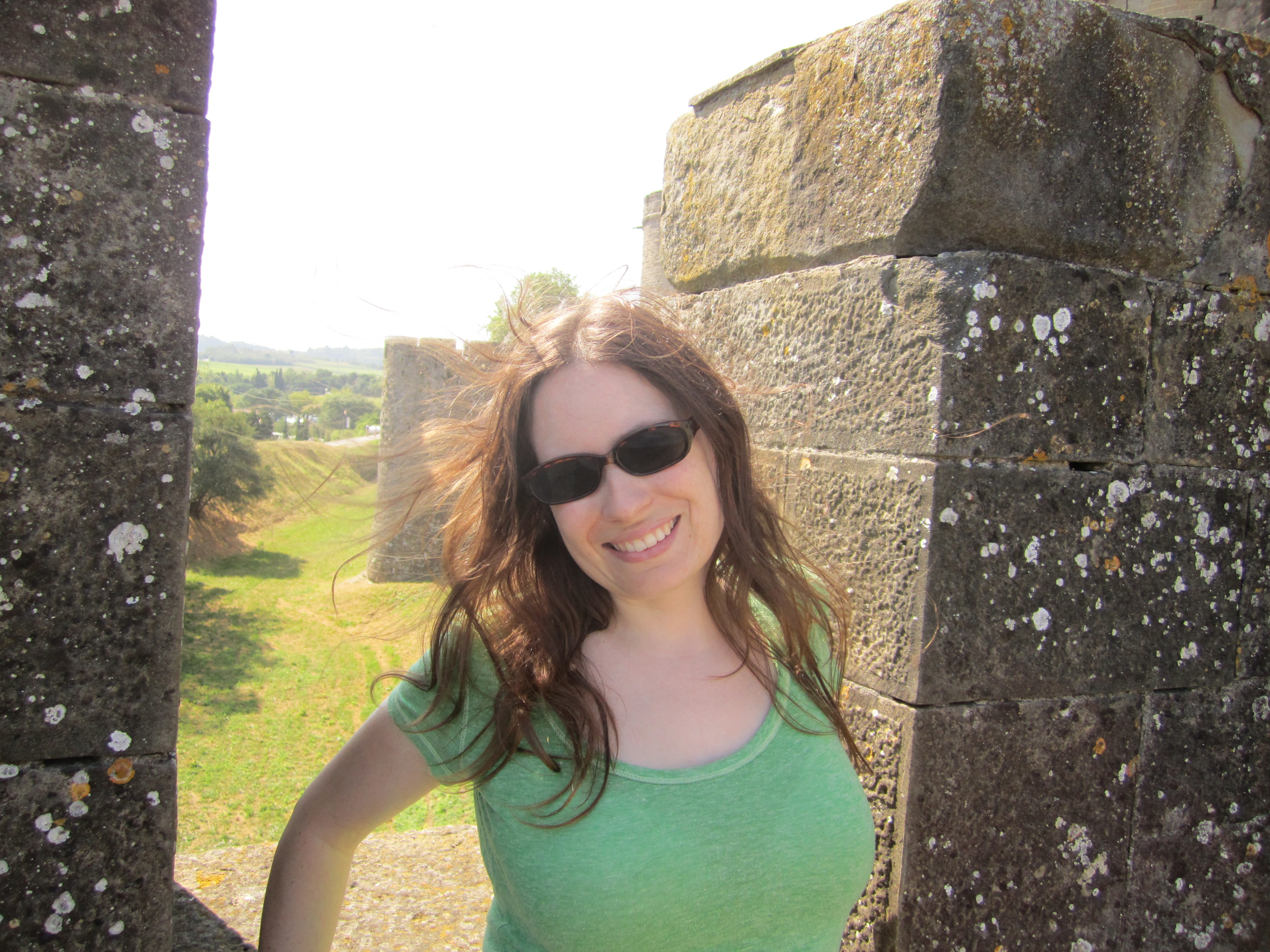
A relaxed Amy in Carcassonne.

A relaxed Amy in Carcassonne.

Taking a break from social media also reminded me afresh how much I appreciate my friends and colleagues. While I didn’t find myself overly tempted to log in, I thought about my friends a fair amount. I wondered how they were doing, and I wished I could send them little texts telling them how fabulous they are. I’m so grateful for the technology that allows me to stay connected with the people who mean so much to me.

That’s probably my greatest takeaway from my time without internet: technology is wondrous, but I’m allowed to use it on my own terms. Writers hear so often about they have to be on this social media site, or that new shiny one, or write blog posts every day, or whatever the latest trend is. But the truth is that in order to continue to do any of those things, we have to find the value in what we’re doing. We have to recognize the amazing feeling of being able to stay close to people who we can’t see face-to-face all the time. We need to appreciate the ability to connect in different ways with our readers and find the way(s) that work best for us.

I know I’ve said this before, but it bears repeating. When we hate a thing or secretly resent it, we aren’t going to be doing our best work. A grudging connection has a different quality to it than one that is celebrated.

When I look behind all the best writer social media strategies, I see people who care. They care about their audiences. They care about providing something meaningful, whether that be information or entertainment or connection. Genuine caring is hard to fake. So our job, then, is to find a way to use social media that allows us to project our caring outwards, while still being able to take care of ourselves.

So how do I feel after my social media time off? Well, right now I’m jet lagged, and I have a head cold, so I’m not exactly feeling refreshed. But I’m so proud of myself for taking the break I needed.

And guess what? Nothing terrible happened. The blog continues. My friends and colleagues are still here. No crises occurred that needed my personal attention. The world doesn’t actually require my constant attention to keep turning.

Sometimes a reminder of that can be a very good thing.

The headline sums it up nicely. I’ll be taking a break from the blog, social media, and email for the next few weeks. So do not fear when next Tuesday rolls around and there isn’t a new post; I’m doing fine, just taking some time off.

See you later in August!

I can't leave without a cute Nala photo. :)

I can’t leave without a cute Nala photo. 🙂

Shortly after I published Friendship Can Be Like Dating, I received a text from a long-distance friend of mine. How did internet friendships play into my theories, he wanted to know. He had a point. After all, he and I are good friends and we definitely don’t see each other once a week. If we see each once a year, it’s time to break out the party hats. And thus, an idea for another blog post was born.

Do I think it’s possible to be close friends with people who don’t live locally? Definitely. Do I think it’s possible to be close friends with people whom I’ve met on the internet? Yes, if certain things happen.

Basically, in order to be close friends, you’ve got to find some way to have both time and intimacy with one another. Without these, it’s hard for a relationship to grow beyond a pleasant acquaintanceship. Luckily for us, both of these things are possible using technology, which means we’re no longer as limited by geography in developing friendships.

Photo by Al Bogdan (another long distance friend).

Photo by Al Bogdan (another long distance friend)

I still think the Once a Week theory holds true in the online realm. The friends we interact with on a weekly basis feel like an active part of our lives. The friends we interact with on a monthly basis still feel present. Less than that, and we become less aware of and engaged with each other. (That’s not to say you can’t still be friends; it simply means you won’t be as immediately close and involved.)

But interactions look different when we live far apart. A few of my friends and I are what I call “text friends” because we communicate primarily via text. We might have an entire conversation over text, or we might just send a quick “You are my favorite brand of awesomesauce” kind of text. But what we’re doing whenever we send one is saying, “Hey, I’m thinking about you, I love you, and I value our friendship.” I have other friends who are “Twitter friends” because we mostly chat on Twitter. Still others are e-mail friends or Facebook/Facebook message friends or Skype friends. Time spent interacting is important, but interacting at all also plays a larger role in these LDFs (long distance friendships).

One of the great things about LDFs is that it is often easier to get one-on-one time. Although there are group-focused ways to communicate, many of the most common methods require forming a personal one-on-one relationship. Whether I’m sending texts to my friends in Ohio and Washington or Skyping my friend in Boston, we’re focusing on each other.

Some of the communication techniques are also great for balancing friendships to be more two-sided. In both e-mail and text, for example, both people will get a chance to speak, talk about their lives and viewpoints, and be heard. And because there’s an inherent delay built into the communication, it’s a lot harder to be interrupted in a way that’s truly disruptive.

I do find that my LDFs are greatly enhanced by any amount of face-to-face time. Often, in fact, they begin with face-to-face time and grow into something closer over the internet. Many of my convention writer friendships have started like this. In person time can be hard (and expensive) to arrange, but when it works out it’s worth its weight in gold.

What do you think? Do you have close LDFs? How do you maintain these friendships?

I spent last weekend at the World Domination Summit in Portland, Oregon. The theme of the conference is how to live a remarkable life in a conventional world.

I could write so many essays about things I learned this weekend (and maybe I will in the future). But right now I want to share some moments of transformation.

As some of my long-time readers know, I’ve been struggling with a lot of physical problems the last few years. I hurt both my knees in the spring of 2009, and they never completely recovered. I’ve also repeatedly injured my left ankle. At the height of these injuries, I was unable to walk a single city block.

But by far the worst parts of my injuries are the activities I’ve had to give up. Nowadays I have to tailor my travel very carefully around my limitations. I’ve spent the last four years being unable to hike, an activity I’ve been doing since I learned to walk. And for the most part, I’ve had to give up dancing.

I began to dance in a summer theater program when I was around eleven, and I was horrible at it. I was awkward, uncoordinated, as inflexible as could be, and had trouble even figuring out if I was turning right or left. But I learned that summer that I could like something even though I wasn’t good at it.

I continued to dance. I learned to dance through the musicals I performed in. I spent months learning how to do the time step (tap). In college, I took some jazz dance classes, swing classes, and salsa classes. But it was in London that I completely fell in love with dance. I took a weekly Five Rhythms (R) dance class, which is a kind of freestyle meditative dance, and I couldn’t get enough.

When I dance, it stops mattering what I look like, or how good or bad a dancer I am. All that matters is the beat and my body moving and the energy I’m sharing with those dancing around me. Everything else falls away, and I feel so much closer to the essentials of what matters to me.

And then I couldn’t dance any more. I had to be careful. I had to be cautious. I had to avoid pain and allow space for the healing that was so incredibly slow. I couldn’t put  much weight on my ankle, and what if I bent it the wrong way? What if I pushed myself too far and undid whatever progress I had made? More than four years passed in this way.

This weekend I gave up on being careful. I let go of safe. Such a large part of my injuries was related to stress and tight muscles and losing a part of myself. And I’ve been working so hard to make the necessary changes to heal.

This weekend it was time.

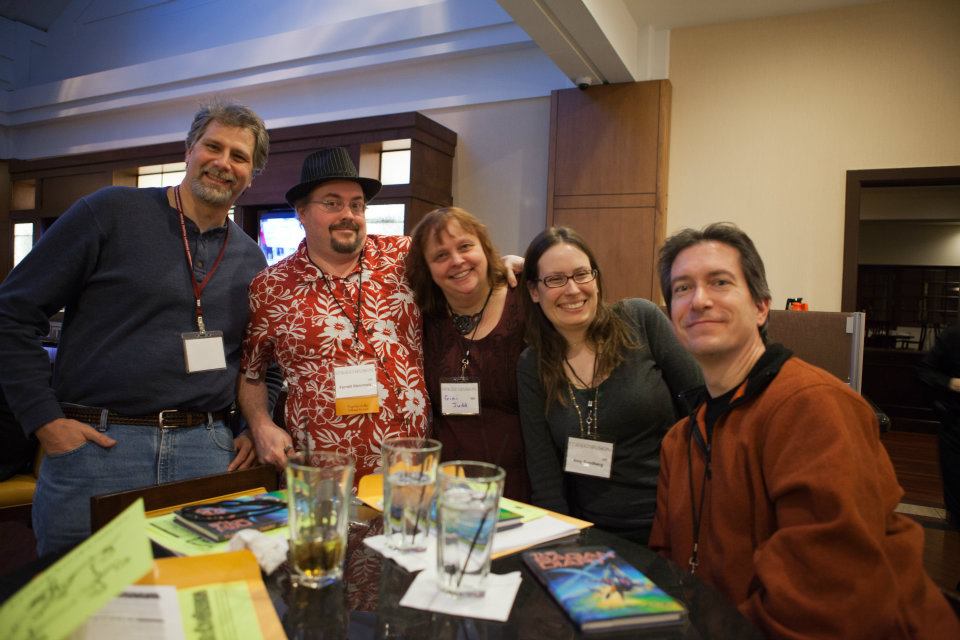
Me with some new WDS friends at the closing party. Photo by Armosa Studios.

I danced. At first it was hard, awkward with my left ankle in a brace. I couldn’t remember how to move. I don’t have the right muscles anymore. The few times I’ve allowed myself to dance in the past few years, I’ve been so very careful. But this time I didn’t stop myself. I paid attention to my body and experimented at the opening party, and then Sunday night at the closing party, I let myself go. I danced three hours straight with only brief breaks. Once I had started, I never wanted to stop.

I’m somewhere in that crowd, dancing with all my might! Photo by Armosa Studios.

I spent many years not feeling like I could be myself. No longer being able to dance was a symptom of that feeling. I was trapped in a prison of impossible expectations, both outer and inner. The world felt like a dangerous place.

When people tell or show us that we don’t matter, we begin to believe it. Until we consciously choose NOT to believe it.

I danced at the World Domination Summit to celebrate the experience of being myself, in all its facets: the brilliance and the mistakes, the joys and the pains, the successes and the failures. Lately I’ve often felt like I’m waiting, that something new is right around the bend if I can only hold out that long.

But something new isn’t coming. Something new is already here.

Happy Fourth!

For my American readers: Happy Fourth of July! For everyone else: Carry on!

How am I celebrating today? Well, I’m having some friends over to play a spirited indie RPG game called Spirit of the Century, in which I play an ace reporter/cat burglar (my character loves shiny things sooo much). Afterwards, we will grill some meats and non-meats on the barbecue, as is traditional. And we will try to comfort Nala if the fireworks get too loud.

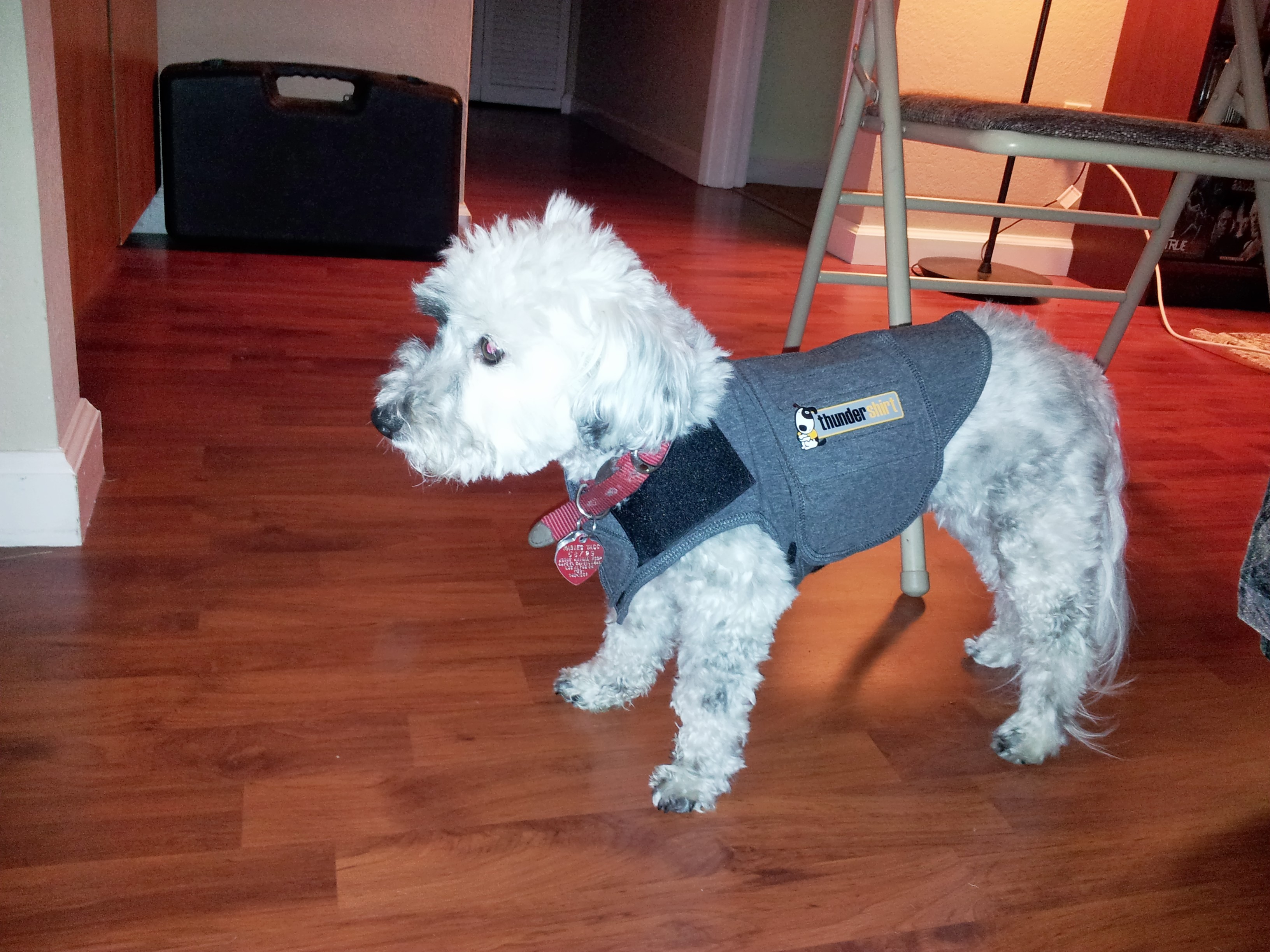
If the fireworks get too loud, Nala will wear her Thundershirt.

If the fireworks get too loud, Nala will wear her Thundershirt.

Then on Friday, I’m off to Portland to attend the World Domination Summit, the brain child of blogger and travel hacker Chris Guillebeau. I am going to learn, be inspired, and meet people who are following their dreams. It should be quite a weekend.

Enjoy the rest of your week!

It didn’t occur to me when I started this blog three years ago (THREE YEARS, WOO!) that every year, I’d have two posts back to back about birthdays. I was newly returned home after attending the Taos Toolbox writers’ workshop, and I was rearing to start this new project I had in mind: a blog called the Practical Free Spirit, about…well, I wasn’t really sure what it would be about. Mostly I was sure that I was excited to give it a try.

Since that time, I have written three hundred twenty-three posts. This one you’re reading right now is number three hundred twenty-four. If you multiply that number by ten, you’ll have some idea of how many comments have gone through this site. (Arithmetic! It is surprisingly fun!)

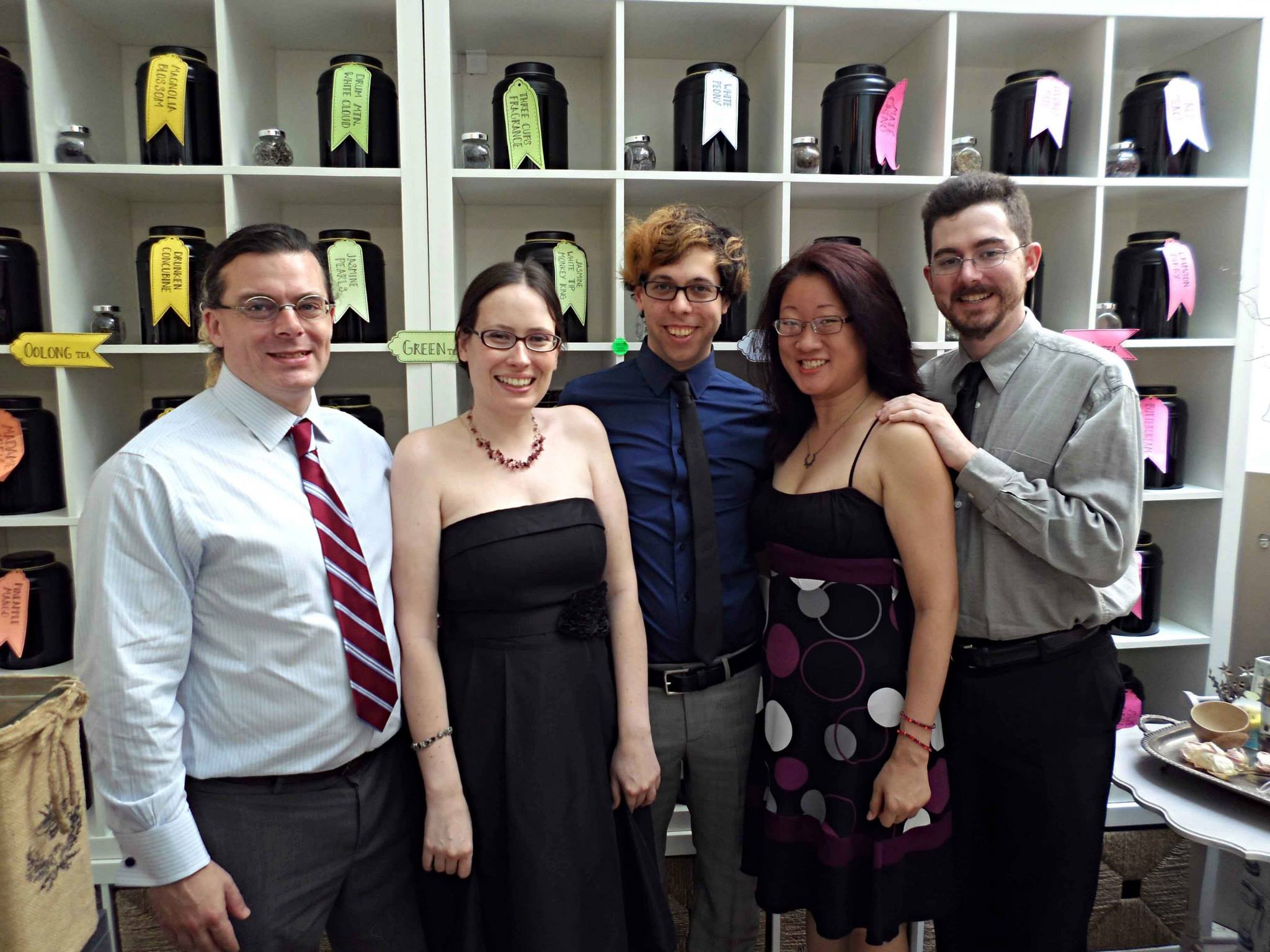
What did I do on my blog's birthday? I went to a fancy tea!

What did I do on my blog’s birthday? I went to a fancy tea! (Technically it was to celebrate MY birthday, but I won’t tell the blog if you won’t.)

I have written about a variety of subjects, many of which I never would have guessed I’d ever write about when I started the blog. I’ve written about things I didn’t want to write about, and I haven’t written about things I did want to write about. I’ve tried to strike a balance that is personal but not too personal, which, as it turns out, requires a fair amount of skill. I’ve also tried to keep things mixed up enough to stay interesting. (I’ve succeeded in keeping myself interested, in any case, which is critical for this blog continuing to exist, so I’m going to call that a win.)

This blog has thoroughly woven itself into the rhythms of my days. If it’s a Monday or a Wednesday, I’m writing an essay. If it’s a Tuesday or Thursday, I’m telling you all that I wrote it. If it’s a Friday, I’m wondering what in the world I’m going to write about next week. And then I start the process over again.

Anyone who reads this blog eventually learns how much I love it. That love has changed over the years, but it hasn’t faded. Sometimes it is a difficult love: when I don’t know what to write about, or when I’m feeling pressed for time, or when I don’t express myself as well as I hoped I would. And sometimes it is a dazzling love: when I get feedback by comment or email or conversation that something I said resonated or helped somebody, when I get to talk about subjects I think are very important, when I get to create art.

Thank you for coming along for the ride. I can’t wait to see what the blog has in store for us in the next year.

Guess what time it is? Birthday week! I’ve been spending the past week celebrating, and there will even more celebrating through the weekend. (Battlestar Galactica the board game! Fancy tea! And also frozen yogurt!) And today is my actual birthday, so I am spending time doing fun things…and also revising. Because revising seems to be a never-ending process in my life at the moment.

For the last couple of years on the blog, I’ve made a birthday post listing five happy things. But today I’d like to take a moment to think about one BIG happy thing: gratitude.

The reason thinking about five happy things every day is supposed to increase general happiness is that it helps us cultivate a sense of gratitude. This year has been a tough one for me, and what I’ve learned is that in the face of adversity, feeling gratitude is even more important. It’s so easy to get caught up in a tidal wave of difficult emotions, but being aware of all the positive parts of life helps keep things in balance. And because of the contrast, the good and the sweet and the special feel even stronger and more important than they normally do.

So today on my birthday, I am feeling gratitude and appreciation. There are so many wonderful people in my life, many of whom will be reading these words today, and my life is so much richer because of you. Whether I am learning from you or having fascinating conversations with you, having super fun times with you or offering and receiving support, you make a difference in my life. I only wish I could see those of you who don’t live close to me more than I do.

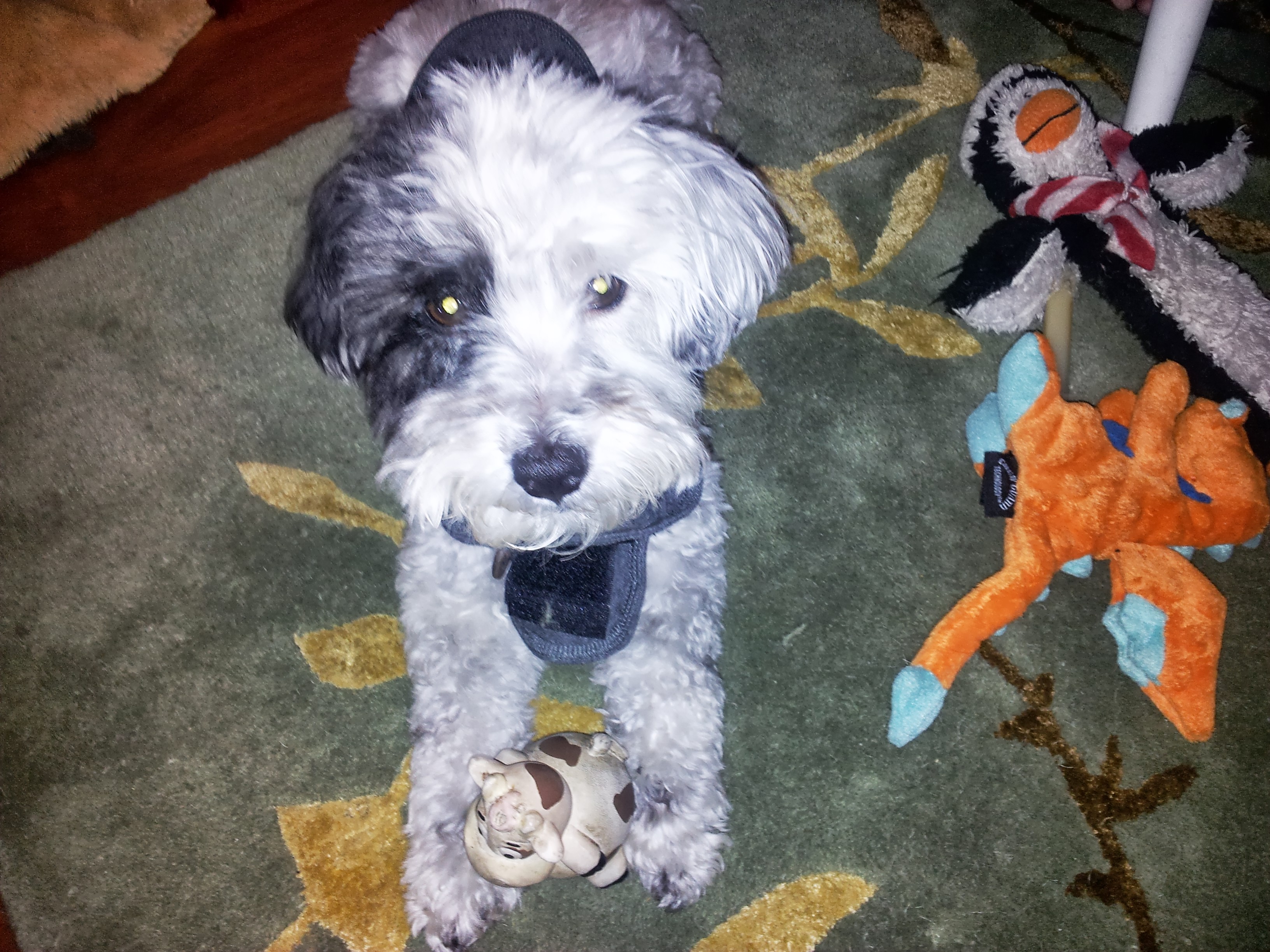
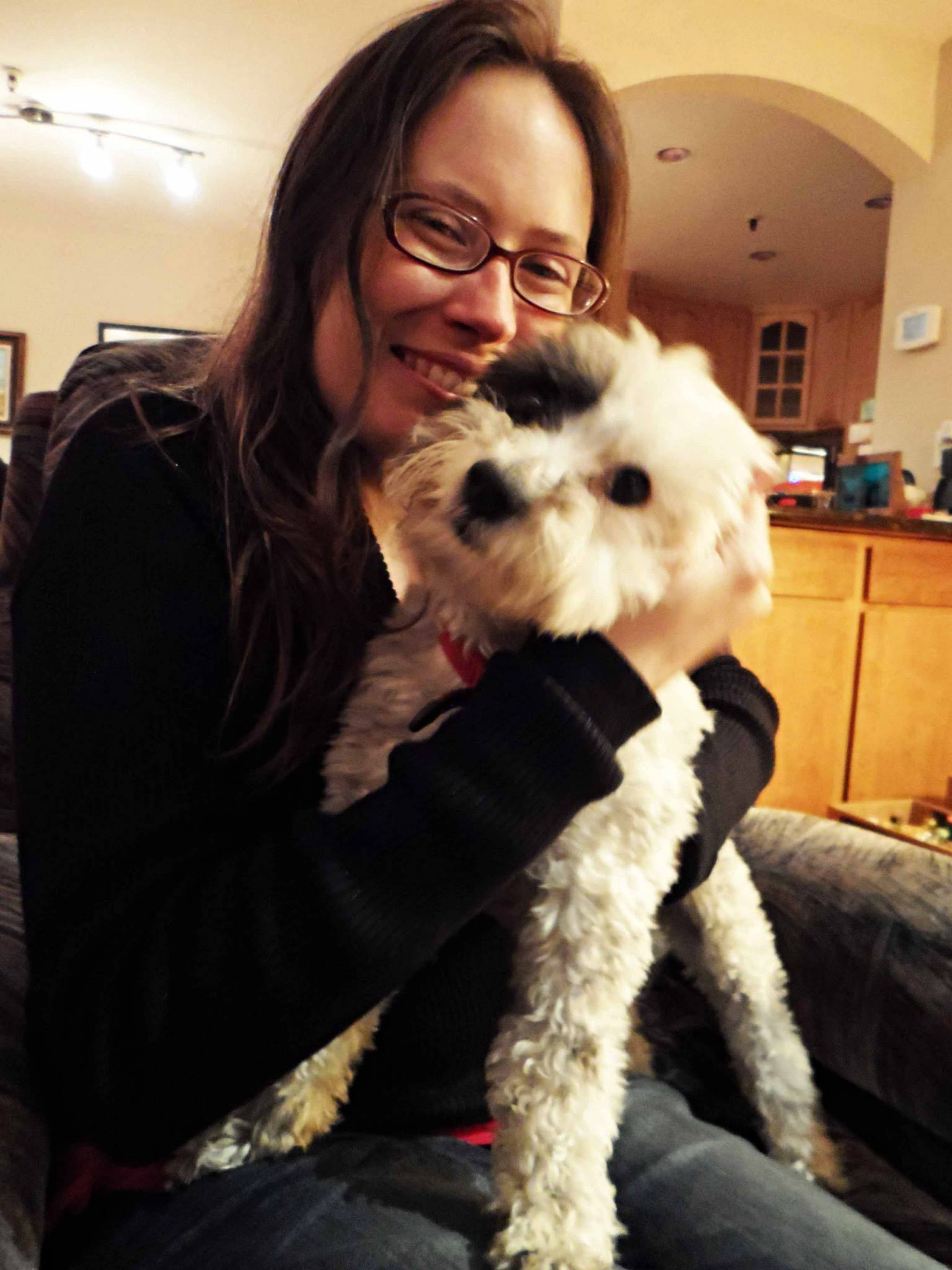
Taken during birthday week! Nala is too excited to hold still and look at the camera.

Taken during birthday week, by Yvette Ono. Nala is too excited to hold still and look at the camera.

I have been lucky this past year in many ways. I’ve gotten to spend a lot of time doing creative work that is important to me: revising The Academy of Forgetting (and revising some more), starting on the Space Novel, thinking of future story ideas. I’ve gotten to spend time in Seattle and New York and Boston, Chicago and Toronto and Detroit. I’ve reconnected with some people who matter to me, met some new people who have been fantastic, and deepened my existing friendships. I’ve been on the receiving end of a whole lot of generosity.

I live somewhere I feel comfortable and safe. My knees have been cooperating, and my allergies have improved. My friend Ferrett survived his triple bypass. I learned a lot about myself, and I’m on the path to creating the life I want. I have a little dog who brightens every single one of my days.

So here’s to another year! I know there will be challenges, but there will also be so much joy and gratitude that I get to be here experiencing life in all its glory.

What do you feel grateful for today? Let’s spread the happiness around.

A friend recently shared an article entitled “The Curse of the Connector.” Its tagline? “It’s easy to never be alone and yet very lonely.” The writer describes a glamorous Gatsby whirlwind of life in his social circle, in which everyone is supposed to always be doing something exciting and “crushing it.” But, he says, “The world desperately needs more “connections” to become true friendships.”

I live in the Silicon Valley, and I’ve experienced the culture the author is talking about. The “crush it” culture exhausts me because, on the surface at least, it seems to focus heavily on appearances. In addition, there is the “always busy” mentality. Meanwhile, we like to speculate on whether social media is making us more lonely. All of these ideas are interconnected, as they relate to the type and depth of connections with which we surround ourselves.

I’m going to rush right by the fact that the first mention about true friends in this article is that they make excellent personal brand consultants. (Really?!? That’s the first thing that comes to mind about friendship? Really?!?) At its heart, this article is about the realization that our lives are better when we have close friends as well as a large number of acquaintances, that friendship isn’t a numbers game or a mere ego boost.

Photo Credit: h.koppdelaney via Compfight cc

Yes, friendship takes time. Yes, it takes work. Yes, sometimes it can be quite difficult to find kindred spirits with whom to be close. Since last year was the Year of Friendship for me, I spent a lot of time thinking about these things, and now I have a few theories about friendship:

The Once a Week Theory: The more often you see somebody, the more likely you are to become close friends. Once a week or more is optimal. Once every other week is adequate. Less than once a month and the friendship probably doesn’t have the time to form right now. (For long distance friendship making, texts, emails, and Skypes can be substituted for in-person time. For established friendships, you can sometimes get by on less, but eventually you won’t be as close.)

It is no coincidence that many of my close friends get together every week for game night. I think of other close friends I’ve made, and there is generally either a concerted effort to see each other regularly, or a steady stream of texts or emails.

The One-on-One Theory: Sure, I can have good times with people at parties or group outings. But for me, a friendship becomes closer when I spend time one-on-one or in small groups (probably no more than four or five). The more one-on-one time I spend with somebody, the more likely we are to become close friends.

The Diminishing Returns Theory: Not everyone is going to be a perfect friend match. Maybe she’s too busy, maybe he’s going through a rough patch, maybe the two of us just didn’t click (or it was a one-sided click). Maybe there’s something in the friendship dynamic that isn’t working too well. It doesn’t mean you aren’t both great people, it just means you’re not going to become close. Happily, there are many more fabulous people out there who might become good friends. It works better to invest time with the people who will invest their time in you and can be part of a balanced and positive friendship. (Yes, friendship can be surprisingly like dating.)

Taylor’s Party Corollary: The closer the friend, the earlier you plan to arrive at their parties. It’s nice when a close friend arrives close to the start time. They can help set up, chat comfortably, hang out before the party picks up speed, or occupy early-arriving acquaintances and help the conversation flow. (Note: I am not good at this. I almost always arrive late to parties.)

How about you? Have any theories of your own about friendship?