Feeds:
Posts
Comments

Archive for the ‘Life’ Category

I read two essays relating to feminism last week, and I can’t get them out of my mind. They offer very different perspectives on living in the U.S. as a woman, and how to navigate the sometimes tricky waters that this entails.The first one was an explanation by Zoe Winters of why she doesn’t call herself a feminist. She offers several reasons, among them that feminism brings with it connotations of angry man haters, that feminists look down on women who have chosen to be housewives instead of career women, and that it’s better to look for win-win situations in the workplace–that if a man is unwilling to hire you because you’re a woman, you’re better off working somewhere else anyway.

The second one was by Justine Musk: “‘Well-behaved women seldom make history’: redefining what it means to be bad.”  She talks about the black-and-white choice for women in our society: to be a good girl or a bad girl. She brings up the different standards of behavior for men and for women, comparing Charlie Sheen with Brittany Spears. She discusses how convenient it is when women choose to be “good,” which is possibly another way of saying something I’ve been talking about a lot lately, choosing to be a people pleaser. (I understand that men can be people pleasers too. However, I suspect the pressures and causes might be a bit different for women than for men in our society. Feel free to argue with me in the comments, though.)

For a long time, I didn’t really self identify as a feminist. You could even say that I was a bit wishy-washy on the whole subject, and you wouldn’t be wrong. I thought I was lucky because sexism had never really affected me or my life.

Unfortunately, I wasn’t actually lucky. I was just naive.

I completely bought into the “good girl” thing that Justine was talking about in her article:

“Raising a girl to be ‘nice’,” a therapist – a woman in her sixties, married and with daughters — once remarked to me, “is like sending her out into the world with one hand tied behind her back.””

That nice girl is me. Was me, is perhaps more accurate. Sexism has affected me my entire life, sometimes in profound ways. Our society’s ideas about gender roles have played a role in shaping who I am, whether I like to admit it or not.

I don’t hate men. Actually, I really like men. Some of my very best friends have been and still are men. There have been times in my life when pretty much all my friends have been male. I have also been friends with guys who are obviously sexist. (Unfortunately, the more overtly sexist, the less likely the friendship will last, because ultimately it’s kind of hard to maintain a friendship with someone who is treating you poorly. Wish I had learned this one a lot sooner.) So I guess I’m the kind of feminist who doesn’t hate men and is only occasionally angry? Oh, and thinks being a housewife is a perfectly fine life choice, thank you very much.

I find the idea that I’d be better off finding a win-win situation in the workplace a bit shallow at best, though. I mean, it sounds great in theory, but what if I work in an industry in which I’m going to face discrimination for being a woman regardless of the company or my boss? I was talking to a female engineer the other day, and she told this story that really appalled me about her male co-workers’ behavior. When I told her that I didn’t know if I’d want to deal with that in my workplace, she responded that her company is actually pretty good to its female engineers. And I believe her; it might very well be worse elsewhere. That doesn’t mean that better is particularly great though. But she has to put up with it if she wants to continue being an engineer, and doing it with good grace is preferable for her career prospects.

As a writer dealing with sexism, it really matters what sub-field I’m in. The kidlit community seems to be made up of about 90% women. I have never experienced any noticeable sexism or inappropriate behavior in the kidlit community. Because I, as previously stated, like men, I’ve hung out with many of the men in the community, and they have always been respectful and treated me like any colleague.

The science fiction/fantasy community, on the other hand, is made up of about 40% women. On the plus side, women writers in the field also win about 40% of the major awards, which is great. Unfortunately, I am sometimes treated differently in the community because of my gender. I have heard about sexual harassment problems at conventions, and I have no trouble whatsoever believing them based on my own experiences. And because I am the “nice girl,” more often than not I let it slide. I push through my discomfort and keep right on smiling. This is the current reality of being a female speculative writer (or at least a relatively young and cute one). So should I stop writing science fiction and fantasy and find a more women-friendly environment in another genre? Or just not be part of the community? You have got to be kidding me. That’s not a win-win. It’s a big fat lose if I feel forced to leave a genre that I love.

Like it or not, sexism is a reality most women are forced to deal with (if you haven’t, I’m happy for you, but I also don’t really believe it). Some of us may not recognize that it’s happening. I often don’t recognize it’s happening. I’ve been watching movies all my life, and it’s only recently that I began to notice how gender is so often portrayed in Hollywood. Now that I’m breaking away from being “too nice” or the “good girl,” I find it valuable to try to notice. Sometimes there might be nothing I can do; sometimes I might have to stand there and smile. Sometimes someone might assume that I’m a man-hating hormonal nightmare of a woman if I use the word “feminist” or a bitch if I don’t temporize, soften my opinions, or stay quiet. But if I notice, at least I can make my own decision about how to respond and have a greater understanding of what’s going on around me and how society is encouraging me to have certain behavior patterns.

For me, feminism is not about fighting against men. It’s about fighting against stereotypes and preconceived boxes that are too small to fit who I am. It’s about being able to be taken seriously in the avocation of my choice, whether that be composer or teacher, science fiction or romance writer, engineer or housewife. It’s about taking a stand against having to fit into the definition of “good girl,” a definition I had no part in creating.

Okay, have at it. Is there anything I missed? Do you consider yourself to be a feminist? Why or why not?

Read Full Post »

I am happy to present the second Backbone Project link round-up! I highly suggest you check some of these essays out pronto.

Dying Is Not a Crime, by Adam Israel

On Snobbery, by Derek Smootz

Love of Critique, by Kimberly Gould

Backbone Project: Shrink, by Marilag Lubag

Backbone Project: Truth, by Marilag Lubag

Backbone Project: Critiques Are Tools, by Marilag Lubag

I Don’t Wear Shoes, from Speculatometry: The Theoretical Measurement

When Critiques Wound, by Sandra Tayler

Library Cards are for the Birds, by Miranda Suri

I also ran into this: On Taking Criticism, by Mike Brotherton. It touches on similar issues to what I discussed in my You are Not a Weenie if a Critique Makes You Cry article.

Thanks to all of you for participating and writing thought-provoking posts.

Read Full Post »

When I announced the Backbone Project two weeks ago, I expected to get some practice at writing essays that weren’t terribly conciliatory, at responding to people who disagreed with me, and at addressing subjects that I might normally hesitate to talk about. And I was right, to a point; I did in fact get practice in all of the above. But I learned a lot more than I anticipated.

First off, I learned that Ferrett is right (which probably doesn’t come as much of a surprise to many of you). Here I’ve been spending all this energy softening the expression of my viewpoints and trying my hardest to keep everyone happy, and it turns out that’s not so interesting. People respond more when I’m less nice, less perfection-geared, and less careful, as you can see from the amazing comment threads on all three of the Backbone Project essays.

Also, when people disagree with me or even dislike me, I don’t spontaneously combust into flames. Instead, I have a feeling of strength. There’s something bracingly exciting about saying: This is who I am, and this is where I stand. You don’t have to agree with me, but here I am, like it or not.

In a small, private-ish corner of the internet, I even stirred up a tiny hornet’s nest. Yes, indeed, there were all sorts of strangers saying, among other things, how judgmental and smug I am, how if I’ve had problems with not drinking, it must be because of my attitude (otherwise known as victim blaming, but whatever), and that it is completely not a big deal to not drink. At first, I felt terrible. I should have chosen my words more carefully. I was an awful person, both to write such an essay and to not want to drink in the first place. That second assertion snapped me out of it and instead I felt defensive. They hadn’t read my essay! They definitely hadn’t read the comments following it. They didn’t understand. For awhile, I yo-yoed between the two states.

And then I realized it wasn’t a big deal. The conversation wasn’t even about me. Anybody who no longer liked me or no longer wanted to read my blog probably wasn’t my friend or ideal reader in the first place. “Congratulations,” my husband said. “Having people tear you apart on the internet means you’ve leveled up. You have more influence now.” Oh. Who knew?

Meanwhile, I was busy being educated, and the remaining small rough patch of alienation caused by not drinking alcohol was being healed as I found solidarity in a completely unexpected way. As all of you shared the ways in which you are different, told your stories about being child free or hating to be photographed, not wearing shoes and being vegetarian/vegan, not driving and being polyamorous, I began to feel not so much held apart by my differences as brought closer to all of you who have had similar struggles. Indeed, our differences became something we have in common. I learned so much from all three conversations, and I’m looking forward to many more.

Of course, while my goal for the Backbone Project was to write three essays, in reality the project is ongoing, which is great, because it supports what I’m doing in the rest of my life as well. I’m going to keep trying to avoid the wishy-washy and to write strongly and bravely. I know I won’t always succeed, but my guess is that the more I do it, the better I will become.

And remember, you have until tonight to send me links to your own Backbone Project essays. There have been some really awesome posts going up this last week, and I can’t wait to share them with everybody!

Read Full Post »

Sometimes I am wishy-washy before I even set fingers to keyboard. I think of a subject that would make an interesting blog post, and then I veto it, not because it is inappropriate but because it crosses the threshold of my comfort zone. Because it would be hard to write about. Because it would be challenging to read about. So for my last backbone project post, I’m going to tackle such a subject head on.

I don’t drink alcohol. Not at all. No, I’m not a Mormon. I’m also not allergic, nor do I have stomach problems. I’m not a recovering alcoholic, and I’m not trying to avoid calories or sleepiness.

An interesting aspect of not drinking is that everyone always wants to know WHY. On the one hand, I can see how making a minority lifestyle choice could prompt questions, but on the other hand, I don’t think most of the people who ask really want to have a ten-minute-long philosophical discussion with me. Plus it gets tedious to be asked the same, slightly-but-not-quite-rude question so many times. Nowadays I’ve wised up, and I usually mention a family history of alcoholism, which kills the topic. Occasionally I’ll also mention that I hate the taste and make a joke about how it all tastes like cough syrup to me (although this is a dangerous tactic, as it encourages people to suggest alcohol that I might like). Both of these answers are true but incomplete.

The fact is, the decision not to drink alcohol is not made lightly. It becomes a big deal, like it or not, because it would be so much easier to acquire the taste and drink socially, at least a bit. Otherwise, people will heckle you, and question you, and try to change your mind, and be baffled and uncomfortable. If I’m choosing to go through all of that, then I’m really making A Choice. My original reasons have morphed over the years to adjust to the extreme reaction people sometimes have to my assertion that I don’t drink. To give you an idea of the magnitude of that choice, I can tell you that back in my dating days, there were two conversations I dreaded having with a new date: the one in which I had to share that my mom is dead, and the one in which I had to explain that I don’t drink any alcohol. Believe me, you can learn a lot about a person by how they respond to those two pieces of information.

So why don’t I drink? My decision was born from the determination to not ruin my life the way I saw other lives be ruined by alcohol and drugs, to create something better for myself. It was a direct response to a family history of drug and alcohol abuse. But it became more than that. As I watched people around me become uncomfortable that I wasn’t drinking, I didn’t want to start doing something that would cause me to become so insecure. I didn’t want to do stupid things and be able to blame it on having too much to drink; if I was going to do stupid things (and believe me, I have), I wanted to do them on my own terms and under my own power. I didn’t want to evade responsibility for myself. I didn’t want to say hurtful things to other people because of my drinking. I didn’t want to lubricate social situations for myself; I wanted to learn the social skills that would carry me through them. I wanted to be less shy all the time and not depend on a possible crutch. And perhaps most of all, I wanted to be accepted for who I was, even if who I was didn’t fit into some neat little box of expectations. My determination not to drink became a symbol saying that I didn’t have to be like everybody else, and reminding me that some things in life are worth a little alienation and judgment.

Now that I’ve gotten older, my choice carries less of an onus. I’m less likely to encounter peer pressure about the subject. I’m less likely to be in environments where the sole purpose of being there is to drink. I still have to survive through long and boring stories of stupid drunks (believe me, they’re a lot less amusing if you haven’t ever been drunk yourself) and lengthy explanations of various cocktail concoctions or wine snobbery (which is the equivalent of talking to someone who has never played nor had any interest in RPGs about the intricacies of your current campaign). And I still have to answer the WHY question. But it seems to have lost much of its previous significance. And yet, this choice of mine not to drink has played a very real part in shaping who I am today.

I know it’s my backbone project and not yours, but I’m going to ask anyway: What choice have you made or circumstance have you faced that has been met with judgmental attitudes? What is a way in which you are different from the mainstream? What stereotypes do people tend to believe about you that aren’t actually true?

Read Full Post »

As promised, here is this week’s round-up of links relating to my Backbone Project:

An Interesting Project Inspired by Yours Truly: The Backbone and Birthday Projects, by Ferrett Steinmetz

The Backbone Project: Critiquing a Piece on Critiques, by Ferrett Steinmetz

Publishing and Your Original Idea, by Kimberly Gould

What Works in Blogging, by Sandra Tayler

Facing Blogging Fears, by Sandra Tayler

The Backbone Project, by Adam Israel

Help Amy Become Less Wishy-Washy, by Luc Reid

A response to my You are not a Weenie post
If I receive more links, I’ll do another compilation of links next Wednesday. So go ahead, be brave, and write a post without apologies.

Meanwhile, I have to get writing the last in my own series of backbone posts. Wish me luck!

Read Full Post »

I really thought I would generate more disagreement from last week’s post on critiques, which goes to show that I have no idea whatsoever about such things.  In any case, it made me realize that the backbone project is really more about me putting myself and my opinions out there, regardless of whether doing so sparks disagreement.  (Also, “weenie” has become my new favorite word. My favorite word before that was “insouciant.” I think this is clear evidence that I am getting stupider by the minute.) However, I promised you could disagree with me, and I feel like I failed to deliver. Which brings us to my backbone project post #2.

As you know, I’m a science fiction and fantasy writer, so it should come as no big surprise that I have accumulated some geek cred over the years. But like most geeks, I have some holes in my preferences. Sometimes even gaping ones. I blame it on hanging out with musicians and psych majors all those years. Totally different kinds of geekdom.

Now, I figure most of you will be able to find something to disagree about in my pet peeves of geekdom list. Seriously. Think of it as your mission. I know you can do it.

1. Dr. Who: I have to plead ignorance to all the old seasons of Dr. Who, as I began watching this show with the reboot. I was okay with Seasons 1 and 2, but Season 3? Are you freaking kidding me? I was simultaneously bored, jumpy in an unpleasant way, and disgusted by the new companion Martha until I just couldn’t take it anymore. And what’s with the plots? Deus ex machina after deus ex machina. I watched “The Doctor’s Wife” and read on the internet that it made everyone cry. Seriously? I was just disgusted that once again, all the episode was about was Amy Pond calling the Doctor and begging to be rescued. Maybe I’ve just been unfortunate about the Amy Pond episodes I’ve seen (which, to be fair, haven’t been many), but all she does is need to be rescued! Yet another companion wasted.

2. the novels of Neil Gaiman: particularly American Gods. I could barely finish it because the pacing was so slow. I expect this to generate actual hate mail, so you see how brave I am being. I just don’t get it all the hype. I mean, yes, Neil Gaiman is like the rock star of writers. And he’s done some stuff that I’ve appreciated: The Graveyard Book, parts of Neverwhere (although I wanted to kick the protagonist in the teeth), that short story about Snow White and vampires. But I just don’t understand the massive hysteria surrounding him and his work. Mind you, I keep trying. But so far, no dice.

3. Anime: My geeky friends first exposed me to anime via Cowboy Bebop, and I was okay with it. I think this made them overly optimistic, because they then showed me a bunch of random, really weird and twisted anime, and it’s ruined me. I’m not kidding. Someone suggests watching anime and I look at them like they’ve grown a third head. My poor husband suffers because of it, but there it is. I just have no interest. It took a huge effort for me to consent to watch Porco Rosso and I could see that it had merit, but the ennui is so overpowering, I kind of don’t care.

4. Agricola: Gah! Resource management at its most boring. The players seem to barely interact, and the whole game is about … wait for it … being a farmer? Yeah, because that’s what I’ve been dreaming about doing my entire life. There aren’t even any silly pictures of beans on cards so you can pretend that you’re collecting an exotic bevy of circus performers instead of farming. Plus I already ran a business for seven years. I don’t want my board games to feel exactly the same as what I could get paid to do. I just don’t.

5. WoW: Okay, I’ve never played WoW, and you know what? I hope I never play WoW because as far as I can tell, that game is crack. It will suck me in, and I will run around like a mindless little medicated drone from Brave New World, and I will never ever escape. Not only that, but I won’t even realize how much time I’m spending doing essentially boring and repetitive things. Because I don’t waste enough time on the internet as it is. Plus WoW steals my friends. It makes them too busy to do things like hang out with me and email me. Which gives it an extra black mark in my book.

6. Lord of the Rings (the books): I know Ferrett already blogged about this, but I still think it deserves a mention. I like the movies. I’ve been wanting to see them again, in fact. But I’ve never made it to the end of the trilogy of books. I read the first two when I was eleven, and then I had to wait for the next library trip to read the last one, at which point I’d lost interest. I tried reading them again before the movies came out, and The Two Towers killed me. I wanted something to happen so badly. But instead it just went on and on about the trees and the pain and the journeying, until Frodo’s pain became my pain. Literally.

7. D&D: I like RPGs. I miss playing them. But I don’t miss D&D. Why not? First, because the only way I could ever make it at all fun for myself was by playing a caricature of my class who was generally of lower than average intelligence. After awhile, that got pretty old. Second, the storytelling seems to have the same average depth as my own at age seven playing with my Barbies. There’s bad guys. Must kill. Slash, hack. The end. Now there’s more bad guys. Slash, hack. Etc. I mean, there’s not even the romantic subplots that my Barbies enjoyed. Third, with the newest edition, it seems that even more emphasis is placed on fighting (who knew it was possible?) and that grid makes combat last forever. Don’t get me wrong, I’m not against some fighting in a campaign, but all fighting and no story makes me fall asleep.

All right, what did I get wrong? I bet you can give me several good reasons why the things above are actually super awesome. My tingling spider sense tells me so. And, for additional kicks, you can share your own geekdom pet peeves. I dare someone to lay into Buffy the Vampire Slayer. Or Star Wars Episode 4. Or Ender’s Game. Let the smack talk begin!

Read Full Post »

Wow.

I have to say, I thought my backbone project idea was pretty nifty, but I had no idea what an outpouring of support I would receive from all of you wonderful people. I’ve already learned a great deal as well, even though I’m not even halfway done. Thank you all, with some extra special thanks to Ferrett for giving me the idea in the first place.

I’ve already visited some of the blog posts that others have written as part of this project, but Kimberly had the great idea of putting together a list of the links so that they’re easy for everyone to find. I thought about putting the list on the sidebar, but I never look at blog sidebars, so instead I’m going to put together a few posts linking to other Backbone Project participants.

Here’s how to get involved! First, go ahead and write a blog post. It can be a post about the project, it can be a non-wishy washy project post like the ones I’m trying to write, or it can be a response to someone else’s project post (preferably disagreeing in some way). Once you’ve published your Project Backbone post (or posts, feel free to do more than one like I am), email the link(s) to me at practicalfreespirt@gmail.com with “Project Backbone” in the subject line. I’ll be publishing a list with your links on the next two Wednesdays, bright and early (meaning, get those links to me by late afternoon Tuesday to be safe). And if you are a twitter person, you can also use the hashtag #backboneproject to label your blog post announcement.

And what is this about another challenge? Why, yes! Apparently it’s in the air. Theodora Goss is organizing a summer YA Novel Challenge, and I’ve decided to join in the fun. (Perhaps some of you will decide to do it as well!) Here are the rules, which are very flexible and meant to be changed:

1. The challenge will run June 1st to August 31st.
2. The goal of the challenge is to write or revise a YA novel, or part of a YA novel.
3. To meet that goal, set smaller goals for yourself: words per day, pages revised per week, etc.
4. If you would like, blog about your progress. Remember that failure is as important as success.
5. Anyone can join or leave the challenge at any time. It’s always OK to start or stop.

I’m going to be starting my next YA novel for this challenge. I don’t expect to finish by the end of August, as I have some travel planned this summer that will interfere with writing, but I’m hoping to get a good start and then some.

And I’m planning to try to blog about it as well. I’m not sure how that will work, to be honest. I hate word count posts, so I’m definitely not going to do that, and I’m not big on sharing excerpts from works-in-progress either. Maybe I’ll share things about my successes and failures. Maybe I’ll go off on a tangent and wax philosophical about related topics. Or maybe I’ll decide blogging about it is just plain boring (or stressful, or both) and stop. I don’t know, but I’m looking forward to finding out.

Until then, have a wonderful Memorial Day weekend!

Read Full Post »

I’ve been following a conversation on one of the forums I belong to about what works when blogging. You know, the type of discussion in which we talk about what engages the reader and what might increase a blog’s audience, while sharing do and do not tips and all the normal considerations of blogginess.

The estimable Ferrett shared a link on his post on how to get comments. There is much good advice to be had in this essay and the one about blogging that precedes it, but there was one sentence that particularly stood out for me. Ferrett says, “If you’re a conciliatory person by nature, writing a pleasant essay that excuses whatever it is that bugs you with a “But I guess that’s how people are” will not get comments either, because you’ll be so wishy-washy that nobody will be able to disagree with you.”

This sentence popped out at me because I had an instant “ouch” moment of recognition. Yeah. I went through the “Oh no, I probably do that” period to the “Oh God, I hate it when people are wishy-washy” phase to the “I need to stop doing that” realization. It was fun like having a root canal done is fun (and wow, do I now know a whole lot about that). And thus the idea of my newest project was born.

The fact is, I want to be a nice person. And I want you to like me. I don’t even know who you all are, but that doesn’t matter; I just de facto want you to like me. Which I hope you can see can be a bit crazy-making. I enjoy smoothing things over, keeping things calm, following the rules, being reasonable and fair-minded, and not stirring up the pot. Being a people pleaser is, in a way, very reassuring. It allows me to feel that I have some control over life. Never mind that I know intellectually that I have about as much control over my life as I do over the U.S. government (I vote, so there’s my tiny little sliver of control right there).

Unfortunately, there is such a thing as too nice, and sometimes I have trouble finding that line. Plus I definitely do not want to be wishy-washy (the horror!). Hence the project. I am going to write THREE blog posts that are not conciliatory. Well, at least I’m going to try very hard, and you can tell me how I’m doing. I’m planning to publish all three in a row if possible, but in any event I will publish them all in a timely manner. (Really I want to write only one, and then see how it goes, and then maybe write another one if it wasn’t so bad. Talk about wishy-washy! So that’s why I’m committing up front to three.)

I’m depending on you, my readers, to help me make this project a success. Here are some ways you can get involved:

  1. If you are also a people pleaser and a blogger, you can make your own commitment of writing x number of non-conciliatory posts. I will cheer you on, and we can provide moral support for each other!
  2.  You can tell me how I’m doing and call me out if I’m being too nice in spite of myself. I’m so used to doing it, I’m pretty sure I’ll do it sometimes without even realizing it. So I need your eyes.
  3. You can function as a part of my own elite cheerleading squad, telling me how great it is that I’m saying things people could disagree with.
  4. You can disagree with me. In public. Especially if you are a people pleaser too, but really no matter who you are. (Just no trolling. Trolling is not cool and will not advance the cause.)

Right. First post should come out on Thursday. Wish me luck, and feel free to share any last-minute tips (believe me, I’m going to need them).

Read Full Post »

My husband found this really fascinating paper entitled “If Money Doesn’t Make You Happy Then You Probably Aren’t Spending It Right.” Since I recently visited the topic of the connection between money and happiness here on this blog, I simply had to devour the entire article. It is, however, quite long, so I am going to choose a few salient points to discuss here.

Photo by Michael Porter

First off, the article says that people with more money aren’t that much happier than people with less, but that they are generally more satisfied. I found this distinction interesting because on first thought, I wouldn’t have thought the two states were really so different. But of course they are. We can have all the stuff we want, we can have the funds to take trips around the world, eat fancy food, and afford other experiences we desire, and be very satisfied that we can do and have all of this. It doesn’t follow, however, that this satisfaction will result in increased happiness, hence the stereotype of the poor little rich girl who has everything money can buy and yet is completely miserable. There are serious problems that have nothing to do with money.

Apparently happiness also depends a lot on our past and future relationship with a given expenditure. Anticipation greatly increases happiness, sometimes more than the actual purchase or experience. I’m going to climb out on a limb here and suggest this has something to do with positive reinforcement, ie I’m excited about my trip to Ashland, I’m thinking about it with excitement, and therefore I’m more likely to approach other aspects of my life in a positive way, which creates a happiness feedback loop. I can definitely experience a stress feedback loop (I’ll be feeling lots of stress and therefore everything seems more overwhelming, even things that would normally be no big deal, creating more stress, etc.), so why not a happiness one as well?

Fond memories of an expenditure will also increase overall happiness, which offers one explanation for why people love to show photos from their past travels and happy occasions. For example, I have wedding pictures and presents scattered throughout my living room that regularly remind me of that event. This is one reason experiences tend to trump material items in the happy-making: we’re more likely to think back to an amazing experience than to an item (to which we have grown more accustomed).

Another point the article brings up is the power of the little things to affect our happiness. The authors suggest making many small purchases instead of a few big purchases. I don’t completely agree with this point because, as we just discussed, often big purchases (trips, weddings, etc.) cause more anticipation and memory, both because we’re excited about them and because it takes longer to save up for a big purchase, increasing the anticipation even further. But scattering smaller purchases throughout our lives (a special coffee drink, a new favorite song or piece of sheet music, a massage, going to a movie) keeps us savoring the texture of life while offering much-needed variety. Of course, appreciating the small things affects happiness whether money is being spent or not, which is part of the beauty of it.

Ultimately what this article leads me to think is something I like to say anyway; namely, that we can contribute to our own happiness through learned strategies, introspection about our priorities, and being present to enjoy both the everyday moments of happiness and the rare, large thunderclaps of happy. Money takes away worries, but it doesn’t automatically bring happiness in their stead. That is something we have to do for ourselves.

What is something little that has made you happy today? For me, I’m wearing a scarf in this fabulous shade of purple that my husband bought for me on our trip to London last year and gave me for Christmas. So I have a warm neck, and every time I look down, I think, “What a great color. What a great husband. What a great trip. Christmas!”

Read Full Post »

I recently received an email from a friend of mine asking for travel advice for an upcoming trip to Europe. I am always thrilled to be asked about travel, because any excuse to talk about it is a good excuse in my book. So I wrote back promptly sharing what I knew, and when he thanked me, he also said, “You talk and blog about the wonders of travel, but for us newbies the actual process can be a bit intimidating.” And I knew I had today’s blog post.
One of my favorite things about travel (and also one of the things I most dread, paradoxically enough) is how uncomfortable it can be. It can shake us loose from our daily routines, from our preconceptions, even from who we might think we are. It challenges us, it taxes us, and sometimes things go wrong. Sometimes things go very, very wrong.

But I realize that maybe that’s not what I tend to talk about. My excitement and passion for travel shines through so brilliantly that it tends to eclipse all else. I gloss over many of the hard bits, or I don’t mention them at all. Plus many events that were quite difficult at the time seem funny or interesting in retrospect. Even as they’re happening, I try to see them as all part of the adventure, and that attitude carries through even when I’m back home.

So yes, the process of travel is intimidating, and not just if you’re a travel newbie. It takes a certain amount of energy to get started, and at this time in my life when I’m getting more settled and am dealing with lingering physical limitations, I have that energy less often than I used to. And while I’m not overly intimidated by travel to Europe anymore (which wasn’t always the case), I’m still easily overwhelmed by contemplating trips to other parts of the world. (Exotic diseases are my bugaboo. If the ailments I read about in the medical part of the guidebook are too disgusting, I lose all enthusiasm for visiting. I’m also convinced that I will get malaria in many parts of the world because mosquitoes love me soooo much.)

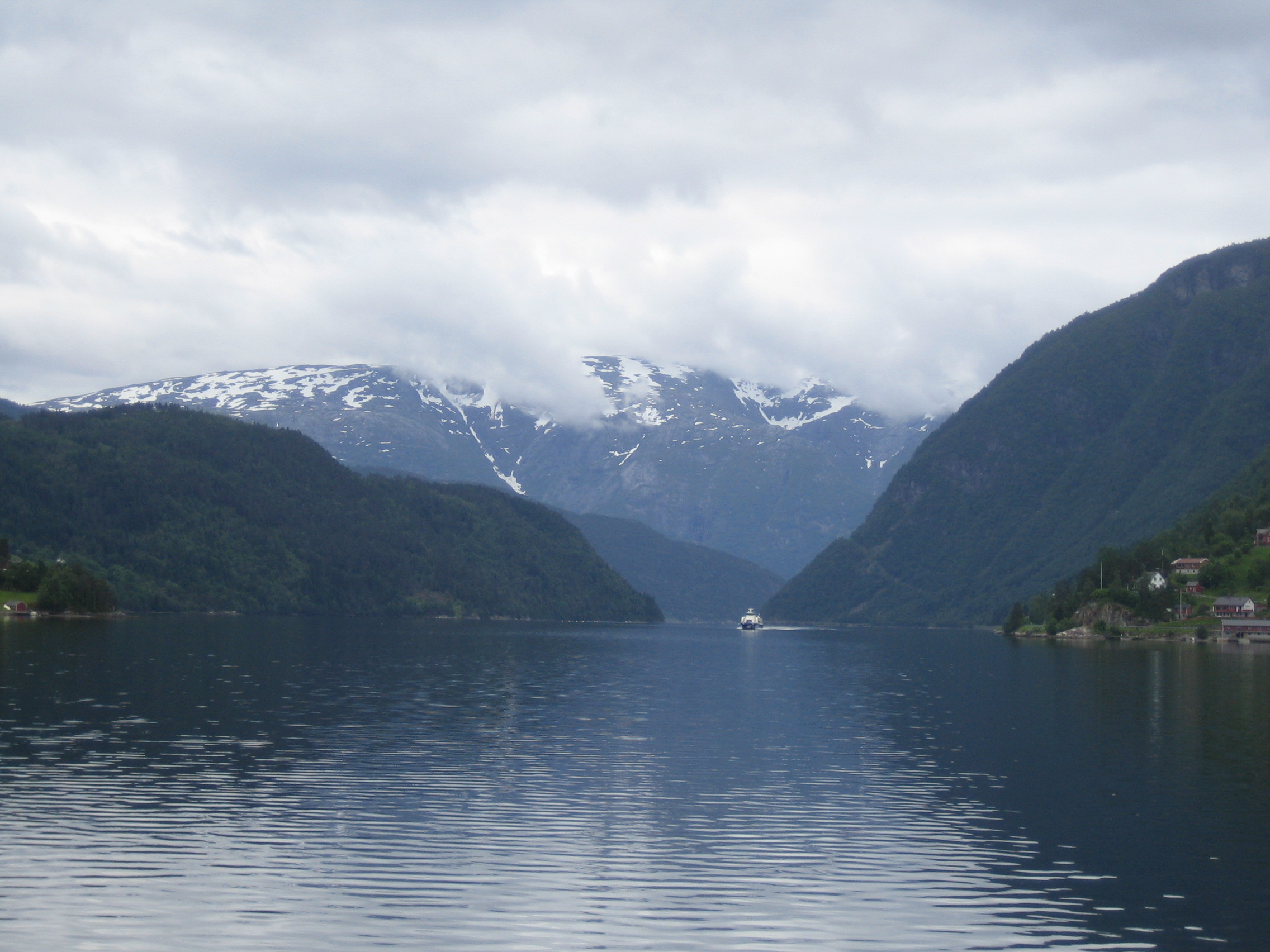
I didn't have a digital camera when I was in Sweden, so a photo of Norway is going to have to do...

Still, it is through the discomfort that transformation can occur, which is why I love it in spite of itself. The first non-English-speaking country I visited by myself was Sweden. Very modern, almost everyone speaks at least some English there, the food isn’t too crazy. I’d arranged to stay in a dorm room in Stockholm, so I even had a place to head upon arrival. I went out and about my first day, and I was so overwhelmed by being alone in a foreign place that I went back to the dorm and hid. I’m not even kidding, I hid and watched TV and cooked food in the dorm kitchen and felt miserable. I thought I’d made a terrible mistake, and it took all my willpower to eventually leave the safety of my room and continue my travel adventure.

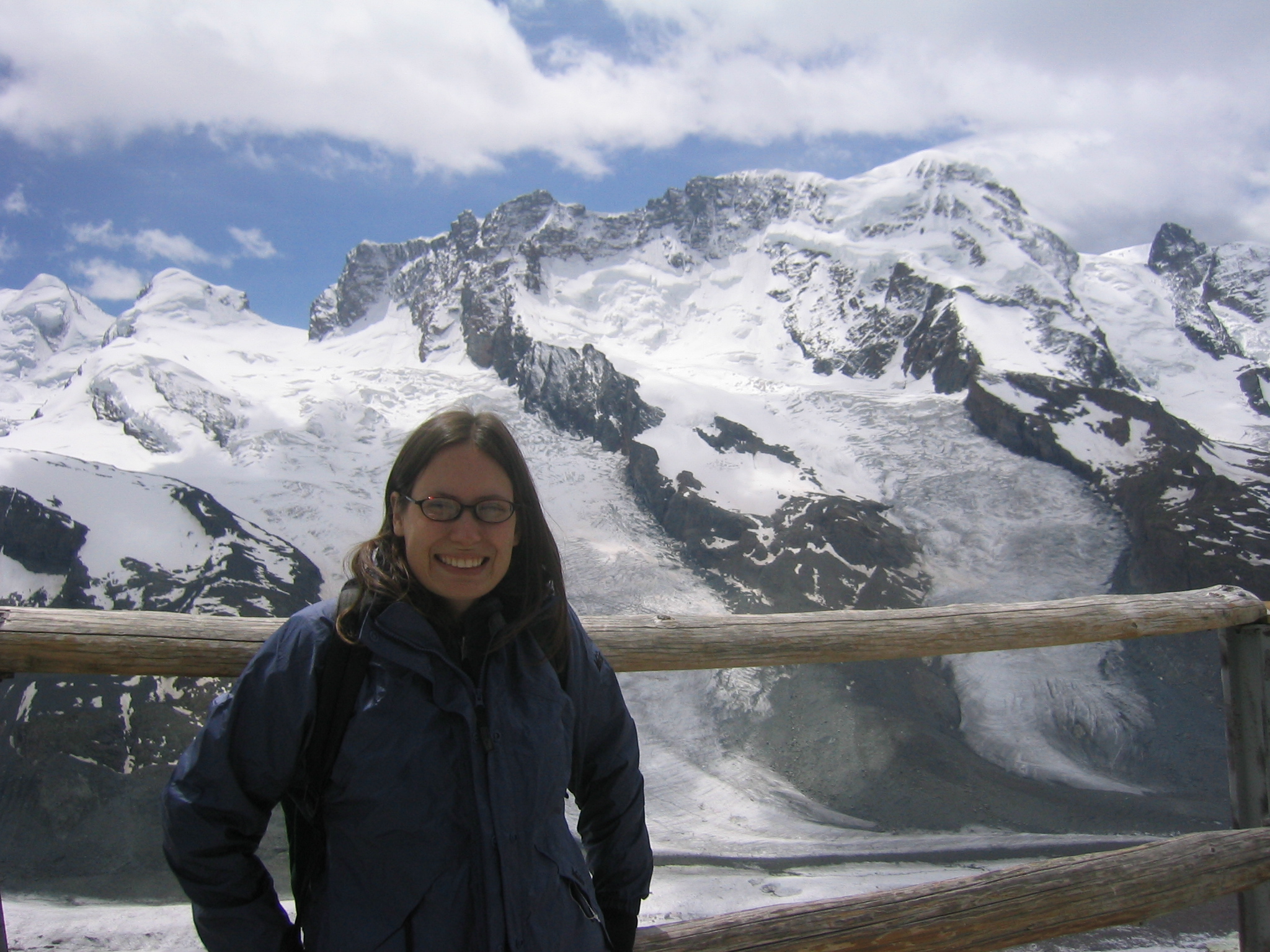
On top of the world... in Switzerland.

Fast forward two months and I was in Switzerland, also alone, but completely transformed. It wasn’t that I was so much more comfortable, but I knew I could rely on myself. I had more confidence, I had seen amazing places and met a huge array of different people, and I had survived. I had faced up to the strong surges of grief I still felt over my mom’s death, and I had finally found a measure of peace around it. I was a different person, and to this day I believe that those two months are among the most important experiences of my life.

So is travel amazing? Yes, but it’s not for the weak of heart. It can be dizzying and terrifying, tedious and stimulating, painful and healing, and no matter how carefully we plan, travel will turn out differently than we expect.

What is an amazing travel experience you’ve had? Or, if you haven’t traveled much, what destination are you eager to visit?

Read Full Post »

« Newer Posts - Older Posts »