Feeds:
Posts
Comments

Archive for the ‘Life’ Category

Definition of kindred spirit:

“A bosom friend–an intimate friend, you know–a really kindred spirit to whom I can confide my inmost soul. I’ve dreamed of meeting her all my life.” – Anne to Marilla in Anne of Green Gables, by L.M. Montgomerie

Theodora Goss recently wrote about soul mates, and when I read her post, I recognized what she was talking about. Her idea of the soul mate is my idea of the kindred spirit. And when we use either of these phrases, what we’re really talking about is connection.

I really like the idea of practicing being a kindred spirit, both to yourself and to others. Because if you are not a kindred spirit, how can you expect anyone else to be? And being your own best kindred spirit plays right into the idea of loving ourselves, which is incredibly important.

And there are so many different kinds of kindred spirit. One of the things I like about the Anne books is that we get to see Anne discover many different types as she grows up. There is the romantic kind, the kind we’re most likely to think of when we say soul mate. And there is the best friend kind, in whom we are perhaps most likely to confide. But there are many other kinds as well, just as there are many different ways to support and appreciate each other.

Some of them run deep, right through the core of who we are. Others (like Mrs. Josephine Barry in the Anne books) are closer to the surface but still marked by the hallmarks of a kindred spirit: a sense of understanding or kinship, along with a sense of appreciation for who the person is. What this sense of understanding revolves around and how widespread it is will vary from relationship to relationship.

It interests me that with many people, we never have the opportunity to share our entire souls, or even a large portion of them. But we often have the opportunity to share a piece of our soul, to shine a ray of ourselves or open one of a hallway of doors. Even if it’s a very little door, its opening still has meaning as it creates its feeling of connection.

I wonder if this is why we sometimes think it’s harder to make friends as adults. With old friends that you’ve known since childhood, we share the understanding created through a shared past. When we make friends in school, it is often also through a shared context and experience (taking place during a period of transformation, oftentimes), which can persist for the rest of our lives. When we’re adults, we have to work harder to find that shared understanding, but it is often still there if we decide to go looking for it.

Of course, now I know many kindred spirits with whom I’ve bonded because of writing. A shared passion can be a powerful magnet. Shared passions or interests, shared past experiences, shared personality traits, sometimes even shared social groups can be enough to light the first spark. I even have my blogging kindred spirits: Rahul Kanakia and Theodora Goss. I rarely get to speak with them in person, but I often talk about their posts here, sharing my own thoughts on their ideas.

One thing that most of my kindred spirits have in common is that they LISTEN. Some of them are better at it than others, but at least some listening on both sides is key. That is the only way to create the necessary understanding. It is the only way to actually get to know someone, and we can only truly appreciate someone if we know at least some part of them. Similarly, we can only be a kindred spirit to ourselves if we learn to listen to ourselves and pay attention to what we hear.

“Kindred spirits are not so scarce as I used to think. It’s splendid to find out there are so many of them in the world.” -Anne in Anne of Green Gables, by L.M. Montgomerie

What does being a kindred spirit mean to you?

Read Full Post »

“You can’t ever know in advance. Big decisions require faith.”

– from S., by J.J. Abrams and Doug Dorst

Today I decided where I’m going to live for the next year.

I’ve had to move many times in my life, and as I look for a place, what I’m always waiting for is a certain feeling. It’s a sense of rightness, a sense of “Yes, this is my home.”

There’s nothing mystical about this feeling. I think it happens when enough aspects of a place line up with what I want. I think carefully about I want ahead of time too: how much I’m willing to spend, what features are absolutely non-negotiable (pet-friendly, space for my piano), what features are exciting bonuses (walk-in closets, lots of light).

When I see enough of what I’m looking for, when all the little details filter through my brain, the feeling begins to wash over me. It’s a vision of a future where I can imagine myself being happy and safe, where I can imagine Nala being her usual happy doggie self, where I can see myself writing and making music and being surrounded by friends.

The most important part of home.

The most important part of home.

The build-up to this decision takes forever. Not only do I have to seriously think about what I want, I have to do lots of research, go see a bunch of places, and adjust my expectations according to what’s available. But the decision itself is easy. I just know. I’d decided to take my next home by the end of my tour. All that was left to figure out was the details.

Big decisions can be so overwhelming, because we can’t know. We can’t know how it’s going to work out. We can’t know for sure if we have all the information we need to make the best decision. We can simply try our best to learn the relevant facts and then take the leap.

When I look back, it’s amazing how many of the decisions I’m most happy with in retrospect are ones about which I just knew.

I just knew Nala was my dog.

I just knew I wanted to be a writer.

I just knew I wanted to go to school at UC Santa Cruz.

I’ve just known when I’ve met several of my friends that they were people I wanted to be in my life.

I just knew which writing project to work on right now.

That’s not to say these decisions didn’t also involve dithering. That’s not to say I had no doubts. I dither; it’s part of my process.

But when it came time to commit one way or another, I just knew. And that knowledge gave me the courage to take the necessary leap.

Looking back on your life, when have you just known?

Read Full Post »

I recently took a couple of online personality tests (the Myers-Briggs and the IPIP-NEO), and my results have changed. I’m now coming out fairly firmly on the extroverted side of things instead of being almost exactly in the middle.

I want to leave aside, for now, the argument that introversion is not a personality trait. I also don’t want to delve deeply into the sometimes ignorant stereotypes and oversimplification that goes along with discussions of introversion and extraversion.

I have not been trying to change into more of an extrovert, but I think me doing so has been a side effect of another change I have been trying to make: namely, to develop a backbone, tone down the people pleasing, and learn to set boundaries.

As it turns out, it is exhausting to be around people when you are a people pleaser. Full stop. It doesn’t matter if you are an introvert or an extrovert. It doesn’t matter if you know how to make conversation or can be a good listener or are a generally pleasant person to be around.

It takes huge amounts of energy to be around people when you aren’t allowed to say no, don’t value your own opinions and feelings and desires, and won’t stand up for yourself. Because the people around you might ask you to do something that you can’t possibly or don’t want to do for them. Or they might (inadvertently or not) treat you without respect. Or they might disagree about how something should happen, and then there will be conflict, which is anathema to the people pleaser. Or they might do something that bothers you but to which you do not feel able to respond.

At some point, in order to protect yourself from this huge expenditure of emotional energy, you might begin to build a wall around yourself. You might find yourself wishing to be alone because being alone is the only time when you can truly relax and be peaceful. You might keep other people at arms’ length to minimize the requests and the conflicts and the fatigue. You might need a lot of time to recharge after socializing.

You might appear to be an introvert.

But as it turns out, with proper implementation of boundaries, there are possibilities! You can say no. You can set limits on the behavior you’re willing to accept. You can stand up for your opinions. You can have opinions in the first place. You can object. You can have emotions. You can leave if you’re not having a good time.

You can be a better friend because you no longer need to demand perfection from yourself or from other people. You don’t need perfection when you’re allowed to communicate and take care of yourself.

And at some point, being around people just doesn’t take up as much energy as it used to.

1622306_10152025564418821_1952270063_o

Where’s Amy? Photo by Yvette Ono, photographer extraordinaire.

Let me be clear. I don’t think all or even most introverts are people pleasers, and that this is why they are introverts. I put no value judgment on how much time people like to spend with other people or how much alone time people want. But I do think that being a people pleaser can mask or change parts of the personality. In my own case, being a people pleaser encouraged me to become more introverted. But as I have been focusing on becoming less of a people pleaser, I’ve also been changing my social behavior and my attitude towards it.

I like seeing markers of progress, even unexpected ones. And I like feeling more fully myself.

Read Full Post »

“Amy,” he said, “right now you need to be like a willow tree.”

Does this tree bear a resemblance to me? Photo Credit: zachstern via Compfight cc

I hate that he’s right, but he is. I need to move (I feel like I just finished moving) and since I got the news, I’ve come up with a huge number of potential solutions to this problem. I still don’t know which one is going to be the winner.

I am an ace at coming up with many possibilities. I didn’t realize until quite recently that this is a skill, and that it isn’t easy for everyone to do this. I can’t really help doing it, that’s how naturally it comes to me. When faced with a problem, my brain churns away and spits out option after option. And then as I gather more data, the options are honed and polished until eventually I pick one and execute it.

It is also a way to live many different lives. I just shared this quotation from Sylvia Plath on Facebook:

“Why can’t I try on different lives, like dresses, to see which one fits me and is most becoming?”

One way to do this, to try on different lives, is to come up with various solutions and then play them out in the mind to see what happens. Another way to do this, of course, is through writing (and reading, for that matter). Perhaps that is why I keep seeing articles saying that reading fiction is good for developing empathy. It gives us the practice of trying on a different life, so when we’re called to try on the life of someone we know, we have more of an idea of how to go about doing such a thing.

It turns out the solution production that my brain loves so much is a highly useful life skill, but like many such skills, it has its downsides. In this case, it makes it hard for me to shut my brain off or be mellow and go with the flow. I am flexible in that I can come up with so many different solutions, but I am not flexible in that the process tends to be quite stressful and on the all-consuming side of things.

So it is useful to be told to be like a willow tree, and it is useful to remind myself that one way or another, my living situation will work itself out. I certainly will be living somewhere come springtime. And while I can’t control the expense or the immense expenditure of time that is moving, I can choose where to spend whatever time and energy I have left over. So that’s something, isn’t it? In any case, it’s what I’ve got.

I may miss a few of my regular posts due to moving shenanigans. I’m going to try as much as possible to keep up my fiction writing schedule, and that might preclude a few blog posts. In addition, my brain is filled up with mundane details about real estate and square footage and the problem that occurs when one combines stairs with pianos, none of which are particularly conducive to interesting blogging unless one has a real estate blog, which I most certainly have no plans to start.

So instead, I will continue thinking about willow trees.

Read Full Post »

I’ve been noticing lately how often anticipated regret plays a role in the decision-making process.

Regret can be a helpful emotion, however unpleasant it might be. After all, it is when we feel regret that we might take a closer look at ourselves and our priorities and decide if there are any changes we want to make. Regret can potentially push us to improve ourselves and our situations.

But making decisions to try to avoid regret in the future is a recipe for self-limitation, as is discussed by Jeremy Dean in his post The Power of Regret to Shape Our Future:

“Anticipated regret is such a powerful emotion that it can cause us to avoid risk, lower our expectations, steer us towards the familiar and away from new, interesting experiences.”

I’m in the middle of making a major decision myself, and I notice my fear of regret coming into play big time. I have three basic choices, and whenever I think of any of the three, my first thought is about the potential regret I’ll feel in the future. Unfortunately, this is more a recipe for paralysis than it is a viable decision-making strategy. Not surprisingly, the decision I perceive as the least risky in the long term is also the one that is the most boring and playing-it-safe.

Photo Credit: YanivG via Compfight cc

What’s particularly interesting to me is that I’ve made a lot of decisions in the past, and I actively regret very few of them. Even the ones I do wish I’d made differently aren’t black and white: they usually did give me some benefit, even if only that of more knowledge. But when considering feeling regret in the future, I don’t have the gift of hindsight to see both sides, so I’m much more likely to be caught in the trap of only considering the negatives of regret while forgetting the potential positives that haven’t had a chance to happen yet.

It’s also easy to overestimate how unpleasant and lasting the worst case will be. We think we are shielding ourselves from the harm of having something so negative come to pass, when in reality we are exaggerating in our eagerness to avoid a regretful result. This too can distort our decision-making process and dissuade us from taking risks.

I don’t know what decision I’m going to make for myself, but I hope I can keep fears of future regret on the back burner while I’m making it. When I shove those fears aside, I realize how lucky I am to have more than one option, all of which have a decent chance of making me happy.

Read Full Post »

When I talked about being on the panels at ConFusion, I mentioned I had another challenge coming up. And now it’s almost here.

The challenge: hosting my own party.

What’s the big deal, you might be asking. My local friends in particular know that I’ve thrown many parties. I’ve even thrown custom-written mystery parties, in addition to all kinds of theme parties and barbecues. I arrange board game gatherings on a regular basis. I convince people it would be fun to dress up to go see the James Bond movie. Event planning is something I’ve had some experience doing.

But when it comes to parties, I never host by myself. I have, in fact, never thrown a party of greater than six or seven people without a co-host. I discovered the amazing reassurance of having a co-host fairly early on, when it turned out a good friend’s birthday was three days after mine. It was only natural that we’d throw a birthday party together. And from there, a tradition was born. Since then, I’ve always found a co-host with whom to collaborate.

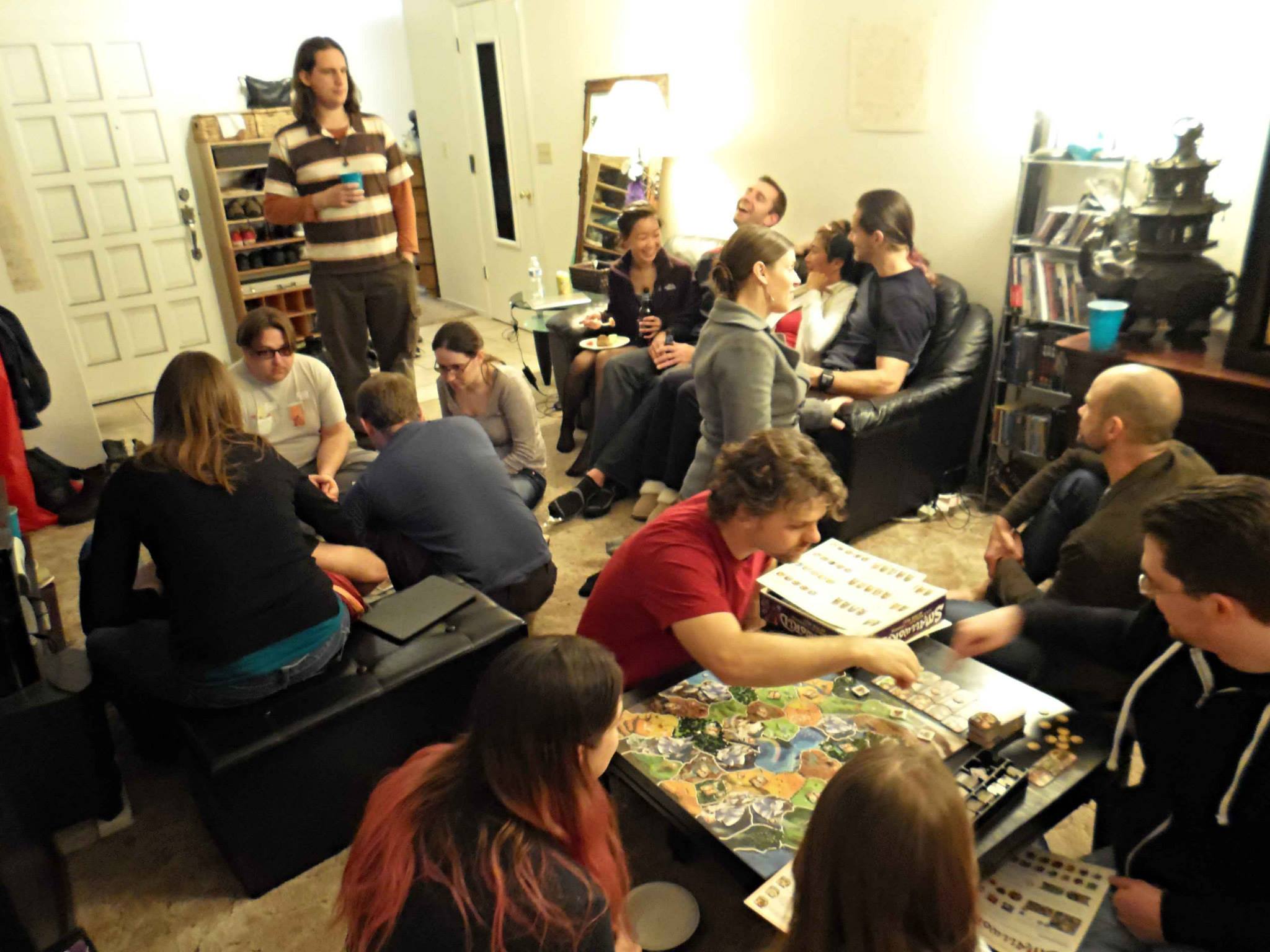
But that changes now. I’m hosting a party this weekend. By myself. I’ve been trying to keep it on the small side because of space constraints, but it’s definitely a party. And a themed “narrative entertainment” party, at that.

My biggest fear about hosting a party is always that no one will show up. That’s why having a co-host is so great–you’re guaranteed their presence, at the very least, plus they’ll be inviting all their friends too. It was a great way for me to get experience throwing parties. However, at this point I am 99% certain this fear is ridiculous and completely unfounded in reality. So by throwing a party, I’ll be putting that last one percent to rest.

I recently read an article about a study showing that when you’re experiencing performance anxiety, it’s better to get excited than it is to try to calm down. This makes complete sense to me because it’s helpful to have somewhere to put that nervous energy. I think back to the times I’ve been the most nervous, and in general it was for events that I was not excited about. Auditions mostly, which for me are just not as thrilling as performances.

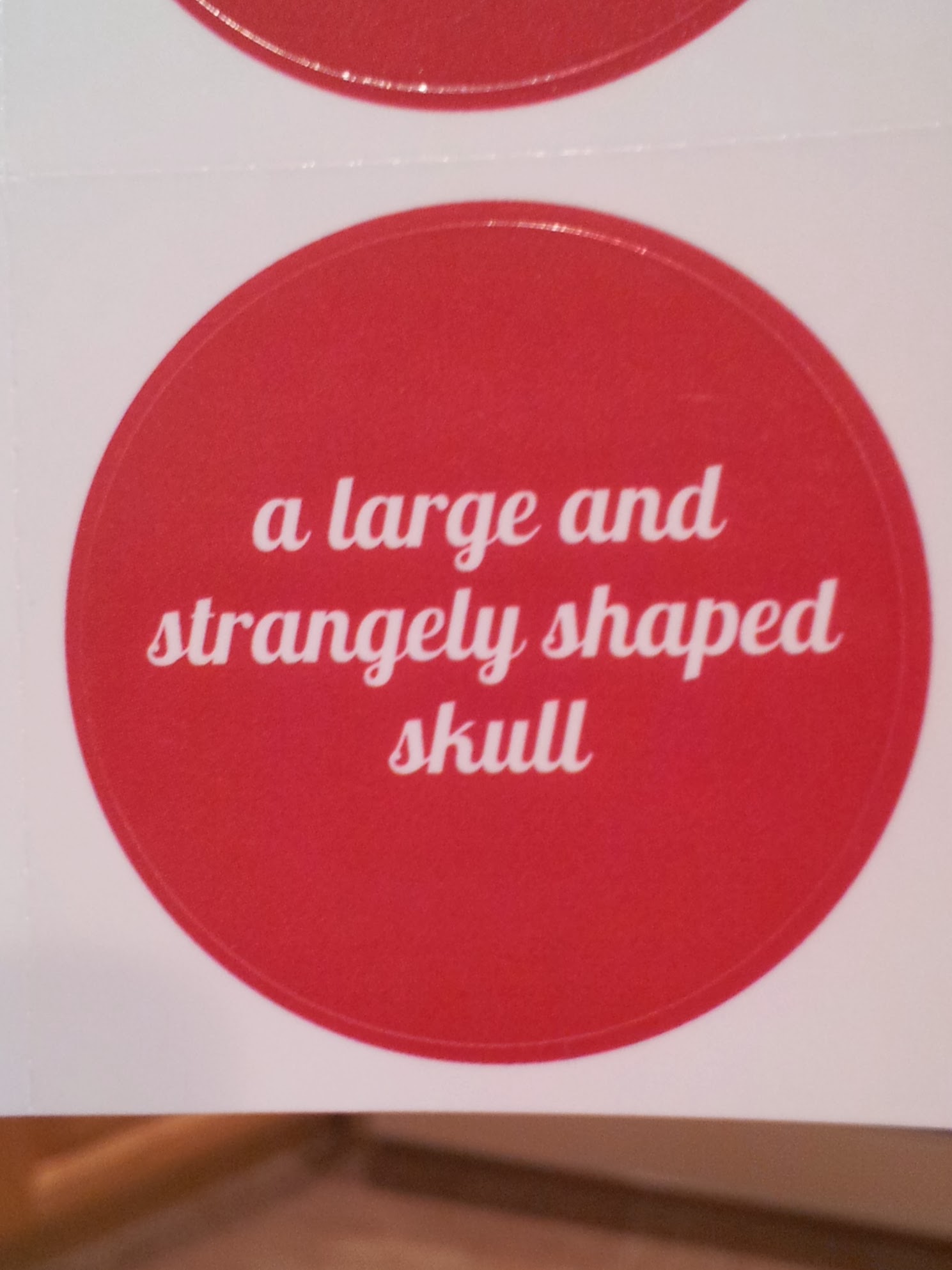
Happily for me, I’m very excited about this party, which means whenever I start to feel nervous, I think about that excitement instead. I really like experimenting with parties that are a little different from the standard barbecue or “Apples to Apples” type affair, and trying new ideas to see what works in a party atmosphere and what doesn’t. This time I’m using a party game mechanic I’ve never tried before, and it was really fun to do the creative prep work for the game. I’ve had stickers custom printed, a friend has agreed to take photographs, and if all goes according to plan, by the end of the party there should be a physical book with records of my guests’ creative fancies. I expect it to be a memorable evening.

The teaser I've given my party guests...

The teaser I’ve given my party guests…

I’ll report back here next week to tell you how it went!

Read Full Post »

I can’t believe I’m about to write an essay about friend-zoning, but so it goes.

A few of my friends have recently shared this comic called The Friend-zoner vs. the Nice Guy. The comments on their shares have generally been supportive, with the exception of one friend, who drew out a gem or two of responses. (I know, don’t read the comments, right? What was I thinking?)

One idea expressed was that it wasn’t okay to make fun of “nice guys” because it is nice guy shaming. Questions of comedy aside (a huge amount of comedy thrives on the principle of making fun of pretty much everything and everyone imaginable, and where the line is between appropriate and inappropriate varies from person to person and could take up a few textbooks, I suspect), I’m actually really glad to see this discussion of “niceness” as manipulation taking place. Because that’s what we’re talking about here. The comic isn’t so much making fun as it is illustrating a problematic behavior.

Now, is it only men who use niceness to manipulate? Of course not! Is it possible for people to take advantage of this nice guy behavior? You bet. (Which is another great reason not to do it.) But pointing out this kind of systemic problem is useful because it raises our collective awareness as a society, which means we can work towards healthier models of friendship and dating.

The idea has taken root that being overly nice or a people pleaser with no personal boundaries is a good life strategy. People are raised to believe this generally because it supports the system they’re a part of, whether that is a smaller family system or a larger system (the patriarchy being one example). Unfortunately, this is simply not the case. I would not have spent the last three and a half years busting my butt to change myself if I didn’t think being a people pleaser was problematic. It hurts the people pleaser, and it hurts the people they care about. Taking that a few steps further and using a lack of boundaries to try to manipulate other people is a dark and destructive path that ends in wreckage and disappointment. We call this “nice” but of course, this kind of thing isn’t actually nice at all.

However, what really strikes me about this conversation about friend-zoning is that we seem to have lost sight of what adult friendship is.

What friendship IS NOT: Preferential treatment that you don’t really want to be giving; trying to impress; a running tally of favors and obligations; a relationship you’re not really interested in unless it leads to something more (ie sex or a romantic relationship), all about you, all about the other person, all about making demands.

What friendship IS: Two people who genuinely care about each other. They want the other person to be happy, and they are also comfortable taking care of themselves and saying no when necessary. Friends perform acts of kindness for each other not because they are expecting something specific in the future but because they are happy and able to help and because they are already getting something valuable out of the friendship as it currently stands.

Two friends hanging out. Photo Credit: Sara Fasullo via Compfight cc

If your friend doesn’t think the two of you would work out in a romantic relationship, and you are angry at them about that because you were so nice to them, well then, that isn’t a friendship to begin with, is it? Will you feel disappointed to have your romantic overtures turned down? Sure. Will you need some additional space for a while? Maybe. But believing your niceness has somehow entitled you to a specific prize? Nope. Believing the other person is obligated to sleep with you because you’ve done favors for them in the past? No again. Accepting bad behavior from someone else because you hope someday they’ll date you? Not a strategy for happiness.

An authentic friendship can withstand the strain of a conversation where only one side wants to progress to a romantic relationship; a friendship based on lack of communication and high expectations of what might happen in the future often can’t. And trying to guilt someone into sex they don’t want to have? That is never the behavior of a friend.

In conclusion: If you want to date someone and don’t really have much interest in being their friend, that’s fine. Then don’t pretend you want friendship, and don’t do favors for them that you don’t want to do. Ask them on a date instead. If you have a friend and you’ve decided you’d like to date them, that’s fine. Tell them, and be willing and open to hearing whatever their response might be without thinking they owe it to you to say yes.

P.S.: After I wrote this, Diana Sherman published a post on the same topic. It goes into greater depth as to why the whole “entitled to date you since I’ve spent so much time with you” attitude sucks for the person on the receiving end and is well worth a read.

Read Full Post »

On Tuesday, Robert Jackson Bennett and I started following each other on Twitter, and we chatted a bit, the way two writers on Twitter are wont to do. He mentioned that he wanted to write a blog post about his anxieties about death at some point, and I encouraged him to do so in spite of his reluctance. In fact, I said if he wrote the post, I would write about it too.

I kind of didn’t think he would do it. But he wrote this beautiful post, which is very much worth your time.

So. Here we are. And I have to keep a promise to write about death.

I’ve been afraid of death since I was eleven years old. At that time, my mom was clinically depressed, and she was suicidal. Death, I understood, could come at any time, and it was very, very real. All of my questions about death, all of my uncertainties, came with the very high stakes of immediate relevancy.

I hear that teenagers have this period of time in their development when they think they’re invincible. I never had that. I knew I could die. I knew life was an appallingly fragile thing, and I knew tomorrow might devastate me, leaving a hollow scream where my heart had once been. I knew tomorrow might never come.

I knew there was nothing I could do about it. I tried anyway, of course. I watched for signs of imminent doom. I learned to read people. I was inconveniently present. I sang “Candle on the Water” over and over. I never let my mom leave the house or go to sleep without telling her I loved her. It wasn’t enough. It was never enough. But it was all I could do.

When you live like that for long enough, it changes you. By the time my mom died of cancer eight years later, I had formed an intimate relationship with death and uncertainty. And one way this anxiety about death manifests itself is in my relationship with time.

You see, I never feel like I have enough time. Surprisingly enough, this hasn’t resulted in me being a workaholic or dashing around an overscheduled life. What it does mean is that I’m very aware of the passing of time, and I care about doing what’s important to me right now, or as soon as possible to right now.

It also means I hate wasting time doing things I don’t think are important. I don’t like running errands. I am the worst carpool participant I know because I calculate exactly how much longer I’ll be driving instead of already being at an event or doing the next thing I want to do. I don’t like how long it takes to clean my house or brush my teeth or cook my food. I get very restless when I’m waiting. Meanwhile, I am perfectly happy spending hours talking to a friend or walking around with my dog or practicing singing or writing or teaching a student or sitting on a plane so I can see or experience something amazing. I am either approaching infinite levels of patience or else I’m struggling to find any patience at all.

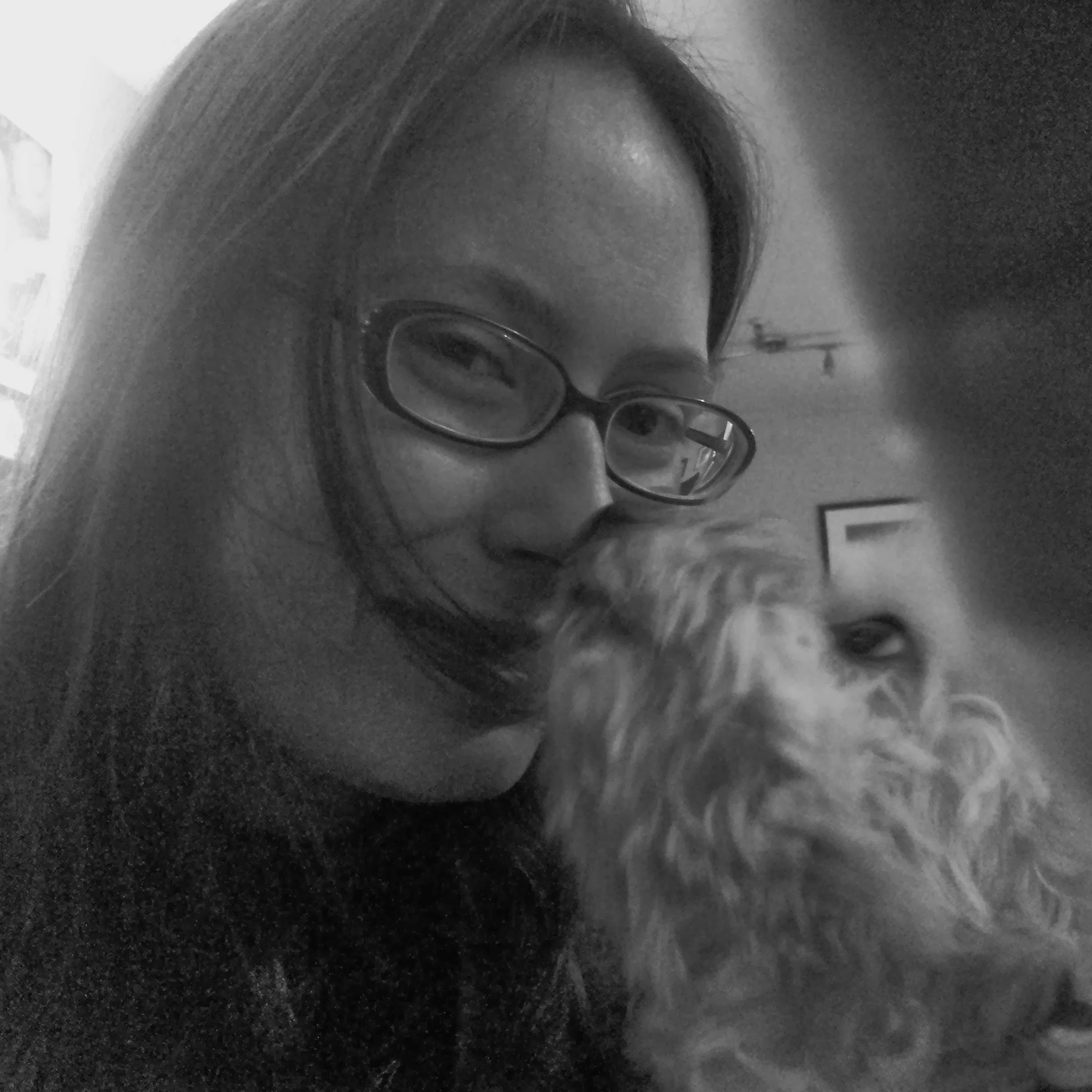
Amy and Nala

I know in my gut there will never be enough time. I love the world so much, how could there be? I will never have enough time snuggling with Nala, and I will never have enough time to write all the books I want to write, and I will never have enough time to learn all the things I’d like to learn. I won’t have enough time to meet all the people I’d love to meet, and I won’t have enough time to see all the places I’d love to see.

And most painfully, I won’t have enough time with the people I love. They will all die too soon for me, no matter the circumstances. And I will die too soon to love them as much as I want to love them. And all of us will be wiped away, our lives and loves and stories forgotten.

What, then, is left? How do I deal with this anxiety around death?

I love with everything inside of myself, even if my heart breaks repeatedly. I notice what is precious to me, and I hold it close. I celebrate being alive right now, and I celebrate that you’re alive too. I grieve when you leave because I refuse to downplay your significance in my heart. I laugh and I play and I work and I do things that scare me. It all matters to me, and when it doesn’t matter to me, I ask myself what I need to change so my life will become more in line with what I care about.

Robert Jackson Bennett said: “Maybe this is what I think the human condition is: shrieking and raging at the universe to pay attention, begging it to understand that this matters, and hearing silence.”

I’ve been hearing that silence since I was eleven years old. Bad things happen, and they change how you see the world, and you know it’s happening and you don’t want it to happen and then it happens anyway. And you can never return to that place of innocence that you never appreciated until you lost it.

But we still have choices. We can choose to be ruled by our fears, or we can cultivate bravery. We can give up, or we can work for what we care about. We can be silent, or we can tell our stories. We can close down, or we can open up.

If the universe answers with silence, so be it. We don’t need the universe to tell us what matters. We already know.

Death is always there, lurking in its otherwise deserted corner. Every moment it stays there is a victory. Every achievement I make, every milestone I reach, every hug I give and every connection I strengthen. Every breath I draw, every story I tell, every place I visit, every song I sing, every day I make the smallest bit brighter for another person. Every time I look into your eyes and we have a moment of truly seeing the other person standing there. They are all victories, and they all matter.

I am afraid to die, but I am so lucky to have this chance to live.

Read Full Post »

This weekend at Legendary ConFusion I’m going to be on a panel in which we discuss recent science fiction and fantasy novels that we thought were good, along with some that are coming out soon that we’re looking forward to. So it’s basically a recommendation panel. The perfect time for me to write about what I think about recommending books.

The problem with book recommendations is that taste differs. The biggest mistake I see people making with their recommendations (or at least the one I notice most often) is that they assume because they liked a book, that means I’ll like the book, even when they know nothing (or very little) about what I like and dislike. Which is another way of assuming everyone will like the book.

Everyone will NEVER like every book. I know this all too well because I have what I’ll call a distinctive sense of taste. This doesn’t mean I think my taste is better than other people’s, or even particularly developed. It means that there are plenty of books–particularly adult science fiction and fantasy–that are extremely popular and that I either really didn’t like or can’t force myself to get through.

Photo Credit: jinterwas via Compfight cc

As it turns out, readers enjoy different things and are bothered by different things. I read primarily for character, although I also appreciate a good plot. (See my love for Agatha Christie. A lot of her characters are pretty cardboard, but the mysteries are so compelling to me that I don’t care.) If the characters are interesting to me, I don’t mind a slower pace and I’ll even overlook some sloppy plotting (aka a coincidence or two). I am bothered by characters who don’t seem real, by extremely dense prose, by large and gaping plot holes, and by most large infodumps. I can sometimes let fairly far-fetched world building go, especially in the high-concept stage of the world, as long as the world remains consistent and the characters are involved in a struggle that captures my imagination. But even I have my limits. (Love is a disease that everyone is cured from when they’re 18? Nope. Couldn’t believe it.)

I don’t mind dark fiction, and I don’t mind sad endings, but I’m less excited if the entire novel is just flat-out depressing to me. (I couldn’t finish Revolutionary Road for this reason.) There are certain fantastical tropes that I’m pretty tired of, including: werewolves, Fae anything, dragons, and portal quests. That being said, I still read novels with these elements, I’m just more picky about how they’re handled. For some reason I have more patience for vampires, witches and other magic users, and the politics associated with monarchies. There is a whole complicated system of subgenres that I’m more likely to enjoy or bounce off.

This is all to say, recommending novels blindly is like doing anything else blindly: your success rate is not going to be all that great. So when I recommend novels, I prefer to do it by describing what a novel is like and leaving it to my audience to decide if it fits into their taste. For example:

  • This novel is like this other novel you might have read or heard about, and this is how.

  • This novel is great if you don’t mind the silly central world building idea. If that kind of thing bothers you, though, give it a pass.

  • This novel is this particular sub-genre, or maybe these two sub-genres combined.

  • This novel is fast- or slow-paced.

  • This novel concerns itself with this fantasy or science fictional trope. (If I think it’s a fresh take on the trope, I’ll say that as well.)

  • This novel is on the literary side. (If questioned, I can then try to define how I think this expressed itself in the particular novel under discussion.)

  • This novel is all about the action. This novel is light and fun.

  • This novel really made me think. (And if I can say about what, all the better!)

It’s okay that we’re not all going to love exactly the same things, whether they be books, movies, or activities. And not all recommendations are going to be equally successful for all people. To me, a book recommendation is more like a blip on my radar. Now I know the book exists, and I can make my own decision as to whether to read it or not.

Ultimately, it’s up to us to try new things, educate our taste, and expand our horizons. No one else can do it for us. They can only offer ideas and possibilities of which directions to go exploring.

Can you describe your taste in novels?

Read Full Post »

1.

There’s this article beginning to make the rounds called “My Wife is a Terrible Piano Player.” I’ll confess I didn’t read the whole thing, but I like its main point. When we start doing something new, we’re usually bad at it. The first time I tried to play the piano, I’m sure I sounded like a little kid pounding randomly on a lot of keys. Because in fact, that’s what I was. It took years of time and practice and instruction and effort for me to become a passable pianist.

This makes me think about grit, a word I’ve seen pop up a lot lately. There are several components to grit, it seems, but one of them must be the ability to persevere even when we’re bad at something. Really bad. Wince-worthy bad, our efforts plagued with mistakes, missteps (or misnotes, as the case may be), and misunderstandings.

The first time I play a new board game, I never expect to win. It’s not that I think winning is impossible or that I’m not good at games. But I like to give myself the space to be bad while I’m learning. I want to experiment. I want to be able to make mistakes without embarrassment or disappointment. Isn’t that what learning is all about?

2.

But some people grow discouraged and give up. They don’t give themselves the time they would need to become good at something.

I saw this difficulty as a teacher. It was particularly prevalent with gifted children. They were so used to everything coming easily to them that when something didn’t–like, say, music, which pretty much always requires lots of practice–it was really difficult for them to continue. They grew frustrated. They weren’t used to having to wait to become good.

Music lessons were probably one of the best things those children could have been doing. Because really what they were learning was not only music, but grit.

Photo Credit: Alan Cleaver via Compfight cc

3.

If, then, part of grit is giving ourselves permission to be bad at the beginning of learning something new, then another part of grit is cultivating self-discipline.

Becoming good at something is not always going to be fun. I love singing, but have I loved every minute of becoming a good singer? Have I enjoyed learning every song I’ve ever been assigned, figuring out how to practice effectively when I’m sick, doing the same exercise over and over and over, giving a poor audition? No. I love writing, but have I loved every minute of improving as a writer? Do I love the times when I’m stuck or whenever I realize my world building sucks or the endless revising or the hours upon hours writing personalized agent query letters? No.

If becoming good at something was pure enjoyment, we wouldn’t need much self-discipline. But there are always going to be off days and parts that aren’t very fun and repetition that is so boring you just want to scream at your screen and then go do anything else. And for things that don’t come with automatic structure, we have to provide ourselves with our own motivation and our own goal-setting as well.

Self-discipline, self-motivation, self-direction? All part of grit.

4.

Just in case anybody wants to talk about talent? Forget about it. Grit is more important.

We can argue about whether talent exists. I happen to think it does. But talent without grit is not enough. Grit without talent might be. Talent might give an extra boost, but having that boost makes it less likely you’ll develop the necessary grit. So if you do have talent, that means you have to work even harder.

5.

So the next time you start learning something new and you really, really suck at it, congratulate yourself and give yourself a pat on the back. “Good job for persevering, self,” you can say. “You’re showing some real grit.”

Read Full Post »

« Newer Posts - Older Posts »