Feeds:
Posts
Comments

Posts Tagged ‘Amy Sundberg’

My husband often reads out loud to me before we go to sleep. We most often read children’s classics and more recent middle grade novels because I want something interesting but not so exciting that I can’t go to sleep. We’d just finished a few books by Bruce Coville (if you’re interested in MG fiction at all, you should run outside RIGHT NOW and buy some of his stuff, because he’s fabulous), and after some pondering, for our next read we’d selected The Absolutely True Diary of a Part-Time Indian, by Sherman Alexie.
Warning: There be spoilers ahead!

My husband began to read, and the book was well written, interesting, and had a sense of humor. But within a few pages it was clear that for his first dramatic incident, the author was going to kill a dog. I told my husband to stop reading because *@*%@*%!!*!! I am so incredibly done with reading about dogs dying.
 

I am TOO CUTE for your shenanigans!

Here is a list of the dying dogs in fiction I have encountered in the past three years: The Knife of Never Letting Go, by Patrick Ness (I was bawling so hard at this one that my husband got worried); a story in Paolo Bacigalupi’s Pump Six; The Big Splash by George Galuschak; “I Can’t Imagine” by Sandra Wickham; and Mama, We Are Zenya, Your Son, by Tom Crosshill. At Taos Toolbox, Nancy Kress told us about her novel Dogs (which I refuse to ever read) and Eric Kelley threatened to kill off the police dog in one of his novels-in-progress. In Working Stiff by Rachel Caine, the dog is threatened, and in Robert Sawyer’s Mindscan, the dog is unable to recognize its master in his new robot body (which completely broke my heart). And these are just the examples I can think of off the top of my head.

Seriously, writers, WE GET IT. Killing off the dog (or pretending you might) is very, very sad. It reliably makes me cry even if I don’t like your story very much otherwise. And it also shows up the bizarreness of human behavior, that we cry when an animal dies and not when a person dies (although to be fair, I often cry when writers kill off people, too…but never for the bad guy, which says something else interesting). So could you please stop now?

Also, do you ever notice how writers don’t seem to kill off cats? (Not that I have anything against cats.) Why all the dog hatred, writers, huh? Why not pick on those of the feline persuasion for a change? Why do you want to violently dispose of sweet little bundles of fur like this?
 

You know you want to pet me!

I’ll admit, the “pick on the cute and loyal dog” thing used to be shocking. But now, it just makes me feel tired. It makes me want to stop reading. It has nothing to do with the merits of the work (if you’re not as sick of dead dogs as I am, you’ll want to check out everything I referenced above). But it’s become even more unpleasant to me than werewolf tropes, and you know, that’s saying something.

So please, the next time you consider killing off the poor innocent puppy to pull some heartstrings, back away slowly. Maybe you can kill off the bratty kid sister or the brooding and boring boyfriend instead. Or, I don’t know, have your protagonist lose a finger or something. Just enough with the dogs.

Thank you.

*****
I’ll be in Detroit this weekend for Epic ConFusion. Say hi to me if you’re there!

Read Full Post »

I was having dinner with a friend the other day, and he mentioned that he hadn’t gotten around to reading any of my stories yet. He followed that up by saying that he was a little nervous to do so because they might reveal that disturbing things go on in my mind. (Newsflash: I’m a writer. That implies a certain level of creativity, which means at least a touch of disturbing is probably going on in there.) He didn’t say he was afraid he wouldn’t like my stories, but I’ve certainly had other people express that worry to me.

This conversation made me realize that what I take for granted, being around writers all the time, might not be so obvious to others. So here is an insider’s guide into how writers deal with each other.

1. Writers read a lot. But we cannot read everything.

Writers are fighting a never-ending war against the gigantic pile of stuff that they’re supposed to be reading. It’s a good thing most of us started out as enthusiastic readers because otherwise we’d drown in the amount of material we try to get through.

We read the novels in our own genre. Some of us have more than one genre, so then we have to read novels in two genres. Plus we are supposed to read novels outside our genre to stay well-rounded, so we have to read those too. Then there is the nonfiction that we have to wade through, some for specific research purposes and some to generally better understand the dynamics of the world we live in. We read short fiction and articles and blog posts. We read magazines about our industry. We beta-read novels for fellow writers, and we read to critique short stories. We read for award season. Sometimes we have students’ work to read, or books to read in order to give a blurb or review. We read and read and read.

We cannot humanly read everything. We cannot even read everything by our dear writer friends. It is impossible.

LESSON: We understand that you might not have time to read what we write, either. We LOVE it when you do, but there is no obligation.

2. Writers don’t always love each other’s work.

One of the first published novelists I got to know told me that it was really awkward to be friends with a writer whose stuff you don’t like.

Happily this has not proven to be true for me, and I don’t think it’s true for many writers. At least I hope not, because every reader (writers included) has her own individual taste, and not everything ever written will fall into that taste. This doesn’t mean that the writers who write stuff not to my taste aren’t fabulous people who I enjoy hanging out with, though.

Writers hardly ever ask each other the following questions: Did you read my latest story? Did you like my latest novel? Do you think I am the most Awesome Sauce Writer that ever lived? Instead, we may congratulate each other on milestones that we are aware of (hey, congrats on winning that award, or congrats on that book deal). If we have actually read and enjoyed a work, we might then say something about it unprompted (hey, I read your book and I loved the protagonist). I have NEVER told a fellow writer that I read their work and then proceeded to tear it to shreds, because that would be completely inappropriate. Mostly, writers spend a lot of time gossiping and talking about each other’s work-in-progress.

LESSON: You don’t need to tell your writer friend whether you read their work unless you did so and would like to share how much you enjoyed it. We know our own work won’t be to everyone’s taste, and most of us know better than to put our friends on the spot.

3. Writers don’t always write stuff that is autobiographical or has deep personal significance.

In the TV show Gossip Girl, there is a budding writer who only writes autobiographical stories and models his characters directly from his life. Everything he writes has deep personal meaning and reveals his true feelings about those around him.

This is FICTION. Many writers do not write autobiographical fiction. That’s not to say there’s not a part of themselves in the work, but often it is very hard to tell which part unless you know them very, very well (in which case, it shouldn’t come as too big a shock). Many writers do not model their characters directly on a real-life person (I don’t know that I’ve ever done this, for example). Many writers do not reveal their deep, dark secrets in the text of their work. Sometimes (often, in fact) they just make stuff up because it will make the story more awesome.

Writers do often re-visit the same themes over and over. For example, I like to write about death and mortality. That fact tells you something about me, but it’s not something I try to keep hidden. Sometimes a writer’s general personality is reflected in their work (although not always), in the sense that when you meet the writer, you think, “Ah yes. I can see how this person would have written that book.” But this is all fairly surface personality kind of stuff, nothing that should be particularly alarming.

LESSON: Writers are not constantly revealing their deepest, darkest secrets in their fiction.

Is there anything I’ve missed? What are some other common misconceptions that might make non-writers uncomfortable when dealing with writers?

Read Full Post »

Sometimes I miss the people who are no longer here.

Some of them are dead. Some of them (most of them) I didn’t know all that well. I miss the ones who died young in a special way, because I’ll never find out who they might have been. I had a high school classmate who died within a year or two of graduation. Ironically, I think about him more than I would have if he were still here. Him being missing leaves questions that I know can never be answered.

Most of them, though, aren’t dead. They’re just gone. They’re out there somewhere (as far as I know) doing a lot of the same things I do: eating, sleeping, working, playing, talking, making new things. Occasionally I might spot their phantom electronic footprints. But our circles never intersect. We are the parallel rays in a geometry problem, branching off into our own separate infinities.

Except when I think of them.

The people who are no longer here have left their shadows behind, encased in my neurons. They do not know what I think, what I feel, the personal story of my existence, but they remain a part of me. Most of them touched the events of my life, but the most enduring of them changed who I am. I still hear their voices echoing forward from the past.

I feel their absence.

The ones I miss the most are the ones I love the most. Love/loved, it all blurs together, but in my memory it remains present tense. I wonder why we’ve formed our own worlds (no fault, though, because fault is for frightened people). I wonder if we think the missing is better than the reality. I wonder if it’s true that time is malleable so I can bend it backwards through these small gaps and spend another moment in their company.

Most of them will never read these words. A few will, but I might never know.

I miss you. The ghost isn’t the same as the original.

Read Full Post »

I don’t really like pain, and I don’t like to feel uncomfortable. Sometimes I daydream about my ideal life, when I have fixed all my problems, have everything I want, and am exactly where I want to be in my career.I will never achieve that ideal life. And thank goodness, because if I did I’d be bored stiff…in which case I would have a problem, wouldn’t I?

Seth Godin published an insightful post last week entitled “Trading in your pain,” in which he outlines two common problems we can have due to our relationship with pain.

The first is the “if only” syndrome. We think if only something (fill in the blank) happens, then everything will be great and we won’t feel pain/discomfort/ uncertainty anymore. If only I meet the right person. If only I buy the right house. If only I remodel. If only I get an agent. If only I sell my first novel. If only my sales figures exceed a certain golden number. If only I win this award or make that bestseller list. If only I get this promotion. If only I was better or had more or …

That’s not generally the way things work, though. Whatever “if only” you’re hoping for (and I’m holding out for several myself), even if it happens, it will open the way to new challenges, new problems, new if only’s, and new pain as you strive. That’s okay. It doesn’t mean you’re not doing well. It doesn’t mean you’re not good enough. It’s just life.

The second is the “fear of change” syndrome. We sometimes become comfortable with a certain flavor of pain or discomfort, and we hold onto it really tightly so we won’t have to deal with another, unknown flavor instead. We become frozen. Stagnant. Afraid of success and the new problems success will bring us. Afraid of a different failure mode and how that will make us feel.

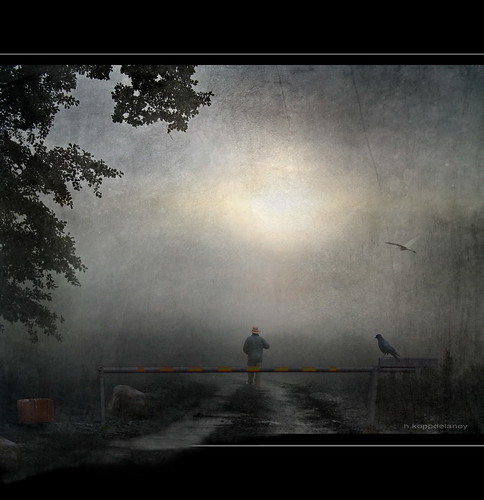
Behind the GateWriters who don’t write are having this second problem. They are used to dealing with the failure mode of “I suck because I’m not writing” and don’t want to address whatever issues might come up if they actually did write: “I suck because I’m not selling” or “I suck because I’m not selling enough” or “I suck because now I have to make business decisions” or whatever.

But I see this problem everywhere, not just in writers. We make ourselves at home with a certain problem, and settle in for keeps. And in the process, we get stuck. We can’t move on; we can’t grow.

Our identity and our personal narrative become entwined with our pain. I’m the girl whose mother died when I was only nineteen. That’s not who I am anymore. It is, however, who I could have been. It is who I was for a period of years. And then I let go and moved on. Instead I’m the girl who loved her mother very much.

Pain can be your friend. It will be lurking nearby for your entire life, and that’s okay. It means you’re alive, and it reminds you that you care what happens. It can push you forward instead of holding you still. It can give you focus instead of causing you to scatter. It can make our priorities clear to us.

If you could shed one “if only” or do one thing that makes you frightened, what would it be?

Read Full Post »

It’s been a good year here at the Practical Free Spirit. I’ve garnered much enjoyment from writing for this blog, and as I gain more experience, the essays often come easier. I’m becoming clearer about what I care about writing about, and I’ve had some great conversations with many of you.

In terms of traffic, the blog is growing slowly but steadily. I’m happy to say that December 2011 has recently become the highest-traffic month in the blog’s history. It’s a satisfying way to close out the year.

Photo by Ray Wewerka

The Backbone Project:

This summer I ran the very successful backbone project, in which I committed to writing three essays on subjects about which I was nervous to write. Not only did I get some much needed practice in being assertive and brave, but I got to hear about so many people’s experiences and opinions, all of which enriched my own. All of the backbone project posts landed in the list of top 10 read posts this year.

The Backbone Project: Help Me Become Less Wishy-Washy
You are not a Weenie if a Critique Makes You Cry
Where is my Geek Cred?
The Teetotaler Manifesto, or Why I Don’t Drink

Most Popular Posts:

Being an Introvert is Awesome!

Like it or not, people in our society are very worried about being introverts, due to the false association between introversion and lack of social skills.

Loneliness and Social Media

The popularity of this article makes me realize that this is another issue that many people are concerned about. Does social media connect us more or make us feel more isolated?

Living Free From Regret

This one is mostly popular because of the awesome photo, but the message is inspiring too.

10 Things I Wish I’d Known 10 Years Ago

This recent post has the distinction of being the second most read post ever on the site on the day of its publication.

My Personal Favorites:

Writers are Super Heroes

This essay gives me an extra dose of “go get them” energy when I need it.

Problem Competition: Who is Worse Off?

How comparing our problems pushes us farther apart instead of bringing us together.

Will You Change the World?

I hope the answer is yes!

The Stories of Our Lives

“We are all leading ladies and men. And we each get the privilege of creating the stories of our lives.”

All together, it’s been a great year. Here’s to another year of interesting thoughts and engaging conversations!

Read Full Post »

Some of my astute readers might have noticed that I initiated a massive life re-haul and personality shift this year. I have written a fair amount about being a people pleaser, developing a backbone, and being a perfectionist because these were things that were on my mind. I decided, somewhere in the haze of extreme tooth pain, that I needed to change, and I set about doing just that.

I’m still in the middle of it. It has already been completely worth it.

It is one of the hardest things I’ve done.

Here is what I have learned: You have to respect yourself. You have to believe that you are worth it. And you have to do whatever it takes to convince yourself you are worth it, even if it means muttering silly mantras to yourself and being glad you work at home so no one suspects you are crazy.

I have spent my entire life believing that if only I was good enough (oh, hey perfectionism), people would love me, respect me, and treat me well. I really wish this were the case, but I was flat-out wrong. The truth is, if you are willing to let something happen, the odds are that it will happen. If you are willing to tolerate being lied to, then people will lie to you. If you are willing to let people ignore you, then they will. If you don’t take a stand against bad behavior towards yourself, then that bad behavior will continue. The world doesn’t give you a voice, you have to demand it.

And in order to demand the respect you deserve, you have to give it to yourself first. You have to believe you are worth it.

Photo by Anita Hart

This self-respect is not the same as thinking you are perfect and infallible and can’t possibly make a mistake. Therein lies another problem (oh, hey narcissism). And it doesn’t preclude feeling compassion for people, even (and especially) the ones who are in the middle of making your life difficult.

What self-respect does give you is the ability to empower yourself. It gives you the choice of surrounding yourself with people who will lift you up instead of pulling you down. It gives you the chance to speak up. It gives you permission to refuse to take on every single problem as your own, when so many of them aren’t really yours at all. It gives you the strength to confront the parts of yourself that you don’t like. It gives you the space to say “No.”

No, I am not your bitch. But thanks for asking.

Remember that you are worth it. That is what I have learned this year.

Read Full Post »

I love the end of the year. Not only do I adore Christmas (it is my favorite holiday), but I like that it’s cold and it gets dark early, both of which encourage me to snuggle up indoors and reflect upon the year that is coming to a close. I plan to spend a lot of time in the next two weeks doing just that, and this week I’m going to write about the two lessons I learned this year that were most helpful to me.

I’ve been struggling with my writing for most of the year–not, thank goodness, with my nonfiction writing, so the blog hasn’t suffered unduly, but with my fiction. I have spent A LOT of time thinking about why I’m struggling and trying various strategies to make the writing work better for me. Most of those strategies failed. But in the last few weeks, I’ve finally found one that feels right.

I was reading snippets from Ray Bradbury’s Zen in the Art of Writing when I had my Aha! moment. He gives this three-fold advice to writers: Work, relax, and don’t think. Work I felt I understood, so I began turning around the other two steps in my head. What would it look like if I relaxed while I was writing? What would it be like to stop thinking so frantically? What if I stopped trying to avoid all the objectionable components of writing, stopped being obsessed with not making any of the obvious and embarrassing mistakes? What would happen if I gave myself permission to write what I wanted to write? In short, what would happen if I trusted myself as a writer and gave myself free rein?

Photo by Paul Moody

I am cerebral sort of person, so it’s difficult for me to even imagine not thinking, but I’m also stubborn and I was determined to give it a try. I sat down and spent the next week and a half writing a short story without censoring myself. I looked forward to working on it, and the words came more easily. I even voluntarily worked on it on the weekend. Here was the joy I had somehow misplaced for so much of the year. When I finished it, I felt a sense of completion. Whether or not I had written something good, I had written something I felt connected to and could take satisfaction from.

I gave the story to my husband, my faithful first reader, without telling him I had been trying anything different. When he finished reading, he told me it was the best thing I’ve ever written.

In creative work, I think it’s important to strive. I believe in working to learn and improve, in tackling difficult themes and uncooperative characters, in experimenting to learn your craft (whatever it might be) to the best of your abilities. But what I didn’t realize until now is that there is a point when I have to let go. I have to trust that my writing knowledge will be there for me. I have to stop second-guessing every decision I make. I have to believe in my vision and voice as an artist.

And it turns out, I do have my own voice. It’s been there all this time, waiting for me to be willing to listen.

Relax. Don’t think. Trust yourself.

What lessons pertaining to your work, artistic or otherwise, did you learn this year?

Read Full Post »

1. It is not as common as it once was to spend your entire career working at one company, or even in one career. Therefore most of my parents’ career advice was completely useless.

2. Bodies are complicated, and often doctors don’t know what’s wrong. So sometimes you have to get creative and proactive in seeking out information, alternatives, and talented people who can help you.

3. A large number of acquaintances is not necessarily going to be as satisfying as a small number of people to whom you can reveal your true self.

4. If your significant other is not meeting one of your core needs and shows no inclination of doing so in the future, it is okay (even necessary) to break up with them.

5. So much of life boils down to communication. Unfortunately, many people are incredibly bad at it.

6. Thinking you might not be good enough is not a good enough reason to decide not to do something.

7. The people who are judgmental about your life choices are generally not the people you want to spend time with, anyway. And it’s impossible to make every person in the entire world like you.

8. Be on the lookout for those who are taking away your agency. The easiest way to have your choices taken away from you is if you never even realize you had a choice in the first place.

9. Fake it until you make it is a cheesy-sounding piece of advice that is actually true. Corollary: Your major is not as important as you think. (Except when it is.)

10. Be fanatical about taking care of your teeth, flossing, and visiting the dentist regularly. And use a mouth guard if there’s even a chance you’re grinding your teeth at night…the unsexiness of such a device be damned!

What do you know now that you wish you’d learned earlier?

Read Full Post »

As the year draws to a close, my attention turns to the list of books I have read this year. I’ve been keeping track for the last three years, and I’m surprised at how much pleasure this small habit gives me. I only write down the books I have finished, which eliminates many books every year, nonfiction taking an especially big hit since I often read selections from nonfiction books instead of reading them from beginning to end. Re-reads count, as do beta reads for novelist friends. Short stories and novelettes do not count unless they are in a collection, but novellas sometimes do…if I remember to include them.

Looking over my list for 2011 as of today, I’ve selected my ten favorite new-to-me reads thus far this year. It’s been a fantasy-heavy year for me, in stark contrast to my list of favorites of 2009, which was very science fiction-heavy. Maybe next year I can find more of a balance.

I did read several YA dystopias this year, but upon reflection I am unable to include any of them on my “Best of” list this year. While some of them were entertaining, none of them hold up particularly well in my memory, and almost all of them suffer from some flaw or another that makes me hesitate to recommend them. I haven’t read all the recent YA dystopias that have received good buzz yet (I’ve heard good things about Blood Red Road and Legend, for example), so it’s my hope that I missed a few gems that I’ll catch up on next year.

Favorite YA Novels:

1. Where She Went, by Gayle Forman. Contemporary YA
This is the sequel to If I Stay. It is told from the point of view of a young rock star who is trying to come to terms with his life and his decisions. The two main characters are both passionate about music, which possibly explains why I particularly like it.

2. Red Glove, by Holly Black. YA contemporary fantasy
This is book 2 in the Curse Workers series, and it does not stand alone. I’ve been really enjoying this series; the world building is strong and the books have their own distinctive voice that make them both enjoyable and memorable.

3. Anna and the French Kiss, by Stephanie Perkins. YA contemporary romance
A romance set in a boarding school in Paris. The plot isn’t the strong point here, but the protag Anna’s voice is likeable, distinctive, and feels very very real.
4. The Girl of Fire and Thorns, by Rae Carson. YA epic fantasy
This is by far the best YA novel I read this year. The worldbuilding, voice, plot, characters: all of them worked for me. It reminds me a bit of old Robin McKinley a la The Blue Sword, but definitely tells a story all its own.

Favorite Adult Fantasy Novels:

5. The Broken Kingdoms and The Kingdom of the Gods, by N.K. Jemisin
The last two books of her trilogy, these books do (more or less) stand alone. This is epic fantasy written straight for my own personal taste. I think I particularly love these books because they are NOT set in Ye Olde Medieval Europe only sanitized; the setting feels real and true to itself, and the characters aren’t cookie cutters either. Plus I love the books’ cosmology so much, and I enjoyed the last book in particular, told from the POV of one of my favorite of her gods.

6. Among Others, by Jo Walton. Contemporary-ish Fantasy (set in the 1970s)
You might have to be an SF/F fan to truly appreciate this book (although that being said, plenty of its references did not hit the mark with me). This book takes place after the big show-down of the plot, so can be seen as a novel-length denouement (although of course it is more than that) and it unfolds itself leisurely and with great character depth. The end didn’t work for me, but even so, it was one of my best reads of the year.

7. The Map of Time, by Felix J. Palma. SF(?)
I suppose this novel is technically science fiction, since it involves time travel, but it read more like fantasy to me. A spellbinding yarn that weaves in and out of itself in a few (to me, at least) unexpected ways, this historical fantasy/sf/whatever-it-is charmed me, especially in the sections involving the author H.G. Wells.

8. Zoo City, by Lauren Beukes. Contemporary Fantasy
It’s the worldbuilding of this novel that makes it stand out, set in modern South Africa exploring the consequences of one little addition of fantasy/magic to the world we know now. This novel moves at a furious clip, and occasionally the plot suffers from this, but it’s worth the read to be immersed in this fascinating world.

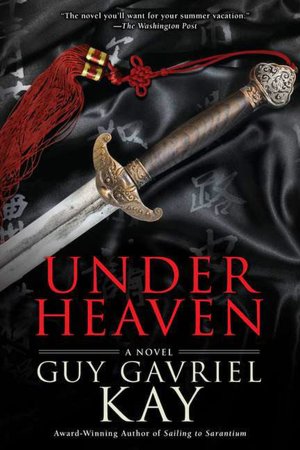
9. Under Heaven, by Guy Gavriel Kay. Historical Fantasy
10. The Lions of Al-Rassad, by Guy Gavriel Kay. Historical Fantasy
What is most noteworthy about my reading year is that I discovered the beautiful prose of Guy Gavriel Kay. I have to be in a certain mood to read him, but when I am, there is absolutely nothing better.

What books did you read this year that you particularly enjoyed? Please let me know so I can add them to my reading list!

Read Full Post »

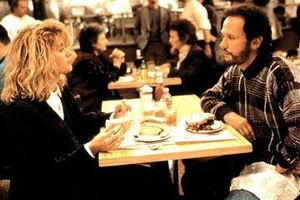
Last night I couldn’t stream Netflix through the Xbox like I usually do because Microsoft’s servers were down. So instead my husband suggested we watch When Harry Met Sally, since I’d been talking about it being a good holiday movie while at a certain wedding a few weeks ago.

While watching it, I realized that this movie, more than any other, is responsible for many of my early ideas of what adulthood was going to be like. It came out in 1989, so I’m imagining it reached the free cable preview weekends (my only real source for movies at the time) a few years after that, and I remember watching it more than once in high school. And while I spent lots of time consuming every Robin Hood movie I could get my hands on, watching Star Wars Episode IV whenever I got sick, and sighing with my best friend over Dirty Dancing, When Harry Met Sally struck me as being more like what real life was actually going to be.

Here is what it taught me:

1. Everyone you know will have a professional sounding job: attorney, journalist, political consultant (I had to ask my husband last night what that actually meant). These jobs will cause them no angst whatsoever and were obviously easy for them to both choose and succeed at.

2.However, everyone will actually spend most of their time and energy dealing with their crazy love lives, having lunch with their girlfriends, and hogging the batting cages from small boys. Also going to baseball games, reading self-help books, and attending many parties.

3. On New Year’s Eve, everyone goes to posh parties at big venues with lots of people they don’t know. Otherwise it doesn’t count.

4. People will often host small and slightly awkward parties at their apartments, where everyone divides up into two teams and plays Pictionary. And they always have an easel set up with a really big pad of paper to make it more awesome. (WHY has this not happened to me in adulthood? WHY?)

5. Never let a friend set you up because blind dates always end badly.

6. Adults are not afraid to do zany and embarrassing things, like sing Oklahoma! at the Sharper Image or have public fake orgasms. (This is particularly true of theater people, but alas, the movie neglected to educate me on that fact.)

7. It is okay to toss barely-used Kleenex around the room when you are very upset.

8. Men might be idiots about love sometimes, but in the end they will come to their senses and sweep you off your feet with an appropriate grand gesture and speech combo. (This is what most romantic comedies teach us, but I’ve found real life to be a vast disappointment in comparison, since most people I know do not seem to have the inclination to actually plan and execute grand gestures.)

9. A man who is married will never leave his wife for you. (Thanks to Carrie Fisher for the running gag teaching this valuable life lesson.)

10. When you move in with somebody, be on your guard for their equivalent to the Roy Rogers wheel wagon coffee table, and make sure you’ve stipulated that it’s not going to be part of the move ahead of time, thus avoiding an embarrassing fight in front of all your friends who are helping you.

What movie most shaped your ideas about what being an adult was going to be like?

Read Full Post »

« Newer Posts - Older Posts »