Feeds:
Posts
Comments

Posts Tagged ‘Amy Sundberg’

There was no post on Tuesday this week because I sprained my ankle, and my head was too boggled by dealing with that to have extra room for other thoughts that I could write about. So I’m just going to have a single post during this holiday week and call it good. And it’s going to be about something I spend a lot of time thinking about and practicing: asking for what we need.

Asking for what I need is most immediately on my mind because of the sprained ankle. I live in a building on the third floor. There is an elevator, thank goodness, but it is a long hallway down from my condo, and then another medium distance from there to a car or a dog-friendly outside area. Not the easiest. And Nala demands being taking outside a minimum of three to four times a day, so…yeah. There is going to be a lot of asking for what I need, namely help, in the immediate future.

The sprained ankle as personal growth exercise. How’s that for a silver lining?

I’ve been practicing asking for what I need for some time now. I often find it uncomfortable, but I am convinced it, along with setting boundaries and taking care of myself, is the only way to leave my people pleasing past behind me. I sometimes even put myself before others now, and I feel only somewhat guilty about it. Go me!

But after a lifetime of putting others first, smoothing things over, and prioritizing others’ comfort above my own, it certainly is unsettling to ask for what I need instead. It’s not as if these new behaviors I’m using meet with universal approval and warm, fuzzy feelings. Sometimes they cause conflict! And using these behaviors in an appropriate and kind way is surprisingly tricky. Sometimes I screw up! And other times I really don’t know what to do, only what I would have done in a past that is no longer relevant. So sometimes I can’t make up my mind!

Yeah, change is hard. I’m like a toddler learning how to walk. Well, really I think I’m slightly more experienced now, so maybe I’m more like a four-year-old who can walk but falls and skins her knee a lot.

Maybe next year I can graduate to being able to run, only I’ll sometimes forget to pay attention or get too excited and wham into the door frame instead.

Learning to walk. Photo Credit: cindy47452 via Compfight cc

I’m writing about this because I see people struggling with similar issues all around me. This is difficult stuff. I talk about it with my friends all the time. And I think it helps to know that it’s hard for other people too.

If you’re struggling to set boundaries or to ask for what you need or to take care of yourself even when you’re under pressure not to, I want to tell you I believe in what you’re doing. When you’re able to go for it, I want to cheer and applaud. And when you try and just can’t do it, I want to hold out my hand to you and help you back up so you can try again later.

We are none of us alone in our quest to better understand, express, and take care of ourselves.

Enjoy the rest of your week, and if you celebrate Thanksgiving, have a great one. I’ll see you all next week! 

Read Full Post »

“You’ve got to love the house you’re in.” – Moonface, from the album Julia with Blue Jeans On

So many flaws, so many mistakes, so many unfavorable comparisons just waiting to be made.

We don’t get a free pass for our choices.

But loving ourselves has to come first. And not just the good parts either, but the ugly, dark, and nasty bits. The things other people have been most critical of. The most unloveable aspects need the love the most of all.

Most of those shadows inside ourselves exist for a reason. Some of them, maybe even many of them, are not all bad.

When I was a kid, I heard all the time about how stubborn I was. Certainly I wasn’t being stubborn on purpose, but it seemed to be built into my character. Apparently my stubbornness caused my family no end of irritation.

I was stubborn just like this mule. Photo Credit: giuliomarziale [www.maurizioagelli.com] via Compfight cc

You know what else my stubbornness did? It kept me alive. When I was a neglected adolescent, it would have been so easy for me to become a statistic. But I watched the chaos around me, and I would not make the choice to join the downward spiral. I dug in my heels in my most stubborn manner, and I would not. So here I am.

Now, I know that my stubbornness can make things unpleasant or difficult for the people around me. I try to rein it in when I notice it or when it is pointed out. But I love the hell out of my stubbornness. I love that it kept me safe when I needed it most. I love that it’s helped me finish a musical and three novels. I love that it keeps me going when the chips are down. I love that it’s kept me focused on the things in life that are beautiful and magic and good instead of only seeing the grim and the difficult and the painful.

My stubbornness has shaped the person I am today in ways for which I am most profoundly grateful.

Let’s pick a harder one: anger. Who among us has not done or said something out of anger that we wish we could undo or unsay? It is so difficult sometimes to handle anger with grace.

But what is anger? It is a warning system. It is a red flag that something is wrong. Maybe it is telling us that we aren’t being treated well. Maybe it is telling us that we are unsafe. Maybe it is telling us that this person has no interest in helping us. And knowing these things is important.

That doesn’t give us a pass for learning to deal with anger in a productive way and learning how to read anger’s signals so we know what it’s really saying. We are still responsible for our behavior. But knowing that anger is just trying to keep us safe makes it a lot easier to love. And that love, in turn, makes it easier to control the anger instead of allowing it to control us.

So when we talk about loving the house that we’re in, we’re talking about all the parts of that house. Sure, we appreciate the sunlight and the counter space and the gas range. But we’re also talking about the leaky roof and the inadequate closet space and the way the circuit breaker overloads when you run the microwave and the hair dryer at the same time.

It’s our job to learn to love it all.

Read Full Post »

Once in a while, I wish I wanted to be an accountant.

In this alternate reality, my life is quite simple. I am a good accountant, diligent, dedicated, and detail-oriented. I probably work too much, and this fact probably occasionally causes a little bit of angst, but I’m probably mostly too busy to think about it.

I do the standard things society has taught me to value. I consume. I nest. I go to the gym several times a week, or else I jog. I follow the most popular TV shows. Maybe I even follow a sport. I am a somewhat brainy accountant, so I bet I read a newspaper, although probably not quite as often as I secretly feel I should to be up on current events.

I have an actual cleaning schedule for chores around my house. I cook balanced, healthful meals, and I freeze leftovers for later. My furniture mostly matches, and I don’t need a ridiculous amount of wall space for eight plus bookshelves and a piano.

I wear slacks on a regular basis, or maybe even smart blouse and skirt outfits, and pointy-toed heels have magically become not a torture punishment to wear. Also, I am not allergic to almost all perfumes. I remember to get my hair cut at regular intervals. I might actually wear makeup almost every day, and I wouldn’t be caught dead outside without sunscreen on.

I go to happy hours on a regular basis. I drink wine with dinner. I host formal dinner parties. The last book I read was Shades of Gray because all my friends told me I had to read it. I receive women’s magazines in the mail. I send out Christmas cards to everyone I’ve ever known, every year, without fail. And I remember to call them holiday cards.

My edges are all rounded off.

***

I am not that woman. She only exists in my mind, an amalgam of television ads and eighties sitcom wives and Good Housekeeping covers and mostly overlooked comments and the fifties sensibilities my parents were raised in. Add in the power woman of the workplace with oversized shoulder pads and the collective obsession with female appearance and a good dose of social norms and common hobbies and belief systems that allow us all to coexist with less friction than otherwise.

And there she is, this imaginary woman. Her life isn’t actually simple at all; it sounds quite challenging to be good at everything she is good at, and to keep on top of everything she keeps on top of. Add in a family and a house, and I wonder if she has any time for herself at all. Maybe she is also unlike me in that she doesn’t become a shell of herself on less than eight (seven, absolute minimum) hours of sleep.

What does seem simple about her, though, is that she is exactly what society has told me I should be.

***

I am who I am, and I live the life I have chosen, and most of the time, I am not just fine with that, but grateful. I mean, yes, I should wear sunscreen more often. And perhaps there would be a kind of comfort in living the life that seven-year-old me was led to expect. But even seven-year-old me wasn’t on board with that life because that’s the year I both started studying the piano and decided I wanted to be a writer. Being a serious artist didn’t ever really fit into the picture I was given.

(Not to say you can’t be a serious artist and also be an amazing cook or be good at keeping the house clean or wear killer blouse and skirt outfits or watch basketball or read three papers a day or be an accountant. People can, and they do. They’re creating their own amazing pictures.)

***

Here is where I spend most of my time.

Here is where I spend most of my time.

Here is my picture:

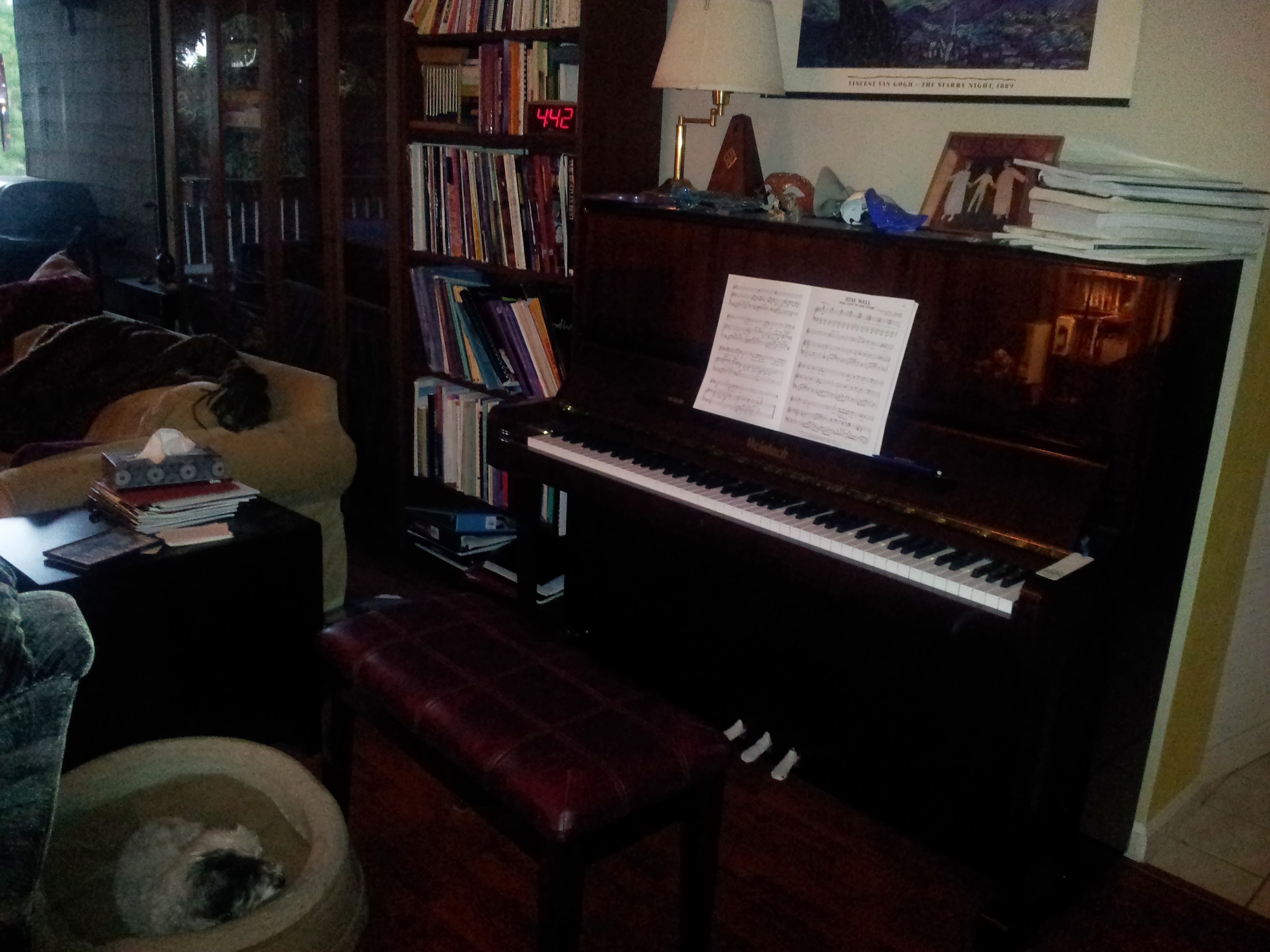
My apartment is filled with books: YA and science fiction and literature and fantasy and travel guides and research materials and sheet music. I can’t imagine living without a piano. The little white dog lies curled up by my chair. I probably need to vacuum.

When I go to happy hours (maybe once a year), I go for the cheap food. I will probably never drink wine with dinner. I have friends over for board games and role-playing games instead of dinner parties, and sometimes I bake brownies for them. I eat out a lot, and I eat frozen dinners a lot of the rest of the time.

I’m wearing jeans, a sparkly sweater, and no makeup. I spend most of my days reading and writing and thinking. I’ve been trying to make more time for practicing music. I love to read novels. I am horrible about sending anything to anyone via post. I’m not athletic and I never go to the gym, but I do love walking my dog and soaking in the world around me. I don’t know the right way to clean a variety of stains, and I don’t know how to use a sewing machine, but I do know how to sew on a button.

I wear glasses, and I have a weird sense of humor, and I’ve never had a traditional salaried job. I like the Vampire Diaries, but I am more than half a season behind on it, and right now I’m rewatching The Gilmore Girls because I like watching Lorelai create her own picture for herself, plus hers includes the really nice blouse and skirt outfits. I daydream about London and New York and Seattle, and Disneyland is still one of my favorite places on the planet.

I try to figure out what it is I actually care about, as opposed to what I’m told I should care about. Sometimes these things are the same, and sometimes they aren’t. Making the distinction can be difficult.

***

What is your picture?

Read Full Post »

I’ve been thinking a lot about empathy lately, and then today I saw Stina Leicht’s beautiful post about empathy and the fine balance required in remembering that everyone is simultaneously different and the same. So I decided I’d write about empathy, and then I surprised myself by how vulnerable I feel writing about the topic.

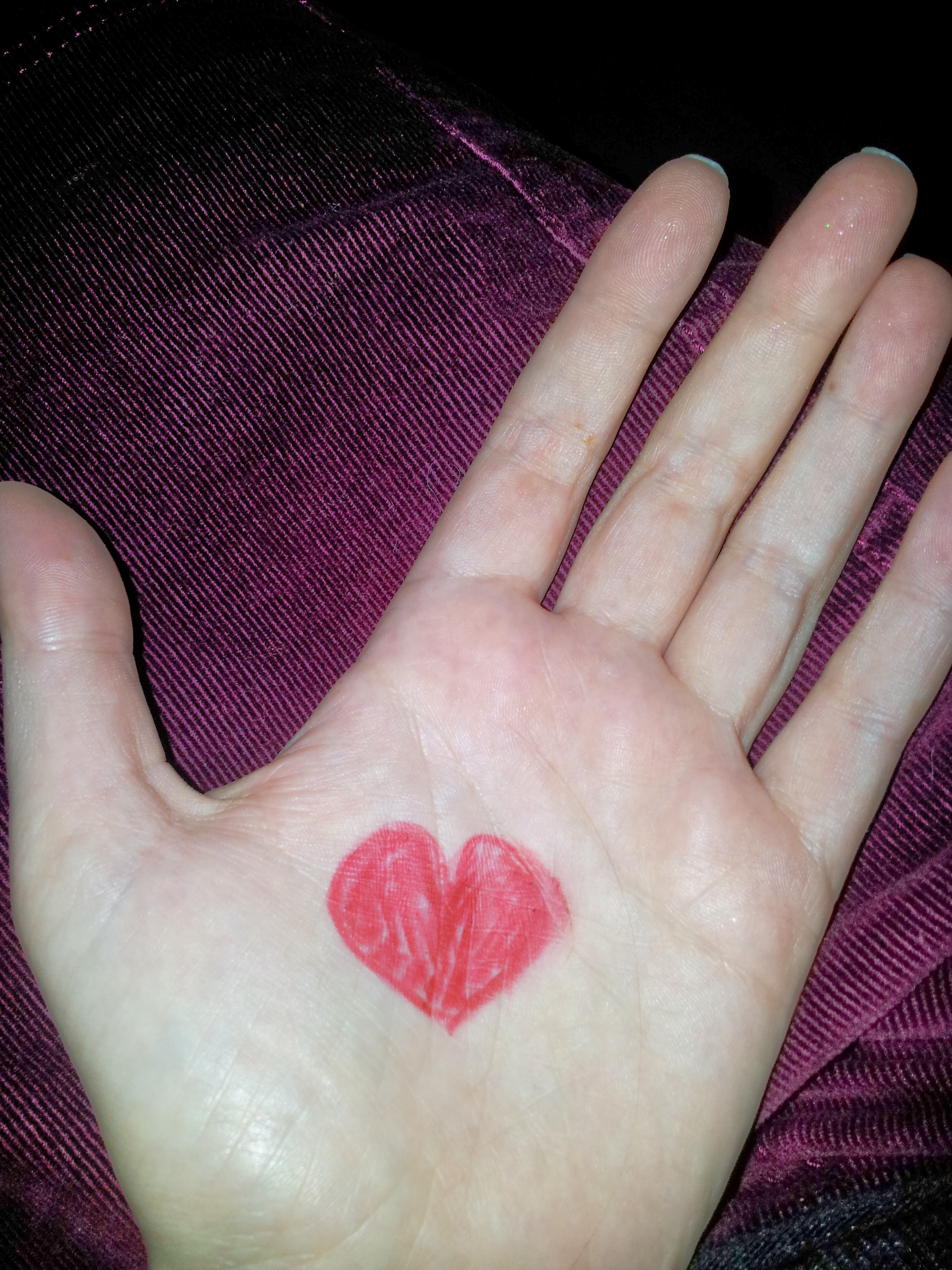
Heart in hand

I’ve realized lately that I have a high amount of empathy. This is not something I’ve known about myself all my life, so I still don’t feel completely easy with the knowledge. It makes a lot of sense, though. One of my strengths as a music teacher was my ability to make my students feel comfortable and supported, even while they were exposing themselves with their singing. As a writer, I enjoy delving deeply into the heads of my characters. And certainly for my adult life, it’s generally been fairly simple for me to put myself into other people’s positions and to see many sides and perspectives of an issue. It’s comfortable like slipping into a broken-in pair of shoes.

Having high empathy is a very mixed experience. My empathy has brought me many of my greatest joys and also many of my hardest challenges. At its best, it truly is a gift without compare. Being able to create connections and be truly present with people is a deeply meaningful and satisfying act. On some level we all want to tell our stories, and there’s a powerful resonance that can be achieved by being a loving witness to that.

But high empathy is tricky to manage. I’ve talked to other people with high empathy, and it appears that many of us have a chameleon-like ability to be who is required. We are the people who can figure out the right thing to say. We are the people who know how to smooth everything out. We can turn our own emotions and needs off like a switch if that’s what we think is necessary. We are the people who can sit quietly and reflect the other person back at themselves without the judgment that would make that too painful.

Unfortunately, we are the people who need the strongest boundaries, and we are the people to whom those boundaries come the least naturally.

Without those boundaries, we become people-pleasing, codependent, or emotionally drained. We can see the other side so clearly that we can accidentally neglect our own perspective or place less value on it. Being so aware of different options and viewpoints can paralyze us into indecision. We can lose ourselves in trying to be who someone else wants us to be. Nothing good lies down that path.

I’m going to tell you a secret about highly empathetic people. We want what we give. Sometimes we want it desperately. We want other people to see us the way we see them. We want other people to listen to us the way we listen to them. We want people to slip into our shoes sometimes too, and we want our experiences to be validated the way we’ve validated so many other people’s experiences.

In the end, we’re just like everybody else. We all want to be recognized for who we are.

The blooper photo: Nala really wanted to be involved.

The blooper photo: Nala really wanted to be involved.

Read Full Post »

I made a hard decision on Friday.

I decided to abandon my current novel-in-progress.

Currently at 61,000 words in length, this novel represents a large amount of my time and effort. It is about 75% completed.

It is also not working. And I don’t mean that in a rough-drafts-suck kind of way, but in a there-are-several-deep-systemic-problems-here-and-most-of-this-needs-to-be-thrown-out kind of way. So I am putting it aside. Maybe at some point I’ll know how to fix these deep systemic problems and I’ll return to the project. Or maybe I won’t. It’s hard to say.

Scott Adams had a good point in his widely shared article about failure: that there are people who focus on goals and people who focus on systems, and it is the people who focus on systems who tend to do better.

Don’t get me wrong; I think having goals is important. I’m a planner, and goals help structure planning. But ultimately, we want to have goals that support our system. When the goal no longer supports the system, it is time to change the goal.

My system is to be continuously improving myself as a writer while looking for opportunities to advance my career. My goal was to complete this novel. When I started the novel, the goal was in line with the system, but that is no longer the case. Being aware of the broken aspects of the novel, at this point I’ve been going through the motions, which isn’t teaching me all that much. (If I didn’t know how to finish projects, or if I felt I could learn a lot about endings by finishing, this might not be the case. But neither of those applies this time.) And finishing a novel this broken won’t do anything for my career except take time I could be using elsewhere.

That’s not to say I haven’t learned a lot from this project because oh wow, have I ever. I’ll take all of that knowledge and experience with me to the next project, where I’ll put it to good use. But sometimes it’s important to be able to figure out when to cut your losses and walk away. My own personal tendency is to hang on too long. This is another opportunity to practice not doing that.

If you’re wondering how I’m feeling, well, I just put 61,000 words into a drawer, which is not the most pleasant experience ever. But at the same time, I do feel good about this decision. I am excited to have more time to work on other projects that I believe in. I’m happy to be moving forward.

Failure is hard, but it’s also necessary when we’re trying to push our limits and become better. So this is not a horribly discouraging thing. I’d feel a lot worse if I no longer believed in my system, but I do. Nothing fundamental has changed. I’m just moving on to the next stepping stone.

What is your system? Are your goals in line with it? How do you feel about failure?

Read Full Post »

James Altucher wrote one of those popular list posts of things he learned from being a day trader. It is really interesting, as his posts often are. Two of his points particularly caught my attention:

  • Say “no.”… You have to decide every moment if this is the situation you want to be in.”
  • “This is crazy” means you’re crazy. …I know when I feel like, “ugh, this situation is insane” that the first place I need to look is at me.”

I like these points, and I think they go together well. Because when a situation feels insane, it’s probably particularly important to decide if that’s really the situation you want to be in. And those are the situations in which the skill of saying no is going to be particularly valuable.

The second point is crucial because it’s so easy not to look at ourselves. Sometimes we want to look anywhere BUT ourselves. But ultimately the situations in which we find ourselves are often about us. They are about us whenever we have a choice.

Even if it’s a painful choice. Those count too. Saying no can be one of the hardest things to do. Deciding to remove ourselves from a situation is often deeply unpleasant. Making different choices than we usually do can take huge amounts of effort.

Which road do you take? Photo Credit: simonsterg via Compfight cc

Sometimes we feel so attached to the way things have been or the way we wanted things to be that it takes awhile to make this choice. Sometimes after making the choice, we feel regret. We second guess. We wonder how it might have been if we’d chosen differently.

But really all that matters is the choice we’re confronted with right now. We can’t do anything about those other choices. We’ll never know how things would have gone if we’d chosen differently. We can’t go back and change things.

Sometimes we’re tempted to blame other people. We look at their behavior, and we want to point fingers and say, “Look! There is where the problem is.” And I’m not saying people don’t do some crappy things to each other sometimes. They do, and it sucks, and we don’t have to be okay with that kind of thing.

But in the end, we still usually have a choice, and so it becomes about us too. We get to decide if we’re willing to be in a relationship with this person. We get to set and hold boundaries. We get to say no. We get to say this is no longer a way I’m willing to be treated.

And what we’ll tolerate and what we won’t tolerate? The message that sends is about ourselves. So then the question becomes, are we choosing to send ourselves hate mail? Or today, are we going to send a love letter?

Read Full Post »

Why Celebrate

“Why celebrate?” he asked me.

At first I couldn’t even comprehend the question. Celebration is baked into the life I lead. I celebrate at the drop of a hat. I celebrate birthdays for weeks, Christmas for a month, and everything in between as much as possible. If something makes me happy, I throw an impromptu internal celebration. I give celebratory hugs, eat celebratory meals, and sing celebratory songs.

“Because it’s fun,” I said, and what fun it is. The yearly ritual to get the tree, the anticipation of whether I’ll be able to blow out all the candles, the smiles, the laughter, the smells in the kitchen, the joy that comes from getting excited about something.

“To break up the monotony,” I said. Because days turn into weeks turn into months and then years, and it all begins to blend together like painting a watercolor with too much water. Celebration gives points of anticipation, markers to measure the passing of time by, and peaks of excitement to remind ourselves that we’re alive.

“Maybe it’s to share joy with others,” he said, and I nodded. I love to hear of my friends’ successes, of the dreams they’ve realized, of the goals they’ve reached, to revel in the fact that they’ve been alive another year, and aren’t we all so lucky that is true?

Photo Credit: pierofix via Compfight cc

“It’s to shine a light in the darkness,” I said. Because sometimes gratitude feels like all we have left, and what is a celebration if not an act of expressing gratitude? Perhaps when we don’t feel like celebrating–when we’re so bone weary we just want the world to leave us alone–perhaps that is when we need to celebrate most of all. Even if it’s a celebration born of quiet and aloneness that only involves a kiss blown from a fingertip and a secret smile.

Why celebrate? Because life is going to happen no matter what I do, and all I get to do is choose how I live it. And I’d rather live it celebrating than not.

On Sunday I celebrated a friend’s promotion with him. We ate Japanese curry and ridiculous amounts of frozen yogurt, and we visited the game store and let Nala chase after her cat toy stick and watched a very strange movie.

What about you? How do you celebrate? Why do you celebrate?

Read Full Post »

I wrote last spring about clothing as a representation of identity. There’s an interesting dialogue going on now about clothing and other status symbols as they relate to class in the United States, begun by the essay “The Logic of Stupid Poor People” by Tressie McMillan-Cottom. Of course, this is not about exploring identity through appearance and presentation, as I was talking about, and much more about what it means to be able to carry off different signals of class and education through appropriate attire, speech patterns, and the like. This is a world in which whether you wear a cotton tank top or a silk shell under your blouse can mean the difference between being hired and being dismissed as not right for the job, regardless of any other qualifications.

This summer Theodora Goss wrote about the Lady Code:

“So dressing, for a woman, is a complicated affair. When you look into your closet in the morning — and even before that, when you buy your clothes in a store or online — you are making a choice about what you want to communicate. You are speaking in a coded language.”

This is, I think, why I am so interested in clothes, because I do see them as a means of communication. I didn’t learn the lady code or any of this sort of communication at home; my mom was completely not interested in matters of clothing or personal appearance. So I’ve had to learn it gradually as an adult, and I remember how much I still don’t know when I read some of Theodora’s posts. I don’t know the right kind of dress to wear to the ballet. I didn’t know that professional women don’t wear nail polish. For that matter, I didn’t realize the important distinction between a silk shell and a cotton tank top.

I’m fascinated that this coded language exists. Some people are unaware of it; some people don’t care about it (although when that is the case, it is usually because they are in a position in which they don’t have to care). Some people have trouble saying what they’d like to with it, either because they don’t know the language well enough or because they don’t have the financial wherewithal. That’s why historically if you were going to be introduced into society, you’d usually have some kind of sponsor, someone who could teach you all the intricacies you’d need to know to send the right message with your appearance and behavior.

John Scalzi talks about his go-to clothing choices (Levis, polo shirt, casual brown shoes) and how they represent “the basic uniform for a middle-class male.” Where I live, in the Silicon Valley, even a polo shirt for a man represents a certain amount of effort. Some men here tend to deliberately ignore style, which is a code in and of itself. Wearing random ill-fitting blue jeans and a free swag T-shirt from your company of employment? Probably a software engineer. Getting to wear those clothes is one of the perks of that position, at least if you’re a guy. I see that uniform less often on women around here, and even when I do see it, the clothing items tend to have a better fit, but I’m not close enough to the industry to say whether this is true across the board or not. I’ve also seen software engineers have to spruce up their wardrobes when they’re after certain promotions; they need their clothes to say something slightly different at that point. (But not too different. It’s a fine line.)

Look closely to see the little dog in this photo....

Look closely to see the little dog in this photo….

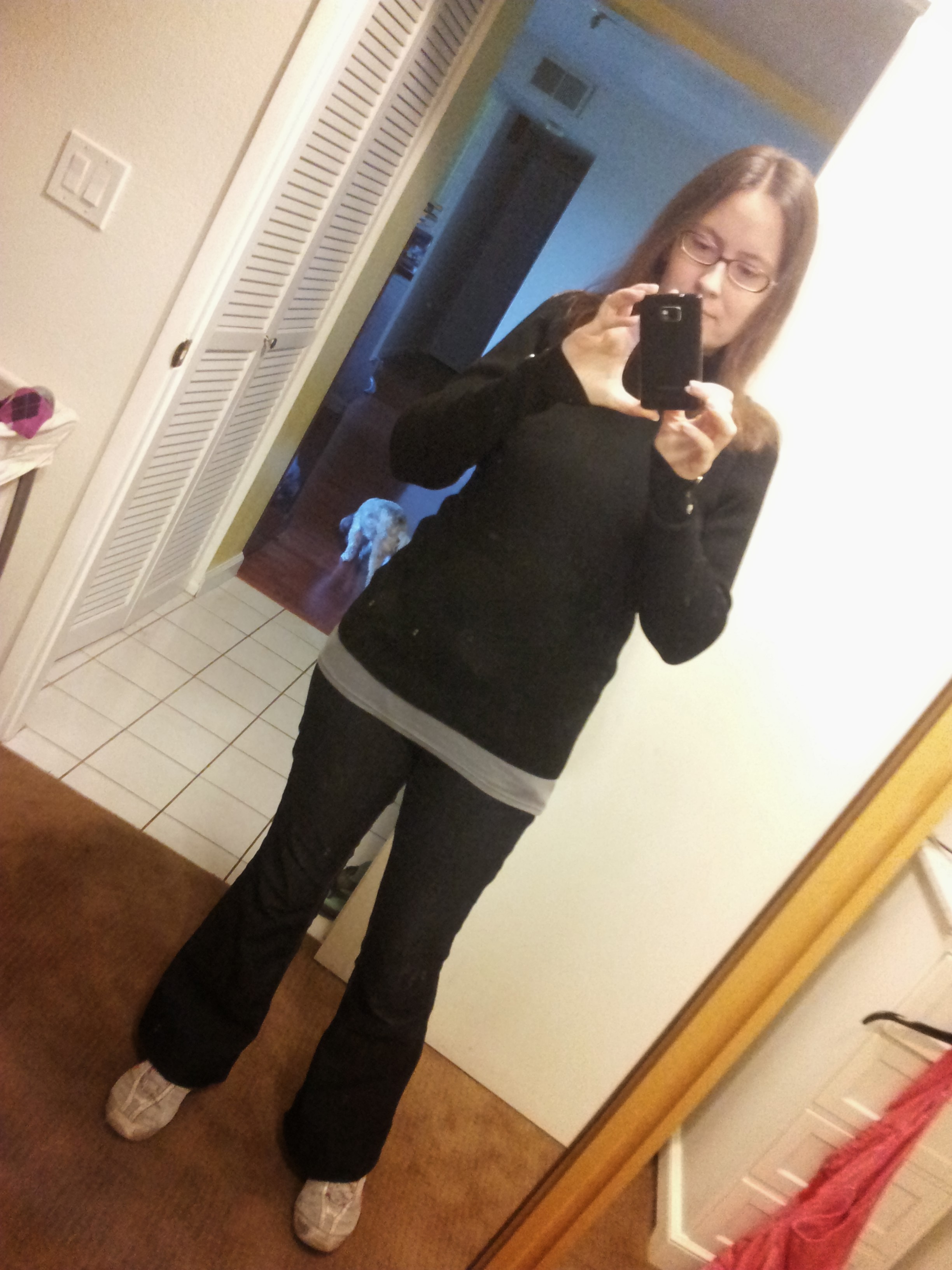
Today I’m wearing a black turtleneck sweater with metallic detailing, a ribbed blue shirt that peeks out from the bottom of the sweater, and stylish blue jeans. I’m wearing sneakers because I was out walking the dog this morning, but I’ll probably change shoes before I go out tonight. I’m not wearing any makeup, and I deliberately have a low maintenance hair cut. No jewelry today, although I’d add a necklace if I wanted to try harder.

All of those facts mean something in the coded language of dress and appearance. What are you wearing today? What messages do you think you’re sending? (And if you’re wearing a Halloween costume, I want to hear about that too, and especially what you think your choice of costume says about you.)


Read Full Post »

Fall Cleaning

Spring is the traditional time to clean, of course, but this year I am cleaning in autumn. Not my house, although that could probably use it too, but a more general airing of my life. It feels like a nice time for it, with the new school year fully in swing and the weather turning cooler.

Some of my fall cleaning is about maintenance. I finally went in for a physical and got my flu shot. I procrastinated on this so long last year that it didn’t end up happening. I got my teeth cleaned. I finally got a hair cut. I’m planning to go buy new socks for the winter, and then remove all my old socks with holes in them from my drawer. (I expect there to be a not small number of those.)

A lot of my fall cleaning is about taking space. A friend of mine recently asked when the last time was that I felt stress-free, and I couldn’t think of an answer. I’d already been taking the time and space I needed to relax during the last few weeks, but this only increased my resolve.

It’s not that I am able to avoid all stress right now–I wish!–but now that I’m not being constantly bombarded with urgent matters, I can breathe and place some limitations on what stress I’m allowing into my life. A lot of that has more to do with my outlook and what I’m willing to emotionally take on than with anything happening outside of myself. And some of it has to do with observing my own experience and being okay with it instead of existing constantly under a harsh eye of judgment.

I am also on the look out for new perspective. Some of this comes from giving myself permission to take time to think through things. Some of this comes from discussing things with other people and listening to their thoughts. And some of this comes from being open to what is new and different.

Quality Nala time!

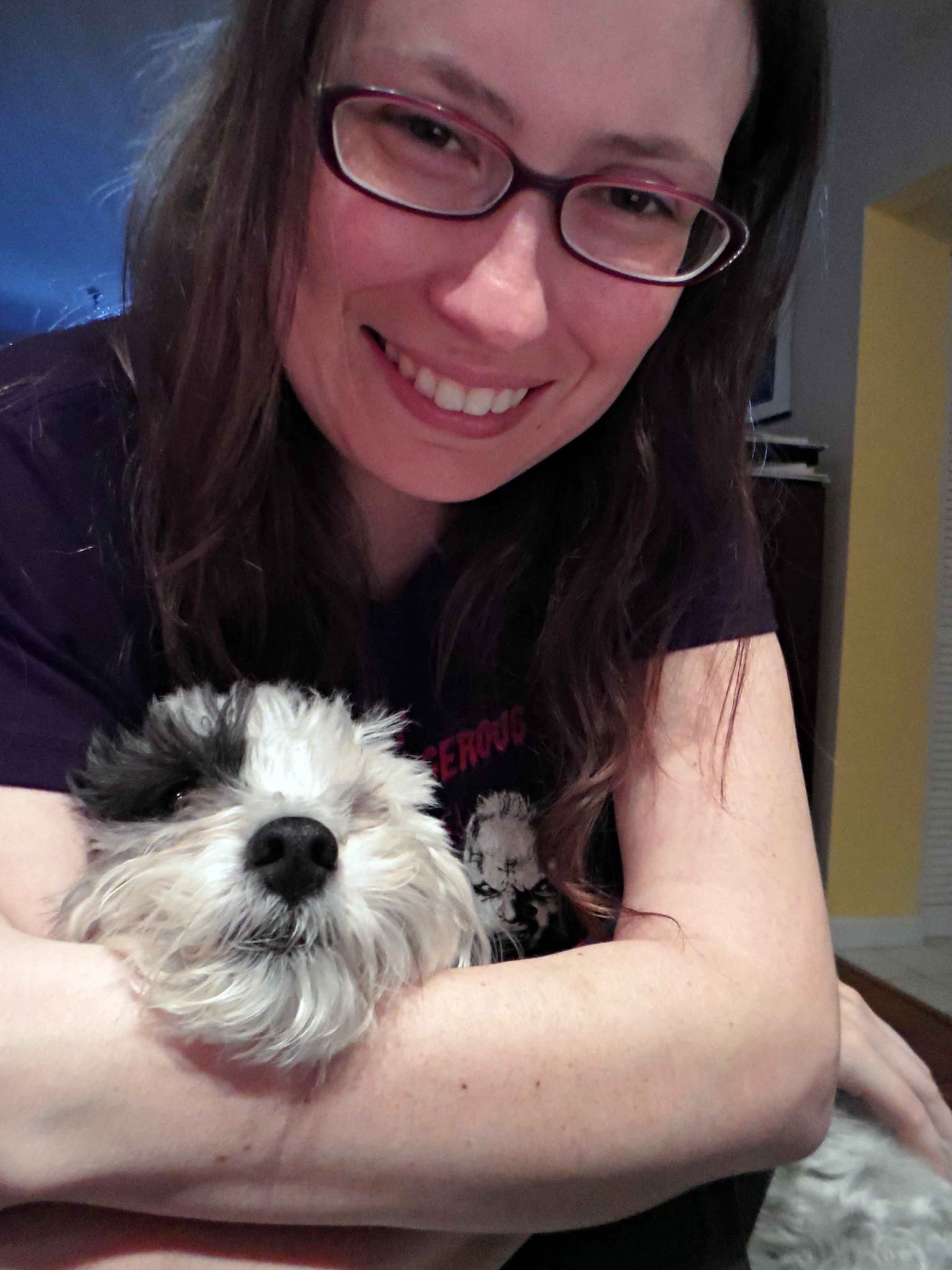
Quality Nala time! Photo by Yvette Ono.

And I am doing things that I find nurturing. This involves lots of Nala time and the occasional pumpkin spice chai. It involves giving and receiving support from friends and using this time to draw closer. It involves quiet time and honesty and toast and walks to soak up the sunshine. It involves sleeping late and soaking in the hot tub and paying attention to what sounds good in the moment.

Are you doing any fall cleaning this year? What does it mean to you?

Read Full Post »

« Newer Posts - Older Posts »