Feeds:
Posts
Comments

A Proposal

I want a beautiful friendship based on a shared love of The Hours by Michael Cunningham.

The Hours is maybe one of the best books I’ve read. I love this book. I never want to be finished reading it, and as the percentage creeps up…40%….52%….67%….I must have more of it and I already regret its end. I can’t think of anything better than reading this book. I resent the fact that I have little time for it, even while I relish the longer duration of my life this means I get to spend wrapped up in it.

I want everyone I know to read The Hours, but I know it is not a book for everyone. It is not a book for most of you. First of all, I don’t think you should read it unless you’ve read Mrs. Dalloway by Virginia Woolf. I read it two years ago, and that is perfect. It would also be perfect if I had read it two months ago. Possibly even more perfect, but is that a thing? More perfect than perfect?

And then it is a very literary novel. The language makes me want to cry, but a lot of readers don’t care about language. And the themes….many of you wouldn’t like them, or you wouldn’t understand them. You wouldn’t want to understand them, or you’d lack the experience or tools to understand them. I don’t think this is the easiest book to understand. I am sure I don’t understand it either, not to the depth I would like. But that’s okay because I will read it again someday, and maybe I will understand it a bit more, and in the meantime, I will savor the anticipation of that re-read.

20140826_144957 (1)

But let us imagine that you love The Hours the way I love The Hours, shall we? Then this is how our beautiful friendship would go.

We would read this book out loud to each other. We would take turns. I would want to be the one to read the Virginia Woolf passages, but I would be willing to compromise. We would let the language trip from our tongues, and sometimes we would pause to savor it in just the way we’d pause to savor a particularly exquisite bite from a fine meal.

We would read this book in the park. We would forget to bring a blanket so we would lie straight on the grass, and it would tickle our necks and our elbows, and we would hope it wasn’t freshly mowed or our reading would become punctuated by outbursts of sneezing. The sun would make us sleepy, and sometimes we’d be listening more to the cadence and inflections of the other person’s voice than to the actual words. 

We would repeat ourselves.

We would read this book on the floor in front of the fireplace. The lights would be dim, the crackle of the fire sometimes overtaken by wind blowing through the trees outside, and into this scene of contrasts–warm and safe versus brisk and wild–we would speak these words and we would feel them more deeply.

We would read this book over the phone when we were far apart from one another. It would remind us of who we are. It would shrink the distance.

I would bring you roses. You would bake me a cake. There would be crumbs in the icing, on purpose. We would go to a hotel, and we would read Mrs. Dalloway there in silence. We would put candied ginger into our tea, and we would wish we were in London. And then one day we’d go to London, and our wish would explode like a dandelion blown by the lips of a child, as all wishes do when they come true.

Just as the three viewpoint characters of The Hours are linked by Mrs. Dalloway, so would we become linked by The Hours. Maybe we would transcend that link.

Maybe we wouldn’t.

Either way, our beautiful friendship would send ripples through time. I would think of you again when I was eighty-three years old. I would think of you with fondness.
A few years ago, I was really struggling to forgive someone. Looking back on it now, I know why I was having such difficulty, but at the time, it really bothered me. So I spent a lot of time thinking about forgiveness, both what it means and what it doesn’t mean. At one point, in some desperation for a new perspective, I even began combing through my more philosophical nonfiction.

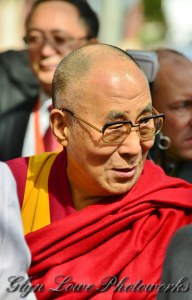
I found what I was looking for in the book Emotional Awareness, which is a conversation between Paul Ekman, who is well known for his work on facial expressions and micro expressions, and the Dalai Lama.

15022499406_8c46965fe8_b

At one point the two of them discuss forgiveness, and to this day I have that place marked in the book. Here is the relevant passage:

EKMAN: It is good for the person who forgives. But does it not remove responsibility?

DALAI LAMA: No, no. For example, now, we mentally give forgiveness to the Chinese. That means we try not to keep negative feeling toward them because of their wrong deeds. But that does not mean we accept it, what they have done. So we have little forgiveness against them, as far as their action is concerned.

DALAI LAMA: Forgiveness means not to forget what they have done. But forgiveness means do not keep your negative feeling toward them. As far as their action is concerned, you use your intelligence. You totally have to take countermeasures, but without negative feeling.

This one passage has entirely changed my understanding and practice of forgiveness.

One of the mistakes I make over and over in my life is being too forgiving. I like people, and I tend to believe the best of them, and I feel friendly towards them. I can almost always see their point of view. So it is incredibly easy for me to think, “Oh, maybe it wasn’t that big a deal” or “Yeah, that really sucked, but I like this person, so….” or “maybe if I do xyz, things will go better” or “They’re doing the best they can” or any of a hundred similar thoughts. This tendency can sometimes be a positive one, but for me, it has also often been a negative one.

In the instance above, when I was struggling so with forgiveness, it was because my natural tendency was to allow the issue to be swept under the rug and go back to the status quo. But at the same time, I now felt unsafe with this person, who I didn’t think had taken appropriate responsibility for their actions and who hadn’t responded well to my boundaries thus far.

So the idea that I could forgive this person, as I both wanted to do and felt a lot of pressure to do, while also keeping myself safe by taking countermeasures (aka setting whatever boundaries I needed to ensure my safety), was, at that time, completely revolutionary for me.

This is when I realized on a deep level the difference between the kind of forgiveness I’d been taught, which meant huge amounts of self-sacrifice and suffering and exhaustion, and the kind of forgiveness the Dalai Lama was talking about, which leads to inner peace and strength and compassion not only towards others but also towards myself.

This is also when I learned that my safety, both physical and emotional, matters. This might seem obvious, but it was not what I was taught, and it is not always how I am treated by others even now. But it is how I strive to treat myself, and that is the most critical–and life-changing–thing. It is when I stop feeling guilty for prioritizing my safety that I find myself surrounded by the supportive and kind people who don’t feel entitled to me, and those are the people I want in my life.

Being given permission to use your intelligence can be a powerful thing.  

I promised you a picture of my sock drawer.

But first, can I tell you how amazing my sock drawer is? I am not kidding when I say I am excited to choose my socks every morning. Because it’s so neat, and I can see all my options, and I can see when I’m running a bit low on socks. And I even have a separate pile of my dance socks so I can just dip in and grab them before heading out.

20160330_010421.jpg

I had no idea a sock drawer could give me any pleasure at all, but I have had my eyes opened. Yes, it does take a little longer to roll the socks after you wash them, but the extra few minutes is entirely worth it.

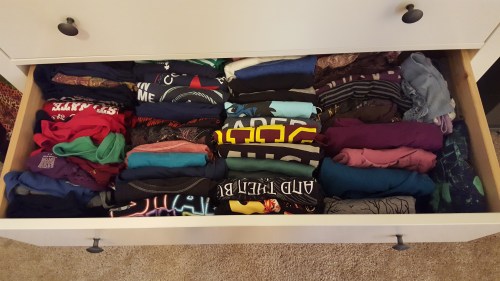
While we’re at it, why don’t we take a look at my T-shirt drawer, because that looks pretty cool too.

20160330_162459

I finished going through all my clothes about a week ago. In the end I got rid of maybe 40% of my clothes, twenty-one garbage bags donated to Goodwill. A few bags of pure landfill trash in there as well, unfortunately.

Next on the agenda was books. I did them all (except music books, which is its own special category) in one brutal afternoon. My friend came over to offer moral support. There are now stacks of books all over my house that I am giving away, once I box them up and maybe get a response to my email from the book sale I am hoping will take them away. Also a big stack of DVDs, and soon stacks of VHS tapes (why do I still have these?) and CDs.

Again, I am giving away a lot, but there is still so much left over. It is very humbling.

It is an intense experience to be engaging with my stuff in this way. The pure excess is shocking, and the amount of emotion that can come up is quite tiring. I have an actual aversion to buying anything right now. My favorite clothing store sent me an email about a sale and I instantly deleted it. Last weekend a friend mentioned there was a sock store down the street and I deliberately didn’t go that way. The last thing in the world I feel like I want is more stuff.

Marie Kondo says most of her clients take six months to tidy their homes, and I don’t know how they do it. I’ve been doing it four weeks, and I’m already so incredibly ready to be finished. In addition to CDs, which shouldn’t take long, this weekend is all about papers, and I either need to find a shredder to borrow or else I need to pay for a shredding service. Even the logistics of tidying are tricky and boring. No wonder I’ve been putting it off forever and ever!

But in spite of my fatigue at this process, I am still committed and really glad I’m doing it. As one of my friends put it, do you own your stuff or does your stuff own you? My stuff has been owning me way more than I would like. And this process also reminds me of the things I own that I truly do love: my beautiful copy of Hyperion, the wooden dragon I picked up in Bali, my collection of knee socks that keep my feet warm.

And then I can peel back yet another layer and say this: it’s all just stuff, and this isn’t where I want my primary focus to be long-term. It is how I spend my time and who I spend it with that matters, and the purpose of my stuff is to support that.

I am very busy

I feel like I don’t have enough time.

16281535381_21f3ff468b_b

Photo Credit: adrianvfloyd via Compfight cc

I don’t know that I have any fresh insights to offer on this subject, but at the very least I’m sure most of you have also felt this way at some point in your lives.

I didn’t have enough time this weekend, so by Sunday night I basically collapsed on the couch unable to do anything because I hadn’t given myself enough time to sleep. I couldn’t even respond to Facebook comments, that is how tired I was.

I think of what I’m supposed to accomplish in the next week, and I feel motivated and focused and anticipatory, and also how the hell am I going to do all that, and how can I squeeze in a bit more?

I think about what I can skip, and then I feel grumpy because I don’t want to skip that!

I’m supposed to take a vacation next month, and I haven’t even started planning it. I don’t know when I have time to plan it. And it will be a working vacation, of course, because my novel is running long and there’s no way it will be done by then, and also (hopefully) I might have another project I need to work on by then, and also there’s a bunch of people I want to see and a few touristy activities I want to do. But at least I won’t have to make huge piles of stuff to donate, so, you know, VACATION!

I’m also having to accept my current timeline may or may not be realistic. As in, it’s at least remotely possible that it isn’t.

So what I am noticing during this time of the busy?

The more I think about how busy I am (like while writing this post, for example), the more stressed I feel and the more time I waste. When I focus on the task at hand, I can actually blow through a lot fairly quickly.

I am even more grateful than usual for the generosity, patience, and flexibility of friends.

I feel more focused when I keep my top priorities clear.

I still have to find downtime, or forget about productivity and sociability.

It’s easier for me to move on from things that really shouldn’t be taking up my time. And that by itself is a huge lesson.

These efforts that are taking up my time are all very important to me, and that is an amazing thing to be able to say. Time is precious to me, and to be able to spend it in ways that are aligned with my goals and priorities is very meaningful. That’s why I’m not cutting out more until I absolutely have to.

I feel like I don’t have enough time. But what a privilege to spend my time as I am.

These temple bones

Last weekend my friend apologized to me.

It hadn’t been that big a deal, the thing for which he apologized, but the timing was bad. I didn’t think about an apology. I didn’t ask for one.

He gave me one anyway. He made amends, and then he offered the apology up to me like an unexpected jewel, and then he made some more amends. I watched him take responsibility for his actions, and I watched him not have to take credit for doing so. He did it without any fuss.

The apology was actually for me.

I accepted it, and I took it in, and it changed me. I hadn’t realized how hungry I had been for that very thing until I sucked it down and felt a palpable relief. I had forgotten such a thing was possible. I am used to being asked to dance in a mirror maze in which I am a mere spectre. And here I was, being offered the chance to be me.

I said yes, of course.

I’ve gotten pretty good at being me, in the privacy of these temple bones, in the sanctuary of this muscle heart, in the safety of this rib cage.

He could have said, “You’re too sensitive, Amy.” He could have said, “Well, it only happened because of x and y and z.” He could have gotten angry at me. He could have thought I didn’t think he was a good person. He could have thought for himself that he wasn’t a good person. He could have asked me to comfort him. He could have asked me to pretend nothing had happened, and I might have, because I have larger battles to fight.

He could have left me sitting there alone. The only consequence would have been me staying in my cage of bones, unwilling to come out where I would not be seen.

But he didn’t do that.

And so I have a stronger friendship than I did before.

And so I can begin to see a path to being myself outside these temple bones.

And so I have hope.

20160320_133437

Stuff has a weight.

20160321_163318

It doesn’t matter if it all has its own place. It doesn’t matter if much of it is hidden away behind doors and in cupboards and drawers. It doesn’t matter if it’s nice stuff or old stuff or ugly stuff or useful stuff.

Stuff has a weight, and I know that because engaging with it deeply the way I am now, I feel it. And so much of it carries the weight of the past.

I wore this skirt in high school. I got this T-shirt in Norway. I wore this dress to a high school formal or during a time when someone hurt me badly. I got this table from my stepmom who disappeared after she broke up with my dad, never to return. I wore this at my wedding. My mom made this. My mom gave me this. My mom owned this. My mom loved this.

I hold on so tightly to my stuff. But none of this is now. None of this is even close to now.

It’s as if this stuff, it proves these things happened. It’s physical proof. Coming from a household where memory was seen as the opposite of reliable, proof matters. I used to run over things that happened again and again because I was afraid I would forget, and by forgetting I would lose myself. And I’d seen exactly how ugly that could be. So I had my litany, like a horror show bedtime story, so I’d remember who I was and where I’d been.

It worked. I remembered.

And I realize now, so many years later, that I know what I know. I know what has happened to me. I know what I’ve done. I know the choices I’ve made, the good and the bad and everywhere in between. I know who has been important to me, who I’ve loved without measure, and I know the difference between the people I know who are safe and the people I know who cannot be trusted.

I don’t need stuff to tell me who I am, or who I’ve been.

Trust me to find something profound in engaging in spring cleaning. Yup, this is definitely who I am.

In The Life-Altering Magic of Tidying Up, Marie Kondo says:

“It is not our memories but the person we have become because of those past experiences that we should treasure.”

When I was a teenager and a young adult, there were things in my life I wished were different. Hard things. I thought about wishing they’d never happened. I mean, I did wish I’d had it easier. But then I thought, “Well, I am the person I am today because of everything that has happened to me. And I like who I am. So that is something to be grateful for.”

Thinking this way didn’t make everything okay. But it did make it meaningful, and that was enough for me to move forward, to keep trying, and to not give into despair and rampant cynicism.

This is what I think about now while I make decision after decision about what stays and what goes. I’m not getting rid of the things I really love right now. And because it’s me, that’s a fair number of things. There’s no worry about me going all minimalist any time soon.

But it is not the stuff that matters. And some of this stuff, I’ve been dragging it around from place to place for reasons that are no longer true. If they ever were.

I’m letting go of the things that are heavy.

Once upon a time I was talking to someone about my writing. And this person said to me, “Yeah, but if you don’t succeed in a year or so, you’d probably quit and try something else, right?”

And I thought to myself, “Wow, we are really not on the same page here. In fact, we are so far apart I don’t know that there’s anything I can do to change that.”

So when I recently read an essay by Matthew Weiner, the creator of Mad Men, I was happy to see the following:

“The most defeatist thing I hear is, “I’m going to give it a couple of years.” You can’t set a clock for yourself. If you do, you are not a writer. You should want it so badly that you don’t have a choice. You have to commit for the long haul.”

I don’t know about the “should” in that statement, but for me, the sentiment is true. I’ve been a writer since I was seven. When I wasn’t writing prose, I was writing music and lyrics. This impulse to write is so deeply buried in who I am, I don’t have the first idea how I’d extricate it. Nor would I want to.

Because commitment matters. As Elizabeth Bear says, “…to succeed at a thing–a job, a relationship–in the long term, the thing is: You Must Commit, even though commitment is scary.”

I used to joke that I had commitment issues because I like to take a bit of time before I commit. I’m a “stick my toe in the water to test the temperature” kind of person, and then I hesitate at the first step or two of the pool, thinking about how cold the water is and wondering if this is actually a good idea, and then suddenly I rush all the way in, and I’m done. I’m committed.

20160301_231836

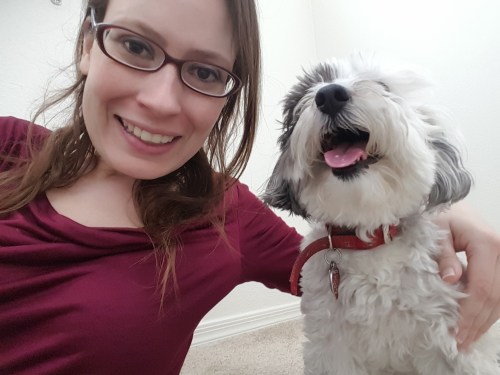
I even hesitated a little bit about adopting this cutie.

But the reason I like to take my time is because once I commit, I AM COMMITTED. And I will put everything I have into whatever it is. So being a little cautious at the beginning is an important protective measure.

Do I think this means I make better decisions? I have no idea. It’s part of my temperament, more than anything else. And I still make mistakes, and I still have failures, and I still make commitments I wish I hadn’t made, not because of failure so much as because the price I paid was too high.

Ultimately I think commitment requires a lot of trust: trust in whatever or whoever you’re committing to, yes, but perhaps even more importantly, trust in yourself. Trust that you can be there–really show up–for yourself. Trust that you can brave the storms and survive the failures. Trust that you can keep learning, that you can keep adjusting, that you can keep in touch with the things that matter to you. Trust that you can leave old commitments behind if it is time. Trust, even, that you can keep trusting instead of clamming up so tight it will become impossible to function in an open-hearted way. (Or, if that’s where you are, that you can figure out how to begin opening that heart back up.)

And finally, trust that we can’t always know and yet we must act anyway. None of us know what the future will bring. We can do our research and collect data, we can try things out, we can discuss the pros and cons, but ultimately, at that point of commitment, there is a LEAP. That leap is unavoidable. And it is terrifying. And it is glorious.

So if I had actually answered the question this person had asked me instead of being polite, I would have said, “What? No, are you kidding? I took the leap to write seriously years ago, and so far it has been a fabulous decision. It’s not always easy, by any stretch of the imagination, and I don’t know when or if I’ll succeed in the way I want. But NO REGRETS. On the contrary, I feel incredibly lucky to be doing this at all. And I really doubt I’ll stop in a year’s time, whatever happens. I kind of doubt I’ll ever stop. I guess we’ll find out.”

Here’s to that glory.

Time to Sleep

This weekend I attended two conventions simultaneously, which required much driving and socializing and very little sleep. I joked that one was a literary convention that required my brain and the other was a dance convention that worked my body, so they complemented each other nicely.

And now I pretty much don’t want to do anything.

That being said, both events were worth the time and expense. I got to catch up with several writer friends and had a particularly noteworthy 3-hour conversation about artificial intelligences. There was actually a bit of a barcon going on at FogCon this year (although granted, during the day but not so much in the evening), so that was a nice change. And I had a particularly tasty strawberry “shake” at a Vietnamese place with one of my writing shake buddies (although alas, he had a less positive experience with his salty plum soda).

The live music at the dance event was top-notch, and I learned a lot from dancing with new partners from around the country and also just from the sheer amount of dancing. I left being even more aware of how much I have to learn, which is an exciting prospect.

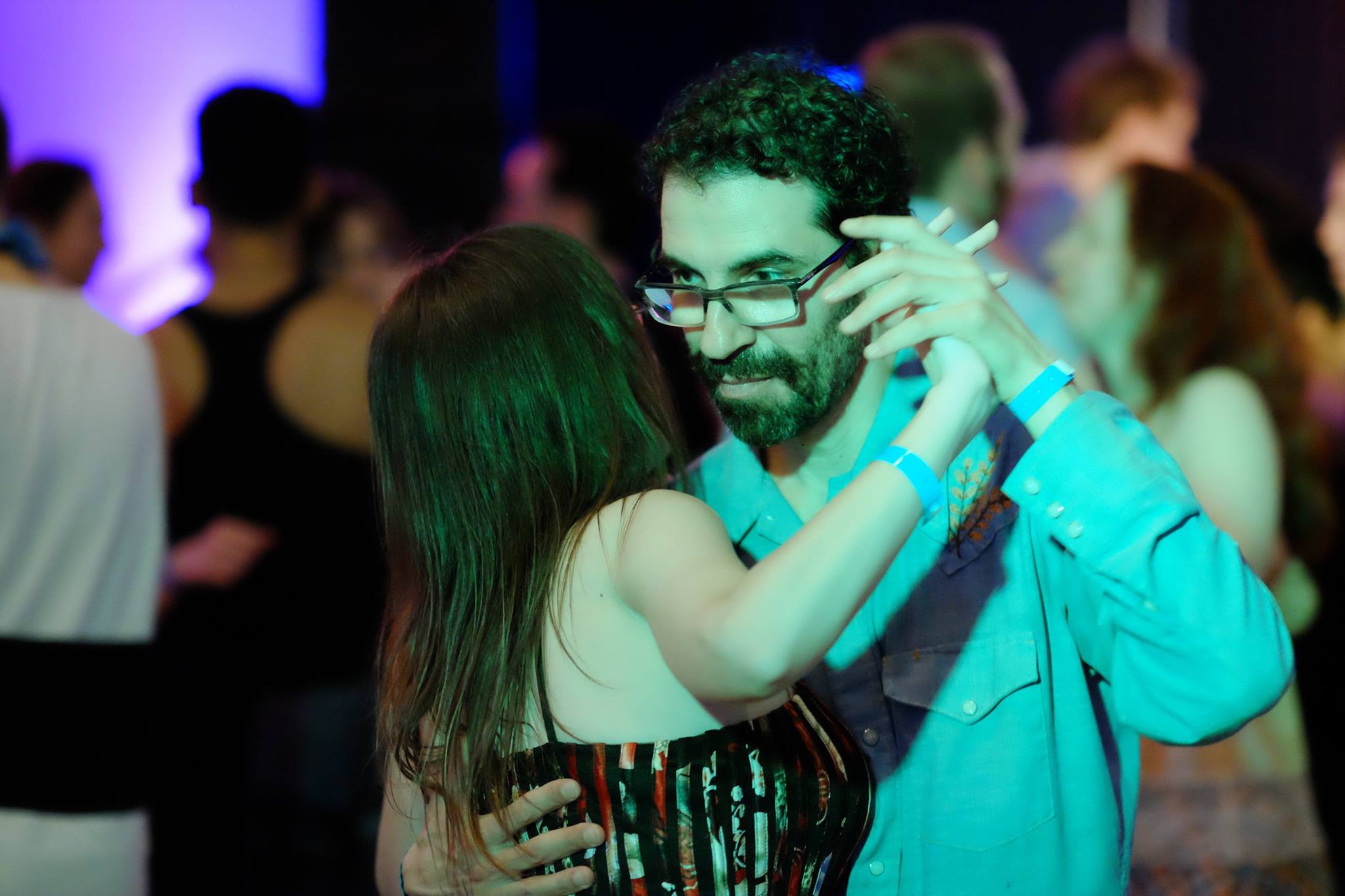
And here is the one photo of me from the weekend. I need to drop my shoulder. In general, actually, as my shoulder posture (is that even a thing?) is quite poor, but it’s a looooong work-in-progress.

Photo by Richard Seely, who is an amazing dance photographer.

Photo by Richard Seely, who is an amazing dance photographer.

And for the last two days all I’ve wanted to do is sleep. And eat ice cream. And sleep some more. This is apparently what happens when I do two conventions at once.

My one-year dancing anniversary took place last month.

Yes, I’m still dancing. And it’s much more enjoyable now that my problem toe has finally stopped hurting as much. I’m beginning to rebuild the muscle I lost from my convalescence, and my hips are finally beginning to loosen again, and all is going well.

It’s also become much easier for me to ask people to dance. I wouldn’t say it’s easy, precisely, but it is easier. I’ll take it.

And I haven’t taken the dive off the deep end that can be so tempting for me, aka dancing has not become my entire life. I read an article last week about all these things I should be doing and attitudes I should be having in order to improve as a dancer, and I didn’t feel the need to do any of them. I’m sure they’re right, mind you; I’m sure if I made video of me dancing, for example, I’d improve much faster. But I’m okay with my current rate of improvement. Which is for the best, since I don’t have a ton of extra time to devote beyond what I’m already doing.

That being said, I am attending a dance convention over the next several days, which I expect to be incredible and exhausting and punishing to my hamstrings.

My face after dancing.

My face after dancing.

I was talking about dancing recently, and I said, in all seriousness, that it has changed my life. I stand by that statement.

There are many ways dancing can change a person’s life, and I’m sure many of those ways have at least touched on my own. But the primary change for me has been one of physicality. Dancing has helped immensely in this last level of healing after the past several years of chronic injuries.

Perhaps most noteworthy has been its effect on my confidence. After spending years dealing with injuries and re-injuries and the limitations that surround them, I was used to thinking not in terms of possibilities but rather in terms of protection. What did I need to do to protect myself? What might hurt me again? What if I chose to do an activity and then spent six months recovering from it? Six months is not a small price to pay, and those kinds of prices begin to inform your decisions, even when you are no longer as fragile as you once were.

Dancing has taught me to trust my body again. I’m not so wary about my ankle anymore; careful, when the situation warrants it, but not so nervous. Aches and pains feel more like a temporary phenomenon again, instead of something that means “Omg, what have you done to yourself now?” Through gentle repeated use, my ankle has become less rigid, which means hills do not daunt me the way they once did. Uh huh, I CAN CLIMB HILLS. The excitement of that statement cannot be overstated.

One last thought on dancing: It makes me happy. I always feel grateful to be attending dance events. I feel grateful to my partners. I feel grateful for the amazing music. And I feel grateful for the community as a whole.  

My heartfelt thanks go to everyone who has contributed to that gratitude over the past year.

I have a lot of stuff.

I am not extreme, in that I don’t have a storage unit and my apartment doesn’t require daily excavation to get from point A to point B. In general, each piece of my stuff has its place where it lives, and there is an order to the madness, and while there is definitely some clutter, it’s not all that bad.

But. That being said, I still have an awful lot of stuff.

So I decided to get rid of some of it.

Getting rid of stuff is not something I’m particularly good at, hence the aforementioned lots of stuff issue. This is due to two factors, that together prove to be fairly intractable:

  1. I get very sentimental. This is unfortunate. If I got something on a trip, I have trouble getting rid of it. If I got something as a present, I have trouble getting rid of it. If I have a bunch of memories relating to an item, yup, you guessed it, I have trouble getting rid of it. And heaven forbid it used to be owned by my mom, because then I lose all willpower.
  2. I struggle with feelings of scarcity. I fall very easily into “maybe I’ll need this one day” and “this could be useful” and “you should hold onto this so you don’t have to spend money to buy another one later.”

The best time to clean my things out would have been when I moved out of a house three years ago. And I did get rid of huge amounts of stuff. But ultimately that was such an enormous job, and I was freaking out about money the whole time, and so I ended up holding onto a lot of inessential stuff from a combination of exhaustion and fear. Fast forward to now, when I still have a lot of that stuff weighing me down.

Anyway, I decided to start with clothes, because I’d been wanting to do that anyway, and because Marie Kondo says you should start with clothes in the part of her book I read for free on the Amazon preview page.

Side note: You cannot speak to people about doing a major clean-out right now without them bringing up Marie Kondo. It is literally impossible. So I am helping all of you out by bringing it up myself.

It’s a good thing I determined to start on clothes first, because once I actually began, I wanted to do anything BUT clothes. I wanted to go through my DVDs. I wanted to go through my papers and figure out what can be shredded. I even wanted to go through my books (which is going to be simply awful). I wanted to do anything but what I’d actually committed to doing.

Also I refused to dump all my clothes out on my bed, which is another thing Marie Kondo tells you to do. I’m pretty sure if I did that, a.) I wouldn’t be able to finish by the time I wanted to go to bed at night, and b.) I would start to cry over the sheer quantity of items to go through. I really like clothes. Most of my stuff is clothes. And books. My two materialistic vices. (I also weirdly have a lot of kitchen stuff, but I don’t care as much about that so I have gotten rid of a bunch of it over the years.)

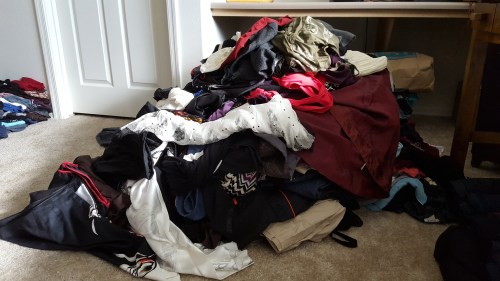
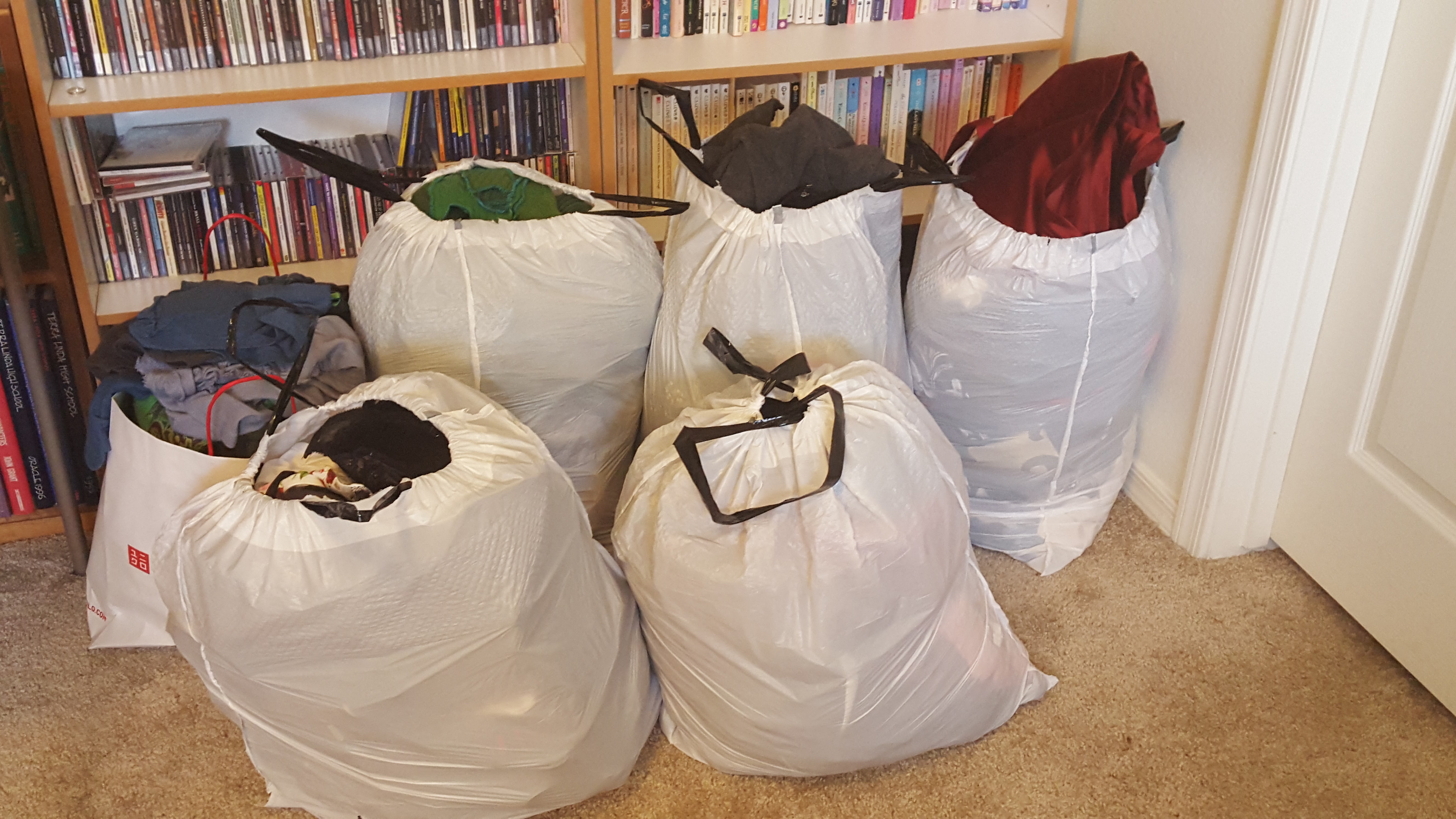
Here is what I’ve bagged up to donate so far:

The first spoils of war.

The first spoils of war.

And there’s a lot more to go through. I haven’t even started on my dressers yet. Yeesh.

Shall we talk about a few of my victories? Hopefully they will fuel me to greater heights of throwing shit away.

  • I had a pair of my mom’s old socks. They were argyle. They had holes in the toes. I’ve had those socks for eighteen years. I threw them in the garbage.
  • I had a plaid button-down shirt that I thought would work great in some kind of Wild West costume. It looked a lot cuter on the hanger than it did on me, so I never actually wore it. I donated it.
  • I got rid of an entire bin of cheap costume pieces and random stuff, except for one beanie that is soft and my favorite color and maybe I’d actually like to wear it once I wash it.
  • I’m donating some expensive dresses that I don’t like and that don’t fit anyway. It’s always harder to get rid of things when they cost a lot.
  • I threw away every single old bra that isn’t in my current drawer, none of which is the proper size and all of which I was holding onto anyway because???

Next up is socks. And then T-shirts. I think I will pile both of these items on my bed. Separately. So I can see how ridiculous it is how many of them I have. (Also did you know you can’t donate socks? You can’t. Unless they’re brand new.) And then I will watch more Marie Kondo folding videos on Youtube. (If I actually fold my clothes based on her techniques, I will post pictures. If I don’t, we will pretend this never happened. Deal?)

In conclusion, this project is going to take me a while. And maybe I should buy Marie Kondo’s book.