Feeds:
Posts
Comments

I spend a lot of time feeling relieved.

For me, relief goes hand in hand with gratitude, so I also spend a lot of time feeling almost absurdly grateful.

I had an ex once who didn’t like it if I said anything about how lucky something was. I think he saw it as tempting fate, that if we spoke about the good things in our lives, that would somehow make them go away. I began to feel the same way, like my noticing and appreciating would be what caused something to be taken from me, snatched so rapidly it would be gone before I realized it. It wasn’t a stretch for me, this attitude, raised in constant vigilance watching for the other shoe to drop, waiting for the next crisis to hit.

But I don’t actually believe in that. I don’t think me noticing goodness, feeling grateful and lucky, means I’m more likely to lose. I think a lot of bad things that happen are kind of random, or else they’re due to choices like being a smoker or spending a lot of time driving too fast or eating nitrates, which I guess increases your risk of getting pancreas cancer. But I don’t think bad things happen because we don’t take the good ones for granted.

As for my vigilance, it’s still present. I can feel it scanning my life the way my laptop looks for a wifi connection. And it doesn’t find anything.

And it doesn’t find anything.

And it doesn’t find anything.

And I am so fucking relieved I don’t even know how to put it into words. It suffuses me until I feel almost giddy.

And my relief turns to gratitude turns to happiness because I don’t take the simplest things for granted.

Sometimes I sit on my couch at night, and I’m reading, and I’m texting, and I’m maybe watching a show. It is quiet. I feel peace steal into my heart, and then I go upstairs to bed, and it’s all simple, so completely un-noteworthy. And I am so happy about all of it. Because everything is okay, and there are no crises I have to deal with, and I can just … be.
Space

Space

I am so happy about dancing, I often don’t want to shut up about it. I stay up too late. My enthusiasm is written plain on my face and body for anyone to see. And I want to take you all by the hand, one by one, and I want to say, “Don’t you see!” Because I couldn’t dance at all–AT ALL-for years. My ankle, my knees, my back, my neck, my body was as twisted up in knots as my life was. And I couldn’t dance, and I couldn’t even afford to think about dancing because the grief would have been too much for me.

And now I get to dance every week, sometimes more, and it feels like an honest-to-God miracle. My bodyworker/trainer hugged me after our session today because he knows. He’s been working with me for five years. He says he’s never seen someone’s body turn around the way mine has. I am so relieved I want to curl up in the corner and bawl my eyes out. I’m so grateful I can hardly contain it.

It’s as if I spent my entire life living in one of those dystopic environments–Robert Silverberg’s city tower or Sondheim’s department store or Ray Bradbury’s Venus–and I’ve finally made it outside. I feel the sun warm my face, and the air tastes like fresh cold water, and everything smells like baked bread and honey. And I’m still in awe that this is even a place that exists, let alone that I get to be here.

I spend a lot of time feeling relieved. I spend more time in simple appreciation.
“I can’t imagine you being angry,” he says to me as we dance. He pushes his palm towards me, and I turn–or do I spin? I think I spin, the soles of my dancing shoes slippery enough to make it easy. I can’t imagine a person who never gets angry.

I can’t imagine this version of myself.

“I can’t imagine you being angry.” It is someone else this time, many months ago, I can no longer remember who, but I remember it was a man–a writer, I think–and I remember feeling the same bafflement.

What do people think, when they think of me? I imagine they think of me with charm pushed to maximum, my smile lighting up not only my face but my entire presence, as I interweave through a complex dance of conversation and introductions and “yes, I know so-and-so” and gaze intently while someone speaks and then throw back my head and laugh. This is maybe the person we cannot imagine being angry.

This is maybe the person we imagine being too much. “I think maybe you’d be too much for me,” he tells me, unprompted. I wonder why he is telling me this, but he does, and I consider it some time before rejecting it.

“I thought maybe you’d be too much.” A different person, about three months later, and the echo makes me take it more seriously this time.

What is too much? My full dazzle social mode? The social skills I spent huge amounts of energy building up once I was surprised to discover I needed them to be a writer? The skills I built up so I’d no longer be so isolated, so I’d no longer fade into the wallpaper, so I’d no longer keep all my thoughts to myself? So that I could walk into my fourth social gathering of strangers in twenty-four hours and speak with a smile about science fictional ideas instead of wilting in on myself and wishing I were somewhere else?

Or, since it is this year, is it the unbridled joy that is too much? I would have thought if I were to be too much, it would be the dark sides of myself, but those haven’t been on display to color these people’s impressions of me. Other things not on display: Many of my emotions. Many of my thoughts. The price I paid back in my days of invisibility. The price I pay to be too much. How after social gymnastics practice, I crash on the couch or on the bed, drained in a way that leaves me feeling empty of words, sometimes even empty of thought.

If I have to suffer through that same conversation one more time, I think to myself, well…I don’t know what.

I inevitably have that conversation again.

They do not see me stride deliberately to the end of the beach, away from the crowd and the lights but just in range of the music. I dance by myself with the waves.

I ask her, “Do you think I’m an extrovert?” She is an extrovert herself, and she does not think I am. “You get really quiet when you’re in a group,” she says.

Except when I don’t. Except when I am very chatty. Except when I accept, mulling through these diverse opinions, that I am a multi-dimensional person.

I said to myself, I want to shine bright bright bright. I said it over and over, through the difficult autumn and into the winter, and I wonder now if that is what you see?

But let’s go back to the summer of 2013, two years ago now, and she says to me, “You’ve lost weight. It was like you were hiding behind it.”

And I thought to myself, hiding? Was that what I was doing? Because at the time I felt like I was shrinking, disappearing, becoming smaller, less than. The weight was mysterious and fickle in its passage.

In retrospect, of course that’s how I felt. Because my old self was disappearing as the new one was being reborn. And it hurt, oh how it hurt, and watching the old self fade away was frightening. And watching the new one emerge, well: Would it be enough? I wasn’t so sure.

Fast forward to a few weeks ago, soon after I’d been horribly ill. “You’ve lost some more weight, haven’t you?” my friend asks. He is concerned. He wants to feed me pie. I am relieved that in our culture of thin-worship and body hatred, someone else has noticed that maybe me becoming this thin because I was really sick isn’t actually a good thing. I want to be fed pie.

And I remember then what she said about me hiding behind the weight. I guess I’m not hiding anything anymore. Instead I’m trying to keep eating, eating, eating, to get back to a healthier weight. But it turns out I’m as challenged at deliberately gaining weight as I was at deliberately losing it. My body does as it pleases.

The reason this is relevant, my body–which I don’t like to talk about because I don’t want any of you to feel comfortable commenting on it–the reason my body is relevant is that we place a lot of emphasis on what we can physically see, us humans. It is so easy for my body to become how you see me. I deliberately try not to cross my arms in front of me because I know it matters.

Too much, not enough, I couldn’t tell you. Once upon a time this was the three bears’ house, and you were Goldilocks, but that’s not the way I run things anymore.

As I accumulate experience, I realize more and more how little the way you see me relates to the reality of who I am.

20150215_230425

At the end of last week’s piece on being single, I said I’d tell you my least favorite part of being single this week. I added that in later on after I was done writing the piece. I didn’t want to sound smug, or like I was dismissing the difficulties of being single. Because while I have had many positive things come out of being single, it also brings its challenges and can be something of a roller coaster. In a society that values coupledom so highly, the benefits of being single come with a price tag.

I could talk about stability, perhaps, or partnership. I could talk about not having to think about who you’re going to invite to that wedding next month. I could talk about my feelings about dating and how much I sometimes really dislike it.

But what I’m going to talk about is intimacy. The intimacy of sharing a history together. The intimacy of trust. The intimacy of proximity and regular contact. The intimacy of being known, of folding back the layers one by one until you’ve allowed another person to see as deeply inside yourself as anyone else will ever see.

Yes, sometimes I’m a really sappy romantic.

Here’s something I wrote to a friend a few years ago, when newly single:

“And while I’m having all these ideas and thoughts and out doing things and meeting people and working on my book, there’s no longer one person who basically knows all of it, who hears all my stories and my opinions and what I’m thinking about and everything. Except me, of course.”

And this continues to be true today. It’s not that I don’t have people with whom I am close, or that I can’t find someone with whom to talk about any subject of my choosing. But the comprehensiveness is not there, and the regularity is not there. You might, for example, know all about my recent thoughts about writing but since we’ve never talked about the past, you have no idea where I’ve come from. Maybe we’ll communicate several times this week, and maybe we won’t communicate much at all. Who can tell? This is often the nature of friendship, and it’s not a bad thing. It’s just…not the same.

So yes, I miss the easy intimacy of not having to fill someone in on the details of events that happened two weeks ago, or two months ago, or two years ago. I miss no longer having to navigate through so many vast expanses of unknowns when relating to another person. I miss the kind of comfort and honesty that only comes with familiarity and trust. I miss knowing someone so well, and I miss being so well known.

This also further elucidates why I think asking questions is so important. How else can you move toward this kind of understanding? A friend of mine told me she was speaking to a potential date on the phone soon after she’d read this post, and when he didn’t ask her any questions, her desire to meet him plummeted. After awhile it’s hard not to notice this kind of thing because the relationship that results from it is inherently somewhat static. Intimacy doesn’t spontaneously arise from a date every Saturday night, or even from a physical relationship. It must be built, with care and interest and over time. And not everyone is interested in building it.

There are nights when I feel lonely. It’s always nighttime, usually late. The apartment is quiet and mostly dark. Nala is sprawled out in deep sleep on her maroon pillow in the music room. Sometimes this is peaceful and relaxing, but other times, I feel a little sad. I want to talk about what happened today. I want to curl up and watch TNG with someone. I want to share a smile that means, “Look, here we are together, and isn’t that wonderful?”

Late at night....

Late at night….

But happiness, they say, comes from within. And so I remind myself, even though I don’t have everything I want (and who does?), my life is pretty damned good. And that is enough.

There are so many words I have not said.

There is a graveyard of words I store somewhere in the space that encompasses me, buried several corpses deep. Words I couldn’t say. Words I should have said but didn’t. Words that risk and words that respect and words that choke in a throat habituated to silence.

Photo Credit: macieklew via Compfight cc

Photo Credit: macieklew via Compfight cc

I think these words I do not say. Sometimes I think them over and over again. I think about their vulnerability. I think about what they’re in response to. I think, “Is this person insensitive? Am I too sensitive? We’re acting like everything is fine and normal. Are this other person’s words and actions actually fine and normal? Would most people not have the reaction I’m having?”

It’s so easy to forget that at a certain point, those questions lose their significance. This is not about labels. This is not about unwinding the precise reasons, the why’s and the chain of events and the correct place to lay the blame.

Blame doesn’t repair anything.

No, this is about hurt. It is about swallowing it down and hoping I can hide it in a dark enough place it will almost be as if it never existed. It is about refusing to shatter the peaceful object that can be the two of us. It’s the fear of leaving the painful limbo for something worse. Maybe even someplace where you and I no longer exist as you and I.

It keeps you a few football fields at least from where I stand. Maybe with you way over there I’ll feel better. Maybe if I don’t tell you about the hurt, I can prevent it from growing if you ignore what I have to say.

It doesn’t work.

And so I think about transformation. What is the alchemy of turning the hurt into something like self-love? Let me test and tinker, let me write down a precise script of process and ingredients, let me join the ranks of the masters who have already perfected this art.

The question becomes not “Why am I like this?” or “How can I not be like this?” but rather “I am like this, so knowing that is true, how can I best be happy and cared for?”

The response becomes not “Swallow it down, and pretend it never happened” but rather “Let’s talk about this hurt and see how you and I can communicate.”

And if that communication is unfortunate and the hurt is not acknowledged? Especially if this is a pattern of interaction or a newer connection? The response becomes not “What’s wrong with me?” but rather “Perhaps I don’t want to spend much time with this person in future.”

Which, of course, can sometimes hurt like hell, but it’s the pain of the Band-Aid being ripped off. The wound was already there.

Meanwhile, I don’t want you to know who I am. My words reveal me. They let you know I am not a statue of joy and granite but a human of flesh and bone, tears and sweat, idiosyncrasies and flaws.

The whisper inside becomes not “I will never be perfect” but rather “I am enough.”

I believe it is better for the words to be spoken. It is only then we can learn each other.

On Being Single

By now we’ve talked about several aspects of dating here on the blog, but I want to talk about something different.

I want to talk about being single.

This period of my life marks the longest time I’ve been single since…well, probably college. I’m also probably the happiest I’ve been in my adult life. I see a lot of portrayals of being single in the media that dwell on the negative aspects (which do exist, of course), and I also know a lot of people personally who are fairly unhappy about being single. But that’s not the only facet of the experience.

A portrait of the artist as a single person.

A portrait of the artist as a single person.

What I like the best about being single is the space. And I’m not talking about the space in my closet (although that’s pretty great too), but of the space to live. I love being me, being Amy, and not being in reference to anyone else. It is during this time of being single, more than any other time that came before it, that I’ve been able to truly get to know myself.

When I was first single after my longest relationship, I spent a huge number of hours simply sitting, in the same chair I’m typing in right now. I was devastated, of course, and I would just sit there in the living room, the ridiculously fancy living room with the domed ceiling and the rich hardwood floor, and I’d stare off into space, or at the perfect white columns in the foyer, or at the iron curlicues of the bannister. Everything was changing, in chaos, soon this wouldn’t be my home anymore, but at the same time, I could breathe. I could really breathe. And I could sit there with myself and exist in a certain kind of peace.

And so I sat there. A lot. Sometimes crying, sometimes meditating, but mostly just sitting. Nala lay in her bed beside me, the refrigerator hummed stoically, and I didn’t have to think about anyone else. No one else would be judging me for sitting there, no one else would be worrying about me sitting there, no one would interrupt the pristine silence, and I had the time and space to begin to piece myself back together.

It was an awful time, but it was also a beautiful time.

And that is what being single is like for me. I do what I want when I want. Plenty of people are happy to give me their advice and opinions if I want them, but I don’t have to check with anyone before I make decisions. I don’t have to apologize for what I want, or what I eat, or even often when I make mistakes, because the mistakes I make often only affect me, and I’m totally okay with myself making mistakes. And if I suddenly decide I want to start dancing a whole bunch, it’s so simple to make the shift.

I used to be afraid to be alone, but now I’m mostly not. Surrounded with friends as I am, I have never been less alone in my life. And that has given me the space to learn what it’s like to be myself without restraint, without pleasing, without compromising to the point that I’m squeezing up in a small corner of what my life could be.

I’m not saying that all relationships don’t allow this kind of space. But I do think for those of us who never got to have this space, it can be easy for us to fall into relationships that are like what we have known before. And so this time to get to know what a spacious life feels like has been invaluable to me.

Our culture tells us we need a romantic relationship to be happy. But really, we need to learn to be happy on our own terms, relationship or no relationship. A relationship will never be enough to fill whatever void lives inside of us; we can learn to fill that void ourselves, or we can make our peace with that void, but no one else can truly touch it, only plaster themselves over the top of it like a cheap Band-Aid.

I decided earlier this year to make my life as amazing as possible, and it worked better than I thought it would, to be honest. So now here is what I look for when I date: I look for someone who will make my life even more amazing than it already is.

It’s not a low bar, but I think it’s a good bar. And it’s only because I’m comfortable being single that I’m able to have it.

So what is my least favorite part of being single? I’ll tell you all about it next week.

“In the end we always act in the dark.” – Rebecca Solnit

I have always been a big planner.

My parents were also planners. My mom made a to-do list every week, even though she had a weekly schedule that didn’t involve a lot of variation. We rotated through the same dinners on a weekly basis: Monday was spaghetti night, Friday was pizza night. My dad planned road trips precisely by mileage. I started learning how to budget when I was eleven.

I enjoy planning. A well-laid plan skillfully executed gives me joy. I like planning trips and parties and my social calendar and my writing projects. I like analyzing, and I like strategizing. I like the sense of accomplishment I receive from meeting goals and milestones.

But.

I also agree with Rebecca Solnit. There is an uncertainty inherent in being alive, in being human. We don’t know the time of our deaths. We don’t know what will happen tomorrow. We might have a good guess, we might hope, but we don’t know. Not for sure.

And sometimes life takes a sudden swift turn, and we end up on a train to Transylvania just because it sounds cool. Or we end up spending five days lounging on the couch unable to leave the house because we are so ill, or two years struggling to walk more than a block because we are so injured. We end up breaking hearts or having our hearts broken. We end up having one of those perfect moments that bubble up from time to time, whose very essence lies in their unpredictability.

Some things cannot be planned.

Some things–and I feel like I’m about to commit sacrilege by saying this–some things cannot be practical.

And sometimes embracing the reality of the darkness, of not being able to see the hand in front of our faces, of not knowing and sinking into the uncomfortable truth of not knowing–sometimes this is the only way forward.

It is through not being able to see or know that we are able to sink deep within and become aware of those truths that endure through the uncertainty, in spite of or perhaps even because of it.

Photo Credit: Schjelderup via Compfight cc

Photo Credit: Schjelderup via Compfight cc

Rebecca Solnit discusses the role of uncertainty and darkness in the life of the artist in the essay “Woolf’s Darkness: Embracing the Inexplicable,” which is in her collection of essays Men Explain Things to Me (how could I not read a book with a title like that?) and which also was adapted for the New Yorker.

My discovery of this essay last week was timely. Unpredictable, even. I’m in that gap between novel drafts that I always find uncomfortable, and meanwhile I had a conversation that made me question what it means to me to be a writer.

Being a writer, or really any kind of artist, is filled with a weird kind of uncertainty. The creative process can be planned, it can be quantified, it can be optimized, and yet…. there’s this point, for me, when all of that falls away. The plans, the ambition, the practicality, no longer speak so loudly. It’s not that they’re gone, exactly, and they can sometimes be forced to the fore when necessary, but they are in service to creation, not the other way around. And things click the way they click. Unpredictably. Not not always in the way I planned.

Onto this conversation about my writing career. We spoke about the timescale, and the other person said (paraphrasing) he’d write as much as possible in order to succeed as quickly as possible. And, he said, regardless of questions of money, I wouldn’t want to keep writing forever if I never succeeded in getting books published, would I?

And practically speaking, I’d have to agree with him. But the funny things is, I don’t actually agree with him. Not at all. I’m a writer through and through. I’ve wanted to be a writer since I was seven. When I wasn’t writing prose, I was writing songs and music. It is so fundamentally folded into who I am, this compulsion to create, I would be bereft without it. It is one of the forces that has shaped who I am, something that feels simultaneously like something I chose and like something that chose me. I’m all in. And success (or at least this definition of success), while it is something I would like, is not the only part of the equation.

Being fully committed to being a writer in this moment feels like another definition of success.

Perhaps this is one of those things that has nothing to do with practicality. Perhaps being a writer is like swimming in the dark. You never know what you will find. In spite of your best efforts to chart your course, you never know exactly where you’re going.

I don’t know what the future holds. All I know is that I write.

“The future is dark, which is the best thing the future can be, I think.” So wrote Virginia Woolf.

Yes. The future is dark. It defies even the most perfect plans.

A few months back, I made a new friend, and we spent a fair amount of time chatting and getting to know one another. And I was struck by something he was doing.

He was asking me a lot of questions.

He asked me my opinion about a lot of things. He asked about my past. He asked about my work. He asked random questions, about my favorite color and Nala and what I like and don’t like. He asked follow-up questions. When I referred to something obliquely, he asked about that too.

In general, I have tended to be the one who asks a lot of questions. (More recently, I’ve been deliberately pulling back so as to strive for more conversational balance.) So I was fascinated by this turn of events, and I resolved to sit back and observe. And what I realized is, it is super flattering when someone asks a lot of questions. I was basking in the attention. And since I was asking questions in return, it built connection and rapport comparatively quickly.

And the result is now I have this new friend who, no joke, knows more about me than friends I’ve known for years.

That is the power of asking questions.

Photo Credit: Ann Douglas via Compfight cc

Photo Credit: Ann Douglas via Compfight cc

Okay, now bring this knowledge to dating. This is a bit more complicated.

Asking questions can potentially turn a date into an interview, and personally I don’t think this is a desirable outcome. However, I think the interview date isn’t too hard to avoid as long as you’re paying attention. As long as the questions are more or less organic (as opposed to sounding like a list you’re trying to get through), and as long as you are also speaking about yourself (which will be easier, of course, if your date is also asking you questions), the interview effect isn’t as likely to happen.

And then there’s knowing which questions are appropriate. There is more than one opinion on this subject. There are those who try to keep the first couple dates on the lighter side, and those who want to dive more deeply right away. I don’t know that there’s a right answer here, but I do know a few subjects I don’t want to talk about right away:

  • Money. I hate when people ask about this on a first or second date. Obviously I am solvent and, you know, doing stuff like paying rent and feeding myself and Nala, and we can discuss the details when I’ve spent more than a couple of hours with you.
  • Past relationships. A little of this is okay, but being on a date with someone who goes on and on about an ex….means this will be the only date. And I’m certainly not going to ask detailed questions right away.
  • Asking questions for the purpose of then being able to deliver a critique on how I live my life. Just…no.

But there are so many potential questions to ask, whether you’re looking to go deep or stay lighter. Movies, books, the article you read yesterday, music, pets, travel destinations. What makes you the happiest. What makes you sad. How you’ve changed over the years. The favorites game. What you’ve learned this week or this year. And on and on.

And yes, I’ll even take my least favorite question over no questions at all.

Now, there are some people who seem to rarely ask questions in conversation. And, um, I have eventually asked them the question of why they never ask questions. (Of course I have.) The answer, inevitably, is this: “I figured,” they say, “you’d tell me if you wanted me to know.”

No. Maybe this works for some people? But it certainly doesn’t work for me.

Having been in a huge number of conversations with people who don’t ask questions, I can tell you the stuff I never talk about tends to have very little to do with my desire to talk about it (with a few exceptions) and everything to do with whether I’m given an opportunity. I find myself looking for a moment where I can drop in a morsel of information so someone can actually–*gasp*–get to know me better. But looking for those moments, well, it takes effort, and it’s never as good as a conversation in which I don’t have to look for those moments because, hey, the other person is actually exhibiting active interest in me.

Now, I know sometimes conversations on first dates in particular can be…awkward, to put it mildly. And I know sometimes a good question simply doesn’t present itself. Even as a lifelong question asker, I sometimes come up empty.

But asking questions gets easier with practice. And it can be a powerful tool, in dating and in relationships in general. Questions allow us both to get to know someone more deeply and to make that person feel special.

What questions do you like to ask when you are getting to know someone? What questions do you like being asked?

A couple of months ago a friend of mine told me I was a Manic Pixie Dream Girl.

At first I argued with him. But that ended pretty quickly because his argument was actually convincing. My favorite point? “How many men,” he asked me, “have you helped ‘discover their joy’?”

My reaction to that question was, “Oh, shut up.” Although of course, I didn’t actually say that because it wouldn’t have been a discovering the joy kind of thing to say.

So then I thought maybe I could write a memoir called “I Was a Manic Pixie Dream Girl.” Because how much fun would that be?

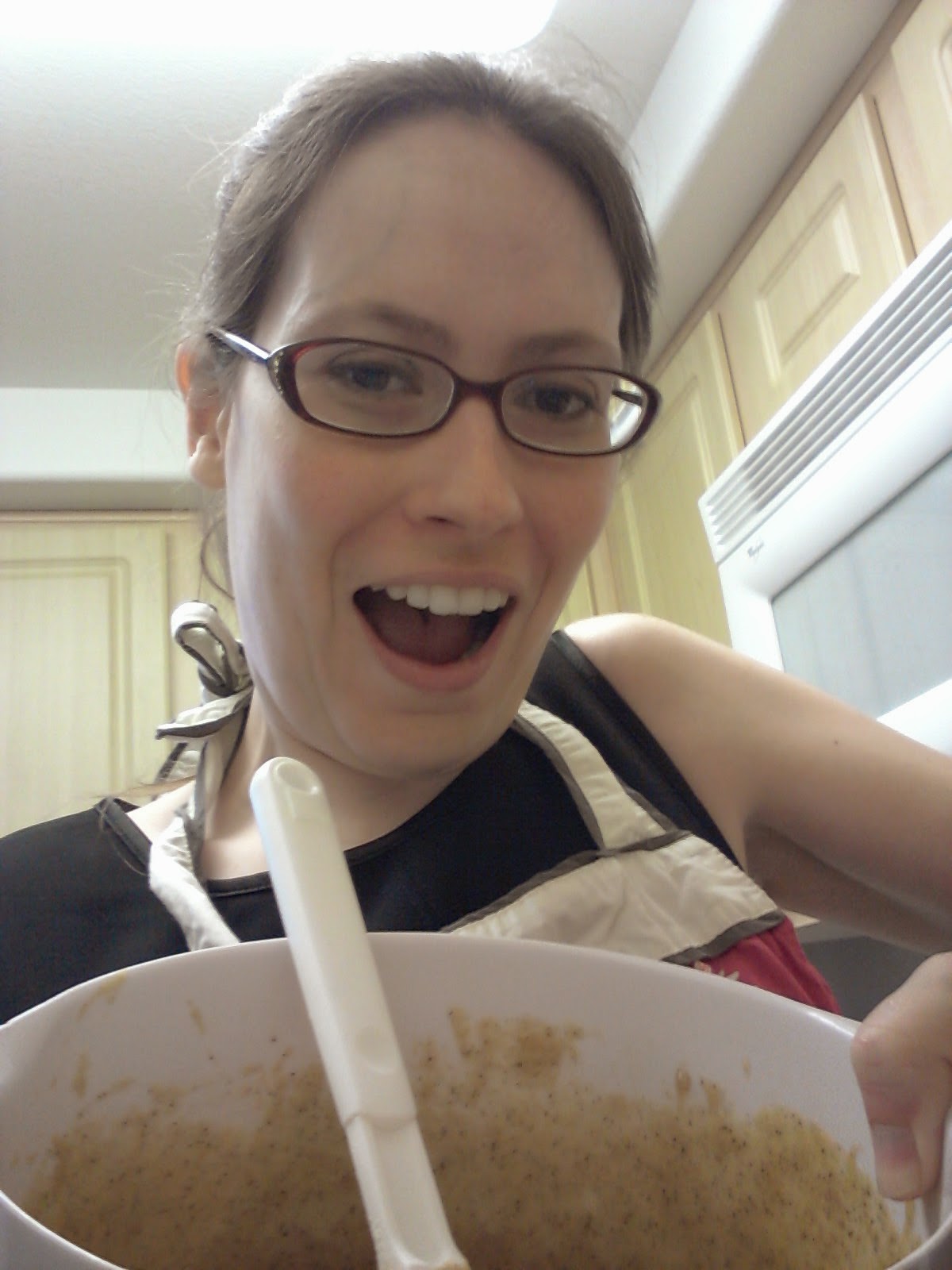
Bringing the joy! With BAKING.

Bringing the joy! With SWEET TREATS.

The idea was shiny but not without its drawbacks. For starters, to write that book properly I’d have to show a lot of the past messes in my life, and even though I know everyone has a lot of mess in their lives at one point or another, it’s still not the most comfortable proposition. Plus I know if I wrote that book the way I wanted to write it, I’d get rape threats for sure. Which, I mean, I kind of feel is inevitable, but it does have a dampening effect on my desire to pursue the project.

Also, I feel the need to point out that yes, we live in a world where female writers think about rape threat potential when planning their careers. Yup.

One of the great things about this hypothetical memoir is that it has a great redemptive arc. And I just read a blog post by Penelope Trunk telling me publishers want redemptive memoirs. (As an aside, I completely agree with her about Jeanette Wallis’s The Glass Castle. I was so disappointed when it ended. I wanted to know how her crazy childhood affected her adult life. To me, that was the interesting part, more so than the redemption. And then the book ended right when we got there!)

Anyway. Note the title of my memoir. I WAS a Manic Pixie Dream Girl. Past tense. Because I don’t really think I am one anymore. How’s that for some redemption?

Why do I think I’ve changed? Well, I’ve been meeting a lot of people for the past several months. Including a lot of guys who I’m sure I could have helped discover their joy. Or at least made myself very unhappy trying. But I’ve lost almost all my interest in doing that. (I mean, okay, not ONE HUNDRED PERCENT of my interest, but hey, no one’s perfect.)

Like, I could never date a workaholic again, and I would be completely happy with that outcome. Ecstatic, really. Workaholics are thick on the ground where I live. And they are the perfect people to help rediscover their joy and the fact there’s a world outside their offices and all that jazz. Also, I totally disagree with their life philosophies. I think they’re more likely than not to regret being workaholics later in life. I mean, look at the top five regrets of dying people. But, I mean, whatever. Maybe they won’t, and in the meantime, it is so amazingly lovely to have that not be my problem.

It is amazing how liberating it is to realize how many things are not my problem. He can’t ask me to do something with a reasonable amount of lead time? Not my problem. He doesn’t see the importance of a social life? Not my problem. He has deep existential pain? Or, you know, some kind of complicated problem? Not my problem. He doesn’t like that I don’t drink? Not my problem. He doesn’t like some detail about my past? Not my problem. He’s unhappy and lost his ability to appreciate the little things? Not my problem. He lacks a sense of wonder? Not my problem. He tends to mansplain? So not my problem. Especially if it’s anything remotely related to writing. I’m currently perfecting my “Why do you think I want to sit here and listen to this?” face. (It needs some work. I’m still way too nice.)

I know to some of you that last paragraph will sound cold. Of course I help when I can and it is appropriate to do so. But refusing to take on other people’s problems means I can take a lot better care of myself. And a lot of that stuff is, frankly, a waste of my time and energy. As it turns out, it really sucks to be a Manic Pixie Dream Girl. It’s a hell of a lot of work for very little reward.

So yes, I was a Manic Pixie Dream Girl. But now I’m just Amy, and I’m pretty happy with that.

This is a hard post for me to write.

I often don’t have much difficulty with Mother’s Day. My normal strategy is to try as much as possible to ignore it, and to spend very little time on Facebook on the actual day.

I don’t usually talk about how it can be hard. I know Mother’s Day is supposed to be a happy day, a day of appreciation and celebration, and I don’t want to take away from that. I want my friends to celebrate their moms, and to have their own motherhood celebrated. That can be a beautiful thing.

And talking about death and grief, well, it can be awkward. People don’t know what to say. I find that when the topic comes up, I’m usually spending most of my energy trying to make it easier for my conversation partner. “It happened a long time ago,” I say. Or, “Yes, it was the anniversary of my mom’s death, but I wrote about it, so that made me feel better.” Or I change the subject as quickly as possible.

I don’t know how to stop doing this. Sometimes, with people I don’t know very well, I think it is the best strategy for me. When I called a friend for support after my friend Jay died last summer, he later told me he thought I should have called someone else, which is sometimes par for the course. Not everyone has the emotional maturity to engage with these issues. But I also know that it is important to talk about the experience of grief. It is by talking about it that we normalize it, and normalizing it cuts down on isolation and shame.

I was at a dinner party the other night, and my hostess had tried out one of her mother’s chicken recipes for the first time. She joked about how she’d called her mom four times asking for advice as she cooked. I commented that it was nice her mom hadn’t minded the constant phone calls. Another friend laughed and said moms never mind constant phone calls.

And oh, this innocent comment gutted me. Because I realized this was a completely foreign experience to me. It sounds so nice, having somebody who doesn’t mind if you call over and over. Having a mom. It sounds really nice. And I don’t have that. I haven’t had that, and I’ll probably never have that.

I don’t have a mom to turn to when I need advice. I don’t have a mom who will fly out to take care of me if I need surgery or get really sick. I don’t have a mom who has been there for all of my major life events. I don’t have automatic plans for holidays. I don’t have a mom’s unconditional love to lean on when times are hard, or, you know, even when they’re pretty good.

And so this week before Mother’s Day, I’m feeling really, really sad. I can’t figure out what I want to do this weekend. What I really want to do this weekend is spend time with my mom. And I can’t. She’s not here.

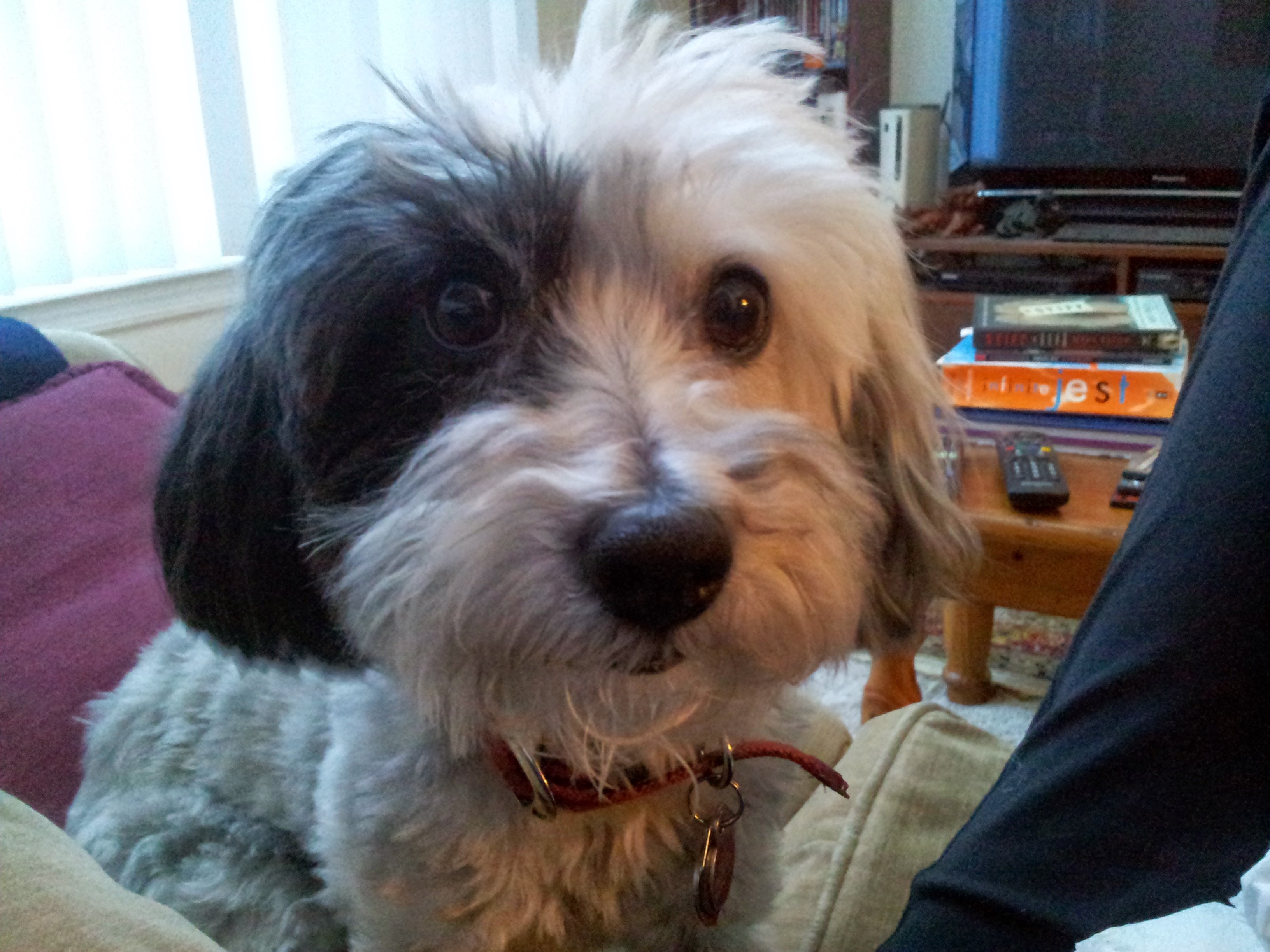
This is what Nala looks like when she is comforting me.

This is what Nala looks like when she is comforting me.

Grief is such a funny thing. So many Mother’s Days have gone by, during which I’ve barely batted an eyelash. And now suddenly, the grief is here, and I don’t really know what to do with it. I keep trying to shove it away; “It happened such a long time ago,” I tell myself. But grief doesn’t have a schedule. And I think maybe grief never goes away. Not entirely. It grows more manageable, but it doesn’t disappear.

So here it is. I really miss my mom. I miss her voice. I miss her hugs. I want to give her everything I’ve ever written and have her read it all. I want to sing for her. I want to take her to Disneyland, and I want to sit on a bench with her in New Orleans Square and watch the people go by. I want to introduce her to Nala, who I know she’d completely adore. I want to tell her that every year I hang up the Christmas stocking she made for me, and every year I read the note she left with it for me to find the first Christmas after she died.

I want her to know the Amy I’ve become.

I’m not going to get what I want. Instead I will wipe away my tears, and I will work on my novel that is about a girl traveling through the Underworld to bring her dead mom back home. Of course that’s what it’s about. And I will think about her. And I will miss her. And life will go forward, the way it always does.

And I will write about it here on the blog, because grief is nothing to be ashamed of. It is simply another reflection of love.

Last week I went to the grocery store, and on a whim, I purchased a cheese ball.

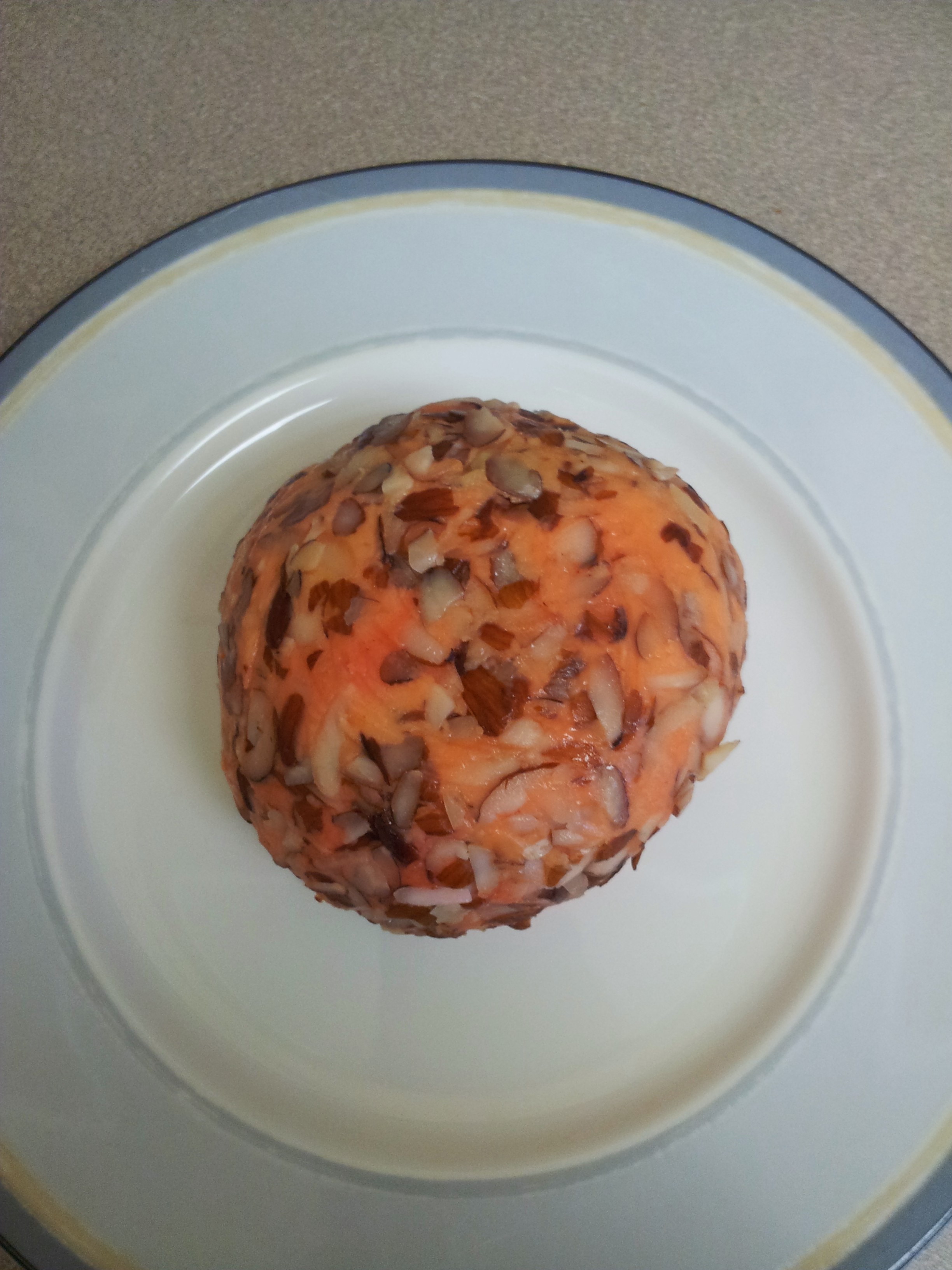
It was a gorgeous cheese ball. Port wine cheese, mottled orange and red, pleasingly symmetrical and encrusted with nuts.

I’ve never purchased a cheese ball before, and I was excited about it. I was looking forward to trying it, especially since I also got these fancy crackers at Trader Joe’s. And as I was dancing with someone that evening, I mentioned my excitement over the cheese ball. Because apparently that’s what I think of as fabulous dance conversation.

“It sounds like you really like cheese,” my partner said.

This is the cheese ball in question.

This is the cheese ball in question.

#

The week before, I had not been feeling the dancing. I’d been really sick, and even though I was better and no longer contagious, I was annoyingly weak and easily fatigued, and my center of balance felt off, which for dancing is particularly unfortunate. And then one of my partners told me THREE times while we were dancing how I’d gotten worse at dancing since the last time we’d danced. I tried to laugh it off the first two times, but by the third time I’d lost all patience (big surprise), so then I was not only tired and weak but also irritated. Not the best night. I went home early and watched Star Trek instead.

And then the next week, I took a lesson before the free dancing period, and I was completely lost for pretty much the entire hour. I was supposed to be learning both how to lead and follow all these different turns, and I’d never really led before, period, and trying to learn both sides at the same time meant I was learning nothing at all because having my focus divided meant I didn’t have enough focus for either side, plus there simply wasn’t enough repetition for me to get it down. By the end of the lesson, I felt like my brain was oozing out of my ears in goo-like fashion.

As I walked off the dance floor afterwards, I realized I had a choice. At that moment, I felt stressed and like a terrible dancer. If I encouraged that feeling, I’d be super tense while I danced, which isn’t good. I’d lose a lot of my connection with my partners, which isn’t good either. And I wouldn’t be having fun, which is definitely not good.

Or I could shake it off to the best of my ability, and believe BY FORCE OF WILL that I was going to have an amazing time dancing that night. I could think of all the other amazing times I’d had, and I could think about how much I love dancing, and I could be happy to see my friends and partners, and I could simply do my best and be okay with that.

I chose option two, and I had a fabulous evening. By getting out of my head and cranking down the perfectionism, I danced better and had a lot more fun. But I could have just as easily have chosen option one and struggled through the evening.

In the end, it came down to my own state of mind. Nothing more, nothing less.

#

Back to the cheese ball. “I’m so excited about it,” I told my partner. “I can’t wait to try it.”

“Wow,” he said. “You must really love cheese.”

“No,” I said. “I really love life.”