Feeds:
Posts
Comments

Archive for the ‘Personal Development’ Category

Last summer I lost my chosen family.

I was really upset. I spent a few days dealing with logistics and trying to finish the things I was supposed to finish. After that I had cleared my schedule to do GISHWHES. But I didn’t really do GISHWHES. Instead I sat around in my living room and stared at stuff. Oh, and I broke up with someone. Then I got a not-very-nice email while shopping for luggage at Marshall’s, and I felt like I might have a panic attack so I went home without buying anything. And then I went to the UK.

When I got back from the UK, I was numb. All my emotions felt muted. Even when I was spending time with people I cared about, I felt like there was this new and unfathomable distance between us. I went to parties and stuff because there were parties and stuff on my calendar. I made plans to hang out with people because I needed new friends and I needed the friends I still had, and friendship doesn’t just spontaneously happen. But I felt like I was going through the motions and waiting for time to pass.

20150130_171056

I was numb for months.

MONTHS.

It felt like years.

I wondered if this was just the way I was going to be from now on.

I wondered how I could seem the same on the outside when I felt completely alien on the inside.

I wondered if I’d ever be able to trust my own judgment.

And then the numbness began to slowly fade. That took awhile too.

And now it’s mostly gone, except when it isn’t, and without the numbness to protect me I’m crying in bathrooms, and I understand why I had to be numb for that time. Because this has been really hard.

At some point a few years ago I thought, well, I couldn’t choose my given family, and that was unfortunate, but now I could have a chosen family of friends so everything was going to be fine.

But everything was NOT fine. Things fell apart. Physical boundaries were violated, emotional boundaries were violated, my words were dropping into a void, and I realized my life hadn’t changed as much as I had hoped. I still didn’t matter the way I wanted to matter.

In my darkest moments this fall I felt I had failed completely and utterly. And I told myself sternly that even if I had, I was not allowed to give up.

I remember writing blasé blog posts in the early years of this blog about how I had been a people pleaser but I was going to change, and how much healthier it would be to not be a people pleaser anymore. What I didn’t know back then is that being a people pleaser is a really effective defense mechanism. And without it? Well, without it, I had to face the painful truth.

Without it, I couldn’t always turn everything back on myself. Without it, I couldn’t keep making excuses for other people’s behavior. Without it, I started setting reasonable boundaries and then standing back to watch the fireworks, instead of not doing it so I could tell myself that if I just did it, everything would be fine. I got to see that sometimes people just do and say shitty things, and there is nothing I can do about it except communicate as clearly as possible, take care of myself, and try to be kind but firm. Especially firm.

I’ve felt like I’ve been hip-deep in bullshit for months. And yet at the same time, I realize that until now, I’ve been nose-deep and barely able to breathe. Changing this has perhaps been the hardest thing I’ve done.

I haven’t written directly about what happened last summer before now because I was worried about what you would think. I was worried about what everyone would think. I was worried that somehow by talking about it, I’d make it even worse. But lately, as I am able to see what’s going on around me more clearly, I don’t care as much as I thought I did. And if I have to choose between caring what you think and writing about what is true, I’ll choose writing about what is true. That’s who I am. That’s what matters to me.

And lately, I have come to realize that maybe, just maybe, I have another chosen family. They don’t look the way I thought they would. They’re scattered all over the place, and they’re not all friends with each other, and they’re very different from one another too. They are the people I trust, or am coming to trust. They are the people who listen. They are the people who respond to boundary setting with respect and patience. They are the people who remind me in a hundred small ways I am not alone.

Last summer I lost my chosen family. But coming out of the numbness now, I see that I am closer to finding myself.

Read Full Post »

Once upon a time there was a whisper, a wish really, running in the back of my head: “Surely there must be something better than this?” I was like a bird captured in a trap, struggling until my body was breaking and I was completely exhausted. And I was still in the freaking trap.

Once upon a time I simply couldn’t continue, and the whisper became a declaration: “I will believe there is something better than this even though that doesn’t even seem possible.” I went all in. I walked away for the first time, and I began to dismantle my life, piece by painstaking piece.

Things got worse.

And worse.

The forest, the cave, whatever you want to call it, it was so dark. And the journey was so slow. And I was afraid, and I doubted.

Photo Credit: eflon via Compfight cc

Photo Credit: eflon via Compfight cc

One of my greatest fears over the last several years has been that it would all be for nothing. That I wouldn’t be able to change myself or my life. That there really wasn’t anything better. That all of the time and effort and my suffering and other people’s suffering, that all the sacrifices I was making, would be fruitless. That my lifelong belief that more is possible for us than we realize would be proven wrong. That in my struggles, I’d end up making everything worse, and then I’d have to live with that.

I was afraid, and I clung onto my belief that I didn’t even really believe in like it was a lifeline. There must be something better than this. And I can do this. I will do this.

I won’t give up, I’ll keep going forward no matter what.

When I think back on 2014 in the future, I will remember it as a difficult year, yes, but I will also remember it as the year I left that cave.

Last month, I wrote about being stuck, and I said: “I’m not waiting for doom to fall down onto my head like an anvil.” I looked at that sentence after I wrote it, and I thought, “Oh shit. Oh shit. That is actually true. I don’t feel like that at all.”

What has changed? I have learned how to prioritize taking care of myself, and as a result, I no longer feel powerless. I don’t take on other people’s problems. When a person repeatedly treats me poorly, I don’t deal with them anymore, and honestly, I don’t care who it is. Because I deserve better than that, and I can have better than that. I work hard to surround myself with people who not only care about me but who are actively good for me. I come home to my lovely apartment with my sweet little dog and my piano and my books and my bathtub and my warm blankets, and for the first time in my life, I feel safe.

So now I know. There was something better the whole time, and I know because I’m living in it.

I’m so relieved. I’m so grateful.

Read Full Post »

Every December I write a bit on the blog about themes that have developed over the last year, or about what I’ve learned, or other reflective stuff like that. And I think one of the main things I’ve been learning about and practicing this year is developing filters and acting upon them.

Ferrett talks about filters in his recent post “On Eternal Vigilance,” and reading it helped me cement my ideas on the subject. I also recently read a post on Wait But Why about 10 Types of Odd Friendships that is also relevant. It wasn’t the list that made up the bulk of the post that I found interesting though, but rather one of the graphics towards the beginning: The Life Mountain Graphic.

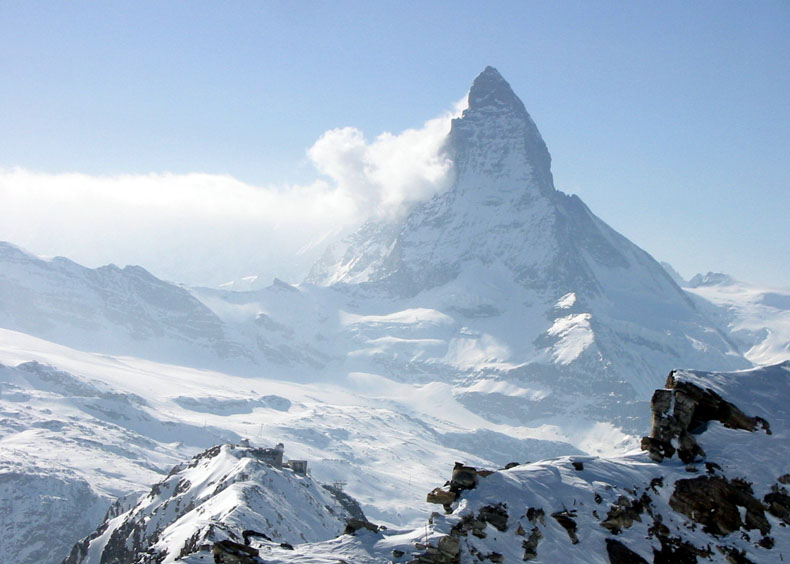
The Matterhorn is one of my favorite mountains, so I'm totally going to model my Life Mountain from it. Photo Credit: AlphaTangoBravo / Adam Baker via Compfight cc

The Matterhorn is one of my favorite mountains, so I’m totally going to model my Life Mountain from it. Photo Credit: AlphaTangoBravo / Adam Baker via Compfight cc

I’ve been trying to develop a filter that has both positive and negative components. The positive part of the filter is all about consciously noticing interactions with other people that feed me in a good way. For me, some of the things I’ve set my filter to pick up are the ability to listen well, to be supportive and nonjudgmental, to have an easy give-and-take, and to share wisdom. I look very closely at with whom I feel safe (physically and also emotionally) and with whom I feel I can be honest. I also look for a willingness to engage and take the time necessary to grow or maintain any kind of relationship.

The negative part of the filter is looking for incompatibilities and unhealthy behavior and dynamics. In dating these are called red flags, but I think it’s important to look for these in any type of relationship. Beyond basic compatibility stuff, here are some of the questions I ask:

Are my emotions being taken seriously or being easily dismissed? Do I feel like it’s okay for me to say no? Are my boundaries being respected? If someone accidentally tramples on one of my boundaries, how do they respond when I tell them and does their behavior change once they are aware? Does the person try to simply sweep problems under the rug and pretend they’re not there? How much emotional energy is the interaction taking? Am I being treated with respect (including respect for my time)? Am I receiving negative messages from this person that I have to spend a lot of time combatting? How hard do I have to work to keep this relationship functioning, and does the work seem more or less balanced?

I can use the data collected by this filter, both positive and negative, to determine who I’d maybe like to have move up my mountain and who should probably move down my mountain. This sounds simple, but in practice it can be a very delicate dance that changes over time and depends not only on the filter but a lot of outside factors.

The only way the filter works is if I act on the knowledge it has given me; namely, if I am able and willing to set boundaries and back them up. Which brings me to the second part of the lesson I’ve learned this year: I have to be willing to walk away.

Often walking away isn’t necessary. Sometimes issues can be worked out through communication (and with time). Sometimes I’ll set a boundary and the person will move a bit down my mountain and then everything will stabilize. It’s often not a big deal, as people are constantly moving around the mountain for all kinds of different reasons. But sometimes the filter has picked up enough red flags, and at a certain point there are only two options: remain in a deeply unhealthy personal interaction or walk away.

Actually, I suppose what I’ve really learned this year is not so much the necessity of being willing to walk away as the changed reality: That I have in fact become a person who will walk away. And I won’t feel particularly guilty about it. Not because I like it, but because I’ve recognized how essential it is. Not because I don’t value loyalty, but because I’ve recognized that loyalty only works when it’s also being returned.

Not because I don’t care about people, but because I’ve learned to care about myself too.

This blog post wouldn’t be complete without mentioning my filter has helped me find and maintain some truly amazing friendships this year: some brand new, some who have moved up the mountain, and some who have been close to the top for a while now. One of the great joys of my life is the people (and a certain little dog) with whom I get to share it.

Read Full Post »

I want to write about solitude today, and finding myself uncertain as to how to begin, I looked up some famous quotations on solitude.

From these, I ascertained that people are very divided about the idea of solitude. Some people love solitude, finding it absolutely essential to their well-being, while other people wouldn’t choose solitude if they had another choice. Solitude is simultaneously viewed as exalting and painful, beautiful and tragic.

I found a reference to Rainer Maria Rilke’s Letters to a Young Poet, and I located my copy, given to me when I was a young artist myself, and started flipping through it, and now I want to read the whole thing again. He references solitude several times in its pages. I particularly like this passage:

“Therefore, dear Sir, love your solitude and try to sing out with the pain it causes you. For those who are near you are far away, you write, and this shows that the space around you is beginning to grow vast…be happy about your growth, in which of course you can’t take anyone with you.”

Photo Credit: h.koppdelaney via Compfight cc

Photo Credit: h.koppdelaney via Compfight cc

There is this common idea that solitude is helpful and perhaps even necessary for artists to develop their own voices (and visions) and do the work required of them. Certainly writers have to sit and be focused inside their own heads while writing, even if they are physically surrounded by people. For some other types of artists, solitude is perhaps less critical.

We each have our own capacity for solitude, and that capacity can change over time and in different circumstances. It can be deliberately expanded (meditation retreats, anyone?) and it can be deliberately contracted. Within limits, of course.

I have been craving more solitude recently. I hit the point far more quickly than usual when I must take time for myself. It’s not simply laziness or fatigue, although I am tired; it’s a strong need for the space to introspect and just be. There is so much going on inside of my head right now, and it’s not that it’s so very private in nature but rather that it feels like the kind of thing I need to sort out for myself, with the occasional helping hand along the way.

Perhaps solitude is important not just for creative work but also for personal change. It’s almost as if I need some time to get to know myself again.

Read Full Post »

I’m getting ready to go on vacation, and it hasn’t been the most uplifting time around here, and then just as I sat to write this, the news of Robin Williams’s suicide broke.

I feel like we need something inspiring on the blog today, something to counterbalance the mud pit of suck.

#

I haven’t been very inspired lately. Mostly I’ve been bone-weary, and that’s when the doubts began to pop up and frolic in my landscape of discouragement. They didn’t help my mood any. I felt pretty horrible until I remembered something.

Sometimes things get worse before they get better.

I don’t know if you all are going to find that very inspiring, but it helped me a lot last week, so it’s what I’ve got for you.

Some of you will remember that I had my birthday epiphany about a month and a half ago. I wasn’t sure at the time what was going to happen with it, or if it would even stick.

Well, it stuck.

And it has been both a difficult and an amazing thing. In the long term, I’m pretty sure it will be mostly amazing. But in the short term, it has been mostly difficult. At the threat of such a large change in perspective, all my deepest fears have been coming out to play and fight for their continued existence, and they are as big and as scary as they’ve ever been. Meanwhile, I am already seeing myself and my life differently, and making different choices as a result, but I haven’t yet developed the emotional muscle and skills to deal with these choices with anything resembling ease.

So yes. In some ways things have gotten worse. But I can see how they are going to be better. I can see the people-pleasing behavior beginning to recede as I make real progress in setting firm boundaries. I can hear the desperation in the loudness of my self-critical thoughts. I can appreciate the generous and heartfelt support of the friends I’ve reached out to in the last few weeks. Some of them are newer friends or don’t know me as well, and it certainly felt like they could have easily dismissed my overtures and requests for support. But they didn’t. They were there for me, and even while I was in the middle of disappointing and discouraging circumstances, these people helped rebuild my hope in what my future could look like.

So if I can leave you with one more inspiring thought, it is this: You matter. Your choices matter. You reaching out to others and being there for others when they reach out, that matters. Your kindness matters.

It has certainly mattered to me.

Photo Credit: Thorsten Becker via Compfight cc

Photo Credit: Thorsten Becker via Compfight cc

Read Full Post »

Paul Weimer recently had this to say on Twitter: “Change doesn’t happen by meekly accepting things as they are. That’s a recipe for the continuation of the bullshit.”

How’s that for a truth bomb?

Change does not come in the wake of being nice. Change does not come from silence. Change does not come from a place of making everyone comfortable. Change is not nice, silent, or comfortable.

No, change is a fight against the inexorable pull of the status quo, against the weight of the way things have always been (even if they haven’t in fact always been this way), against apathy and ennui and not wanting to be bothered. Change calls thoughts and ideas, sometimes unexamined, often long-held, into question. Change awakens insecurities that we try to keep under the surface.

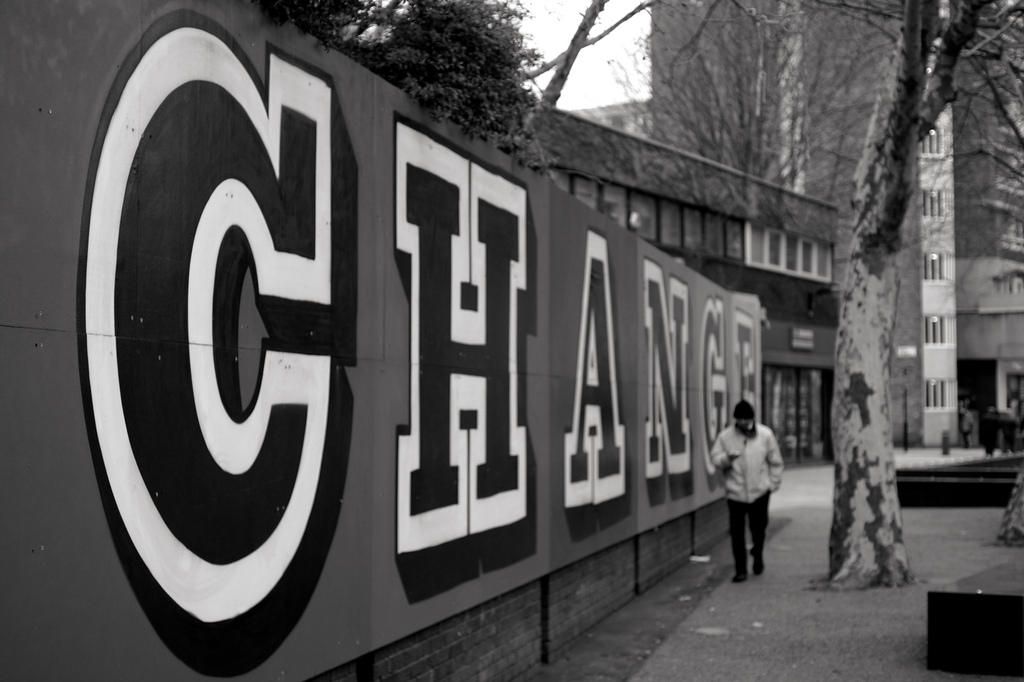
Photo Credit: Nanagyei via Compfight cc

Photo Credit: Nanagyei via Compfight cc

Change often comes with a certain amount of anger. Anger, because the process of standing against the tide is exhausting and anger provides energy. Anger, because change takes a long time and repeatedly standing up to ignorance and entitlement takes a certain toll. Anger, because sometimes our world is singularly lacking in empathy, and because listening is a hard-won skill that many people have not developed.

Change comes at a high personal cost. Change comes from speaking up, and speaking up comes with consequences: derision, derailment, defensiveness, death threats, rape threats, a loss of personal safety and security. Change involves delving into painful truths. Sometimes those painful truths show us things about ourselves and our society that we’d rather not see.

But change DOES come. When life looks particularly dark, I find this truth comforting: everything changes. Today ends, and tomorrow begins. The situation right now will not be the situation forever. Within a generation, the ideas of a society can shift. And in another generation, they can shift some more.

And I can educate myself and strive to be someone more than who I am today.

I can change too.

Read Full Post »

A few months ago, Robert Jackson Bennett, Ferrett Steinmetz, and I wrote a series of blog posts that Ferrett called a “death-triptych.” I read Robert’s, then I wrote my own, but I didn’t read Ferrett’s. Well, I read the first sentence, and then I stopped because I knew it would hurt me to read it. So it’s been sitting in an open tab ever since, waiting for me to be ready.

Well, a few days ago, I was finally ready.

And this is the part of that post I want to talk about. Ferrett says:

“And I think: Gini is not a guarantee.  There is literally nothing in my life that is a guarantee now.  And I think: You were foolish to think that it ever was.”

This thought, that nothing is a guarantee, is not about death per say. It’s about life, and it’s about the human condition. It’s about how we experience life after we’ve been through trauma.

Or, as Myke Cole says:

“PTSD is what happens when all that is stripped away. It is the curtain pulled back, the deep and thematic realization that life is fungible, that death is capricious and sudden. That anyone’s life can be snuffed out or worse, ruined, in the space of a few seconds. It is the shaking realization that love cannot protect you, and even worse, that you cannot protect those you love.”

So the question becomes how do you go on living, once you have this knowledge? Once you know how fragile everything in your life is? Once you know how quickly you can lose what you value most? Once you know that sometimes nothing you can do will be enough?

My answer is that it is really, really hard. Sometimes you try to construct meaning into your life, like Myke talks about. Sometimes you question why you’re doing anything at all even while you continue to go through the motions, like Ferrett talks about. Sometimes you bend over backwards to create something, anything, that might be different, that might be a sure thing, that allows you to enfold yourself in the comforting fiction that you have some control over the vagaries of life.

And then there's always ice cream, which makes many things at least slightly better.

And then there’s always ice cream, which makes many things at least slightly better.

Sometimes you live your life with an intensity that other people cannot understand. Your emotions are heightened because in some way, you’ve entered into the cliché of living life like today is your last day: like right now is the last time you’ll have with a loved one, like every decision could have a lasting and significant impact, like any small sign could be your only warning of impending doom.

Instead of fear of the unknown, you have fear because you’re intimately aware of just how bad things can get.

And sometimes you become very adept at finding a nice, comforting rhythm with which to end essays like this, like the kind that Ferrett wished he could find but couldn’t. And the thing is, those uplifting positive statements are true. I believe in them with all my heart. I believe in making the most of the time you have, and I believe in keeping the heart as open as you can stand, and I believe that people can be good and noble and beautiful. I even believe that people can change. And I believe that making a difference in somebody’s life–even a small one–really matters.

But the truth is complex. And just because I can see the meaning, the stuff that makes life worthwhile, the positive outlook, that doesn’t mean I can’t also see the dark monster skulking under the bed. Life is freaking terrifying. It sometimes leaves us with too little to hang onto.

In the face of this reality, all I can do is put one foot after another and try my best to be the person I want to be, because of the rich tapestry of my life or in spite of it. It’s not much, but it’s what I’ve got.

(Oh, look. I found a nice, comforting rhythm with which to end this essay too. What a shock.)


Read Full Post »

I thought I’d write today about self care, since I’m in the middle of a move, and moving is on that list of highly stressful life stuff, which means self care is something that I’ve been making extra effort to pay attention to right now. And it’s actually working; my stress levels are on the high side but not crazy high, and I have been having cheerful and happy times in spite of the move, and without that weird frantic edge that signals the presence of overwhelm.

So here are some self care things I’ve been doing:

1. I talk about the move. Whenever I want (within reason). This is huge because it means I’m getting emotional support during a high stress time. I’m getting to vent, I’m getting feedback about what’s going on, I’m getting comfort when I need comfort and celebratory time to help me remain positive about all the good things this move is going to bring. And it’s such a relief to have people know what’s going on with me.

2. I ask for help. This past weekend, my friends came over and helped me pack my entire place. In mere hours they completed a job that would have taken me days and days and reduced me to an incoherent, exhausted, and injured person. One of my best friends came with me to see the place I ultimately decided to rent to give me a second opinion. Other friends have been giving me information about the neighborhood and reaching out to give me doses of moral support. Feeling so supported and cared for definitely reduces the stress I’m feeling.

3. I fight the impulse to be frugal. When I know something is going to be expensive (like, say, moving), my first impulse is to do whatever it takes to save as much money as possible. This attitude puts a lot of additional stress on me, to put it mildly. And it’s so much easier to be frugal when you’re not in the middle of a mini-crisis. So I’ve been allowing myself to hire the movers who are slightly pricier than I feel completely happy with, and to pay for extra body work so I don’t fall apart physically, and to spend money to make problems less huge.

4. I make sure I have time for classic self care. Did I have a Gilmore Girls marathon, complete with frozen pizza and strange pie, a few nights ago? You bet I did, and I appreciated the energizing alone time. I’ve also been prioritizing sleep, walks and snuggle time with Nala, and hot tub time.

One of the pillars of my self care routine.

One of the pillars of my self care routine.

5. I take advantage of focus but rein in bigger ambitions. Things are going so well, I think to myself, perhaps I could up my daily word count, or query more agents, or do some more semi-stressful social things. And then I realize that no, instead I can appreciate that things are going well and keep the pace I set myself, while resisting the temptation to push myself too hard. I don’t have to do all the things right now. I can focus on my five top priorities and let the rest go. (For those curious, those are moving, novel, Nala, personal growth/care, and friends.)

6. I give myself a reward. When the move is completely over, I get to go to Seattle for a week. Thanks to frequent flyer miles and wonderful friends, I have an amazing trip to look forward to. So whenever I think, “Ugh, I hate moving,” I can then counter with, “But then I’m going to Seattle!” And then I can add on, “Plus my friends are fabulous! And I love the novel I’m writing!” Which makes it really hard to spiral into serious negativity. So maybe this one isn’t so much about giving myself a reward and more about feeling gratitude.

Of course, none of this would be as effective without this last one:

7. I clean up my life in the hopes that one crisis/setback won’t set off a chain reaction. I spend time with people who are good to me. I set and hold boundaries. I cultivate good things so it is easy to find gratitude.

Here’s to leveling up with my self care.


Read Full Post »

I am not in a good mood right now.

I have spent the last few weeks dealing with my landlord and his real estate agent, both of whom act like they’re doing me huge favors by, say, not illegally breaking my lease or being willing to pay for professional cleaners to clean their property before their open house event. No acknowledgment is being made of the fact that I am the person in this situation who is hemorrhaging money and time and stress from the inconvenience.

Where is our compassion?

I am supposed to be appalled at how non-inclusive the science fiction community is becoming because of the recent hoop-la about this year’s Hugo host. Did things get out of hand? Yes. And ultimately both sides of this drama suffered. How terrible it must be to have to worry about having your win of a major writing award punctuated with a joke about your weight or gender. Can we stop for a moment and imagine what that would feel like? (Kameron Hurley has more to say about this, and it’s worth reading.) And how unfortunate that the con committee didn’t prepare Jonathan Ross for the current climate of SF&F and take more care in making and presenting their choice. Meanwhile, how ironic that this is being held up as an example of science fiction not being inclusive, when the circumstances from which this situation arose exist because of a backlash against science fiction not being inclusive.

Where is our compassion?

I recently had a conversation with a female writer, who also happens to be a mother, about how she was told that since she is a mother, she will never be as good a writer as either someone with no kids OR a man who is a father. How painful a comment that is, to tell a serious writer, “Nope, sorry, since you have reproduced, you’ll never live up to the rest of us. Oh, and by the way, if you were a man, this wouldn’t apply.” Painful, unnecessary, and untrue.

Where is our compassion?

Photo Credit: jorgempf via Compfight cc

Now that I try to be very mindful about setting boundaries and standing up for myself (go, Backbone Project, go), I notice it all the time, this lack of compassion. Some of it is simple thoughtlessness, and some of it is deeper and more troubling. Some of it is people who honestly feel if they can get away with taking advantage of somebody, then they should do it. I have been told there are entire cultures based on this principle.

There are two obvious choices when confronted by this problem:

Choice 1: Shut up, sit down, pretend everything is fine, blame everything on yourself, learn to believe your emotions aren’t valid or important, become used to being treated like there’s something wrong with you for having perfectly normal emotional responses to being treated badly, take what is given and be thankful for even that much, lose your voice if you ever had one to begin with, or else never learn to speak in the first place, let people trod all over you as you sink deeper and deeper into the muck and learn to value yourself as little as you’re being valued. In short, be a victim.

Choice 2: Stand up and demand respect. Value yourself. Protect yourself. Set boundaries and don’t allow yourself to be talked or shamed out of them. Be compassionate, but do not allow your compassion to be used against you. Trust people, but only when the trust is deserved. Love people, but do not try to save them because they’ll be perfectly happy to pull you down with them. Give yourself the compassion other people may not be willing or able to give you.

With the landlord situation, I picked Choice 2, and I am now going to be compensated for my time and inconvenience. This would never have been the result if I hadn’t spoken up. Loudly. More than once. And I’m prepared to do it again.

Where is our compassion?

It starts with ourselves.

Read Full Post »

I recently took a couple of online personality tests (the Myers-Briggs and the IPIP-NEO), and my results have changed. I’m now coming out fairly firmly on the extroverted side of things instead of being almost exactly in the middle.

I want to leave aside, for now, the argument that introversion is not a personality trait. I also don’t want to delve deeply into the sometimes ignorant stereotypes and oversimplification that goes along with discussions of introversion and extraversion.

I have not been trying to change into more of an extrovert, but I think me doing so has been a side effect of another change I have been trying to make: namely, to develop a backbone, tone down the people pleasing, and learn to set boundaries.

As it turns out, it is exhausting to be around people when you are a people pleaser. Full stop. It doesn’t matter if you are an introvert or an extrovert. It doesn’t matter if you know how to make conversation or can be a good listener or are a generally pleasant person to be around.

It takes huge amounts of energy to be around people when you aren’t allowed to say no, don’t value your own opinions and feelings and desires, and won’t stand up for yourself. Because the people around you might ask you to do something that you can’t possibly or don’t want to do for them. Or they might (inadvertently or not) treat you without respect. Or they might disagree about how something should happen, and then there will be conflict, which is anathema to the people pleaser. Or they might do something that bothers you but to which you do not feel able to respond.

At some point, in order to protect yourself from this huge expenditure of emotional energy, you might begin to build a wall around yourself. You might find yourself wishing to be alone because being alone is the only time when you can truly relax and be peaceful. You might keep other people at arms’ length to minimize the requests and the conflicts and the fatigue. You might need a lot of time to recharge after socializing.

You might appear to be an introvert.

But as it turns out, with proper implementation of boundaries, there are possibilities! You can say no. You can set limits on the behavior you’re willing to accept. You can stand up for your opinions. You can have opinions in the first place. You can object. You can have emotions. You can leave if you’re not having a good time.

You can be a better friend because you no longer need to demand perfection from yourself or from other people. You don’t need perfection when you’re allowed to communicate and take care of yourself.

And at some point, being around people just doesn’t take up as much energy as it used to.

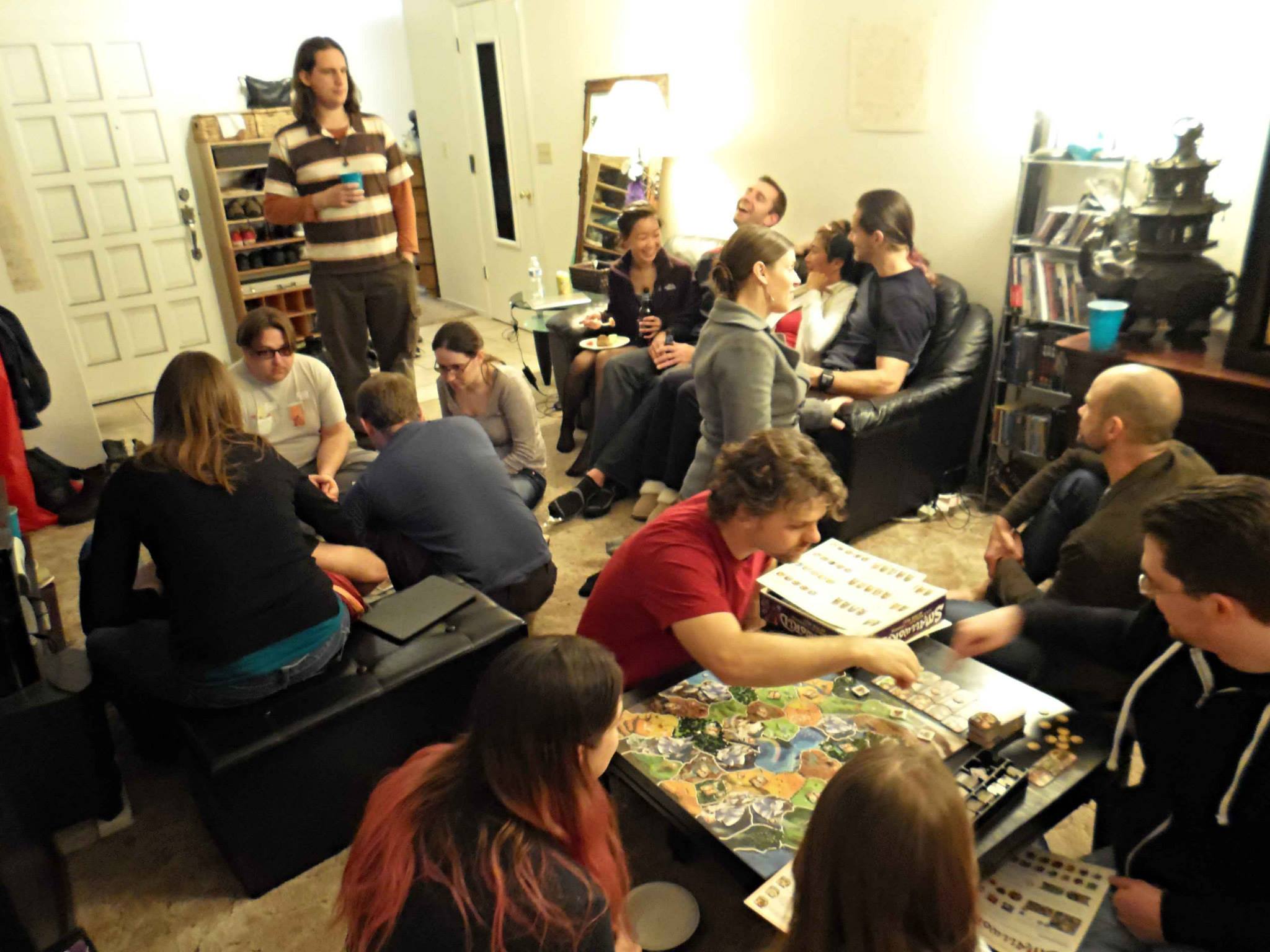
1622306_10152025564418821_1952270063_o

Where’s Amy? Photo by Yvette Ono, photographer extraordinaire.

Let me be clear. I don’t think all or even most introverts are people pleasers, and that this is why they are introverts. I put no value judgment on how much time people like to spend with other people or how much alone time people want. But I do think that being a people pleaser can mask or change parts of the personality. In my own case, being a people pleaser encouraged me to become more introverted. But as I have been focusing on becoming less of a people pleaser, I’ve also been changing my social behavior and my attitude towards it.

I like seeing markers of progress, even unexpected ones. And I like feeling more fully myself.

Read Full Post »

« Newer Posts - Older Posts »