Feeds:
Posts
Comments

Archive for the ‘Life’ Category

All people are the same, and all people are different.

I think sometimes we tend to get into trouble when we forget one (or both) of these statements. Holding both of these ideas in mind at the same time definitely exercises our ability to doublethink, but they are not as mutually exclusive as they might first sound.

Photo by Leo Reynolds

All people are the same.

We are born, we grow older, we die. We get hungry, tired, hot and cold. We feel pain, both physical and emotional.

We want. We want to be loved, we want to obtain safety. We want to stop feeling scared and uncomfortable. We want meaning, whether that be through myth, religion, stories, or science. (Or all of the above.) Some of us want stuff, some of us want intangibles, but most of us want something. And what we think we want and what we actually want is only sometimes the same.

All people are different.

We come from different backgrounds, geographical locations, religious beliefs. We have different bodies, different skin colors, different hair, and different health problems. We have different eccentricities, idiosyncracies, passions, likes and dislikes, loves and hates. We’re skilled and unskilled at different things. Our brains don’t all work exactly the same way either.

We have different memories, even of the same event. We have different ways of communicating. We have different opinions, different eating habits, different ways of conducting relationships. We have different needs and different desires and different ways of expressing ourselves. We have different tastes in style and pets and child-rearing and financial management and music and transportation.

We have different stories, different baggage, and different wounds. All of which lead to different life choices, some of which work for us and some of which don’t.

We are simultaneously the same and different.

When we forget we are the same, we may feel alienated or isolated. We may turn another person or group of people into the Other. We may think we’re better than everyone else, or that we’re not worth the air we’re breathing.

When we forget we are different, we may impose our own life choices on other people. We may become visibly judgmental. We may make inaccurate assumptions and stifle other people’s voices. We may forget there are other points of view.

There is a universality to the human experience, but the details are always different–sometimes very different and sometimes only a little different. We try to understand each other with mixed success. And we forget the following important truth.

You are not me. But we are both human together.


Read Full Post »

We don’t always live in a way that’s consistent with the things we know to be true.

I wrote this sentence on Monday when I was writing Tuesday’s blog post about making yourself a priority. It was the best sentence I wrote that day, but it didn’t fit the post, so I set it aside to use today instead. Take a minute and think about it.

We don’t always live in a way that’s consistent with the things we know to be true.

There are all kinds of reasons for this, of course. Maybe we’re being socially pressured to conform or live in a certain way. Maybe the truth is too painful to deal with. Maybe the truth calls into question our core beliefs, values, and what we hold dear. Maybe it has become so obscured we’re not even sure what it is. Maybe we’ve decided to bury the truth because it seemed necessary or because we were trying to be kind or because that was the only way we could see to move forward.

Life is messy, and sometimes truth and reality become misaligned.

I offer no judgments here. We’ve all done this, we’ll all probably do it again, and perhaps we’re doing it right now. We do it because we receive some kind of value in return. Something that we might really need.

But such a disconnect can also become malignant. It can worm its way inside of you, insatiable and bold, and it can hollow you out into an echoing emptiness. It can silence your voice. It can dull your vision. It can leave you in a dizzying state of confusion.

There is power to be found in the place where truth and reality intersect. The kind of power that creatives tap into to create the art that grabs you by the shoulders, kicks you in the gut, and never lets go. The kind of power for you as an individual to use to create a life story filled with meaning. It is not always a comfortable place, this intersection, but it is healing and challenging and ultimately uplifting.

This meeting place, where you live your truth, is where you can be the most authentic you. That you may not always be perfect or nice or happy or popular or responsible.

But that you is so blindingly beautiful all the same.

Read Full Post »

I just got back from L.A. and the annual SCBWI summer writing conference. I got to spend a lot of time with some truly incredible human beings, I got to hear Matthew Kirby be intelligent (if you ever have the opportunity to hear him talk, go!), I got to be inspired and fired up and reminded of a critical component of my own identity.

But I’m going to talk about something that was said at the conference that I disagree with. One of the keynotes given was “The Power of Quiet,” presented by Deborah Underwood. It was a good talk about, among other things, creativity, recent neuroscience research, the usefulness of daydreaming, and the importance of allowing for quiet time in our lives. But… Towards the end, Ms. Underwood basically said (and I’m paraphrasing here) that we don’t owe it to ourselves to make time for quiet, but rather that we owe it to the children who will read our books.

[Insert appropriate noise of pain and frustration here.]

Then today I was linked to an article by Amanda Craig in which she says, “Yet putting yourself last is one of the best things that can happen to a writer.” (This article, by the way, is a great way of inducing rage in yourself as it is one of the more misogynistic and offensive pieces of writing I’ve seen. Happily the commenters seem to agree with me, which does help prop up my hope for humanity.)

Both of these examples reference writers in particular, but I see this idea of selflessness, self sacrifice, and the deprioritization of self care all over the place. Our society propagates it, and while it is a popular idea, it can also be quite harmful. It is tempting to link it to our society’s issues with gender and the role of the female as the nurturing caregiver who puts everyone in front of herself, but actually I believe it’s a universal message that simply sometimes differs in presentation depending on gender.

This is not an idea I can support. Yes, it is good to be kind and treat each other well. It is good to help others. It is good to fulfill your responsibilities. Sometimes you have to compromise or put other people’s needs ahead of your own, particularly if you have children. Sometimes you have to juggle priorities and put important personal ones on the back burner for a while. Life happens.

But having needs is not only okay, it’s human. We all have needs. It is not necessary to put ourselves last in order to be virtuous or good writers or good family members or good citizens. It is not necessary to give ourselves permission to do something good for ourselves (and in this example, good for our careers as well) only because it might help other people down the line. It is not necessary to value ourselves so little. It’s as if we’re afraid that by giving ourselves permission to take care of ourselves, the ugly Selfish Monster will burst out of our foreheads and wreak havoc on the world.

Well, guess what? It takes a lot more for the Selfish Monster to show itself.

Putting yourself last is NOT the best thing that can happen to a writer. It keeps you from writing. It keeps you from feeding your creativity and inspiration. It keeps you weighed down on the floor instead of being able to fly. It encourages you to make poor business decisions. It keeps you from taking care of yourself, which means that stress and bad health are going to take their tolls…both on you and–shocking, I know–on your writing.

Give yourself permission to fly.

Putting yourself last is not the best thing that can happen to ANYONE. Sometimes it happens. But think about it. Putting yourself last literally means you’re putting the needs of every person you know, and society at large, and probably also random groups of strangers, in front of your own. All the time. How long is it possible to survive this way? Why do we valorize behavior that leads to unhealthy perfectionism, people pleasing behavior, and nervous breakdowns? How can you be the best possible version of you, which is on its own a huge service to the world, if you’re treating yourself so badly?

Someday I hope I’ll have the opportunity to give my own speech on this subject. But in the meantime, take care of yourselves. Cherish yourselves. Respect yourselves. Not just because you’re doing worthwhile, noble work (although that is awesome), but because you allow yourself, your life, and your experiences to have their own inherent and deeply personal value.

Please believe you’re worth it.

Read Full Post »

Dear Library,

I can’t remember the first time I stepped through your doors. In fact, my first time probably involved being carried, too young to walk. I didn’t realize then that I was visiting one of my lifetime homes.

What I do remember is visiting you without fail every other Saturday afternoon. Library Saturday, one of the high points of the week. I remember exploring the high stacks of the children’s section, what we might call Middle Grade today. My mom would linger by the new releases section, trying to pick out titles she thought I’d like, while I flung myself into the great sea of books.

Maud Hart Lovelace’s Betsy and Tacy books, Donald J. Sobol’s Encyclopedia Brown books, Frank Baum’s Wizard of Oz books. I checked out the first two Lord of the Rings books but not the third, and then nearly died waiting for the next Saturday to get the third…but it was too late, the magic was lost, and I never finished. The Mary Poppins books, getting T.B. White and T.H. White mixed up, and then I discovered E. Nesbit and the Mrs. Piggle-Wiggle books and Zilpha Keatley Snyder (oh, Below the Root).

I unearthed Beauty by Robin McKinley from your shelves, and it became my first long-lasting favorite book. I found the Pierces, Tamora Pierce and Meredith Ann Pierce, and devoured them. And when I needed a sure thing, I’d wander over to the other side of the room and choose a fat collection of fairy tales: one of the colored Fairy books, perhaps, or a collection of Grimm.

And then I graduated to Upstairs where the adult fiction lived, an endless stream of Piers Anthony and Anne McCaffrey and Andre Norton and Victoria Holt.

Photo by Thomas Hawk

Some of my happiest hours were spent browsing underneath your roof. I started my own little library at home, but it didn’t matter too much that I couldn’t afford all the books I wanted because I could always visit you and find something new to read that would transport me to a magical place. That would teach me what the world could be, what my place might be in it, and how to live.

And your guardians! The wise folk who spend their days roaming your halls and helping make your knowledge more accessible. They smiled at me when I checked out the maximum twelve books every time. I couldn’t help thinking that by spending so much time there, they were absorbing the essence of the place, a situation I deeply envied. Because who wouldn’t want to spend their time surrounded by books?

Oh, Library, I love you so. You are always there waiting for me, willing to give me the brain food I crave. You, with your multiple locations and quiet reading areas and musty smell and old books that have worn edges and yellowed pages and have been touched by who knows how many pairs of hands. You, who offer knowledge and adventure and magic and possibilities to anyone who enters. You, who played such a large role in who I am today and who I will become tomorrow.

I love you, Library. You will always hold a special place in my heart.

Your admirer, and perhaps even (do I presume too much?) your daughter,
Amy

Read Full Post »

Last week Theodora Goss wrote about becoming more fearless, and she had this to say:

“Perhaps it’s when you come to the realization that the point of life isn’t to be rich, or secure, or even to be loved — to be any of the things that people usually think is the point. The point of life is to live as deeply as possible, to experience fully. And that can be done in so many ways.”

I love this so much. I love it not only because I agree with it, but also because it redefines what “success” is. It allows us to be kind with ourselves about the inevitable mistakes and confusion and decisions that didn’t turn out the way we thought they would. Because all of that, the laughter and tears, the messes and triumphs, they all become woven into the tapestries of our lives. And to value all of them seems to me to be celebrating life in a more complete way.

It’s not that the other things Dora lists aren’t important. Money is useful for obvious reasons (read: not starving to death). Security–that feeling that the earth isn’t going to shift underneath you at any moment–well, I think some of us crave security more than others, and for those of us who do crave it, not having it can produce inordinate amounts of stress. And love–we all learned from The Christmas Carol that love, both the personal kind and the more general goodwill towards humans kind, is more important than wealth. And indeed, love of all kinds can be a deeply enriching experience.

However, all of these things can be stripped away. Here today, gone tomorrow. Huge financial crisis, lay-offs at work, a medical crisis, and your money is gone. Career change, bad health news, a house fire, and security is gone. Death, divorce, drifting away, and the love might not be gone, but it has certainly altered. Because the fundamental truth of being human is that the world and our experience of the world are in constant flux, whether we want that or not.

Photo by Dave Morrow

This is why I like what Dora said so very much. Because living as deeply as possible, that does not have to change, at least not until death. “As possible” is key here; we may not get to live as we would choose, but we can still have as our goal to live as fully as possible given our circumstances. There are so many possibilities of what that could look like. Maybe I can’t travel to China this year (wouldn’t that be a fabulous trip to take?), but I can go to Seattle. And write a novel. And read beautiful books. The challenge then becomes creating something meaningful out of what you can make possible.

Living like this takes a lot of courage, I think (which makes sense, given that Dora was talking about fearlessness). It is hard to let go of specific ideas of what we want. It is hard to create meaning when circumscribed in various ways. It is hard to accept that things change when we were comfortable or happy with the way they were before. It is hard to cast ourselves on the winds of life and attempt to steer even though we might not know exactly where we are going. (And if we do know, we are often wrong.)

But when I lie on my deathbed, I think this is what will matter to me, this passionate living of life. I’ll care a bit about the physical comforts that money can bring me, sure. I probably won’t care much about security given that I’ll be dying. I’ll care a lot about the people I love and the time I have been able to spend with them. And I’ll care about how I spent the time I had. I’ll care that I lived with all my being, that I did courageous things, that I listened to Thoreau and sucked the marrow right out of life.

How do you want to spend your life?

Read Full Post »

I’ve written before about how travel can cause us to get to know people better. What I didn’t say was that travel can help us learn to know ourselves better.

This fact is perhaps why I care about travelling so deeply. Because all those things you can find out about your traveling companion? If you’re paying attention, you can also discover them about yourself.

Travel forces us to exist in liminal spaces, pushes us into in-betweens. We are no longer inhabiting our familiar landscapes, no longer in our comfortable personal worlds. We are past the comfort zone, pushing boundaries, encouraged to see what is around us with new eyes. Grocery shopping becomes glamorous and the tenth art masterwork we’ve seen today becomes mundane.

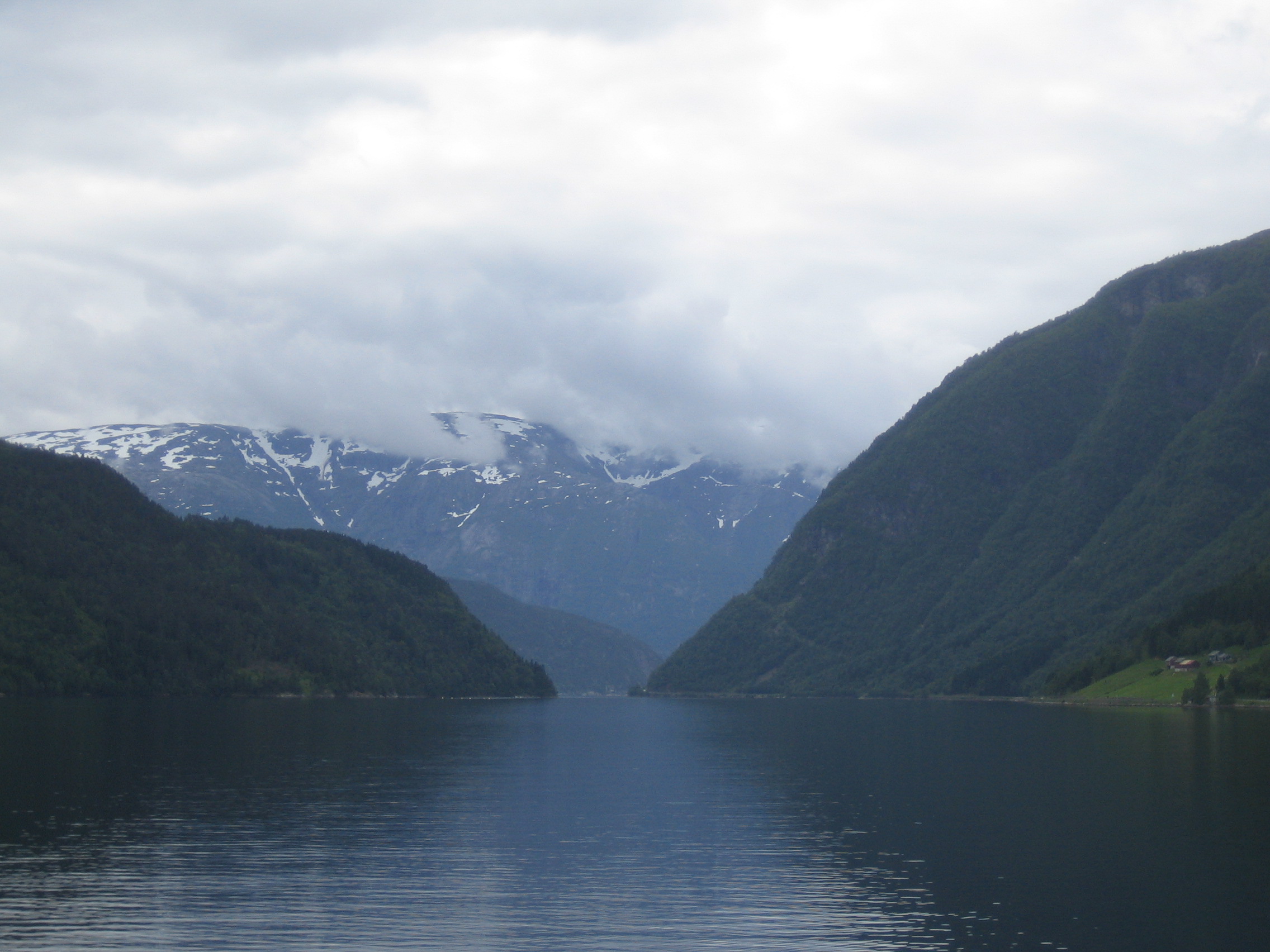
A fjord in Norway

Travel is taxing. We are often tired from long sits on airplanes, the passage of too many time zones, making our way from point A to point B in stifling heat or numbing cold. Our bodily needs become complicated as we try to manage our hunger, our thirst, our exposure to the sun, or our aching feet. The food may be different. The language may be different. Things go wrong and fall apart, and we are left feeling simultaneously buffeted by a large, impersonal world and lifted up by strangers’ acts of kindness and generosity.

It is because travel can be so uncomfortable that it is so rewarding. We find edges we didn’t know existed inside of us. We run headlong into our assumptions. Many of our outer trappings are stripped away even while we experiment with creating personal narratives for the people we meet. And meanwhile we are surrounded by brain food or soul food or the seeds of creative inspiration, or all three at once.

Sometimes we lose ourselves, and travel is one way to begin searching. Sometimes we crave change, and travel is one way to explore the possibilities. Sometimes we need to remind ourselves that we are alive, and travel is one way to find peak experiences.

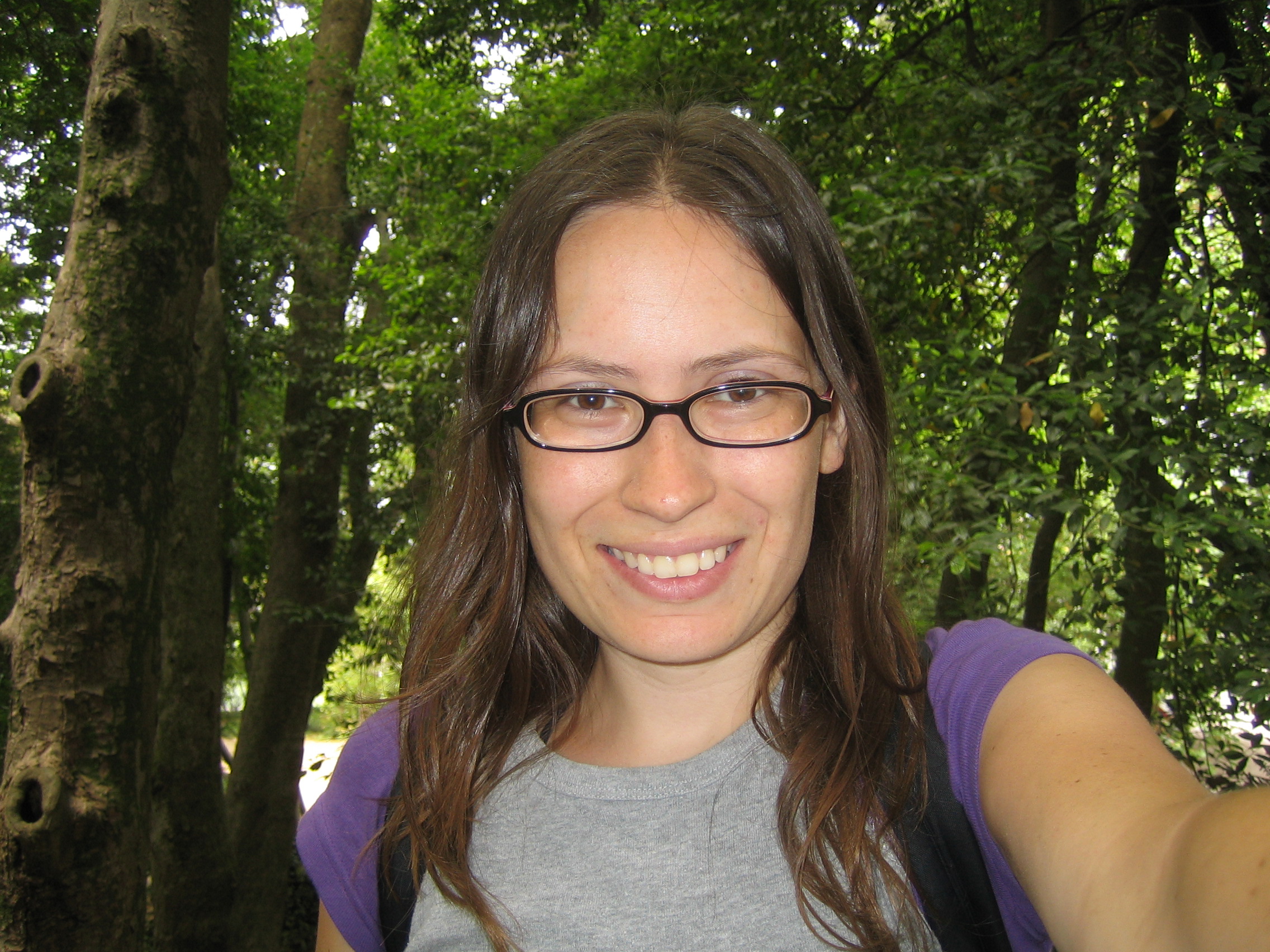
Exploring in Portugal

Travel is an active doing and a passive waiting. Travel is discomfort and pleasure, sublimity and boredom, a pain in the butt and the best time ever. Travel is flinging ourselves into the world and asking, Will you catch me? Which sometimes turns into, Can I catch myself?

We often think about travel as an exploration of the world. But it can also be an exploration of the self. In removing ourselves from our routines, our comforts, and our surroundings, we gain fresh perspective.

I had a friend ask, “By traveling, aren’t you running away from your problems?”

But sometimes traveling is running directly into our problems. We take ourselves wherever we go. The question is how serious we are about creating change. And traveling is one way to do just that.

Read Full Post »

A couple of recent articles about what to say and not to say to chronically ill people reminded me of an essay I’ve been wanting to write for a long time: an essay about what to say and not to say to grieving people.

This is not that essay.

Instead I’ve been thinking a lot about the fundamental difficulties in communication. Those articles I linked to have excellent advice for how to support people who are ill, and yet… implementing that advice is no easy matter. It can be hard to be supportive, and it can be hard to be supported.

One way to be supportive

I’d love to think that having gone through the experience of losing my own mother would make me some kind of expert when it comes to grief. But it hasn’t. I still find myself at a loss for words. I still don’t always know the best way to support someone experiencing grief. Because people are different, and they need different things.

The reason I wanted to write that essay is because of some profoundly stupid and upsetting things people said to me about losing my mother (both during and afterwards). But I recognize that some of those things that grated against my raw skin would have been comforting to others. So if you don’t know a person extremely well, how do you know? How do you know what they need to hear? The answer is, you don’t. You do your best to be thoughtful and caring, and you listen in hopes of hearing what they need.

Of course, some responses are simply a bad idea. Pushing our religions and religious ideas onto others who don’t share them in a time of grief is shockingly dense. Comparing one grieving person with another one unfavorably is also completely out. (Julie lost her mom last year and is doing great, so why are you such a mess? Ugh.) Continuing a conversation normally as if we didn’t just hear someone tell us about a recent loss? Completely inappropriate. (And yes, these are all responses I received personally.)

But beyond that, some people want alone time, while other people never want to be alone. Sometimes it’s nice to pretend like everything’s okay, and sometimes another minute of pretending seems completely insupportable. Sometimes people will want to talk about it, sometimes they’ll want to cry, and sometimes they’ll want to play video games. Some people will want to talk religion, some will be experiencing grave doubts, and some will simply want to avoid the subject as much as possible. And the relationship between the grieving and the dead will be different in each case as well. But somehow in the aftermath of death we forget this and make assumptions that aren’t always correct.

Our society teaches us to tiptoe around grief. What this often means is a flood of well wishes right after the death of a loved one, followed by…resounding silence. No one knows if they’re supposed to pretend nothing is wrong or if they’re supposed to inquire after you. People don’t know how best to support you. Those who grieve are not always encouraged to figure out what they need or communicate those needs to others. Sometimes they are too upset to have any hope of doing so.

Because this is not that essay, I don’t have any nice, neat conclusions for you. I don’t have definitive answers or a list of ten things you should do to help your friend who is grieving. What I try (and sometimes fail) to do myself is to be compassionate, remember that the other person is not me, and pay attention. I don’t feel like it is enough, but it’s all I’ve got.

If you’ve ever lost a loved one, what kind of support did you need/want? What things did people say to you that were particularly helpful (or unhelpful)?

Read Full Post »

I had a topic all ready to write about today, but I’m throwing it out the window, and instead I’m going to talk about the recent New York Times editorial “The Busy Trap” that people have been sharing like crazy. Sometimes extremely busy people, which is giving the entire conversation an extra dose of (unintentional?) humor.

I am actually very torn by the idea of the culture of busyness that apparently is not just a Silicon Valley thing (although I can’t pretend to be very surprised it also lives in places like Manhattan). First off, the whole conversation automatically comes from a place of privilege–people who can choose whether or not to be busy because they have time that is not taken up with working to support their families or working insane hours so they will not be fired (and I’m sure there are other examples you can think of).

That being said, it’s still an interesting cultural phenomenon for many of those in the middle class. I’ve certainly seen it countless times here in the Bay Area. And on the one hand, I’m impressed by the busy (which is, after all, partly the point), while on the other hand, it irritates me to no end.

Busy busy.

Sometimes, after all, the busy is really cool. I admire people who have decided to embrace their passions, or go out and change the world, or meet tons of fascinating people, or travel around the world. Their social calendars sound exciting, and when you ask them, at the occasional party, what they’ve been up to, they always have something to say beyond, “Eh. I work. And then I don’t work.” There is a certain energy some of these people have that can be quite intoxicating, as they catapult from event to event and obligation to hobby. And I’m really happy for them and encourage them to follow their dreams.

But on the flip side, it’s hard to become Friends with a capital F with these busy people. Because all those activities take time, and it has to come from somewhere. And when you try to get together and have to schedule a month ahead…to have dinner…and there’s not even kids or babysitters or anything involved…and this happens every time you try to schedule…well, it becomes an obstacle. And it is difficult to build intimacy with local friends who you are not able to see once a month or so, at least during some formative period at the beginning of the friendship (honestly I’d say every other week, but Silicon Valley has forced me to adapt my expectations).

I am not busy. Not like that. I have my weeks that go off the rails, and I travel a fair amount, but here is my secret. I like not being busy. I like having time when I’m sitting around thinking. I like having lazy Sundays when I sleep in, take my dog to the park, read a novel, and maybe go out for sushi in the evening. I like having time to write this blog. I like having time to notice what’s going on around me, and I like silence, and I like days when I have nothing scheduled. And sometimes at parties, all I have to say is, “Well, I’ve been writing.”

Not to give you the wrong idea. I still have stuff I have to get done, obligations to meet, appointments to keep, projects going full swing. I vigilantly guard my writing time, even when I’m invited to do fun stuff. But it’s a very different pace. It is definitely a privilege.

And I have the time to appreciate that.

Read Full Post »

My blog, the Practical Free Spirit, turns two this week. On Saturday, June 30th, to be exact. This is my 223rd post. I just read my first post, Originality: Having Something to Say. I didn’t know what to expect, but it’s not so bad. It sounds like me two years ago, which isn’t, after all, so much different from me now.

Would you like some more data? I’ve taken time off for vacation a few times, but other than that, I reliably post twice a week. I’ve never failed to post when I was planning to do so, although I’ve come close once or twice. The blog gets an average of 105 comments per month (thank you for joining the conversation!). Probably about half of those comments are from me, although I’ve been falling a bit behind in the past few months.

The highest traffic month in the blog’s life was April 2012. The most popular post is What is a Free Spirit?, which is apparently more of a pressing question than I would think. (Thank you, Google Search.) Other popular subjects include those I was afraid to write about, introversion, and cool Star Wars pictures. I am still on a quest to bring some much-deserved cuteness fame to Nala because what good is having a blog if you can’t occasionally cute-bomb your long-suffering readership?

Storm troopers create new lives for themselves fighting crime.

I don’t know much about my readers, actually, except the ones who comment. I wish I knew more. I wonder about you sometimes. It’s a strange sort of intimacy we have because I suspect there’s a significant part of me that you can get to know pretty well if you read regularly. Not the entire me, of course, but an important part. I talk about what I care about here (really, there’s no point in me writing a 500-word essay about something I don’t care about). I talk about what I’ve been thinking about. I link to the most interesting articles I’ve read. Once in a while I get teary-eyed while I’m writing one of these posts because it matters so much to me.

I read articles about what I “should” be doing with the blog, and then I ignore a lot of what I read, because we are friends, you and I. And a lot of those shoulds sound sleazy or cheap or fake to me, and I can’t bear to do them. Not to the blog, which has taken on a life of its own. It depends on me, after all; I breathe life into it. I am responsible for it. Before I started, it didn’t ever occur to me to think of a blog as a living entity, and perhaps many blogs aren’t. But this one–well, it just might be.

I am going to ask for a birthday present now, for me or for the blog, or for both of us. Satisfy my curiosity, leave a comment, and tell me about yourself. Who are you? What do you like about this blog? What do you wish I’d do more or less of? What are you glad that I don’t do (and you hope I never start)? What subjects do I talk about that give you a burst of satisfaction?

I would really like to know whatever you’d like to tell me.

Read Full Post »

It’s that time again! Birthday time! My birthday is tomorrow, but I am celebrating all week. Why? Because I can, that’s why. And because I’m happy to be alive. And because I keep thinking of things to do that sound like excellent birthday-related activities. Like playing an epic game of Battlestar Galactica this past weekend, for example. And visiting Ghirardelli Square. And going to a bookstore (any reason is a good reason to do THAT!)

Last year I wrote about Five Happy Things for my birthday, and I think that’s an excellent tradition, so I’m going to do it again.

1. The Academy of Forgetting. Flawed it might be, but it’s also the best and most ambitious thing I’ve ever written. I’m in the middle of an exciting (and at times turbulent) romance with it, and it reminds me of all the best parts of being a writer.

2. The Writing Community. When I went up to Seattle at the last minute this spring, I sent out an e-mail telling local writers I was going to be in town. I expected to spend most of the trip by myself; maybe a couple of people would be able to get together, I told myself. Instead, I got to see so many writer friends, it blew me away. People who went out of their way to spend time with me, help me (especially with the buses), and show me cool aspects of Seattle (the Underground Tour, the Theo Chocolate Factory, the nightlife, the food). And that’s when it hit me down deep: this is what community is. And I am a part of it. How amazing is that?

3. Food. I love food. I was raised on a bland and narrow diet, and ever since I went away to college, I’ve been on a journey of discovery. I am so happy there are spices! And onions! And different types of cuisines from different countries! Heirloom tomatoes exist, how exciting is that! And beets, and baked sweet potatoes, and cherries, and gnocchi, and sushi, and Ethiopian food, and curries, and white hot chocolate, and… You get the picture.

4. My bathtub. My bathtub is a proper big bathtub, like all bathtubs are meant to be. It also has jets, but I never use them. What I like about my bathtub is that I don’t have to bend my knees to fit in it, and I can be submerged in hot water from my neck to my toes. Sheer bliss.

5. Being able to set my own sleep schedule. I do not like going to bed. However, I do like to sleep and feel well rested. Do you see the inherent quandary? Happily I am able to set my own hours, and therefore I am able to stay up late and still get eight hours of sleep. This is a wonderful thing, and I appreciate it on a pretty much daily basis.

I will leave you all with the adorableness that is Nala. This is maybe my favorite photo of her.

You can see some Jack Russell attitude here. Classic Nala.

Read Full Post »

« Newer Posts - Older Posts »