Feeds:
Posts
Comments

Posts Tagged ‘priorities’

James Altucher wrote one of those popular list posts of things he learned from being a day trader. It is really interesting, as his posts often are. Two of his points particularly caught my attention:

  • Say “no.”… You have to decide every moment if this is the situation you want to be in.”
  • “This is crazy” means you’re crazy. …I know when I feel like, “ugh, this situation is insane” that the first place I need to look is at me.”

I like these points, and I think they go together well. Because when a situation feels insane, it’s probably particularly important to decide if that’s really the situation you want to be in. And those are the situations in which the skill of saying no is going to be particularly valuable.

The second point is crucial because it’s so easy not to look at ourselves. Sometimes we want to look anywhere BUT ourselves. But ultimately the situations in which we find ourselves are often about us. They are about us whenever we have a choice.

Even if it’s a painful choice. Those count too. Saying no can be one of the hardest things to do. Deciding to remove ourselves from a situation is often deeply unpleasant. Making different choices than we usually do can take huge amounts of effort.

Which road do you take? Photo Credit: simonsterg via Compfight cc

Sometimes we feel so attached to the way things have been or the way we wanted things to be that it takes awhile to make this choice. Sometimes after making the choice, we feel regret. We second guess. We wonder how it might have been if we’d chosen differently.

But really all that matters is the choice we’re confronted with right now. We can’t do anything about those other choices. We’ll never know how things would have gone if we’d chosen differently. We can’t go back and change things.

Sometimes we’re tempted to blame other people. We look at their behavior, and we want to point fingers and say, “Look! There is where the problem is.” And I’m not saying people don’t do some crappy things to each other sometimes. They do, and it sucks, and we don’t have to be okay with that kind of thing.

But in the end, we still usually have a choice, and so it becomes about us too. We get to decide if we’re willing to be in a relationship with this person. We get to set and hold boundaries. We get to say no. We get to say this is no longer a way I’m willing to be treated.

And what we’ll tolerate and what we won’t tolerate? The message that sends is about ourselves. So then the question becomes, are we choosing to send ourselves hate mail? Or today, are we going to send a love letter?

Read Full Post »

Theodora Goss recently wrote one of those lists of what she’s learned in her life. The entire post is worth a read, but I was particularly interested in her #9:

“Your habits create who you are.”

I completely agree with Dora. Our habits are the building blocks of our lives and of our identities. I actually love this truth because while changing habits can be difficult, it is very possible. So that means if we don’t like our lives or identities, we can work towards doing something about that.

Photo Credit: Celestine Chua via Compfight cc

Take the identity of being a writer, for example. (How could I not go there?) Some people are satisfied with the daydream of being a writer, which is fine but unlikely to bring about the reality. But for people who seriously want to claim the writer identity, it’s all about habits. It’s about making the time to write on a regular basis. It’s about making a commitment to finish projects. It’s about revising and reading other people’s work and thinking critically and educating yourself to become better. All those activities can be developed into habits over time.

This works for personality traits to a certain extent, too. We all have our original set points for different traits, and some of us will have to work harder than others to change and maintain those points, or will have limits to where we can move those points. But we can choose to encourage new habits that develop a certain trait. I used to be quite shy when I was younger, but I decided it wasn’t really very fun to be shy. So I practiced meeting people, I practiced inviting people to do things, I said yes to invitations, and I cultivated new hobbies that encouraged me to be social. I still have my shy moments, but now I often look at those moments as a challenge or game that I can try to succeed at as opposed to a miserable experience. And really, most of the time I’m not very shy at all because of the habits I eventually formed. I’ve talked to several other people who have had similar experiences.

And finally, habits even affect the kind of thoughts we have. That’s what Cognitive Behavioral Therapy (CBT) is all about. If we decide we want to be more positive, we can explicitly practice framing our thoughts in more positive ways until it becomes second nature. If we want more self esteem, we can practice thinking kinder thoughts about ourselves until, you’ve got it, those thoughts become second nature (or at least more frequent). Sometimes a lot of how we see the world is affected by our individual thought patterns, which are really just habits of thinking we’ve picked up over time.

When I think about it, I realize how strongly my habits shape my life, from how I spend my time to what and how I think to what my actual expressed priorities are. Of course, habits can arise FROM those priorities as well as shape what those priorities are. I think that’s why I care so much about living an examined life, so I can be more conscious about choosing those priorities and figuring out how to express them rather than have priorities happen TO me.

What habits have you chosen to develop? What habits do you want to change?

Read Full Post »

A Happy Life:

I have few or no worries and low stress. I am healthy and pain-free. I don’t have to deal with change very often. I spend time doing pleasant activities: reading books, playing games, watching movies, eating good food, making music, doing fun work, hanging out with friends. I go on fun outings on the weekends. I have enough money to do what I want to do.

A Meaningful Life:

I don’t walk away from something only because it is difficult. I embrace change when it is necessary. I enjoy challenges. I prioritize time for the things that matter to me: building close connections with others, helping others, working towards artistic mastery, creating things, doing work I’m invested in, learning more about the world and about myself, feeling gratitude and appreciation for the little things, evoking emotions and uncovering truth. While I still search for a balance in order to take care of myself, I make trade-offs in order to live in line with my priorities.

*****

I don’t think these two lives are necessarily mutually exclusive, but they do sometimes come into conflict with each other. And when I’m being honest with myself, I know that the happy life, while sometimes tempting, also sounds…empty. I’d enjoy it for a while, sure, but if that was all there was for me, I’d get restless.

When I think back on my life so far, what gives me the most personal satisfaction are not the pleasant activities I’ve done. I can hardly remember most of them. Most of the things I’m actively glad I did were challenging and not always comfortable. I’m glad I moved to London for a year. I’m glad I studied music. I’m glad I got to travel. I’m glad for the relationships I formed, with students, family, friends, romantic partners. I’m glad I taught. I’m glad I wrote a musical, and short stories, and novels. I’m glad I got a dog. None of those things were easy, and none of them were unadulterated happiness (although the dog was close!). But they are what matter to me.

I was struck by something in the Atlantic article “There’s more to life than being happy:”

“Having negative events happen to you, the study found, decreases your happiness but increases the amount of meaning you have in life.”

Now there’s a silver lining if ever I’ve heard one. Right after reading the above article, I happened across my friend Myke Cole’s essay on PTSD, and he also talks about finding meaning in the face of adversity:

“We have to find a way to construct significance, to help a changed person forge a path in a world that hasn’t changed along with them.”

This is how we move forward in the world, through the meaning we create, through the choices we make. The more I think about this idea, the more clarity I find. Buddhism talks a lot about the inevitability of suffering. But the suffering can give birth to meaning, and that meaning? It’s a truly beautiful thing.

Read Full Post »

I really like James Altucher’s blog. I disagree with him some of the time, but he usually makes me think, whether I agree or not, and I appreciate that. Of course, one of the challenges in reading his blog is ignoring his heightened rhetoric. (Heightened rhetoric is great for blog traffic, but it makes ideas harder to talk about.)

My friend pointed me to the recent James Altucher post “How to be a Slave.” Its main point is that if you work for someone else, you’re trapped and getting a bad deal: you’re losing all this money you could be making in the company’s overhead and paying your boss’s salary, and then also you have to sit through boring sexual harassment seminars and dress a certain way and act a certain way. So you should go work for yourself and be free.

But it’s not that simple. First off, there is a trade-off working for a company vs. working for ourselves, and it depends on our individual personalities and circumstances which one we’ll be more comfortable with.

Working for yourself or the Man? (Photo Credit: Alan Cleaver via Compfight cc)

If you work full-time for a company, you often get paid time off (vacation, holidays, sick days) and access to cheaper and sometimes better health insurance. This is part of your compensation package, so yes, you’re paying for it, but it’s nice to have vacation days and good health insurance, so it might be compensation that you want. If you receive a salary, you know about how much money you’ll make this year. On the other hand, there’s also the possibility you could be laid off. You have an imposed structure to work within, which some people find quite appealing. Overall, people at companies are perhaps less self-directed, but the amount of self direction depends from job to job and company to company.

If you work for yourself, you do not get paid for time you don’t work, and health insurance is more of a problem (although we’re all crossing fingers it will get better in January). Basically you have to earn more money to make up for the alternate compensation methods you’re not receiving. You have complete control of your time, but this can be a double-edged sword. The amount of money you’ll make in a year tends to be more variable. You can’t be laid off, but your business might do poorly. My favorite part of working for myself is that ultimately, the decision-making is up to me. But some people don’t like calling all the shots; it can be a lot of responsibility.

In addition, it is simply not true that if you work for yourself, you automatically can spend all your time the way you like or dress the way you like or treat people like crap because they’re the opposite sex from you. It is true that you can avoid a certain amount of red tape, wasted time and money, and procedures that are inefficient and ineffective. But many people who work for themselves have clients/customers, and in order to be successful, they have to cater to these clients. I couldn’t dress like a slob as a music teacher, or no one would have hired me. I had to do tasks I didn’t enjoy to keep the business running healthily. I always tried to be polite, respectful, and professional in all my interactions with my students. If I hadn’t done these things, my business would have failed. Sure, I had more choice, and that was fabulous. I didn’t have to deal with policies that had no purpose. But I still didn’t have the leeway to consistently make poor decisions.

The irony is that even though I disagree with many of the arguments in that article, I have done what it suggests. I have never had a full-time salaried position. I like being in control of my time. I like working for myself.

But what I would like to suggest is that different people need and want different things. Some people will thrive working for a company, and there’s nothing wrong with that. Other people will do better working for themselves, and there’s nothing wrong with that either. Some people will go back and forth between the two. If you’re miserable, by all means change things up.

But if it doesn’t work for you, you don’t have to live somebody else’s dream. You get to create your own.

Read Full Post »

I talk about creating change a lot, and I want to be clear about what I’m talking about. Making a change in our lives is not necessarily about happiness. I mean, it can be, but that is not the only reason to change. And even if the end goal is happiness, the process of change itself is not conducive to increased happiness; it’s too difficult and stressful for that.

So why change, then? We may wish to change to create more meaning for ourselves and our lives. We may wish to tell a different story with our lives than the one we find ourselves in. We may be thirsty for challenge or new experiences. We may be on a quest to become healthier or more empowered or more mindful. Or we may sense that we are being pushed down below our natural happiness setting and wish to change the circumstances causing this.

A lot of people are looking for something. We may be looking for happiness, or we may be looking for comfort or satisfaction or excitement. We may be looking for answers to questions that echo down the years of our lives. We may be looking for something larger than ourselves.

Photo Credit: h.koppdelaney via Compfight cc

At the World Domination Summit, Donald Miller, a memoirist, spoke about the psychiatrist Viktor Frankl, who wrote the bestselling book Man’s Search for Meaning. Dr. Frankl was a Holocaust survivor, and he worked professionally with Holocaust survivors. For him, life was all about creating meaning, even in the face of horrific circumstances.

According to Mr. Miller, Dr. Frankl believed three things mattered in creating a meaningful life:

1. Having a meaningful project that helps the world in some way (note this doesn’t have to be a paying project)

2. Having personal connections with other people, whether that be family, a significant other, friends, and/or a community

3. Having a redemptive perspective on suffering; aka finding the meaning in suffering, feeling one is achieving something through one’s suffering, choosing how to respond to suffering, etc.

This is some of the best advice on how to live life that I have ever heard. It’s so practical. It doesn’t wince away from the tough realities that sometimes face us. And it crystallizes my thoughts about my own life. It’s not happiness I’m seeking, not really. It’s meaning. It’s the ability to have a life that matters to me, and one in which I’ll be okay even in the darkest of times.

“Life is never made unbearable by circumstances, but only by lack of meaning and purpose.” – Viktor Frankl

Maybe the happiness research is correct, and there isn’t very much we can do to affect our own personal happiness levels (although gratitude and mindfulness practice seem to help). But if we are most concerned with meaning, then that hardly matters. We don’t have to be the happiest people on the planet in order to create meaningful lives. We simply have to decide that meaning is important to us and make choices that reflect that belief.

A project that matters. Being brave, finding the silver lining, and experiencing gratitude even through bad experiences. Love.

Yes. These are the building blocks of the life I want to live.

Read Full Post »

A friend recently shared an article entitled “The Curse of the Connector.” Its tagline? “It’s easy to never be alone and yet very lonely.” The writer describes a glamorous Gatsby whirlwind of life in his social circle, in which everyone is supposed to always be doing something exciting and “crushing it.” But, he says, “The world desperately needs more “connections” to become true friendships.”

I live in the Silicon Valley, and I’ve experienced the culture the author is talking about. The “crush it” culture exhausts me because, on the surface at least, it seems to focus heavily on appearances. In addition, there is the “always busy” mentality. Meanwhile, we like to speculate on whether social media is making us more lonely. All of these ideas are interconnected, as they relate to the type and depth of connections with which we surround ourselves.

I’m going to rush right by the fact that the first mention about true friends in this article is that they make excellent personal brand consultants. (Really?!? That’s the first thing that comes to mind about friendship? Really?!?) At its heart, this article is about the realization that our lives are better when we have close friends as well as a large number of acquaintances, that friendship isn’t a numbers game or a mere ego boost.

Photo Credit: h.koppdelaney via Compfight cc

Yes, friendship takes time. Yes, it takes work. Yes, sometimes it can be quite difficult to find kindred spirits with whom to be close. Since last year was the Year of Friendship for me, I spent a lot of time thinking about these things, and now I have a few theories about friendship:

The Once a Week Theory: The more often you see somebody, the more likely you are to become close friends. Once a week or more is optimal. Once every other week is adequate. Less than once a month and the friendship probably doesn’t have the time to form right now. (For long distance friendship making, texts, emails, and Skypes can be substituted for in-person time. For established friendships, you can sometimes get by on less, but eventually you won’t be as close.)

It is no coincidence that many of my close friends get together every week for game night. I think of other close friends I’ve made, and there is generally either a concerted effort to see each other regularly, or a steady stream of texts or emails.

The One-on-One Theory: Sure, I can have good times with people at parties or group outings. But for me, a friendship becomes closer when I spend time one-on-one or in small groups (probably no more than four or five). The more one-on-one time I spend with somebody, the more likely we are to become close friends.

The Diminishing Returns Theory: Not everyone is going to be a perfect friend match. Maybe she’s too busy, maybe he’s going through a rough patch, maybe the two of us just didn’t click (or it was a one-sided click). Maybe there’s something in the friendship dynamic that isn’t working too well. It doesn’t mean you aren’t both great people, it just means you’re not going to become close. Happily, there are many more fabulous people out there who might become good friends. It works better to invest time with the people who will invest their time in you and can be part of a balanced and positive friendship. (Yes, friendship can be surprisingly like dating.)

Taylor’s Party Corollary: The closer the friend, the earlier you plan to arrive at their parties. It’s nice when a close friend arrives close to the start time. They can help set up, chat comfortably, hang out before the party picks up speed, or occupy early-arriving acquaintances and help the conversation flow. (Note: I am not good at this. I almost always arrive late to parties.)

How about you? Have any theories of your own about friendship?

Read Full Post »

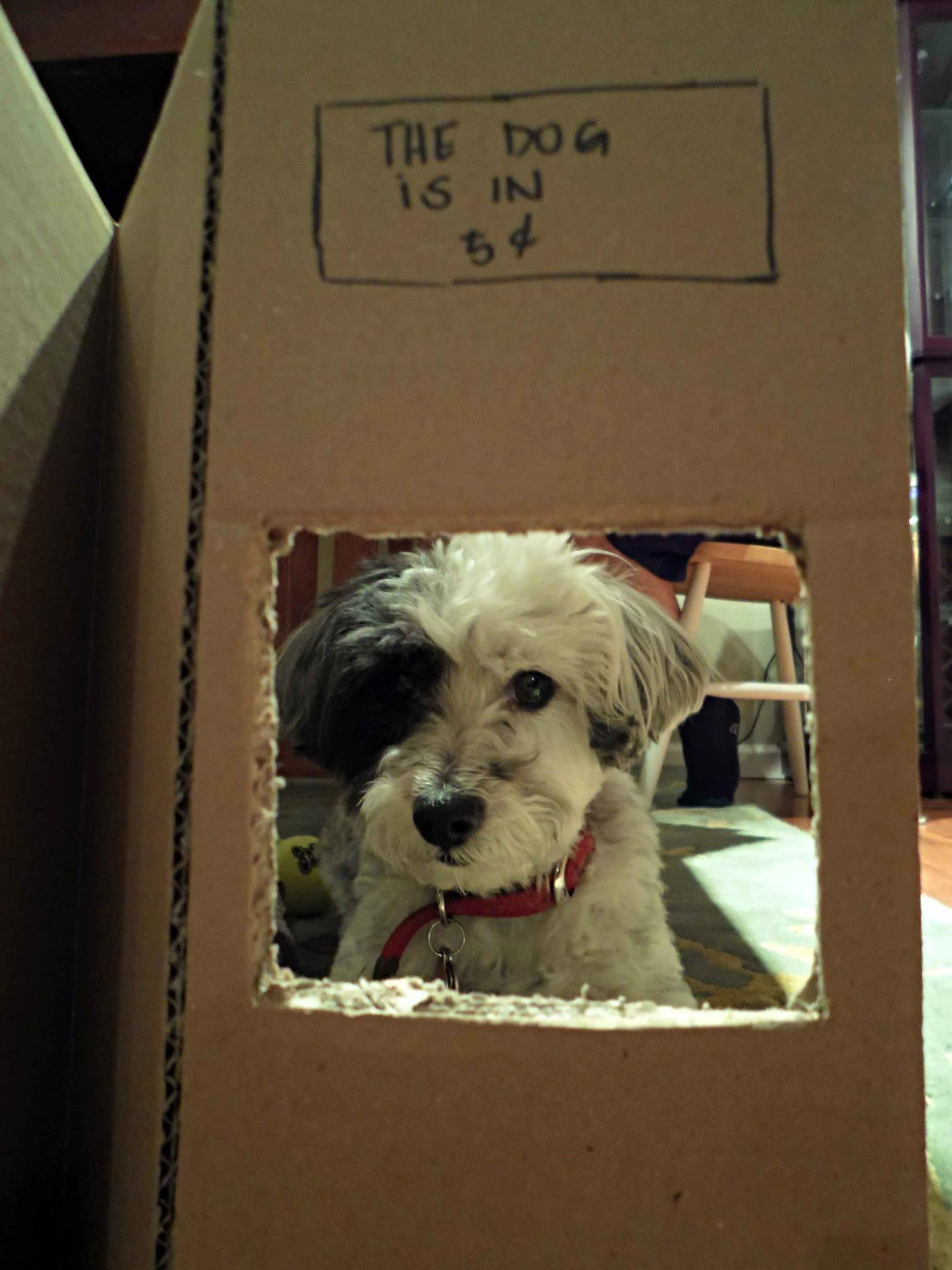
As I write this, Nala is sitting right next to me keeping me company, as she usually does while I write blog posts on my laptop. Actually, in this case, she is sprawled upside down, limbs akimbo, the top of her head smushed up into the side of her bed so I can’t see her eyes, only her white ear and lots of paw.

Sleepy dog.

Sometimes, she curls up in a little ball instead.

Four years ago this month, I saw a photo of Nala on the Silicon Valley Humane Society’s website. She looked scruffy and scrawny, and I fell instantly in love.

When I met her, she wasn’t interested in me. She didn’t want to snuggle, and she seemed nervous around people. She was much more interested in exploring the shades covering the window. I put her on a 24-hour hold so I could sleep on such a major decision. But I went directly from the shelter to the pet store to get everything a little one-and-a-half-year dog could need.

Nala loves to howl when she gets excited.

Nala loves to howl when she gets excited.

When I first got her, I was really excited every time I was on my way home because I knew I’d be seeing her soon. I figured that eventually this feeling would fade. But four years later, it hasn’t changed a bit. Whether I’m coming home from an errand or a long trip, I always look forward to seeing her.

Nala, Wisdom Dog

Things aren’t always easy. Nala has been suffering from increased separation anxiety the last few months, and I worry about her even while I’m trying to help her adjust. And Nala worries about me too sometimes, even while she’s licking my hands and staying close, doing her best to cheer me up. But we get through the hard times together.

She's also a great listener.

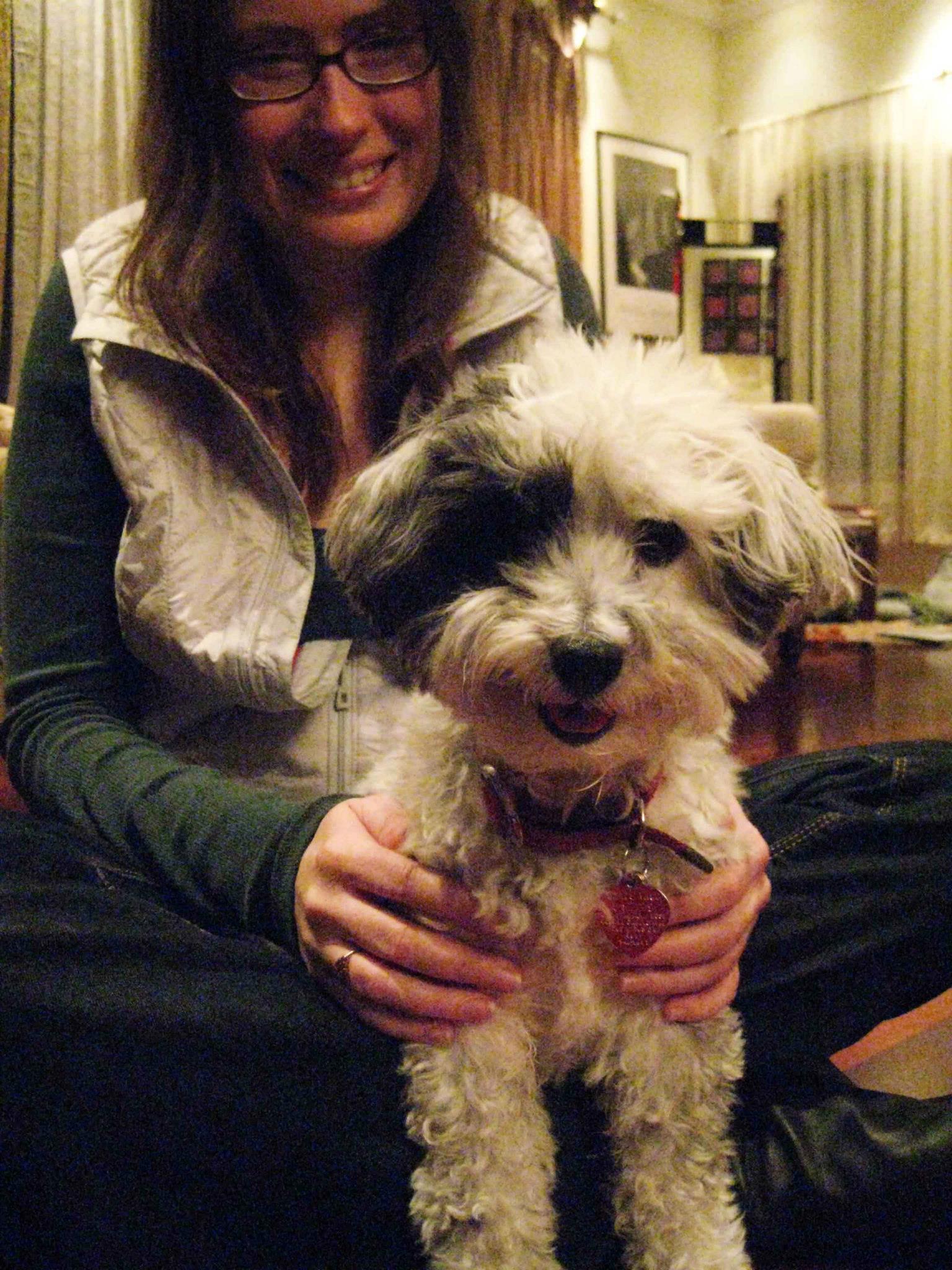
She’s also a great listener. (Photo by Yvette Ono)

Adopting Nala has been one of the best decisions I’ve ever made. She is my constant companion and my best doggie friend. The flow of unconditional love between us is one of the most beautiful parts of my life. She makes every day better with her presence.

I love my little dog.

Best friends!

Best friends! (Photo by Yvette Ono)

Read Full Post »

My post about my friend who throws away books generated a fair bit of controversy a couple of weeks ago. I was really happy to hear from so many people who love books a lot, just as I do. But I was also a bit surprised by how upset some people were, to the point that one person even said that he couldn’t be friends with someone who threw books away.

I guess we all have our hot topic buttons, but I can’t imagine throwing Rahul under the bus because he has a different perception than me (and one he has thought about, to boot). Most of my friendships can survive more than one difference of opinion, particularly one that doesn’t affect me directly (regular and overt sexist behavior, for example, would be another kettle of fish).

Anyway, I’m talking about this because I’m going to share a profound Rahul Kanakia quotation from Facebook: “The only major decision that life offers is: Should I look for something better, even though it means endangering what I have?

Photo Credit: timtom.ch via Compfight cc

(I mean, seriously, how could I not be friends with someone who randomly posts status messages like that on Facebook?)

I’ve been trying to think of a major decision that doesn’t involve the choice of perhaps losing or changing what you already have, and I’m drawing a blank. Change involves endangering the status quo. Sometimes when we’re involved with change, we’re pretty sure we’re going to end up better off because of it; other times, we’re simply guessing. We don’t know, and that’s where some of the pain of change comes in: letting go of something to make room for something else that might not be any better (or, even worse, might be not as good).

Also, if looking for something better doesn’t endanger what you already have in any way, then it’s not a very hard decision.

I suppose there is sometimes a follow-up decision, which is this: you’ve already decided on the change, but you have to choose between several options. In this case, instead of endangering what you already have, you’re trying to make the optimal decision for yourself. We see this when high school seniors are deciding what college to attend, in multiple job offer situations, when going house shopping. The more options there are, the more decision paralysis sets in. But you’ve already made the initial decision to look for something different (by getting more education, purchasing a house, searching for a job, etc.).

Should I look for something better and accept the risk? It’s a question worth asking. Often the answer is no. The risk isn’t worth it. The hypothetical better isn’t worth it. But sometimes the answer is yes.

Good fiction asks this question a lot. Sure, sometimes the main character is railroaded by events, but the most interesting fiction gives the protagonist some agency. As readers we enjoy when the stakes are high and the protagonist has more to lose, because then this decision becomes really interesting.

Do I act, even though by acting I risk losing what I care about? Do I try, even though I could fail and never get back to where I am now? Do I change, even though the changes will have unforeseen consequences?

These questions, I think, are a deep part of what it is to be human.

Read Full Post »

I have a friend who occasionally requests blog posts, and her ideas are always so good. It’s actually quite a talent to come up with good topic ideas. I know because sometimes I’m completely stumped, and I ask someone what I should write about, and they can never come up with anything good either. So obviously from now on I should ask Danielle.

This time she asked me to write about intention. (See what I mean? That is exactly the kind of thing I write about.)

Intention can be one of the most powerful tools at our disposal. It’s good for change, for achievement, for opening ourselves up to possibility. It’s a way of resetting old beliefs, world views, and limiting thoughts that might or might not have had a good reason to exist in the past but are definitely holding us back now.

Photo Credit: CarbonNYC via Compfight cc

Of course, in order to work, intention has to be an active process. Take my intention at the beginning of last year: I wanted to have more friends, so I set the intention to be open to new friendships. From that intention, I decided on concrete priorities and actions. If I told myself, “It would be nice to have more friends” and then proceeded to sit on my couch every night and not talk to anybody, then nothing would have happened. Instead, I accepted invitations, I invited people to do stuff, I traveled to various events, I texted and wrote emails, I sometimes went out even when I didn’t exactly feel like it, I practiced healthy boundary setting. In short, I put in a lot of effort.

I find that when I set an intention, it helps me better focus on what I need to do next. In the case of socializing, it means I’m paying attention and making or inviting that overture of friendship. Maybe it was there all along, but I’m much more likely to notice it and make that little extra effort required. In the case of writing, it means I keep plugging away, even if that means only doing a little work each day. I remember that I want to live a literary life and it informs the choices I make on a daily basis.

Our intentions join together to form our vision, both of who we want to be and what we want our lives to look like. Vision is an interesting thing because I think we have to believe completely in our vision for ourselves at the same time as we doubt and question it. It’s like reading a novel, being completely immersed in the world of these characters and events while simultaneously knowing that it’s fiction.

I believe completely in my vision for myself. I also think it might not happen. But I do believe it could happen, and perhaps that’s the important distinction–the belief in what’s possible and the willingness to commit ourselves to finding out.

What intention(s) have you set for yourself recently?

Read Full Post »

Last Thursday I was eating my lunch when I heard a horrible crunching sound in my mouth. I pulled out a small piece of white porcelain, confirming that yes, I had just broken the crown with which I had so much trouble two years ago.

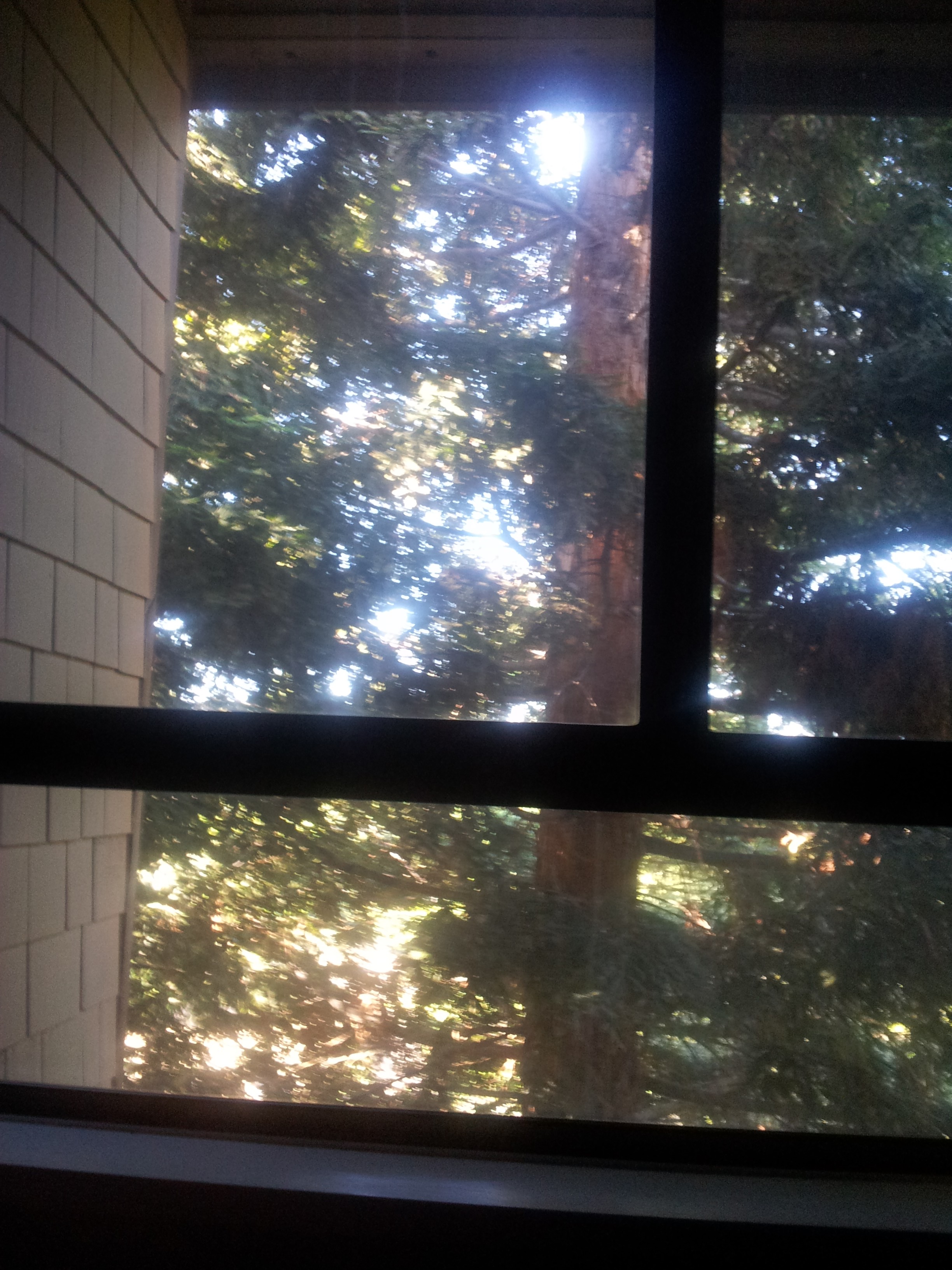
I spent some time shining a flashlight in my mouth and staring at the damage, followed by some aimless wandering around muttering “Okay” at periodic intervals. After calling the dentist and making an appointment, I ended up laying on my study floor with Nala and staring at the tree outside the window.

I wanted to lay there looking at that tree forever.

My Tree

My Tree

A friend of mine posted on Facebook that he didn’t seem to have energy to do even simple tasks, but he was pretty sure he wasn’t depressed. I suggested it could be related to anxiety. I was speaking from personal experience.

The last two months have been among the most stressful of my life, coming at the end of perhaps the most stressful year of my life. And it turns out the symptoms of high stress that you hear about are actually true. They include:

1. general fatigue/exhaustion (I was so tired on Friday, I got lost in a familiar part of town.)

2. lack of ability to focus (my speed of reading has fallen drastically)

3. muscle tension (in my case, particularly in the back, shoulders, and neck)

4. less effective immune system (I’ve had the flu twice in the last three and a half months)

5. insomnia

6. memory loss/unreliable memory (Two weeks ago I double booked myself. I still can’t believe that happened. I am usually a scheduling goddess.)

7. easily overwhelmed

8. tension headaches

9. appetite changes

10. easily triggered fears/worries

I haven’t wanted to write about any of this for a number of reasons. But on Thursday, I felt like breaking my crown was too much; it was the last straw. I considered lying there and contemplating the tree forever. It seemed like a pretty good idea, until the thought wiggled its way into my consciousness that I should write about this. And eventually, buoyed up by this thought, I got up.

As a child, I was taught to try to be as perfect as possible. If I was going through a hard time, I was supposed to hide it.

But this belief contributes to the problem. Not only is it isolating, but it strengthens the idea that if we don’t handle everything perfectly, we are failures, when in reality we’re just the same as everyone else. Everyone has struggles. Everyone goes through hard times. Everyone has moments when they stare at a tree (or the road or the ceiling or the screen or their feet or the dark when they can’t sleep) and want all the difficult things to go away because they seem like too much.

So I’m going to be honest. I’m tired all the time. I prioritize my to do list carefully every day because I can’t get as much done as normal. Nala is always at the very top of that list, and everything else comes after. Sometimes it takes me an hour or more to figure out how to respond to a typical situation or request. I can’t always be there for my friends the way I want to be, and sometimes I have to cancel plans.

I’m not depressed. I love life, I love the world, and I am optimistic about my future. I have so many projects I want to work on, so many books I want to write, and so many people I want to spend time with, some of whom I haven’t even met yet. I get frustrated by my energy levels because I still want to do all the things.

But realistically, there is only a certain amount of stress any of us can handle before it begins to affect things. And I am past that amount. I look forward to a time when that’s no longer true. Hopefully it will be here soon.

And in the meantime, sometimes I will spend some time staring at my tree.

Read Full Post »

« Newer Posts - Older Posts »