Feeds:
Posts
Comments

Posts Tagged ‘people pleaser’

I’ve been thinking a lot about empathy lately, and then today I saw Stina Leicht’s beautiful post about empathy and the fine balance required in remembering that everyone is simultaneously different and the same. So I decided I’d write about empathy, and then I surprised myself by how vulnerable I feel writing about the topic.
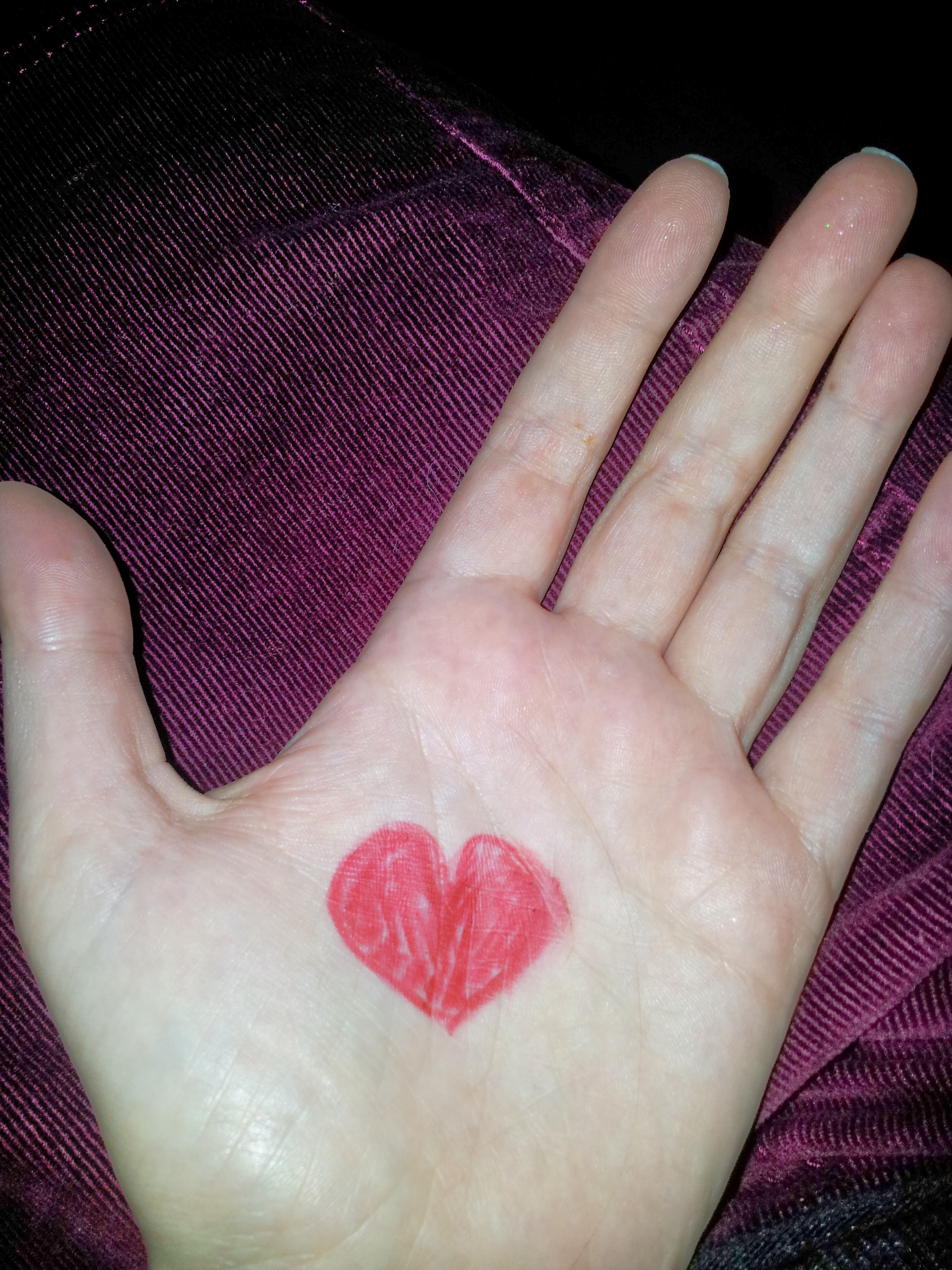
Heart in hand

I’ve realized lately that I have a high amount of empathy. This is not something I’ve known about myself all my life, so I still don’t feel completely easy with the knowledge. It makes a lot of sense, though. One of my strengths as a music teacher was my ability to make my students feel comfortable and supported, even while they were exposing themselves with their singing. As a writer, I enjoy delving deeply into the heads of my characters. And certainly for my adult life, it’s generally been fairly simple for me to put myself into other people’s positions and to see many sides and perspectives of an issue. It’s comfortable like slipping into a broken-in pair of shoes.

Having high empathy is a very mixed experience. My empathy has brought me many of my greatest joys and also many of my hardest challenges. At its best, it truly is a gift without compare. Being able to create connections and be truly present with people is a deeply meaningful and satisfying act. On some level we all want to tell our stories, and there’s a powerful resonance that can be achieved by being a loving witness to that.

But high empathy is tricky to manage. I’ve talked to other people with high empathy, and it appears that many of us have a chameleon-like ability to be who is required. We are the people who can figure out the right thing to say. We are the people who know how to smooth everything out. We can turn our own emotions and needs off like a switch if that’s what we think is necessary. We are the people who can sit quietly and reflect the other person back at themselves without the judgment that would make that too painful.

Unfortunately, we are the people who need the strongest boundaries, and we are the people to whom those boundaries come the least naturally.

Without those boundaries, we become people-pleasing, codependent, or emotionally drained. We can see the other side so clearly that we can accidentally neglect our own perspective or place less value on it. Being so aware of different options and viewpoints can paralyze us into indecision. We can lose ourselves in trying to be who someone else wants us to be. Nothing good lies down that path.

I’m going to tell you a secret about highly empathetic people. We want what we give. Sometimes we want it desperately. We want other people to see us the way we see them. We want other people to listen to us the way we listen to them. We want people to slip into our shoes sometimes too, and we want our experiences to be validated the way we’ve validated so many other people’s experiences.

In the end, we’re just like everybody else. We all want to be recognized for who we are.

The blooper photo: Nala really wanted to be involved.

The blooper photo: Nala really wanted to be involved.

Read Full Post »

James Altucher wrote one of those popular list posts of things he learned from being a day trader. It is really interesting, as his posts often are. Two of his points particularly caught my attention:

  • Say “no.”… You have to decide every moment if this is the situation you want to be in.”
  • “This is crazy” means you’re crazy. …I know when I feel like, “ugh, this situation is insane” that the first place I need to look is at me.”

I like these points, and I think they go together well. Because when a situation feels insane, it’s probably particularly important to decide if that’s really the situation you want to be in. And those are the situations in which the skill of saying no is going to be particularly valuable.

The second point is crucial because it’s so easy not to look at ourselves. Sometimes we want to look anywhere BUT ourselves. But ultimately the situations in which we find ourselves are often about us. They are about us whenever we have a choice.

Even if it’s a painful choice. Those count too. Saying no can be one of the hardest things to do. Deciding to remove ourselves from a situation is often deeply unpleasant. Making different choices than we usually do can take huge amounts of effort.

Which road do you take? Photo Credit: simonsterg via Compfight cc

Sometimes we feel so attached to the way things have been or the way we wanted things to be that it takes awhile to make this choice. Sometimes after making the choice, we feel regret. We second guess. We wonder how it might have been if we’d chosen differently.

But really all that matters is the choice we’re confronted with right now. We can’t do anything about those other choices. We’ll never know how things would have gone if we’d chosen differently. We can’t go back and change things.

Sometimes we’re tempted to blame other people. We look at their behavior, and we want to point fingers and say, “Look! There is where the problem is.” And I’m not saying people don’t do some crappy things to each other sometimes. They do, and it sucks, and we don’t have to be okay with that kind of thing.

But in the end, we still usually have a choice, and so it becomes about us too. We get to decide if we’re willing to be in a relationship with this person. We get to set and hold boundaries. We get to say no. We get to say this is no longer a way I’m willing to be treated.

And what we’ll tolerate and what we won’t tolerate? The message that sends is about ourselves. So then the question becomes, are we choosing to send ourselves hate mail? Or today, are we going to send a love letter?

Read Full Post »

The blog post that I have found to be the most influential on my life is James Altucher’s How to Deal with Crappy People (and its follow-up How to Deal with Crappy People Part 2).

I don’t remember when I read it, probably a couple of years ago, and it was a revelation to me. Just the bare fact that there are crappy people who exist and we’re allowed to acknowledge this as truth was amazing to me. And that we are actually allowed to do something about it besides silently suffering? Wow. Heady stuff.

Then I read this article last week on The Problem of Being Too Nice (an issue I’ve written a little about myself). And I realized why receiving permission from that James Altucher article to call a spade a spade was so important.

Here’s the problem. If you come from a certain background, a background that generally includes at least a few influential and crappy people (usually but not always involving a dysfunctional family), then you become more likely to attract other crappy people. You turn into a Crappy People Magnet. And you’re so used to being around crappy people, and dealing with them, and having crappy things happen, that it all becomes normalized. You assume everyone is like that, and it’s all on you to make everything work out anyway. You can’t tell who is crappy and who isn’t. They just all blur together into an incoherent pile of people.

Photo Credit: jessicalsmyers via Compfight cc

With so many crappy people involved in your life, though, things never stabilize. There always seems to be stress and drama. You’re so rarely getting what you need that you get more and more tired. It takes all your energy to keep your head above water. And the worst part is you might eventually become a crappy person yourself. After all, it’s not like you’re learning healthy behaviors.

As a young girl, it was strongly instilled in me that everyone else was good and I should tolerate most behaviors. Even now I find writing about crappy people to be really uncomfortable. The people pleaser in me wants to make a million excuses for them. But the fact is, there’s a real difference between being an imperfect human who makes mistakes sometimes and being a crappy person. Maybe the crappy person is only crappy to some people. Maybe the crappy person won’t always be crappy. Maybe the crappy person has extenuating circumstances. It’s good to be compassionate. But…

It’s even better to take care of ourselves first.

I know there are plenty of happy people out there who mostly know other good and happy people. I am so glad they exist because they are excellent role models for those of us who have more of a struggle. But this post is not for them.

This post is for those of you who do have crappy people in your lives. This post is for those of you who need permission to call a spade a spade. This post is for those of you who might need to make some difficult decisions in order to take care of yourselves.

There are people out there who are kind and care about what you need. And life without so many crappy people? It isn’t perfect. There are some things about it that are sad.

But it’s also like being able to take a full breath of air for the first time.

Read Full Post »

Thank goodness for Jonathan Carroll and his Facebook page, because whenever my brain is feeling slow, I take a look at what he has posted recently to get my thoughts flowing again. Recently he shared this quotation:

People will kill you over time, and how they’ll kill you is with tiny, harmless phrases, like “be realistic.” – Dylan Moran

This makes me think about how subtle an influence a person can have on us. So subtle, in fact, that often no one in the room is conscious of what’s happening. A comment here, a snort there, and a little body language thrown in for good measure, and our thoughts and emotions can be deeply affected:

“I’m not good enough.”

“Maybe I’m being stupid.”

“My career/life goals aren’t important/valid/valuable.”

It’s so easy to diminish, to de-motivate, to plant the seeds of doubt, to make someone feel lesser. It’s so easy to neglect to listen to what other people have to say in favor of listening to ourselves. It’s so easy to sting someone without even thinking about what we are saying.

As a writer, I believe that words matter, perhaps more than most. The written word matters, and the spoken word matters. Body language, tone of voice, and mannerisms matter, all contributing to the overall message that someone is communicating.

Because I think words matter, I pay a lot of attention. I listen. I think about what people say to me. I think not only about the words used, but about the manner of their delivery, the context, and other circumstances that are relevant.

For many years, I internally chided myself for my “sensitivity.” But now I recognize what a gift it can be. Because if I’m paying attention, then I can notice more of those small messages, many of them negative, that I receive from other people. And then I can work to counter them and lessen their impact.

Words matter. (Photo Credit: felipe_gabaldon via Compfight cc)

That’s why choosing carefully the people with whom we spend a lot of time is so important. Not only will they be affecting the activities we participate in, the subjects we talk about, and even the amount of food we eat, but they will be sending subtle unconscious messages that have a real impact (potentially either positive or negative) on our moods, our world views, our self esteem, and what we think is possible for ourselves. The more we notice, the more we can make deliberate decisions about whether to spend time with people who make us feel awesome, energized, and supported for being who we are, or whether to spend time with people who make us feel tired, drained, ignored, and not enough. The choice is clear, but only if we are able to track what’s going on.

Words matter. Our environment matters. The choice to be kind matters.

What tiny, harmless phrase have you taken to heart lately? What would you rather hear?

Read Full Post »

I am tired of apologizing.

Expressing empathy and sympathy? I’m all over that. But I’ve spent way too much of my energy apologizing for things that have nothing to do with me.

And you know what? I’m not sorry.

  • I’m not sorry that I may have different priorities than other people .
  • I’m not sorry that I have things I want and things I need.
  • I’m not sorry that I want to be treated with respect and consideration.
  • I’m not sorry for the life choices I’ve made, even if people don’t agree with them or understand them.
  • I’m not sorry that I don’t want to discuss my financial situation with strangers.
  • I’m not sorry that I have a different sleep schedule from the norm.
  • I’m not sorry that the ways in which I spend my time are not obvious.
  • I’m not sorry that I notice and sometimes point out sexism and misogyny in media.
  • I’m not sorry for my own opinion and assessment of myself.
  • I’m not sorry when I choose to say no.
  • I’m not sorry that I can’t be perfect.
  • I’m not sorry when I refuse to take on other people’s issues willy nilly.
  • I’m not sorry for the existence of my emotions.
  • I’m not sorry for standing up for myself.
  • I’m not sorry for communicating.
  • I’m not sorry for being complicated.
  • I’m not sorry that we don’t have every single thing about ourselves in common.
  • I’m not sorry when people won’t take care of themselves. I feel sad about it, because I know how bad that feels, but I am not responsible for the choices they make and the pain they put themselves through.

This is what it looks like to not be a people pleaser. You start apologizing a lot less frequently. Instead you communicate, and you compromise, and you take responsibility for yourself and your actions, and you surround yourself with people who are willing and able to take responsibility for themselves and their actions, and when you screw up on occasion, you apologize and make amends, and everything works out a whole lot better.

Stop apologizing for yourself. Start living instead.

Read Full Post »

I didn’t write a blog post earlier this week because I have the flu, and I spent most of Monday sleeping, and most of the rest of Monday having such a high fever that all I could do was sit around and think strange thoughts. I haven’t been this sick for quite some time. But I am going to do my best to write something for you today.

I’m going to tell you a story. Sometimes now when I write I hear James Altucher in my head saying “Bleed on the page.” And I see the photo of Penelope Trunk’s bruise after she had a fight with her husband. And I say to myself, I could never do that. But today I have the flu, which means I can do things I sometimes think I can’t, so this is that kind of story, only Amy-style.

I was sixteen or seventeen, in drama class. My drama teacher was big on improvisation and on giving us assignments that required improv. I wanted to be handed a script and learn my lines and figure out blocking, but that’s not the way things were done in drama most of the time.

My group was doing a skit that showed a teenage girl finding out she was pregnant in the middle of a family dinner. I was supposed to play the girl’s big sister who offered sage advice in a touching sisterly scene later on in the skit. But my classmate who was supposed to play the pregnant teen had been out sick for a long time, and eventually we had to perform the skit without her for our grade. So at the last minute, I had to step in to play the part.

Afterwards, I thought it had gone about as well as could be expected, given the lack of rehearsal time. I sat with the rest of my class in the seats facing the stage, glad it was over, until the drama teacher began really tearing into my performance.

Was I aware, she said, that I had been smiling the entire time? How horrible and awkward it had been, and how amazing my fellow group members were for somehow managing to continue on in the face of such a poor performance. And then she came right up to me, in front of the entire class, and said, “Do you always smile when you’re sad? Do you?” She was insisting on an answer I couldn’t give her, and it was all the worse because the answer was yes. And I hadn’t even known it until that very moment.

To this day, when I think of this story, my heart hurts.

I can even smile when I have the flu. Now there's talent for you. :)

I can even smile when I have the flu. Now there’s talent for you. 

Sometimes conditioning runs so deep that we don’t realize what we’re doing, even when we’re working very hard to be mindful. I write in this blog about a lot of things I still struggle with. I’m still a perfectionist. I’m still sometimes a people pleaser. I tell you that your emotions are okay, but I don’t always believe that for myself. When something happens that is upsetting for me, my first instinct is to pretend everything is okay.

Once upon a time, it was extremely important that I be good at acting in a very specific way. One that didn’t go over well in drama class.

That story is over now. But I still smile sometimes when I’m sad.

Read Full Post »

This weekend, one of my closest friends had a heart attack. He spent most of the day Tuesday in surgery. On Wednesday, soon before I sat down to type this, he started breathing on his own again. The surgery went well, I think.

I am so relieved and grateful.

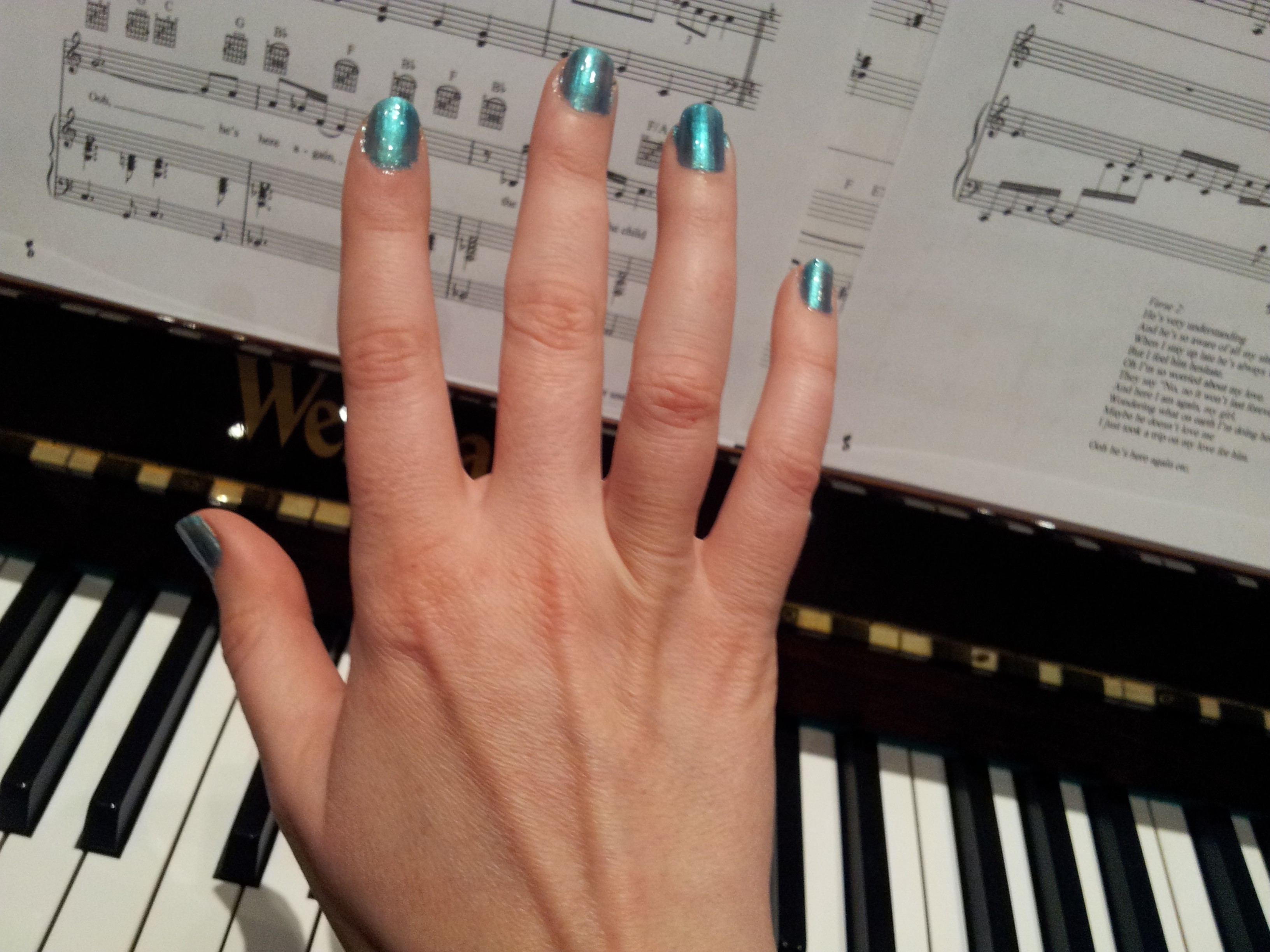
My "pretty princess" nails in support of Ferrett.

My “pretty princess” nails in support of Ferrett.

I originally became friends with Ferrett because of this blog, and in fact, he is the single person who has had the most influence on it. I came up with the idea of the Backbone Project because of his blogging advice, and in characteristic Ferrett fashion, he threw himself behind my idea with enthusiasm and support. And so we became friends.

Over time, we became better friends. And he was the first one who was there when life began to crumble apart. He was the one I could show the cracks and imperfections, the confusion and the doubt. He understood what I was trying to do, and he believed in my ability to do it, even when I couldn’t believe in it myself.

We were talking about what to do when we falter on Tuesday. If you’re lucky enough, having a friend who believes in you with all his heart can be a powerful thing indeed. And Ferrett has one of the biggest and most generous hearts of anyone I’ve met.

He’s also taught me what it means to be a friend. In a healthy, supportive, and non-people pleaser kind of way.

Through these last few days, when I’ve been mentally in a hospital in Cleveland even though I couldn’t be there physically, I’ve been reminded quite strongly of what’s important to me. I’m always big on priorities, of course, but there’s nothing like a life-or-death kind of event to give you a little extra kick and provide some perspective.

I’m in a liminal space right now, and I don’t like it. I mean, it has its advantages and interesting parts, and it is completely necessary, but it’s a hard place for me to stay for an extended period of time. But I realize that even in this space, I can and am focusing on the things that matter to me: the people I care about (and one very adorable little dog); my writing and creative work; maintaining and improving myself (physically, mentally, and emotionally); experiencing joy and wonder in the world around me.

Sometimes I feel like I don’t know what I want. But that is not actually true at all. I know exactly what I want. I just don’t always know the form it will take or the balance it will require.

Ferrett wrote a post for his blog the day before his surgery. He said: “There is a small chance that these will be the last words I ever write on this blog.  And if they are… let them be thanks and love.”

It doesn’t look like those will be his last words on the blog, thank goodness. But if they had been, they would have been very fine last words indeed.

Read Full Post »

This weekend I got a question on an old post of mine that I thought deserved a longer response. The post is on the topic of the difficulties of being a free spirit, and the commenter asked: “”What do you do when you falter? How do you stay strong in the face of judgement?” Both excellent questions.

What do I do when I falter? And oh wow, do I falter. Most of us do. It’s hard to make unconventional choices, and it takes a fair amount of courage, and sometimes my supply of courage feels like it’s running short. What to do about this indeed?

One answer is to pay attention as much as we can, so at least we have a chance of noticing when we’re faltering. And once we’ve noticed, we can allow ourselves to be gentle about it. It’s fine to feel the fear, the discomfort, the wish that the choices that seem so much easier would be the right choices for us. But we also need to remember the why’s. Why do we like being free-spirited? Why do we prefer considering options instead of making the default choice? Why is this better?

When I falter, I remind myself of my experiences of doing what others expected or wanted rather than what I wanted, and how that usually turned out poorly. I give myself my own personalized pep talk. And because I’m a planner, I develop a plan for getting myself back on track, which might include getting additional support.

Photo Credit: bogenfreund via Compfight cc

Far more difficult in my own experience is staying strong in the face of judgment. Being judged is such a creepy-crawly, uncomfortable experience. And even though it so often is all about the person doing the judging rather than the person being judged, it still feels very personal.

The first place to look is to ourselves. If we encourage our own minds to be judgmental and critical of ourselves, then we’ll feel that same sensation of judgment coming from the outside as well…even if it doesn’t actually exist outside at all. So we need to be kind to ourselves while developing our own sense of worth. The more we believe in ourselves, the more confident we become. And the more confident we become, the less it matters what other people think, and the easier it becomes to remember that their judgments are more about them than about us.

It’s harder when the judgments are coming from people whom we care about: our family and friends. Sometimes their voices become so loud that we internalize them and can hear them criticizing us even when they aren’t present. And because we value their opinions, it can be harder to tell the difference between genuine concern and viewpoints respectfully expressed and more manipulative and painful judgments.

For this, I am a big fan of setting boundaries. When we’re not used to having boundaries, it takes a lot of practice. Really a lot. And not only that, but people can become quite judgmental about the fact that you have boundaries in the first place. But it’s psychologically healthy to have boundaries, and over time they become super effective. You’re allowed to decide what you’re going to do with your life, and you’re allowed to take care of yourself. (I could write entire books about boundaries. In fact, people have, and here’s my favorite.)

So, in summary, here’s what I do when I falter and when I’m having trouble with the judgments of others:

1. Be mindful so I notice what’s going on.
2. Self pep talk, reminder of why what I’m doing is awesome.
3. Get support, make a plan if necessary.
4. Work on increasing self esteem and minimizing my own critical judgments.
5. Set boundaries with other people and take those boundaries really seriously.

What do you think? How do you stay strong in the face of judgment?

Read Full Post »

I’ve been trying to think of what other 2012 life lesson I should write about today. It’s problematic because I feel like I’ve learned so much, and I don’t want to choose only one thing. So I’m going to bypass this problem by making a list (and you all know how much I love lists).

Things I Have Learned in 2012:

  1. Being assertive is important.
  2. Ditto being open and authentic.
  3. I know how to make a mean cranberry sauce.
  4. Setting boundaries means I have more energy for being social.
  5. Chicago has a world-class art museum. I want to go back.
  6. Hurricanes can hit when you least expect them.
  7. First person point of view has a lot of nuances that are fun to play with. So do unreliable narrators. These two things are related.
  8. I am happier when I make my writing a top priority. I also accomplish a lot more.
  9. When you are confident, you hold your body differently. When you hold your body differently, you become more confident.
  10. Nobody is perfect. (This is quite a relief for all concerned.)
  11. Starbucks serves their pumpkin spice chai lattes all year round. Although I’ve yet to test this.
  12. People say wise things all the time if you pay attention.
  13. It doesn’t actually rain every day in Seattle.
  14. There is such a thing as too nice.
  15. Too much stress, and I’m in pain and/or sick.
  16. I’m better at making hard decisions than I give myself credit for.
  17. Life really is stranger than most fiction. Things happen that you could never get away with putting in a story.
  18. It’s okay to ask for help.
  19. New Year resolutions can sometimes be a very good idea.
  20. I like pie. (All right, I already knew this one.)
  21. Feeling an urgent need to succeed is something that happens at the beginning of the journey to mastery. Somewhere in the middle of the journey, I chill out and can focus more on the actual work.
  22. No matter how many books I have to read, I can always find more books I’d like to read, particularly if I venture into a bookstore.
  23. It can be useful to learn to embrace failure, since being okay with it allows you to take bigger risks and accomplish bigger things.
  24. Change takes time.
  25. People are infinitely adaptable.
  26. Seeing life through a lens of gratitude increases levels of happiness.
  27. So do little dogs. Probably also cats.
  28. So does loving yourself.
  29. Time keeps passing. And passing. And passing. No matter what happens or does not happen.
  30. Suffering and adversity can reveal great beauty.

What did you learn in 2012?

Read Full Post »

1. Assertiveness is not the same as decisiveness. Some of my friends disagree with me on this one, but I actually feel very strongly about it. Sometimes the most assertive thing to say in a situation is “I don’t know.” Maybe you need more time or more information before you can form an opinion or make a decision. Not being assertive would mean allowing someone else to push you into a decision before you are ready, possibly in the name of “decisiveness.” Assertiveness also doesn’t close the door on changing our minds, which is something else I feel strongly about.

2. Assertiveness is stating your opinion and showing yourself to the world. Even though you might be wrong. Even though you aren’t perfect. Even though people might not care or want to hear what you have to say. Even though everyone won’t agree with you. I think the courage to do this in a strong but balanced way comes from a sense of self worthiness.

3. Assertiveness is asking for what you want/need. Even when doing so is scary. Even when it might make the person you’re talking to think less of you, or not like you, or feel emotions. Maybe especially then.

4. Assertiveness is being okay when someone says no. Which, if you’re asking for what you want on a regular basis, is definitely going to happen. Emotions might happen when someone says no, and that’s fine…as long as you don’t act on them and instead deal with them in a mature way that works for you.

That is one assertive apple. (Photo by Fernando Revilla)

5. Assertiveness is gathering information. Maybe some people aren’t okay with you being assertive. Maybe some people repeatedly say no, don’t do what they say they’re going to do, or behave towards you in ways that you’re not okay with. This sucks. But it’s good to know so you can make decisions based on reality instead of what you wish was true. The kind of fabulous people you want in your life aren’t going to be trampling all over your boundaries all the time like it’s some kind of sport.

6. Assertiveness is allowing other people to have their own feelings and their own issues instead of taking those on as your own. The more I pay attention to this, the more I realize hardly anything that happens is actually about me. It’s about the mood someone else is in, or they’re worried about xyz that has nothing to do with me, or they want something so much they’re not even paying attention to me, or they’re behaving in this bizarre way because of some childhood trauma or the way they were raised or because they’re been compelled to do so by the power of Cthulu. At a certain point, it doesn’t matter why. Our job is to take care of ourselves by asking for what we want, sometimes saying no, and dealing with our own emotions. Our job is not to take on everyone else’s stuff.

7. Assertiveness is embracing the awkward and the uncomfortable. Change is sometimes awkward. Saying no can be awkward. Being honest can be awkward. Being vulnerable can be awkward. Letting someone know how you feel can be uncomfortable. Letting someone know they’ve behaved in an inappropriate way can be uncomfortable. I’ve grown very skilled at making people feel comfortable over the years, which is fabulous when you’re teaching voice lessons. However, assertiveness sometimes requires allowing those awkward moments and uncomfortable silences to happen instead of smoothing them over.

8. Assertiveness is respecting yourself. There is that old truism about how you can only truly help other people after you’ve taken care of yourself. I completely agree with this statement, but I also think it’s a way to dance around the truth so people pleasers might actually listen. That truth? Respecting and caring for yourself is inherently important and valuable. It means you have healthy self esteem and can go rock the world with your own personal brand of awesome.

A year and a half later, and look at the Backbone Project go!

Read Full Post »

« Newer Posts - Older Posts »