Feeds:
Posts
Comments

Posts Tagged ‘change’

I spent last weekend at the World Domination Summit in Portland, Oregon. The theme of the conference is how to live a remarkable life in a conventional world.

I could write so many essays about things I learned this weekend (and maybe I will in the future). But right now I want to share some moments of transformation.

As some of my long-time readers know, I’ve been struggling with a lot of physical problems the last few years. I hurt both my knees in the spring of 2009, and they never completely recovered. I’ve also repeatedly injured my left ankle. At the height of these injuries, I was unable to walk a single city block.

But by far the worst parts of my injuries are the activities I’ve had to give up. Nowadays I have to tailor my travel very carefully around my limitations. I’ve spent the last four years being unable to hike, an activity I’ve been doing since I learned to walk. And for the most part, I’ve had to give up dancing.

I began to dance in a summer theater program when I was around eleven, and I was horrible at it. I was awkward, uncoordinated, as inflexible as could be, and had trouble even figuring out if I was turning right or left. But I learned that summer that I could like something even though I wasn’t good at it.

I continued to dance. I learned to dance through the musicals I performed in. I spent months learning how to do the time step (tap). In college, I took some jazz dance classes, swing classes, and salsa classes. But it was in London that I completely fell in love with dance. I took a weekly Five Rhythms (R) dance class, which is a kind of freestyle meditative dance, and I couldn’t get enough.

When I dance, it stops mattering what I look like, or how good or bad a dancer I am. All that matters is the beat and my body moving and the energy I’m sharing with those dancing around me. Everything else falls away, and I feel so much closer to the essentials of what matters to me.

And then I couldn’t dance any more. I had to be careful. I had to be cautious. I had to avoid pain and allow space for the healing that was so incredibly slow. I couldn’t put  much weight on my ankle, and what if I bent it the wrong way? What if I pushed myself too far and undid whatever progress I had made? More than four years passed in this way.

This weekend I gave up on being careful. I let go of safe. Such a large part of my injuries was related to stress and tight muscles and losing a part of myself. And I’ve been working so hard to make the necessary changes to heal.

This weekend it was time.

Me with some new WDS friends at the closing party. Photo by Armosa Studios.

I danced. At first it was hard, awkward with my left ankle in a brace. I couldn’t remember how to move. I don’t have the right muscles anymore. The few times I’ve allowed myself to dance in the past few years, I’ve been so very careful. But this time I didn’t stop myself. I paid attention to my body and experimented at the opening party, and then Sunday night at the closing party, I let myself go. I danced three hours straight with only brief breaks. Once I had started, I never wanted to stop.

I’m somewhere in that crowd, dancing with all my might! Photo by Armosa Studios.

I spent many years not feeling like I could be myself. No longer being able to dance was a symptom of that feeling. I was trapped in a prison of impossible expectations, both outer and inner. The world felt like a dangerous place.

When people tell or show us that we don’t matter, we begin to believe it. Until we consciously choose NOT to believe it.

I danced at the World Domination Summit to celebrate the experience of being myself, in all its facets: the brilliance and the mistakes, the joys and the pains, the successes and the failures. Lately I’ve often felt like I’m waiting, that something new is right around the bend if I can only hold out that long.

But something new isn’t coming. Something new is already here.

Read Full Post »

My post about my friend who throws away books generated a fair bit of controversy a couple of weeks ago. I was really happy to hear from so many people who love books a lot, just as I do. But I was also a bit surprised by how upset some people were, to the point that one person even said that he couldn’t be friends with someone who threw books away.

I guess we all have our hot topic buttons, but I can’t imagine throwing Rahul under the bus because he has a different perception than me (and one he has thought about, to boot). Most of my friendships can survive more than one difference of opinion, particularly one that doesn’t affect me directly (regular and overt sexist behavior, for example, would be another kettle of fish).

Anyway, I’m talking about this because I’m going to share a profound Rahul Kanakia quotation from Facebook: “The only major decision that life offers is: Should I look for something better, even though it means endangering what I have?

Photo Credit: timtom.ch via Compfight cc

(I mean, seriously, how could I not be friends with someone who randomly posts status messages like that on Facebook?)

I’ve been trying to think of a major decision that doesn’t involve the choice of perhaps losing or changing what you already have, and I’m drawing a blank. Change involves endangering the status quo. Sometimes when we’re involved with change, we’re pretty sure we’re going to end up better off because of it; other times, we’re simply guessing. We don’t know, and that’s where some of the pain of change comes in: letting go of something to make room for something else that might not be any better (or, even worse, might be not as good).

Also, if looking for something better doesn’t endanger what you already have in any way, then it’s not a very hard decision.

I suppose there is sometimes a follow-up decision, which is this: you’ve already decided on the change, but you have to choose between several options. In this case, instead of endangering what you already have, you’re trying to make the optimal decision for yourself. We see this when high school seniors are deciding what college to attend, in multiple job offer situations, when going house shopping. The more options there are, the more decision paralysis sets in. But you’ve already made the initial decision to look for something different (by getting more education, purchasing a house, searching for a job, etc.).

Should I look for something better and accept the risk? It’s a question worth asking. Often the answer is no. The risk isn’t worth it. The hypothetical better isn’t worth it. But sometimes the answer is yes.

Good fiction asks this question a lot. Sure, sometimes the main character is railroaded by events, but the most interesting fiction gives the protagonist some agency. As readers we enjoy when the stakes are high and the protagonist has more to lose, because then this decision becomes really interesting.

Do I act, even though by acting I risk losing what I care about? Do I try, even though I could fail and never get back to where I am now? Do I change, even though the changes will have unforeseen consequences?

These questions, I think, are a deep part of what it is to be human.

Read Full Post »

I have a friend who occasionally requests blog posts, and her ideas are always so good. It’s actually quite a talent to come up with good topic ideas. I know because sometimes I’m completely stumped, and I ask someone what I should write about, and they can never come up with anything good either. So obviously from now on I should ask Danielle.

This time she asked me to write about intention. (See what I mean? That is exactly the kind of thing I write about.)

Intention can be one of the most powerful tools at our disposal. It’s good for change, for achievement, for opening ourselves up to possibility. It’s a way of resetting old beliefs, world views, and limiting thoughts that might or might not have had a good reason to exist in the past but are definitely holding us back now.

Photo Credit: CarbonNYC via Compfight cc

Of course, in order to work, intention has to be an active process. Take my intention at the beginning of last year: I wanted to have more friends, so I set the intention to be open to new friendships. From that intention, I decided on concrete priorities and actions. If I told myself, “It would be nice to have more friends” and then proceeded to sit on my couch every night and not talk to anybody, then nothing would have happened. Instead, I accepted invitations, I invited people to do stuff, I traveled to various events, I texted and wrote emails, I sometimes went out even when I didn’t exactly feel like it, I practiced healthy boundary setting. In short, I put in a lot of effort.

I find that when I set an intention, it helps me better focus on what I need to do next. In the case of socializing, it means I’m paying attention and making or inviting that overture of friendship. Maybe it was there all along, but I’m much more likely to notice it and make that little extra effort required. In the case of writing, it means I keep plugging away, even if that means only doing a little work each day. I remember that I want to live a literary life and it informs the choices I make on a daily basis.

Our intentions join together to form our vision, both of who we want to be and what we want our lives to look like. Vision is an interesting thing because I think we have to believe completely in our vision for ourselves at the same time as we doubt and question it. It’s like reading a novel, being completely immersed in the world of these characters and events while simultaneously knowing that it’s fiction.

I believe completely in my vision for myself. I also think it might not happen. But I do believe it could happen, and perhaps that’s the important distinction–the belief in what’s possible and the willingness to commit ourselves to finding out.

What intention(s) have you set for yourself recently?

Read Full Post »

Last Thursday I was eating my lunch when I heard a horrible crunching sound in my mouth. I pulled out a small piece of white porcelain, confirming that yes, I had just broken the crown with which I had so much trouble two years ago.

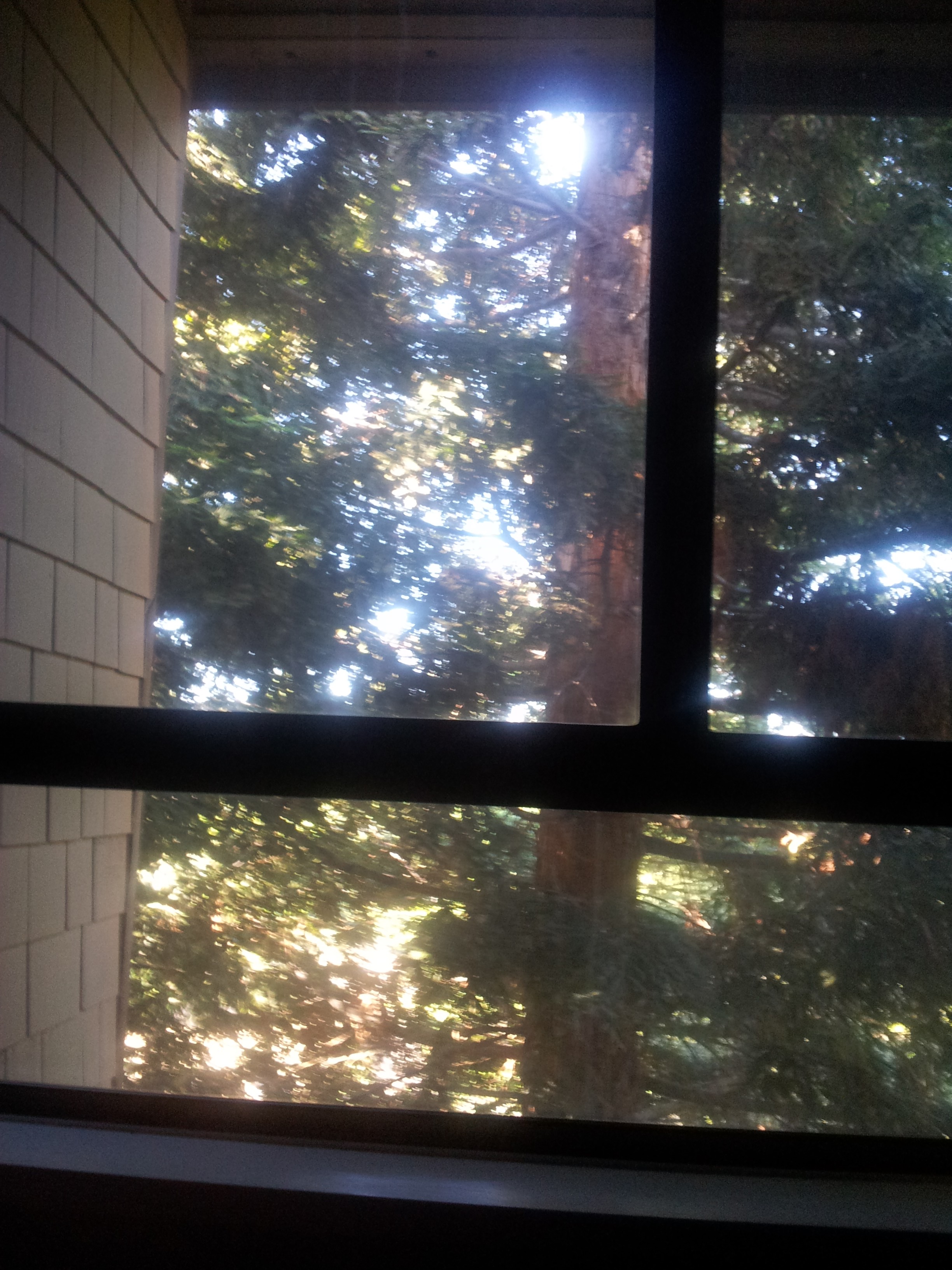
I spent some time shining a flashlight in my mouth and staring at the damage, followed by some aimless wandering around muttering “Okay” at periodic intervals. After calling the dentist and making an appointment, I ended up laying on my study floor with Nala and staring at the tree outside the window.

I wanted to lay there looking at that tree forever.

My Tree

My Tree

A friend of mine posted on Facebook that he didn’t seem to have energy to do even simple tasks, but he was pretty sure he wasn’t depressed. I suggested it could be related to anxiety. I was speaking from personal experience.

The last two months have been among the most stressful of my life, coming at the end of perhaps the most stressful year of my life. And it turns out the symptoms of high stress that you hear about are actually true. They include:

1. general fatigue/exhaustion (I was so tired on Friday, I got lost in a familiar part of town.)

2. lack of ability to focus (my speed of reading has fallen drastically)

3. muscle tension (in my case, particularly in the back, shoulders, and neck)

4. less effective immune system (I’ve had the flu twice in the last three and a half months)

5. insomnia

6. memory loss/unreliable memory (Two weeks ago I double booked myself. I still can’t believe that happened. I am usually a scheduling goddess.)

7. easily overwhelmed

8. tension headaches

9. appetite changes

10. easily triggered fears/worries

I haven’t wanted to write about any of this for a number of reasons. But on Thursday, I felt like breaking my crown was too much; it was the last straw. I considered lying there and contemplating the tree forever. It seemed like a pretty good idea, until the thought wiggled its way into my consciousness that I should write about this. And eventually, buoyed up by this thought, I got up.

As a child, I was taught to try to be as perfect as possible. If I was going through a hard time, I was supposed to hide it.

But this belief contributes to the problem. Not only is it isolating, but it strengthens the idea that if we don’t handle everything perfectly, we are failures, when in reality we’re just the same as everyone else. Everyone has struggles. Everyone goes through hard times. Everyone has moments when they stare at a tree (or the road or the ceiling or the screen or their feet or the dark when they can’t sleep) and want all the difficult things to go away because they seem like too much.

So I’m going to be honest. I’m tired all the time. I prioritize my to do list carefully every day because I can’t get as much done as normal. Nala is always at the very top of that list, and everything else comes after. Sometimes it takes me an hour or more to figure out how to respond to a typical situation or request. I can’t always be there for my friends the way I want to be, and sometimes I have to cancel plans.

I’m not depressed. I love life, I love the world, and I am optimistic about my future. I have so many projects I want to work on, so many books I want to write, and so many people I want to spend time with, some of whom I haven’t even met yet. I get frustrated by my energy levels because I still want to do all the things.

But realistically, there is only a certain amount of stress any of us can handle before it begins to affect things. And I am past that amount. I look forward to a time when that’s no longer true. Hopefully it will be here soon.

And in the meantime, sometimes I will spend some time staring at my tree.

Read Full Post »

Photo Credit: chiaralily via Compfight cc

The scene: A spring afternoon on a concrete patio with metal tables and chairs, close to the train tracks. A slight breeze keeps me worried that I should have brought more than my thin sweater, worried enough that I order a hot drink in spite of the sunny weather. A large dog lays with his head between his paws, gazing with eyes big enough that many of his actions automatically become characterized as mournful even though that’s not his personality at all.

My friend is telling me about a conversation she had with a customer service representative over the phone. After explaining recent events and how they pertained to the issue in discussion, the woman told her, “Don’t worry, now you’re getting the chance to start over.”

I say, “Don’t we all start over at one point or another?”

***

I have thrown away a bowl full of leaden gingerbread dough. I have discarded ten thousand words and started a novel from scratch (and felt grateful it was only that many). I have graduated, I have moved, I have ended relationships, rekindled relationships, started relationships. I have obtained employment, lost employment, quit, and changed careers. I have opened and closed a business. I have walked out of a lobby at a convention and sat for twenty minutes in my hotel room before coming back out and starting again. I have spent months recovering from physical injuries, only to re-injure myself and go back to the beginning of the process. I have rebooted my computer, my phone, huge strands of my life.

So I guess you could say I start over a lot.

***

A friend of mine moved recently, and in the process, she got rid of a ton of stuff. She hardly has any books left (she mostly reads electronically these days), most of her kitchen cabinets are empty, she’s getting rid of big pieces of furniture. I thought to myself, “Wow. This is the way to start over.”

By contrast, when I start over, I tend to carry everything with me: my experiences, my memories, my baggage, and physical mementos from the past. It’s certainly the bulkier way to go. But there is no one right way to start over. There is the way that feels right at the time.

My kitchen cabinets are full. But I do have an empty bookshelf.

***

The title of this post suggests that I’m going to offer up advice or maybe a list of ten bullet points summing up the process of starting over. But this time I don’t have a list for you.

Starting over is hard. A lot of that is because of the fear that often comes with it, the fear and the not knowing and the what if game. And starting over is stressful. If you look at the Holmes and Rahe Stress Scale, you’ll see that almost all of the most stressful events in life have to do with change: beginnings, endings, and starting over.

So really when we’re talking about how to start over, we’re also talking about how to be kind to ourselves and how to be resilient and how to deal with stress.

When have you started over?

Read Full Post »

I really like the metaphor of the phoenix for transformation.

I remember learning about metamorphosis in grade school, and being excited I could remember how to spell it. (I had a happy gift for spelling.) The caterpillar stuffs its little self as full as can be, and then it spins a warm, comfy cocoon. I imagined it sleeping inside, engaged in curious caterpillar dreams, until one day it would wake up and break free, transformed. It sounded so easy.

That’s why I like the phoenix. The phoenix doesn’t have it easy at all. When it’s time for the phoenix to change, it literally bursts into flames. Being burnt to ash has to be excruciating. And there might very well be some uncertainty involved as well, because what if it doesn’t work this time? What if the phoenix does not become reborn? And even if it does, what if it’s different in some critical and upsetting way? What if it is no longer its self? What if it’s lost something valuable in the process of being reborn?

Photo Credit: Ryan McCurdy via Compfight cc

So often, that’s the reality of transformation. We don’t always know exactly what the end result will be. When I sit down to revise a manuscript, I often have the troubling thought, “What if I end up making it worse instead of better?” When I set out to change myself, I can only guess at the ripples that are going to spread out from that change. And those ripples, once they start moving, are extremely difficult, if not impossible, to control. Who knows where they’ll travel or how fast they’ll spread?

What we can know is the process will hurt. It will be uncomfortable. Bursting into flames, even if it’s only metaphorical, is clearly not the easiest path available to us. Excising large portions of a manuscript that represent hours upon hours of effort can be nausea-inducing even while it’s liberating. Any large change is going to require an adjustment period when nothing feels quite as it should. When you rip off the band aid, you take some skin and hair along with it. When you fling yourself into the world newly altered, you flail and whack one or more of your limbs against obstructions that you hoped to avoid or didn’t even know were there.

But the idea of the phoenix also encompasses hope. The phoenix is reborn. It returns renewed and refreshed, brighter and fiercer. It is a thing of beauty and fascination. Through the pain of the fire, the old is burned away, leaving space for something new and wonderful.

Read Full Post »

“I think it takes a great deal of courage to be one of the people who tries to change the world in some way — I’ve heard too many people say that they’re not trying to change the world, that they’re just trying to entertain (particularly in their writing). But that’s the point of that? If you’re not trying to change the world, what are you doing, and why? I mean, doesn’t the world need changing?”

-Theodora Goss, Magical Women

We are taught to believe that changing the world is difficult, if not impossible. Changing the world, we are led to understand, is something people wish to do in their youths, and at some magical point, we will grow up, realize it’s impossible to create change, and give up our childish idealism.

But we artists, we’re all about changing the world. (And all of us have the capability for being artists inside of us, whether or not we’re creating art professionally.) In fact, art is so much about creating change, about communication, about shedding a different light on a subject, that it seems disingenuous to insist that the only purpose of any given piece of art is entertainment. This is simply not the case the vast majority of the time.

Take the wildly popular Broadway musical The Book of Mormon, for example. It’s by and large a fluffy, crowd-pleasing musical with fairly unexceptional music and a big sense of humor. It pokes fun at the Mormon church with practically every lyric. At first glance it isn’t obviously world-changing. And yet. By the end, the audience is given the impression that while those Mormons are funny folks with lots of hilarious traditions and a bit of hypocrisy thrown in for good measure, they’re basically just like everyone else, good people trying to do good in the world. And I’m sure some audience members have left at the end of the night of theater with a different opinion of the Church of Latter Day Saints than when they walked in.

Photo Credit: an untrained eye via Compfight cc

Now, it might be true that we do not intend change or anything deeper in our work than a romping adventure yarn. We might be unaware of some of the messages we are sending with our stories, our characters, and our imagery. But so many of the choices involved in artistic work either support the status quo or disrupt it. We are changing the way people see the world, even if it’s unconscious on all sides. If we write a series of novels with all active men characters and all passive women characters, then we’re helping to shape our readers’ ideas about gender. If we write and perform songs that glorify hate crimes, then we’re helping our listeners form ideas about what constitutes acceptable behavior.

We are taught that we don’t have power, and sometimes it’s easier to believe that and thus avoid taking responsibility. But the truth is, so many of us have the power to change minds and hearts. And sometimes the most important minds and hearts to change are our own.

Read Full Post »

I am tired of apologizing.

Expressing empathy and sympathy? I’m all over that. But I’ve spent way too much of my energy apologizing for things that have nothing to do with me.

And you know what? I’m not sorry.

  • I’m not sorry that I may have different priorities than other people .
  • I’m not sorry that I have things I want and things I need.
  • I’m not sorry that I want to be treated with respect and consideration.
  • I’m not sorry for the life choices I’ve made, even if people don’t agree with them or understand them.
  • I’m not sorry that I don’t want to discuss my financial situation with strangers.
  • I’m not sorry that I have a different sleep schedule from the norm.
  • I’m not sorry that the ways in which I spend my time are not obvious.
  • I’m not sorry that I notice and sometimes point out sexism and misogyny in media.
  • I’m not sorry for my own opinion and assessment of myself.
  • I’m not sorry when I choose to say no.
  • I’m not sorry that I can’t be perfect.
  • I’m not sorry when I refuse to take on other people’s issues willy nilly.
  • I’m not sorry for the existence of my emotions.
  • I’m not sorry for standing up for myself.
  • I’m not sorry for communicating.
  • I’m not sorry for being complicated.
  • I’m not sorry that we don’t have every single thing about ourselves in common.
  • I’m not sorry when people won’t take care of themselves. I feel sad about it, because I know how bad that feels, but I am not responsible for the choices they make and the pain they put themselves through.

This is what it looks like to not be a people pleaser. You start apologizing a lot less frequently. Instead you communicate, and you compromise, and you take responsibility for yourself and your actions, and you surround yourself with people who are willing and able to take responsibility for themselves and their actions, and when you screw up on occasion, you apologize and make amends, and everything works out a whole lot better.

Stop apologizing for yourself. Start living instead.

Read Full Post »

Here’s a new word I learned recently. I found it on Jonathan Carroll’s Facebook page, and he found it on this neat Tumblr. As is often the case for me, I’m not completely sure how to pronounce it. But I love it all the same.

Metanoia – the journey of changing one’s mind, heart, self, or way of life

At a party this weekend, someone asked me what I’d been thinking about lately. I was momentarily flummoxed because I’ve been so busy and preoccupied, I don’t feel like I’ve been thinking as much as I normally do. But now, a few days later, I realize the best answer would have been, “I’ve been thinking about metanoia.” Because really, I’ve spent a lot of time thinking about self change over the past few years.

At its heart, metanoia involves crystallizing priorities and learning to know yourself as well as possible. It’s hard to change something when you don’t understand what’s there to begin with. Strangely, it sometimes feels more like remembering than anything else. Remembering who you are, and remembering who you’ve always been. That knowledge becomes the starting point for whatever change you wish to create.

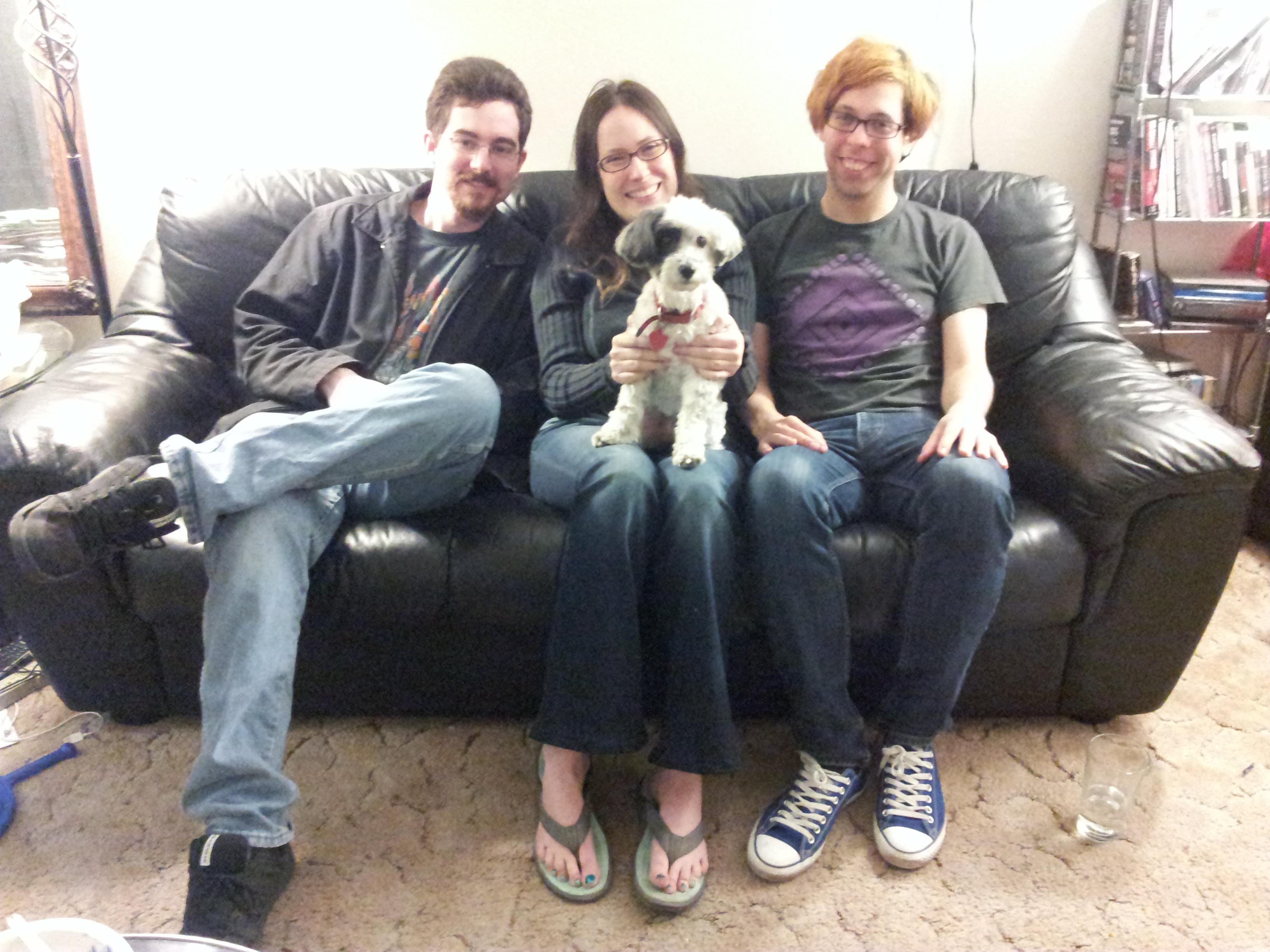
Surrounded by three of my dearest friends, I am very much myself.

Surrounded by three of my dearest friends, I am very much myself.

“Remember who you are.” That was my advice to a friend of mine this weekend, the only words I had to offer. It’s so important, isn’t it? Because without that, we can become so very lost or muddled or distracted. And we worry about what happened before and what is going to happen later and we compare ourselves to other people and measure ourselves against other people’s visions of who we are, instead of remembering that other people have nothing to do with our essential knowledge of ourselves. Good people can help support us while we take the journey, but it’s a discovery we must make on our own.

So metanoia is essentially taking yourself by the hand and saying, “Hello, you. Let’s take a walk down by the stream and lay down on the mossy bank and talk for hours and hours. And I will do my very best to listen carefully to what you have to say. I will listen to the good parts, the parts that make your heart soar and your body sing and your mind dance. And I will listen to the dark parts, the parts that are difficult and scary and secret and that you maybe wish weren’t true. And I will love you for all those parts, even the parts that I want to change, and then together we can decide where we want to go next.”

Remember who you are, my friends. Treat that knowledge like the precious thing it is.

Read Full Post »

You know how people say that as you get older, you stop changing? They see the teens and early twenties as this turbulent time as you explore and establish who you are, and then your identity is set, and you are who you are.

This idea of selfhood has always disturbed me. I have never wanted to become set. I enjoy playing with identity, whether it is through writing characters, wearing clothes and costumes, playing RPGs, or acting on the stage. I like thinking about why I do what I do, and why people in general do what they do, and what influence society and families and past experience has on our emotions and decisions and worldviews.

But recently (and by recently, I mean ten minutes ago), I realized my own relationship with identity is more complex than that. Because I do believe there is an unchanging core of myself, of Amyness, that has existed as far back as I have memory. Just as I can look at old photographs of myself and see my current face in the chubby cheeks of two-year-old Amy, in the gawkiness of nine-year-old Amy, behind the huge glasses of teenaged Amy, so I can feel an ongoing sense of self that has persisted throughout my lifetime.

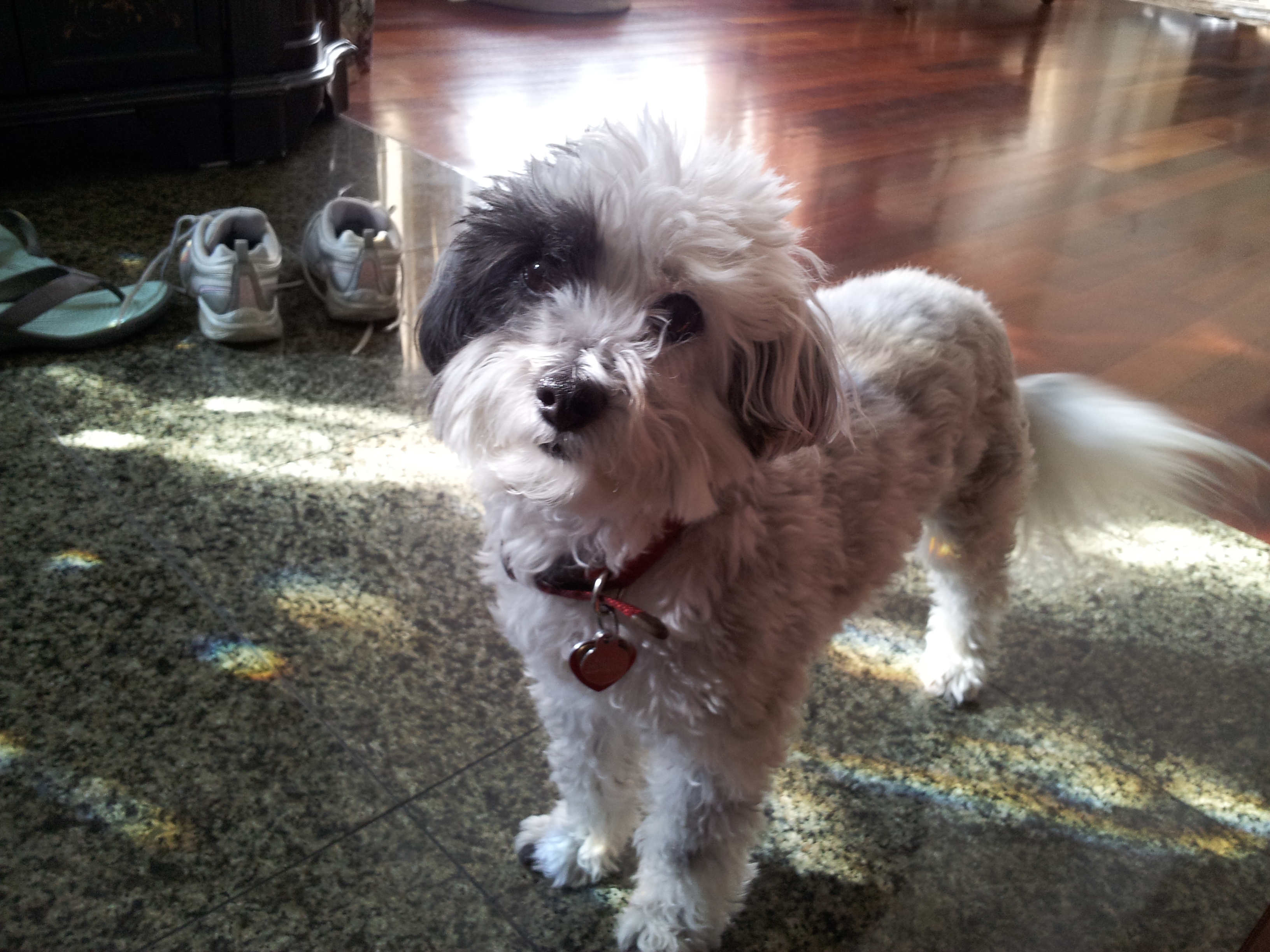
Yes, the title of this post might be a thinly veiled excuse for a cute dog photo.

Yes, the title of this post might be a thinly veiled excuse for a cute dog photo.

My friend Rahul wrote in one of his excellent essays: “I wonder if individuality is something that deepens in you when you start to live purposefully.” To come at the same idea from a slightly different direction, I think that through life, we can grow in ways that bring out and express our own individuality with greater strength and clarity. And these changes that we can make that allow ourselves to shine out ever brighter, these changes are what I am personally committed to and what I hope will never stop, no matter how old I become.

I have spent the last few years completely dedicated to change. Some of that evolution has been documented here on the blog, most explicitly through my backbone project. What I realize, though, is that I haven’t been changing the core of who I am. That sense of self is my foundation, the part that by never changing allows me to have the strength to challenge myself and my assumptions and make so many other changes. What I have been changing are my attitudes, my behaviors, my reactions, my understanding, and my choices. I have the freedom to change so much because ultimately, I am already so grounded in who Amy is that my core identity can survive through any changes I care to make.

And through all this change, I see the juxtaposition that so many of us struggle with. On the one hand, we want to be the same. We want understanding and empathy and sympathy, we want people to like the same things we like, we want to have that sense of connection that can come from sharing. But simultaneously, we want to be different. We want to rebel, we want to express our individuality, we want to be SPECIAL. And there is a push and pull created between these two opposing desires.

Only they’re not opposing at all. We can be both ordinary and special. We are all the same in some really basic ways. But each of us also has that core of identity that makes us who we are, whether we are consciously aware of it or not, and each core varies ever so slightly from every other core. And each of us has our own slightly different point of view as we travel through life. And this different selfhood and different perspective makes us special even as we are awash in sameness. In a similar way, we can be changing like mad even as we’re always ourselves.

Isn’t it neat the way that works out?

Read Full Post »

« Newer Posts - Older Posts »