Feeds:
Posts
Comments

Posts Tagged ‘Amy Sundberg’

Dating is not Simple

I still talk about dating a fair amount with my friends. We compare notes. We make lists. And whatever our discussion–comparing paid dating sites to free dating sites, considering the virtues and difficulties of meeting people in person instead, considering what traits in a partner are essential and which simply icing, contemplating profile photos–we always tend to hit on one consistent idea: that dating can be really freaking difficult.

There’s this sense of indignation about the whole thing, this semi-random process that is supposed to help you discover this compatible someone. It seems so inefficient! It seems so random! It’s painful to be rejected and it’s painful to be doing the rejecting.

But then I think about what many of us want dating to achieve–to find a life partner–and I’m not surprised it feels complicated and difficult. I am almost more surprised it works at all. It feels like a tall order.

Ferrett wrote a great post about dating last month–The Abandonment Rate, Or: Date More, God, Date More–in which he said:

It took me fifteen years of constant dating before I found the love of my life, and I consider that to be a pretty lucky catch. You? You’re trying for life-changing things. That’s good. Life-changing things involve a lot of perseverance. So keep at it.”

Fifteen years? That’s a fair amount of effort.

My friend has this theory that it is important to know the three things you most want in a partner. It can only be three, and it includes everything from personality traits to likes and dislikes to basic life information. Only three! I was skeptical, but it didn’t matter because I still had to figure out my three. I spent a lot of time coming up with and rejecting and ending up with more than three.

And now, I can’t even remember what I finally settled on. I’m fairly confident one of the three was kindness, but the other two…um….maybe intelligence? I don’t know. The whole exercise felt like boiling something complex down into something so simple it no longer held any meaning.

So then I wrote a list of what I was looking for in a partner, and I let myself write down as many items as I wanted. I put a lot of stuff I thought was important, but I also let myself put down things that seemed silly or trivial or like low-hanging fruit but I still wanted: things like “knows how to dress self for different occasions” (I live in Silicon Valley so this is an actual perk), “has an overlap with my musical taste,” and “not intimidated by Shakespeare.” (Yes, I really put those on my list.)  

I put 59 items on my list. Yes, fifty-nine. A far cry from three. But reading my list now, I keep nodding and saying, “Um, yeah, of course I want that. And that. And that.” It’s not that I felt I needed all 59 things to be perfectly true, and a bunch of them are low bars, but even so. I did want a majority of them.

59. Not really all that simple.

Strangely, I found making that list to be liberating. Because then dating did not have to be simple. It validated my actual experience, which was that finding someone compatible to date wasn’t that straightforward, that there was no algorithm that took all the guesswork out of the equation, that the only real way forward was to meet a bunch of people, and most of them wouldn’t be right, and that would be tiring, and all of this was perfectly normal.

I’m not saying there aren’t things you can do to simplify and streamline the process, or to improve your chances of success. But online dating sites sometimes make it seem like dating is straightforward shopping; you flip through a seemingly infinite catalog of biographies and jokes and photos, you are presented with an array of options, there are percentages and matching protocols that are supposed to help you narrow things down. All very clean until you hit the next part of the process: actually communicating with another human being, a person who can’t be completely boiled down in a few paragraphs and photos and multiple choice questions.
OkCupid.com_website_homepage_screenshot

Looking for a life partner is anything but simple. You’re going to spend A LOT of time with this person. You’re going to make major life decisions with them. You’re going to be influenced by them. You’re going to get to know them very well, and they’re going to know you very well. Your life is going to be changed by being with them. And the process of dating is going to reflect the importance of this decision.

No list, whether of three or of fifty-nine, is ever going to be able to accurately reflect the reality of that decision. Instead we have to get our hands messy and do the work of getting to know other people, and maybe even more importantly, getting to know ourselves.
Read Full Post »

I write a lot about friendship.

A few days ago I saw someone share an article about friendship, and someone else responded to their post by saying that this was literally the first article about friendship they’d ever read. This made me feel good that I’m already writing about it, and also sad there is a relative dearth of information and thought about friendship out there.

When I write about boundaries and friendships, I know some of you are wondering what kinds of boundaries are common to need to set in the context of friendship. I think this varies a lot from person to person and from friendship to friendship, but I do have some general thoughts on what I look for in my friends and what kinds of boundaries sometimes come up.

Kinds of issues that come up in friendships that sometimes require boundary setting/enforcing:

  • Responding to invitations
  • Responding to favor requests
  • Having to cancel plans due to illness or emergency
  • Arranging logistics (including scheduling, timing, transport, choosing restaurants, choosing activities, issues of payment)
  • Addressing mobility/health issues
  • Asking for empathy instead of advice
  • Negotiating the flow of the house guest (either being one or hosting one)
  • Figuring out frequency of communication/visits, response time, safeguarding work time, etc.
  • Seeking safe spaces at public (or semi-public) events
  • Dealing with problematic behavior in communities and friend groups
  • Responding to sexual requests
  • Responding to peer pressure
  • Asking for and giving emotional support
  • Speaking up on issues of social justice
  • Asking for consideration
  • Taking someone into your confidence

I’ll be honest for you: I look for friends who don’t need much boundary enforcing because that’s the part I find the most difficult and tiring. I can often set a boundary now, especially if I have a little time to consider, but enforcing it against push-back wears me out extremely fast. And no wonder. Boundary enforcing means your boundary has already been crossed (or is not being taken seriously after being stated), and it often involves hurt feelings, or at the very least disappointment, especially if it’s a repetitive issue. So it’s much easier to reach a point of diminishing returns if you’re having to enforce regularly. (Also, one way of enforcing is to introduce space into the friendship, and if you have to introduce enough space, you’re not interacting much with that person anymore anyway, so selecting for low levels of enforcement tends to happen at least somewhat organically.)

I look for friends to whom I can say no. Sometimes that will be no to a favor, and sometimes that will be no to an invitation. In an ideal world, I could say yes to everything, but the reality is that I have lots of commitments to fulfill, as does any adult: in my case, to my work, to my own physical and mental well-being, to my dog, to my boyfriend, etc. I have idiosyncracies to work around for maximum well-being, like my general dislike of driving too much, especially in traffic, and my sleep issues. I have budgetary restraints. I get sick and injured. All of these things mean that sometimes I have to say no, and I look for friends who will understand that it’s not personal and that I would help them or hang out with them if I could.

I look for friends who will make a commensurate effort. This doesn’t have to be equal in an obvious sense: for example, I have friends who always come over to my place and other friends who I always visit at their places, and as long as everyone is cool with that, it works fine. But both people have to be willing to find time for each other and to care about how the other person is doing. And both people have to be getting some of their friendship needs met.

I look for friends who are generally kind. I used to think, oh, it’s okay if my friend is sort of an asshole, as long as they treat me well. But I’m not as on board with that line of thinking anymore because it’s so easy for that kind of behavior to eventually spread out to include you. Obviously no one is perfect, but I think kindness is probably the most important trait I look for in friends.

And in that vein, my closest friends are generally pretty good at empathy. I become closest to people with whom I can be honest and genuine about myself and my life without fear of judgment, with whom I can share openly and who will share openly with me, who can listen well, and where there is interest and care on both sides.

Finally, one of the great part about friendships I’ve learned while negotiating these things is that they can be flexible. They do not need to be all things, all at once. While my closest friendships are usually built on empathy, I also have great friendships based upon a shared interest (shocking, I know!) and great friendships based on compatible senses of humor. I have friends who I get to see one-on-one and friends that I almost always see in groups. I have friends who I talk to all the time and friends I only get to see once a year. I have friends who I don’t ask for certain things because I know they cannot give them to me, and I appreciate what they do bring to the friendship and ask for those other things elsewhere.

I used to think friendship came in one certain mold, but in learning the many ways friendship can present itself, I’ve found a lot more interest and connection with the world. I thought by setting boundaries I’d be limiting myself, but instead my boundaries allow me to be more present and more accepting of who my friends are.

Even myself. Maybe especially myself.

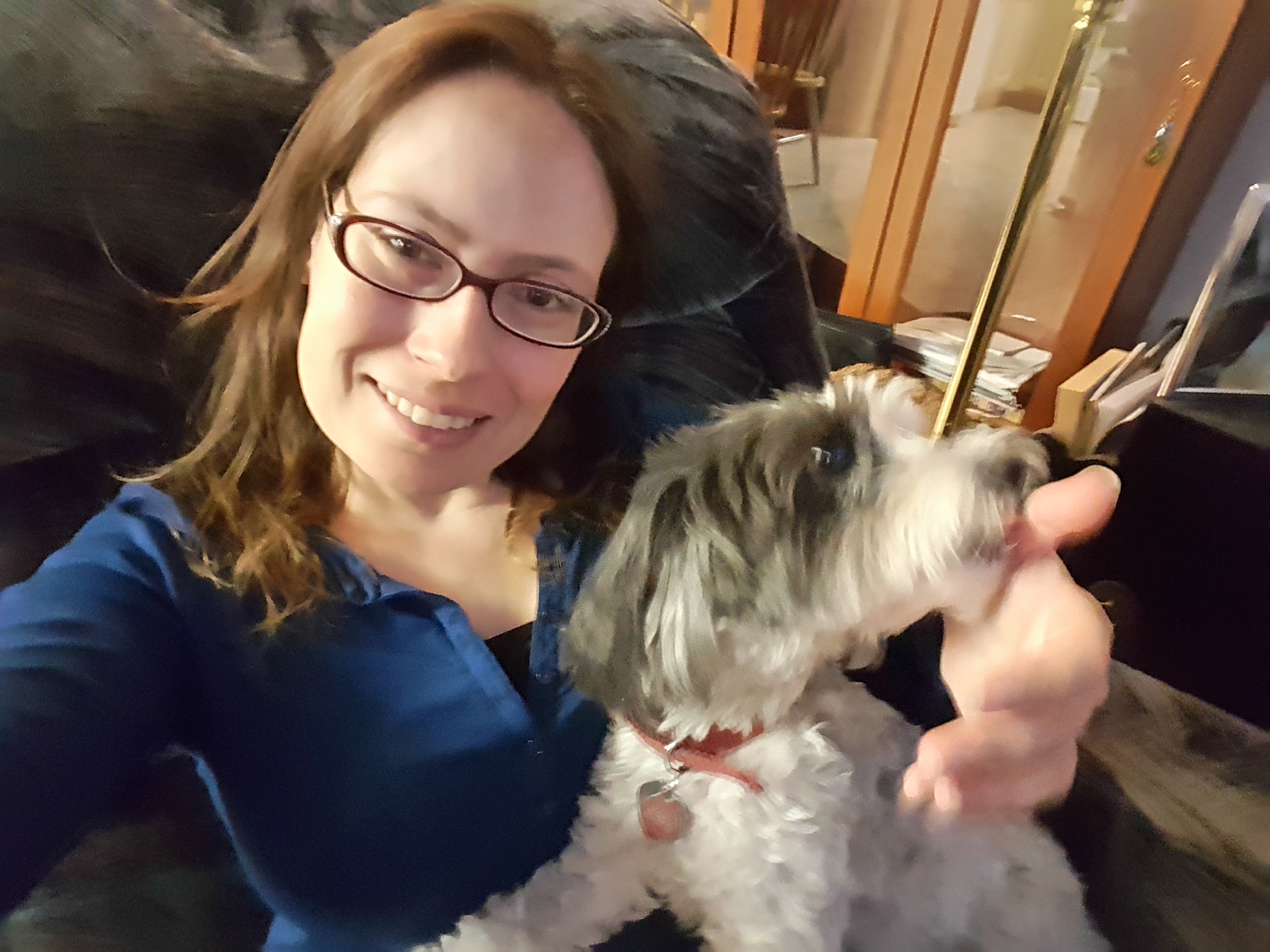
Oh look, it's my best doggie friend.

Oh look, it’s my best doggie friend.

Read Full Post »

Several months ago, a friend came up to me and said, “Hey, you know how you’re always writing about boundaries and stuff like that? I don’t really get what you’re talking about. That’s never come up in my life.” And I wasn’t surprised, because this friend has great boundaries and is one of my boundary role models, so boundary situations don’t come up very much in his life, and when they do, he doesn’t notice that’s what they are because he has healthy instincts and just, you know, sets boundaries and goes on with his life.

I remembered this conversation when I read the post The Asshole Filter, which is about how you can go about unconsciously arranging your life so you end up dealing with assholes a lot, even when you’re not an asshole yourself. (Warning: that post is yellow font on a purple background and causes my eyes some pain. It may or may not also cause your eyes pain. But it is super interesting.) Anyway, the post is mostly in the context of accidentally developing an asshole filter in an organizational context, but a lot of it is also true in an interpersonal context.

So, here is one way to unconsciously develop an asshole filter in your personal life:

You start out with poor skills at setting and enforcing personal boundaries, probably because your home life as a child was kind of dysfunctional.

Then, as an adult, you meet a random bunch of people. Some of these people are mostly great. Some of these people are mostly assholes. You might be starting out with a few assholes from childhood as well.

What happens next? Well, the assholes will be thrilled to know you. Meanwhile, some of the great people aren’t going to end up being very close to you because the fact you can’t set boundaries makes them uncomfortable. Others of the great people are going to watch you not dealing effectively with the assholes, and this is going to train them into acting more like assholes to you too, because they’re going to think that kind of behavior doesn’t bother you. Also, a lot of people are pretty great overall…except when they’re not met with firm boundaries, in which case everything gets really messy instead. (When boundaries aren’t clear, mess tends to result, even if all people involved are otherwise amazing.)

Finally, dealing with assholes takes up a lot of time and energy. A LOT. So you end up being exhausted all the time, and therefore you aren’t putting that time and energy into your relationships with the great people, because they don’t need that much maintenance, so they gradually drift away. And you become more and more tired, even while you keep making excuses for the bad behavior that seems to be becoming more prevalent and thinking that if you could only be more patient or more kind or more understanding or more [fill in the blank here], everything would improve drastically.

At some point, you maybe stop and look around you and realize your situation is really unfortunate. You might even realize the whole “it’s always all my fault and everything in the world is my responsibility” thing isn’t ever going to bear fruit. But at this point you are incredibly tired, and it kind of seems like everyone in the whole world sucks, or at the very least takes an awful lot of energy to deal with. All you want is to be less tired all of the time.

So then, acting in self-preservation, perhaps you begin to isolate yourself. Which, unfortunately, makes complete sense given the faulty assumptions the data seems to imply but is actually a terrible idea. Because then you are cutting off ways of ever figuring out that actually, there are some really great people out there. All you can see, at this point, are the assholes.

Dark night of the soul time.

Then, if you’re really lucky, the writing community steps up and shows you incontrovertible evidence that not everyone is an asshole. People are unexpectedly kind to you. You start working as hard as you can on learning how to set and enforce boundaries and begin building a community of people who care about you and are good for you.

And then your asshole filter starts working in the opposite direction, and life is infinitely better.

No assholes beyond this point. (Photo Credit: derekbruff via Compfight cc)

No assholes beyond this point. (Photo Credit: derekbruff via Compfight cc)

Read Full Post »

Gilmore Girls seems to have a reputation for being in a certain demographic. A very female demographic. Which is particuarly interesting because, according to Wikipedia, for its first four seasons (which I would argue are its strongest), it ranked first in the 18-25 demographic for women and second in the 18-25 demographic for men. Meaning, people really liked it regardless of gender.

That being said, one of my male friends was embarrassed to admit he’d watched and enjoyed the show. Another one scoffed at the idea of watching it because it has “girls” in the title, so it obviously wasn’t for him. I think maybe it has an (undeserved) reputation for being like a Lifetime movie, something that would only appeal to women (and yes, there are all kinds of problems with that statement).

Of course, this tension is not universal. There is also the guy I was dating last year who was watching through the series and would tell me his thoughts on the episodes. And the popular two-guy podcast Gilmore Guys, hosted by one guy who loves the show and one guy who had never seen it before.

I started watching Gilmore Girls for the first time several years after it had concluded, when I was in the process of getting a divorce. I loved it at that time, and will probably always love it, because the show centers around Lorelai Gilmore, a (off-and-on) single woman in her 30s (she’s 32 when the show starts and 39 when it ends) who is not mostly defined by her relationships with men. She is smart, she is stylish (sometimes), she is assertive, she is ambitious, she is very good at her job and eventually becomes a successful entrepreneur, and her most important relationship throughout the seven years of the show is not a romantic one with a man (although she has those too!) but with her daughter. And as a smart woman in my 30s who didn’t want to define myself primarily by my relationship to men, I found watching stories of this fictional woman’s life vastly reassuring.

But as I continued watching, I came to realize Gilmore Girls is more than just a reassuring reflection for me. It’s really funny! (In an absurd way, which is my favorite.) It’s a smart, witty, show with a fast pace, a quirky style, and tons of pop culture references. It brings its characters and its setting of the idealized but bizarre small town of Stars Hollow (which is a character in and of itself) into vivid being. And it happens to center around the lives of a mother and daughter.

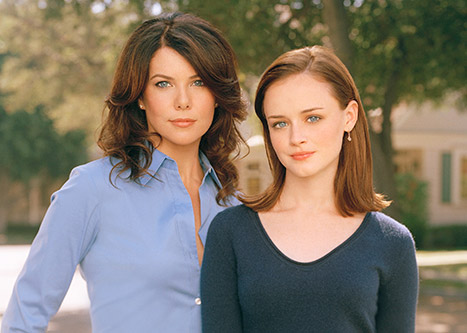
gilmore girls still

Yesterday, I read Penelope Trunk saying, “Men don’t need to see themselves reflected back to themselves in a relationship. They need to see themselves reflected back as some sort of hero. Women want to see themselves reflected back as being competent in relationships.” She goes on to say this because most women want kids, and it won’t be relatable for them to watch other women putting a career before family.

One of the reasons I love Gilmore Girls is because, while what Ms. Trunk says may or may not be true on a wider scale (and if it is true, it’s because of what our society raises women to value, so if our pop culture changed, this truth would most likely change as well), I know that I personally love seeing myself reflected back as some sort of hero. Who wouldn’t like that? Why can’t I be a hero and care about my relationships all at the same time? And it is a joy to watch a female character in her 30s be so competent, successful at business, and with a full and fulfilling life.

Also, it’s great to see other people, including women, who aren’t super competent at relationships (which Lorelai patently is not). Not only does that provide much-needed drama to sustain a longer-running television series, but come on! Relationships are difficult. None of us is perfect at them. And it’s affirming to see that lack of perfection reflected back in our media. In her book Daring Greatly, Brene Brown says that feeling like we’re not alone and that our personal experience is relatable and not unique to us is very important for shame resilience. Which is one reason why what the media portrays (and does not portray) is so critical.

Ultimately I’d like to see all kinds of characters reflected as heroes in media: female and male and non-binary genders, white people and people of color, young people and old people, straight and gay and bi people, people who are the same as me and people who are different from me. I want to see people being great at relationships and I want to see people who are messing up at relationships. I want to see warm family connections and I want to see troubled ones. I don’t really want to see absolute perfection because flaws are what make characters–and more generally human beings–interesting and three-dimensional and who they really are.

So dislike Gilmore Girls all you want, but dislike it because of its flaws as a show: the mess of seasons six and seven, the way it’s depressing to watch Rory descend into the dystopia her mother had escaped a generation before, the inconsistencies of the world, the way it deals with economic and class privilege. Dislike it because you don’t like watching dysfunctional family relationships or because it’s not a show centered around mysteries or action or whatever genres really engage you.

But don’t dislike it because it’s a show for women. It’s not, no more than Sherlock or Star Trek are shows for men (to mention two other shows I really like).

It’s a show for everyone.

Read Full Post »

I’ve always considered myself to be a brave person.

Not physically brave. And given that a sprained toe that is supposed to take two to three weeks to heal is for me taking three months and counting, you can maybe begin to see why. I’ve got a different risk/reward ratio going on there.

But emotionally brave, absolutely.

In college it was about a ten minute walk down to the music building from where I lived. I’d be trundling downhill to go to an audition, and I wasn’t the hot shit in the music department AT ALL, so I knew the odds of me getting anything were incredibly slim at best. And in my head, I’d think, “This is absolutely insane. Why am I doing this? I could just turn around right now and go home. That is a real option for me.” And then I’d think, “Yup. And now I’m going to audition, goddamnit.”

And I wouldn’t get the part, but it kind of didn’t matter because I’d won just by showing up prepared and doing my thing. (It also kind of did matter, but after a while you get used to rejection so that it’s just this normal crappy thing that happens a lot.)

It actually became a point of pride for me, that if something made me frightened (except for physical things because I also care about self-preservation), I would make myself do it.

Recently, someone pointed out that often bravery is an action of willpower, and a lightbulb went off for me. No wonder I think I’m brave! I have willpower up the wazoo!  And I’m very, very good at getting myself to do the things I’ve decided I want or need to do.

What does this photo have to do with being brave, Amy? I have no idea, but I like it, so there you go.

What does this photo have to do with being brave, Amy? I have no idea, but I like it, so there you go.

Anyway, lately I’ve been having some trouble being brave, which is unusual for me, but, well, it’s happening. I’m having to use all my willpower, which I hardly ever do, and I’m still really struggling. Like tonight, I have to do this thing–have a conversation, actually–and thinking about it makes me feel literally ill, that’s how afraid I am to do it. But this is a great chance to notice some concrete ways to cultivate bravery, right? Right.

For instance, I know I want to avoid this conversation. It would be so easy to just…not do it. So I’ve made concrete plans around it to make it easier to do it than to not do it. And I’m writing about it here, and by the time this post publishes tomorrow morning, I’d better have done it. So I have created some built-in accountability. Yes, I could cancel the plans and I could change this post, but the effort of having to do those things will encourage me to stick to the original plan.

I’m trying to stay in touch with reality. Because reality is, this conversation does not have the power to destroy my life. Not even close. So thinking about unrelated stuff in my life that I’m happy about is actually really helpful for staying grounded and keeping perspective. Likewise, I’m doing my best to think about the conversation going well and all the reasons it might go well, and to avoid thinking too hard about the conversation going poorly. Aka I’m practicing positivity.

I’m doing my best to keep it simple. I find it’s really important when making plans to set goals I can actually meet. I don’t mean that you have to set easy goals, but rather realistic goals. Writing a novel, for example, is not easy, but I can make a plan to write a novel that, based on past experience, I’m pretty confident I can follow. So for this conversation, my goals are to show up and ask for one thing. It’s not going to be easy to ask for the one thing, and it doesn’t help that I hate asking for anything, but I’m pretty sure I can do it because at least it’s only one.

I’m being kind with myself. I’m using up so much willpower right now, that means I don’t have a lot of it left over for other things. Which means I’m not being super productive right now. But I’m being passably productive, and everything important is being taken care of, and that’s good enough.

And finally, I’m quite happy to lean on some good old-fashioned stubbornness, of which I always have a large supply.

I still think I’m a brave person. I think I will go, and I will feel queasy, and I will stammer a whole bunch, and I will have this conversation.

Just because bravery isn’t always easy or flashy or elegant or clean doesn’t make it any less true.

Read Full Post »

I’ve been thinking about the cliché about how it’s the journey that’s important, not the destination.

I completely believe this. And for me, the fact this is true brings much of my happiness and enjoyment of life.

I’ve been trying to think of what in my life it has ever actually been about the destination, and I am drawing a blank. Even when I travel, it’s not so much about getting to a place as it is about what I do in that place once I’m there. In other words, it’s about the experience of the travel and the location and what I learn while there, not just the achievement of checking it off my list.

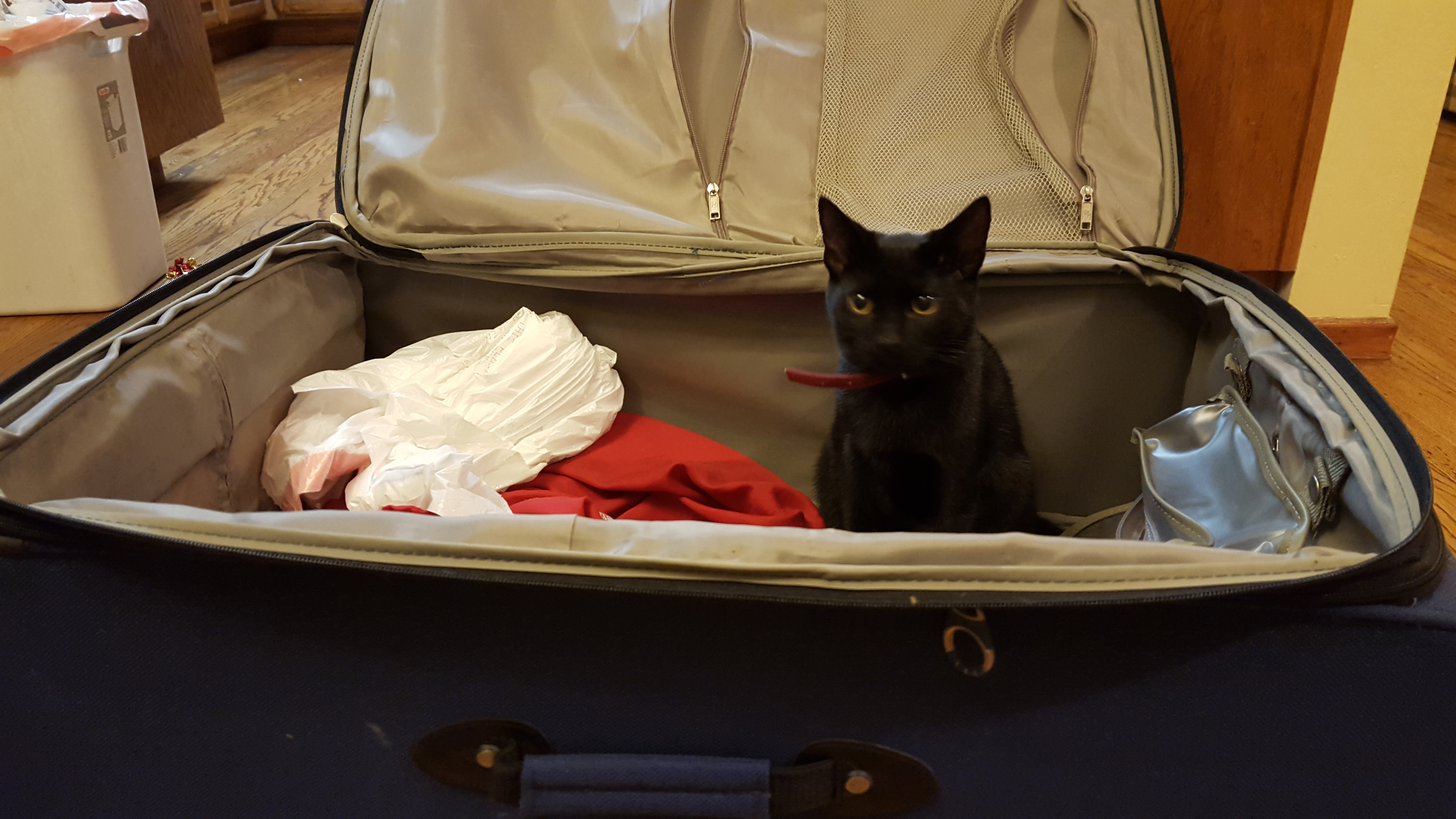
This kitten totally agrees with me and wants to take a journey himself.

This kitten totally agrees with me and wants to take a journey himself.

University? Of course getting the diploma has been helpful (although less so than I would have thought), but that’s not what I think of first when I think of my college years. I think of getting to immersively study music, I think of all the life skills I learned, I think about moving away from my family for the first time, I think of my friends and my professors and the university environment.

Career and artistic aspirations? In a writing career, there are various milestones, and I take goal-setting seriously. But each of those milestones is only a blip on the radar, and then everything continues on, and I keep writing. Finish a draft? Great, keep writing. Sell a story? Great, now write another one. It is the enchantment I have with writing that keeps making it worthwhile. And that is all about the process.

Romantic relationships? Well, now that I’ve achieved Girlfriend Status(™), I can cross this off my list of priorities. Haha. But again, this is mostly not about having a significant other or being married or whatever step you’re at. It’s about building something meaningful over time. There is no checking out just because you’ve reached a specific status.

Friendships? Amazing pets? Etc? Same as above.

It’s not that I don’t enjoy reaching a goal or celebrating a milestone. And sometimes, usually when it involves something really unpleasant, all I can really focus on is the end result as I push through the work to achieve it.

But most of life isn’t spent celebrating milestones. Most of life isn’t checking off big accomplishments. Most of life is in the moments in between.

So it behooves us to find a way to make those moments something precious.

It’s no accident that Viktor Frankl’s three criteria for a meaningful life have little to do with materialistic metrics for success. Having work or a project that you find meaningful, having and maintaining personal connections with people and/or communities, and having a positive perspective on suffering and life in general: these three things are all focused on the moments between. They are ongoing. They revolve around fostering a general sense of purpose rather than centering on very specific goals. And, I think, they allow for greater resilience in the face of adversity.

So yes, I care the most about the journey. I care about the hours I spend writing that rough draft, and I care about the time I spend with the people I love. I care about the two weeks I spent in Bali, not just my ability to say I’ve been there. I care about improving at things and learning new things. I care about the regular Thursday night dance and having ice cream and struggling to practice singing as much as I’d like. I care about taking a walk with Nala every day.

And when I reach a destination, I try to stop and appreciate it, but ultimately it is never long before I’m thinking about my next steps. And I’m glad that’s true.

To me, the next steps are happiness.

Read Full Post »

What I Did in Bali

I’m back!

And I’m even somewhat over the jet lag (although wow, the jet lag going to and from Bali is possibly the worst I’ve ever experienced) and mostly over the cold I caught my last morning in Bali. Note to self: don’t expect to come back from a vacation halfway around the world, however relaxing it might be, feeling well rested.

But I had a truly amazing time. And I’m going to share a few highlights with you.

Most relaxing moment: The couples’ wrap and massage at our beach-side resort.

Best dinner: The five-course meal at our resort in Seminyak.

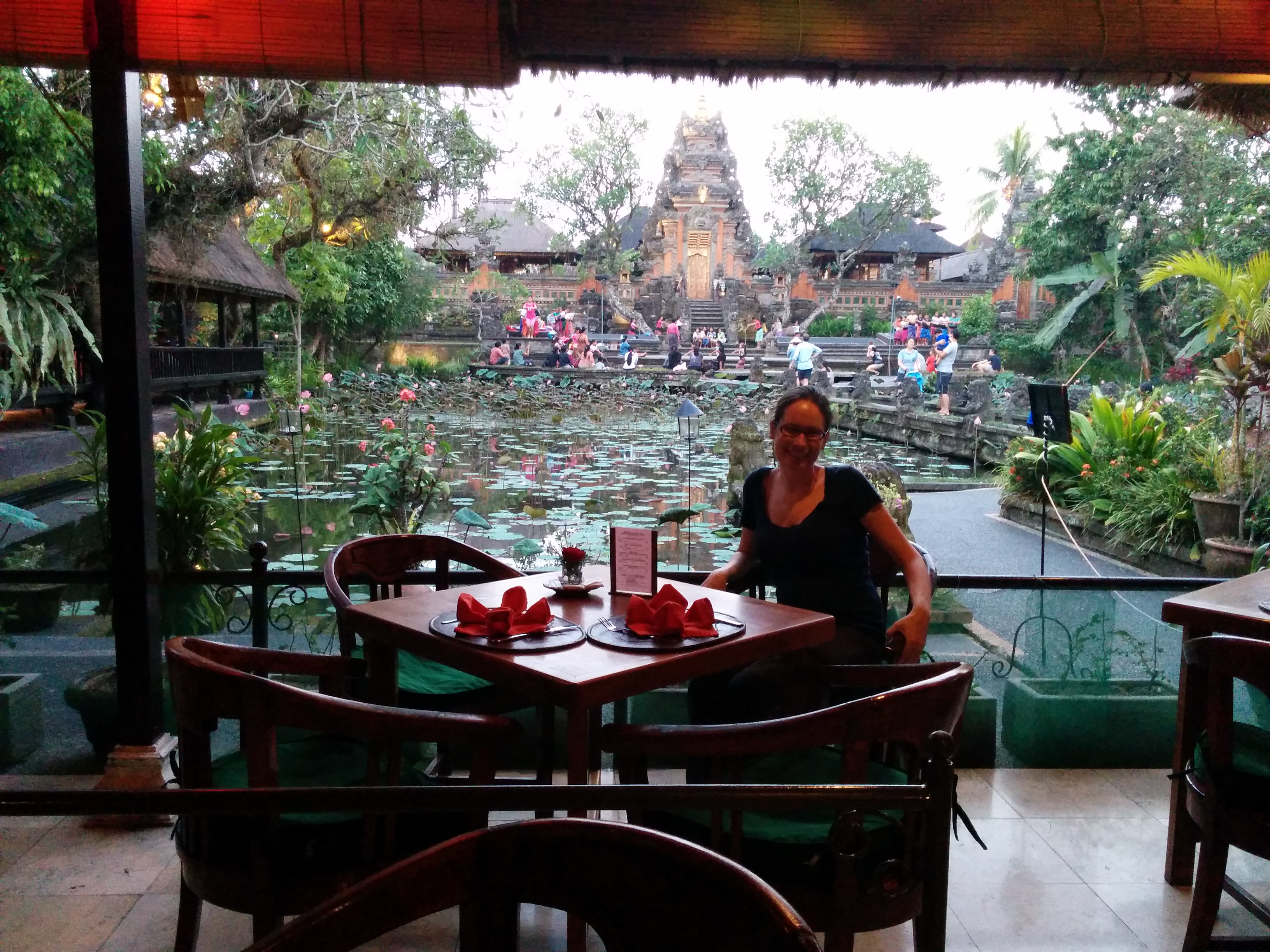
Runner-up: The Lotus Cafe in Ubud, for obvious reasons.

IMG_20150925_181557

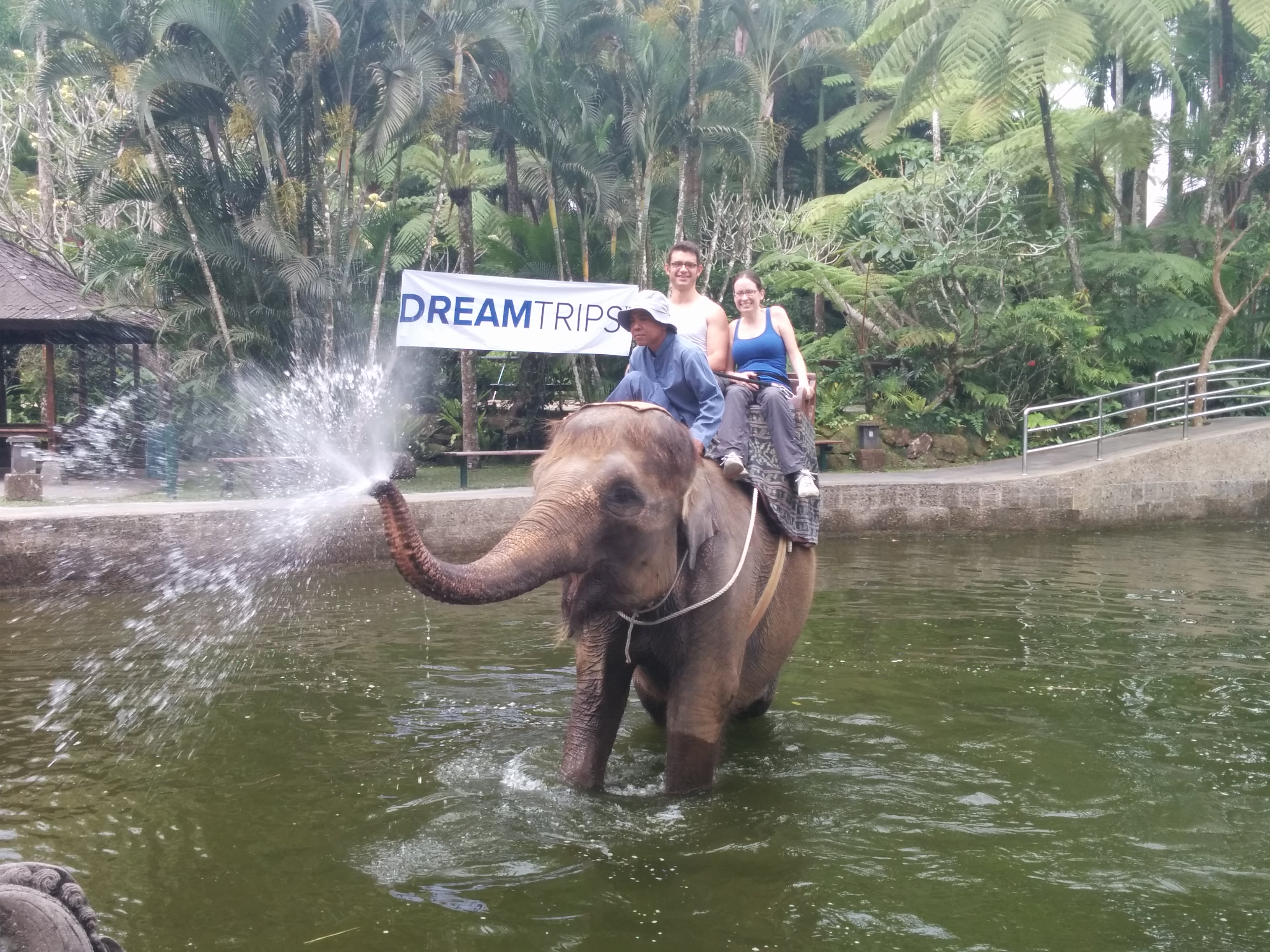
Most exciting moment: Riding on the back of Daisy the Elephant

IMG_20150928_153205

Most challenging moment: The entire journey home, when I was really sick and our flights were disrupted by a typhoon.

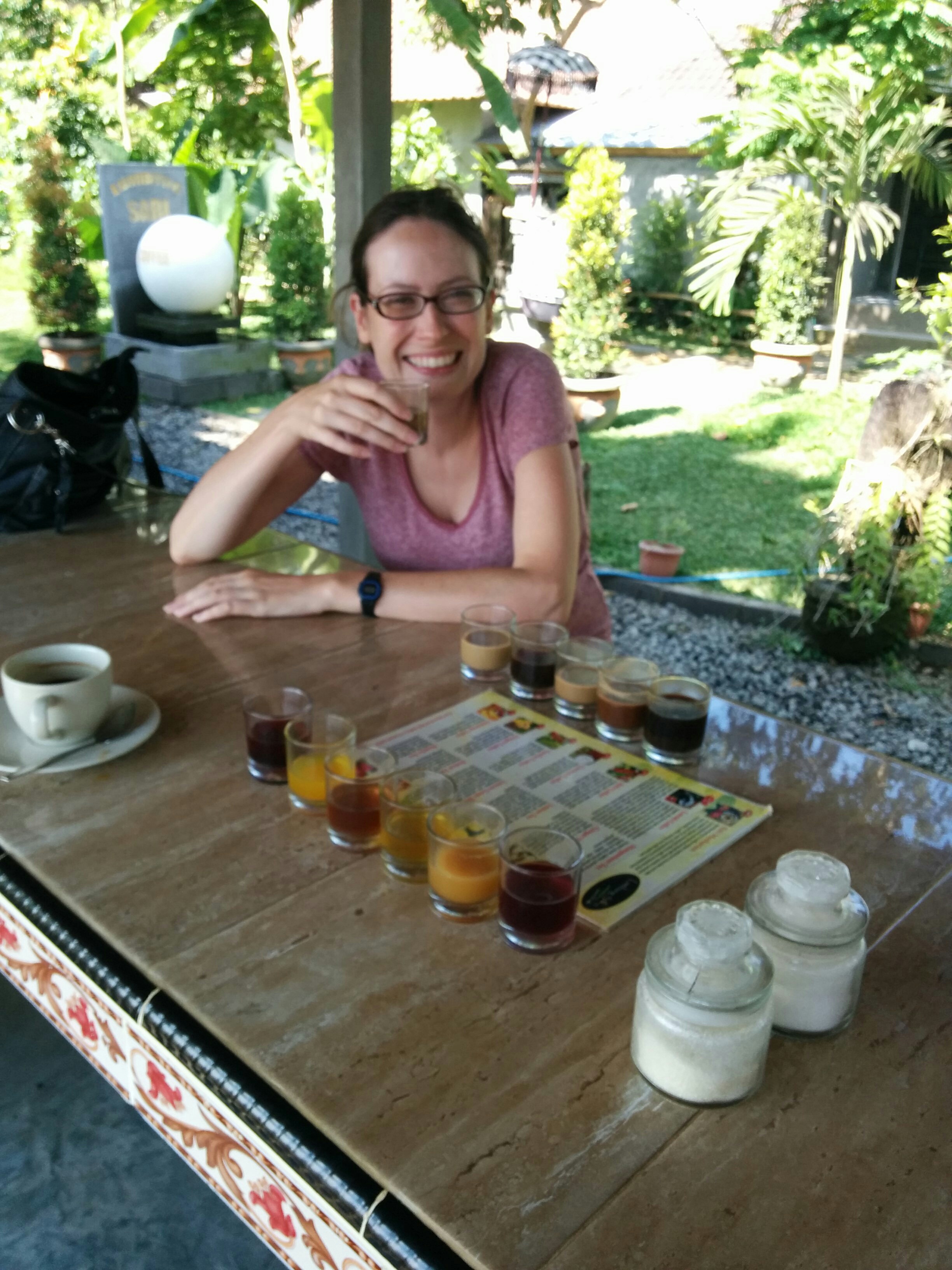
Most surprising moment: Actually liking the coffee I tasted at the coffee plantation

Yum yum!

Yum yum!

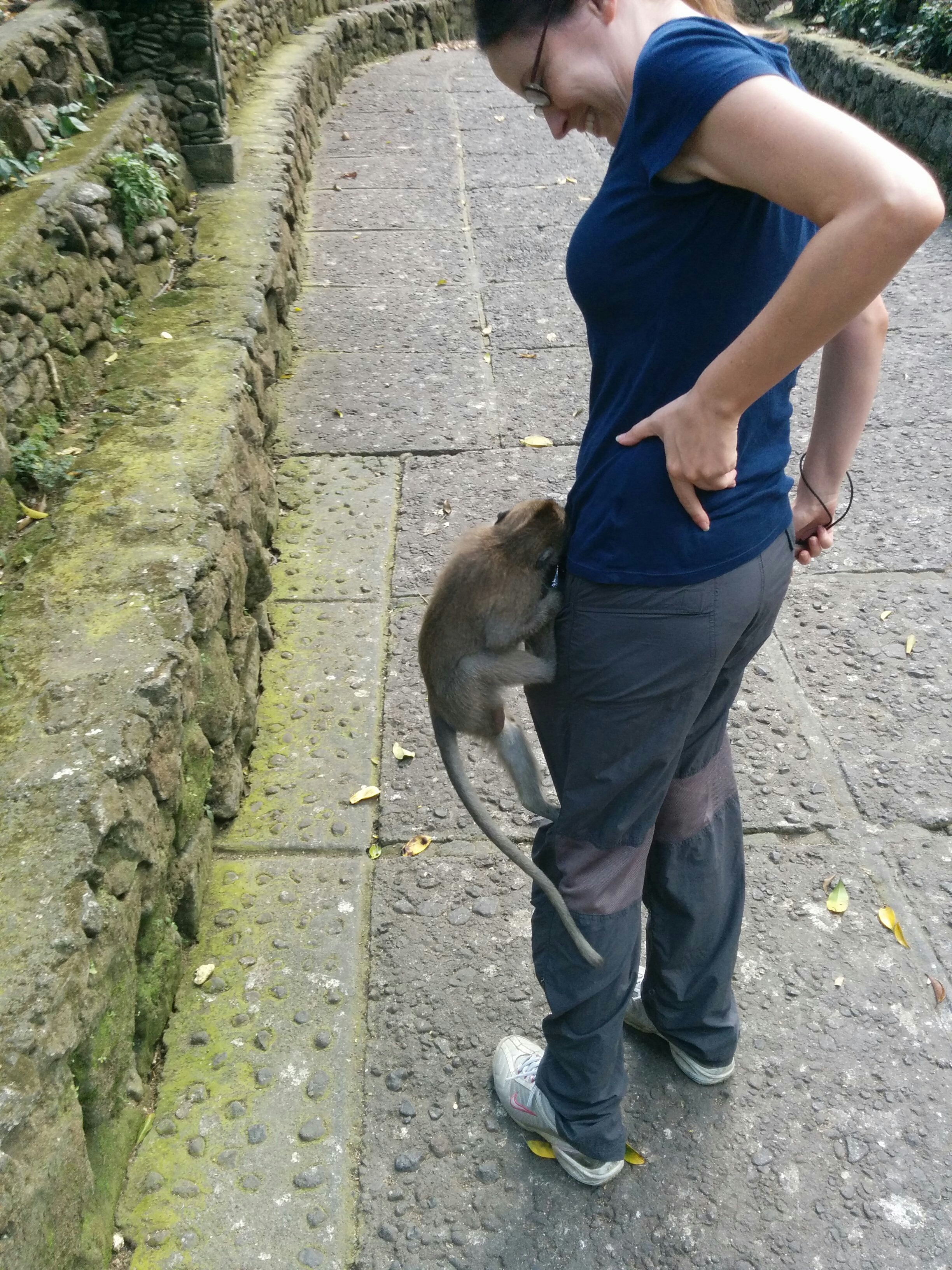
Scariest moment: When this little monkey couldn’t get my water bottle out of my pocket and therefore refused to let go of my leg.

My new friend!

My new friend!

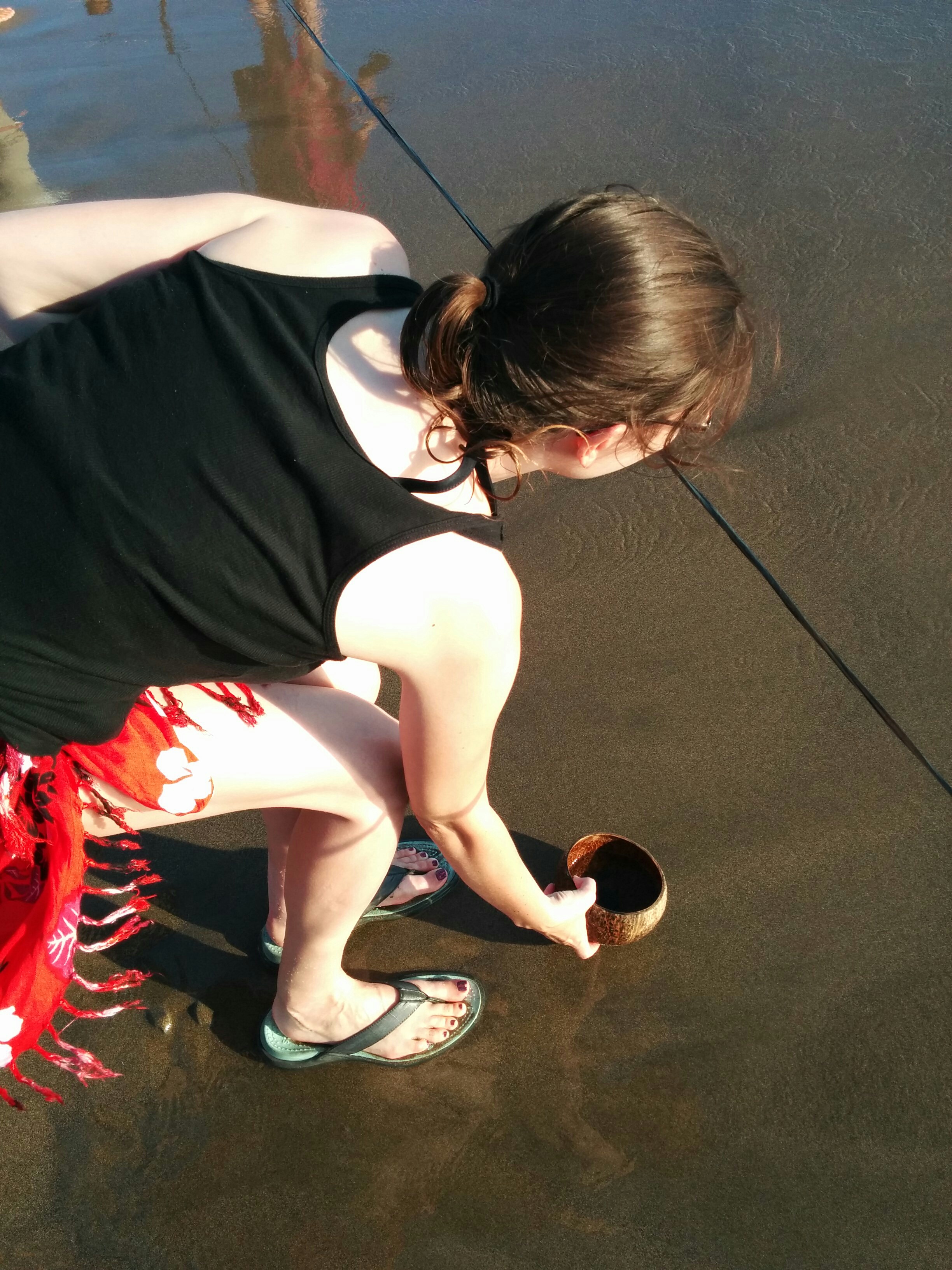
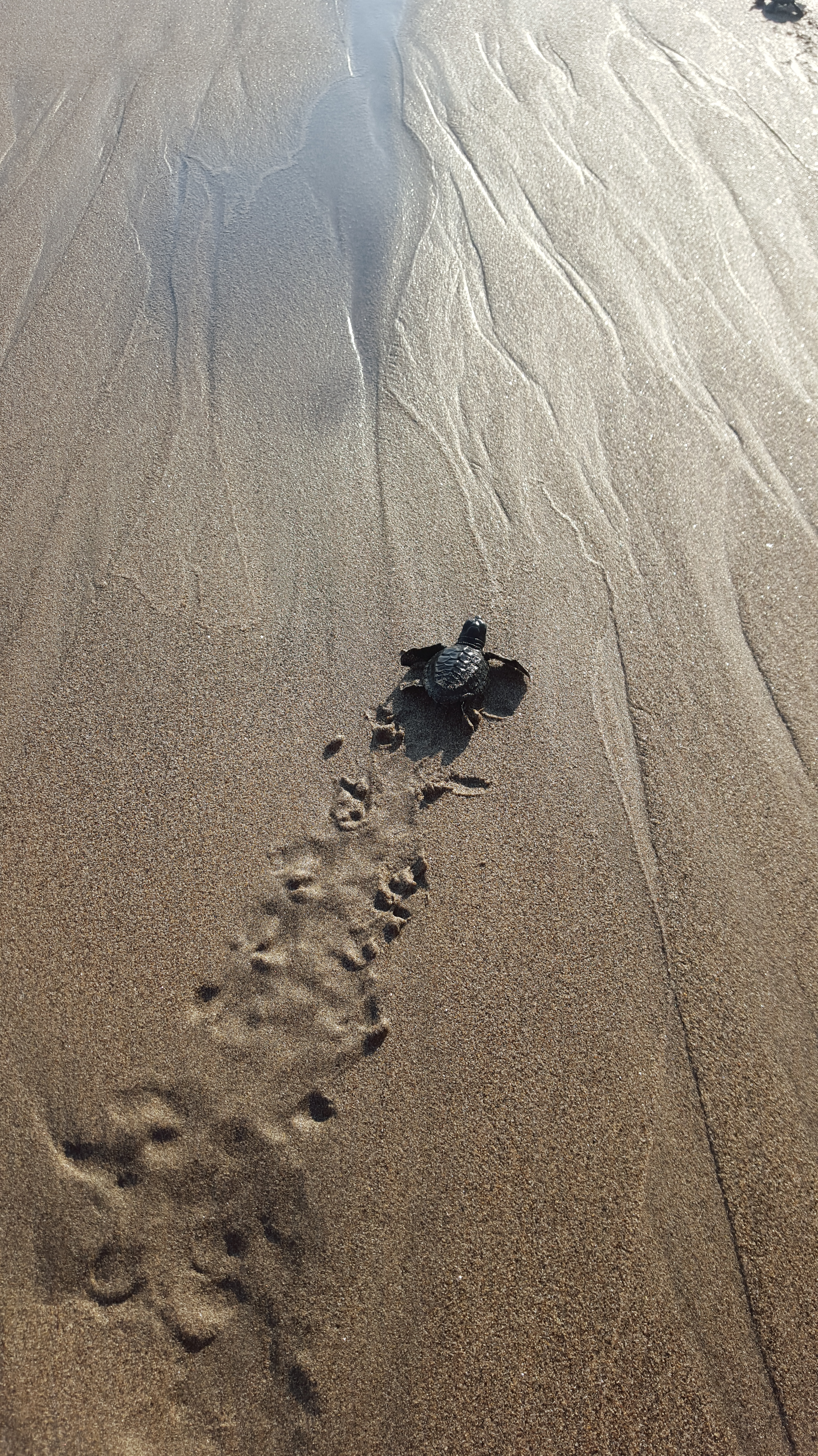
Most touching moment: Releasing baby sea turtles into the wild.

IMG_20150922_171337

Go, Egbert, go!

Go, Egbert, go!

Most romantic moment: Dancing with the boyfriend in the surf to one of our songs while the sun set.

20150922_030020

Favorite cultural experience: Pura Luhur Uluwatu and the Kecak Fire Dance we saw there

IMG_2057

Best hello: From Nala when I got home in the middle of the night

20150930_185216

Well, okay, this was the next afternoon, but close enough!

I am also happy to report I did not get sunburned, I only got a few bug bites, and I didn’t succumb to dengue fever. I did eat a lot of great food, go swimming in the Indian Ocean for the first time, and make out like a bandit in the souvenir shopping department.

I also got to see several gamelan instruments (which are made of metal) being transported via scooter, which is a sight I don’t expect to forget any time soon.

And now to get back into the swing of things at home!

Read Full Post »

A year ago I imagined a better life for myself.

I didn’t really believe it could happen, but I did believe it was what I wanted. So it was worth going all out for, even though I thought my efforts might very well end in failure.

I don’t think I’ve ever been as intensely social as I have been during the last year. I’ve been to so many parties and so many events, so many dances and movies and shows and luncheons and bruncheons and dinners and coffees and teas and outings. I’ve had the same small talk conversations maybe hundreds of times, and I’ve gone deeper whenever I saw the chance. I’ve spent time with hundreds of people, many of whom I’d never previously met.

I thought, I will find my people. I will find my balance. I will figure out what gives me joy and what does not. I thought, I will practice setting boundaries until it gets a little bit easier. I will practice saying no until that gets a little bit easier.

I thought, I will find the people who believe me and are patient with me and love me as I am. I will find the people who see me. I will find the people who make me feel safe, and I will love them with everything I have.

I thought, I know these people exist because I’ve already met a bunch of them. And I want to spend more time with the ones I’ve already met. And I want to meet more of them. And so that is what I’ll do, even though I kind of hate humanity right now and all I really want to do is wrap myself in a blanket and watch Pride and Prejudice over and over again. (The A&E miniseries version, if you really need to ask.) And maybe also Star Trek: The Next Generation because I’d just started watching that and it seemed like a good idea.

I thought, do the things you know you should do and be as hopeful as you can, and then if it all ends in misery, you will totally have an excuse to do something drastic like become a hermit or move to a foreign country or write angsty beat poetry.

And now a year has gone by, and it turns out it did NOT all end in misery. It turns out all those things I knew I should do were actually great ideas. It turns out all that social time resulted in me starting and/or continuing some fabulous friendships and feeling connected and getting a lot of practice and becoming more and more clear on what is important to me.

And now I am very happy with my friends and my communities and my boyfriend.

And I am also really freaking tired.

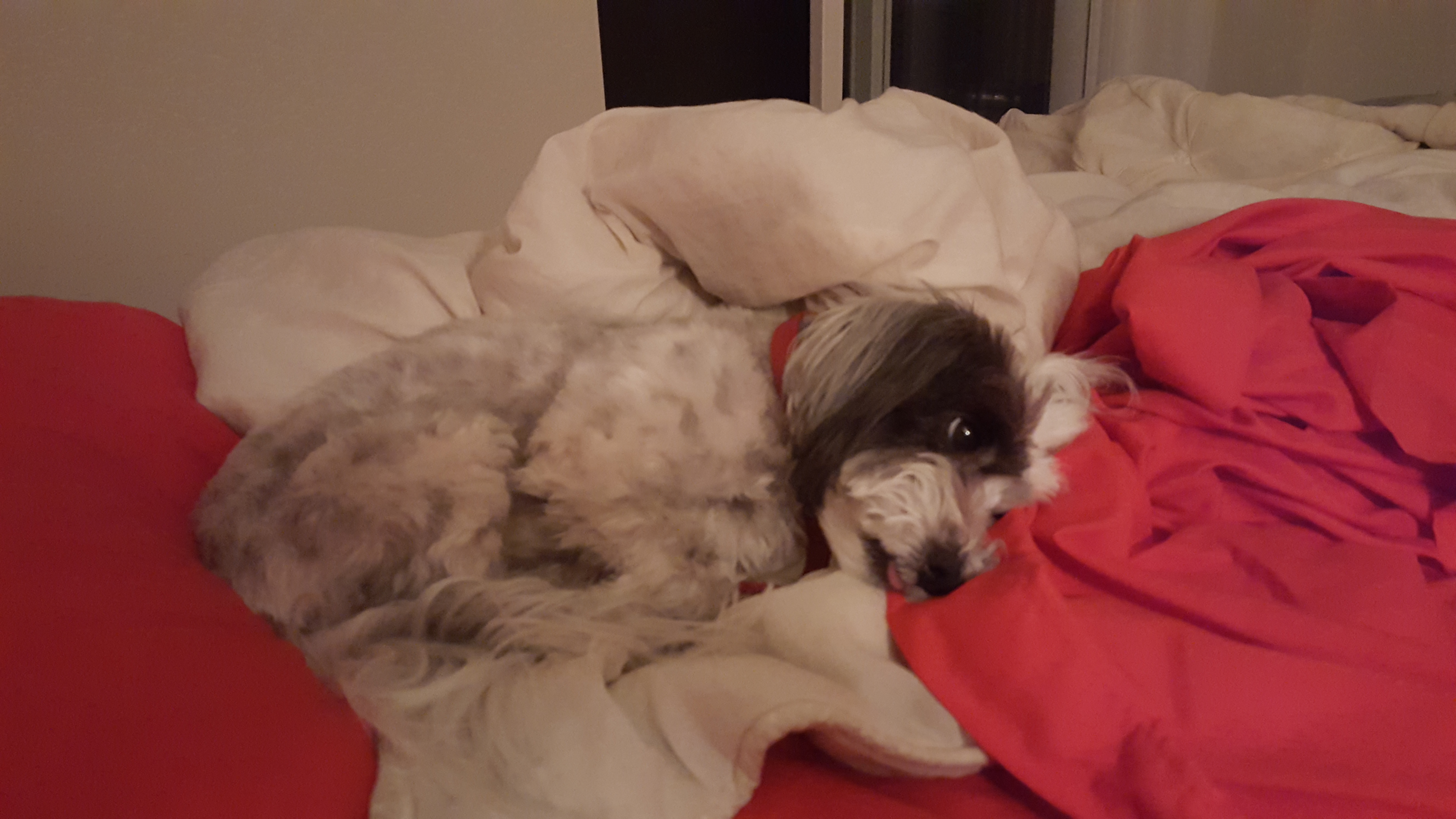
Nala is also tired.

Nala is also tired.

I get invited to large events where I’ll know hardly anyone, and I think, do I really have to go? And then I think, hahahaha, no, I do not! And that is very exciting for me. I look at the week ahead, and I know I should schedule-fu things up. And then I think, hahahaha, no, I can take things easy this week. And, you know, maybe wait for people to invite me. And in the meantime do an Orphan Black rewatch, because when is that not a good idea?

My sprained toe has forced me to take a slower pace, but once I realized that didn’t mean I’d be sitting around in enforced isolation for two months, it’s actually been kind of nice. Well, minus the pain and frustration and cabin fever, anyway. The slower pace has been nice. The reduced volume of small talk has been nice. The permission to focus more on self-care has been nice.

I’m so glad I made all the efforts I made, and they have paid off in spades. Enough so that now I can give myself a little break.

And soon I’ll be going on vacation, and it feels like the perfect time. But, more about that next week!

Read Full Post »

I feel very protective of my close friends.

I forget this is true until one of them tells me a story of some awful thing someone else has done to them. And I don’t even have to think about it. I want to tell them how amazing they are and how much they don’t deserve that kind of behavior, and I want to listen to them vent if they think that will make them feel better, and I want to validate the hell out of them.

And I’m angry on their behalf. Much angrier than I would be if the same thing happened to me. And none of the weird delayed reaction anger either. I’m pretty much angry right away. Angry and sometimes indignant.

One time a close friend of mine called me up on the phone with this story of some really bizarre and inappropriate behavior of a mutual acquaintance of ours. And I realized this mutual acquaintance could, no doubt, use his access to me to make things even worse for my friend. And I knew the mutual acquaintance would have no qualms in doing so.

I decided then and there to let that mutual acquaintance go. It was one of the easiest interpersonal decisions ever. If there had been inappropriate behavior directed towards myself, I would have agonized over it, and wondered if I was being reasonable, and wondered if I needed to give some more benefits of the doubt, and worried about possible repercussions and burned bridges, and worried about what people would think, and wondered if it was somehow all my fault. But because it was about my friend, doing the right thing was easy. To this day, I think about the boundary I set with satisfaction and zero doubt.

This, then, is what it means to become your own best friend. It can be a powerful thought experiment. It is advocating for yourself the way you would advocate for your actual best friends. It is wanting for yourself the kind of respect and appropriateness you would want for your actual best friends. It is stopping and telling yourself the story of what’s going on right now as if the story was happening to your best friend instead of to you, and then noticing the difference in reaction and allowing that to guide you accordingly.

And it is also about learning to see and appreciate yourself the way your best friends see and appreciate you. I think my best friends are fabulous. I am blown away on a regular basis by all their good qualities, and I feel so lucky to know them and have them in my life. I love hearing about what they’re doing, their successes and their failures, their joys and their sorrows. I want them to be happy, of course, but when they are having a hard time, I see how courageous they are. I see how hard they’re trying. I see the risks they are taking. I see how deeply they feel and care. And I admire them so hard.

To be my own best friend, I need to admire myself that hard. To be my own best friend, I need to be blown away by my strengths, not only be bogged down by considering my weaknesses. To be my own best friend, I need to remember that my hard times don’t automatically reflect poorly on me.

To be my own best friend, I need to embrace the idea of being as protective of myself as I am of the other people I love.

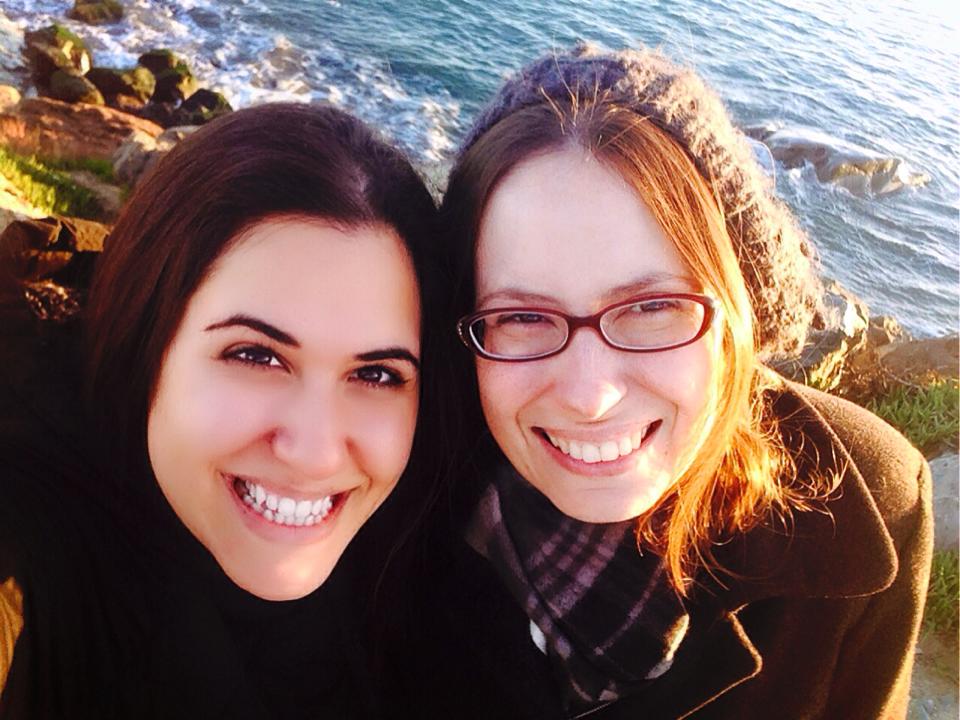
One of my amazing besties!

One of my amazing besties!

Read Full Post »

The timing was like something out of a novel.

I had reached the end of my patience with dating. I’d had a few fizzles, and I wasn’t even upset anymore as much as I was simply DONE. I looked at my life, and everything else was going really well. It was only dating that was making me unhappy, and I felt less and less incentive to take the time and energy out of all the parts of my life I did like for something that was feeling like a waste of my time.

I wrote “On Dating Fatigue.” On Facebook, one of my college friends suggested I take a break from dating. I replied, and this is a direct quote, “I’m not taking a break per say, but I have taken a step back and am not actively looking.”

Little did I know I’d start dating the man who is now my boyfriend nine days later.

*

To be honest, I didn’t really know what I meant by taking a step back, but I was forced to figure that out a few days later when someone asked me on a date. And I decided it didn’t mean I couldn’t say yes to a date I really wanted to accept, but it did mean I wasn’t going to be making effort to make those invitations happen.

The same day I made this determination, I went to game night. Attending for the first time was Future Boyfriend, who I had met a couple of times prior, always at big parties. But this time, we sat next to each other while we played Resistance, and he tried to convince everyone I was a spy instead of him, and I tried not to flirt with him. As the night wore on, this proved to be more and more difficult, but I was determined! I wasn’t going to make any effort! No flirting allowed!

By the end of the night, despite my best effort to make no effort, my best friend had invited Future Boyfriend to do a puzzle room with us, and I had somehow, with the least effort I’ve ever had to make to do such a thing, arranged for a bunch of us, including Future Boyfriend, to play BSG later in the month. In some circles, this might have been considered a failure of not making effort, but I was secretly pleased.

And also determined to make no further effort.

*

Two days later, Future Boyfriend asked me on a date. A less discerning individual could not have been faulted for thinking it was a Maybe Date, but I knew. It was a date.

I spent the requisite amount of time agonizing over what to wear: something as flattering as possible but also casual because of the whole Maybe Date thing, preferably something that didn’t look like I’d thought about it much at all, and could I get away with a skirt? Because sometimes guys try to take advantage of skirt-wearing on early dates, so it’s always a risk.

I wore the skirt. He was a gentleman. We made it to date two.

After date two, there was another game night. And a puzzle room. And a party. And a sprained toe. And BSG. And rushing Nala to the emergency vet together late at night. And more dates. And some frank conversations.

And eventually, he became my boyfriend, full stop.

*

One might extrapolate from this story that not making effort was a winning strategy.

But one would be wrong about that.

PLOT TWIST

A few months before the above events, I ran into Future Boyfriend at a party. We barely talked, but he sent me a friend request on Facebook, so I invited him to my birthday party. (effort)

Then, in a somewhat uncharacteristic move on my part, I invited him to go to a wedding with me. (effort) But he was busy and couldn’t go.

At my birthday party, I felt like I had no time to talk to anyone. But when I found out he was leaving, I carved out the time to have a short conversation with him. (effort) During the conversation, he mentioned in a few weeks he was going to start coming to game night.

I went to game night. I probably would have gone anyway. But due to my freakish memory, I knew he would be there. (effort?)

Would I have invited him to my birthday and the wedding if he hadn’t sent me a Facebook request? No.

Would I have been there at that game night if I hadn’t known he was going to be there? Maybe…?

Would he have come to my party and game night and asked me on a date if I hadn’t asked him to that wedding? Maybe. Maybe not.

I guess we’ll never know.

*

No, refusing to make effort isn’t some magical answer. Instead, here’s what I take from this: you never know. You never know when and how past efforts may pay off.

So much of being social is about planting seeds. You put the seed in the ground, and if you can, you give it a little sun, a little water, and you wait and see. Sometimes nothing comes of it. Sometimes some shoots begin to emerge from the soil. Sometimes it’s a different kind of plant than you thought it would be. Sometimes it takes more time, and sometimes it takes less.   

And sometimes you get really, really lucky, and the timing is impeccable, and you begin to date someone right when you’ve finally stripped off enough layers to be truly genuine. And they show up, and they match you. And suddenly commitment doesn’t feel like this big, scary, pressured thing.

Instead it feels natural, like something you actually want. And you are even happier than you were before.

20150820_194052

Read Full Post »

« Newer Posts - Older Posts »