Feeds:
Posts
Comments

Posts Tagged ‘Amy Sundberg’

Here Lies My Grief

I am grieving.

#

I dive right into the morass of emotions. This is my way. I don’t want to stifle it or pretend it isn’t there. I find numbness disturbing. I sometimes allow myself to be distracted because conserving energy is important, but this is not my primary concern.

I carry on with the essential daily tasks. I eat, I shower, I sleep. I take care of the little dog. This is always a weird part of grief, this continuation of life. It feels like everything should stop, but of course it never does. Knowing this, I do what I must do without complaint, but also without much attention.

Mostly, I feel. This grief is a palpable physical experience. My temperature fluctuates. I’m breathing normally, but I sometimes feel like I’m not getting enough oxygen. There is a knot between my breasts that won’t go away. A scattered panicky feeling lurks at the back of my awareness. I burst into tears unexpectedly, or I would do except no tears are actually unexpected right now. I wander around my apartment, and then I sit, and then I wander around my apartment, and then I sit again. I feel like I could do this all day.

I exist underneath a heavy blanket that makes the world seem muted and every action and decision seem more effortful than usual. The loss comes in waves that take my breath away.

#
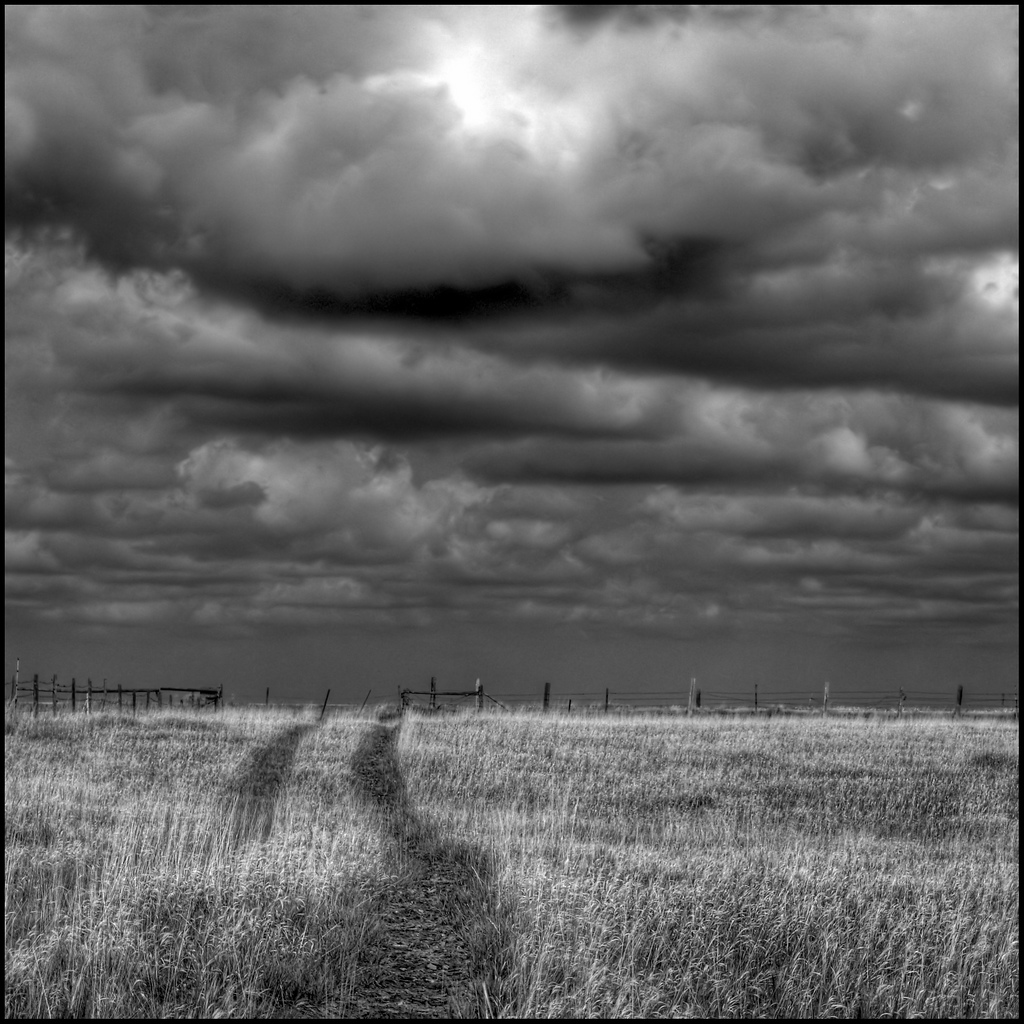
Photo Credit: ecstaticist via Compfight cc

Photo Credit: ecstaticist via Compfight cc

#

I don’t want to be alone. In this physical experience I’m having, the only thing I’m sure I want is physical contact. Hands holding my hands, arms wrapped around me, my hair being stroked. It reminds me that I’m still here, and it reminds me that I’m not alone. My brain is more convinced by touch than it is by anything else.

I want to be alone. My grief is still raw, and I think it will make other people uncomfortable. I don’t want to have to pretend it’s not happening. Just hold me and hold me and hold me, and remind me to eat. But I feel like that’s asking a lot.

I have no masks to offer you today.

#

I want to feel this way. I wouldn’t feel differently if I had the choice. My grief is a celebration of the life of someone who mattered to me. My grief is an expression of love. My grief is a gift that I offer gladly.

#

I wanted to write something about Jay Lake today. This isn’t what I sat down to write, but this is what I have right now. I might have something else later.

But this is still about Jay. Because my grief is for him, and because I am writing publicly about grief for him. For years he wrote unflinching accounts of his experience as a cancer patient. He talked about the things we’re not supposed to talk about, and he did so in service of others.

We’re not supposed to talk about grief either. But grief is a natural part of life. It’s here, whether we like it or not. It is something we all must face.

There is no right way to grieve. It comes as it comes. All we can do is accept it when it arrives.

So I eat, and I sleep, and I feel grateful for what I have.

#

I am grieving.
Read Full Post »

Paul Weimer recently had this to say on Twitter: “Change doesn’t happen by meekly accepting things as they are. That’s a recipe for the continuation of the bullshit.”

How’s that for a truth bomb?

Change does not come in the wake of being nice. Change does not come from silence. Change does not come from a place of making everyone comfortable. Change is not nice, silent, or comfortable.

No, change is a fight against the inexorable pull of the status quo, against the weight of the way things have always been (even if they haven’t in fact always been this way), against apathy and ennui and not wanting to be bothered. Change calls thoughts and ideas, sometimes unexamined, often long-held, into question. Change awakens insecurities that we try to keep under the surface.

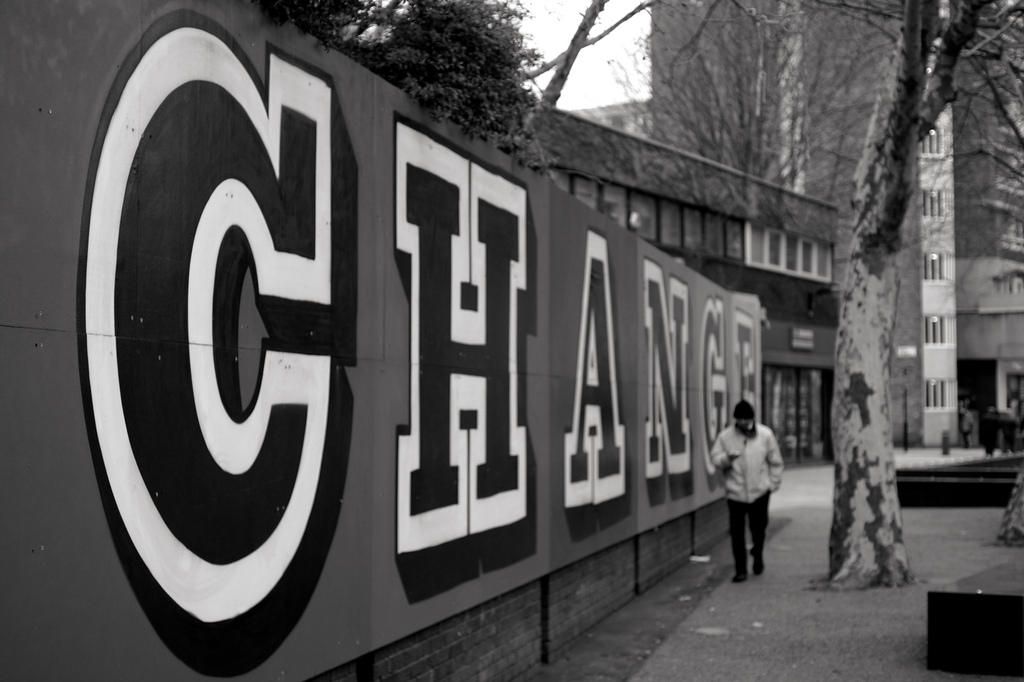
Photo Credit: Nanagyei via Compfight cc

Photo Credit: Nanagyei via Compfight cc

Change often comes with a certain amount of anger. Anger, because the process of standing against the tide is exhausting and anger provides energy. Anger, because change takes a long time and repeatedly standing up to ignorance and entitlement takes a certain toll. Anger, because sometimes our world is singularly lacking in empathy, and because listening is a hard-won skill that many people have not developed.

Change comes at a high personal cost. Change comes from speaking up, and speaking up comes with consequences: derision, derailment, defensiveness, death threats, rape threats, a loss of personal safety and security. Change involves delving into painful truths. Sometimes those painful truths show us things about ourselves and our society that we’d rather not see.

But change DOES come. When life looks particularly dark, I find this truth comforting: everything changes. Today ends, and tomorrow begins. The situation right now will not be the situation forever. Within a generation, the ideas of a society can shift. And in another generation, they can shift some more.

And I can educate myself and strive to be someone more than who I am today.

I can change too.

Read Full Post »

Sometimes we experience this humbling moment: when we receive a different perspective on a problem that has been plaguing us and realize how grateful we are to have the problem at all.

#

Another humbling moment: when we remember how temporary this moment is, and how fleeting a lifetime.

#

And so we carry on doing the best we can. We celebrate graduations and anniversaries and birthdays. We spend time with the people we care about. We bury our feet deep into the sand, and we allow the surf to wash over us. We take the moments as they come.

Photo Credit: paul bica via Compfight cc

Photo Credit: paul bica via Compfight cc

Read Full Post »

I am tired and irritable, so let’s grab hold of a silver lining and use this as an opportunity to talk about strategies for recharging, shall we? Because they are certainly on my mind right now as I try to implement them.

I first noticed I felt socially tired around the end of March, ie when I was in the middle of moving. Not a huge shocker. I thought it would pass once I’d completed the move and had some time to relax. But while it held relatively steady for a while, it also wasn’t dissipating. And then instead it began to build.

I noticed I was feeling more stressed about common occurrences in my life, like scheduling and driving. Soon thereafter, I also noticed I was just generally more irritable. Doing things that are challenging for me in the best of times, like setting boundaries, saying no, and handling lots of last-minute changes became ridiculously hard. My tolerance for receiving repeated unasked-for advice and not being listened to–hot buttons for me in the best of times–fell even lower than usual.

And then I attended the Nebula Awards Weekend. I knew I was in a danger zone, so I was very careful to take plenty of time for myself, and I have to say, everyone I interacted with was lovely. I am so grateful for the respect and kindness with which my colleagues treat me. The weekend was in some ways like taking a nice warm bath of social goodness.

But I entered this week still feeling irritable, with an added side of exhaustion. And since I’m ahead of schedule on Beast Girl, I figured I could take a little extra time to recover from my social burn-out. Here’s what I’m trying:

1. No scheduled social events for several days in a row. (Well, except for one hour-long family thing that was important and already scheduled.) So far this has been BLISS. I’m finally getting a chance to really rest.

2. Avoiding particular stressors. I’m deliberately driving less and have even taken some days during which I don’t have to drive AT ALL. I’m not scheduling things for the future, either. I figure most things can wait a week or two. Basically, whenever I feel stressed about something, I ask myself, “Is this important right now?” If it’s not, I postpone it.

3. Being gentle with myself. I’m refusing to do most planning and decision-making type things. Of course, this doesn’t mean people have stopped asking me to plan and make decisions. Also, I’m still irritable, which means the occasional spasm of irritability reaches the outside world. Castigating myself for not being as perfect as I want to be isn’t going to help the situation though, so I’m trying my best to be kind to myself instead.

4. Making music. I love singing and playing the piano, and I haven’t been doing much of either lately. That has changed this week, as I’m learning two fabulous Moonface songs and getting slowly back into practice. I love the physicality of singing and playing and how it brings me back into my body.

5. Reading. Because there aren’t very many activities more soothing to an over-socialized psyche.

6. Taking hot baths. Except for this.

7. Watching educational videos. Because feeding my brain makes me happy.

8. Spending time with Nala. Because unconditional love makes me happy, and watching Nala blissfully flop around the house reminds me of what it means to be relaxed.

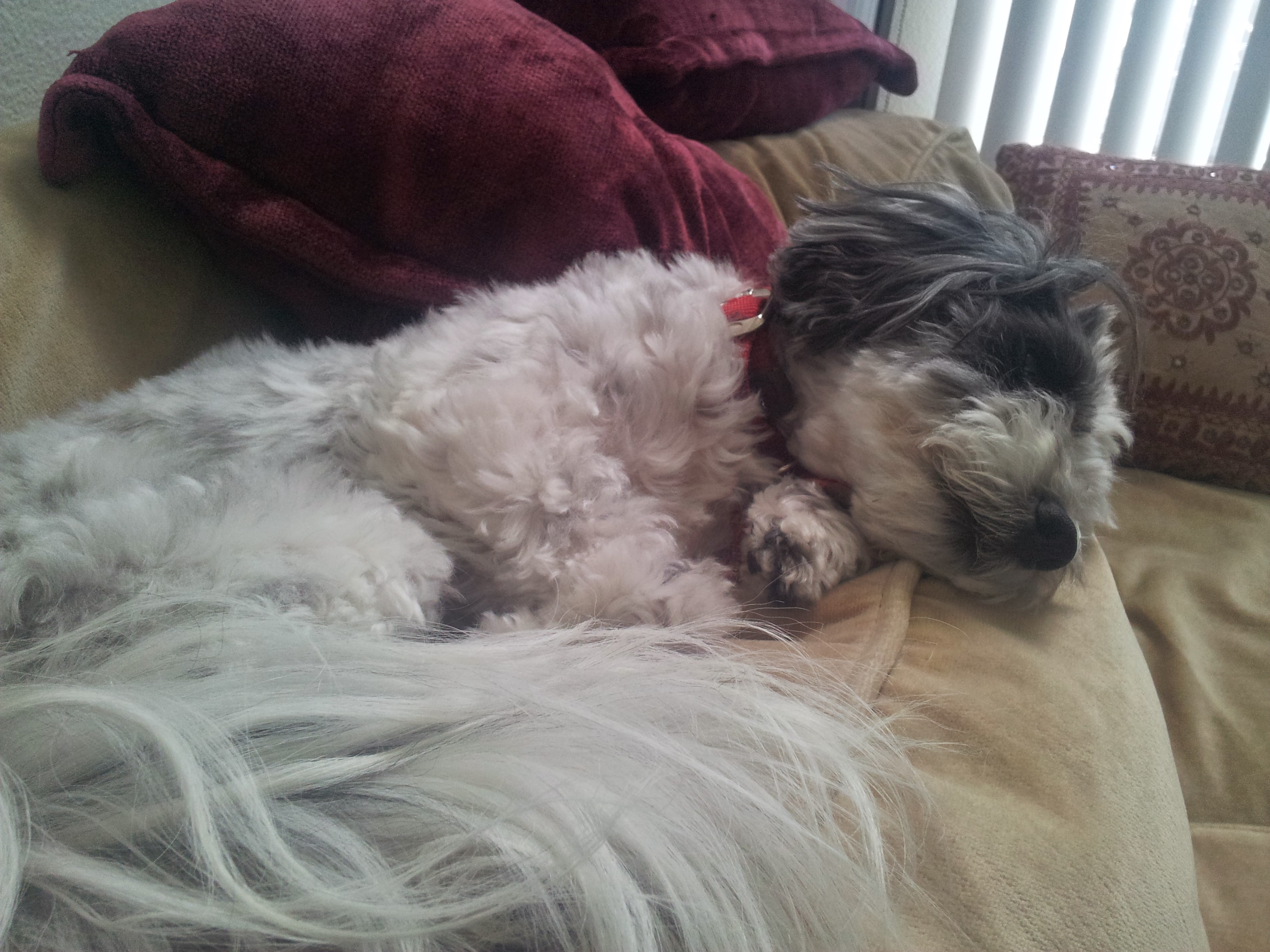
Nala looks pretty relaxed.

Nala looks pretty relaxed.

9. Being grateful. I’m so glad I can take this space, and it gives me time to think about all the people and activities in my life that I love.

What do you do to recharge? How do you know when you need a social vacation?


Read Full Post »

I was poking around on Twitter, looking for blog post ideas, and I ran across Christopher Barzak talking about graduation season and the ridiculous “welcome to real life” rhetoric that goes on at this time of year. He had this to say:

“Your life is real no matter what you choose to do with it. Don’t let others impose their definitions of what’s real and what isn’t on you.”

I grew up with a very narrow presentation of what reality could be, and I’m sure I’m not the only one. Our worlds tend to start out small. We model reality after what we have witnessed and experienced. Part of gaining wisdom, then, is being able to move out of the shadow of the Way Things Were during childhood to see the many realities that people are living.

Happily for me, I was always full of questions and an insatiable curiosity. I wanted to understand the people around me and the systems in which they participated. I wanted to know what else might be possible. And I read a lot, which meant I knew that in fiction, a lot was possible. The open question became, how much was possible outside of fiction?

And I was aware of this ever-present tension, this pervasive idea that when we grow up, the responsible thing–the realistic thing–is to settle.

I don’t care what people do in their lives: if they do it with the attitude of settling, it’s going to be unfortunate. Settling makes us dissatisfied, bitter, and resentful. It leaves us thinking about hypothetical what-ifs from the past instead of doing something with our present.

Believing that there are only certain versions of life that are “real” encourages us to settle. It also blinds us to the realities of people who are different from us: people who face different struggles, people with different life experiences, people who have made different decisions. It puts a value judgment on what gets to count and what doesn’t.

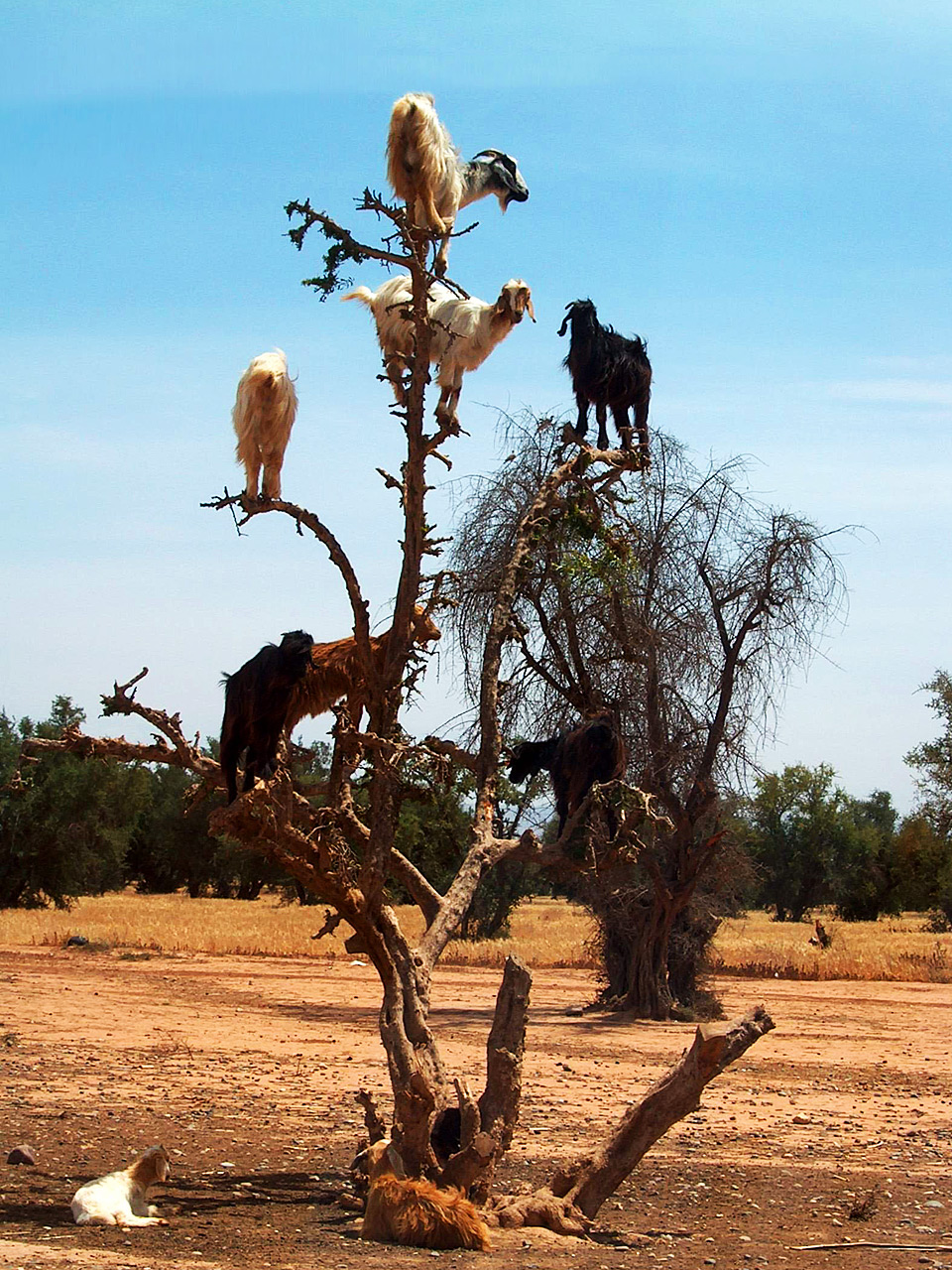
These goats are real. Photo Credit: stereotyp-0815 via Compfight cc

These goats are real. Photo Credit: stereotyp-0815 via Compfight cc

Who gets to define what is real? For me, real meant getting a reliable, steady job and holding onto it for as long as possible. It meant mirroring certain aspects of the lives of my parents before me. In my real life as an adult, I would get to drive my decisions even while their narrowness meant most of them were already partially decided for me by this shared view of reality. Real meant settling for what other people had decided was best.

Which is all patently absurd. My life didn’t become real when I was graduating at age twenty-two. It was real when I was a child and didn’t have as much power over my own life. It was still real when I went to live abroad after graduation. It was real when I started my own business. It was real when I was bored to tears, and it was real when I was taking a risk. It was real whether or not I chose to follow the standard blueprint, whether or not I was financially independent, whether or not things worked out the way anyone, including myself, expected them to, and regardless of my own personal range of knowledge, wisdom, and understanding.

We welcome people to the “real” world during periods of transition, often with the perceived judgment that they haven’t had to deal with any serious problems until this point. Newsflash: we all have problems. Some of them are more invisible than others, but that doesn’t mean they aren’t there.

We’ve all been in the real world this entire time.

Read Full Post »

I have a confession to make.

When I’m chatting with someone online and they send me a link, I often don’t want to click on it. Sometimes I even give into temptation and don’t do it. Particularly if it’s a YouTube link. Shocking, I know, but there are only so many viral videos I can take in any given month before I lose all interest. That number, for me, is quite low.

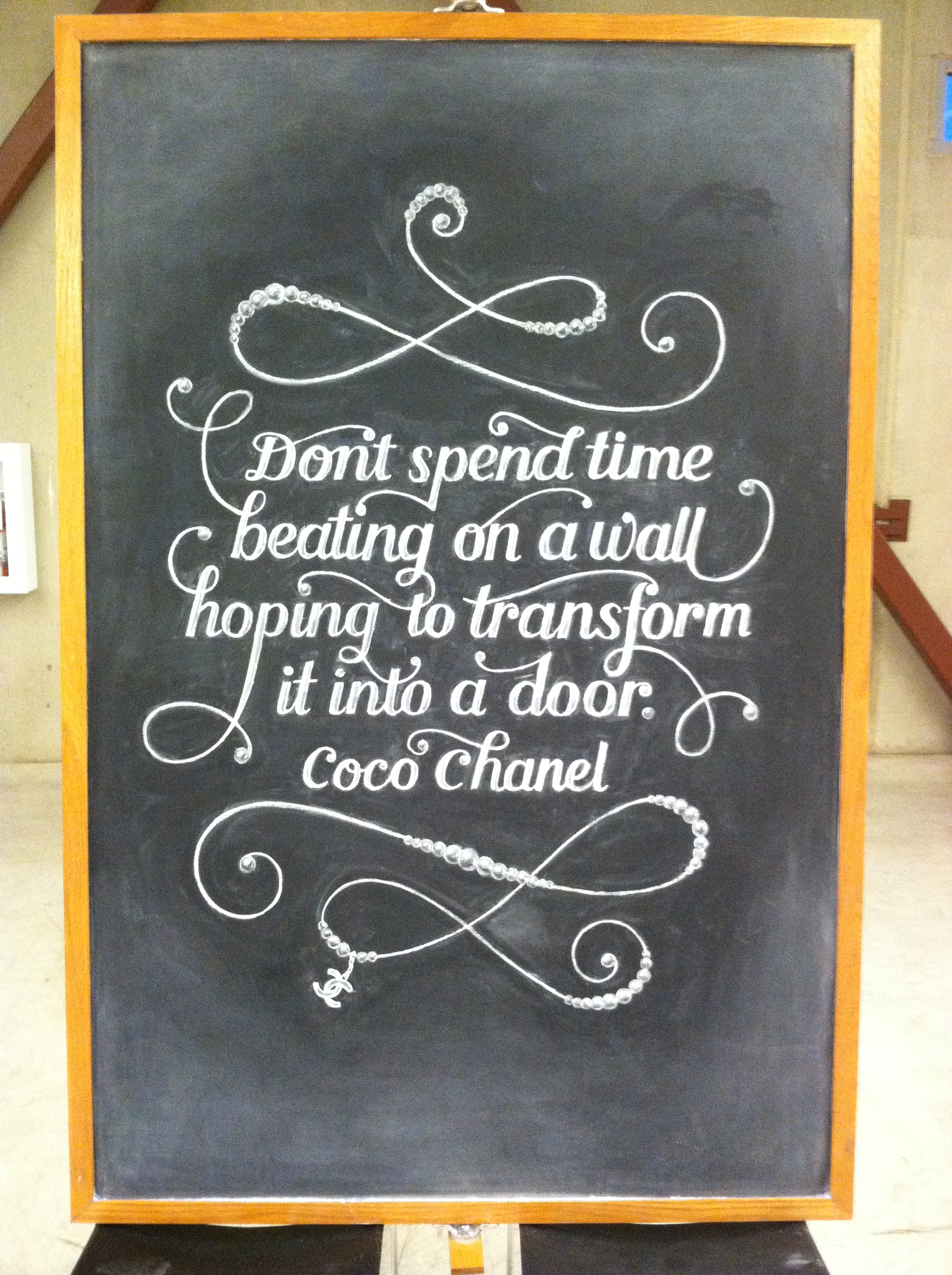
But the other day my friend sent me a link that I clicked on, and I’m glad I did because it features amazing chalkboard art with cool quotations. Here is the one I want to talk about today:

Artwork by two anonymous students at the Columbus College of Art and Design

Artwork by two anonymous students at the Columbus College of Art and Design

“Don’t spend time beating on a wall hoping to transform it into a door.” – Coco Chanel

This reminds me of the Serenity prayer, only punchier and with less potential baggage. I talk about change a lot, but what I don’t remember talking about is how to figure out what is possible to change in the first place. Because some things you can change easily, some things you can change if you work your butt off, and some things…well, you probably can’t change them at all.

At the top of my list of things that cannot be changed? Other people. We can communicate, we can express our needs and desires, in certain contexts we can teach them. But when it comes to people, change comes from the inside, not the outside. And sometimes, as Ferrett so eloquently explains, someone is just bad for us, and we have to walk away. I hate that this is true, but there you have it.

All right, but what about personality? I am thrilled to have this opportunity to point you towards this “How to date an INFJ” post, which explains my personality in enough detail to be a little scary.

(Digression: But Amy, you just said a few months ago that you have become more extroverted, so aren’t you an ENFJ? So yeah, about that. I’ve swung over to the more introverted side again, so apparently I flip-flop depending on, I don’t know, life and stuff. In any case, I definitely started out in life as a solid INFJ. Plus, see item: “INFJs can often mimic other types.” Yup.)

So here are two different personality examples from the post:

Example 1: “INFJs hardly ever initiate anything. They like it when the other person initiates a conversation, contact, etc.”

This description used to fit me to a T, but it’s no longer accurate. I initiate things all the time. I plan parties, I organize board game events, I ask people over, I ask people I don’t know very well to do stuff. It took a lot of practice and will power, but this was possible to change.

On the other hand, I still LOVE it when other people initiate. Most people probably don’t know how absurdly happy I become when I get any piece of communication: an e-mail, a text, even a Facebook message. I am SO HAPPY. And when someone invites me to do something and has obviously given thought as to what I would like to do, well, it is THE BEST THING EVER.

But I have changed initiation from something I cannot do into something that doesn’t hold me back.

Example 2: “For most INFJs, omitting or distorting information is equivalent to lying, and at the very least will rouse their suspicion.”

This description of me is still completely accurate, so much so that when I was typing it out, I realized I have trouble comprehending what it would be like not to think this way. I have tried to work on this, but I have had very limited success. The omission and distortion of information tends to drive me up the wall, and I turn into a stress-ball. My experience so far has confirmed that I cannot emotionally deal with it on a repeated basis and still remain close with the other person involved.

So, never say never, but this aspect of my personality seems a lot less likely to change.

***

Figuring out what is possible to change and what is not can take some trial and error. But the more we can differentiate between the two of them, both in ourselves and in the world around us, the better we can allocate our energy. It’s no fun trying to turn a wall into a door, but it’s amazing to open a door that doesn’t need to remain shut.

What do you think you can change? What do you think you can’t?

Read Full Post »

Last week I wrote about this gem of an article on differences between amateurs and professionals. But I left my favorite item on Bob Lefsetz’s list for today. If I were compiling a list of things about life I wish I’d known as soon as freaking possible, this would go near the top.

Amateurs, he says, believe what people say. Professionals believe what people do.

Which is to say, talking about something is all fine and good, but if subsequent actions don’t line up with the words, it’s generally the actions that point to the deeper truth about what’s going on. This is true not just in professional life, but across the board.

I suffer from a vein of serious gullibility, crossed with a strong desire to believe the best of people, so I still need to remind myself of this lesson. Noble intentions are wonderful to possess, but until we follow through on them, they remain intangible. Similarly, words matter, but if they aren’t backed up with fact, action, or experience, they remain hollow. And words can create false expectations about what will happen in the future.

I do think it takes a certain self awareness and ability to adjust to line up words with actions. And words by their nature sometimes lack the required precision. Which is why the actions themselves are so important. They cut through the potential for misunderstanding. They also help us better understand ourselves and what we care about.

I spend a lot of time thinking about my priorities and then developing plans around them because I don’t want to be a person who regularly expresses desires but then does nothing to make any of them happen. And it is so easy to be that person. It’s not as interesting to be that person, but it does, in my experience, take a lot less effort.

It also takes less courage. Because acting on words makes them real, and it also makes the possibility of failure or success real. And both failure and success can be terrifying because they cause change and require adjustment. As long as we don’t act, we can hold on to our fantasies about what could be true.

In writing, this manifests as the person who professes to want to write or want to build a career as a writer, but who doesn’t write or pursue this seriously. I’m not talking about people going through rough patches–times when life ruthlessly intervenes or we have to take some time to work out how to deal with a particular demon. But ultimately a writer needs to figure out a process that works, a way to actually write and produce, and ideally a way to write that doesn’t solely depend on the occasional burst of inspiration.

Saying we want to be writers or we wish we could be writers is certainly not uncommon, but it is the actions we take in pursuit of this goal that demonstrate how committed and serious we are. And professionals can tell the difference a mile away. This is, I believe, one reason why going to Clarion and other such workshops can be such a door-opener; spending the time and resources on a residential workshop shows a certain level of commitment that professionals respect.

What we do–the actions we take-becomes a large part of who we are.

Read Full Post »

I ran across an excellent article on an economics blog I follow called “Amateurs versus Professionals.” It very much applies to what I’ve observed about writing, and I imagine it holds true for many other pursuits and professions as well. I thought it would be fun to expand on some of the points made. (Yes, this is totally what I do for fun. Welcome to my mind.)

After reading this list, it occurs to me that much of the difference between an amateur and a professional is a state of mind. This means that even during the earliest stages of a career, we can aspire to professionalism. And I believe this state of mind will make it much likely to eventually find success.

Here are some points I find particularly relevant:

Execution: Amateurs don’t see their work through. They don’t finish. They don’t find the time, or they get distracted by other shiny ideas, or they allow themselves to be held back by their own fears. To a professional, execution is paramount: “Sure, they occasionally abandon a project when they see further effort is fruitless, but the mark of a pro is someone who begins and ends.”

Image: Amateurs are concerned with image, whereas professionals are concerned with their work.

It can be fun to be involved in the industry, to network and name drop and know “important” people. And knowing writers definitely livens up my social life. But it doesn’t matter who you know if you’re not doing the work. It doesn’t matter how connected you are if you are not finishing any of your projects. The work trumps everything else. And professionals know this in their bones.

Confidence: This one is interesting, because if there is any profession in which professionals are insecure, it’s writing. But professionals tend to express it differently. They are less likely to express their insecurity publicly on the internet. They are less likely to make extreme self-effacing remarks in public. They are more likely to be matter-of-fact about their insecurities if they happen to come up. And they are more likely to deal with their insecurities with their close friends instead of with whoever happens to be around.

A writer must have the confidence to envision entire new worlds in her mind. Photo Credit: h.koppdelaney via Compfight cc

A writer must have the confidence to envision entire new worlds in her mind. Photo Credit: h.koppdelaney via Compfight cc


Empathy: Professionals recognize we all have to pay dues, we all have to navigate a series of “breaks,” and we all have our own set of problems.

I wince whenever I hear one writer talk about a professional difficulty, only to have another, usually less experienced writer say, “Oh, I wish I had your problems.” NO. Just NO. First off, problem comparing is not helpful. Second of all, that other writer just passed up a golden learning opportunity. Who knows when this “coveted” problem might be your own? Third, the writer sharing the problem is going to notice the lack of empathy offered and the relationship might be weakened as a result.

Talking/Listening: Amateurs interrupt; professionals listen. Amateurs tend to go on and on with a minimum of prompting. They talk for twenty minutes straight about their current project and then never ask about yours. They inadvertently reveal ignorance because they are so busy filling the space with themselves.

One of my favorite things to do in a professional setting is find someone whose knowledge and opinions I respect and get them talking. And then I sit there asking questions and soaking up everything they say like a super-absorbent sponge. The amount of information I get from doing this is priceless. I already know what I have to say; I want to learn about what other informed people think.

What do you think are important marks of a professional?


Read Full Post »

I recently read an article by PZ Myers about how silence is political, and it gave me pause. While I do place a lot of importance on having a voice, I am frequently silent. In particular, I often remain silent about the controversy du jour of the science fiction community, of which I am firmly a part.

I remain silent because it is the easy thing to do, and it is my privilege to be able to choose to do so. I remain silent because I want to be liked, and I usually have friends on both sides of the issue. I remain silent because it takes a lot of energy to produce a well-crafted statement of opinion, and sometimes I don’t have that energy to spare.

The choice to remain silent is, however, inherently political. I am choosing not to rock the boat. I am choosing not to expend the energy. I am choosing what is important enough that I’ll brave the inevitable conflict for speaking about it. I don’t know that this is incorrect in that I have finite resources, but it is an act of privilege that I feel I can afford to stay silent, that I even have a choice at all.

Photo Credit: _Zahira_ via Compfight cc

Photo Credit: _Zahira_ via Compfight cc

It is with this in mind that I’m going to talk about my recent decision involving SFWA. For those of you who don’t know, SFWA is the professional organization for science fiction and fantasy writers. My membership came up for renewal last month, and I was quite torn about whether to renew. Much of this, I confess, came down to the mundane fact that I didn’t particularly want to spend the $90 required, but I’ve also been disturbed by the controversies regarding sexism that have been rocking this professional organization for the last year or so. What to do, what to do?

I was speaking about SFWA to a friend of mine who stated he didn’t think he’d join once eligible. He talked about how all the scandal has tarnished SFWA’s reputation and how they don’t behave like a professional organization. He criticized organizational decisions and responses and behavior. He made several valid points.

And to my surprise, I found myself defending SFWA. When an organization is striving to make large and systemic changes, it is bound to be messy and slower than we would wish, I argued. But if I support the intended changes towards more professionalism and less sexism, can I in good conscience abandon the organization before giving them time to correct? The latest revamped Bulletin (the organization’s newsletter) is an excellent example of something deeply positive and helpful coming out of all the controversy of the last year.

Ultimately I feel that my decision as to whether to remain a SFWA member is also political. And this year, I chose to pay my dues and stay a part of the organization.

I believe that communities cannot change without experiencing growing pains. And a lot of the controversy of the last year and a half is happening because people are no longer staying silent. Having people speak up about difficult issues almost always causes a push-back. Just as some people in my life were unhappy with my decision to leave my people-pleasing days behind me, so some people in SFWA have been unhappy with those members who have chosen to speak out against the sexism of the Bulletin, among other issues. Change is hard and painfully slow. But the only way the change will stick is if the people invested in the change hold the course.

So yes, sometimes SFWA does not act like the professional organization it is striving to become. Sometimes its officers make errors of judgment. Sometimes it seems like its responses are ridiculously slow. But I believe it is on the course to becoming more professional. And I’m willing to give it some more time to see if it’s able to continue to transform itself into an organization of which I am proud to be a member.

Next year I’ll probably go through the same mental gymnastics in order to decide whether to renew. But for now, I’ve put my money where my mouth is, and I’m speaking up about my decision.

Read Full Post »

A few months ago, Robert Jackson Bennett, Ferrett Steinmetz, and I wrote a series of blog posts that Ferrett called a “death-triptych.” I read Robert’s, then I wrote my own, but I didn’t read Ferrett’s. Well, I read the first sentence, and then I stopped because I knew it would hurt me to read it. So it’s been sitting in an open tab ever since, waiting for me to be ready.

Well, a few days ago, I was finally ready.

And this is the part of that post I want to talk about. Ferrett says:

“And I think: Gini is not a guarantee.  There is literally nothing in my life that is a guarantee now.  And I think: You were foolish to think that it ever was.”

This thought, that nothing is a guarantee, is not about death per say. It’s about life, and it’s about the human condition. It’s about how we experience life after we’ve been through trauma.

Or, as Myke Cole says:

“PTSD is what happens when all that is stripped away. It is the curtain pulled back, the deep and thematic realization that life is fungible, that death is capricious and sudden. That anyone’s life can be snuffed out or worse, ruined, in the space of a few seconds. It is the shaking realization that love cannot protect you, and even worse, that you cannot protect those you love.”

So the question becomes how do you go on living, once you have this knowledge? Once you know how fragile everything in your life is? Once you know how quickly you can lose what you value most? Once you know that sometimes nothing you can do will be enough?

My answer is that it is really, really hard. Sometimes you try to construct meaning into your life, like Myke talks about. Sometimes you question why you’re doing anything at all even while you continue to go through the motions, like Ferrett talks about. Sometimes you bend over backwards to create something, anything, that might be different, that might be a sure thing, that allows you to enfold yourself in the comforting fiction that you have some control over the vagaries of life.

And then there's always ice cream, which makes many things at least slightly better.

And then there’s always ice cream, which makes many things at least slightly better.

Sometimes you live your life with an intensity that other people cannot understand. Your emotions are heightened because in some way, you’ve entered into the cliché of living life like today is your last day: like right now is the last time you’ll have with a loved one, like every decision could have a lasting and significant impact, like any small sign could be your only warning of impending doom.

Instead of fear of the unknown, you have fear because you’re intimately aware of just how bad things can get.

And sometimes you become very adept at finding a nice, comforting rhythm with which to end essays like this, like the kind that Ferrett wished he could find but couldn’t. And the thing is, those uplifting positive statements are true. I believe in them with all my heart. I believe in making the most of the time you have, and I believe in keeping the heart as open as you can stand, and I believe that people can be good and noble and beautiful. I even believe that people can change. And I believe that making a difference in somebody’s life–even a small one–really matters.

But the truth is complex. And just because I can see the meaning, the stuff that makes life worthwhile, the positive outlook, that doesn’t mean I can’t also see the dark monster skulking under the bed. Life is freaking terrifying. It sometimes leaves us with too little to hang onto.

In the face of this reality, all I can do is put one foot after another and try my best to be the person I want to be, because of the rich tapestry of my life or in spite of it. It’s not much, but it’s what I’ve got.

(Oh, look. I found a nice, comforting rhythm with which to end this essay too. What a shock.)


Read Full Post »

« Newer Posts - Older Posts »