Feeds:
Posts
Comments

Posts Tagged ‘Amy Sundberg’

“In the end we always act in the dark.” – Rebecca Solnit

I have always been a big planner.

My parents were also planners. My mom made a to-do list every week, even though she had a weekly schedule that didn’t involve a lot of variation. We rotated through the same dinners on a weekly basis: Monday was spaghetti night, Friday was pizza night. My dad planned road trips precisely by mileage. I started learning how to budget when I was eleven.

I enjoy planning. A well-laid plan skillfully executed gives me joy. I like planning trips and parties and my social calendar and my writing projects. I like analyzing, and I like strategizing. I like the sense of accomplishment I receive from meeting goals and milestones.

But.

I also agree with Rebecca Solnit. There is an uncertainty inherent in being alive, in being human. We don’t know the time of our deaths. We don’t know what will happen tomorrow. We might have a good guess, we might hope, but we don’t know. Not for sure.

And sometimes life takes a sudden swift turn, and we end up on a train to Transylvania just because it sounds cool. Or we end up spending five days lounging on the couch unable to leave the house because we are so ill, or two years struggling to walk more than a block because we are so injured. We end up breaking hearts or having our hearts broken. We end up having one of those perfect moments that bubble up from time to time, whose very essence lies in their unpredictability.

Some things cannot be planned.

Some things–and I feel like I’m about to commit sacrilege by saying this–some things cannot be practical.

And sometimes embracing the reality of the darkness, of not being able to see the hand in front of our faces, of not knowing and sinking into the uncomfortable truth of not knowing–sometimes this is the only way forward.

It is through not being able to see or know that we are able to sink deep within and become aware of those truths that endure through the uncertainty, in spite of or perhaps even because of it.
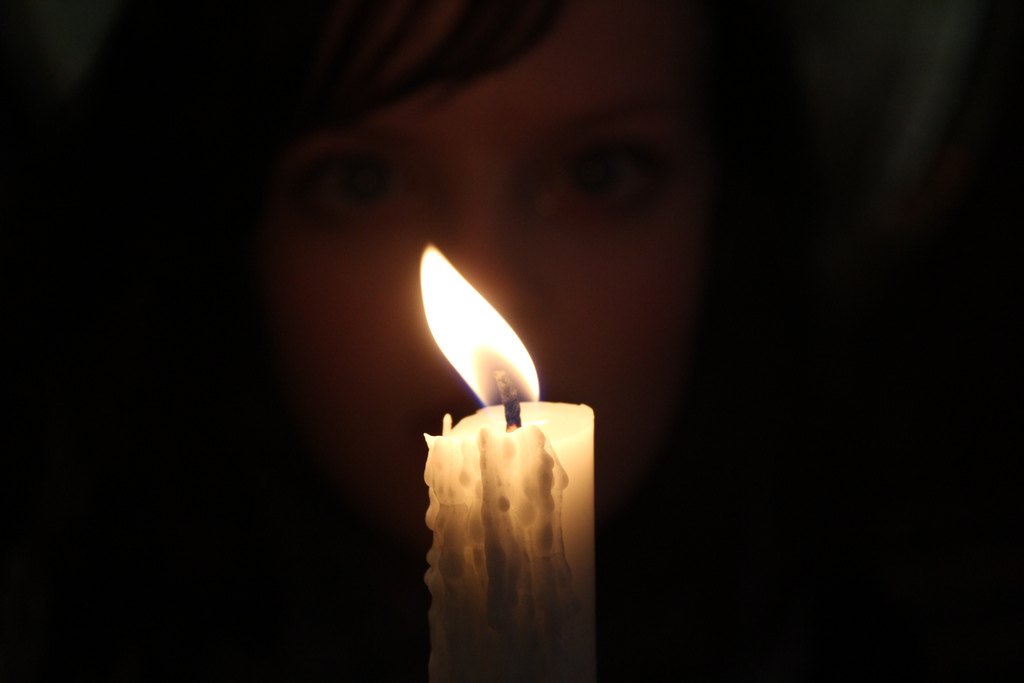
Photo Credit: Schjelderup via Compfight cc

Photo Credit: Schjelderup via Compfight cc

Rebecca Solnit discusses the role of uncertainty and darkness in the life of the artist in the essay “Woolf’s Darkness: Embracing the Inexplicable,” which is in her collection of essays Men Explain Things to Me (how could I not read a book with a title like that?) and which also was adapted for the New Yorker.

My discovery of this essay last week was timely. Unpredictable, even. I’m in that gap between novel drafts that I always find uncomfortable, and meanwhile I had a conversation that made me question what it means to me to be a writer.

Being a writer, or really any kind of artist, is filled with a weird kind of uncertainty. The creative process can be planned, it can be quantified, it can be optimized, and yet…. there’s this point, for me, when all of that falls away. The plans, the ambition, the practicality, no longer speak so loudly. It’s not that they’re gone, exactly, and they can sometimes be forced to the fore when necessary, but they are in service to creation, not the other way around. And things click the way they click. Unpredictably. Not not always in the way I planned.

Onto this conversation about my writing career. We spoke about the timescale, and the other person said (paraphrasing) he’d write as much as possible in order to succeed as quickly as possible. And, he said, regardless of questions of money, I wouldn’t want to keep writing forever if I never succeeded in getting books published, would I?

And practically speaking, I’d have to agree with him. But the funny things is, I don’t actually agree with him. Not at all. I’m a writer through and through. I’ve wanted to be a writer since I was seven. When I wasn’t writing prose, I was writing songs and music. It is so fundamentally folded into who I am, this compulsion to create, I would be bereft without it. It is one of the forces that has shaped who I am, something that feels simultaneously like something I chose and like something that chose me. I’m all in. And success (or at least this definition of success), while it is something I would like, is not the only part of the equation.

Being fully committed to being a writer in this moment feels like another definition of success.

Perhaps this is one of those things that has nothing to do with practicality. Perhaps being a writer is like swimming in the dark. You never know what you will find. In spite of your best efforts to chart your course, you never know exactly where you’re going.

I don’t know what the future holds. All I know is that I write.

“The future is dark, which is the best thing the future can be, I think.” So wrote Virginia Woolf.

Yes. The future is dark. It defies even the most perfect plans.
Read Full Post »

A few months back, I made a new friend, and we spent a fair amount of time chatting and getting to know one another. And I was struck by something he was doing.

He was asking me a lot of questions.

He asked me my opinion about a lot of things. He asked about my past. He asked about my work. He asked random questions, about my favorite color and Nala and what I like and don’t like. He asked follow-up questions. When I referred to something obliquely, he asked about that too.

In general, I have tended to be the one who asks a lot of questions. (More recently, I’ve been deliberately pulling back so as to strive for more conversational balance.) So I was fascinated by this turn of events, and I resolved to sit back and observe. And what I realized is, it is super flattering when someone asks a lot of questions. I was basking in the attention. And since I was asking questions in return, it built connection and rapport comparatively quickly.

And the result is now I have this new friend who, no joke, knows more about me than friends I’ve known for years.

That is the power of asking questions.

Photo Credit: Ann Douglas via Compfight cc

Photo Credit: Ann Douglas via Compfight cc

Okay, now bring this knowledge to dating. This is a bit more complicated.

Asking questions can potentially turn a date into an interview, and personally I don’t think this is a desirable outcome. However, I think the interview date isn’t too hard to avoid as long as you’re paying attention. As long as the questions are more or less organic (as opposed to sounding like a list you’re trying to get through), and as long as you are also speaking about yourself (which will be easier, of course, if your date is also asking you questions), the interview effect isn’t as likely to happen.

And then there’s knowing which questions are appropriate. There is more than one opinion on this subject. There are those who try to keep the first couple dates on the lighter side, and those who want to dive more deeply right away. I don’t know that there’s a right answer here, but I do know a few subjects I don’t want to talk about right away:

  • Money. I hate when people ask about this on a first or second date. Obviously I am solvent and, you know, doing stuff like paying rent and feeding myself and Nala, and we can discuss the details when I’ve spent more than a couple of hours with you.
  • Past relationships. A little of this is okay, but being on a date with someone who goes on and on about an ex….means this will be the only date. And I’m certainly not going to ask detailed questions right away.
  • Asking questions for the purpose of then being able to deliver a critique on how I live my life. Just…no.

But there are so many potential questions to ask, whether you’re looking to go deep or stay lighter. Movies, books, the article you read yesterday, music, pets, travel destinations. What makes you the happiest. What makes you sad. How you’ve changed over the years. The favorites game. What you’ve learned this week or this year. And on and on.

And yes, I’ll even take my least favorite question over no questions at all.

Now, there are some people who seem to rarely ask questions in conversation. And, um, I have eventually asked them the question of why they never ask questions. (Of course I have.) The answer, inevitably, is this: “I figured,” they say, “you’d tell me if you wanted me to know.”

No. Maybe this works for some people? But it certainly doesn’t work for me.

Having been in a huge number of conversations with people who don’t ask questions, I can tell you the stuff I never talk about tends to have very little to do with my desire to talk about it (with a few exceptions) and everything to do with whether I’m given an opportunity. I find myself looking for a moment where I can drop in a morsel of information so someone can actually–*gasp*–get to know me better. But looking for those moments, well, it takes effort, and it’s never as good as a conversation in which I don’t have to look for those moments because, hey, the other person is actually exhibiting active interest in me.

Now, I know sometimes conversations on first dates in particular can be…awkward, to put it mildly. And I know sometimes a good question simply doesn’t present itself. Even as a lifelong question asker, I sometimes come up empty.

But asking questions gets easier with practice. And it can be a powerful tool, in dating and in relationships in general. Questions allow us both to get to know someone more deeply and to make that person feel special.

What questions do you like to ask when you are getting to know someone? What questions do you like being asked?

Read Full Post »

A couple of months ago a friend of mine told me I was a Manic Pixie Dream Girl.

At first I argued with him. But that ended pretty quickly because his argument was actually convincing. My favorite point? “How many men,” he asked me, “have you helped ‘discover their joy’?”

My reaction to that question was, “Oh, shut up.” Although of course, I didn’t actually say that because it wouldn’t have been a discovering the joy kind of thing to say.

So then I thought maybe I could write a memoir called “I Was a Manic Pixie Dream Girl.” Because how much fun would that be?

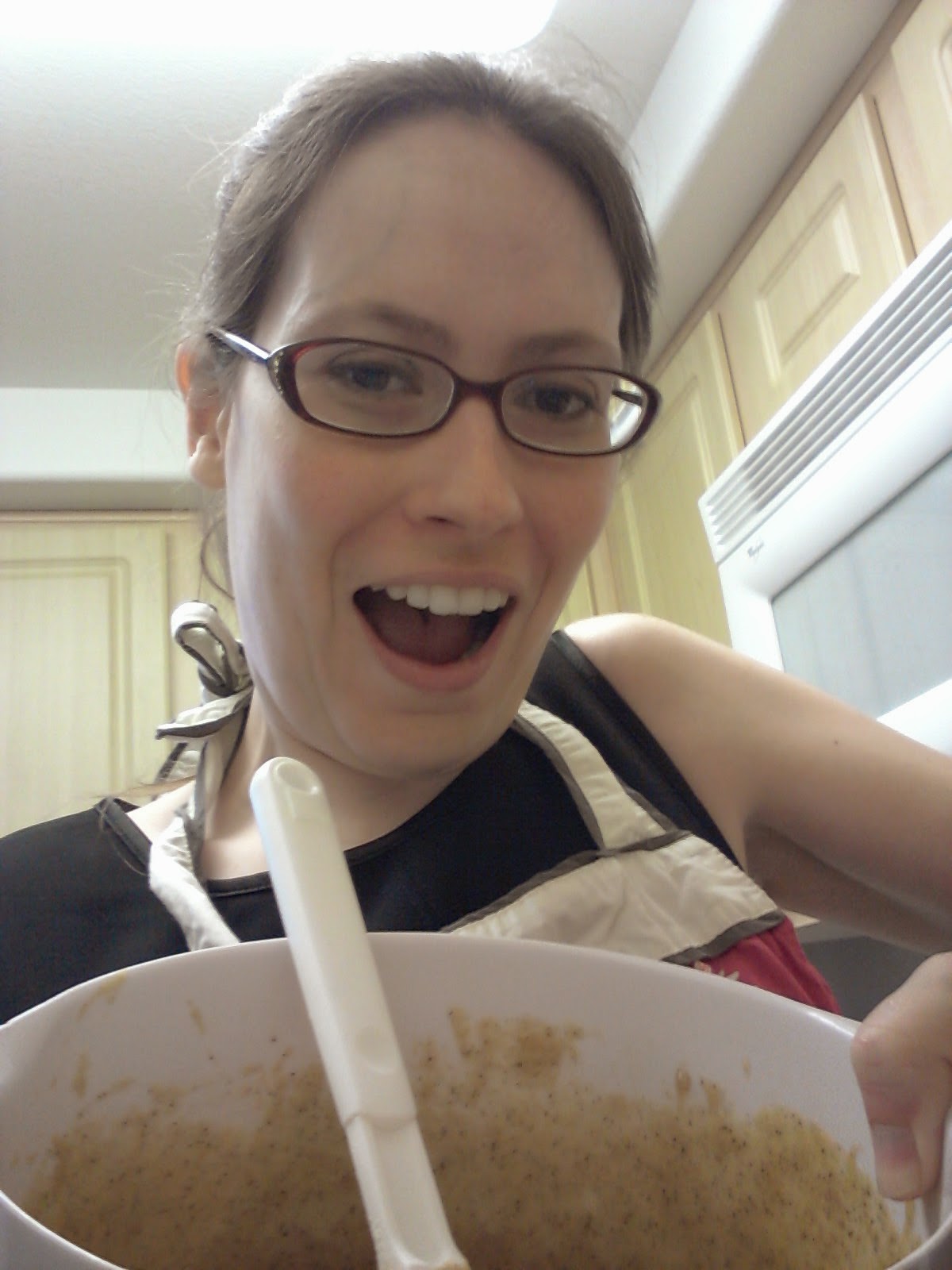
Bringing the joy! With BAKING.

Bringing the joy! With SWEET TREATS.

The idea was shiny but not without its drawbacks. For starters, to write that book properly I’d have to show a lot of the past messes in my life, and even though I know everyone has a lot of mess in their lives at one point or another, it’s still not the most comfortable proposition. Plus I know if I wrote that book the way I wanted to write it, I’d get rape threats for sure. Which, I mean, I kind of feel is inevitable, but it does have a dampening effect on my desire to pursue the project.

Also, I feel the need to point out that yes, we live in a world where female writers think about rape threat potential when planning their careers. Yup.

One of the great things about this hypothetical memoir is that it has a great redemptive arc. And I just read a blog post by Penelope Trunk telling me publishers want redemptive memoirs. (As an aside, I completely agree with her about Jeanette Wallis’s The Glass Castle. I was so disappointed when it ended. I wanted to know how her crazy childhood affected her adult life. To me, that was the interesting part, more so than the redemption. And then the book ended right when we got there!)

Anyway. Note the title of my memoir. I WAS a Manic Pixie Dream Girl. Past tense. Because I don’t really think I am one anymore. How’s that for some redemption?

Why do I think I’ve changed? Well, I’ve been meeting a lot of people for the past several months. Including a lot of guys who I’m sure I could have helped discover their joy. Or at least made myself very unhappy trying. But I’ve lost almost all my interest in doing that. (I mean, okay, not ONE HUNDRED PERCENT of my interest, but hey, no one’s perfect.)

Like, I could never date a workaholic again, and I would be completely happy with that outcome. Ecstatic, really. Workaholics are thick on the ground where I live. And they are the perfect people to help rediscover their joy and the fact there’s a world outside their offices and all that jazz. Also, I totally disagree with their life philosophies. I think they’re more likely than not to regret being workaholics later in life. I mean, look at the top five regrets of dying people. But, I mean, whatever. Maybe they won’t, and in the meantime, it is so amazingly lovely to have that not be my problem.

It is amazing how liberating it is to realize how many things are not my problem. He can’t ask me to do something with a reasonable amount of lead time? Not my problem. He doesn’t see the importance of a social life? Not my problem. He has deep existential pain? Or, you know, some kind of complicated problem? Not my problem. He doesn’t like that I don’t drink? Not my problem. He doesn’t like some detail about my past? Not my problem. He’s unhappy and lost his ability to appreciate the little things? Not my problem. He lacks a sense of wonder? Not my problem. He tends to mansplain? So not my problem. Especially if it’s anything remotely related to writing. I’m currently perfecting my “Why do you think I want to sit here and listen to this?” face. (It needs some work. I’m still way too nice.)

I know to some of you that last paragraph will sound cold. Of course I help when I can and it is appropriate to do so. But refusing to take on other people’s problems means I can take a lot better care of myself. And a lot of that stuff is, frankly, a waste of my time and energy. As it turns out, it really sucks to be a Manic Pixie Dream Girl. It’s a hell of a lot of work for very little reward.

So yes, I was a Manic Pixie Dream Girl. But now I’m just Amy, and I’m pretty happy with that.

Read Full Post »

This is a hard post for me to write.

I often don’t have much difficulty with Mother’s Day. My normal strategy is to try as much as possible to ignore it, and to spend very little time on Facebook on the actual day.

I don’t usually talk about how it can be hard. I know Mother’s Day is supposed to be a happy day, a day of appreciation and celebration, and I don’t want to take away from that. I want my friends to celebrate their moms, and to have their own motherhood celebrated. That can be a beautiful thing.

And talking about death and grief, well, it can be awkward. People don’t know what to say. I find that when the topic comes up, I’m usually spending most of my energy trying to make it easier for my conversation partner. “It happened a long time ago,” I say. Or, “Yes, it was the anniversary of my mom’s death, but I wrote about it, so that made me feel better.” Or I change the subject as quickly as possible.

I don’t know how to stop doing this. Sometimes, with people I don’t know very well, I think it is the best strategy for me. When I called a friend for support after my friend Jay died last summer, he later told me he thought I should have called someone else, which is sometimes par for the course. Not everyone has the emotional maturity to engage with these issues. But I also know that it is important to talk about the experience of grief. It is by talking about it that we normalize it, and normalizing it cuts down on isolation and shame.

I was at a dinner party the other night, and my hostess had tried out one of her mother’s chicken recipes for the first time. She joked about how she’d called her mom four times asking for advice as she cooked. I commented that it was nice her mom hadn’t minded the constant phone calls. Another friend laughed and said moms never mind constant phone calls.

And oh, this innocent comment gutted me. Because I realized this was a completely foreign experience to me. It sounds so nice, having somebody who doesn’t mind if you call over and over. Having a mom. It sounds really nice. And I don’t have that. I haven’t had that, and I’ll probably never have that.

I don’t have a mom to turn to when I need advice. I don’t have a mom who will fly out to take care of me if I need surgery or get really sick. I don’t have a mom who has been there for all of my major life events. I don’t have automatic plans for holidays. I don’t have a mom’s unconditional love to lean on when times are hard, or, you know, even when they’re pretty good.

And so this week before Mother’s Day, I’m feeling really, really sad. I can’t figure out what I want to do this weekend. What I really want to do this weekend is spend time with my mom. And I can’t. She’s not here.

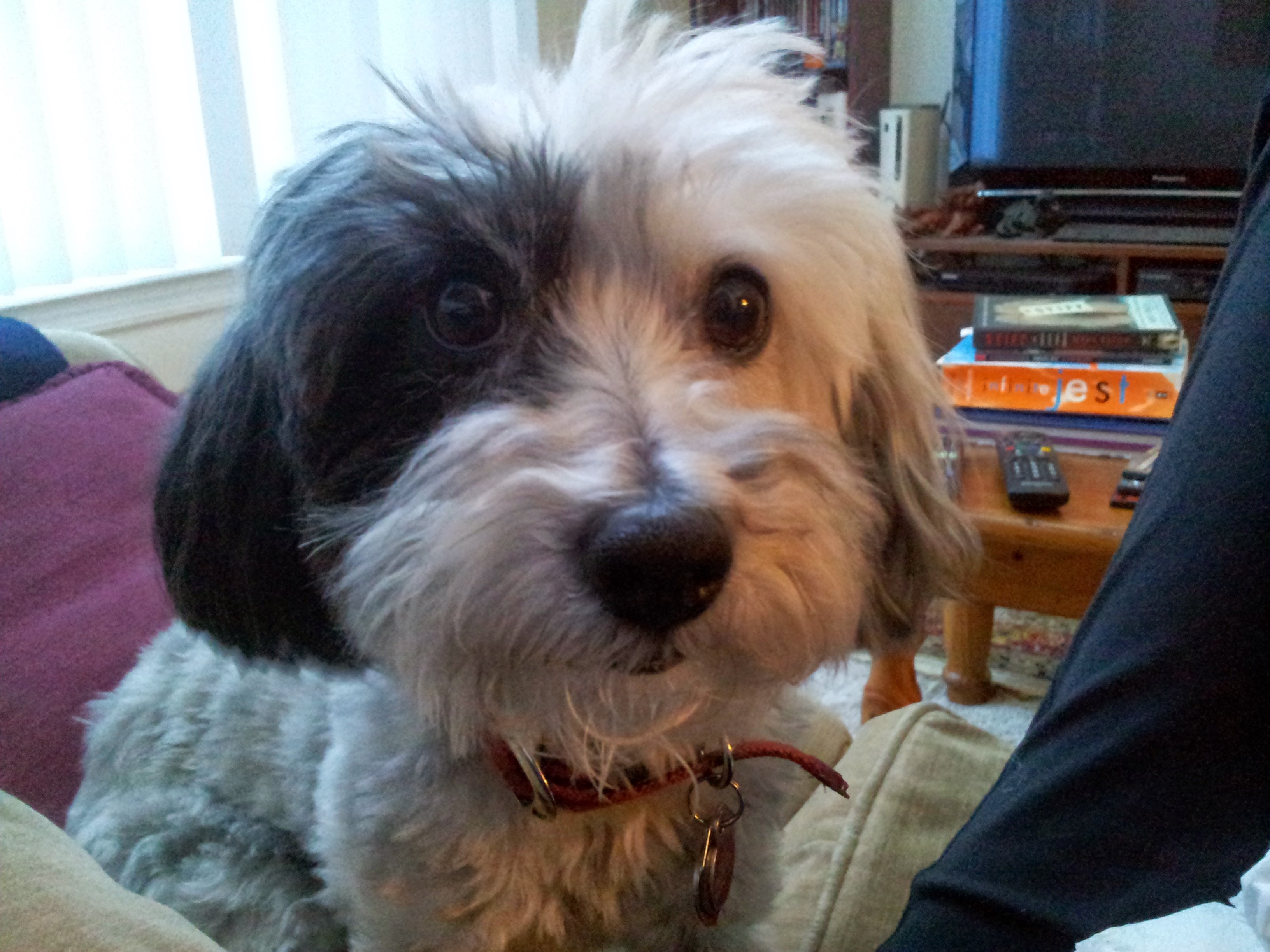
This is what Nala looks like when she is comforting me.

This is what Nala looks like when she is comforting me.

Grief is such a funny thing. So many Mother’s Days have gone by, during which I’ve barely batted an eyelash. And now suddenly, the grief is here, and I don’t really know what to do with it. I keep trying to shove it away; “It happened such a long time ago,” I tell myself. But grief doesn’t have a schedule. And I think maybe grief never goes away. Not entirely. It grows more manageable, but it doesn’t disappear.

So here it is. I really miss my mom. I miss her voice. I miss her hugs. I want to give her everything I’ve ever written and have her read it all. I want to sing for her. I want to take her to Disneyland, and I want to sit on a bench with her in New Orleans Square and watch the people go by. I want to introduce her to Nala, who I know she’d completely adore. I want to tell her that every year I hang up the Christmas stocking she made for me, and every year I read the note she left with it for me to find the first Christmas after she died.

I want her to know the Amy I’ve become.

I’m not going to get what I want. Instead I will wipe away my tears, and I will work on my novel that is about a girl traveling through the Underworld to bring her dead mom back home. Of course that’s what it’s about. And I will think about her. And I will miss her. And life will go forward, the way it always does.

And I will write about it here on the blog, because grief is nothing to be ashamed of. It is simply another reflection of love.

Read Full Post »

Last week I went to the grocery store, and on a whim, I purchased a cheese ball.

It was a gorgeous cheese ball. Port wine cheese, mottled orange and red, pleasingly symmetrical and encrusted with nuts.

I’ve never purchased a cheese ball before, and I was excited about it. I was looking forward to trying it, especially since I also got these fancy crackers at Trader Joe’s. And as I was dancing with someone that evening, I mentioned my excitement over the cheese ball. Because apparently that’s what I think of as fabulous dance conversation.

“It sounds like you really like cheese,” my partner said.

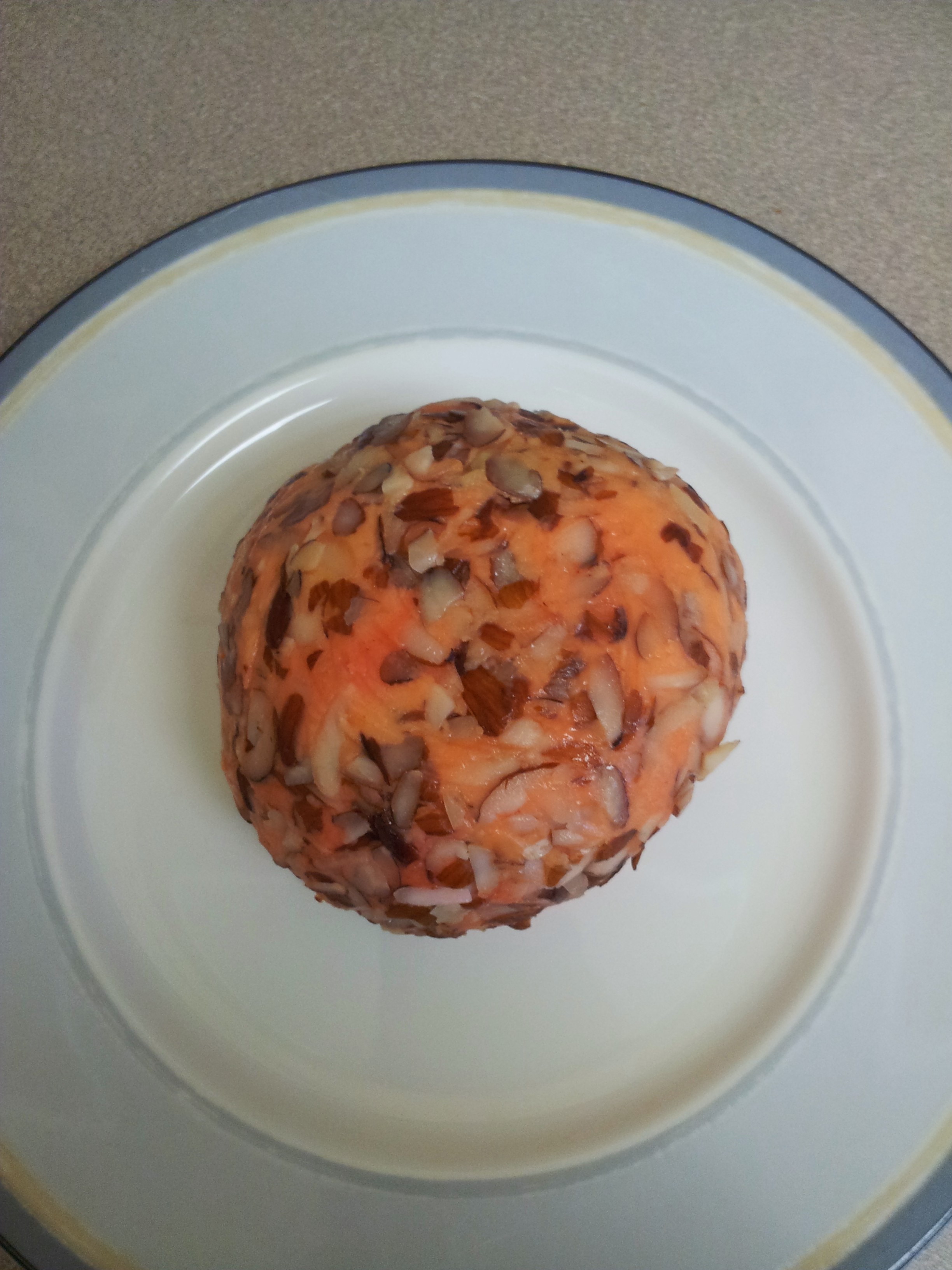
This is the cheese ball in question.

This is the cheese ball in question.

#

The week before, I had not been feeling the dancing. I’d been really sick, and even though I was better and no longer contagious, I was annoyingly weak and easily fatigued, and my center of balance felt off, which for dancing is particularly unfortunate. And then one of my partners told me THREE times while we were dancing how I’d gotten worse at dancing since the last time we’d danced. I tried to laugh it off the first two times, but by the third time I’d lost all patience (big surprise), so then I was not only tired and weak but also irritated. Not the best night. I went home early and watched Star Trek instead.

And then the next week, I took a lesson before the free dancing period, and I was completely lost for pretty much the entire hour. I was supposed to be learning both how to lead and follow all these different turns, and I’d never really led before, period, and trying to learn both sides at the same time meant I was learning nothing at all because having my focus divided meant I didn’t have enough focus for either side, plus there simply wasn’t enough repetition for me to get it down. By the end of the lesson, I felt like my brain was oozing out of my ears in goo-like fashion.

As I walked off the dance floor afterwards, I realized I had a choice. At that moment, I felt stressed and like a terrible dancer. If I encouraged that feeling, I’d be super tense while I danced, which isn’t good. I’d lose a lot of my connection with my partners, which isn’t good either. And I wouldn’t be having fun, which is definitely not good.

Or I could shake it off to the best of my ability, and believe BY FORCE OF WILL that I was going to have an amazing time dancing that night. I could think of all the other amazing times I’d had, and I could think about how much I love dancing, and I could be happy to see my friends and partners, and I could simply do my best and be okay with that.

I chose option two, and I had a fabulous evening. By getting out of my head and cranking down the perfectionism, I danced better and had a lot more fun. But I could have just as easily have chosen option one and struggled through the evening.

In the end, it came down to my own state of mind. Nothing more, nothing less.

#

Back to the cheese ball. “I’m so excited about it,” I told my partner. “I can’t wait to try it.”

“Wow,” he said. “You must really love cheese.”

“No,” I said. “I really love life.”

Read Full Post »

Facebook is an amazing social tool. I know a lot of us love to hate it, and it has its problems, but we don’t leave for a reason, that reason being its extreme usefulness.

Aside from allowing me to stay in some kind of light touch with people who live far away and giving me a curated set of articles to read, Facebook is the single easiest way I’ve found to grow my local social life. You friend someone and then they invite you to their events, and then you meet people at those events and friend them, and they invite you to their events, and your social circle grows with much less effort on your part than back when you had to wait to be on email address exchange terms to get an invitation. (Or phone number exchange terms, heaven forbid!)

Likewise, I’ve found Facebook to be indispensable for dating. Basically, there are two ways most of the single people I know date. One way is to use internet dating sites: OKCupid is super popular among my friends, but there are a whole slew of sites to choose between. You don’t even have to choose! Some people are on a bunch of them all at once.  (And I guess a corollary of this would be speed dating, which I kind of want to do just because then I could write a hilarious blog post about it, and we’d all have fun with that.)

The other way, the Facebook way, works like this: You go to a social event. Any event where there are people will do; parties are perhaps the most common, but this also works with game nights, group dinners, conventions, classes, dances, etc. You meet another single person and spend some time chatting. Maybe a lot of time. Sometimes they then pull out their phones and add you on Facebook on the spot. Other times you friend each other in the next day or two or three. Regardless, now Facebook is your main point of contact.

Photo Credit: Peter Samis via Compfight cc

Photo Credit: Peter Samis via Compfight cc

“But Amy,” you say, “surely you could exchange phone numbers or email addresses instead!” Yes, you are right. Surely you could, and occasionally you even do. But I’d say ninety percent of the time, you don’t. You friend each other on Facebook. And then maybe you switch to email or texting after that. Maybe. At some point. Or not.

Anyway, now you’re Facebook friends, and you begin messaging back and forth. There may be some banter. At some point the possibility of hanging out in person is discussed. All of this is very casual. After all, this is the exact same way you might go about creating any new friendship. Occasionally someone is very explicit about asking the other person on a date, but more often than not it’s all unspoken subtext. (I know from my Maybe-Date post we all have lots of opinions about this. Regardless, this is in my experience what tends to happen without making deliberate effort to make it happen differently. Not always, but often.)

I was talking to my friend about hipsters because I find the hipster movement fascinating and slightly confusing, and the conversation turned to hipster dating conventions (of course it did). My friend said that for hipsters, it’s all about plausible deniability and avoiding possible embarrassment. I don’t know if my friend is right, but the relaxed technique of hanging out and testing the waters with potential romantic interests happens all the time. And Facebook forms a cornerstone of this strategy.

(Of course, my friend went on to say, “Limbo can continue for months.” Months! Who has the patience for months? I certainly don’t. I’d simply turn my attention elsewhere. But apparently this too is a thing.)

In any case, I would not want to be dating right now without Facebook. It is simply too ubiquitous and useful. Plus I haven’t done any online dating since January because I was so appalled by Creepy Neighbor Guy (met on OKCupid, for those keeping track) that I just got annoyed with the whole thing. So at this point in time my dating prospects are all people I’m meeting first in person, and Facebook is the easiest way to facilitate that.

Of course, Facebook is a convenient way to encourage new friendships and grow existing friendships in general. Dating is just one facet of that. But it’s definitely an interesting part of the Facebook experience!

Read Full Post »

What does it mean to respect yourself?

That is a question one of my friends asked on my last post, and I’ve been thinking about possible answers ever since. I’ve gotten to the point where I have a good idea of what respecting myself feels like, but as it turns out, putting that feeling into words is not without its challenges.

So I took myself off to the Merriam-Webster dictionary, which defines respect as an act of giving particular attention. When we act with respect, we act with consideration. It’s also defined as high or special regard, i.e. esteem. So when we are talking about respecting ourselves, no surprise, we are talking about self-esteem and self-consideration.

It’s hard to talk about self-respect sometimes because we live in a culture in which confidence is sometimes equated with arrogance and self-consideration is sometimes equated with selfishness. And of course, arrogance and selfishness are attitudes that many of us strive to avoid, to the point that we can end up overcompensating. Which is why Matthew McConaughey’s point that it’s easier to respect others when we’re already respecting ourselves is so critical.

I think of self-respect as fostering a relationship with ourselves. Just as we put in a lot of time and effort building our relationships and friendships with other people, so we can put in time and effort into our relationship with ourselves. Getting to know ourselves, and getting to know how to take care of ourselves and what we need to function well are fundamental acts of self-respect.

20150228_161240 (1)

I can’t talk about self-respect without bringing up boundaries. Setting and keeping healthy boundaries is also an act of self-respect. Some people do this so automatically they don’t even have to think about it. And some of us have to practice and do this a lot more explicitly.

It is harder to maintain self-respect (or learn it in the first place) if you spend a lot of time in an environment in which you are not receiving external respect. When you’re with people who don’t value your opinion, your comfort, or your emotional or even physical boundaries, it becomes easy to internalize these attitudes of disrespect. And of course, it’s in these people’s best interests that you do so, as it is perpetuates the dysfunctional system. This is one of the reasons why mindfully choosing the people with whom we spend time and develop intimacy is so important.

What does self-respect mean to me personally? I’ve made a little list.

  • Taking care of my physical needs, such as doing my best to get enough sleep, eat good food when I’m hungry, rest and recover when I’m sick, etc.
  • Taking care of my emotional needs, such as having people in my life with whom I don’t have to pretend when I’m having a hard time, reaching out for support, doing self-care, fostering supportive connections with others, doing activities that make me happy, taking alone time when necessary, etc.
  • Taking care of my mental needs, like engaging in projects that I find challenging and interesting, trying new things, learning, asking questions, having an artistic outlet, etc.
  • Prioritizing my time and energy for people and activities that are generally positive to my well-being.
  • Setting and enforcing appropriate boundaries, and surrounding myself by people who support this.
  • Protecting myself from the disrespectful behavior of others.
  • Taking ultimate responsibility for my decisions, which also means not being too easily swayed by others’ opinions.
  • Embracing who I am and where I come from.
  • Being kind to myself and relaxing my perfectionism as much as possible; recognizing my own humanity and fallibility.
  • Being my own best friend.

What does self-respect mean to you?

Read Full Post »

As long-time readers of my blog might recall, at the end of April every year I write about my mother as a way to remember the anniversary of her death.

I was kind of on the fence about writing about her this year. I didn’t really know what I wanted to say. It’s been a long time.

It’s interesting because after someone dies, it doesn’t mean your relationship with them comes to a full stop. You still carry on with it, only it exists in your own head instead of in the outside world, for the most part. Anyway, my relationship with my mom has been a bit turbulent this last year. I think that’s a good thing, but it does leave me feeling a bit more ambivalent than I might otherwise feel.

But then I got an email this afternoon announcing the sudden death of a colleague of mine. She was fine, in good health. I saw her two weeks ago. She was hit by a bike while taking a walk one morning early this week, and she received a head injury, and that was it. She never woke up.

I don’t want to offer you platitudes. I don’t want to offer myself those platitudes either.

Sudden death, or really any kind of death, makes you consider what is actually important.

IMG_1771

Living every day as though it’s your last sounds great but is really bad advice. We can’t actually do that. If you think about an agrarian society, for example, if everyone lived as if today was the last day, no one would bother to work the fields. Why would they? And then everyone would starve to death unless they lived in the type of climate where you can gather enough on a day-to-day basis to survive.

In other words, living every day as if it’s the last limits focus too severely.

But you can think about what matters to you and try to spend at least some time and focus on that every day. Sometimes it might only be a little bit. Sometimes it might be more.

The trick is, we don’t want to subsume ourselves to the fear of loss. We don’t want to become the captive to the idea that there might not be a tomorrow, that today is everything, that failures can’t be followed by successes, that there will never be another chance, that if you don’t give everything today, you may lose what you care about tomorrow. The fear of death can keep you so tightly in a cage.

So where does that leave us?

I was talking to my friend on the phone today, and I asked him what I should write about for this blog post. He gamely came up with a bunch of ideas, all of which I rejected, and we went on to talk about other things. And of course, it’s one of those other things I would like to write about.

We were talking about Matthew McConaughey’s Oscar acceptance speech last year. I hadn’t seen it, but after hearing my friend talk about how it had been a little bit out there, I checked it out after I got off the phone. I don’t want to talk about the part of the speech that was out there, though. I want to talk about something he said before that part.

He said he wanted to thank his mother because she had taught him and his brothers to respect themselves. And he’s realized that respecting himself made it a lot easier to respect others.

Yes.

So today that’s what I have for you. Love, yes, Connection, yes. But also one way to achieve those things in a healthy way: respect. Self respect first, and then from a true respect that lives deep within us will come respect for those around us. And with respect comes empathy and kindness and empowerment. That’s what I think is important.

I wish my mother had taught me that, the way Matthew McConaughey’s mother taught him. But she didn’t, and that’s okay. Luckily we can search for other teachers, and sometimes we can teach ourselves things instead. And here we are.

We can’t determine how long we get to live. And we can’t control how long the people around us get to live either. But for me, trying to cultivate inner respect is a way out of the trap that is fear, and then I can focus on how I really want to be living for the time I do have.

Happy April, Mom. Thanks for this time.

Read Full Post »

Yes, I know “nobody” talks on the phone anymore. Somewhere along the way it became trendy to have phones that work poorly as phones, and we really only need to communicate in text-based ways anyway, and I’m a writer so this is all to my benefit. But haven’t we all been part of a frustrating text-based communication string that takes forever and would have taken three or less minutes to clear up over the phone? Haven’t we?

The truth is, I was never one of the people who hated talking on the phone. Sure, given the choice, I’ve always preferred face-to-face, but back in the day the phone was a useful tool for staying in touch, and I used it that way. I wasn’t one of those people whose ear was permanently glued to my receiver, but I did spend some non-business-related time on the phone. Until everyone stopped using the phone, and the mere idea began to feel…weird.

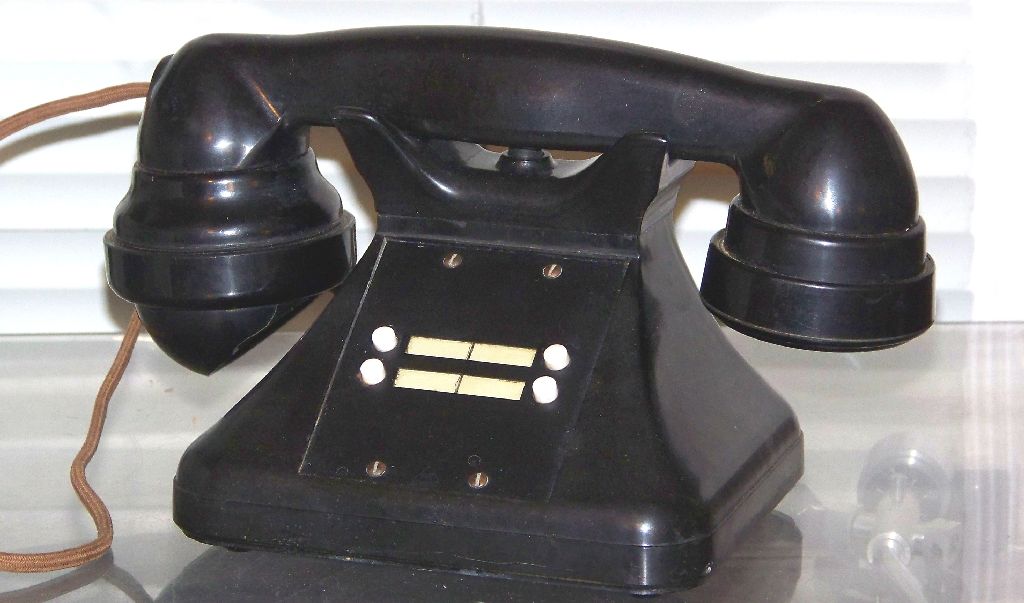
Photo Credit: alexkerhead via Compfight cc

Old School! Photo Credit: alexkerhead via Compfight cc

Now, I’m not saying there aren’t plenty of communications that are much more convenient and effective via email or text or choose-your-text-based-method-of-choice. And I don’t want to go back to the days when there were fewer options (those options being telephone, snail mail, or knocking on my friend’s door and asking if they could play).

But I realized recently that just like with snail mail, for me telephone calls have gained a certain kind of cachet because they happen more rarely. Meaning, they’re more likely to feel SPECIAL.

When I finished my novel a couple of weeks ago, I was having a great time texting and messaging a bunch of friends to celebrate. One friend responded by calling me up, and I have to say, that made my day.

Last month I got a text from a friend that mentioned crying. I instantly called him up. Next best thing to being able to be there in person.

One of my good friends phones me up for a chat every week or so. We’re both busy people, and we can’t always find time to see each other, and even when we do, we’re often going to group events together and such. But finding twenty or thirty minutes to talk is usually doable, and our phone chats allow us to stay up-to-date with the personal details of each other’s lives.

Honestly I like the phone for the same reason I like Skype; talking on the phone doesn’t strip away as many cues as text-only does. With Skype, I still get all (or at least most) of the body language. With phone calls, I miss most of those, but at least I get tone of voice and intonation. I use emoticons and exclamation points and asterisks and capital letters liberally in text to give it some of the same nuance as speaking, but honestly, there’s only so much I can do.

I still don’t call people on the phone a lot myself. There’s so many people who hate talking on the phone that it feels like a potential minefield. So I tend to save it for those moments when it will potentially make a big difference, when a friend is celebrating or struggling, or when I am.

But sometimes I think a phone call is exactly the right thing to do.

Read Full Post »

What I’ve learned in the last three hours of wrestling with this blog post and ultimately producing nothing I could use is that making a point effectively and concisely while maintaining and projecting empathy can be incredibly difficult.

Maybe this is part of the problem.

The troubles with internet culture are not new. From what I understand, Youtube has historically been a cesspit of bile and awfulness, which is why I never read any Youtube comments except when I’ve been unexpectedly hit by a train of stupid by my own brain. I’ve been aware of the death and rape threats routinely made via the internet for many years. And my corners of the internet have been quite troubled for the past several months, by Gamergate, by some controversy in the YA world that I speak about obliquely here and less obliquely here, by the Requires Hate reveal, and most recently by the Hugo award nomination fracas.

In short, the internet can be an ugly place to hang out. There is a cost associated with being here. There is a cost associated with being a thought leader and expressing your opinion here. It is a cost I have been aware of since I began this blog nearly five years ago.

A few friends of mine reached out to me after I published my piece on rocking the boat about #KeepYAKind. I listened to them carefully, and I’ve been thinking about what they said for the last few weeks. My main takeaway is, people are scared. People are scared to speak up. People are scared to share their opinions. People are afraid of the internet being dropped on their heads. People are afraid of the cost involved. They are afraid of the threats, the personal attacks, the harassment, the name-calling. And understandably so.

One of my friends told me, “Someday you’ll see this from the other side.” And it’s true, I know it can happen to me. Of course I’ve thought about it. Of course I’ve thought about what it will be like getting rape threats on the internet, because I’m a woman who sometimes talks about feminist issues, and no matter how careful I am, no matter how many times I read over each blog post and how thoroughly I consider my word choices, I will offend someone. And someday that someone might be a shitty person who thinks an appropriate way to respond is with a rape or death threat. And at some other point, I am bound to say something stupid. I’m sure I already have, and I’ll do it again. And the internet might fall on my head. It might be right about me, it might be wrong, but in that period of time, the rightness and wrongness will probably not be foremost in my mind.

I still disagree with the #KeepYAKind campaign. It showed an ignorance of the type of rhetoric and cultural training that have been used for decades to keep women quiet and “in their place” that I find quite troubling, especially given what it was in response to. And tactically, it was much more likely to silence the moderate and less privileged voices; the trolls weren’t going to be affected by it to anywhere near the same extent, if at all.

But I do agree that internet culture, and the harassment, bullying, and scare tactics that go along with it, are a huge problem, both for writers (my own tiny habitat in the pond) and for society in general. We can theorize about why internet culture is the way it is (the power of anonymity, the dehumanization and depersonalization of others that is perhaps an effect heightened by interaction over the internet, the attention economy, humanity’s history of only having to deal in relatively small social units, etc.). But all our theories will not change the reality.

Then we have Kameron Hurley’s recent inspirational piece about how the internet harassment she is subjected to is nothing compared to the difficulties faced by her grandmother in Nazi-occupied France. I will admit this gave me a severe case of mixed feelings. On the one hand, perspective is valuable, as is having the moxy to live loud on the internet and encourage others to do the same.

On the other hand, we’re looking at some problem comparing here. Of course internet harassment is not the same as living in Nazi-occupied France. But that doesn’t make the fear less real. That doesn’t mean anyone who is afraid or upset or angered by internet harassment should feel ashamed of those emotions. And shame is the danger that inevitably comes with problem comparing, even when such a comparison makes for a great rhetorical device.

Photo Credit: Roadside Guitars via Compfight cc

Photo Credit: Roadside Guitars via Compfight cc

Well, I am not ashamed. I’m a recovering people pleaser, for goodness sake. Of course I was afraid when I started this blog. If I hadn’t been afraid, I wouldn’t have needed any Backbone Project. I recognized the need for me to claim my voice in spite of the fear, and I’ve been working on that ever since. And I’m still afraid, sometimes. I still worry. It’s gotten a lot easier, but when I get the internet dropped on my head, I’m sure I’ll have a miserable time of it.

As a writer, I have to keep asking myself: Am I willing to pay the price for lifting my voice? Even when the price is stupidly high? Even if I’m terrified or creatively blocked or otherwise emotionally compromised by the experience? And if the answer becomes no, then so be it. There is no shame in that. Ultimately my own welfare and safety trumps everything else.

But so far, the answer is still yes. And I hope it will continue to be yes for a long time to come.

Read Full Post »

« Newer Posts - Older Posts »