Feeds:
Posts
Comments

I returned from Washington late Sunday night, only to find I had brought a bad cold back with me. This is the kind of cold that makes me feel like the distance between my neurons has doubled, so that any thinking I might wish to do happens… very… slowly. So even though I don’t usually talk about events much on the blog, because I think maybe that is very boring for anyone who wasn’t at said event, that’s all I’ve got in me today.

First, a few pictures. The location was truly gorgeous, right on a lake that tended to get misty in the mornings, with the rain forest on the hills behind the buildings. It rained a lot, not surprisingly, which was fine since I was supposed to be writing.
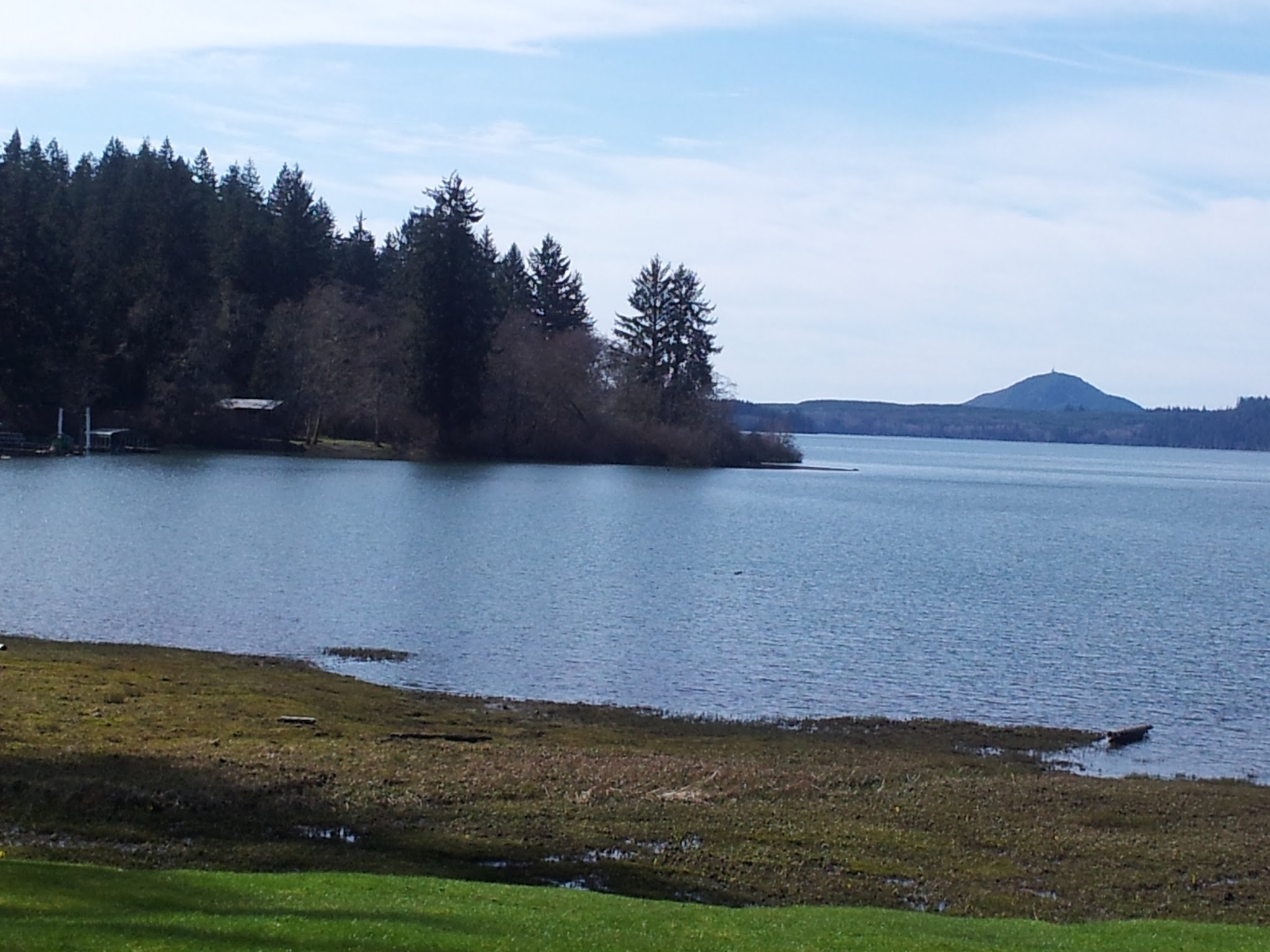
Beautiful Quinault Lake: what a view!
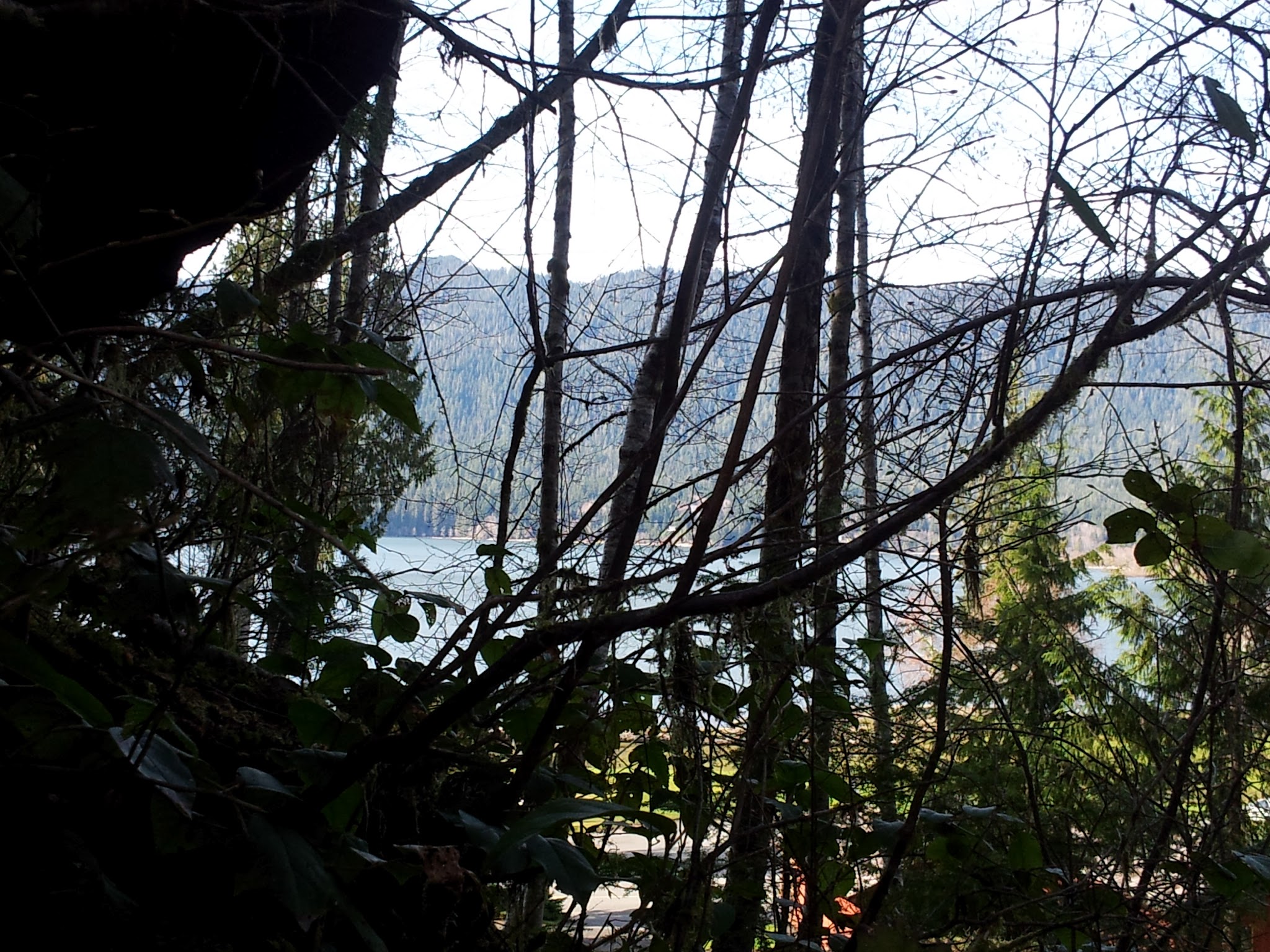
And here's the lake again through the trees.

 

There was lots of moss in the rain forest.

I was pleased with how much I wrote and found I was able to be more productive than my usual. I wrote until my outline broke. Of course, now I have to fix it before I can start again, and aforementioned neuron difficulties aren’t helping matters any. But figuring out how to fix broken outlines is actually one of the parts of writing I like best, even though I also enjoy complaining about it.

But really the best part of the trip was the people. No big surprise there, of course. Put me in a room full of writers, and the likelihood of me meeting someone who I find fascinating and nice increases exponentially. So do my chances of encountering a kindred spirit, and really, there isn’t much in this world that makes me more happy than making contact with that elusive breed. Except perhaps spending even more time with them. And writing.

I wonder if it’s a matter of depth, a trait all the kindred spirits I’ve met share. I don’t know if people who already have depth are drawn to writing, or if writing requires and develops depth in people. Or perhaps both? I don’t mean to imply that all people who aren’t writers don’t have depth (or contrariwise, that all writers automatically have it), as that is simply not true. But I do think the percentage of writers who have depth (or at least who express themselves in ways that reveal it) tends to be higher than average.

I think I’d like to write more about kindred spirits when my thought processes are in better working order. But in the meantime, I must conclude in order to consume liquids and lay on the sofa like a rag doll. Suffice it to say I thoroughly enjoyed my time in the Quinault Rain Forest.


Today I am away from home, attending the Rainforest Writer’s Retreat in Washington. Ah, the bliss of days on end in which I have no obligations except those of basic upkeep and writing, writing, writing! After which I get to converse with other writers to my heart’s content.

In other news, my husband and I are currently reading my old favorite The Phantom Tolbooth, by Norton Juster, at bedtime. This book is full of gems of word play and absurdity, as well as surprisingly profound insights on the nature of the world. Here is one of my favorite passages:

“…from here that looks like a bucket of water,” he said, pointing to a bucket of water; “but from an ant’s point of view it’s a vast ocean, from an elephant’s just a cool drink, and to a fish, of course, it’s home. So, you see, the way you see things depends a great deal on where you look at them from.

This passage struck me strongly when I read it as a child, and every time I re-read it, I am reminded again of what an important insight it really is. So much of the world depends on your point of view, doesn’t it? Not only does this help me keep perspective on my own life and problems, but it’s also helpful when trying to understand other people. We all see things in our own special way, and it continues to amaze me how very different those ways can be.

When one stops to consider how mutable memory is, this train of thought gets even more interesting. Let’s say I attend a small event with three other people. Each of us will perceive the event from our own perspective to begin with. So maybe Person A is really happy because she got good news earlier today and has been really looking forward to this event. Person B is trying to be chipper but is experiencing some RSI pain in his arms and shoulders. Person C is deeply annoyed because he wanted to go to Japanese food but the group consensus was for Italian and now he’s worrying about eating too many carbs. And Person D worked really hard today and is having trouble transitioning from work mode to social mode.

Already we can expect that each person will experience the evening differently. But then ask them all about it three months later, and the stories will be even more different. Each person will have personal details they remember and others they forget. Some of them will misremember. And if they’re remembering together, one them may say, erroneously as it happens, “Didn’t Person B order gnocchi?” and then another will say, “Oh, that’s right” and in such a way the erroneous memory will spread. Each person’s perspective will shift depending on what they remember.

Norton Juster got it right. It all depends on your point of view, and many more things are subjective than we might at first realize. I often think about that bucket of water and remember that today, I might be the elephant and you might be the fish.

I haven’t been writing recently about being a people pleaser, or becoming more assertive, and other topics like that. You know why? Because it’s hard. It’s hard to change how you react to things. It’s hard to tear your life apart, examine it from every angle, and then slowly put it back together again. I often put pieces on backwards, or they just don’t fit right even though I’m hammering at them for dear life.

But then I read this essay by Penelope Trunk, who is, as you know, one of my favorite bloggers, and I realized I should write about it more. Here is what she had to say:

“It’s hard to know who to take advice from. But my instinct tells me that the best advice comes from the people with the most difficulties. Not in the past. But right now. Because that’s where you want to be: doing something difficult right this moment.”

So yeah. I’m doing something difficult right now, so maybe it is worth talking about, even though it’s dangerous and messy and I don’t have all the answers. I don’t want to give you advice as much as I want to illustrate that people can in fact do this–that people can change themselves, that people can look at themselves and say, I could be a lot happier than I am, and then take positive steps to make it so. Because I meet so many people who seem to think that almost everything is impossible, and that just isn’t true.

Here are two things that happen when you have actually made strides at changing your people pleaser tendencies: people will freak the hell out, and you will realize you have spent most of your life listening to very bad advice.

People will freak out because, even if they are actually decent people (and sadly, some of them aren’t), they are used to you being a doormat. You suddenly deciding you’re not a doormat is vastly inconvenient and confusing. It disrupts the normal patterns of all your relationships. Even the people who are generally supportive of this change will sometimes freak out, because oh my god change and where do they fit into this new picture?

As for the bad advice, it’s amazing how willing many people are to support you making decisions that are outright harmful for you. Society as a whole is quite okay with this notion too. There are two forces at work here. There are the people who are taking advantage of you in some way. It is obviously in their best interest to give you bad advice about continuing to be a doormat with everyone; they have a vested interest in you continuing to drink the Kool-aid. And there are the people who are doormats just like you, who don’t have good advice to give since they are in the same unfortunate position, and who wouldn’t give the good advice anyway because then it might force them to examine their own position, which they don’t want to do because of the chaos that would then ensue in their own lives.

Of course, once you have that lightbulb moment in which you realize how generally absurd most of this advice is (and wouldn’t that make a fun post one of these days?), there is no turning back. You have taken the red pill, and you begin to wonder: why was pleasing these people ever so important in the first place? So instead you sit back and watch them freak out, and you remember that you are worth it. And you keep resisting the gravitation pull of going back to the old comfortable ways that were holding you down.


About Writing Mind

I mentioned in my post The Dangers of Advice that among the common writing advice I don’t follow myself is the adage to write every day. Apparently, Jeff VanderMeer doesn’t write every day either, at least not to a specific word count. So you know, yet more evidence that you should studiously ignore all writing advice that doesn’t work for you.

I will add that, even if I’m not churning out word count every day, you can see from my post on Tuesday that I’m constantly engaging in what I am going to call writing mind. It’s more in the forefront these days, but even when I’m not shoulder deep in novel, it is a challenge to turn it off for any length of time. Almost everything I do, think about, read, I experience through a writer’s lens, so that being a writer suffuses my entire life, to the point that constant word count is, to a certain extent, a moot point.

Writing mind: a combination of subconscious processes and experiencing the world through the lens of a writer

In a recent interview, Robin Hobb talks about her experience, which sounds an awful lot like writing mind to me:
But even when I’m not at the keyboard, I’m still writing. I think that’s what the paper notebook taught me. My brain ‘writes’ all the time. It’s just finding the time to sit down at the keyboard and record what is store there!

Certainly one has to write to be a writer, and as a whole the writer community is very insistent on this point given the number of people who say they are writers but don’t write at all. We feel obligated to be prickly about it because there is a wide-spread misconception that writing fiction is easy. But the more I write, the more I am coming to understand that the actual writing is a critical component of the whole, but not the only one.

It is a pleasure, especially for a perfectionist like me who sometimes (often) suffers under an unforgiving work ethic, to realize that the time I spend every morning sitting in front of the fire and staring into space, or feeding my brain with various economic analyses, neuroscience findings, pop psychology, and insights about books and writing is all in service to the writing. Of course if I have a particularly busy day I have to skip right past the brain feeding phase except for a brief brainstorm in the shower and jump right into the heavy lifting, but it’s nice to realize that both parts are necessary and valuable. This insight allows me to be more fully me and to enjoy the process without quite as much of the kicking and screaming (although plenty of that still goes on; you try writing a novel dealing with the mutability of memory and see how you get on).

Being a writer encourages me to keep having interesting thoughts and doing interesting things, which is an aspect of it that I value extremely highly, especially at this time in my life when I can fully appreciate the comfort that comes from slipping into a pleasant routine and avoiding challenge in favor of the pleasures I already know I enjoy. Writing itself keeps me constantly on my toes, but it also rewards me when I decide to get more adventurous.

A few recent examples for you:

  1. I went to see President Obama speak a few weeks ago, not just because it was an amazing opportunity, but because I thought, “Hmm, I’ve never been to a political rally or heard a person with high charisma speak in public. I bet that will come in handy someday in my writing.”
  2.  We are beginning to consider our summer travel, and I provided my husband with a list of places I thought might figure into the settings of my next novel. “Which of these are you interested in?” I asked. Of course, it turned out that he was willing to go to any of them because apparently the heroine of the book has excellent travel taste.
  3. I picked up some novels recently that are not my usual fare, based on recommendations in an article by my friend Damien. Now on my to-read stack: Orlando by Virginia Woolfe, The Glass Bead Game by Herman Hesse, and The Magus by John Fowles. I don’t know if I’ll like them, but at the very least I’ll learn something from them.

To sum up: Jeff VanderMeer doesn’t have a daily word count goal. Robin Hobb describes writing mind well. And writing mind meshes nicely with the desire to see life as an adventure and not settle too easily into general complacency.

My head is in the clouds. Actually, my head is in a fictional boarding school in a remote location in the Canadian Rockies.

In other words, I am obsessed by the novel I am currently writing. And when I’m not completely lost in my obsession, my mind invariably turns to the novel I want to write next.

This makes everyday interaction a bit…problematic. Because there’s a part of me that wants to spend all my time at Lincoln Academy because my god, the amount of tension and drama in the plot right now! I want to find out what happens next. (I mean, I kind of know what happens next, but it’s not the same as when the words are written. Words can be surprising.) There’s a part of me that never wants to leave my house. On days like today, when I don’t have to, I am suffused by a sense of well-being because I can just let my mind go on its haywire creative journey all day long. And I am deeply, deeply happy…even when in the depths of misery because the book will not cooperate, the book is not as good as it should be, the book is making my brain hurt because dealing with an unreliable narrator is even more mind-blowing for the writer than it is for the reader (or so I am learning).

Of course, I can’t spend every minute of every day writing. For that matter, I spend very little time actually writing, and much more time thinking about all things novel-related. But I can’t even do that all the time. However, I am finding it increasingly difficult to clear my mind enough to think or converse intelligently about other topics. I can do it, but it takes significantly more effort than usual. So when I wrote about how writers shouldn’t talk about writing on their blogs all the time, maybe I was being a touch naive. Because right now, what else could I possibly want to talk about?!?!

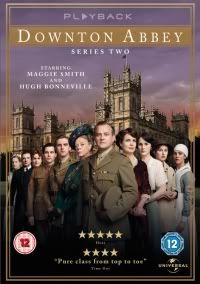
When I need a break from the novel, I do turn to Downton Abbey...

The blog is a particular problem because I choose the topics and the original post is just me talking about what I’m thinking about. In person I get along a bit better, because in general people are quite happy to take over most of the conversation, and I certainly have enough brain space to nod and smile at the correct intervals. I can even make vaguely relevant comments. The people who know me best can still strive for total engagement with strategic introduction of proven Amy-enticing topics: Disneyland, travel, theater, books besides my own, bridge, a sufficiently interesting intellectual topic (with extra points for neuroscience or social trends). Sometimes politics is shocking enough to dart pass my defenses, although this is invariably unpleasant.

But in the end, I am living breathing dreaming and otherwise immersed in my novel. So if I seem somewhat distracted here on the blog, or if you notice a certain, dare I say, sloppiness creeping into my thought processes, well, that is why.

Tell Me If This Is Art

In our discussion about what it means to be an artist, the question of the definition of art came up more than once. This issue–what exactly IS art?–has been the subject of all kinds of learned debate, study, essays and books. So why not tackle it in a single blog post? The things I do for my readers! (Not that I’m complaining–it gives me the perfect excuse to use this image I found the other day.)

Hmm... is this art?

So what are some factors we can consider?

1. Exposure/size of audience: Has nothing to do with whether something is art. Pop/rock musicians and TV shows reach an audience of millions, whereas new classical music works are sometimes lucky to break into the thousands. We can get into an argument about low vs. high art, but let’s not.

2. Opinions of the experts: Have been proven wrong in the past, and are likely to again in the future. Critical acclaim is great, but who among us hasn’t read the rejection letters from expert editors regarding books that later became classics?

3. The Ka-ching! factor: Has nothing to do with whether something is art. Some people make a lot of money from art they create…and some people really don’t. Take Vincent Van Gogh from Tuesday’s post. He made hardly any money from his art, and is anybody really going to argue with me that Starry Night is not art? Anyone?

4. Skill: So maybe most of us agree that Starry Night is art. But what about that novel you trunked? What about your kid’s crayon drawing of the family that she spent several days on, but that consists of stick figures? What about your first musical performance, when you cracked on that high note? What about that song that consists of three chords? Is that song art if it has a catchy melody as well? What if it has especially original lyrics? What if it’s a parody of another popular song? Yeah, this category is tricky.

5. Artistic freedom: How much control over the work of art does the artist have, and does this affect its classification as art or not-art? For example, is graphic design to a client’s specifications art? What about animating someone else’s graphics/story? (Is that any different from a singer or actor interpreting a song or script? If so, how?) What about a tie-in novel with pre-existing characters and a pre-approved plot? How about if an opera company commissions you to compose an opera? That’s definitely art, right? So how is it different from any of the above scenarios? (I’d argue that in this case, the composer retains most of the artistic vision for the project. But what about portraiture?)

6. Intent: The idea that art can be defined by the intent of its creator. So if I put my dog’s paws into paint and let her walk around a blank canvas, she is not an artist. Maybe I am though, if I had the idea of making art based on this plan. If I’m singing in the shower and not thinking about it, that’s not art, but if I’m performing in front of a room of my students, perhaps it is. What about when I’m practicing that performance by myself? This is the broadest definition of art, and the one I resonate with the most, as a teacher as well as an artist. Were my singing and piano students not artists because they hadn’t achieved mastery yet? No, but I’d argue that some of them were perhaps not artists because they didn’t understand or care about what they were doing (and therefore lacked artistic intent).

7. Art is in the eye of the beholder. In which case it is inherently defined by those experiencing it as opposed to those creating it. Although do you experience it while creating it? What about afterwards?

I know, I’m asking a lot more questions than I’m answering. I’m hoping some of you will be moved to comment and tell me your opinions about the questions I’ve raised. So let me leave you with one final question:

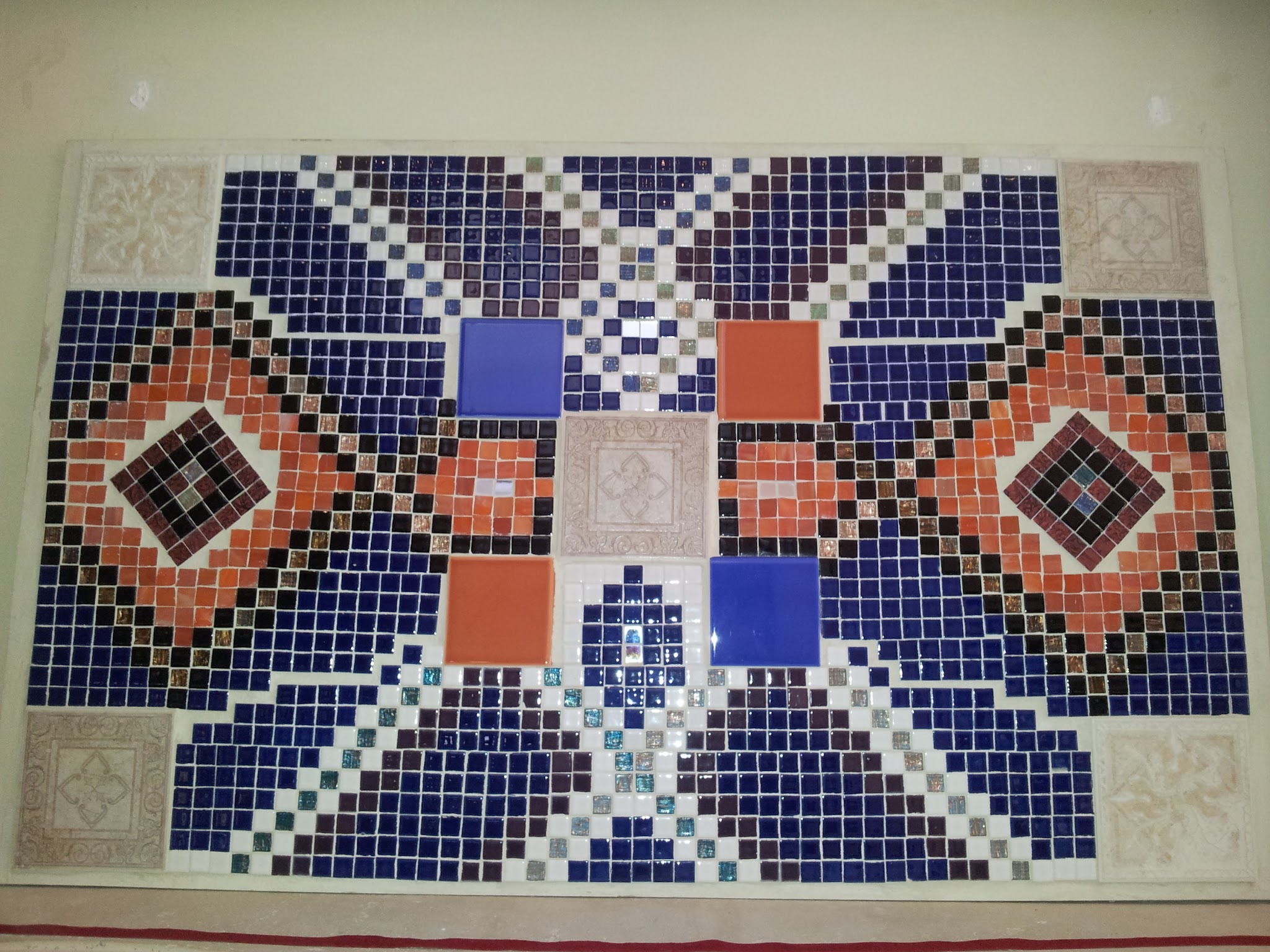
A few years ago, in a sublime and slightly insane act, I decided to create a mosaic as part of the decorations for a Greek/Norse Gods & Goddesses party I was throwing. I don’t know anything about mosaics. I’ve seen a few in Portugal, but that’s about it. So I bought some materials and a book telling me how to do it, and I got to work. I spent hours and hours on this piece. In the middle, I got RSI in my hand from squeezing the glue container (I kid you not) so I had to recruit my husband to squeeze the glue while I painstakingly placed each tile. Here is the finished result:

As I said, I know next to nothing about mosaics, and this was my first attempt and therefore most likely a flawed and amateurish effort. The skill wasn’t there, the money certainly wasn’t, and everyone was so involved in other aspects of the party that they hardly noticed the mosaic (ah, party planning 101). I did, however, have complete artistic freedom and an intention to create art. So my question is, is this mosaic art? Or not art?

I can’t wait to hear your thoughts!

What does it mean to be an artist?

I’ve been asking myself this question, in various forms, for most of my life. It’s a question that bears repetition because there are so many possible answers, and my own personal answer sometimes changes. When I first began creating, the question wasn’t clearly formulated and the answer was simple: Joy! As I grew older and awareness of economic realities intruded, the questions became How can I be an artist? and Should I even try?

For a year or two, I chose not to be an artist. Oh, I still dabbled in this and that, but I wasn’t wholly or even halfheartedly invested. It was a dark and boring time.

When I recommitted myself, I felt such a deep sense of relief. I was spending my time the way I was supposed to again. I was focusing on what was important again.

Perhaps that relief, that sense of purpose, is part of what it means to be an artist.


We can judge our artistic success on so many levels:

1. Financial: how much money we make, can we make a living as an artist
2. Recognition/acclaim: receiving opportunities, reviews, awards
3. Size of audience: how many people experience what we are doing
4. Growth as an artist: how we are improving and/or taking risks as an artist
5. Producing a piece or performance that works the way we wished it to

But perhaps being an artist doesn’t have so much to do with traditional success. Some of the most lauded artists labored in obscurity in their lifetimes. Many famous writers self published their own work. Vincent Van Gogh, Jane Austen, Emily Dickinson, Jan Vermeer, Franz Schubert, Henry David Thoreau.

If money and fame are of less importance, then what does it mean to be an artist? It means we create. It means we dream. It means we explore the fundamental question of what it means to be human: what it means to be conscious, what it means to experience emotions because of a painting or a symphony or a poem or a novel, what it means to have the capability for empathy. The exploration is inherently of value, regardless of the outcomes.

Stephen King said, “Life isn’t a support system for art. It’s the other way around.” Art supports life; it creates meaning, some semblance of order created from the complications of existence. It takes us outside of ourselves and pushes us more deeply inside of ourselves. It raises as many questions as it provides answers.

Being an artist, then, is about more than a job or a career. Being an artist becomes a state of mind. 

And the seven-year-old me was right after all. What else does it mean to be an artist? Joy!


I can hear your groans already. Not another social media site!

But I have good news: Pinterest is simple, fun, and pretty. It can be a helpful creative tool. And it is absolutely NOT necessary for a solid writer platform. Use it if you enjoy it, but if you don’t have the time or inclination, this isn’t a make-or-break proposition.

Aren’t you feeling better already?

What is Pinterest?

Most simply, it is a social image-collecting site. You can create “boards” that are collections of various images you have “pinned.” For instance, you can have a “Books I love” board or a “Beautiful photos” board or a “Yummy recipes to try” board. The boards tend to be visually pretty.

You can re-pin images directly from the Pinterest site. You can pin images from other sites, either by adding a “Pin It” link to your browser’s bookmark bar or by copying and pasting the image’s url into Pinterest. You can also upload your own images for your boards.

Finally, you can browse through other people’s boards and images, comment on them, re-pin others’ images, and like others’ images. You can follow other people on a board-by-board basis, and they can follow you. Hence the social media part.

Downsides of the site:

1. Massive time suck. Massive.
2. You can only use the service if you already have either a Facebook or Twitter account. Given my privacy concerns around Facebook, I chose to use my Twitter account. However, that means I can’t look for other friends who use Pinterest, as you can only do that (to my knowledge) by linking to Facebook.
3. You can’t re-arrange the images pinned to your board, so whatever order you enter them, that’s the order you’re stuck with. Hopefully they will eventually add a click and drag sort of interface to make the boards more customizable.
4. The user interface of the site can occasionally be a bit confusing, and the “Pin It” browser button doesn’t always work.
5. As far as I can tell, there is no way to make a board private. So everything you do on the site will be in full public view. Otherwise it would make a great archival/bookmarking tool.

Ways to Use Pinterest as a Writer:

1. Settings boards: Make boards of photographs of various settings in your WIP. I recently wrote a story set in Rio, and I had an entire browser window with twenty tabs devoted to the photos I’d found. I would have loved to have the convenience of pulling all the photos together in a board instead.

2. Blog boards: If you use interesting pictures on your blog, you can pin them all onto your blog board, and have a beautiful visual representation of your blog. You can see mine here.

3. Book boards: I adore books, and it gives me happiness to click on my “Books I Love” board and see all my favorite covers staring back at me. This can also work as a recommendation board or as a record of the books you’ve read this year.

4. Mood boards: I know a lot of writers use music, often carefully crafted set lists, as a tool to get into the mood of their book. For those of us who can’t use music (I find it too distracting), we can make a visual board instead and take a look for inspiration before a writing session.

5. Random inspiration: If you can be disciplined enough to avoid the time sink factor, scrolling through the aesthetically pleasing images can be just the thing to kick-start those creative juices. Also, need an idea for a story? Maybe you can find an image that gives you the first nugget of an idea.

6. Hobbies: If you happen to have an interest in design, fashion, architecture, photography, visual art, cooking, etc., you might find this site fun outside of any writerly benefits it may provide.

Notice that not once do I mention the social aspect? That’s because I really think of Pinterest as more of a creative tool than a social site. And if you’re using it as a tool, the social aspect will follow. You’ll begin re-pinning and liking other users’ images…and they’ll know you did. You’ll find some people who have such awesome boards that you want to follow them. Maybe you’ll have to comment on a particularly thought-provoking image. You get the idea. The social part, I think, can happen organically.

What do you think? Have any more great ideas for ways to use Pinterest? Need to vent some social media angst? I’d love to hear your thoughts.

Thank You, John Green

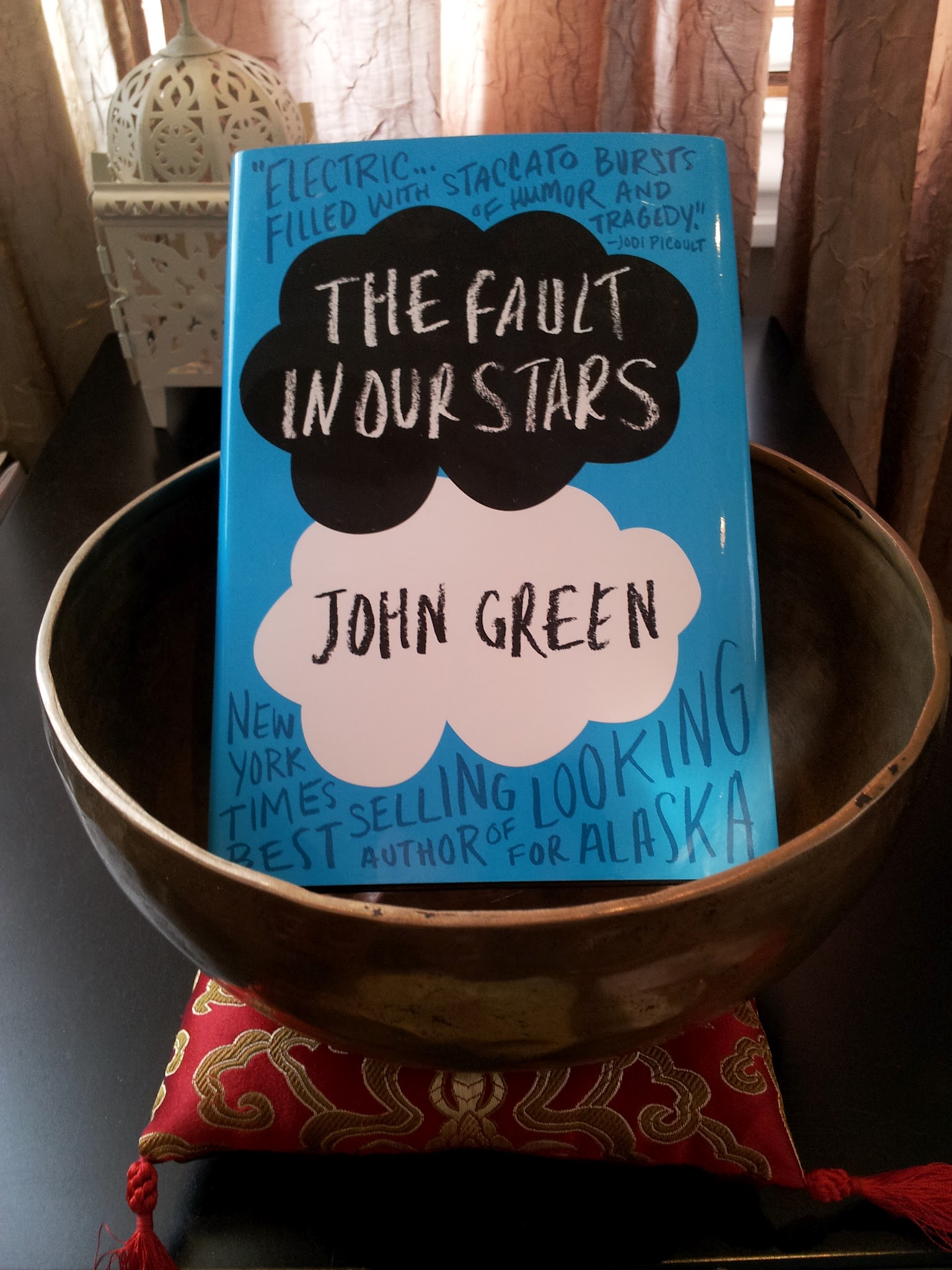
Last week I read John Green’s new novel, The Fault in our Stars.

This is not a review.

After I had read the first twenty-one pages, I told my husband this was going to be the best book I’d read all year.

A little while later I went to the bookstore and bought the hard copy because if Amazon ever disappears and I no longer have access to my e-books, not having this novel would be a particular tragedy. Also, I wanted to hold the tangible printed version in my hands.

When I was twelve, I started writing a novel from the point of view a girl about my age who had been diagnosed as HIV positive. I didn’t get very far with it, but it has lived on in my mind ever since. So when I heard the premise of The Fault in our Stars, I knew I had to read it. It is a novel from the point of view of a girl of sixteen who has terminal cancer. It is a heart sister to the novel I never wrote, that I couldn’t write, and the fact that it exists makes me breathe more freely.

This novel is not a sappy issue book that makes you want to yell at it as if it is conscious before you hurl it across the room and mope.

This novel is not an easy book to read. I can only imagine what it must have been like to write.

This novel is not perfect. Our protagonist says at one point that the movie V for Vendetta is a boy movie. I completely disagree. Of course, one could argue that this slight blemish makes the book even more perfect.

If you talk like either of the two main characters and/or think about the things they think about, I want to be your friend. We can go to a coffee shop every week and have deep existential conversations in between making ironic statements that have us internally rolling on the floor even though on the outside we only cue our mirth with a certain type of smile. If you don’t live nearby, you should move here. It will be worth it.

Also, when you worry about what your life means or may mean or may not mean, I will hold your hand, if you will hold mine.

In the meantime, enjoy this novel. Its construction is a miracle to behold. It has layers upon layers, a story within a story (and then some). It plays with language. It is a brave book. It talks about things that matter that maybe most people don’t want to talk about, like death and dying and illness and meaning and love that lasts through it all. It does not flinch away.

This book punched my heart even while it fed it. Or it filled it up till brimming even while it broke it.

Thank you, John Green.

Disclaimer: This post in no way reflects the opinions of my husband or his employer. Yup, it’s one hundred percent me. So without further ado, here’s what I’ve learned from Google.

1. Filtering is critical.

Google is not a media company, and it doesn’t produce any content of its own. Its core idea is to filter and organize data in a way that makes it useful to the end-user (that’s you and me). Without a way to make sense of the huge masses of data, the internet would lose much of its practicality and all of its convenience. And when you think about, filtering is critical for communication in general. If you asked about my day and I gave you a minute-by-minute breakdown, you’d probably be so bored you’d miss anything important I chose to relay.

2. People will hate on you, and there’s nothing you can do about it.

No matter what decisions Google makes, some people are unhappy about them. I don’t even work there, and I hear about it all the time. The bigger and more successful you are, the larger a target you become for other people’s judgment and rage. (Seriously. Random people rage at my husband all the time. It drives me crazy.) Just a reminder, I suppose, of the truism that you can never please everyone.

3. The power of data is nothing without the power of distribution.

So Google offers this great filtering service to the world. And yet, this service by itself generates very little revenue for Google, which makes almost all its money from advertising. Meanwhile, what do I insist on spending my money on? Internet access in my home and a data plan on my phone, so I can get to the filtered data. Infrastructure for distribution is key. (Look at the publishing industry. This fact has been screwing them over for decades.)

4. People love the idea of free food.

For a long time when people found out my husband worked for Google, they wanted to hear about the campus and the food. Had I eaten at Google myself? What did I think of the food? (Not much, as it turned out.) There was a near endless fascination by the idea that Google fed its employees for free. And in fact, until we moved in together, my husband barely had anything in his kitchen because he ate almost all his meals at work.

Photo by Trey Ratcliff

5. It’s possible to change the world, and you don’t even have to be Einstein to do it.

Larry Page and Sergey Brin were two CS grad students when they founded Google. Now they are among the richest people in the world, and they have had a deep impact on the way we all experience that world. Plus they continue to use their resources to investigate other potential changes in the future, like self-driving cars. You can never be sure how much power the right idea at the right time will have.

6. A catchy motto can come back to haunt you.

“Don’t be evil.” I’m sure it sounded good at the time, but now it gives people yet another reason to be asinine while complaining. If I read one more “clever” twist of this motto, in which people are for some reason shocked to discover that Google is in fact a corporation and not some shiny Kumbaya fest, I’m going to have to go hide in an isolation chamber.

I wrote this post on Google Docs, I’ll get notified of any comments through Gmail, I’ll promote this content on Google+, and I looked up the correct spelling of Kumbaya on Google Search. Whatever your opinion of Google (and I certainly don’t agree with everything they’ve ever done either), the company impacts my life on a day-to-day basis. So the last thing I’ve learned from Google is the incredible value of easy access to data. Remember the days of encyclopedia sets that never told you everything you wanted to know, so you’d just be left wondering? I, for one, am glad those days are behind us.