Feeds:
Posts
Comments

Archive for the ‘Science fiction and fantasy’ Category

As the year draws to a close, my attention turns to the list of books I have read this year. I’ve been keeping track for the last three years, and I’m surprised at how much pleasure this small habit gives me. I only write down the books I have finished, which eliminates many books every year, nonfiction taking an especially big hit since I often read selections from nonfiction books instead of reading them from beginning to end. Re-reads count, as do beta reads for novelist friends. Short stories and novelettes do not count unless they are in a collection, but novellas sometimes do…if I remember to include them.

Looking over my list for 2011 as of today, I’ve selected my ten favorite new-to-me reads thus far this year. It’s been a fantasy-heavy year for me, in stark contrast to my list of favorites of 2009, which was very science fiction-heavy. Maybe next year I can find more of a balance.

I did read several YA dystopias this year, but upon reflection I am unable to include any of them on my “Best of” list this year. While some of them were entertaining, none of them hold up particularly well in my memory, and almost all of them suffer from some flaw or another that makes me hesitate to recommend them. I haven’t read all the recent YA dystopias that have received good buzz yet (I’ve heard good things about Blood Red Road and Legend, for example), so it’s my hope that I missed a few gems that I’ll catch up on next year.

Favorite YA Novels:

1. Where She Went, by Gayle Forman. Contemporary YA
This is the sequel to If I Stay. It is told from the point of view of a young rock star who is trying to come to terms with his life and his decisions. The two main characters are both passionate about music, which possibly explains why I particularly like it.

2. Red Glove, by Holly Black. YA contemporary fantasy
This is book 2 in the Curse Workers series, and it does not stand alone. I’ve been really enjoying this series; the world building is strong and the books have their own distinctive voice that make them both enjoyable and memorable.

3. Anna and the French Kiss, by Stephanie Perkins. YA contemporary romance
A romance set in a boarding school in Paris. The plot isn’t the strong point here, but the protag Anna’s voice is likeable, distinctive, and feels very very real.
4. The Girl of Fire and Thorns, by Rae Carson. YA epic fantasy
This is by far the best YA novel I read this year. The worldbuilding, voice, plot, characters: all of them worked for me. It reminds me a bit of old Robin McKinley a la The Blue Sword, but definitely tells a story all its own.

Favorite Adult Fantasy Novels:

5. The Broken Kingdoms and The Kingdom of the Gods, by N.K. Jemisin
The last two books of her trilogy, these books do (more or less) stand alone. This is epic fantasy written straight for my own personal taste. I think I particularly love these books because they are NOT set in Ye Olde Medieval Europe only sanitized; the setting feels real and true to itself, and the characters aren’t cookie cutters either. Plus I love the books’ cosmology so much, and I enjoyed the last book in particular, told from the POV of one of my favorite of her gods.

6. Among Others, by Jo Walton. Contemporary-ish Fantasy (set in the 1970s)
You might have to be an SF/F fan to truly appreciate this book (although that being said, plenty of its references did not hit the mark with me). This book takes place after the big show-down of the plot, so can be seen as a novel-length denouement (although of course it is more than that) and it unfolds itself leisurely and with great character depth. The end didn’t work for me, but even so, it was one of my best reads of the year.

7. The Map of Time, by Felix J. Palma. SF(?)
I suppose this novel is technically science fiction, since it involves time travel, but it read more like fantasy to me. A spellbinding yarn that weaves in and out of itself in a few (to me, at least) unexpected ways, this historical fantasy/sf/whatever-it-is charmed me, especially in the sections involving the author H.G. Wells.

8. Zoo City, by Lauren Beukes. Contemporary Fantasy
It’s the worldbuilding of this novel that makes it stand out, set in modern South Africa exploring the consequences of one little addition of fantasy/magic to the world we know now. This novel moves at a furious clip, and occasionally the plot suffers from this, but it’s worth the read to be immersed in this fascinating world.
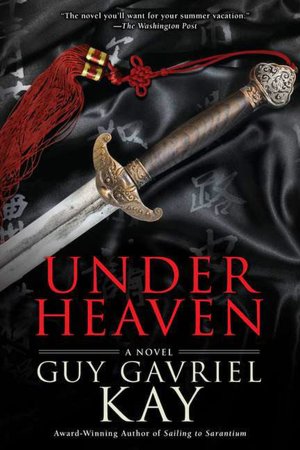
9. Under Heaven, by Guy Gavriel Kay. Historical Fantasy
10. The Lions of Al-Rassad, by Guy Gavriel Kay. Historical Fantasy
What is most noteworthy about my reading year is that I discovered the beautiful prose of Guy Gavriel Kay. I have to be in a certain mood to read him, but when I am, there is absolutely nothing better.

What books did you read this year that you particularly enjoyed? Please let me know so I can add them to my reading list!

Read Full Post »

I’ve recently stumbled over a conversation in SF circles about the dearth of positive written science fiction, in spite of the demand for such stories from readers. Not that this is a brand new conversation in the genre; while attending my first Worldcon in Montreal back in 2009, I met Jetse de Vries, who was in the process of pitching the idea of his anthology of near-future optimistic science fiction stories.

I don’t seek to disagree with the argument in favor of positive stories but instead to offer a more nuanced view. I think there is plenty of room within science fiction for optimism and stories of a basically positive nature. I also emphatically agree that the demand for such stories is high; we have but to look at Analog, which has the highest circulation numbers of the Big 3 science fiction magazines and the most prominent focus on more upbeat endings for stories, to see the popularity of positivity. And if we take a peek at novel-length science fiction, we see many of the genre’s favorite writers who take a generally positive tone (or at the very least, not excessively bleak): Connie Willis, Lois McMaster Bujold, and John Scalzi come to mind, as do Charles Stross and Robert Sawyer, all authors who have been nominated for Hugos in the novel category in recent years. Indeed, my husband and I have often wondered if the recent upsurge of the steampunk subgenre is related to a general desire for nostalgia and shiny adventure stories decked out with amazing flashing gadgets and mad science.

On the other hand, I would be disappointed to see the hunger for positive stories lead to less ambiguity in modern science fiction and fantasy. Bryan Thomas Schmidt says he misses old-fashioned stories “where good people fought for good causes and came out ahead, making for a better world.” He argues that the wildly popular Song of Ice and Fire books by George RR Martin are gritty but feature “admirable heroes who fight against evil for good.” Perhaps it’s been too long since I’ve read these books, but I don’t remember any admirable heroes–what I remember are flawed human beings who make a lot of mistakes and get caught up in the throes of power in various interesting ways. While some characters are worse than others and there are exceptions (Jon Snow comes to mind as being more noble than most of the characters, and also one of my least favorite, although as I’ve said, it’s been a while), the reason I enjoy those books is because of the ambiguity, not the noble heroes…an ambiguity that equates more with how I view our own world. In fact, I have a problem reading many fantasy novels that have the obviously good guys (constructed of cardboard) fighting the obviously evil forces of darkness (made of a lesser grade of cardboard). I don’t object to novels where good people win in the end, but paint the villain too evil or the hero too saintly and good and the story loses a lot of its tension for me.

Meanwhile, my colleague Brad Torgersen states, “Yet a good deal of written sci-fi adores the “downer” ending, the anti-hero, the morally ambiguous and ultimately meaningless stories…” While you all know I love a good comfort read, I don’t find all science fiction that isn’t optimistic and upbeat to be meaningless, and I think describing dystopias and darker science fiction in such terms is doing the genre a disservice. Sometimes people fail. Sometimes moral questions have more than one answer depending on a person’s point of view. Sometimes downer endings and ambiguous stories show us more about ourselves and what we hold to be important.

Speaking as a reader, I didn’t discover science fiction through the optimistic Golden Age of science fiction. I didn’t read Asimov’s short story gems or Heinlein’s romping juveniles as an adolescent. My gateway drug, at age 11 or 12, was Ender’s Game, by Orson Scott Card, a novel I would not classify as particularly lighthearted. Sure, we get the fun zero-G and gaming bits, but we also get a faceful of child brutality, emotional isolation, and the morality of war and genocide (or xenocide, in this case). We follow our protagonist into dark places, and ultimately it is his nearness to perfection that damns him. I fell in love with science fiction not because of its ability to uplift (although nothing to sneer at) but because of its penchant for dealing with difficult questions of humanity.

Granted, Ender’s Game does end on a hopeful note. I find that overall, I prefer reading novels that do have some sort of hopeful or positive note at the end (although there are exceptions, 1984 being the first to come to mind). I don’t need a crystal-clear happy ending, mind you; I enjoy goals achieved but at a high price, or goals achieved that the protagonist then realizes weren’t what she wanted. I enjoy the bittersweet. But I do like some kind of positive salve to end with. Short stories, though, are a different beast altogether for me. They can end in an extremely dark place, they can devastate me and make me cry, and often I’ll like them better for it. I don’t tend to feel despair from a sad ending as much as I feel empathy and an increased understanding of the more painful aspects of being human. The more positive, romping short stories often (although again, not always) lose my interest as they don’t always seem to be about anything in particular, and they more often fail to make me think about things in a different way.

So my complaint of some positive stories is that they are not sufficiently challenging to satisfy me, while my colleagues’ complaint of some dark stories is that they’re depressing and overly pessimistic. All of this makes me suspect that the problem may not be nihilism so much as differing tastes of the reader. Some readers like happy stories; some readers like dark stories. Some readers like a nice variety. Readers will be depressed by different things, readers are looking for different experiences, and readers find meaning filtered through their own perspectives. Perhaps we have an imbalance of dark short sf fiction (in novel-length, I’m not seeing it as much), and if more writers begin to explore optimistic ideas in short form, I won’t be sad. But I’m also very glad there’s a place for experimenting with darkness, exploring the ugly parts of humanity, and shining a light onto those things we most fear.

Your turn to weigh in! Would you like to see more positive science fiction stories? What are your reading preferences (or writing preferences, for that matter)? Anything you’d like to add?

Read Full Post »

Some of my favorite novels are ones in which nothing much happens. That’s not to say that nothing at all happens, or that the stakes aren’t sometimes raised, but the story unfolds in a leisurely, unrushed sort of way, allowing me to feel like I’m really getting to know the characters and being allowed to inhabit their lives. In fact, I’m so fascinated by the characters and the setting, I feel wrapped up in a different world and don’t feel the slightest bit bored.

My favorite example of this kind of writing is (no surprise here) Anne of Green Gables and sequels, in which we basically get a window into the life of Anne Shirley and get to watch her grow up. She has victories and struggles, sadness and happiness, and a penchant for getting into scrapes, but there are no real antagonists or villains, no sweeping natural disasters, no explosions. There is the occasional gentle mystery, but that’s about it. I find reading these books to be profoundly restful.

Other examples include the Betsy-Tacy books by Maud Hart Lovelace and much of Jane Austen’s oeuvre, Little Women and even Jane Eyre. I wonder if Ishiguro’s The Remains of the Day could also fall in this category; indeed, perhaps that is part of the reason why I love it so much. Dramatic events happen but there’s plenty of time for the build-up to them and ample space to discuss social events, meals, and daily life.

These books are in stark contrast to the plot-driven fast-paced novel that is currently in vogue (at least in my part of the literary world). Cut cut cut, the advice for writers says. Every scene has to move the plot forward. Commercial fiction needs an antagonist, or maybe even a series of antagonists that lead up to the final Big Boss. I can read a screenwriting manual like Save the Cat! and find it completely relevant to novel-writing because so many novels feel at least somewhat like long-form movies, except instead of fancy cinematography they have ripples of beautifully garlanded prose. Meanwhile, these slow-paced books I’m talking about? They’re made into mini-series and too many versions of artsy costume films.

I want more of these books I love. I want to read books that have a plot but aren’t raising the stakes every five minutes. I want to read books that don’t have predictable plot twists because there aren’t so many plot twists to fit in, and that don’t have cliffhangers at each chapter ending because they are relying on enchantment rather than adrenaline to keep you reading. I want to read books that, while they don’t go off on hundred-page-long tangents like Hermann Melville is famous for doing, meander a little bit on their way to the ending. I want comfort food books in which nothing too awful happens, or at least, not too terribly often. I want more Agatha Christie novels in which, inevitably, justice is served in the end, and even in the face of brutal murders, characters carry on having dinner parties and taking care of their mustaches. I want more screwball comedies like To Say Nothing of the Dog in which the main character can’t remember what he is to do, takes a lazy trip down the Thames, returns a cat, and has to engage in some complicated matchmaking. Sure, the stakes are that the entire fabric of time could unravel, but did anyone feel really worried that such a thing would actually happen? I know I didn’t.

I don’t know if this desire makes me old-fashioned or out of touch. I’d like to think that somewhere out there is a cohort of readers who want the same things I want, who sometimes like to take a break from the page-turners and convoluted plot machinations, or the implausible series of misunderstandings and caricatured character flaws that so often characterize a less plot-driven novel. I’d like to think that this is why novels like Pride and Prejudice are still so popular.

But don’t mind me. I’ll just be curling up by the fire with A Civil Campaign by Lois McMaster Bujold. Or maybe Among Others by Jo Walton, which is my new comfort book find of the year.

Have any comfort reading recommendations? Think I’m crazy to not always want the stakes raised? Please share.

****
I’ll be at World Fantasy Convention in San Diego for the rest of the week, so if you’re also here, please feel free to find me and say hi! I’ll be participating in the Crossed Genres reading on Sunday at 10am (suite number not yet announced), so if you want to be able to say you witnessed my very first reading ever, you know where to be.

Read Full Post »

Sometime in the last few months, I read someone’s Tweet about space travel. I don’t remember who it was, but they said something to the effect of how science fiction set in space felt irrelevant or dated to them. Like it was nostalgia and nothing more. Of course, this was right around NASA’s final space shuttle launch, so depression about the space program and the likelihood of humans doing much in space is understandable. But more than the final space shuttle launch itself, that comment depressed me, and I’ve been thinking about it off and on ever since.Has space really become so passé that stories involving it are outdated? I began thinking of my own (admittedly small) body of work, almost none of which takes place in space. I have a few subtle nods to the idea that there are humans in space, even though the stories in question take place completely on Earth, and I believe I have one scene of a trunked story that takes place on the Moon. And that’s it. But I’ve written a lot more fantasy and contemporary fiction, so I don’t see myself as indicative. I actually see my lack of space settings as more of an oversight than anything else.

I love space. I love learning about space, and I love reading stories set in space. Many of my all-time favorite novels and series are set in space, and some of the most formative of my reading experiences came from space operas (the Hyperion books and Dune come to mind). As sad as I am that the space shuttle has been discontinued, I would be a whole lot sadder if science fiction that explored the possibilities of space was no longer being written.

Here’s the thing. Economics and politics are always changing. Technology is constantly being developed, and scientists are gaining new knowledge about the world and the universe around us. Our world isn’t a constant–it’s always in a state of flux.

So there aren’t any huge, aggressive space programs right now. Given the present geopolitical and economic climate, this isn’t a huge shocker. But does that mean there never will be a great space program in any country in the world? I don’t think so. The confluence of events, powers, and technologies during and after World War II led to the Cold War and provided the perfect pressure cooker in which the space race could occur. Such a perfect storm could happen again, this time with different political pressures and different emerging technologies.

In the meantime, it is science fiction that keeps the dream of space alive, whether that be in literature, film and TV, or video games. It reminds us of what is possible. Beyond that, space provides an evocative backdrop for storytelling, in which we can enjoy stories of truly epic scope, explore the other (often in the form of an alien race), celebrate innovation and a spirit of adventure, and encounter different cultures and ways of being human.

Just in the past few days, I saw another Tweet from someone who said they were watching Firefly just to see the spaceships. And i09 had an article about how we need more space adventures. It’s nice to know that I’m not alone in my love for and appreciation of fiction set in space. Yes, I’m an optimist in a gloomy time, but I hope I can find space in science fiction for a long time to come.
ETA: Just found another great article on the importance of science fiction that seems relevant to this conversation: China has decided that science fiction is the key to its future success in invention and design of new products.

Read Full Post »

I have the pleasure of announcing that my story “Forever Sixteen” is now up on Daily Science Fiction’s website. I’ve been very excited ever since I sold the story back in March, and I’m thrilled that it’s now available for everyone to read.


The main character is a girl whose aging and development has been arrested so that she remains sixteen years old (if you want to know why, you’ll have to read the story). What would it be like to stay sixteen forever? On the one hand, we live in a society that is obsessed with youth and appearance, so the idea of being able to retain that youth (and implied health) is quite attractive. On the other hand, would you really want to be sixteen for the forseeable future? I didn’t even have huge high school traumas and I’m still not overly enthusiastic at the thought of remaining a perpetual teenager.

Going wider, this premise can be seen as a metaphor illustrating the tension between the desire for stasis and the need for change. We live in a world that is constantly changing, and we’re constantly changing within it. It’s natural for us to want to impose our control on such chaos, to attempt to preserve the status quo. So many of us fear change (and I’m certainly no exception), even when the change is largely positive in nature. And yet, what if that potential for change was taken away from us? What if everything really did stay the same, even our own bodies and the hormone levels coursing through them? As much as I sometimes dread change, this story illustrates one of my true nightmares: the attempt to suspend change.

We’ve all heard the old saw about how the only sure things in life are death and taxes. But whenever I hear that, I always think that in reality, the only sure thing in life is change. Life may trundle along on an even keel  for a while, even for many years, but ultimately something will happen to disrupt its direction.  Sometimes we choose the change; sometimes it chooses us–like death, a natural disaster, or a shift in politics or the economy. Sometimes we have to fight for change, like the protagonist of my story. And sometimes change comes at a high price, at which point we are called upon to decide: how high is too high?

On a more personal note, this story is one of my own favorites. I don’t know if this is true of other writers, but I definitely have the stories I’ve written that are especially meaningful to me and stay close to my heart. Right now I have three of those special stories, and this is one of them (the other two are still looking for homes). The fact that my first pro sale was made with this story in particular makes me feel especially pleased.

So tell me: would you want to stay a teenager forever?

Read Full Post »

I read two essays relating to feminism last week, and I can’t get them out of my mind. They offer very different perspectives on living in the U.S. as a woman, and how to navigate the sometimes tricky waters that this entails.The first one was an explanation by Zoe Winters of why she doesn’t call herself a feminist. She offers several reasons, among them that feminism brings with it connotations of angry man haters, that feminists look down on women who have chosen to be housewives instead of career women, and that it’s better to look for win-win situations in the workplace–that if a man is unwilling to hire you because you’re a woman, you’re better off working somewhere else anyway.

The second one was by Justine Musk: “‘Well-behaved women seldom make history’: redefining what it means to be bad.”  She talks about the black-and-white choice for women in our society: to be a good girl or a bad girl. She brings up the different standards of behavior for men and for women, comparing Charlie Sheen with Brittany Spears. She discusses how convenient it is when women choose to be “good,” which is possibly another way of saying something I’ve been talking about a lot lately, choosing to be a people pleaser. (I understand that men can be people pleasers too. However, I suspect the pressures and causes might be a bit different for women than for men in our society. Feel free to argue with me in the comments, though.)

For a long time, I didn’t really self identify as a feminist. You could even say that I was a bit wishy-washy on the whole subject, and you wouldn’t be wrong. I thought I was lucky because sexism had never really affected me or my life.

Unfortunately, I wasn’t actually lucky. I was just naive.

I completely bought into the “good girl” thing that Justine was talking about in her article:

“Raising a girl to be ‘nice’,” a therapist – a woman in her sixties, married and with daughters — once remarked to me, “is like sending her out into the world with one hand tied behind her back.””

That nice girl is me. Was me, is perhaps more accurate. Sexism has affected me my entire life, sometimes in profound ways. Our society’s ideas about gender roles have played a role in shaping who I am, whether I like to admit it or not.

I don’t hate men. Actually, I really like men. Some of my very best friends have been and still are men. There have been times in my life when pretty much all my friends have been male. I have also been friends with guys who are obviously sexist. (Unfortunately, the more overtly sexist, the less likely the friendship will last, because ultimately it’s kind of hard to maintain a friendship with someone who is treating you poorly. Wish I had learned this one a lot sooner.) So I guess I’m the kind of feminist who doesn’t hate men and is only occasionally angry? Oh, and thinks being a housewife is a perfectly fine life choice, thank you very much.

I find the idea that I’d be better off finding a win-win situation in the workplace a bit shallow at best, though. I mean, it sounds great in theory, but what if I work in an industry in which I’m going to face discrimination for being a woman regardless of the company or my boss? I was talking to a female engineer the other day, and she told this story that really appalled me about her male co-workers’ behavior. When I told her that I didn’t know if I’d want to deal with that in my workplace, she responded that her company is actually pretty good to its female engineers. And I believe her; it might very well be worse elsewhere. That doesn’t mean that better is particularly great though. But she has to put up with it if she wants to continue being an engineer, and doing it with good grace is preferable for her career prospects.

As a writer dealing with sexism, it really matters what sub-field I’m in. The kidlit community seems to be made up of about 90% women. I have never experienced any noticeable sexism or inappropriate behavior in the kidlit community. Because I, as previously stated, like men, I’ve hung out with many of the men in the community, and they have always been respectful and treated me like any colleague.

The science fiction/fantasy community, on the other hand, is made up of about 40% women. On the plus side, women writers in the field also win about 40% of the major awards, which is great. Unfortunately, I am sometimes treated differently in the community because of my gender. I have heard about sexual harassment problems at conventions, and I have no trouble whatsoever believing them based on my own experiences. And because I am the “nice girl,” more often than not I let it slide. I push through my discomfort and keep right on smiling. This is the current reality of being a female speculative writer (or at least a relatively young and cute one). So should I stop writing science fiction and fantasy and find a more women-friendly environment in another genre? Or just not be part of the community? You have got to be kidding me. That’s not a win-win. It’s a big fat lose if I feel forced to leave a genre that I love.

Like it or not, sexism is a reality most women are forced to deal with (if you haven’t, I’m happy for you, but I also don’t really believe it). Some of us may not recognize that it’s happening. I often don’t recognize it’s happening. I’ve been watching movies all my life, and it’s only recently that I began to notice how gender is so often portrayed in Hollywood. Now that I’m breaking away from being “too nice” or the “good girl,” I find it valuable to try to notice. Sometimes there might be nothing I can do; sometimes I might have to stand there and smile. Sometimes someone might assume that I’m a man-hating hormonal nightmare of a woman if I use the word “feminist” or a bitch if I don’t temporize, soften my opinions, or stay quiet. But if I notice, at least I can make my own decision about how to respond and have a greater understanding of what’s going on around me and how society is encouraging me to have certain behavior patterns.

For me, feminism is not about fighting against men. It’s about fighting against stereotypes and preconceived boxes that are too small to fit who I am. It’s about being able to be taken seriously in the avocation of my choice, whether that be composer or teacher, science fiction or romance writer, engineer or housewife. It’s about taking a stand against having to fit into the definition of “good girl,” a definition I had no part in creating.

Okay, have at it. Is there anything I missed? Do you consider yourself to be a feminist? Why or why not?

Read Full Post »

I really thought I would generate more disagreement from last week’s post on critiques, which goes to show that I have no idea whatsoever about such things.  In any case, it made me realize that the backbone project is really more about me putting myself and my opinions out there, regardless of whether doing so sparks disagreement.  (Also, “weenie” has become my new favorite word. My favorite word before that was “insouciant.” I think this is clear evidence that I am getting stupider by the minute.) However, I promised you could disagree with me, and I feel like I failed to deliver. Which brings us to my backbone project post #2.

As you know, I’m a science fiction and fantasy writer, so it should come as no big surprise that I have accumulated some geek cred over the years. But like most geeks, I have some holes in my preferences. Sometimes even gaping ones. I blame it on hanging out with musicians and psych majors all those years. Totally different kinds of geekdom.

Now, I figure most of you will be able to find something to disagree about in my pet peeves of geekdom list. Seriously. Think of it as your mission. I know you can do it.

1. Dr. Who: I have to plead ignorance to all the old seasons of Dr. Who, as I began watching this show with the reboot. I was okay with Seasons 1 and 2, but Season 3? Are you freaking kidding me? I was simultaneously bored, jumpy in an unpleasant way, and disgusted by the new companion Martha until I just couldn’t take it anymore. And what’s with the plots? Deus ex machina after deus ex machina. I watched “The Doctor’s Wife” and read on the internet that it made everyone cry. Seriously? I was just disgusted that once again, all the episode was about was Amy Pond calling the Doctor and begging to be rescued. Maybe I’ve just been unfortunate about the Amy Pond episodes I’ve seen (which, to be fair, haven’t been many), but all she does is need to be rescued! Yet another companion wasted.

2. the novels of Neil Gaiman: particularly American Gods. I could barely finish it because the pacing was so slow. I expect this to generate actual hate mail, so you see how brave I am being. I just don’t get it all the hype. I mean, yes, Neil Gaiman is like the rock star of writers. And he’s done some stuff that I’ve appreciated: The Graveyard Book, parts of Neverwhere (although I wanted to kick the protagonist in the teeth), that short story about Snow White and vampires. But I just don’t understand the massive hysteria surrounding him and his work. Mind you, I keep trying. But so far, no dice.

3. Anime: My geeky friends first exposed me to anime via Cowboy Bebop, and I was okay with it. I think this made them overly optimistic, because they then showed me a bunch of random, really weird and twisted anime, and it’s ruined me. I’m not kidding. Someone suggests watching anime and I look at them like they’ve grown a third head. My poor husband suffers because of it, but there it is. I just have no interest. It took a huge effort for me to consent to watch Porco Rosso and I could see that it had merit, but the ennui is so overpowering, I kind of don’t care.

4. Agricola: Gah! Resource management at its most boring. The players seem to barely interact, and the whole game is about … wait for it … being a farmer? Yeah, because that’s what I’ve been dreaming about doing my entire life. There aren’t even any silly pictures of beans on cards so you can pretend that you’re collecting an exotic bevy of circus performers instead of farming. Plus I already ran a business for seven years. I don’t want my board games to feel exactly the same as what I could get paid to do. I just don’t.

5. WoW: Okay, I’ve never played WoW, and you know what? I hope I never play WoW because as far as I can tell, that game is crack. It will suck me in, and I will run around like a mindless little medicated drone from Brave New World, and I will never ever escape. Not only that, but I won’t even realize how much time I’m spending doing essentially boring and repetitive things. Because I don’t waste enough time on the internet as it is. Plus WoW steals my friends. It makes them too busy to do things like hang out with me and email me. Which gives it an extra black mark in my book.

6. Lord of the Rings (the books): I know Ferrett already blogged about this, but I still think it deserves a mention. I like the movies. I’ve been wanting to see them again, in fact. But I’ve never made it to the end of the trilogy of books. I read the first two when I was eleven, and then I had to wait for the next library trip to read the last one, at which point I’d lost interest. I tried reading them again before the movies came out, and The Two Towers killed me. I wanted something to happen so badly. But instead it just went on and on about the trees and the pain and the journeying, until Frodo’s pain became my pain. Literally.

7. D&D: I like RPGs. I miss playing them. But I don’t miss D&D. Why not? First, because the only way I could ever make it at all fun for myself was by playing a caricature of my class who was generally of lower than average intelligence. After awhile, that got pretty old. Second, the storytelling seems to have the same average depth as my own at age seven playing with my Barbies. There’s bad guys. Must kill. Slash, hack. The end. Now there’s more bad guys. Slash, hack. Etc. I mean, there’s not even the romantic subplots that my Barbies enjoyed. Third, with the newest edition, it seems that even more emphasis is placed on fighting (who knew it was possible?) and that grid makes combat last forever. Don’t get me wrong, I’m not against some fighting in a campaign, but all fighting and no story makes me fall asleep.

All right, what did I get wrong? I bet you can give me several good reasons why the things above are actually super awesome. My tingling spider sense tells me so. And, for additional kicks, you can share your own geekdom pet peeves. I dare someone to lay into Buffy the Vampire Slayer. Or Star Wars Episode 4. Or Ender’s Game. Let the smack talk begin!

Read Full Post »

I have noticed a lot of confusion in the speculative community about the difference between Young Adult (YA) fiction and Middle Grade (MG) fiction. Indeed, some people seem unaware that there is a difference, a problem with which I sympathize, since I had no idea about this myself until a few years ago. So I am going to attempt to explain the difference, and I’m counting on my Kidlit colleagues to correct me where I go wrong (or expand, as the case may be). 

Middle Grade:

Age: These novels are targeted at readers aged 8-12. The protagonists are often (but not always) aged 8-14. (Kids tend to read up. So do teens.)
Word count: The word count tends to run 25-40k for a completed novel.
Conflict: Characters are learning how they fit into their own world. At the same time, the conflict is more likely to be focused on the external (ie our Hero is trying to save the world or save the day).
Edge factor: No sex, no drugs, no swearing. Usually not much romance at all, although there are often boy-girl friendships with hints that it may become romantic someday in the future, and/or “crushes” that don’t lead to serious, deep relationships.
Action: MG novels tend to be more action-packed, with tighter writing, faster pacing, and less time for reflection and/or angst. That doesn’t mean that well-drawn characters aren’t important in MG, just that the focus is different.
Themes: often focusing on the protagonist’s family, friends, and community. Can deal with puberty changes. Often wide in scope (the protagonist as Hero).

Young Adult:

Age: These novels are targeted at readers aged 12 and up. The protagonists are often (but not always) 15-18 (due to the reading-up phenomenon mentioned earlier).
Word count: The word count tends to run 45-80k, and longer if it is a speculative fiction YA (then 90-100k is not uncommon, and sometimes you see books running in the 120k range).
Conflict: Characters are confronting adult problems, often for the first time (coming of age, etc.).The conflict is more likely to focus on the internal (although this by no means excludes external plot as well, particularly in speculative YA).
Edge factor: Writers can get away with a lot more edge in YA, although sometimes these books will be recommended for ages 14 and up, instead of age 12. Also romance plays a much larger role in many of these books, as either the main plot or an important subplot. (This is possibly because so much of the YA market is currently focused on a female audience.)
Action: It depends on the book, but with more focus on the internal and subtle character nuances, YA novels are often less action-packed than their MG cousins (although not always). Keep in mind, too, that YA novels can easily be two to three times longer than MG novels, so the action is often more spread out.
Themes: often focusing on the protagonist growing up and becoming an adult. Often shows a teen’s relationship with society (hence why YA dystopia is an easy fit). Can still be epic in scope, but is more likely to spend more time dealing with the teen’s internal life.

Examples: (WARNING: SPOILERS AHEAD)

Harry Potter series (J.K. Rowling) – in my opinion, the first three books (maybe four) are clearly MG, and then it gets a bit more murky as the series gets darker in tone and spends more time focused on Harry’s inner life.  People enjoy arguing about the classification of this series.

Twilight (Stefenie Meyer) – classic YA. Bella is 17 years old when the first book begins. The book’s main plot is a romance, it’s more internally focused, Bella is dealing with growing up; by the end, she’s married with a baby.

Hunger Games (Suzanne Collins) – YA. Katniss is 17 (I think?) at the beginning of the first book. While this book has a lot of action, its focus is on Katniss’s inner journey just as much as her outer one. It begins when Katniss performs an act of sacrifice and takes on an adult role, and follows her struggles to perform that role. Also has a strong romantic subplot.

Charlie and the Chocolate Factory (Roald Dahl) – MG. Charlie is younger, and his family relationships are of crucial importance to him (and not in a breaking away from the family as he grows up kind of way). Lots of cool stuff happens in this book, and at the end Charlie is the Hero, the winner of Willy Wonka’s challenge. Has a more external focus.

Charmed Life (Diana Wynne Jones) – MG. Again, a lot of focus on Cat’s relationships with his family (Gwendolyn) and his surrogate family. Lots of cool stuff and action happens. Cat gets to save the world, something he didn’t know he was capable of doing. Has a more external focus.

13 Reasons Why (Jay Asher) – YA. A lot of focus on intricate social relationships as framed by high school. Talks frankly about suicide, sex, rape. Shows a coming-of-age that fails, and how that failure shapes the coming-of-age of a classmate.

All right, now it’s your turn to chime in. What did I get wrong? Do you have other examples of YA  or MG books? What exceptions can you think of?

Read Full Post »

I have recently been struck by the preponderance of family dysfunction in Western fairy tales and myths. It seems that everywhere I turn, I find another evil mother or unkind sibling. Here are only a sampling of stories involving family strife and betrayal:
  • In Cinderella, she has an unkind stepmother (who I read was the biological mother in some older versions), an absent father, and cruel step/half/full sisters who compete with her for one man.
  • In Thousand Furs/Donkeyskin, the father either tries to or succeeds at raping his daughter the princess.
  • In The White Cat, we have three brothers competing for their father’s throne.
  • In Blockhead Hans, we have older brothers being cruel to their youngest “simple” brother.
  • In Toads and Diamonds, we have an evil “step”mother and sister conspiring against our heroine.
  • In Snow White, we have the evil, jealous stepmother who wants her stepdaughter to be killed. And what about the father? He’s apparently alive and just completely neglectful of his daughter.
  • In Hansel and Gretel, we have the evil wife who wants to get rid of an excess of children.
  • In Beauty and the Beast, we have a father willing to sacrifice his daughter for himself.
  • In the legends of King Arthur, we have the seduction of King Arthur by his half-sister Morgan, and his troubled relationship with his son Mordred.
  • King Lear has its root in British mythology, and shows the unhappy relationship between a king and his three daughters (and jockeying between the three daughters for position, including use of armed force).
  • In Rumpelstiltskin, we have a father willing to sacrifice his daughter to save himself because he lied, and the daughter in her turn carrying on the family tradition by being willing to sacrifice her future child for her own safety.
  • In Rapunzel (or now Disney’s version Tangled), we have the overprotective and narcissistic “mother”, exemplified by the wicked witch who pretends to be a blood relation.
  • Don’t even get me started on those crazy Greek gods and goddesses!

I find this particularly fascinating because I’m used to thinking of family dysfunction as a modern phenomenon that only began to be spoken of in the last few decades, but of course there have been dysfunctional families since the dawn of time. Not only that, but it seems to have been a subject of much interest and anxiety in times past to be featured so prominently in the surviving stories.

This consciousness in fairy tales runs counter to the zeitgeist of the 1950s, which seems to be personified by the TV series title “Father Knows Best” and idealizes maintaining an image as the “perfect family”. No, in fairy tales, the downtrodden member of the family is usually the protagonist of the story, and these heroes and heroines are often shown having adventures and using adversity to help them transform so that they are able to escape their tormenting relations. In other words, they often win. The evil family members in question often meet horrible and gruesome fates, like the step sisters in Cinderella who have their eyes pecked out when attending Cinderella’s wedding, or Snow White’s evil stepmother who is forced to wear iron shoes and dance until she drops dead. Other times our protagonists merely leave their family members far behind as they begin their new lives.

Are these tales truly discussing dysfunctional families or are they merely providing enough hardship and conflict (often in the form of evil family members) to force the protagonists into growing up and coming into their own? Whatever the answer, it’s hard for me to read them now without noticing the implicit moral of distrust of family and reliance on self — maybe with a little help from a magical item or a fairy godmother along the way.

Read Full Post »

Lightspeed, December 2010

As we descend into award season for the speculative fiction community, I would like to bring to your attention the wonderful new science fiction magazine Lightspeed and its editor, John Joseph Adams.1

Lightspeed began its publication last June and released seven issues in 2010. Every issue features two original stories and two reprints, as well as several nonfiction pieces that often (although not always) connect to the stories. It’s available on-line (for free) or as an e-edition, purchasable as either a subscription or on an issue-by-issue basis.

I’ve been deeply impressed by the quality of the stories published at Lightspeed, and I’m not the only one. Out of the 16 original stories published in Lightspeed in 2010, a full 50% of them have been selected for Year’s Best Anthologies. I’ll repeat that: FIFTY PERCENT.

In line with what I spoke about yesterday, John Joseph Adams seems to select the risky stories, the stories that say something, the subversive or vaguely disturbing stories, the interesting, mind-bending stories. Happily for me, the stories I want to read most.

So first of all, if you haven’t already, I encourage you to check out the magazine for yourself. You might also wish to consider nominating Lightspeed in the Best Semiprozine category for the Hugos, or its editor John Joseph Adams for Best Editor, Short Form. (He also had some anthologies out in 2010, including The Way of the Wizard and The Living Dead 2.)

Any other semiprozine or editor you think should be considered for this year’s Hugos? Let me know below!

1 Disclaimer: Yes, I know John in Real LifeTM.

Read Full Post »

« Newer Posts - Older Posts »