Feeds:
Posts
Comments

Archive for the ‘Science fiction and fantasy’ Category

My short story “The Box in my Pocket” has recently come out in the anthology Fantastic Stories of the Imagination, which is available as a paperback and an e-book. Here it is directly at Amazon (paperback and Kindle e-book) and B&N (for the Nook).

I wrote this story in January of 2011.  I remember thinking of the story seed, writing the first line, and then the story had its hooks in me. I put aside the novel project I was supposed to be working on in order to write this story instead. (And given that I usually become quite single-minded during my novel writing time, this is saying something.)

Yes, that is my name on the cover. 🙂

This story is one of the most personal I have written to date.  The point of view character is a teenage girl who is losing her mother to cancer. This character is not me, but the situation is one with which I am intimately familiar. Well, except for the fantastical element, of course. That part didn’t happen to me. Really.

Normally I shy away from writing anything too autobiographical. Bits of me will inevitably worm their way into the words I write and the telling details I choose; I am never completely separate from my work. But early in my writing days, I found myself defending characters’ behavior in a story I had written, saying, “But this actually happened exactly like this.” It didn’t matter, of course. It didn’t work in the story. Real life doesn’t always translate well into fiction. People don’t always behave in “believable” ways. So now I don’t tend to write with real circumstances in mind.

I do not, however, avoid writing about the emotional truths I have experienced. “The Box in my Pocket” is one emotional truth of what it feels like to lose a mother at a relatively young age. It deals with the dual themes of death and memory, both of which I find myself addressing in my fiction repeatedly; my fascination with them never seems to fade. It asks the questions, how do we deal with loss, and how do we finally let go (or do we hold on forever, and at what price)?

As for the anthology itself, Warren Lapine is its editor, and it includes stories by Mike Resnick, Harlan Ellison, Sharon Lee and Steve Miller, Kelly McCullough, Barry Longyear, and many other writers, so I am in extremely good company.


Read Full Post »

I am happy to report that a week ago today, I finished the rough draft of my latest novel, The Academy of Forgetting. It clocks in at a little less than 77,000 words, which is ideal for a YA novel with a speculative element, and gives me a little breathing room in both directions as far as final length is concerned.

Some of you may remember that I started this novel as part of Theodora Goss’s YA Novel Challenge last summer. I wrote the outline, banged my head against the beginning, and stopped after having written 10,000 words. In retrospect, I believe I wasn’t ready to write the book: my skills weren’t quite at the right level, my concept of the setting and main character weren’t clear enough in my own mind, and some of my ideas regarding the plotting of the beginning of the book needed to be rethought.

This photo makes me want to read my own book by candlelight. Or really just any book.

I started again this January. I threw out the 10,000 words. I kept most of the outline but made some key alterations. I began writing in first person past tense instead of first person present tense, and I conceived of a narrative structure that was very exciting to me. I had some different ideas about the tone I wanted to start with as well. With all these changes, the novel began to form itself in my mind in a new way. And three months later, I have a complete first draft. I am so relieved to have finished!

This novel is definitely the most complicated of the three I’ve completed to date. It’s a psychological thriller with a vastly unreliable narrator that plays around with memory, so it had to be quite twisty and involved by its nature. I really don’t think I could have written it pre-Taos Toolbox, which is a testament to the excellent teaching of Walter Jon Williams and Nancy Kress.

So what happens next? Revise, revise, revise. I’m going to do my own pass first, addressing all the notes I took while writing it, replacing brackets with actual decisions, and adding a soupcon of description along the way (I tend to go too light on description). At the same time I’ll be writing my own scene and chapter summaries for future reference. Then I’ll send it to my amazing friend Daniel, who is the ultimate plot whisperer. And I’ll revise it again. And then I’ll send it to more amazing writer friends. And I’ll revise it again. At some point I’ll write a query letter (which, if I do it well enough, will be somewhat similar to the copy on the back of a book) and a synopsis (which I really detest doing). The whole process will take several months.

But this week, I’m resting and enjoying the feeling of satisfaction that accompanies typing the words “The End.”

Read Full Post »

I’ll be attending FogCon in Walnut Creek this weekend, and I’m moderating a panel this Friday the 30th at 1:30pm:

Body and Mind: Smash the Binary, Salon B/C
Body/Mind duality is a staple of Western philosophy and metaphysics, from the ancient Greeks through Rene Descartes through the present day. Is this a false duality or an essential truth? Come the Singularity, when we upload our personalities to the Cloud, what will be left behind or left?

Is it just me, or does that sound like two panel topics? In any case, we’ll be tackling both, and it should be interesting. I know a lot more about philosophy than I did a week ago, let me tell you.

Anyone attending FogCon, please feel free to come up and say hi during the weekend. I look forward to seeing you!

Read Full Post »

As many of you know, I’m a big Buffy the Vampire Slayer fan. I’ve watched the series more than once. I have a Buffy T-shirt. I even own a replica scythe. So what I’m about to say may shock you.

Buffy the Vampire Slayer is not a feminist show. It is sometimes egregiously sexist, in fact. It showcases repeatedly negative portrayals of female sexuality and engages in blame-placing on female characters (Buffy is accused of leading Spike on, Buffy is blamed for Jenny Calendar’s death even though Angel is the one who did it, etc.) while excusing crazy behavior of male characters (Buffy should obviously instantly forgive Riley for cheating on her with vampire women). There’s the problematic treatment of dismissing rape in Season 7. And I could go on.

However, I strongly disagree with the idea that Buffy is not a strong female character. Indeed, I’ve begun to worry about our culture’s definition of what a strong female character actually is. Yes, we obviously want to get beyond the idea that a strong woman is simply a man with boobs–what a ridiculously simplified idea. But I’ve been seeing some commentary that suggests that strong female characters still have to be…well, perfect and together and always making the right decision. And heaven forbid they ever show emotion or, you know, CRY.

Is Buffy a strong female character?

I’m going to unpack a few of these ideas in relation to Buffy so you can see what I mean. First up is Mur Lafferty’s critique of Buffy the character. (I actually agree with much of this article, especially the part about The Princess Bride, which is an awesome movie if you ignore the horrible female characters and particularly the passive MacGuffin who is Princess Buttercup.) “Buffy failed this test [of emotional strength] when Spike attacked her in Season… 5? Since the attack was sexual in nature, Buffy lost all ability to fight, and just struggled on the floor and cried…we’d seen her kill so many monsters – including her lover – I can’t believe she’d cave under that attack. It didn’t fit with the character.”

Okay, so the attempted rape scene in Season 6 is definitely an emotional moment. But that’s all it is: a moment. Buffy struggles against Spike and cries for all of fifty seconds before she succeeds in pushing him off her. (Yes, I timed it, just to be sure I was remembering correctly.) Not only that, but she does this while already badly injured, after dealing with several months of deep depression, and while dealing with the shock of having a former lover try to rape her. But her reaction time of fifty seconds, no, it’s just not quite good enough for her to be considered emotionally strong? Um… Yeah, it must be because she committed the cardinal sin of crying. (Not to mention this assessment smacks of victim blaming.)

Or does crying automatically make her weak?

Here’s another great one, this time from The Mary Sue (again, this article makes many great points but I quibble about the strong/weak character identifications): “And Buffy is textually weak in all her relationships. She falls apart not only when Angel leaves her, but when Parker (yeah, you don’t remember him, either) doesn’t want to pursue more than a one-night stand with her, too.” It goes on to discuss the badness of Buffy chasing after Riley when he flies off in the helicopter.

So does this mean a strong woman isn’t allowed to have feelings or make mistakes, even out of inexperience (as was the case with Parker)? I mean, are we just supposed to shrug after a painful break-up and decide not to care? After all, Buffy sends the vampire she loves to hell in order to save the world–not an act I’d call particularly weak. Sure, I wasn’t a fan of Buffy running after Riley, but she received bad advice from a trusted friend and had a moment of weakness. But I guess in order to be a strong woman she would have to recognize the sexist parameters of her world at all times and never have a second of doubt, disappointment, or grief… Or maybe it’s the crying.

From the same article: “And inherently problematic is the idea of the Watcher, a predominantly male presence that is the male gaze made manifest – a source of constant looking that is an explicit form of control.”

Yes, the idea of the Watcher is sexist. The origins of the Slayer are deeply problematic. But Buffy fights against this time and time again: she fires her Watcher, she rebels against the Council, she orders them to give her the information she needs about Glory, and at the end of the series, she thwarts their original intent for the Slayer by giving the power to all the Potentials. She is constantly second-guessed and undermined by everyone in her world, friends as much as foes, and yet she continues to fight and to believe in herself. How exactly is this not strong behavior? I really have no idea.

Strong female characters can still be human. They can be flawed, they can have moments of bad judgment, and they can cry. They can feel overwhelmed, and they can have bad taste in men. What they can’t be is only existing because of and judged in relationship to male characters. What they must have is some kind of personal agency. Even, and this is my key point, the agency to make mistakes and be less than perfect.

Rose Lemberg wrote an excellent article on feminist characters, and I really hope you go read the whole thing. She says:“But what we often do in genre is allow men to be uncomfortable and difficult, but erase the women who are less than warm and fuzzy-making.”

Yes. Even to the point of having unnecessarily limited definitions of what makes a strong woman. Buffy is a flawed character, but she exists in her own right, not as some kind of set piece for the male characters on the show and not only as a girlfriend, or friend, or sister, or protegé. She ultimately calls the shots and makes most of the hard decisions. And if anything, the facts that she suffers, that she feels loss and fear, that she cries, these things show how strong she really is.

So what do you think? How do you define strong female characters? And what are examples of them that you think are done well?

Read Full Post »

My head is in the clouds. Actually, my head is in a fictional boarding school in a remote location in the Canadian Rockies.

In other words, I am obsessed by the novel I am currently writing. And when I’m not completely lost in my obsession, my mind invariably turns to the novel I want to write next.

This makes everyday interaction a bit…problematic. Because there’s a part of me that wants to spend all my time at Lincoln Academy because my god, the amount of tension and drama in the plot right now! I want to find out what happens next. (I mean, I kind of know what happens next, but it’s not the same as when the words are written. Words can be surprising.) There’s a part of me that never wants to leave my house. On days like today, when I don’t have to, I am suffused by a sense of well-being because I can just let my mind go on its haywire creative journey all day long. And I am deeply, deeply happy…even when in the depths of misery because the book will not cooperate, the book is not as good as it should be, the book is making my brain hurt because dealing with an unreliable narrator is even more mind-blowing for the writer than it is for the reader (or so I am learning).

Of course, I can’t spend every minute of every day writing. For that matter, I spend very little time actually writing, and much more time thinking about all things novel-related. But I can’t even do that all the time. However, I am finding it increasingly difficult to clear my mind enough to think or converse intelligently about other topics. I can do it, but it takes significantly more effort than usual. So when I wrote about how writers shouldn’t talk about writing on their blogs all the time, maybe I was being a touch naive. Because right now, what else could I possibly want to talk about?!?!

When I need a break from the novel, I do turn to Downton Abbey...

The blog is a particular problem because I choose the topics and the original post is just me talking about what I’m thinking about. In person I get along a bit better, because in general people are quite happy to take over most of the conversation, and I certainly have enough brain space to nod and smile at the correct intervals. I can even make vaguely relevant comments. The people who know me best can still strive for total engagement with strategic introduction of proven Amy-enticing topics: Disneyland, travel, theater, books besides my own, bridge, a sufficiently interesting intellectual topic (with extra points for neuroscience or social trends). Sometimes politics is shocking enough to dart pass my defenses, although this is invariably unpleasant.

But in the end, I am living breathing dreaming and otherwise immersed in my novel. So if I seem somewhat distracted here on the blog, or if you notice a certain, dare I say, sloppiness creeping into my thought processes, well, that is why.

Read Full Post »

What is that elusive concept in writing known as voice? Plot, character, setting, world building, theme: all of these aspects of fiction, while complicated in their own right, are at least fairly simple to explain as basic concepts. But for me, voice has always been trickier to talk about in an intelligent way. I know it when I see it, but what is it that I’m noticing?

First, I’d like to differentiate between authorial voice and narrative voice. By authorial voice, I mean a way of writing that is unique to the author, so that you can read a story by him and know who wrote it by how it is written. Ernest Hemingway has a particularly distinctive authorial voice. So does Herman Melville. By narrative voice, I mean the voice of the protaganists in the story. In first person, this voice completely permeates the text, but even in close third, the descriptions and prose will be affected by whose point of view we are in. (Don’t take these definitions as a golden standard, by the way; the internet disagrees about what these terms mean, so I’m merely sharing my own personal definitions so we can understand each other.)

When we talk about voice in YA, the voice we are usually talking about is narrative voice, not authorial voice. The narrative voice will change from novel to novel and story to story by the same author (except in series). For example, the narrative voice in M.T. Anderson’s Feed is very distinct from the narrative voice in his Octavian Nothing novels.

What does the world look like through her eyes?

So what aspects contribute to a specific narrative voice?

1. Vocabulary and word choice, aka diction: What is this character’s likely vocabulary? What words does this character use that may be unique to her world? How much slang is used? How can the choice of words reflect this character’s reality?

2.  Range of language: Possibly a subset of word choice. How does this character speak differently to different sets of people? How does this character’s thoughts differ from what he says out loud? Does the range of language change over the course of the story in reaction to external events?

3. World view/perspective and experience: The perspectives of the character reflect themselves in the voice. This includes her backstory, her priorities (look at how obsessed with food Katniss is in The Hunger Games, for example) and views of the world.

4. Psychic distance (a term coined by John Gardner): This refers to the distance the reader is held from the story and is related to POV. In YA, this distance tends to be close and  immediate, which is why first person is so popular in the genre.

5. Syntax/sentence length and pacing/density of prose: YA tends to be less densely packed than some adult fiction; to see what I mean, compare Ian McDonald’s Planesrunner (MG, but still a good example) to his adult The Dervish House, or Paolo Bacigaluipi’s Shipbreaker with his adult The Wind-up Girl. Pacing in YA tends to be on the faster side, although there is plenty of adult fiction that is paced just as fast or faster (and there are the occasional slow YAs). Boy books in particular tend towards the fast paced.

6. Maturation of voice over the course of the narrative: Because most YAs are, at least in part, coming of age stories, the voice generally changes as a consequence of maturation and realizations. The change is often subtle.

7. Emotional urgency: YA highlights emotional urgency. Everything is a big deal or the end of the world because the protaganist lacks the experience to see things differently. Speculative YA often literalizes the metaphor and deals with the actual end of the world or life and death situations.

8. Dialogue: The dialogue in fiction directly illustrates the characters’ personalities and way of speaking. It allows us to experience their actual out-loud voice.

9. Interior monologue: This is a critical component of voice in YA. It is used to convey a character’s reactions, emotions, judgments, perspective, and sense of humor. It shows how a character feels about herself as well as the world around her. It allows the readers to understand and feel for the protagonist. (And according to agent Krista Marino, this is the aspect of voice that is most often missing from YA manuscripts that she reads.)

As you can see, voice and character are inextricably linked. In order to be effective, the narrative voice must fit the character, sound like the character, and reveal the character. The better you the writer know the character, the more likely an authentic voice will emerge in your work. (Or conversely, sometimes you may grow to know the character through his voice, depending on how you work.) YA voice in particular is very close to the protagonist(s), very emotionally immediate, and reflects the unique experience of a person in her teens. The voice in YA often changes and matures over the course of the story, and spends time focusing on the internal dialogue of the protagonist as well as the external dialogue.

What did I miss? Please feel free to weigh in.

Further Reading/References:

Perfecting Your YA Voice Part 1, by Ingrid Sundberg

Perfecting Your YA Voice Part 2, by Ingrid Sundberg

Evolving Voice in the Young Adult Novel, by Swati Avasthi

YA vs. Adult: Do You Have the Voice?, by Heather Howland

Narrative Voice and Authorial Voice, by Ruth Nestvold and Jay Lake (This article talks about both narrative and authorial voice, but while I’m a bit unclear as to its actual definitions of the terms, I believe they are different than the definitions I use above.)

Read Full Post »

I was talking to a new friend at Epic ConFusion about YA and the difficulties that many newcomers to the genre (especially those writers who started in adult markets) have in identifying it. This may be the reason why we keep getting these awful panels at sf/f cons that devolve into an hour-long discussion trying to differentiate between Middle Grade and YA (even though that is not the topic) or complaining about Twilight (which has gotten to be quite old hat). In an amazing recent SF Signal roundtable (which I hope to blog about more extensively soon-ish), Malinda Lo said, “Perhaps I’m the odd one out, but I guess I don’t think the definition of YA is that hard to pin down. I feel that publishers and the YA community have a pretty clear idea of what it is, and it’s folks who are new to YA who don’t understand and often make assumptions about what it is and who reads it.” Which is exactly the problem: the YA community knows exactly what YA is, but writers from other communities? Maybe not so much.

I’ve spent the last three years reading YA (and a bit of MG on the side) voraciously, and so yes, I have a pretty clear idea of what YA is. I told my friend that many times, the place where writers go wrong when trying to write YA is the voice of their novel. When trying to quantify that more for him, I could only say, “I know it when I see it.”

While it’s nice for me to be able to know it when I see it, that assertion is problematic on a few levels. It means I can say, “No, this isn’t really a YA voice,” but then draw a blank when I have to explain why that is so (not so helpful for other writers, is it?). It also means that I can’t work as concretely on improving my own YA voice. So obviously working to analyze what YA fiction really is and breaking down the different components that contribute to a YA voice is very useful. I’ve always wanted to attend a panel titled “The Differences Between Adult and YA Fiction,” but I haven’t seen it yet. So consider this that panel, and hopefully I can encourage others who know YA well to contribute to the conversation in the comments.

Yay, reading!

So what makes YA different than adult fiction?

1. The age of the protagonist: In YA, the protagonist is almost always a teenager, theoretically 14-18 years old. In practice, I haven’t seen that many 14-year-old protags–they indicate borderline Middle Grade (which is for readers age 8-12, and these kids tend to read up) and tends to read on the youngest side of YA at best. So practically speaking, 15-18. In a novel set in the modern world or its equivalent, the protagonist is always a high schooler. The summer after high school is fair game, but anything beyond that (read: college) is usually not done (which is another post of its own).

2. POV and tense: Arguably the most trendy POV and tense in YA right now is first person present tense (although I’m seeing something of a move away from it recently). First person past tense and limited/close third person past tense are also okay. Omniscient is out of fashion just like it is in adult fiction. Most novels limit themselves to one or two POV characters. If there are two POV characters, they often (but not always) change in alternate chapters. A trend right now is to have one female and one male POV that alternate chapters.

3. Tone: YA fiction can run the gamut between very light and very dark. It’s hard to go too dark, and there are very few taboo subjects.

4. Theme: YA fiction covers many themes, but very often feature some kind of coming-of-age plot. The teenage protagonist vs. society is also very popular (hence the dystopia, for example), as are issues of identity, peer relationships, and romance.

5. Genre: The most popular genres right now are paranormal and dystopian. The dystopias are beginning to show more sf-nal elements (yay for YA in space!), but dystopias and post-apocalypses are still the most common. There are also the high fantasies and the historicals (historicals w/ fantasy elements are probably more popular than the straight ones). In contemporary, we have the “issue” books, the romances, the thrillers, and the just plain contemporary books.

6. Boy books vs. girl books: I hate that this divide exists, but it does. Boy books usually have a male protagonist, and get readers of both genders. Girl books are more likely to have a mostly female audience. Boy books tend to be more externally focused, plot focused, and full of action. They often read a bit younger to me than girl books. Girl books tend to be more internally focused and usually include a romantic element. Some books lie somewhere in the middle and are particularly awesome. For example, John Green tends to write contemporary novels with male protags who are more internally focused, and The Hunger Games has a female protag and is full of action; there is a love triangle, but it’s not the primary focus of the story. (This is also its own blog post, and a super touchy subject, so keep in mind I’m doing a fast and dirty summary, and there are many exceptions. That being said, people in the industry do talk about “boy” books, so it’s a reality in the marketplace right now.)

7. Narrative Voice

We can see from looking at the above list how critical narrative voice actually is. YA is basically a teenage character reflected in the narrative voice of the novel who is embroiled in a plot that is relevant to them. Krista Marino says, “An adult looking back on the teen experience is an adult book.” It follows, then, that a YA novel is filtered through the immediate viewpoint of a teenager. And so much of how that viewpoint is expressed is through voice.

Next time, I’m going to break down voice into various aspects so we can hopefully gain a better understanding of what it is and how it contributes to that YA feel of “I know it when I see it.” In the meantime, please feel free to comment below and tell me your opinion: what I missed, what I got wrong, examples in current YA novels, questions, etc.

Read Full Post »

My husband often reads out loud to me before we go to sleep. We most often read children’s classics and more recent middle grade novels because I want something interesting but not so exciting that I can’t go to sleep. We’d just finished a few books by Bruce Coville (if you’re interested in MG fiction at all, you should run outside RIGHT NOW and buy some of his stuff, because he’s fabulous), and after some pondering, for our next read we’d selected The Absolutely True Diary of a Part-Time Indian, by Sherman Alexie.
Warning: There be spoilers ahead!

My husband began to read, and the book was well written, interesting, and had a sense of humor. But within a few pages it was clear that for his first dramatic incident, the author was going to kill a dog. I told my husband to stop reading because *@*%@*%!!*!! I am so incredibly done with reading about dogs dying.


I am TOO CUTE for your shenanigans!

Here is a list of the dying dogs in fiction I have encountered in the past three years: The Knife of Never Letting Go, by Patrick Ness (I was bawling so hard at this one that my husband got worried); a story in Paolo Bacigalupi’s Pump Six; The Big Splash by George Galuschak; “I Can’t Imagine” by Sandra Wickham; and Mama, We Are Zenya, Your Son, by Tom Crosshill. At Taos Toolbox, Nancy Kress told us about her novel Dogs (which I refuse to ever read) and Eric Kelley threatened to kill off the police dog in one of his novels-in-progress. In Working Stiff by Rachel Caine, the dog is threatened, and in Robert Sawyer’s Mindscan, the dog is unable to recognize its master in his new robot body (which completely broke my heart). And these are just the examples I can think of off the top of my head.

Seriously, writers, WE GET IT. Killing off the dog (or pretending you might) is very, very sad. It reliably makes me cry even if I don’t like your story very much otherwise. And it also shows up the bizarreness of human behavior, that we cry when an animal dies and not when a person dies (although to be fair, I often cry when writers kill off people, too…but never for the bad guy, which says something else interesting). So could you please stop now?

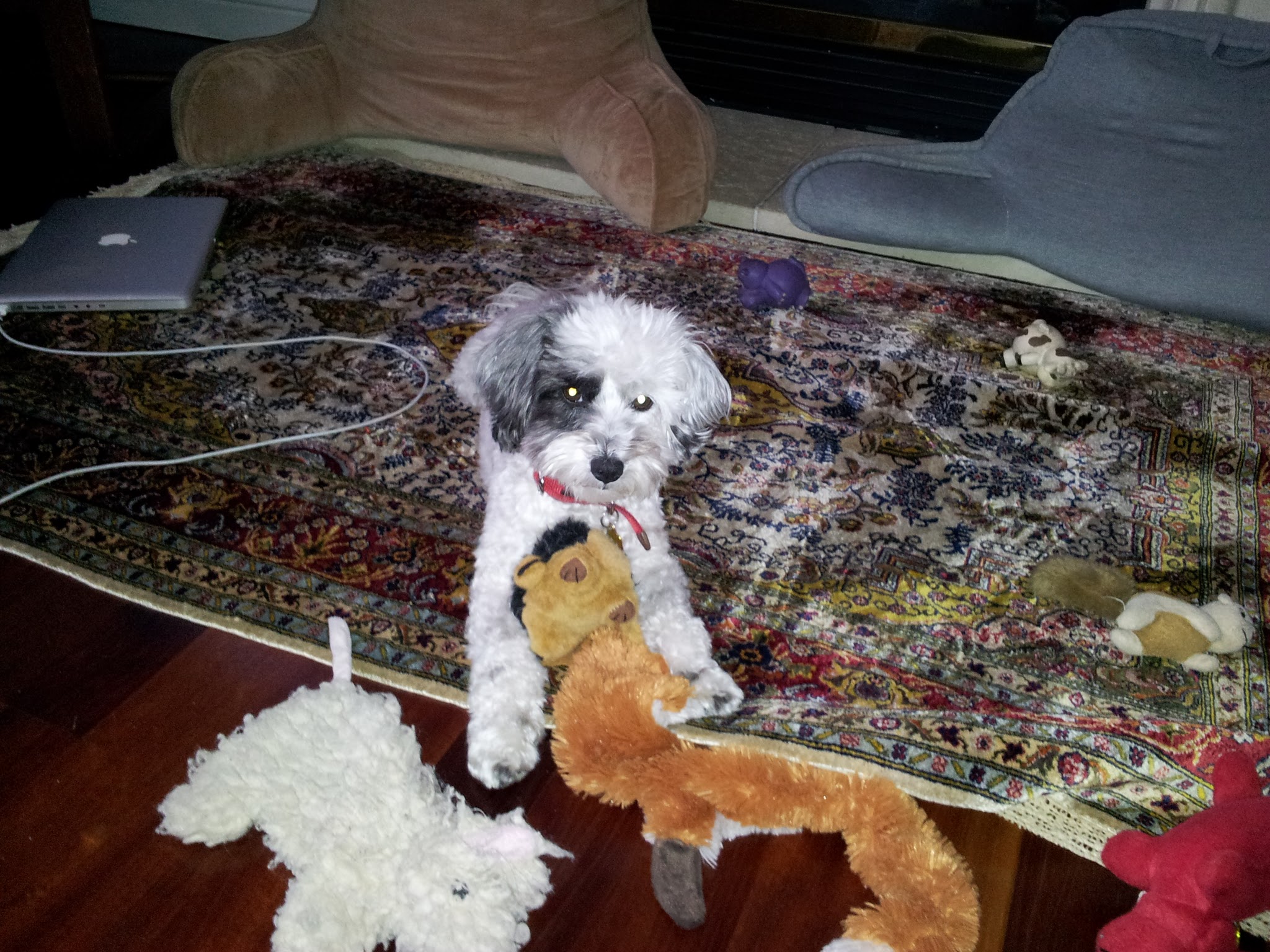
Also, do you ever notice how writers don’t seem to kill off cats? (Not that I have anything against cats.) Why all the dog hatred, writers, huh? Why not pick on those of the feline persuasion for a change? Why do you want to violently dispose of sweet little bundles of fur like this?


You know you want to pet me!

I’ll admit, the “pick on the cute and loyal dog” thing used to be shocking. But now, it just makes me feel tired. It makes me want to stop reading. It has nothing to do with the merits of the work (if you’re not as sick of dead dogs as I am, you’ll want to check out everything I referenced above). But it’s become even more unpleasant to me than werewolf tropes, and you know, that’s saying something.

So please, the next time you consider killing off the poor innocent puppy to pull some heartstrings, back away slowly. Maybe you can kill off the bratty kid sister or the brooding and boring boyfriend instead. Or, I don’t know, have your protagonist lose a finger or something. Just enough with the dogs.

Thank you.

*****
I’ll be in Detroit this weekend for Epic ConFusion. Say hi to me if you’re there!

Read Full Post »

Yesterday, I received my symbol of the year in the mail.


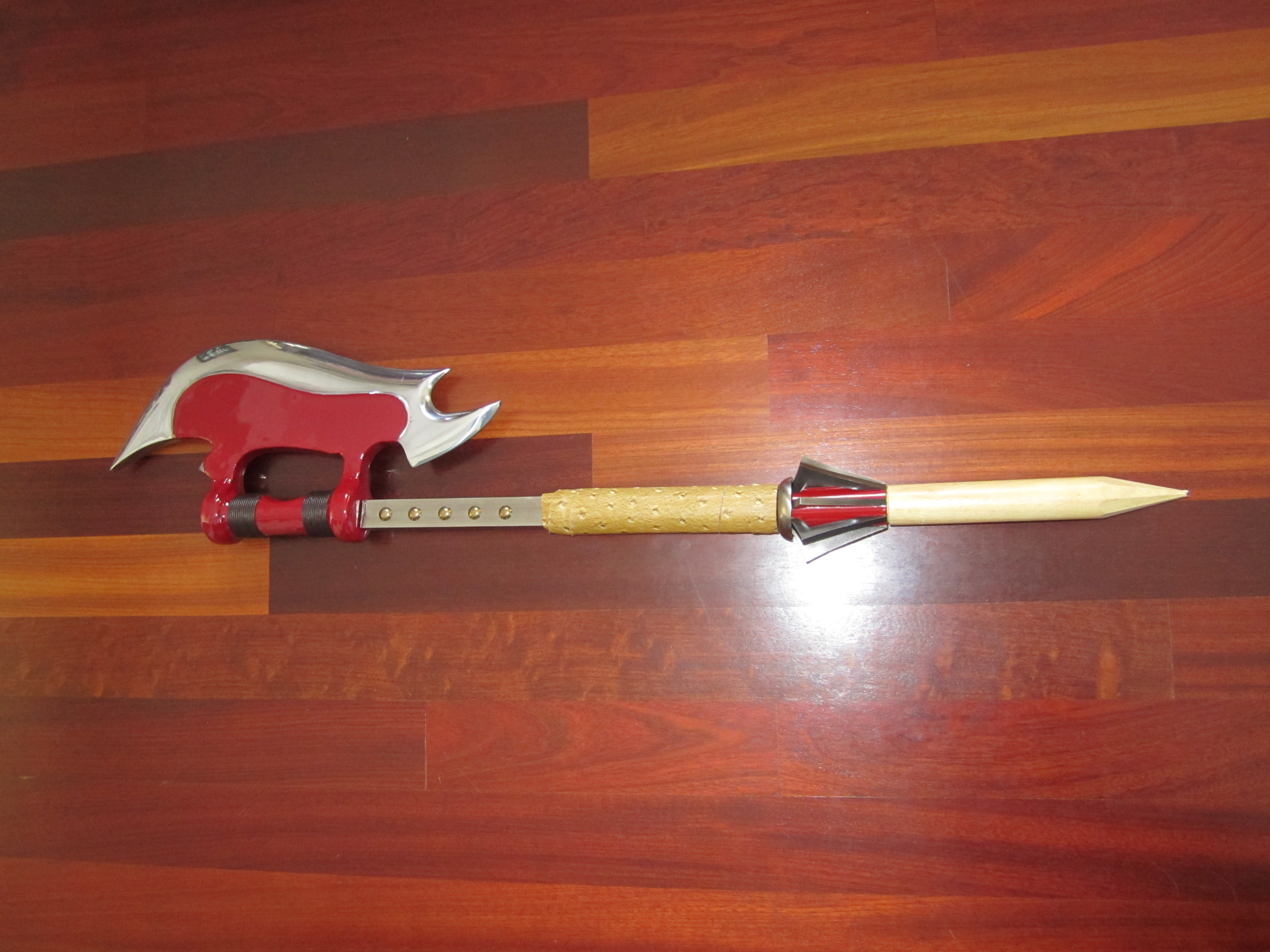
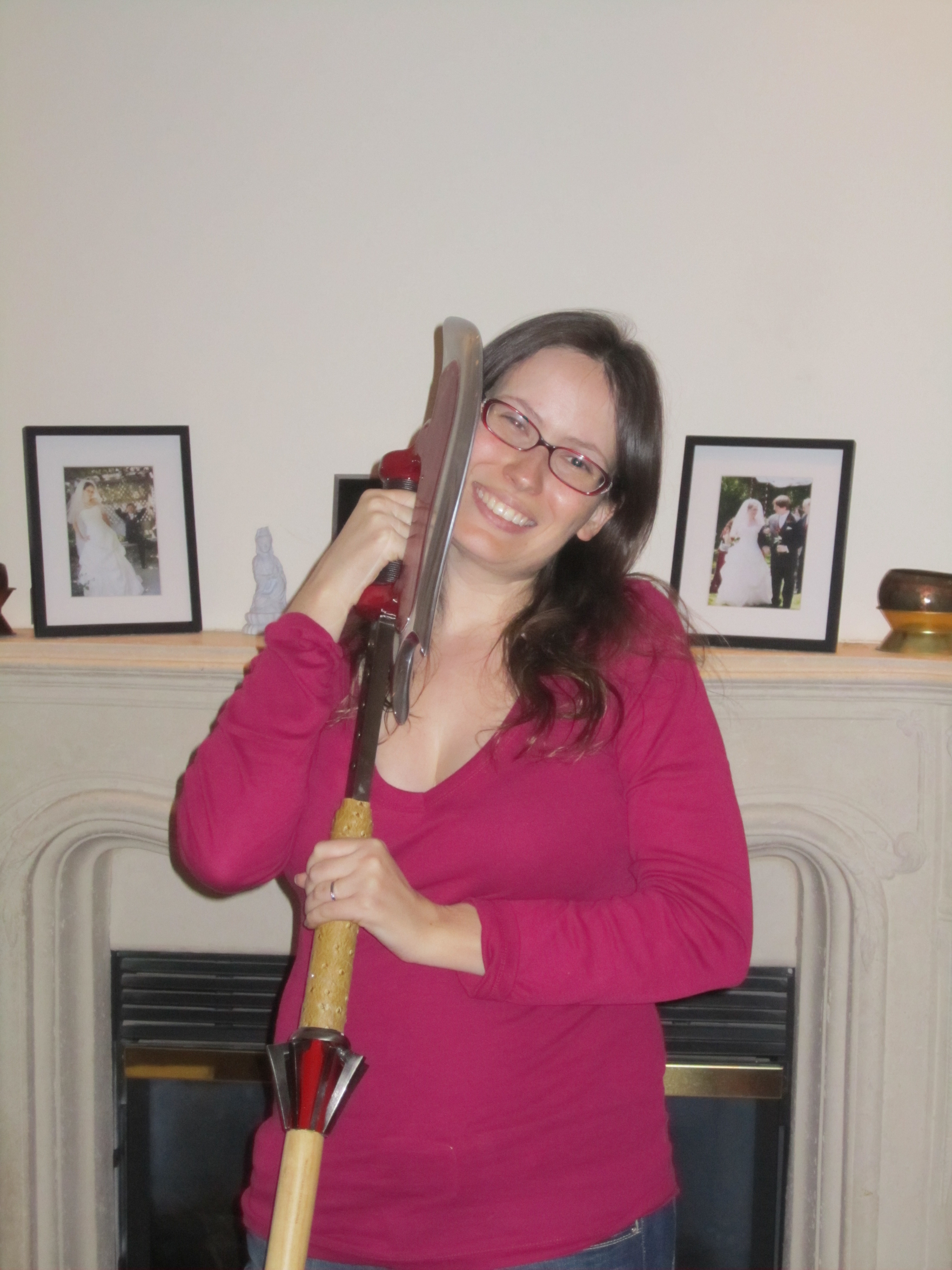
Yes, it is the Scythe from Buffy the Vampire Slayer Season 7. Full geek points to you if you recognized it. For those of you not familiar with the show, the Scythe is a mystical weapon forged for the Slayer (into every generation she is born: one girl in all the world, a chosen one). It’s also something of a deus ex machina, but hey, we’ll let that go because of its shiny awesomeness.

This year, I get to be my own chosen one. The Scythe is a symbol of power, both external and internal. To me, it represents courage and strength: to make tough choices, to trust myself, to believe in myself, and to really go for it this year. I think I might hang it over my fireplace.

I love my Scythe.

Award Season

If you read other SF/F writer blogs, you know there is that inevitable time of year when they post a list of work that is eligible for awards. Yup, it’s that time.

My short story “Forever Sixteen,” published in Daily Science Fiction, is eligible to be nominated for the Nebulas and the Hugos.

I am also entering my first year of eligibility for the Campbell Award (for best new writer in science fiction and fantasy), which you can nominate for if you are nominating for the Hugos. Here is a list of my publications to date; if you’d like a copy of anything on the list, I’d be happy to send one to you if you leave a comment below or email me at practicalfreespirit@gmail.com.

Lastly, Catherine Schaff-Stump reminded me that I am also eligible to be nominated in the Fan Writer category of the Hugos for my work on this blog. How awesome is that? You can check out an overview of my work here on my Best Of Blog page.

Right then! Does anyone else have a symbol for the year? It doesn’t have to be a large weapon that you want to hang over your fireplace. It doesn’t even need to be something you own. If you have an idea, please share below!

Read Full Post »

I stumbled across Brenda Cooper revisiting her predictions for 2011, and my interest was completely captured. “What a fun game!” I thought. “Maybe I should make some predictions myself for 2012.” Then I thought again. “But many of my predictions will end up being wrong.” The unimaginable horror of that idea paraded through my brain.

So of course, now I have to write 2012 predictions to take my first good whack at my perfectionism this year. And not only that, but I am going to write them quickly, without obsessive researching, and I’m going to write them boldly without resorting to wishy-washiness.  Are you ready?

Publishing

  • E-books will continue to gain share in the marketplace. Based on the huge amount of Kindles that sold this December, I’m going to say that by the end of 2012, we’re going to see e-books up to 35% of the market…at least.
  • Publishers will hold firm at a 25% net royalty for electronic sales…except for the biggest author names.
  • A couple of major name authors will strike out on their own and release titles themselves. Because they are big names, they will easily be able to continue commanding shelf space at B&N.
  • Publishers will begin (or continue?) to commit more resources to building stronger relationships with readers (more aggressively building their email lists, for example) and developing brand recognition for their publishing imprints apart from author names. (This one, I am afraid, might be overly optimistic, but I can’t help myself!)
  • There will be no definitive answer in the traditional vs. self-pub debate. Some writers will go all in one way or another and be super judgmental of anyone doing something different. The smartest writers will do both. There will continue to be a stigma, although not nearly as strong as it was even a few years ago, against self-published work by writers who haven’t already been traditionally published. Interestingly, there will be no stigma against those writers who raise money for projects using crowd-sourcing platforms like Kickstarter. (Maybe because Kickstarter mainly works for those writers who already have an established fan base?)

Current Affairs

  • There will be the usual hoop-la of a US election year. Romney will win the Republican nomination, and Obama will win the election, but it will be a hard fight. Voter apathy will be more of a problem than it was in 2008.
  • The Euro will still exist as a currency at the end of 2012. No promises for 2013, though!
  • Some major shit will go down in Egypt this year, what with elections expected in the next six months. The military won’t let go of power easily.
  • Syria’s government will collapse by the end of the year.
  • The economic turmoil in the EU and the political turmoil in the Middle East won’t do the US economy any favors. Oil prices will go up. Volatility in the stock market will continue. I don’t expect unemployment rates to improve substantially (although I’d be very happy to be wrong).
  • My husband says the cinema industry will begin to tank this year, but I disagree. I actually think 2012 will be better than 2011 in terms of box office sales. The foreign markets for movies will continue to be robust.
  • Social media sites will try to collect ever more information about their users. Some people will continue, inexplicably, to think that they should overshare mundane data with their “friends.” Facebook, Google+, and Twitter will all continue to exist healthily at the end of the year. Klout, on the other hand, will have lost its klout in most circles due to both its basic dullness and its arbitrary algorithms (how I can lose or gain influence over 1000 people in the course of a single day is beyond me).
  • Houses will begin to become “smarter,” both due to Kinect technology and chips that talk to each other over WiFi and Bluetooth.
  • Scientists will push stem cell research farther this year, and will succeed in regenerating a more complicated organ (they’ve already done bladders and tracheae).
  • There will still be no flying cars or Asimov-esque robots in general use (and no, I don’t count the Roomba).

Care to play along? What predictions can you make about 2012?

Read Full Post »

« Newer Posts - Older Posts »