Feeds:
Posts
Comments

Archive for the ‘Life’ Category

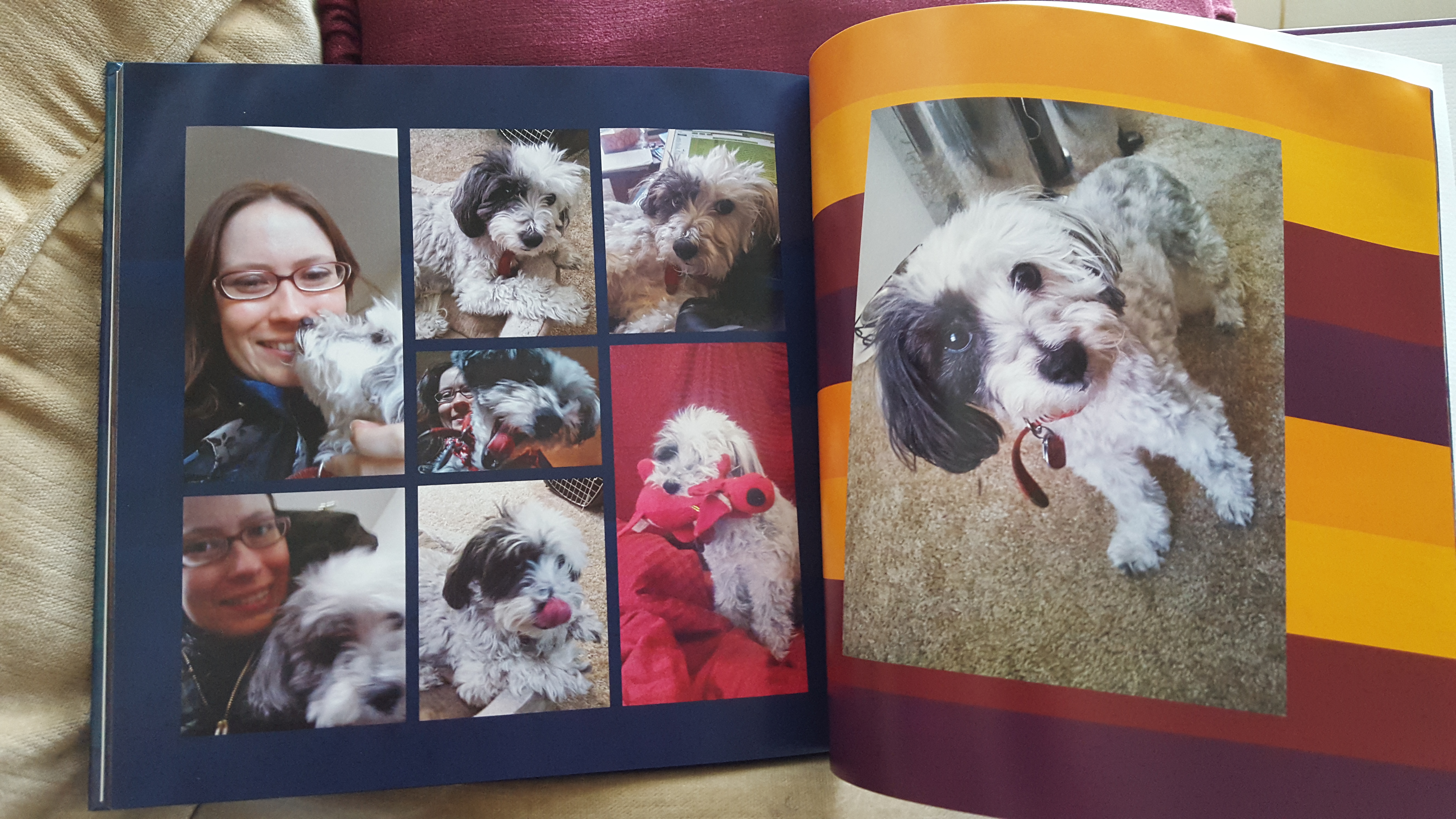
Every year at the end of November I make a photo book.

The tradition started two years ago. My Christmas plans that year were shaky, and my Christmas the year before had been…not super Christmas-y. So I sat down and thought about what I could do that would make the day special. And the idea I came up with was the yearly photo book.

Here’s what I do:  I put together all my photos (and friends’ photos) from the previous year, and I combine them into a beautiful, customized hardcover book. When the book is shipped to me, I am not allowed to open it and look at it. Instead, I wrap it up right away and am not allowed to open it until Christmas.

It turns out this idea was completely inspired. There is no way I’d rather spend part of my Christmas Day than by looking at photos of the people I love and the special times I’ve had over the course of the last year. It is hard for me to feel lonely while doing such a thing, and it is very, very easy to feel grateful.

Now I think about this tradition all year long. I do a better job remembering to take photos throughout the year, and sometimes I tell people, “I want this photo for my photo book,” and it makes them a part of the tradition. I put it out on the coffee table for my friends to enjoy as they wish. And I think I will really enjoy having a visual record of many of the important people and events in my life in the future as well. Of course, I always have the digital files of the photos, but looking through the books is more a curated and intimate experience.

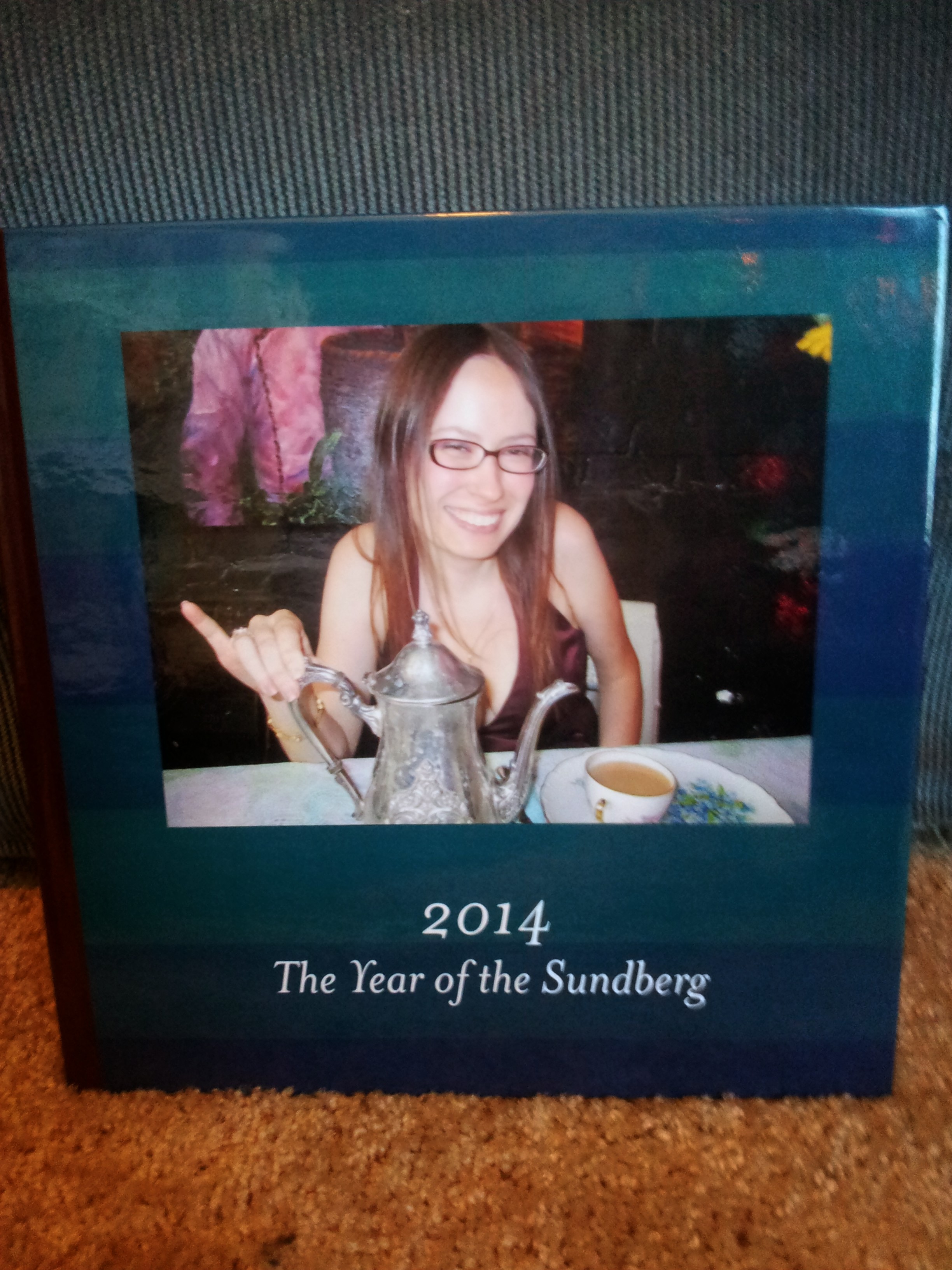
Here are a few examples:
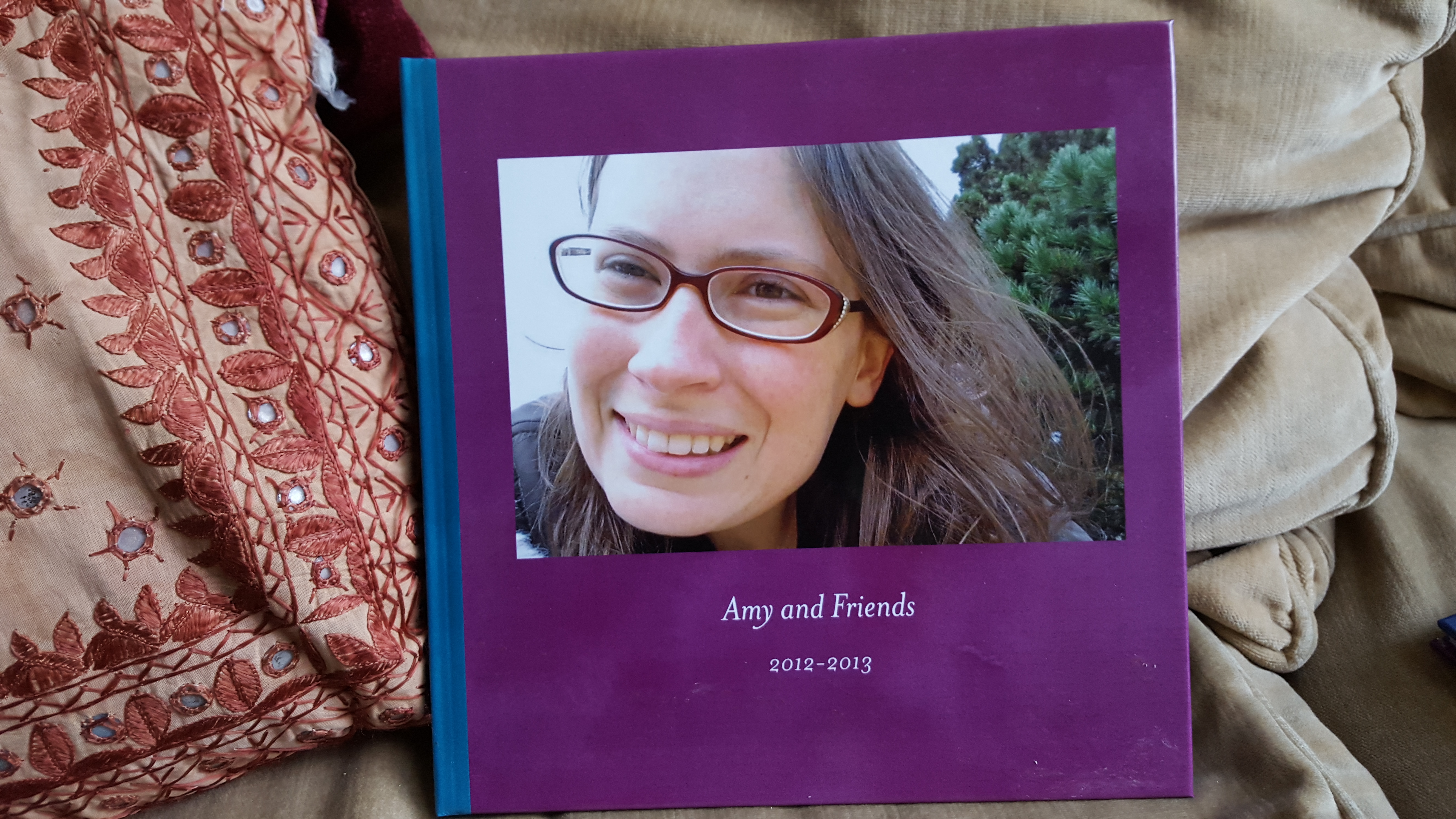
I used two years worth of photos for my first book.
I used two years worth of photos for my first book.


Last year's book

Last year’s book


And here, have a Nala spread!

And here, have a Nala spread!

If you would like to make your own photo book, here are some tips I have learned over the last few years:

  • I use shutterfly.com to make my books. Their layout interface is a little glitchy, but it could be worse, and I like how many options they offer. That being said, these photo books are expensive, and I suspect there are cheaper options out there.
  • If you do use shutterfly, never pay full price. Instead, wait until they have a promotion, which they seem to have constantly. You can build your book and save it and wait until the best (cheapest) time to buy. You should be able to get 50% off your book and free shipping. This year I got 50% and a free photo calendar.
  • It takes many hours to make a comprehensive book covering a year. It takes less time if you are making a book that covers a single event or trip, but the year-long books are a big project. My books usually include over 100 pages of photos, and that much layout takes time. (Shutterfly does offer to automatically lay it out for you if you prefer.)
  • One of the most time-consuming tasks is culling your photos and getting them all onto shutterfly. I try to do a little of this work ahead of time by downloading likely photos from Facebook as they are posted and putting them in a special folder. The more you can organize your photos ahead of time, the easier it will be to put together your book.
  • Keep in mind that resolution will matter, and it will matter more the bigger you want the photo to be in your book. (You can get away with lower resolutions at smaller sizes.) This is mostly an issue with photos downloaded from Facebook. If you can get people to send you the full image file instead, that is better. (This encourages me to take as many pictures on my own devices as possible. Especially because when the photos are on other people’s cameras, you sometimes just never get them at any resolution.)
  • I like to have a balance between some large photos that take up most of the page, and some collage pages that contain multiple photos (occasionally I do up to 16 on a page). That way I can highlight particularly special moments or great shots while also not having to cull so aggressively, which comes in handy when I’m faced with the several hundred cute photos of Nala that I inevitably have by the end of the year.
  • I do multi-page spreads for important events like trips and my birthday party, but I also like to include spreads that highlight my more everyday life. This year I included lists of the concerts, plays, and movies I’ve seen, and I have spreads for blues dancing, playing board games, yummy foods, and cute Nala photos.

I’m really looking forward to getting to see my 2015 photo book. Only a few weeks left to wait!
Read Full Post »

Yes, I Don’t Cook

I am very vocal that I don’t cook.

I think it’s important to set expectations. Especially when standard expectations are different from reality. The last thing I want is to be pressured to do something I dislike doing. So I like to set expectations about the fact that I don’t cook.

Mostly I have to set these expectations in dating situations. You can avoid them altogether with friends, nine times out of ten, unless you run with a crowd who hosts constant dinner parties. My friends don’t really have dinner parties very often, though, and it’s more common for us to eat out when we meet up, or just have dessert or a hot beverage. And I have my normal things I bring to potlucks: brownies, or pumpkin cranberry bread, or berry fruit salad, or a nonalcoholic beverage I would actually enjoy drinking. Once in a while I get more creative, but not very often. My brownies are yummy; why mess with a good thing?

I noticed early on that I was expected to know how to cook, and I was expected to be decent at cooking. Also good at meal planning, which I particularly abhor, and grocery shopping, which quickly lost its novelty. But several things conspired to get in the way at a formative age. First, I’d watched my mom cook five meals a week for my entire childhood, and the food was, for the most part, repetitive and bland and something she took no joy in. Second, I had some slow-to-heal injuries through most of my 20s that made it much more difficult (and painful) to do certain key activities, like chopping and handling (and washing) heavy pans. Third, when I worked as a nanny, I did some of the family’s grocery shopping and often started their dinners for them, so the last thing I wanted to do when I got home from work was cook another whole dinner for myself. Fourth, my mom’s OCD meant I’d never learned normal protocols for cooking with meat, so I didn’t feel comfortable doing it.

I have no doubts I could be decent at cooking, given enough practice, but I continue to have no desire to spend the time. Cooking is, most of the time, an activity I find boring and tedious. And between the preparation, the actual cooking, and the clean-up afterwards, it tends to be very time intensive. I want to spend my time doing other things: writing, reading, dancing, spending time with friends, practicing music. (Which means one of the few times I am willing to cook is when it is a social activity.)

And, I discovered early on, I don’t actually have to cook; because my caloric needs are fairly low, I can eat more or less affordably from the frozen section, augmented with a few other simple and basic meals. More affordably, in fact, than I ever seem to eat when I actually try to cook something more ambitious but equally tasty.

I do receive some strange criticism for not cooking. One date assumed I must eat out all the time, and even when I corrected him on this point, was convinced that if only I were to cook the way he thought I should, I would save tons of money, which was very important! Another guy who was trying to pick me up was baffled at how I could resist showing my love for my family and significant other by feeding them (I am certain he would have found much else about me to baffle as well).  And then there was the memorable first date during which we were cooking together (because that’s a dating thing to do, for better or for worse) and I forgot to plug in the rice cooker that I’d only used one time before in order to make rice for Nala when she was sick. (Although he was pretty nice about it, so that wasn’t so much criticism as a funny story.)

But to their credit, most people take it in their stride. And last week I helped the Boyfriend plan Thanksgiving and made several of the side dishes. It is not that I can’t cook (I am inexperienced but am usually able to follow a recipe) or even that I won’t cook; it is simply that I prefer not to cook the majority of the time.

20150327_140947 (1)

(Although yes, I will bake cookies. Gladly.)


Read Full Post »

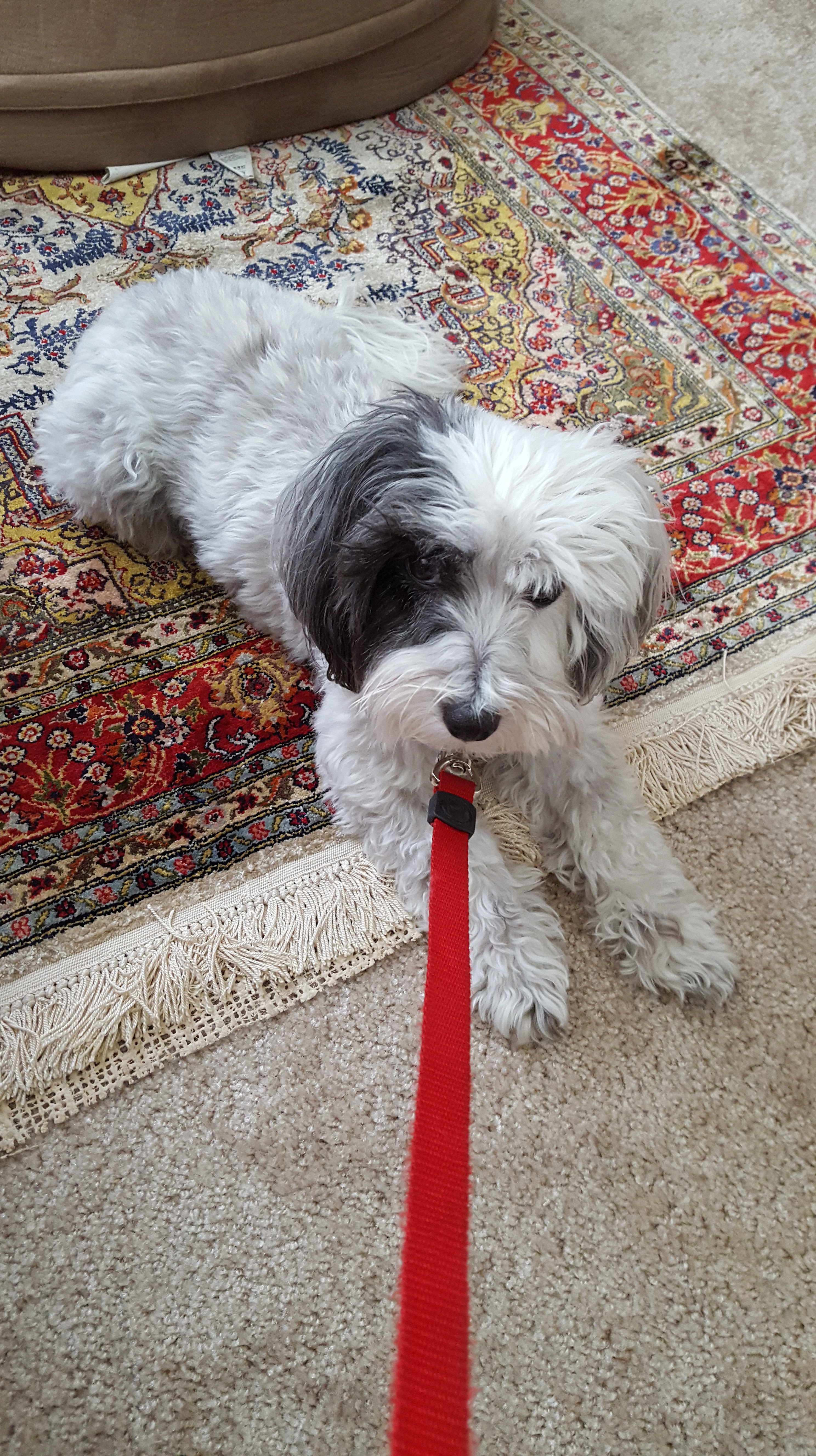
Almost every day, I take a walk with Nala. We have a couple of regular routes that depend on how much time I have and what the weather is like and how my toe feels and how long it’s been since I last picked up the mail. In the past, this walk has also been a time to catch up with significant others, but for the last few years, it’s almost always been just for Nala and me.

Nala on her leash

Nala on her leash

I don’t take my phone on these walks. This wasn’t a mindful choice; it began because in the summertime I often don’t have any pockets, and it was a mindful choice not to have to lug a purse around for a simple walk in my neighborhood. But lately I’ve noticed how much I enjoy not having my phone.

Don’t get me wrong, I love my phone. It tells me how to get where I’m going. It lets me access my schedule. It lets me keep in touch with a host of lovely people. It gives me information exactly when I need it (and yes, I did check a recipe in the grocery store today in order to choose the correct size of cranberry bag). It lets me take photos that help me remember what I have done and where I have been.

I love my phone too much. I want to check my phone. I want to see what’s happening on Facebook and Twitter. I think of things to google. I flip into schedule mode at the drop of a hat. I want to see if anyone has texted me. I want to text someone. Hell, I simply want to know what time it is.

But I also don’t like my phone. I go to social events, and I notice when everyone has their phone out, and everyone is talking to people who aren’t there, via texting, instead of talking to the people who are there. I don’t think I judge (I know what it’s like to be shy, to want to avoid an awkward moment), but I do notice. Sometimes, when I am not at my best, I think, “Aha! This means I’m allowed to look at my phone too.”  But more often I think, “What’s going on here? How can we re-establish a connection right now?” Because that’s really what’s happened. The social connection has gotten difficult or a little slow for some reason, and instead of waiting it out and sitting with the slowness, we’ve retreated into our phones.

I like noticing. I like having some daily time when I remember what it’s like not to have the impulse to check. I like not always being available.

I revel in the opportunity to be actually alone. When my phone is there, it is a constant reminder that I don’t have to be alone. But sometimes the company provided by my phone can feel hollow. I remember that according to Facebook, my life is an uninterrupted stream of exciting events and cute outfits. According to Facebook, I live a magazine kind of life, and yet that isn’t actually what my life is like at all. My life is so much more complex than that.

I like having uninterrupted time with the people who are important to me when we just…talk. And sometimes we sit in silence. And sometimes the conversation is not the most scintillating thing ever, and most likely there’s something really exciting happening somewhere on the internet. And I don’t care.

Because it is in that space that conversations deepen. It is in that space that conversations spread out to become some of the most interesting I’ve ever had. It is in that space that I learn things about the world, and about the people in that world.

It is in that space that I get to feel what it is like to be you.

Read Full Post »

Happy Thanksgiving!

I want to wish all of you a very happy Thanksgiving!

Today I am cooking and eating and eating and cooking and playing with animals and eating some more and spending time with some of my favorite people.

I have a lot to be grateful for every year, but this year has been particularly full and amazing. I feel very, very lucky.

Mischievous kittens

Mischievous kittens


Best friends

Best friends

Happy Thanksgiving!

Read Full Post »

Success in our culture is associated with MORE.

  • More money, fancier car, fancier house, more things to put in the fancier house.
  • More sales, more critical acclaim, more award nominations, more award wins, more clout.
  • More bonuses, more stock, more seniority, more autonomy, larger teams, more prestige, more press.
  • Better, prettier, sexier, thinner, busier, richer, smarter, better read, better informed, more talented, more hard-working, more visionary, more original, more popular.

I’ve known some pretty successful people, and even right after a big achievement, it is not uncommon for them to still worry, to still feel insecure, to still want more. 

Won one award? Well, why haven’t I won more?

Made a million bucks? Well, I won’t truly be safe until I have [plug in larger number here.]

Got a promotion? Well, when am I going to be another level up?

And to a certain extent, I admire the striving. It is exhilarating to be pushing ourselves, to be ambitious, to be trying to improve, to do wonderful things.

But at some point I wonder, when is it enough?

Which is followed soon thereafter by its cousin, will it ever be enough?

And I think as long as we are measuring success by external factors, it may never be enough. Not unless the internal factors have been addressed as well.

Photo Credit: jacilluch via Compfight cc

Photo Credit: jacilluch via Compfight cc

When we internalize rejection, when we take failure as a reflection on our intrinsic value as a person, when we struggle with unacknowledged shame, when we replay messages that tell us we are somehow bad or wrong for things outside of our control, when we relive past traumas through the present day, when we measure success only from the outside and not from the inside…

no success will ever be enough.

Happiness doesn’t come from the outside in. But this is hard to believe. If you just get that job or make a certain amount of money or find the perfect partner or have the right number of well-behaved children, happiness will surely follow. Won’t it?

And it is true, all of those things can contribute substantially to happiness. (And if you don’t have certain basic things, of course, all bets are off.) But if you are not prepared for happiness on the inside, none of them will be enough. Because nothing is perfect. Nothing remains unchanged. Important things–families, relationships, friendships, careers–take a lot of work. And there will be parts that are unpleasant. And there will be setbacks. And there will be losses.

So then, lasting happiness comes not only from external factors but from a wellspring deep inside.

And in order to find this, we might need to re-examine our definitions of success. We might need to let go of having MORE and instead focus on what we have and where we are right now.

We might need to consider that we are already enough, and that we always were.

Read Full Post »

“To live meaningfully is to be at perpetual risk.” — Robert McKee, Story

“Life is all about not knowing, and then doing something anyway.” — Mark Manson

When I was reading Frankl’s idea that the meaningful thing to do when confronted with avoidable suffering is to avoid it, my first thought was, oh, does this make decision-making simpler? Avoid suffering! Got it.

But the dilemma of leaving behind unnecessary suffering is actually at the crux of many difficult decisions. Because sometimes it is not at all clear which path will lead to less suffering. We are sometimes confronted with decisions in which there is no great answer, no win-win-win that Michael Scott (The Office) championed, no choice that effectively avoids all suffering. At which point it is a determination as to which is the lesser evil, and the answer to that question is sometimes not at all obvious.

What we are left to navigate, then, is a map of decision points. Our choices shape our lives and give them meaning, and they also determine what stories we set down now that change into our pasts with the passing of time. Those stories, which can be re-told, re-interpreted, and even subverted, in turn play their part in forming our identities.

And sometimes we do not know. And sometimes, not knowing, we take large risks. And sometimes those risks do not pay off the way we wish they would.

Photo Credit: Bryan Davidson via Compfight cc

Photo Credit: Bryan Davidson via Compfight cc

But a life with no risk–besides being impossible, since walking out your door is a risk, as is choosing to stay home–becomes a life of less meaning. Moments matter more because they are impermanent and cannot last. Meaning is created from change, from development, from action and experience. We cannot know and yet we act, and from that action we illustrate who we are. Sometimes we even create who we are. And this is the case regardless of outcome.

I’ve spoken before about the importance of actions, of how I’ve been training myself to pay more attention to people’s actions and less attention to their words (particularly when the two don’t match up). Recently I’ve been thinking not only of how actions define others, but how my actions define me, and more particularly, the relationship between actions and emotions.

For a long time I was baffled by the common wisdom that we get to choose how to react to any given situation. “What was the choice?” I wondered. If someone did something and I felt angry or hurt or sad about it, well then, I was angry or hurt or sad. I couldn’t magically choose not to feel those things.

But what I realize now is that yes, of course I will feel whatever emotions might be present inside me. And it is difficult to choose what those might be in specific situations (although there are ways to foster more compassionate and/or positive outlooks in general). Sometimes emotions just happen. But emotions do not have to define me in the same way that my actions do.

Indeed, in many cases my actions will result in changing my emotions. And my emotions can be valuable indicators of when action might be needed and sometimes even of the types of actions I need to consider. Using my emotions as a kind of barometer to help determine action leads to them defining me less than they did previously, when they just sat there, an inert lump in my stomach.

But for this to work, risk is still necessary. Uncertainty is still present. I don’t always know the right thing to do.

Sometimes there is no right thing to do.

And I think part of what Robert McKee and Mark Manson are saying is that this state of uncertainty is okay. Because the uncertainty makes our decisions matter.

And then these decisions imbue our lives with the meaning we crave.

Read Full Post »

I finished reading Viktor Frankl’s Man’s Search for Meaning today.

First of all, if you haven’t read it, I very highly recommend it, particularly if you are interested in philosophy, psychology, or the triumph of the human spirit. About two-thirds of it is a first person account of Dr. Frankl’s experiences in concentration camps during World War II. It is difficult and grim reading, of course, but also deeply inspirational and very well written. This is followed by a section detailing his doctrine of logotherapy and a postscript: “The Case for a Tragic Optimism.”

I’ve written about some of Frankl’s thoughts before, but after reading this book, I would like to revisit his philosophy.

Meaning, Frankl tells us, is both paramount and personal. He repeatedly quotes Nietzsche: “He who has a why to live for can bear almost any how.” And each person must embark upon a quest for meaning for themselves; one person’s meaning will not necessarily be the same as someone else’s. Therefore, the ultimate existential question becomes not “What is the meaning of life,” but rather “What is my meaning in life?”

While no two paths to meaning may look exactly alike, Frankl believed we could discover the meaning in our lives through three different avenues:

  1. Creating a work or doing a deed. In other words, we can find meaning through achievement and accomplishment.
  2. Experiencing something or encountering someone. This includes experiences of art and culture, of travel, and of nature. It also includes the social experiences of feeling love and being part of a community.
  3. The attitude we choose when we face unavoidable suffering.

It is this third method towards meaning that is a primary focus of Frankl’s account of his time in the concentration camps, perhaps because it is both the hardest to grasp and the hardest to implement.

Frankl firmly believed suffering was an opportunity: “Most important…is the third avenue to meaning in life: even the helpless victim of a hopeless situation, facing a fate he cannot change, may rise above himself, may grow beyond himself, and by so doing change himself. He may turn a personal tragedy into a triumph.”

(It is also worth noting Frankl didn’t believe suffering is inherently necessary to discover meaning and explicitly stated the meaningful thing to do when suffering is avoidable is to remove its cause rather than continue suffering for suffering’s sake.)

When I think of what I know of unavoidable suffering, I think of when I was young, still a child, and surrounded by suffering. I could not escape it; it was truly unavoidable. There was little if anything I could do to affect the situation in which I found myself. So I watched the tragedies of those around me, and I did my best to learn from them, and I told myself, with a fierceness that has not lessened in the intervening years: “This will not be me. I will not let my own suffering overcome me. I. Will. Not.”

The indomitable human spirit. Or something. :)

The indomitable human spirit. Or something. 🙂

And that is when I learned that even when faced with suffering we cannot change, we get to decide who we are. We can choose to continue to search for meaning, even when the world around us is dark and full of terrors. We can cultivate a “tragic optimism;” that is, an optimism that does not shy away from suffering and other difficult truths but lives on regardless, saying, “Yes, yes, there is suffering, and yes, it is challenging and awful. But even so, here I am and I will make what I can from the circumstances in which I find myself.”

This ability, this tragic optimism, is one of the abiding lights of humanity. We all suffer, yes, but we are also all granted the privilege of transforming our suffering into meaning.

Read Full Post »

I, as a woman, have a lot of expectations placed upon me.

I, as a woman, am expected to put effort into my appearance. And I’m not talking merely practicing basic hygiene, either.

I, as a woman, am expected to toe the line of fashion. Wear one blouse that is too low-cut, by some random definition of low-cut, and I will be judged and slut-shamed. Wear formless clothes, and I will be found frumpy, ugly, not as interesting.

I, as a woman, am expected to need to have babies in order to be fulfilled.

I, as a woman, am expected to know the right thing to say in every situation.

I, as a woman, am expected to cook tasty but healthy meals. As long as you’re pretty and can cook, you’ll have a boyfriend in no time. -actual thing I’ve been told

I, as a woman, cannot win when it comes to sex. Virgin or whore, frigid or slutty, no is never as simple as it seems nor as simple as it should be.

I, as a woman, am expected to remember personal details: names, birthdays, life stories, and logistics. I am expected to coordinate. I am expected to hostess. I am expected to keep in touch.

I, as a woman, am expected to respond to egregiously bad behavior with poise and tact and compassion.

I, as a woman, am expected to be less rational, less logical, less intelligent, and more emotional. Meanwhile, my society pays lip service to valuing logic while demeaning emotions.

I, as a woman, am expected to be “more emotionally aware and available.”

I, as a woman, am expected to be bad at math.

I, as a woman, am expected to smooth things over and make social interactions a little bit easier and little bit less awkward.

I, as a woman, am expected to put my male partner’s career before my own.

I, as a woman, am expected to never look old. Wrinkles and silver temples do not translate as dignified and experienced on me. They translate to washed-up.

I, as a woman, am expected to know and say less valuable things and therefore not mind when I am interrupted or when basic things upon which I am an expert are explained to me.

I, as a woman, am expected to be more unassuming and careful and less confident when I speak.

I, as a woman, am expected to really like pink.

I, as a woman, am expected to be catty and judgmental of other women’s appearances and sexuality.

I, as a woman, am expected to smile.

I, as a woman, have to think very carefully about career issues such as whether to use my initials instead of my first name if I ever publish a science fiction novel so that readers won’t know I’m a woman.

I, as a woman, am expected to be interested in domestic subjects. And also yoga. (True story: the Boyfriend and I randomly met another couple at a restaurant and were going to go explore some ruins with them, but then the other woman got scared because it was dark. The other man said to her and me, “Oh, you two would rather stay up top doing yoga while we explore.” And I thought, “Why on earth would I choose yoga over exploring ruins?” Yeesh. Needless to say, I explored those fucking ruins. Thoroughly. Sprained toe and all.)

****

Some of these things are true. I do like pink. I put effort into my appearance. I like clothes and musical theater. I know my way around an emotional landscape.

Some of these things are not true. I explicitly do not cook (and I could write a whole post on why I am so explicit about it). Most domestic subjects bore me. I am good at math. I don’t always remember names. I don’t always feel poised and tactful.

Some of these things I am working on. I do not want to be judgmental about other women’s choices. I do not want to be less than confident when speaking about things I know. I do not want to smooth over every awkwardness and insult at my own expense. I do not want to smile on command.

Mostly, I don’t want to care. I don’t want to care about the expectations, and I don’t want to internalize them, and I don’t want to be held back because of my gender identity. I don’t want you to be held back either, whatever your gender.

I don’t want to be less than.

None of us do.

Read Full Post »

I have been waiting with bated breath to write another board games post, but I told myself I couldn’t write one until I had at least three games to talk about, and until recently, I’ve only had two. And now suddenly I have FOUR!

Splendor

I always want to play this game. The fact that I haven’t yet purchased my own copy is a travesty that means I don’t get to play it half as much as I would like.

This game consists of collecting pleasingly tactile coins that represent different kinds of gems, which you use to purchase cards that also represent gems and potentially give you the points you need to win the game. So really it’s all gems all the time! Do not underestimate the pleasure of stacking up your gem coins.

Playing this game is an almost meditative experience for me. I have the best time being completely quiet and slowly building my collection of stunning gems.

Great things about the game: It plays well with 2 players as well as 3 or 4, which is pretty rare. It is great for travel (it went to Bali and back). The rules are easy to learn, and the gameplay is relatively quick.

Cons about the game: I don’t want to talk to anyone while I’m playing. Some people don’t love it as much as I do. If you get too far behind, it becomes almost impossible to catch up (although I even enjoy playing it then, which I understand sounds bizarre.)

Among the Stars

I want to play this game almost but not quite as often as I want to play Splendor.

Featuring simultaneous card drafting, this game is very similar to Seven Wonders (which I also love) except it has a SPACE STATION THEME. Therefore it is awesome. There is less player interaction than in Seven Wonders, which means which chair you selected at your gaming table is less important.

Great things about the game: The theming is very well done. SPACE STATIONS! YOU GET TO BUILD THEM! WHAT ARE YOU WAITING FOR?

Cons about the game: It’s easy for newbies to forget about the energy cube mechanic. Some people don’t care about space stations, which is hard to understand but nevertheless true.  A few of the race cards seem to be more powerful than the rest.

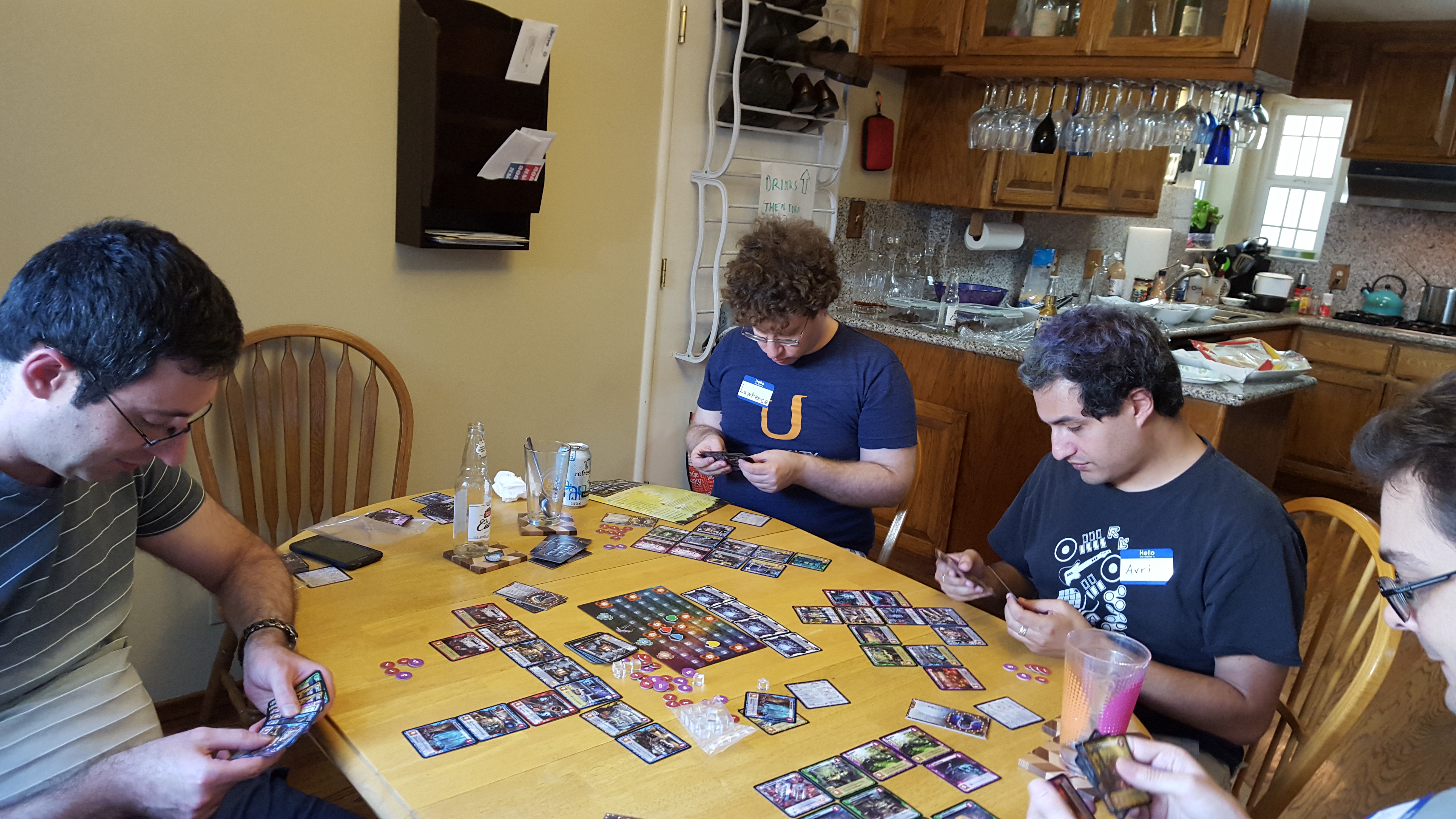
Here are some people playing Among the Stars. I wish I were one of them....

Here are some people playing Among the Stars. I wish I were one of them….

Codenames

I don’t know how I got to play a social game that isn’t Cards Against Humanity with my group of friends, but it has happened. More than once, even!

Reminiscent of Taboo, Codenames is a social word game at which I don’t suck horribly, which is very exciting for me! Two teams compete against each other to guess all their team words from one word clues from their spymaster. The spymaster tries to choose their clues to act for more than one word at a time. For example, if the spymaster says “Travel, three,” the correct words might be France, airplane, and suitcase. But what if there’s also the word beach on the board? Needless to say, there is a lot of strategy involved.

Pros about the game: A word game I can play without being super bad at it! Great for larger groups. Very challenging but fun to be one of the spymasters. Funny.

Cons about the game: There is an hourglass included with no real mechanics for its use, and it can break the game (or at least make it unnecessarily stressful).

Keep Talking and Nobody Explodes

Aaaah, this game! So much fun!

This computer game (available on Steam) reminds me of the game Space Team, only more complicated. One person is trying to defuse the bomb on the computer. The other people, unable to see the monitor, are using the manual to try to explain how to defuse the bomb. Each bomb consists of several possible mini games, as well as variations in time allotted and mistakes allowed.

Pros about the game: It is super super fun. And quite challenging. The teamwork involved is really satisfying.

Cons about the game: You need a PC to play it. And I’m really bad at the Morse code mini game, which is tragic for me.

Played any games you’ve liked recently? Let me know in the comments.

Read Full Post »

Dating is not Simple

I still talk about dating a fair amount with my friends. We compare notes. We make lists. And whatever our discussion–comparing paid dating sites to free dating sites, considering the virtues and difficulties of meeting people in person instead, considering what traits in a partner are essential and which simply icing, contemplating profile photos–we always tend to hit on one consistent idea: that dating can be really freaking difficult.

There’s this sense of indignation about the whole thing, this semi-random process that is supposed to help you discover this compatible someone. It seems so inefficient! It seems so random! It’s painful to be rejected and it’s painful to be doing the rejecting.

But then I think about what many of us want dating to achieve–to find a life partner–and I’m not surprised it feels complicated and difficult. I am almost more surprised it works at all. It feels like a tall order.

Ferrett wrote a great post about dating last month–The Abandonment Rate, Or: Date More, God, Date More–in which he said:

It took me fifteen years of constant dating before I found the love of my life, and I consider that to be a pretty lucky catch. You? You’re trying for life-changing things. That’s good. Life-changing things involve a lot of perseverance. So keep at it.”

Fifteen years? That’s a fair amount of effort.

My friend has this theory that it is important to know the three things you most want in a partner. It can only be three, and it includes everything from personality traits to likes and dislikes to basic life information. Only three! I was skeptical, but it didn’t matter because I still had to figure out my three. I spent a lot of time coming up with and rejecting and ending up with more than three.

And now, I can’t even remember what I finally settled on. I’m fairly confident one of the three was kindness, but the other two…um….maybe intelligence? I don’t know. The whole exercise felt like boiling something complex down into something so simple it no longer held any meaning.

So then I wrote a list of what I was looking for in a partner, and I let myself write down as many items as I wanted. I put a lot of stuff I thought was important, but I also let myself put down things that seemed silly or trivial or like low-hanging fruit but I still wanted: things like “knows how to dress self for different occasions” (I live in Silicon Valley so this is an actual perk), “has an overlap with my musical taste,” and “not intimidated by Shakespeare.” (Yes, I really put those on my list.)  

I put 59 items on my list. Yes, fifty-nine. A far cry from three. But reading my list now, I keep nodding and saying, “Um, yeah, of course I want that. And that. And that.” It’s not that I felt I needed all 59 things to be perfectly true, and a bunch of them are low bars, but even so. I did want a majority of them.

59. Not really all that simple.

Strangely, I found making that list to be liberating. Because then dating did not have to be simple. It validated my actual experience, which was that finding someone compatible to date wasn’t that straightforward, that there was no algorithm that took all the guesswork out of the equation, that the only real way forward was to meet a bunch of people, and most of them wouldn’t be right, and that would be tiring, and all of this was perfectly normal.

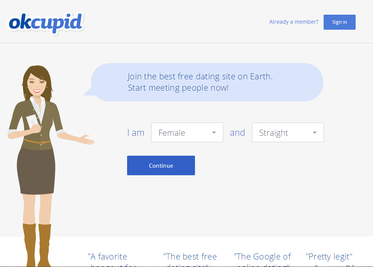
I’m not saying there aren’t things you can do to simplify and streamline the process, or to improve your chances of success. But online dating sites sometimes make it seem like dating is straightforward shopping; you flip through a seemingly infinite catalog of biographies and jokes and photos, you are presented with an array of options, there are percentages and matching protocols that are supposed to help you narrow things down. All very clean until you hit the next part of the process: actually communicating with another human being, a person who can’t be completely boiled down in a few paragraphs and photos and multiple choice questions.

OkCupid.com_website_homepage_screenshot

Looking for a life partner is anything but simple. You’re going to spend A LOT of time with this person. You’re going to make major life decisions with them. You’re going to be influenced by them. You’re going to get to know them very well, and they’re going to know you very well. Your life is going to be changed by being with them. And the process of dating is going to reflect the importance of this decision.

No list, whether of three or of fifty-nine, is ever going to be able to accurately reflect the reality of that decision. Instead we have to get our hands messy and do the work of getting to know other people, and maybe even more importantly, getting to know ourselves.

Read Full Post »

« Newer Posts - Older Posts »