Feeds:
Posts
Comments

Archive for the ‘Life’ Category

I have a friend who occasionally requests blog posts, and her ideas are always so good. It’s actually quite a talent to come up with good topic ideas. I know because sometimes I’m completely stumped, and I ask someone what I should write about, and they can never come up with anything good either. So obviously from now on I should ask Danielle.

This time she asked me to write about intention. (See what I mean? That is exactly the kind of thing I write about.)

Intention can be one of the most powerful tools at our disposal. It’s good for change, for achievement, for opening ourselves up to possibility. It’s a way of resetting old beliefs, world views, and limiting thoughts that might or might not have had a good reason to exist in the past but are definitely holding us back now.

Photo Credit: CarbonNYC via Compfight cc

Of course, in order to work, intention has to be an active process. Take my intention at the beginning of last year: I wanted to have more friends, so I set the intention to be open to new friendships. From that intention, I decided on concrete priorities and actions. If I told myself, “It would be nice to have more friends” and then proceeded to sit on my couch every night and not talk to anybody, then nothing would have happened. Instead, I accepted invitations, I invited people to do stuff, I traveled to various events, I texted and wrote emails, I sometimes went out even when I didn’t exactly feel like it, I practiced healthy boundary setting. In short, I put in a lot of effort.

I find that when I set an intention, it helps me better focus on what I need to do next. In the case of socializing, it means I’m paying attention and making or inviting that overture of friendship. Maybe it was there all along, but I’m much more likely to notice it and make that little extra effort required. In the case of writing, it means I keep plugging away, even if that means only doing a little work each day. I remember that I want to live a literary life and it informs the choices I make on a daily basis.

Our intentions join together to form our vision, both of who we want to be and what we want our lives to look like. Vision is an interesting thing because I think we have to believe completely in our vision for ourselves at the same time as we doubt and question it. It’s like reading a novel, being completely immersed in the world of these characters and events while simultaneously knowing that it’s fiction.

I believe completely in my vision for myself. I also think it might not happen. But I do believe it could happen, and perhaps that’s the important distinction–the belief in what’s possible and the willingness to commit ourselves to finding out.

What intention(s) have you set for yourself recently?

Read Full Post »

I was hanging out in the hallway at the Nebula Awards weekend last Friday when I ran into my friend Rahul. He proceeded to completely floor me by mentioning that he throws books away when he finishes them.

“But you don’t literally throw them away, right?” I couldn’t help asking. “I mean, you don’t put them in the garbage, do you?”

“Actually,” he said, “I put them in the dumpster.”

After a few minutes of spluttering, I said, “I’m totally going to blog about this!” So here I am.

As appalled as I am by the idea of actually throwing books away (as opposed to giving them to Goodwill or selling them to the used bookstore), my constant struggle to stay within my allotted shelf space gives the idea a certain shine. Plus, there is no denying it’s easier to walk down to my garage and chuck some books in the dumpster than it is to make a trip to Goodwill. But really Rahul’s strategy highlights a key question:

Are books disposable objects? What value do they retain once we’ve read them? What value do they have if they sit on our shelves for years without ever being read? (My to-read shelves have expanded to encompass an entire tall bookshelf so I’m sure some of them will never be exposed to my eyeballs.)

I approach the ownership of books from a position of scarcity. I remember when I could only afford to buy a couple of (mass market paperback) books per year. This meant that my small personal library acquired an almost sacred feel to it, and I never got rid of any books, even ones that I really didn’t like. Even now, when I do sell books back to my local used bookstore, it’s not an activity without a certain element of pain (which also means I procrastinate about doing it). And I hardly ever remove an e-book from my Kindle and dread the day when I fill it up so I’ll be forced to curate my collection.

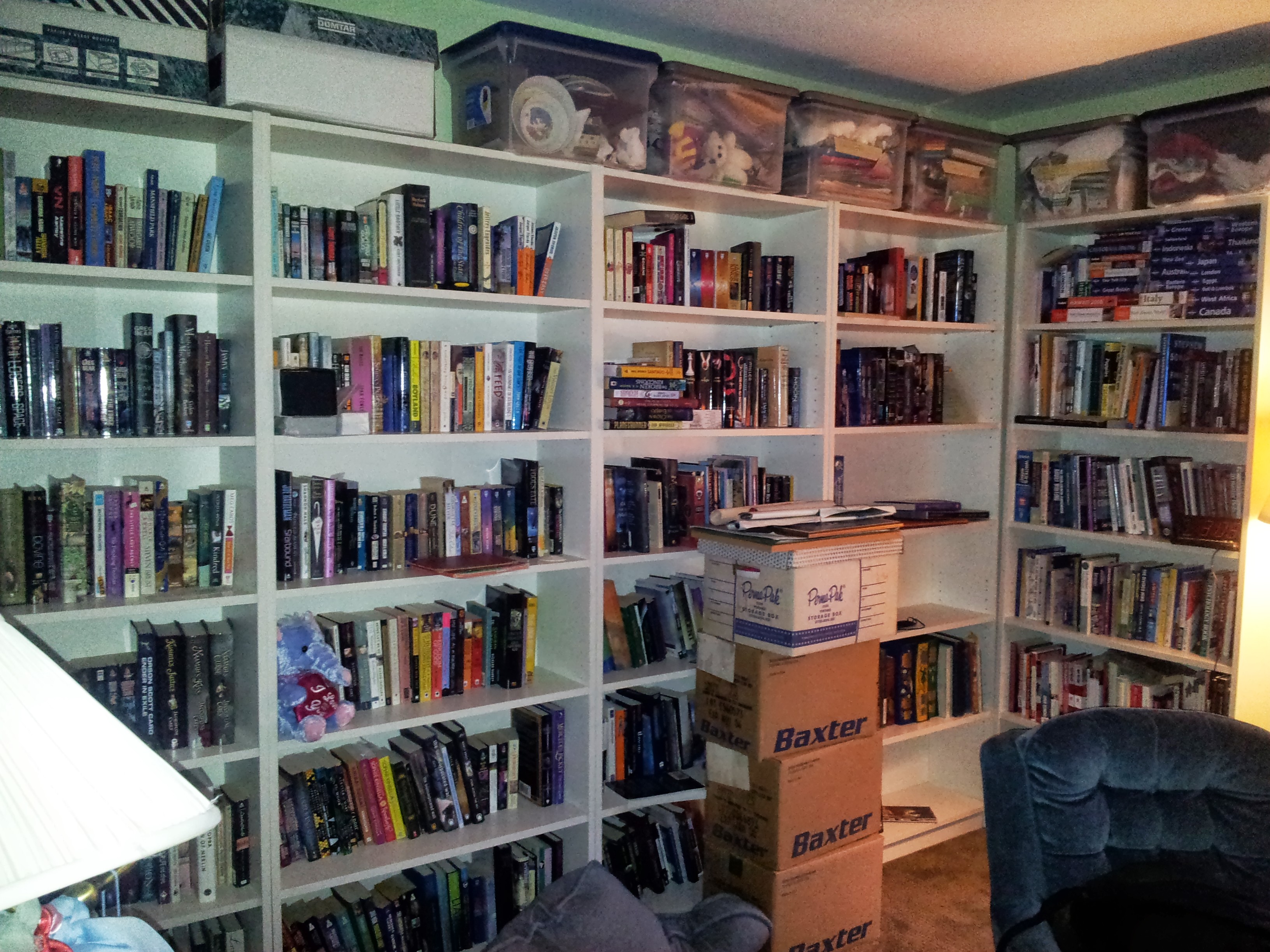
The bulk of my library. Once I take care of those boxes, this will be my dream room realized.

The bulk of my library. Once I take care of those boxes, this will be my dream room realized.

On the other hand, even while I adored my small personal library, I turned to the public library for the bulk of my reading. And heavy library usage does support the idea of books as disposable objects for the individual, if not for society. I kept my library books for two weeks or a month, and then the vast majority of them I never checked out again. Is Rahul’s practice of chucking his read books into the dumpster so much different, given that many libraries use donated books to raise funds through book sales instead of actually cataloguing and storing them? Sure, the library will receive fifty cents or a couple of dollars for that book donation, but not enough money to get anyone really excited.

So maybe books really are disposable objects. But I still can’t imagine throwing mine in the trash can; they have too much of an aura of magic and possibility for that. I’ve imbued these objects with so much meaning that I can’t bear to part with them, just as another person saves ticket stubs or theater programs. Except they’re not quite the same; books represent not only an experience I had in a past, but an experience I can choose to have again, albeit perhaps in an altered form since each reading of a book can expose new layers.

What do you think? Are books disposable? Do you throw books in the trash when you’re through with them? Should you start?

Read Full Post »

Here is a beautiful thing.

In the midst of stress, there is connection. In the midst of sorrow, there is laughter. In the midst of fatigue, there is anticipation. In the midst of loss, there is appreciation. In the midst of chaos, there is the act of kindness that matters because of its mere existence.

In articles about dealing with stress, the idea of gratitude is repeated over and over again. Whether or not it is an active strategy, I find that gratitude and its cousin appreciation bubble up so easily these days. Perhaps because I need more help I have more to be grateful for. Or perhaps the contrast makes my appreciation keener. Or maybe I’m always this way and I just don’t usually pay as much attention. It is hard to know.

I stood in the grass at Shoreline Amphitheatre this weekend, my vest zipped up against the cool evening air. I watched Passion Pit play their song “Take a Walk,” and I was so happy to be there. I watched a friend of mine win the Andre Norton Award on Saturday night, and in the middle of tearing up, I was so happy to be there. I ate a late evening snack at my favorite local crepe place with a group of friends old and new, and I was so happy to be there.

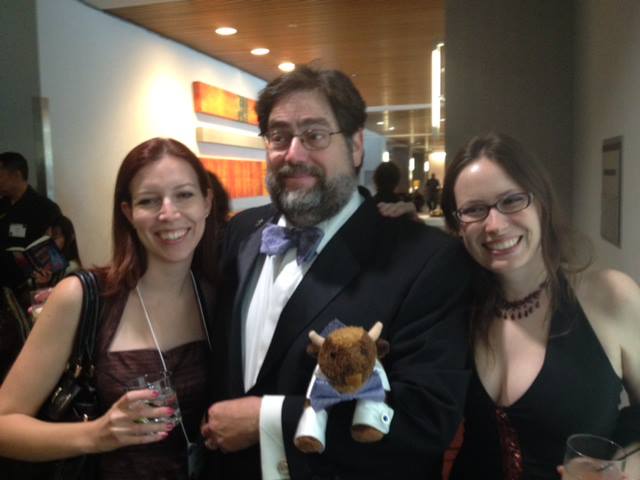
My Taos buddies and I at the Nebulas this weekend. Photo by Valerie Schoen.

My Taos buddies and I at the Nebulas this weekend. Photo by Valerie Schoen.

A friend told me this weekend about a friend of hers who read my blog post about stress last week. Apparently it had a big impact, being the right post at the right time for this friend, who has been going through a lot herself recently, but she was embarrassed to write and tell me. I laughed and said, “I was embarrassed to write that post too.” I am so happy I decided to write something that mattered to someone.

I am so happy that so many of you have reached out to offer support and tell me it’s totally fine to spend some time staring at trees. And I completely agree. Staring at trees can be pretty great. So can eating pie and reading fluffy novels and petting little dogs and wearing a fantastic dress.

I am so happy to be here right now.

I am always looking for reasons to be happy, and I found so many of them this weekend. And perhaps that’s what I feel the most grateful for: my ability to find those reasons, and your willingness to create those reasons with me.

Thank you.

Read Full Post »

Occasionally I read an article that makes me really excited because it puts an idea or concept so elegantly into words that even if I’ve thought about the topic many times before, I feel like I’ve made a brand new discovery. This happened a couple of days ago when I read Toni Bernhard’s “Why Judging People Makes Us Happy.”

In the article, she explains the distinction between discernment and judgment:

“Discernment means perceiving the way things are, period. Judgment is what we add to discernment when we make a comparison (implicit or explicit) between how things or people are and how we think they ought to be. So, in judgment, there’s an element of dissatisfaction with the way things are and a desire to have things be the way we want them to be.”

When I was younger, I wanted so badly to be nonjudgmental that I often didn’t even allow myself to practice discernment. This had results about as unfortunate as you might expect.

When I started allowing myself to have opinions again, I had no idea what to do with them. Plus I’d been storing them up for quite some time. I felt like I was having judgmental thoughts left and right.

That’s why I like the idea of discernment, the middle ground of seeing the truth of what’s going on around you. Discernment doesn’t require excuse-making (for ourselves or for anybody else). It also doesn’t require us to change anything (or wish anybody would change). What it does allow for is seeing a situation as it is unfolding, for seeing how other people are acting and reacting, and for noticing how what’s going on is affecting our own states, whether that be emotionally or physically.

Discernment gives us data, the data of what actually is as opposed to wishes about what could be. Once we have data, then we can make good decisions for ourselves as to what actions we wish to take and what boundaries we might want to set. Without data, it’s hard to figure out the best way to take care of ourselves.

Let’s say I have a friend, and I notice that every time we’re together, he’s talking in a negative way. At that point I can pay attention to how that’s affecting me: Am I tired after we hang out? Do I feel more negative myself? What emotions am I feeling? Do I brush off the negativity fairly easily or does it linger for the rest of the day?

Maybe it doesn’t affect me very strongly, and I feel compassionate towards my friend because I know he’s having a hard time, in which case I don’t have to do anything at all. Or maybe I’m feeling drained or some other way that I don’t like feeling, and I realize I only want to spend time with my friend when I have a certain amount of energy. Maybe some other stuff is going on in the friendship too, and I decide I need some distance. Or maybe I have a conversation about it with my friend. All of these choices are fine, and they simply depend on the dynamics of that particular friendship.

Discernment and then action move us away from the blame game. Instead of thoughts of “it’s her fault, and why does she have to be that way?”, we move to “what do I need to do to take care of myself?” Taking care of ourselves is something we can act upon, and doing so allows us to have more compassion for those around us.

What do you think? Do you agree with Toni Bernhard’s definition of discernment vs. judgment?

Read Full Post »

Last Thursday I was eating my lunch when I heard a horrible crunching sound in my mouth. I pulled out a small piece of white porcelain, confirming that yes, I had just broken the crown with which I had so much trouble two years ago.

I spent some time shining a flashlight in my mouth and staring at the damage, followed by some aimless wandering around muttering “Okay” at periodic intervals. After calling the dentist and making an appointment, I ended up laying on my study floor with Nala and staring at the tree outside the window.

I wanted to lay there looking at that tree forever.

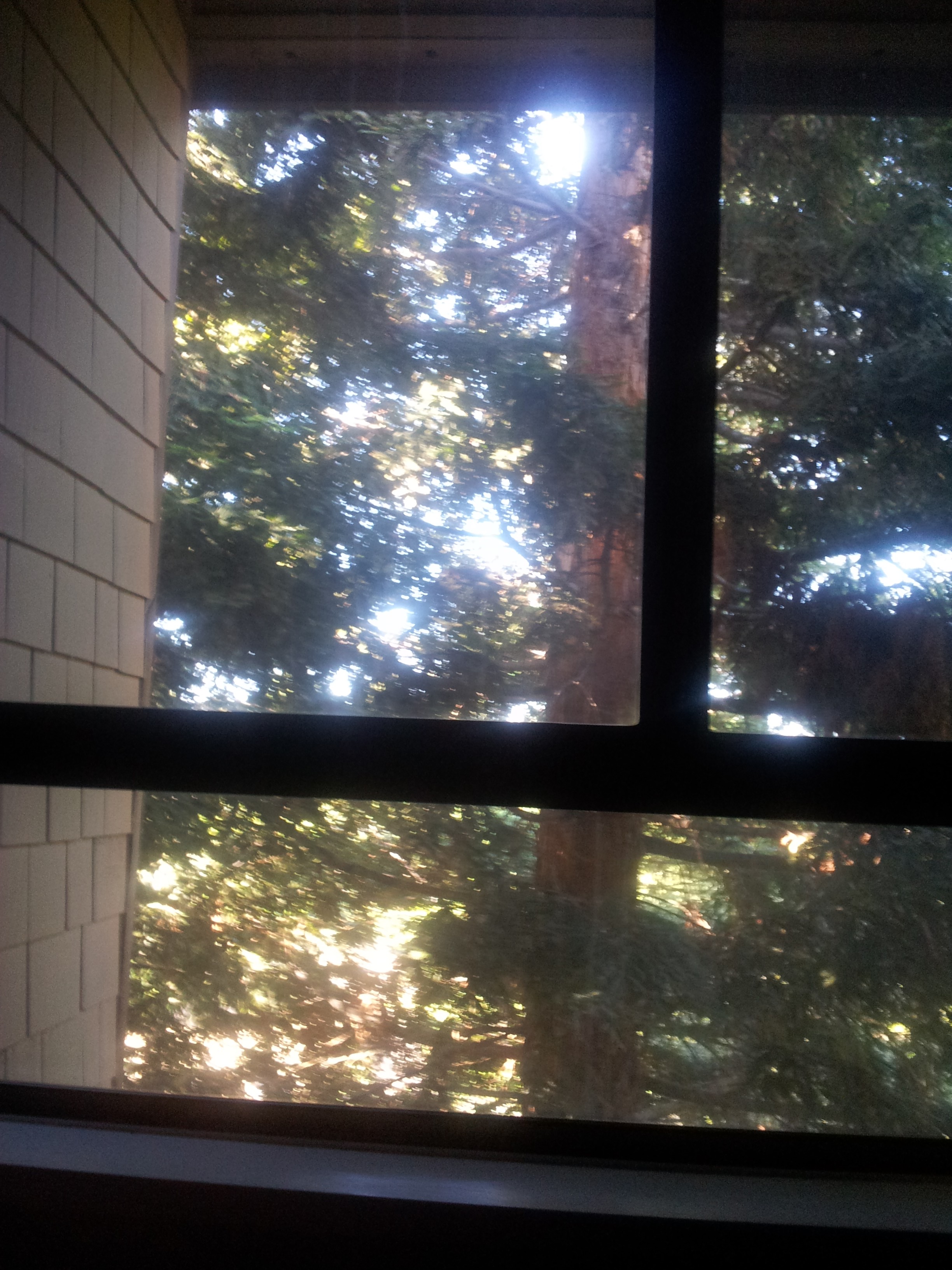
My Tree

My Tree

A friend of mine posted on Facebook that he didn’t seem to have energy to do even simple tasks, but he was pretty sure he wasn’t depressed. I suggested it could be related to anxiety. I was speaking from personal experience.

The last two months have been among the most stressful of my life, coming at the end of perhaps the most stressful year of my life. And it turns out the symptoms of high stress that you hear about are actually true. They include:

1. general fatigue/exhaustion (I was so tired on Friday, I got lost in a familiar part of town.)

2. lack of ability to focus (my speed of reading has fallen drastically)

3. muscle tension (in my case, particularly in the back, shoulders, and neck)

4. less effective immune system (I’ve had the flu twice in the last three and a half months)

5. insomnia

6. memory loss/unreliable memory (Two weeks ago I double booked myself. I still can’t believe that happened. I am usually a scheduling goddess.)

7. easily overwhelmed

8. tension headaches

9. appetite changes

10. easily triggered fears/worries

I haven’t wanted to write about any of this for a number of reasons. But on Thursday, I felt like breaking my crown was too much; it was the last straw. I considered lying there and contemplating the tree forever. It seemed like a pretty good idea, until the thought wiggled its way into my consciousness that I should write about this. And eventually, buoyed up by this thought, I got up.

As a child, I was taught to try to be as perfect as possible. If I was going through a hard time, I was supposed to hide it.

But this belief contributes to the problem. Not only is it isolating, but it strengthens the idea that if we don’t handle everything perfectly, we are failures, when in reality we’re just the same as everyone else. Everyone has struggles. Everyone goes through hard times. Everyone has moments when they stare at a tree (or the road or the ceiling or the screen or their feet or the dark when they can’t sleep) and want all the difficult things to go away because they seem like too much.

So I’m going to be honest. I’m tired all the time. I prioritize my to do list carefully every day because I can’t get as much done as normal. Nala is always at the very top of that list, and everything else comes after. Sometimes it takes me an hour or more to figure out how to respond to a typical situation or request. I can’t always be there for my friends the way I want to be, and sometimes I have to cancel plans.

I’m not depressed. I love life, I love the world, and I am optimistic about my future. I have so many projects I want to work on, so many books I want to write, and so many people I want to spend time with, some of whom I haven’t even met yet. I get frustrated by my energy levels because I still want to do all the things.

But realistically, there is only a certain amount of stress any of us can handle before it begins to affect things. And I am past that amount. I look forward to a time when that’s no longer true. Hopefully it will be here soon.

And in the meantime, sometimes I will spend some time staring at my tree.

Read Full Post »

In my ongoing quest to stop being a perfectionist and instead just be a human being, I have found the following strategies to be useful.

1. Get a dog. Dogs don’t care if you’re perfect; they only care that you love them.

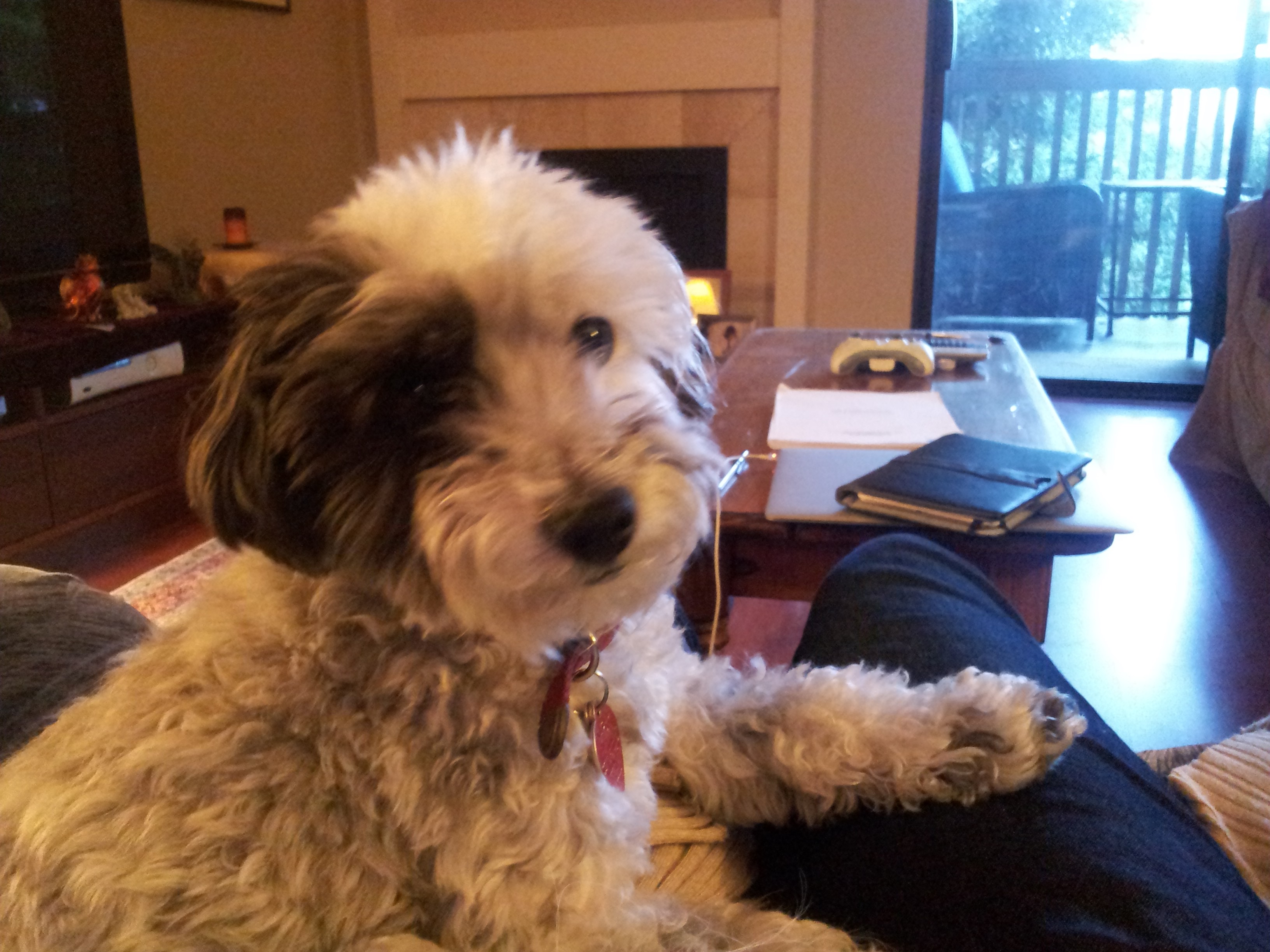
Portrait of a Devoted Doggie

2. Reframe the idea of perfection. Decide it is impossible, or decide it encompasses more than a single rigid definition, or go all philosophical and decide that imperfection is perfect in its own way.

3. Spend time around people who appreciate your natural strengths.

4. Spend time around people who are okay when you falter.

5. In fact, spend lots of energy finding awesome people with whom to surround yourself. This helps with all sorts of things if you are paying attention.

6. Distinguish between situations in which you must present yourself professionally at all costs and those (often in your personal life) in which you have some more leeway.

7. For the latter, force yourself to be honest. Especially when you really don’t want to admit that you need help or that you’re having a rough time.

8. Accept that not all people are going to understand or believe your honesty. Change your response to this from a panicked “I must seek their approval at all costs” to a shrug. Be grateful for those who are supportive. (And if none of those exist in your life yet, go back to number 5 and try some more. They are out there.)

9. Remember that you are one person and that therefore you cannot do all the things. Even if other people want you to. Even if you want to.

10. Realize you can’t control everything, and that perfection doesn’t automatically equal happiness.

11. Actually, not only does perfection not equal happiness, it sometimes equals stress, burn-out, dysfunctional relationships, isolation, and despair. Remind yourself of its downsides when you’re having trouble letting go.

12. Embrace the cheesiness and tell yourself you love yourself. Tell this to yourself even more when you think you’ve fallen short.

Read Full Post »

I am so happy it’s May! I’m going to celebrate by talking about … board games!

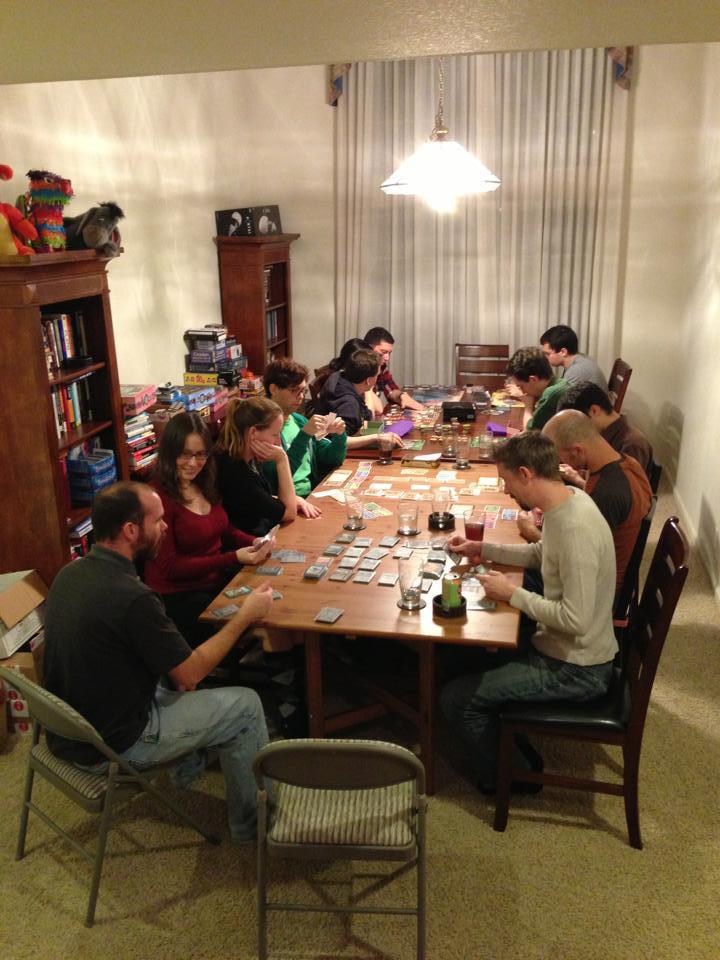
I’ve been playing board games since I was a little kid. I started out with Hi Ho Cherry-O and Sorry, graduated to Monopoly and Pay Day, and then played Dover Patrol, Risk, and D-Day with my dad. For several years I was a bridge aficionado (although alas, I am without a bridge group right now). And a couple of years ago I started going to a weekly board game night, so now I think about board games more than ever.
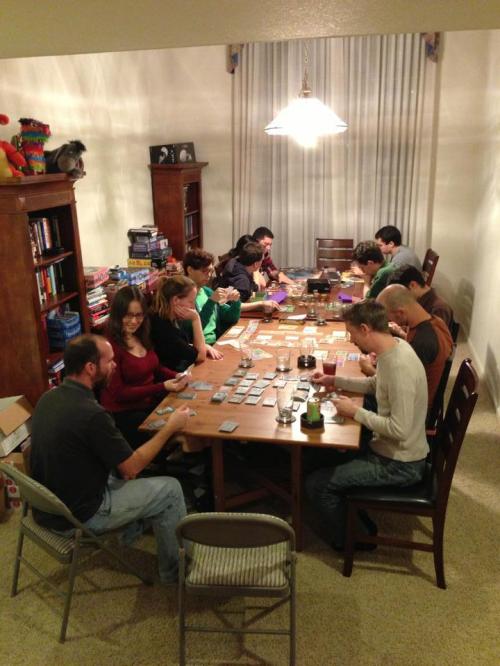
My gaming group. They are fantastic!

My gaming group. They are fantastic!

Here are three board games I’ve been really excited about recently:

Battlestar Galactica

I’ve loved this game (and its expansions) for a long time, and it continues to be my absolute favorite board game. It’s a semi-cooperative team game that pits the human players, who want to survive and cover a certain distance, against the Cylon players, who want the human players to die. But you often don’t know who the Cylon players are…and you can find out halfway through the game that YOU are actually a Cylon.

What I love most about this game is its strong narrative and evocative atmosphere. I’m immersed in the story while playing, and it can really get my heart pumping! Also, having secret Cylons is just super fun. On the minus side, it can be intimidating for new players to learn and it can take a looong time to play.

I’ve gotten to play three times recently, twice with the Pegasus expansion (although not the endgame because I’m not a big fan of it) and once with the base set. One complaint I’ve heard about the game is that the Cylons always win, something I’ve always argued against because the humans have won more often in my personal experience. But in these last three games, the Cylons have won all three times. Maybe it has something to do with the fact that in two of those games, I played a Cylon character brilliantly (and I even finally got to be a Cylon leader, hooray!). And in the third game, some of our human players were unhealthily fixated on their newfound power to put people out the airlock. But in any case, I’m looking forward to many more games, and I especially want to play more with the Exodus expansion.

Alien Frontiers

I’m a fan of White Wolf RPGs, which means I love rolling dice, so this game is a great fit for me. Plus it has a space colonization theme. (Actually all three of these games have space themes. I’m sure none of you are surprised.) It’s Yahtzee meets space awesomeness meets strategy. Um, yeah. Also, all of the regions on the planet to be settled are named after science fiction writers. How cool is that! (Although would it have killed them to include ONE female science fiction writer on the planet? Or even more than one? I think not.)

Anyway, I have yet to get bored with this game. You roll your dice (which represent your spaceships) and try to gain a foothold on the science fiction planet based on different combinations of numbers. If you don’t like to rely on the luck of the roll, you can invest in alien technology that allows you to have more control over your dice. And there are ways to thwart other players, particularly those who may be playing just a little too well.

My main critique of this game is that it can be a bit slow going, especially in later rounds. You can’t plan your own turn in advance very well because you don’t know what you’re going to roll (and because of the game mechanics, you just can’t roll ahead). So you can have strategies in mind but not specific implementation plans, so things can get bogged down. But otherwise it’s a fabulous game.

Sadly, it’s out of stock almost everywhere until its planned reprint in Q4 of 2013. On the upside, it will make a great holiday present! And until then, it is available on the iPad if you can’t wait to try it out.

Space Alert

Space Alert is my newest game love, a timed cooperative game in which your group is trying to survive scanning missions in dangerous parts of the galaxy. It’s like a cooperative version of Robo Rally with aspects of Galaxy Trucker, and that cooperative aspect is really what makes the game for me. Each player can choose to move or do actions, and they have to coordinate where they are on the ship and who is going to deal with which threat (the threats include asteroids, saboteurs, aliens, and enemy ships). But all of your actions are decided face-down as the computer (or CD) counts down your time and introduces new threats. Then you play all the actions out to see what ended up happening. Hilarity often ensues as people fire at nonexistent threats, run out of the energy required to do the things they were hoping to do, and try to take robots that someone else has already taken.

I love this game because it’s exciting and all about communication, decisiveness, and taking responsibility. It’s fascinating to see how things break down, and it’s really satisfying when the team works well together. Plus each mission doesn’t take very long, making the game very flexible in terms of time commitment. As for minuses, it’s really better with the missions being played for you on the computer, which means you need a computer and internet connection for best game play (although there is a CD for when that’s simply impossible).

Games I Want To Play More of Soon:

Dune, Eclipse, Illuminati, Arabian Nights, Race to Adventure (and Spirit of the Century, the RPG on which it’s based).

What are your favorite board games right now?


Read Full Post »

Photo Credit: chiaralily via Compfight cc

The scene: A spring afternoon on a concrete patio with metal tables and chairs, close to the train tracks. A slight breeze keeps me worried that I should have brought more than my thin sweater, worried enough that I order a hot drink in spite of the sunny weather. A large dog lays with his head between his paws, gazing with eyes big enough that many of his actions automatically become characterized as mournful even though that’s not his personality at all.

My friend is telling me about a conversation she had with a customer service representative over the phone. After explaining recent events and how they pertained to the issue in discussion, the woman told her, “Don’t worry, now you’re getting the chance to start over.”

I say, “Don’t we all start over at one point or another?”

***

I have thrown away a bowl full of leaden gingerbread dough. I have discarded ten thousand words and started a novel from scratch (and felt grateful it was only that many). I have graduated, I have moved, I have ended relationships, rekindled relationships, started relationships. I have obtained employment, lost employment, quit, and changed careers. I have opened and closed a business. I have walked out of a lobby at a convention and sat for twenty minutes in my hotel room before coming back out and starting again. I have spent months recovering from physical injuries, only to re-injure myself and go back to the beginning of the process. I have rebooted my computer, my phone, huge strands of my life.

So I guess you could say I start over a lot.

***

A friend of mine moved recently, and in the process, she got rid of a ton of stuff. She hardly has any books left (she mostly reads electronically these days), most of her kitchen cabinets are empty, she’s getting rid of big pieces of furniture. I thought to myself, “Wow. This is the way to start over.”

By contrast, when I start over, I tend to carry everything with me: my experiences, my memories, my baggage, and physical mementos from the past. It’s certainly the bulkier way to go. But there is no one right way to start over. There is the way that feels right at the time.

My kitchen cabinets are full. But I do have an empty bookshelf.

***

The title of this post suggests that I’m going to offer up advice or maybe a list of ten bullet points summing up the process of starting over. But this time I don’t have a list for you.

Starting over is hard. A lot of that is because of the fear that often comes with it, the fear and the not knowing and the what if game. And starting over is stressful. If you look at the Holmes and Rahe Stress Scale, you’ll see that almost all of the most stressful events in life have to do with change: beginnings, endings, and starting over.

So really when we’re talking about how to start over, we’re also talking about how to be kind to ourselves and how to be resilient and how to deal with stress.

When have you started over?

Read Full Post »

People will try to take your voice away.

They will try to make you shut up if you are different than them, if you have a different opinion than them, if you are engaging with an idea that makes them uncomfortable, if you are a woman, if you are below a certain age or above a certain age, if you have a darker skin color, if you are gay, if you belong to a different religious or political group, if the things you believe to be important are not the same things that they believe to be important.

People will try to take your voice away.

They will mock you, harass you, and make fun of you and what you are trying to say. They will tell you that women are inherently not as smart, talented, important, or fill in the blank as men. They will ask you why you have to think the way you think, why you have to ask the questions you’re asking, why you have to pick everything apart. Leave well enough alone, they tell you. You’re reading too much into it, they say. Be grateful for what you have. As if gratitude for the good requires a blanket of silence. (Anyone who tells you that you should be grateful has an agenda, and it’s not one that involves being particularly kind to you.) They will say that you are whining or bitchy or too negative.

People will try to take your voice away.

They will reward you for your silence. They will reward you for smiling, for agreeing, for not bringing it up, for being the nice one or the good one. You will get to avoid conflict and uncomfortable silence (until you start to realize that uncomfortable silence is not really all that bad a price to pay in order to refuse to be smothered). You will feel like one of the group, you might even be able to pretend that these people are your friends. (Except real friends will not try to pressure you into silence. They might change the subject or say they prefer not to discuss a specific topic, but they won’t try to make you feel small. And if they slip up, they will apologize.)

People will try to take your voice away.

They will feign ignorance, or maybe they genuinely will not understand how toxic they are being. They will be doing it for your own good. They will mean well. They won’t even notice. They will do some nice things for you, and you won’t realize your voice has died down to an inaudible whisper. Eventually you will internalize their voices and be harsh with yourself for doing positive activities like engaging in critical thinking. Their attempts to keep you quiet will become your own attempts to silence yourself.

People will try to take your voice away. But you don’t have to let them. You can keep talking, keep writing, keep singing, keep questioning, keep engaging, keep thinking, keep pushing out of your comfort zone. You can keep asking why: Why does the new Dove ad campaign make you uncomfortable? Why are you being criticized for doing something you didn’t do? Why do you like what you like and dislike what you dislike?

In both singing and writing, finding your voice is so important. Once you’ve found it, cherish the discovery and don’t let anyone take it away from you.

Read Full Post »

I’ve been going through a bunch of my boxes of old memorabilia, trying to consolidate and store stuff in boxes that aren’t collapsing from age. It has proven to be a fascinating experience–albeit an allergy-inducing one–punctuated by shrieks whenever I come across an unexpected bug. Good times, good times.

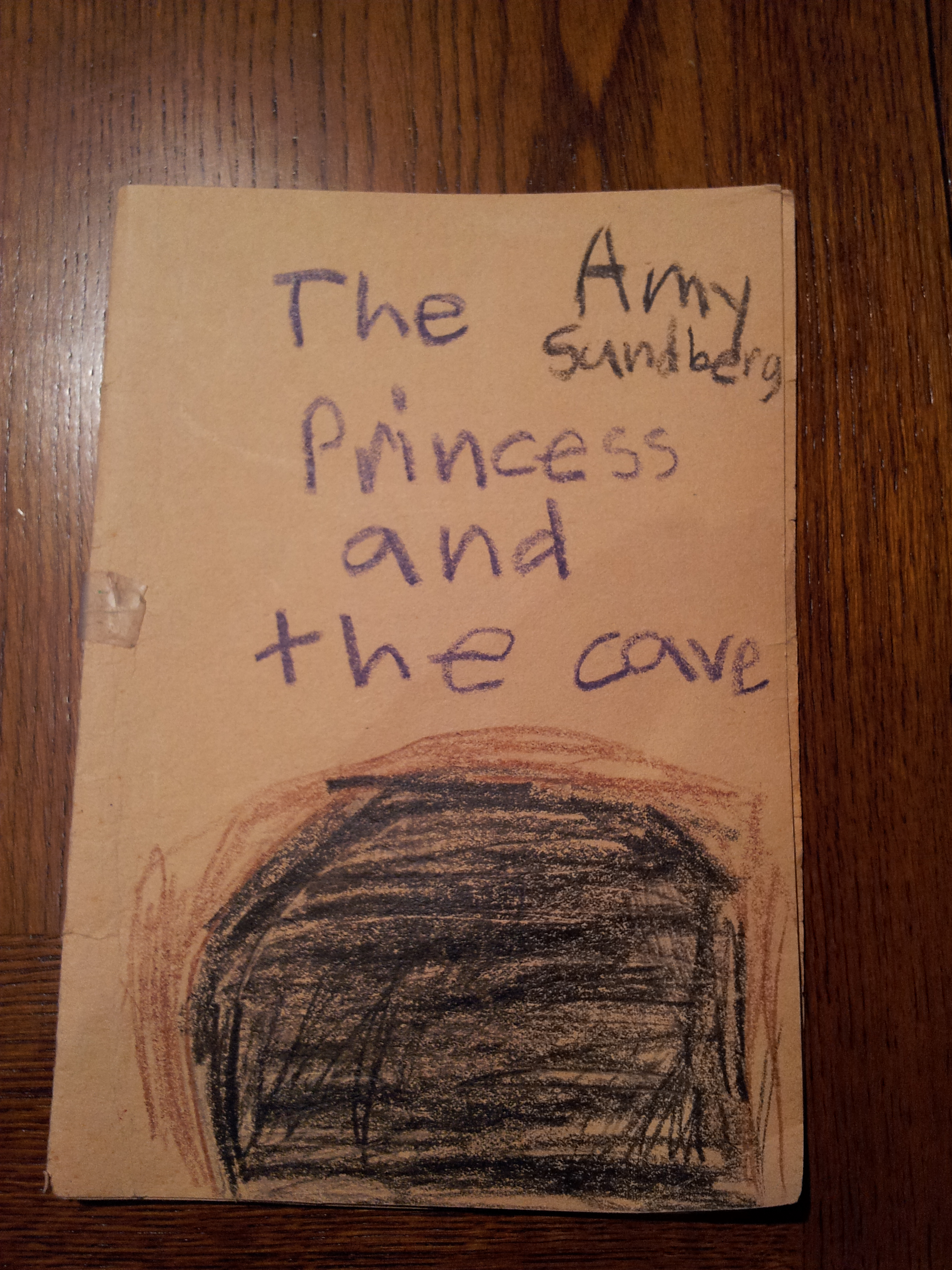
In the excavation process, I found something I thought was lost in the mists of time forever: my first book. Written when I was seven years old, it is called “The Princess and the Cave” and reflects my undying love for fairy tales, and also probably for The Princess and the Goblin, which I believe I’d read shortly before writing my own story. Here is the cover:

The Princess and the Cave

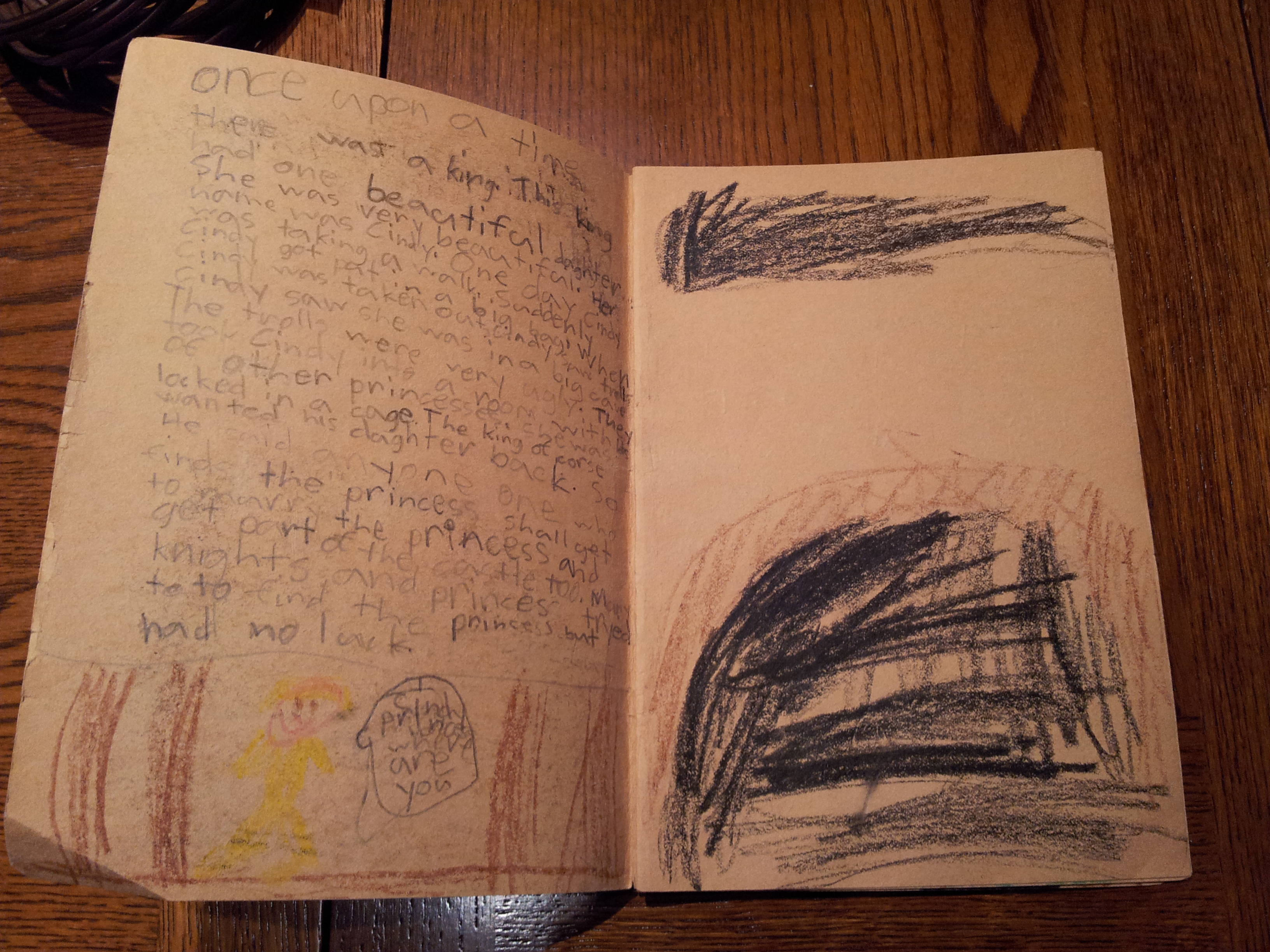
 And here is a taste of the artwork inside:

Amy's cave drawing

We can see two things from these photos: first, that I was fascinated with the idea of caves, and second, that it’s not surprising I didn’t go on to have a career in the visual arts.

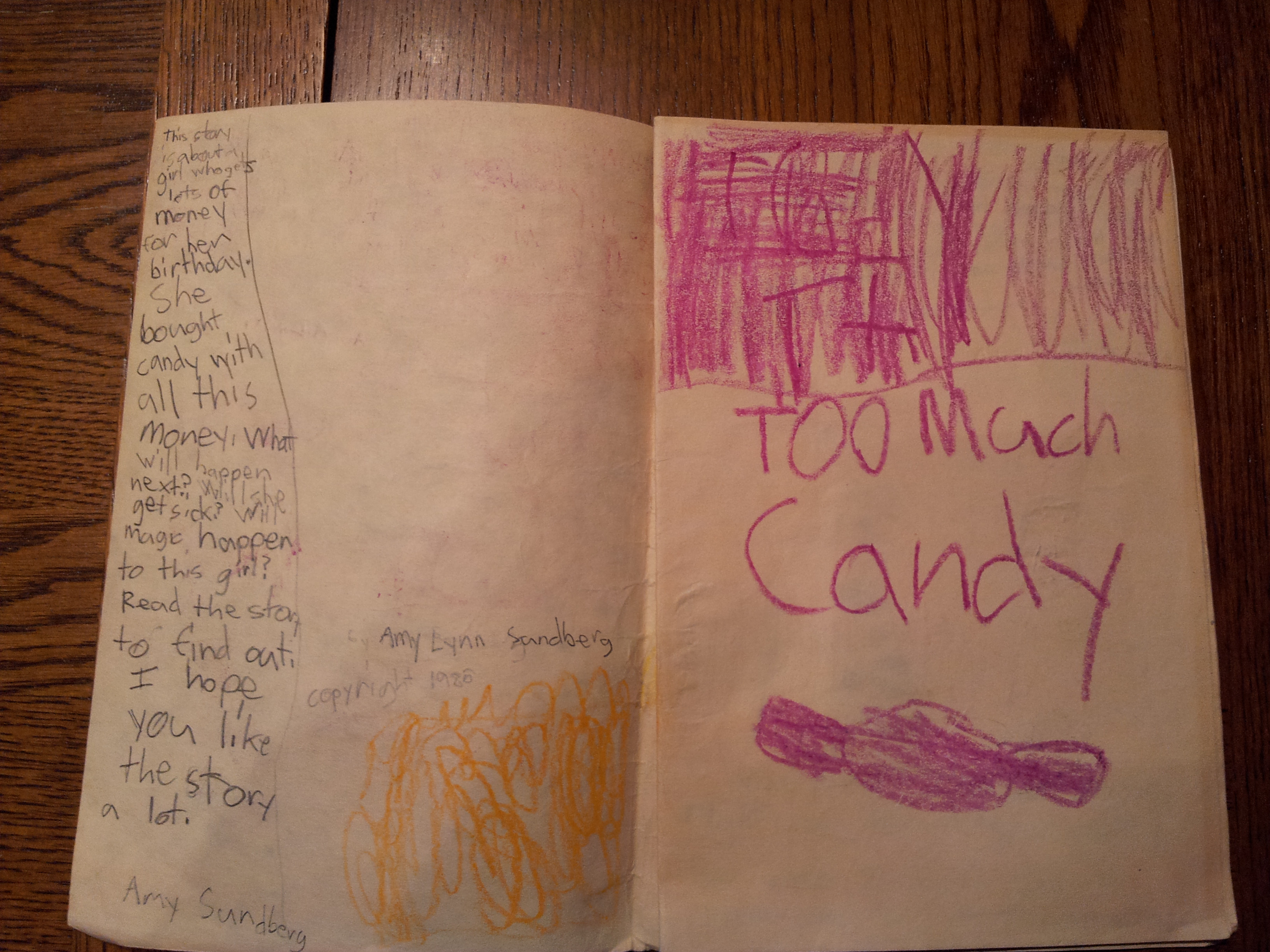
I loved writing “The Princess and the Cave” so much that I promptly sat down and wrote a second book:

Too Much CandyI find these books to be noteworthy because it was when I was writing them for a classroom assignment that I understood that the books I loved to read were actually, really truly written by other people. And I decided that when I grew up, I wanted to be an author.

I never changed my mind. I decided I wanted to be a musician too, and I devoted many years of my life to primarily focusing on music. But even then, I was writing bad poetry or memoirs or short stories or lyrics or the book of a musical. And I always held onto the idea in the back of the mind that one thing I wanted to accomplish in my lifetime was to write a novel. I thought I might not do it until I was fifty (I’m glad I was wrong about that), but it was always a part of my vision for my life.

Having a vision for our lives can be so powerful, whether the vision was formed when we were seven or it’s brand new. A vision can give us purpose and direction, something to aim towards as we make the decisions that shape our lives. And in times of change, it’s the powerful vision of what we’re striving for that carries us through. I’m not talking so much about visualizing what we want, which some research shows actually makes us less effective at carrying out our plans. Rather, I’m talking about knowing what we want (or learning what we want if we don’t already know) and believing it could become a reality.

We can become so limited by what we believe to be impossible. Obviously we aren’t capable of every thing under the sun, and sometimes we don’t want to set the corresponding priorities or make the sacrifices necessary to make something possible, and that’s fine. That’s different than experiencing a failure of imagination, imagination being the capacity that perhaps allows us to have vision in the first place. We get to choose our vision, after all. But we can become stifled by a narrow view, or by exhaustion, or by fear.  We can forget that so many amazing dreams are worthwhile not so much because of the end result (although that can be quite nice, of course) but because of the journey we take to follow them.

Do you have a vision for your life?


Read Full Post »

« Newer Posts - Older Posts »