Feeds:
Posts
Comments

Archive for the ‘Life’ Category

In the last month and a half, I have fallen headlong in love….

with a new hobby.

Blues fusion dancing, to be specific.

I will give a practical definition of what that means to this beginner dancer (by which I mean, take my definition with a grain of salt). Blues fusion is a partner dance (mostly), but it is a lot more loose and less defined than any other partner dance I’ve tried. And you can incorporate styles and moves from many other partner dances, like the various types of swing, or tango, or salsa, or even waltz. Someone told me the fusion part means you dance mostly to modern music, but also not always.

I know, it’s all very indefinite and fluid. That’s probably part of the reason why I like it. (There’s also a lot of history behind it that I am not entirely clear on, which I suspect might elucidate it further.)

A good friend of mine started blues dancing sometime last year, and she told me about it, and I put it on my list of things I wanted to try sometime this year, because a.) I love dancing, b.) it was possible my ankle might actually survive the experience since it had been doing better, c.) trying new things (and new dances!) can be lots of fun, and d.) I love my friend. So at the beginning of February, when we were chatting on the phone, I told her I wanted to come. And she said great, come over to my house on Thursday and we can carpool.

Thus, a passion was born.

I knew right away, too. The room was crowded with strangers, and I had no idea what was going on, having never attempted blues fusion before (or even really having a clear idea of what it was). I was wearing jeans, which were too hot, and socks because I didn’t have appropriate dancing shoes, which meant I was in constant fear of my feet being stepped on. I forgot to bring a hair band. I told every person I danced with it was my first time blues dancing, in the hopes they’d be generous and forgive any massive blunders I might make. I tried to follow my partners, and sometimes I failed. By the end of the night, my calves were screaming and my ankle was basically okay.

And it was glorious. Completely rush-to-the-head, fill-the-heart-to-the-brim, this-is-exactly-where-I-want-to-be glory. When I say I fell in love, I’m not being facetious. I fell HARD. Even with the uncomfortable bits, the “I don’t know what’s going on” and the “so many strangers in one place while I’m feeling super vulnerable” and the “I’m making a lot of mistakes” bits.

So I went again, and this time I didn’t tell everyone I danced with that I didn’t know what I was doing, and I tried to relax. That was it, my one goal of the evening: to relax into this new activity and new space. It was hard. I loved it all the more for the challenge.

And then, dear reader, I ordered shoes.
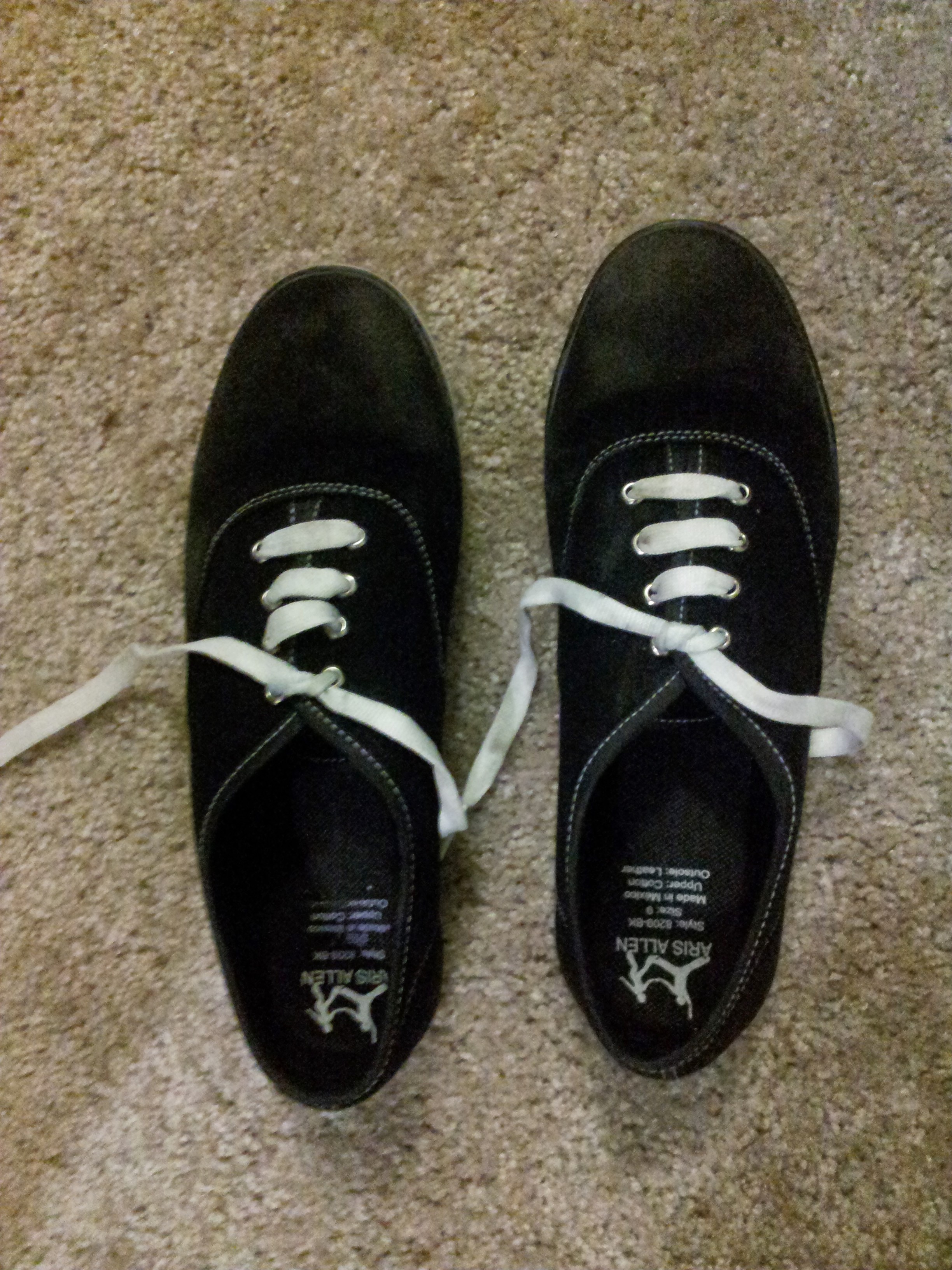
Canvas dance sneakers (shown) and character shoes, to be precise.

Canvas dance sneakers (shown) and character shoes, to be precise.

I knew. I knew I was in love. I knew what I wanted. My wonderful trainer/body worker was on board. My ankle was, surprisingly enough, continuing to cooperate. “You’re very committed,” my friend said to me. And I laughed, because of course I’m committed. Commitment has never been a problem for me when I know what I want. “Is there a boooooy?” another friend wanted to know. I shook my head and laughed again.

Why, Amy? Why are you so passionate about blues fusion?

I love the dance. I love moving my body in time to the music, and I love working on controlling my body. I love getting stronger. I love the endorphins. I love pushing myself. I love losing myself in the motion and the rhythm and the focus.

I love the unspoken physical communication between me and my partner. I love watching, and listening, and feeling, and making art with other people. I love learning. I love getting dizzy.

I love to play. I love to experiment. I love to express myself and my moods through dance, whether grace or flirtation or exhilaration or absolute silliness.

I love (yes, I’m going to admit it) that I finally have someplace to wear all the adorable dresses that up until now have been hanging forlornly in my closet, unworn.

I love the community. I love how friendly people have been. I love sharing my joy in the experience with other people. I love the kindness of the leads who give me feedback and help me improve. I love the passion for dance that is on constant display.

Why have I fallen in love? Because blues fusion makes me feel one hundred percent ALIVE. And that, my friends, is something worth giving my heart.

Read Full Post »

This weekend I went to a party that was basically a room full of Buddhists…and me.

Does that sound like the set-up for a joke?

Anyway, I really enjoyed hanging out with these people because they were all kind and authentic and heartfelt, and also there was a lot less small talk than usual at a party where I don’t know anyone, and as we’ve already kind of touched upon, small talk tends to bore the crap out of me, especially in large doses. (And as an aside, I haven’t gotten to ask anyone yet about the coolest thing they’ve ever done, but I am SO looking forward to it.)

Photo Credit: ~C4Chaos via Compfight cc

Photo Credit: ~C4Chaos via Compfight cc

I also had to speak in front of the group, in impromptu fashion, and I mentioned in passing that I had found my own way to work towards wholeheartedness. Afterwards, more than one person was very interested in hearing about my “practice,” and I found myself struggling to put it into words. I didn’t have a convenient sticker like “Buddhism” to slap onto myself and how I move through life.

And yet, it didn’t seem like an odd question, because I do have a practice. Those of you who have been reading this blog for a long time probably know a lot about it because I tend to write a lot about it, but it doesn’t have a specific label. It is a combination of many different parts, some of which would be very familiar to a Buddhist: mindfulness, introspection, and compassion, as well as a focus on priorities and strategies and investigations into how the world works and how I work.

But what I found myself saying more than once was this: I am an artist. That is my practice.

I am an artist. That is my community.

Music has always been my foundation and solace. It reminds me how joy feels. And writing, well, writing changes me. There was that moment when I realized I couldn’t separate myself from my writing. I was in my writing, whether it was in these essays or in my fiction, and therefore I wanted to strive to be the person I wished to see in my work.

And art is a practice. It’s all about practice, whether you’re repeating vocal exercises or the difficult end passage of that aria, or whether you’re memorizing music, or whether you’re writing two essays a week and a thousand words a day. Art is trying new things and challenging yourself, pushing yourself to your limits and then coming back tomorrow and finding your new limit and pushing yourself again. Art is in the way you see the world, and it becomes entangled in the way you interact with the world.

For me, there came the point where I saw my entire life as one long continuous work of art. It’s a fun way to live.

In thinking about all this, I also realized how important community is to any practice. Because yes, writing changed and continues to change me, but I don’t know that I would have had the courage to let it without the writing community by my side, helping me and educating me and supporting me and cheering me on. It is hard enough to transform without doing it in isolation. It is easier to challenge yourself when you are surrounded by people who understand why you’re doing what you’re doing.

Aside from a renewed sense of gratitude for my own community, I left the Buddhist party with the following awareness: that there are so many ways to travel in the same direction and so many ways to reach the same, or a similar, destination. There are so many ways to have and cultivate a practice. There are so many ways to embrace change. There are so many ways to strive and grow and learn.

There is no one right way.

The Buddhists and I, we’re really not all that different. In that room, we each of us had a practice, parts of which were different and parts of which were the same.

Read Full Post »

My grandmother was raised during the Great Depression. She knew how to be frugal, and she’d save aluminum foil in order to re-use it later. That’s how I understood frugality as a small child: saving things you had now because you might need them again later.

There is nothing wrong with frugality or avoiding waste. But when frugality progresses to a pervasive feeling of scarcity, then we might begin to have a problem.

What does the world look like when viewed through the lens of scarcity? There is never enough, and whatever we do have might be taken from us at any time. There isn’t enough money, there isn’t enough food, there isn’t enough of the yummy cake from which we wanted another slice. There isn’t enough time. There aren’t enough friends, aren’t enough activities, isn’t enough love to go around.

Photo Credit: GDidi via Compfight cc

Photo Credit: GDidi via Compfight cc

And what about the complex we get about missing out on things? When the cool kids are always at the next activity or the next bar or the next party, and we’re thinking about what they might be doing or what we could be doing instead of paying attention to what we’re actually doing.

When we live in a world of scarcity, we are saving for a rainy day but aren’t very likely to recognize the rainy day when it comes. We are thinking about what we don’t have or what we might lose instead of being able to enjoy the moment, right now, in which we are who we are and we have what we have. We cling tightly to what we have even if we don’t even want or need it.

We are afraid.

Having been raised in a culture of scarcity, I struggle with this all the time. I was talking to a friend about the opportunity cost of going to an event, and he laughed and said, “What, twelve bucks?” And I had to consciously remind myself, oh yeah, Amy, twelve dollars isn’t actually a lot of money.

I was cleaning out my closet a few months ago, and I had to try on almost every piece of clothing to show myself, Hey Amy, see, it really is too big, so you for sure don’t need this anymore. (And those clothes are still folded neatly in stacks and haven’t yet made it out the door to Goodwill.)

When I need to say no to someone, I have to remind myself: yes, Amy, there will be other opportunities to see this person. There will be other chances to show them I care. There will be time.

Sometimes I take the idea of seizing the day way too seriously.

And so I’ve taken to giving myself these gentle reminders, repeated day in and day out. I’m slowly changing the way I’m thinking about scarcity versus abundance. There will be more. There will be enough. Somehow these things will work themselves out.

There will be a tomorrow.

And if I don’t re-use the aluminum foil, if instead I chuck it into the recycle bin, it probably won’t make much of a difference.

Read Full Post »

I’ve been sick this week, which isn’t exactly surprising since I just got back from the Rainforest Retreat, which means airplanes and airports and hanging out late with writers who are sick and sleeping not especially well in the strange cabin bed and working my butt off.

I’m not seriously sick, I just have a cold, and so I’ve almost been enjoying watching how everything slows down. Because I don’t have a lot of energy, my life as a result gets pared down to its essentials: putting on clothes, feeding myself and the dog, taking the dog out, drinking ridiculous amounts of fluids. And then, you know, trying to put at least a few words down through the fog of illness.

And now of course I’m sitting down to write this blog post, and my main thought is, how do I make being sick compelling? And I probably can’t, of course, because the overriding experiences of being sick are those of physical misery (throat that burns every time you swallow, limbs that ache and feel strangely heavy, tightness at the temples) and tedium (because you’re really too tired to do much of anything), and neither of those are particularly interesting. Being sick sometimes feels like the spaces between when all the good stuff might happen.

But the spaces between do give me time to reflect on the good stuff. So I’m going to tell you a story. It is about a tipping point. Unlike being sick, tipping points do tend to be compelling because they represent that moment when everything our unconscious minds have been working on coalesces and comes out into the open. And then we, story-loving creatures that we are, turn that into a narrative of the tipping point.

The time: About a month ago, a Sunday evening. The place: My living room, the same chair I’m sitting in now, in fact. It’s an awful-looking chair, I’m told, but I don’t even see it when I look at it anymore. I just know it’s comfortable.

I’d spent a few hours earlier in the evening working on tax-related stuff, and now I’m making a hard phone call. Also, I’m irritated. And I have hurt feelings. Nala lies at my feet.

So I’m sitting there trying to have this conversation, and honestly, this is not a real conversation I’m having. I mean, there are words coming out of both of our mouths, but I’m certainly not being myself, nor have I ever been myself with this particular person (a reality that has been troubling me), and I have no idea who I’m actually talking to. It’s all mirrors and masks and a maze made of brick and a series of painfully careful steps leading to this moment.

And I’m engaged in some waste-of-my-time chain of thought, and then all of sudden, I interrupt it. It is so abrupt that before I have time to think about it, I blurt the interruption out loud: “This is not my problem.”

Not my most tactful moment, but that sentence continues to resonate in my mind. This is not my problem. And most of my other emotions fall away, and I’m left with a sense of profound relief. Because this is not my problem, and that means I don’t have to do a thing about it.

….

And I didn’t. I let it go. I was grinning like a maniac for several days, and the next day I sat down and wrote “What I Really Did Last Summer.” Because now I could see that what had kept me from writing it before was, in fact, not my problem either. I could see that all that careful footwork had gotten me precisely nowhere except all tied up in knots and estranged from authenticity. And why? For something that wasn’t even my problem in the first place.

My most adorable problem.

My most adorable problem.

I’ve spent much of the past month noticing what else is not my problem. It’s an interesting exercise. It doesn’t remove all the hurt or disappointment from life, but it does remove a lot of stress. It turns out there are many things I thought were my problems that really aren’t. So many situations I don’t have to fix, so many people I don’t have to charm or make feel better. Which means I have a lot more energy to throw at the things that actually are my problems, like making my current novel as awesome as possible or getting myself to Rainforest and back or hydrating obsessively to get rid of this cold.

And now that I’m sick and everything has slowed down, I can sit back and appreciate this feeling of having fewer problems, of letting other people do what they’re going to do while I take care of myself.

I could get used to this feeling. It feels like happiness.

Read Full Post »

As a long-time wishy-washy people-pleasing nicey-nice female blogger, I have something to say about the tone argument.

Last week, the latest SF/F brouhaha began with an article by K. Tempest Bradford: “I Challenge You to Stop Reading White, Straight, Cis Male Authors for One Year.” The headline is the most incendiary thing about it, and honestly, it’s not all that shocking or offensive, especially in this age of clickbait headlines. In it, Miss Bradford discusses the value of conducting reading experiments to increase the diversity of what you read. She even includes some helpful lists of books to get you started.

Some people got upset about this article, and some of these upset people brought out the tone argument. Miss Bradford should have been nicer in her article (even though it is completely professional, mind you). Miss Bradford should have suggested reading some diverse authors, but should never have suggested reading all diverse authors (even for a limited period). Miss Bradford should have been helpful by giving the reading list but not suggested a reading challenge at all (even though the idea of a reading challenge is neither new nor particularly subversive at this point. At least theoretically.) Miss Bradford should not have been an asshole in talking about a diversity reading challenge (she is apparently an asshole because her reading challenge excludes a certain kind of writer, ie the most privileged, most published, and most well-read kind). And on and on.

There is a lot of misunderstanding about privilege and how it works at play here, as well as some confusion as to how widespread any adoption of such a reading challenge is likely to be. (The answer? Not very.) But what I want to talk about right now is the tone argument, because I feel particularly qualified to comment upon it.

Photo Credit: Elodie R-S via Compfight cc

Photo Credit: Elodie R-S via Compfight cc

When you are nice, when you bend over backwards to avoid offending every single person, when you water down your message, when you take on everyone else’s issues along with your own, when you speak quietly and mildly and sweetly…NOBODY LISTENS TO YOU.

Believe me, I know. People might say they respect you, but they certainly don’t act like they respect you. They probably won’t listen, and if they do, they’re less likely to remember. They dismiss you at the first opportunity. Not only that, but they tend to walk all over you. And if you’re trying to engender change, well, forget about it.

THIS IS NOT EFFECTIVE WRITING.

I wrote about my own PoC Reading Challenge last year. I did everything people said Miss Bradford should have done. I didn’t issue a challenge to my readers to follow my example. I gave a list of books written by people of color. My own personal challenge was less “extreme.” I was super nice about the whole thing.

And guess what? Nobody read that post. Nobody talked about that post. Really. I’ve looked at the stats. The post did quite badly. And while I bring up my experience with that reading challenge on a semi-regular basis in conversation, no one ever brings it up before I do, asking me about how it went or what I learned. Nobody read it, and the people who did read it don’t remember it. Why not? Because the post wasn’t effective and compelling.

Miss Bradford, on the other hand, wrote a highly effective post. She had a headline that meant people would both read and remember her post. She had a strong call-to-action, and she didn’t water down her message or try to avoid making people uncomfortable. Nor should she have, because the discrimination prevalent in the publishing industry today is, quite frankly, not comfortable. She maintained a professional attitude while discussing her own personal struggles and process.

This is what a good blog post looks like. This is a blog post that has a chance of making a small difference in the world.

Do I think it’s cool when people spew rage-filled rape and death threats at other people? No way! Am I on board with personal attacks and name-calling? Again, no. But this blog post is not that. Not at all.

Jaym Gates makes an excellent point in her response to all of this: “Wendig and Sykes have a loud, fun, wacky internet presence, and are loved for it, but a female, queer, or POC author who has *one* outburst, or makes a mildly incendiary post (like this one), gets piled on.” We are imposing a double standard of presentation and behavior here. I mean, seriously. Can you imagine someone saying, “Oh, Scalzi, you should have been nicer when you talked about that controversial subject?” Because I can’t.

The same kind of thinking that is behind the tone argument is what kept me silent and stifled and miserable for years. Don’t have opinions. Don’t have emotions. Don’t say what you think. Don’t take a seat at the table. Don’t demand the respect you deserve. Play it safe, and don’t take chances. Don’t be a voice for change, it’s too risky. Don’t be authentic. Don’t show people who you really are. Not ever. If you’re nice enough, and patient enough, and sweet enough, you’ll eventually get your chance and be treated with respect and have a voice.

For the record, I did not get my chance and be treated with respect and have a voice until I stopped being so nice.

Which is to say, the tone argument is complete bullshit. Be nice and no one will listen to you. Be courageous and loud and true, and they just might.

Read Full Post »

On a great date, the conversation will flow, there will be a bunch of questions you want to ask and a bunch of topics you want to pursue, and it will end with a continued sense of fascination about the person with whom you’ve been spending time.

Most dates aren’t great dates.

But before we start talking about my own personal date conversation dislikes, let me suggest that we all try our best not to take this post too seriously. Because you know, life is short and we’ve all made a few of the conversational blunders I’m about to point out. ME TOO. That doesn’t mean they aren’t funny or worth talking about. That also doesn’t mean you fail at dating or socializing.

It simply means, hey, life is ridiculous sometimes. We screw up sometimes. Things that don’t work for me might work swimmingly for you. Etc., etc.

So with that out of the way, let’s talk about my least favorite conversational gambit of all time: the What Do You Like to Do in Your Spare Time question.

Sometimes this question can masquerade as “What are your hobbies?” Both questions are about equally wretched and boring. In fact, I hate this question so much that at this point I will endeavor to avoid having to answer it. Unfortunately, most people who have strayed so far off a good conversational path will inevitably HOLD THEIR GROUND, thereby consigning us both to an asinine few minutes. The only consolation, and it is a tiny one, is that I can then ask them the same bad question to see if they actually have a good answer to it. For science. (But they don’t. They never do. At least not so far.)

Okay, stop and take a deep breath if you often ask this question. I’ve asked it too. We are okay. Really. Just, you know, maybe think about it before you ask it next time.

Here’s why I think it’s such a bad question: because the response it encourages is merely a bland list of activities. Basically this question sucks for the same reason that my blog sometimes sucks, because it doesn’t give you nice, juicy concrete details. It doesn’t lead to stories. It doesn’t lead to connection. It leads to boring boring boring. (Or if you’re talking to me, it leads to me going completely blank and giving you a piteous look.)

Photo Credit: jwordsmith via Compfight cc

Photo Credit: jwordsmith via Compfight cc

A better conversational tactic is to talk about what the two of you have been doing recently, which will usually automatically give rise to talk about activities and subjects that interest both of you, but in such a way as to encourage anecdotes and details and maybe even an actual discussion. (I know, I know, I set my sights high.) Granted, if all you’ve been doing lately is working, this won’t be as effective, but here, have a nice reason to strive for a little bit of balance in life. You’re welcome. (Or, barring that, I suppose you could talk about what you want to be doing or what you’re going to do.)

Here are some other quality conversational blunders I love to hate:

  • “I know you don’t drink alcohol, so let me talk for a lengthy period of time about alcohol.” No. Just don’t do it. In a group, I will deal with it. One-on-one, this is totally unnecessary. If you have a huge passion for wine, or Scotch, or whatever, I accept that maybe someday I’ll have to listen to you talk a lot about it, just as you’ll have to listen to me blather about musical theater. But that time is not the first date. Or the second. Or probably even the third. Basically it just shows you’re not paying attention to what your companion finds interesting. (If, on the other hand, it hasn’t come up that I don’t drink, you’re totally off the hook. Expecting your date to be a mind-reader is not cool.)
  • Personal questions about money. I understand my date might want to be reassured that I’m solvent and responsible and not about to flee the country or file for bankruptcy, but beyond that, waiting a couple dates before prying into all the details of my financial situation is a good call. I know some people think this is totally fine behavior, which is their prerogative, but I’d never to do it on the first couple of dates myself.
  • “Here’s what you should do about x situation that you didn’t ask for advice about.” Ugh. This is often kind of annoying anyway because people usually want a different response (and that’s if they’re actively talking about their problems in the first place, which is rarely the case in early dating, when you’re merely trying to get to know one another). But on the first couple of dates, it’s particularly bad because the other person probably doesn’t even know enough details or information to actually be giving relevant advice. But then when I stand my ground and then try to change the subject, they won’t always let it go. Fun times.
  • Saying something mean-spirited/putting the other person down. Here’s the thing. Maybe the person was nervous. Maybe the person was making a joke (granted, a mean-spirited joke). But ultimately I don’t care why it happened. If someone says something kind of mean during one of your first times together, odds are it’s going to happen again. And again. And again. This isn’t just a red flag, it’s a get-the-hell-out-NOW flashing neon sign of doom.

(Note: I’ve gotten some push-back in the past when I’ve talked about this particular neon sign, and I think it might be because people are worried their teasing will be interpreted as mean or negging or whatever. But if it is interpreted that way, then that means the two of you are not compatible, end of story. Your senses of humor simply do not mesh. Or else it means you are crossing the boundary between teasing and being disrespectful and aren’t aware of it. But nobody owes you a lesson in that; it’s something you’ll have to work out for yourself. Or maybe people are worried that I am too sensitive. Don’t be. My main failure at reading people is sugarcoating what I know and being too accommodating, and I’m fine with being willing to stand up for myself.)

In conclusion, most dates aren’t amazing out-of-this-world I-can’t-stop-talking-about-it dates. If they were, dating would be a simple and short process (and for the people for whom it is, hey, more power to you!) But dates are certainly a lot more pleasant when both people are kind and polite and make an effort to be in tune with one another. On that I suspect we can all agree.

PS: If you would like to share your least favorite conversational gambit of all time, I’d love to hear it!

Read Full Post »

“How do you build up confidence?” he asked.

I gave him some of my general advice, and then I had an inspiration. “Or, just pretend you’re a rock star because that will be way more fun.”

I love this thought experiment so much. It doesn’t really matter what form it takes. You can pretend you are a rock star, or a movie star, or a famous opera singer, or a Bohemian poet, or a tragic romantic figure, or that you’re leading a literary life (substitute that adjective as needed), or that you’re the type of person who is going to have ridiculous memoirs to write when you’re ninety years old. The point isn’t the exact shape the thought experiment takes, but rather, using your imagination to get out of your own head.

The trick is to get out of your normal mode of thinking. Instead of thinking, “What would I do in this situation?,” I think, “What would rock star Amy do?” And then I do the rock star way, pretending like it’s actually what I’d do and ignoring any resulting discomfort as much as possible.

So how I am leading my rock star life?

Well, because I’m a rock star, heads turn when I enter a room. I’m allowed to wear fabulous and eccentric clothes as much as I want. And I’m charming, and people generally enjoy meeting me and are interested in hearing what I have to say. And I can go and strike up conversations with random people without it being a big deal. Whatever, I’m a rock star.

Because I’m a rock star, I generally get to do what I want. I’m not afraid to ask or put myself on the line. And when something really sucks, I speak up or I move on. When someone isn’t treating me respectfully, I just walk away. Because I’m a rock star, so I don’t have time for that shit.

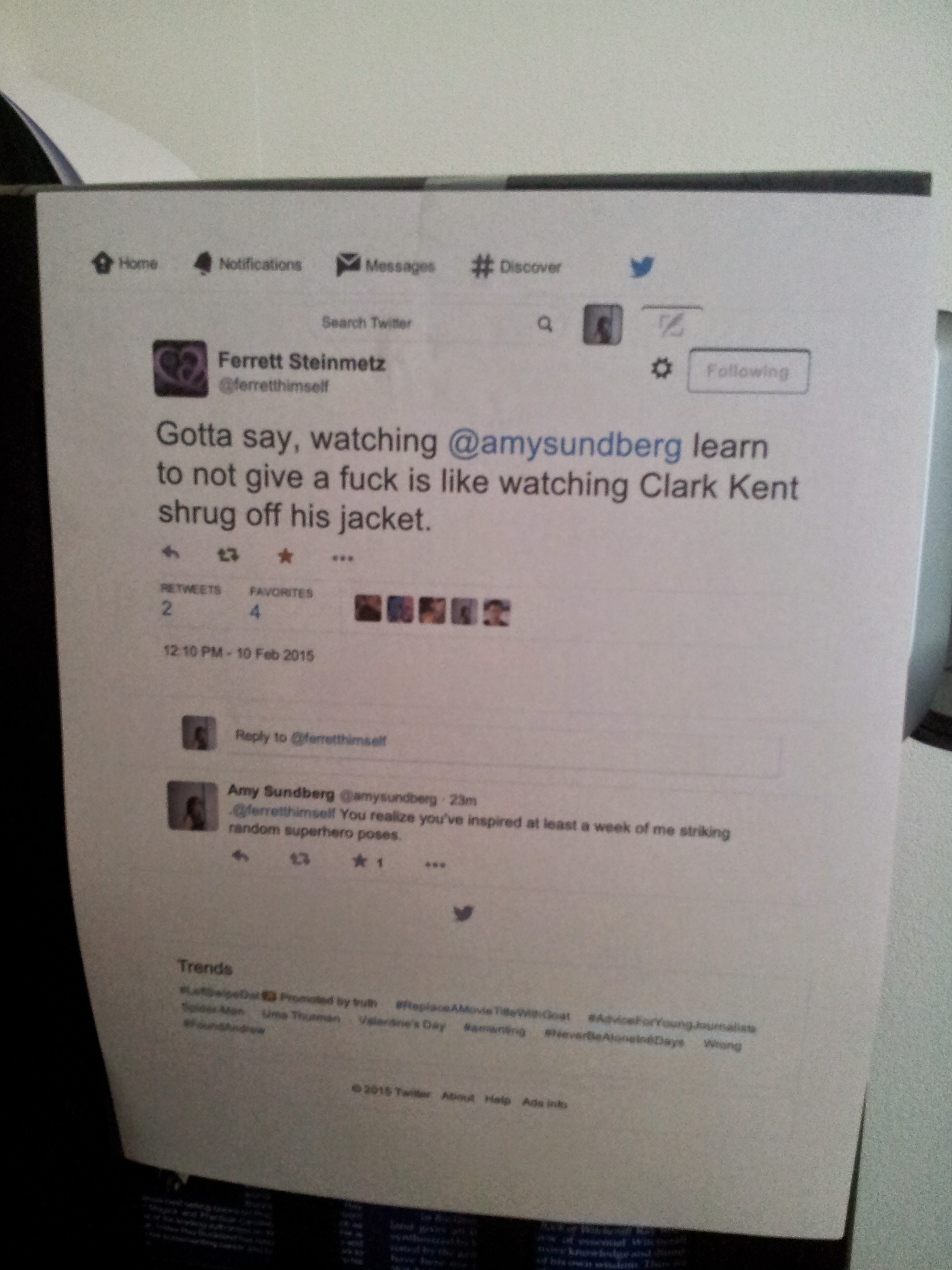
Sometimes I am also a super hero with a secret identity and everything.

Sometimes I am also a super hero, with a secret identity and everything.

Because I’m a rock star, I can try new things and be fearless. My self-esteem doesn’t ride on my success or failure. I feel good about myself, so it doesn’t matter if I’m bad at something when I start out, even when other people feel the need to vocally judge me. Instead I can enjoy the satisfaction of the challenge.

Because I’m a rock star, I can say absurd things in conversation and then stare the other person in the eye and dare them not to find it funny. And if they don’t find it funny, I laugh anyway.

Because I’m a rock star, I stay up late and I sleep in late and I don’t cook unless I feel like it. I can find instant oatmeal and peanut butter toast glamorous when in the right mood. I have dance parties in my kitchen, anthems that I talk about incessantly on Twitter, and I proudly make brownies from a mix because they’re damned good.

Because I’m a rock star, I never have to apologize for who I am. And I don’t care if you like me because hey, I am who I am. Instead I celebrate myself.

Because I’m a rock star, I can walk in a room where I know no one. I can stand in a crowd and not have to talk to someone every single second. I can afford to not hide behind my phone. I can smile a small, amused smile and watch the world turn until I choose to engage.

Because I’m a rock star, I get to go to live concerts and plays and museums and clubs and dances. I get to travel and see new places and learn new things. I get to write and dance and sing and spill out my heart and soul for you in characters on a computer screen, and I get to be nostalgic about ink.

Because I’m a rock star, I get to surround myself with other rock stars, people who have passion and dreams and ambition and gratitude. People who don’t ask me to shrink down a few sizes but who take up their own space just as I do. People who love and laugh and have accidental adventures on a Sunday afternoon. People who are both fascinating and fascinated and love to laugh. Imperfect people, yes, but imperfect people who don’t take their lives for granted.

Here’s my secret: I’m not really a rock star. But when I pretend to be a rock star, all the above things are true anyway. Because when you pretend something long enough, after a while it stops feeling pretend, and instead it simply feels like you.

So if you want to become more confident, give it a shot. Pretend to be a rock star, and see if you can find the freedom to be yourself.

Read Full Post »

I was having a conversation with a friend, and after telling me about someone new she’d hung out with, she asked, “So. Do you think it was a date?”

This is not as uncommon a question as you might think.

I myself am the master of the maybe-date, so much so that I have coined the phrase “maybe-date” in order to more efficiently communicate with my friends. “Oh, what am I doing Wednesday night? I have a maybe-date. Yeah, I’m not really sure. Maybe.”

Photo Credit: zeevveez via Compfight cc

Photo Credit: zeevveez via Compfight cc

Here is how the maybe-date tends to come about. You’ve met someone in real life (aka not via internet dating, which tends to cut down on ambiguity, although YOU WOULD BE SURPRISED). You’ve met them at work or at a party or at some other social event. You likely have at least one friend in common with them, and often more. They are your preferred gender, and they are available. At least you think they’re available. If you’re me, you also think they might not be polyamorous. At least you hope they’re not polyamorous. (Although if you’re me, you have tons of polyamorous friends, and therefore the likelihood the guy you just met at x social function is polyamorous is fairly high. This tends to confuse things even further.)

Anyway, you and this person who you think is available have made plans for just the two of you. But is it a date? Or are you friends hanging out? WHICH IS IT?

You think it’s easy to tell the difference? Well, yes, sometimes it is. And it’s always satisfying to be able to say, “Yes, I have a date” with conviction. But sometimes, between the context and the casual way everything has come about, it isn’t so clear. Add to that the fact that sometimes I’m not even sure if I want it to be a date or not, and the confusion can mount quite quickly. And sometimes you’re pretty sure it IS a date, only to end the evening with a shrug and an “Or not.”

Okay, so let’s break down some signs of date vs. not a date that you can disagree with me about in the comments, shall we?

  • Gives you lots of compliments: more likely a date, unless it is a colleague trying to help you out of the depths of impostor syndrome
  • Pays for your meal/activity: not clear. Yeah, I know this is gendered, and it used to be my go-to way for telling if something was a date, but it doesn’t work anymore. It’s actually become a pretty bad way of telling, because enough people like to treat and enough other people go Dutch as a matter of course that this is simply not enough data.
  • Touches you a lot, like on the hand or shoulder or whatever: more likely a date
  • Is also touching other people in the same fashion (say, if you’re at a party or other group event): probably likes flirting in general, so who knows?
  • Invites you to dinner: more likely a date, but solidly in the gray zone
  • Invites you to a group activity: probably not a date
  • Invites you to a group activity, and then because of the vagaries of life, it ends up being just the two of you: probably not a date, unless they’re trying to be weirdly crafty (which is unnecessary, since they could, I don’t know, just ask you on a date?)
  • Randomly runs into you and then hangs out: not a date (yes, I’m defining a date has having been planned in advance.)
  • Mentions dating: Who knows? People on a date love talking about dating. It’s kind of weird but true. But people also just like talking about dating in general.
  • Asks you on a date-like activity soon after meeting you: more likely a date
  • Has gone to a lot of trouble to elaborately plan what you’re doing: probably a date. Either that or maybe they just really like to plan stuff?
  • Flirting: more likely a date, but people’s definitions of flirting differ (for example, smiling can be seen as flirtation, but I smile at EVERYONE, it’s just part of Amy-ness)
  • Stays up talking too late with you: more likely to be a date, but could also just be a night owl (like me) or love chatting (also like me)
  • Hugs you: I live in California. This means nothing here.
  • Asks for your phone number: more likely to be a date, although context really matters here. The advent of the Facebook age has definitely increased the number of maybe-dates in the world.
  • Holds your hand and/or kisses you: yeah, it’s a date
  • Asks you explicitly on a date (aka “Would you like to go on a date? Would you like to go out sometime? I’d like to ask you to dinner. etc.): Easy peasy! It’s definitely a date.

Basically, it all comes down to body language and social cues, and sometimes those things make the “is it a date” question?” very clear, whereas other times…who can say? This effect is probably heightened when more of the interaction is done via a text medium (no body language and no tone of voice make it a lot harder to read) or if at least one of the people involved is a bit on the awkward side.

What to do about the maybe-date? Well, you can try to make your plans in a way that is more explicit. Certainly I have plenty of first dates that aren’t internet dates that I am still sure are dates. Barring that, you can just straight-out ask. This isn’t the smoothest thing ever, but it does resolve the question in a quick and efficient manner. Or you can learn to be comfortable in the maybe-date zone and wait and see what happens.

As for myself, I’m perfectly happy to take a wait-and-see attitude on occasion. By the end of the outing, I’ve usually made up my mind about something, anyway: either on whether or not this was a date, or if not that, perhaps on whether or not I wanted it to be. Although if I’m still really uncertain, I’m probably less likely to want it to have been a date, because you know, life’s too short. And then there’s Mark Manson’s popular Theory of Yes to keep in mind.

And what about my friend? After much discussion, we decided we think it was a date. But we’re still not a hundred percent sure.

Read Full Post »

Him: “Yeah, I went to the movies this past weekend, it was my fun thing for the month.”

Me: “You only do one fun thing per month?”

Him: “Well, it’s probably more like every other week, but yeah.”

Me: “Oh. But don’t you want to spend time with your friends?”

Him: “I’m kind of a Lone Wolf.”

Me: “Uh huh….”

Him: “I don’t have time to have a social life like you do.”

Me: “Hmm. I will ignore your condescending tone and actually think about this.”

So yes, I am lucky to have the time and energy to maintain the social life I do. And having had to jumpstart it twice in the last three years (yippee!), I’ve collected a lot of experience and information about making friends, and having friends, and what friendship can mean, and what can go wrong in a friendship, and what I want. And I have a bunch of theories about friendship and social dynamics that I occasionally trot out. (I want to say I bring them out at dinner parties, but I am never actually invited to dinner parties.)

Anyway, here are two myths about friendship that I’ve been thinking about recently:

Myth #1: Everyone has a lot of friends and a swinging social life.

I don’t know why I ever believed this one, but maybe it’s a weird remnant from high school or something? Anyway, as is becoming the norm for me, I’ve been meeting a lot of people, and as I talk to all these people, I’ve recognized a thread that keeps returning.

Not everyone has a lot of friends. And a lot of people are kind of sort of lonely. A lot of these people are really busy in their professional lives, and, like the guy in the conversation above, they don’t feel they have the time to prioritize friendship. Some of them don’t really know how to be a friend. Some of them don’t really understand how one goes about making new friends. Some of them feel stuck.

Of course, the amount of ideal social activity varies from person to person. And there are plenty of people who are content with their social lives. But this isn’t all people.

If you are unhappy with your social life or if your life is kind of unbalanced right now, you are not alone.

Myth #2: Having friendships and an active social life just kind of happens.

I don’t know why I ever believed this one either. Because oh my gosh, maintaining a busy social life is A LOT OF WORK.

I know, tiniest violin, right? I’m not saying this is something warranting complaint, but it is simply fact that it takes a fair amount of effort. Maintaining social ties takes work. Making new friends takes work. Keeping in touch takes work. People say all the time how bad they are at keeping in touch, and the reason that’s something it’s even possible to be bad at is because it requires thought and action and time.

And of course, when you’re kickstarting your social life, it takes even more work. Or, um, when you’re running your social life close to capacity. Which, yes, is what I’m doing right now, and so I’ve been feeling like I’m running behind, and like I always have messages I need to answer, and occasionally I forget them because my brain cannot hold all the information it needs to hold, and I can almost always make time, but that works exactly the way it sounds, with a whole bunch of effort put into somehow making that time materialize. And then once in a while I have no plans and I don’t have to schedule or coordinate or drive for two hours or find parking or figure out an activity or restaurant suggestion or communicate clearly and instead I can sit on my couch with Nala on my feet and eat ice cream and watch Star Trek and that is the best thing ever.

Have I mentioned I’m just the tiniest bit tired?

It’s completely worth it, or I wouldn’t be doing it. The rewards are incalculable. But I have also realized that five years ago, I wouldn’t have been able to do this. It would have been actually impossible for me. Because the only way I can keep this up is by communicating as clearly as possible and asking for what I need and sometimes saying no and not moving heaven and earth when the logistics are really complicated but instead just accepting this isn’t the right time. The only way it works is if I can trust my friends to take care of themselves the way I’m doing my best to take care of myself. The only way I can do everything I want to do and spend time with everyone I want to spend time with is by accepting that in the process, I’m not going to be perfect.

I couldn’t have done those things five years ago. And as a result, I might have been a bit of a Lone Wolf. I didn’t really like being a Lone Wolf. It was lonely, and also I didn’t have as many choices, and also when someone behaved poorly, there was more incentive to ignore that instead of taking care of myself.

But no longer. When the particular Lone Wolf at the beginning of this post spent the conversation putting me down and proceeded to make a “joke” telling me I needed more exercise (implying what? that I’m fat? really?), I was completely happy to run, not walk, the other direction.

I’ve got better places to be.

San Francisco at dusk.

San Francisco at dusk.

Read Full Post »

So what’s going on with your blog, Amy?

If you’re guessing my blog is coming up more than usual in conversation and correspondence, you’d be right. And there’s a story behind it.

20150207_131011

I was sitting in the bar at ConFusion one night, the way you do when you’re a writer, and I was hanging out with two of my favorite bloggers. I have to admit I’m kind of snobby when it comes to bloggers, and these two people both knock it out of the park on a regular basis. And one of them said they had trouble emotionally connecting with my blog.

You might remember that at that time I was in the throes of impostor syndrome, so my poor brain was screaming at me, “You see, Amy, you see? You even FAIL AT BLOGGING.”

I listened to my brain for a minute or two, and then I said, “No, this is dumb, I don’t fail at blogging, and also, hello? This is a GOLDEN OPPORTUNITY.”

So I asked these two bloggers for their advice. They had both read my blog. What was one thing I could do that would improve it and create a stronger emotional connection with my readers?

I talked with one of the bloggers about how to structure a post for maximum impact, which was geektastic and fascinating. And then I turned to the other blogger. “You tend to be kind of vague, Amy,” he said. “You don’t use specific details.” And then he gave me some examples.

And I thought, yes, I know, I totally do that, and worse, I do it on purpose, I pull my punches. I don’t say what I really want to say. I try to write about the truth without showing you the truth.

I tend to pull my punches in real life too. I can be so freaking nice. You know what other words spring to mind along with nice? Milk soppy. Wishy washy. BORING.

In-fucking-visible.

So I resolved, there and then, to write a post about my impostor syndrome, which is something that most writers face at one time or another and yet many of us are afraid to write about for fear of damaging our careers. And I resolved to NOT pull my punches. I resolved to pay attention to structure and to use specific details. I resolved to tell you what it was like in that bathroom, down to not knowing where the hell to put my glasses while I cried.

I became a better writer the day I wrote that post.

And the day I published the post? Well.

I did not expect the reaction I got. Not at all. The outpouring of support was….well, it was amazing and overwhelming and inspiring and strange and deeply meaningful. It changed me. You changed me. Part of the reason I write this blog is to give something to you, and then you wonderful human beings turned the tables on me and gave me something so precious that I’m tearing up while I’m trying to write about it.

Thank you.

Thank you thank you thank you.

So that’s what’s going on with the blog. I’m experimenting with the good advice from two bloggers who I deeply respect. I’m not pulling my punches. I’m trying to give myself permission to write the way I was born to write. And it’s making people uncomfortable, and it’s making ME uncomfortable, and it’s making me a better writer, and I don’t know where I’m going with it.

And it’s not just the blog that’s changing either; I’m changing right along with it.

Exciting times, my friends. Exciting times.

Read Full Post »

« Newer Posts - Older Posts »