Feeds:
Posts
Comments

Archive for the ‘Grief’ Category

I don’t really like pain, and I don’t like to feel uncomfortable. Sometimes I daydream about my ideal life, when I have fixed all my problems, have everything I want, and am exactly where I want to be in my career.I will never achieve that ideal life. And thank goodness, because if I did I’d be bored stiff…in which case I would have a problem, wouldn’t I?

Seth Godin published an insightful post last week entitled “Trading in your pain,” in which he outlines two common problems we can have due to our relationship with pain.

The first is the “if only” syndrome. We think if only something (fill in the blank) happens, then everything will be great and we won’t feel pain/discomfort/ uncertainty anymore. If only I meet the right person. If only I buy the right house. If only I remodel. If only I get an agent. If only I sell my first novel. If only my sales figures exceed a certain golden number. If only I win this award or make that bestseller list. If only I get this promotion. If only I was better or had more or …

That’s not generally the way things work, though. Whatever “if only” you’re hoping for (and I’m holding out for several myself), even if it happens, it will open the way to new challenges, new problems, new if only’s, and new pain as you strive. That’s okay. It doesn’t mean you’re not doing well. It doesn’t mean you’re not good enough. It’s just life.

The second is the “fear of change” syndrome. We sometimes become comfortable with a certain flavor of pain or discomfort, and we hold onto it really tightly so we won’t have to deal with another, unknown flavor instead. We become frozen. Stagnant. Afraid of success and the new problems success will bring us. Afraid of a different failure mode and how that will make us feel.
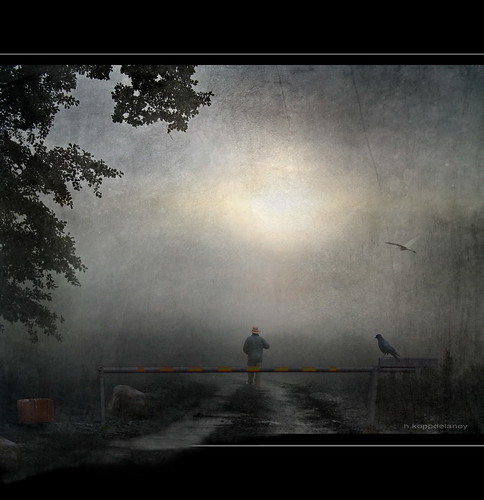
Behind the GateWriters who don’t write are having this second problem. They are used to dealing with the failure mode of “I suck because I’m not writing” and don’t want to address whatever issues might come up if they actually did write: “I suck because I’m not selling” or “I suck because I’m not selling enough” or “I suck because now I have to make business decisions” or whatever.

But I see this problem everywhere, not just in writers. We make ourselves at home with a certain problem, and settle in for keeps. And in the process, we get stuck. We can’t move on; we can’t grow.

Our identity and our personal narrative become entwined with our pain. I’m the girl whose mother died when I was only nineteen. That’s not who I am anymore. It is, however, who I could have been. It is who I was for a period of years. And then I let go and moved on. Instead I’m the girl who loved her mother very much.

Pain can be your friend. It will be lurking nearby for your entire life, and that’s okay. It means you’re alive, and it reminds you that you care what happens. It can push you forward instead of holding you still. It can give you focus instead of causing you to scatter. It can make our priorities clear to us.

If you could shed one “if only” or do one thing that makes you frightened, what would it be?
Read Full Post »

I recently received an email from a friend of mine asking for travel advice for an upcoming trip to Europe. I am always thrilled to be asked about travel, because any excuse to talk about it is a good excuse in my book. So I wrote back promptly sharing what I knew, and when he thanked me, he also said, “You talk and blog about the wonders of travel, but for us newbies the actual process can be a bit intimidating.” And I knew I had today’s blog post.
One of my favorite things about travel (and also one of the things I most dread, paradoxically enough) is how uncomfortable it can be. It can shake us loose from our daily routines, from our preconceptions, even from who we might think we are. It challenges us, it taxes us, and sometimes things go wrong. Sometimes things go very, very wrong.

But I realize that maybe that’s not what I tend to talk about. My excitement and passion for travel shines through so brilliantly that it tends to eclipse all else. I gloss over many of the hard bits, or I don’t mention them at all. Plus many events that were quite difficult at the time seem funny or interesting in retrospect. Even as they’re happening, I try to see them as all part of the adventure, and that attitude carries through even when I’m back home.

So yes, the process of travel is intimidating, and not just if you’re a travel newbie. It takes a certain amount of energy to get started, and at this time in my life when I’m getting more settled and am dealing with lingering physical limitations, I have that energy less often than I used to. And while I’m not overly intimidated by travel to Europe anymore (which wasn’t always the case), I’m still easily overwhelmed by contemplating trips to other parts of the world. (Exotic diseases are my bugaboo. If the ailments I read about in the medical part of the guidebook are too disgusting, I lose all enthusiasm for visiting. I’m also convinced that I will get malaria in many parts of the world because mosquitoes love me soooo much.)

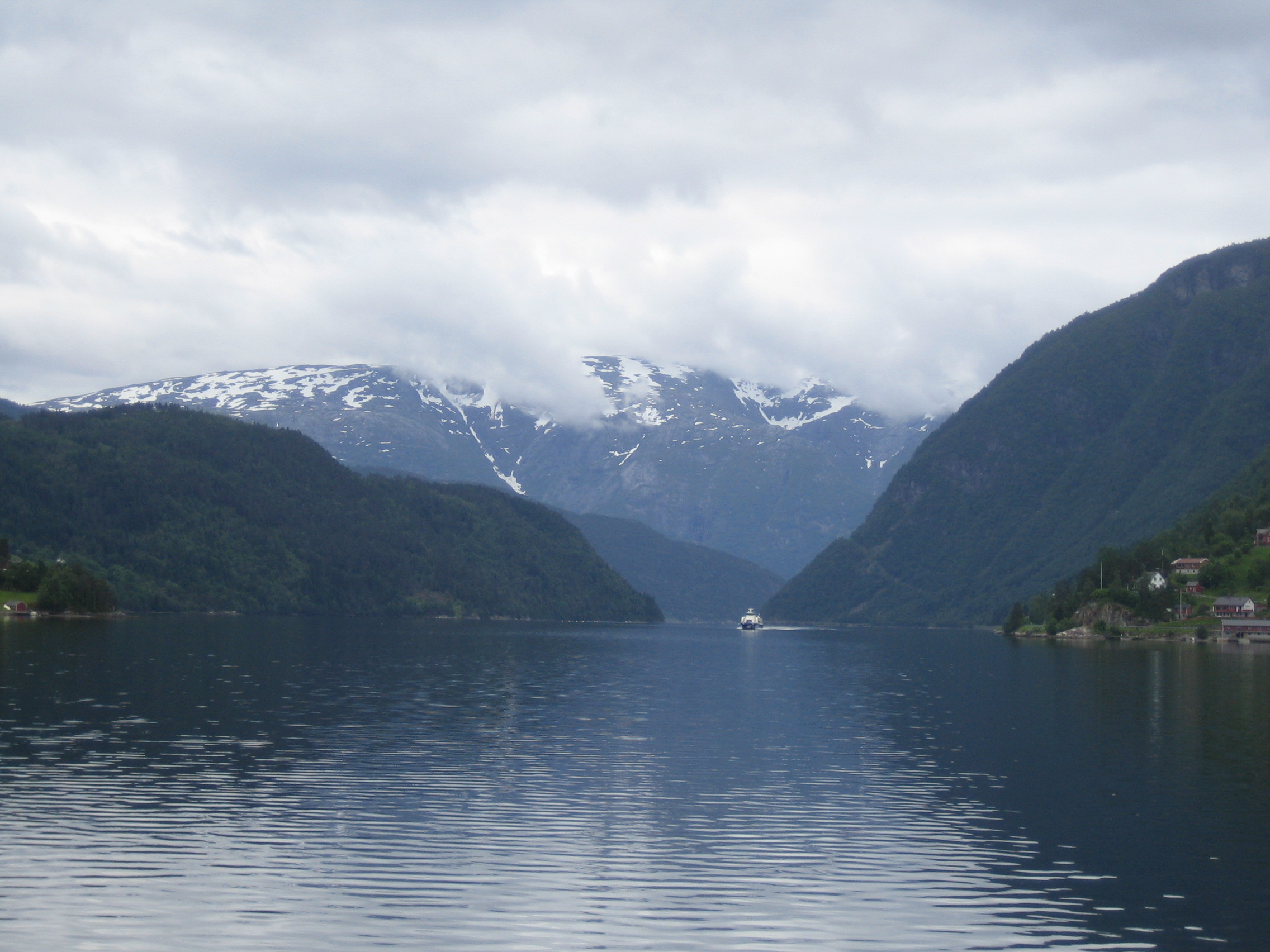
I didn't have a digital camera when I was in Sweden, so a photo of Norway is going to have to do...

Still, it is through the discomfort that transformation can occur, which is why I love it in spite of itself. The first non-English-speaking country I visited by myself was Sweden. Very modern, almost everyone speaks at least some English there, the food isn’t too crazy. I’d arranged to stay in a dorm room in Stockholm, so I even had a place to head upon arrival. I went out and about my first day, and I was so overwhelmed by being alone in a foreign place that I went back to the dorm and hid. I’m not even kidding, I hid and watched TV and cooked food in the dorm kitchen and felt miserable. I thought I’d made a terrible mistake, and it took all my willpower to eventually leave the safety of my room and continue my travel adventure.

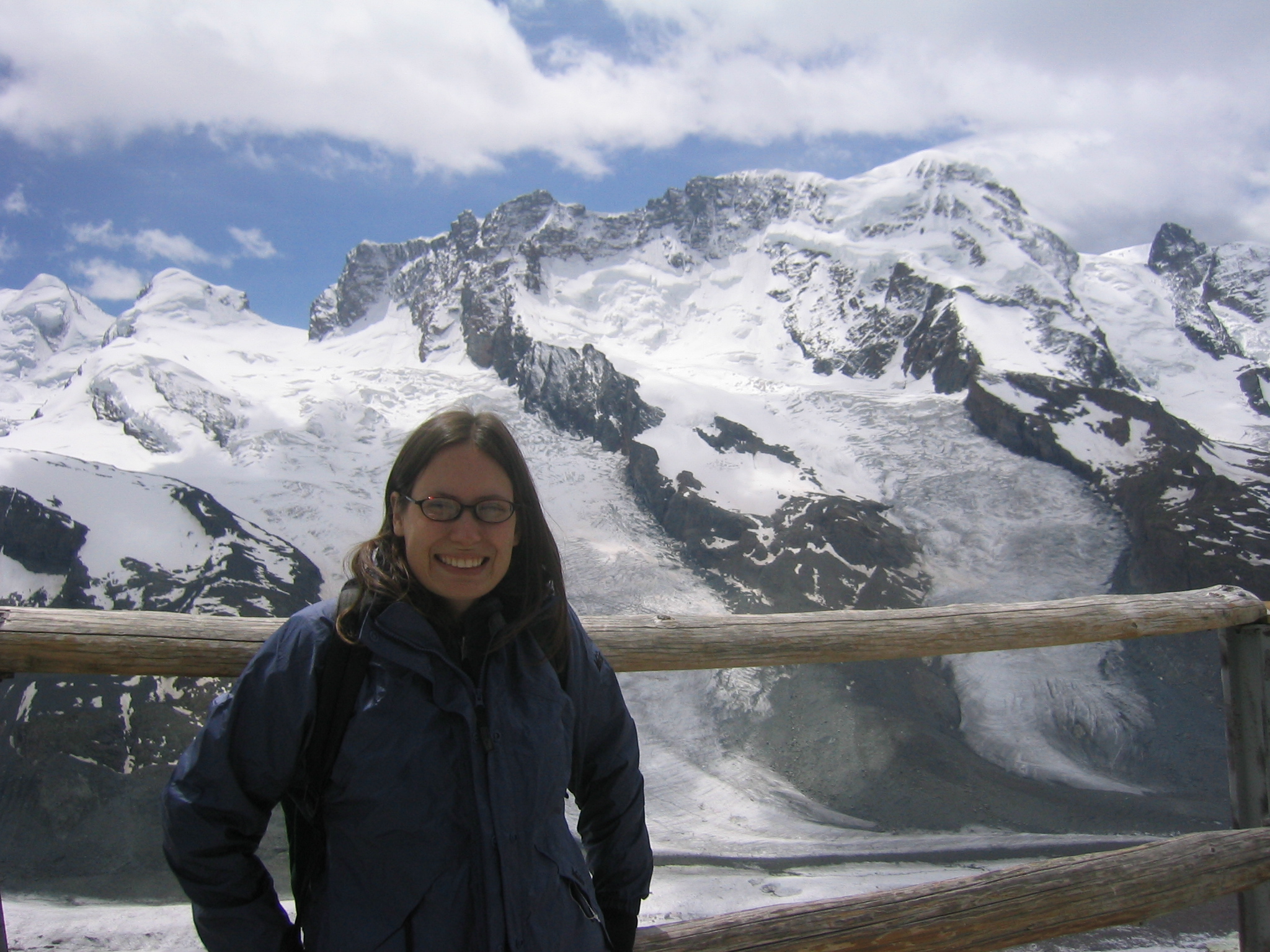
On top of the world... in Switzerland.

Fast forward two months and I was in Switzerland, also alone, but completely transformed. It wasn’t that I was so much more comfortable, but I knew I could rely on myself. I had more confidence, I had seen amazing places and met a huge array of different people, and I had survived. I had faced up to the strong surges of grief I still felt over my mom’s death, and I had finally found a measure of peace around it. I was a different person, and to this day I believe that those two months are among the most important experiences of my life.

So is travel amazing? Yes, but it’s not for the weak of heart. It can be dizzying and terrifying, tedious and stimulating, painful and healing, and no matter how carefully we plan, travel will turn out differently than we expect.

What is an amazing travel experience you’ve had? Or, if you haven’t traveled much, what destination are you eager to visit?

Read Full Post »

I started watching the first season of The Vampire Diaries on Monday night. I could say it was for research purposes, to see what’s going on in YA high school land and vampire land right now (in which case Glee is also research). But really I just wanted to watch a silly show that wasn’t taking itself too seriously after receiving bad dental news. Who knew that it would inspire my next blog post?

The first episode establishes the teenage protagonist of the series, Elena, who is starting a new year of high school only a few months after her parents were killed in a tragic accident. We see her getting ready in the morning, telling herself that she’ll no longer be “the sad girl”. And later on, she complains how everyone is asking her “How are you?” when really they don’t care and just want her to be fine. She spends the day lying because, of course, four months after losing her parents, she’s not fine. She’s pretty far away from fine.

A lot of that first episode was bad in a funny way (some of it, I suspect, on purpose). But I keep thinking about that moment of complete truth, because the writers completely nailed the “How are you?” detail. That simple question had the same effect on me. It took me quite awhile to accept its usage as a social nicety and standard greeting rather than the question it purports to be.

Offering this greeting to a grieving person is like jabbing a sore muscle to see if it still hurts…only it’s somebody else’s sore muscle being poked. It’s a reminder that no, you’re actually not doing fine at all, and not only that, but you are now expected to lie about it and pretend everything’s just peachy. That kind of pretending, unfortunately, takes energy, and energy is in fairly short supply when you feel like your chest is going to split open from missing the one you lost. In addition, it causes you to feel like you should be as together as you’re claiming. After awhile, you learn to dread the question.

Another variant of the problem is the person who asks you how you are constantly, like you’re going to explode into a million pieces any second now. (Or, as shown during the episode, the fake, over-concerned, and pitying rendition.) The true answer probably hasn’t changed in the last day or two, but sometimes it’s nice, even necessary, to take a break from the wellspring of grief for the comfort of normalcy. Overasking shatters any possibility of creating moments and experiences of relative peace.

So should we avoid saying “How are you?” altogether? I don’t think so, but wouldn’t it be interesting if we began meaning it as a question again, instead of allowing it to remain just a form? And perhaps thought more about appropriate times to ask it and how to listen in a nonjudgmental way? Then, instead of lying, a grieving person could honor their own difficult feelings and feel more supported by the outside world. Heck, I’m not grieving right now and I’d still like to be asked how I’m really doing. But many people never ask.

Here’s how I’m doing. I’m tired. I’ve been having a hard time this last several months. I’ve been under a lot of stress and in a fair amount of pain. Sometimes I feel completely overwhelmed. But I’m also determined, and I’m completely in love with life. So I’m hanging in and appreciating the good things even more than usual, especially the people who I love (and the dog, I can’t forget her). And I’m looking forward to change.

How are you?

Read Full Post »

« Newer Posts