Feeds:
Posts
Comments

Archive for the ‘Arts’ Category

I’ve been somewhat injured the last week or two, so I’ve had some extra time on my hands. So I decided to poke around Kickstarter and see some of the awesome projects artists have in the works.

In case anyone doesn’t know, Kickstarter is a funding platform in which artists put up projects and how much funding they wish to receive, and then their fans and the interested public can pledge money towards those projects, usually for nifty rewards like art, books, tickets to live performances and screenings, etc.

What’s exciting about Kickstarter is it gives artists a viable alternative to get their amazing work out into the world while getting paid for it. Many creative projects require money up front in order to become realities, and Kickstarter allows the artist to get paid directly from their fans instead of finding corporate backing. It definitely works best when an artist already has an established fan base who can both support them financially and spread the word. For writers, a successful Kickstarter mimics the advance system of traditional publishing while allowing the writer to retain complete creative control. Which is all-around awesome sauce.

Here are some of the Kickstarters I decided to back last week:

Tropes vs. Women in Video Games, by Anita Sarkeesian

I’ve been watching all of Anita’s videos ever since she explained to me, complete with relevant examples, what the Bechdel test was. Now she’s taking on the portrayal of women in video games with a lengthy new series. I couldn’t resist backing this project, because this video series NEEDS to exist.

Fireside Magazine Issue Two, by Brian White

This looks like a promising new fiction magazine, with a lot of speculative heavy hitters in the line-up for the next couple of issues. But really I was sold by the opportunity to be drawn by my friend Galen Dara, who is an amazingly talented artist.

Amanda Palmer: the New Record, Art Book, and Tour, by Amanda Palmer

Amanda Palmer is in the process of revolutionizing the way musicians can interact with their fanbase and make a living while doing awesome things. How could I not want to be a part of this? Also, art books are cool.

Crossed Genres Publications, by Bart Lieb

I have a special place in my heart for Crossed Genres. While they weren’t my first sale, they were the first publication who ran one of my stories. Their Kickstarter has been so successful, they are now going to bring the magazine back (it folded recently), and they also have a few very interesting anthologies scheduled for publication in 2013.

I’m Fine, Thanks, by Crank Tank Studios

To make this independent documentary, the filmmakers toured the country and conducted lots of interviews. Their topic? Complacency and the pull to follow a pre-approved script instead of creating your own unique and individual path through life. Can you think of any subject of a documentary that fits in more with the spirit of this blog? Because I can’t. I am so excited a movie like this exists, and I can’t wait to watch it.

I can’t cover all the worthy Kickstarter projects out there in one blog post, so please help me out. What projects have you supported recently? What other cool things are artists out there doing?

Read Full Post »

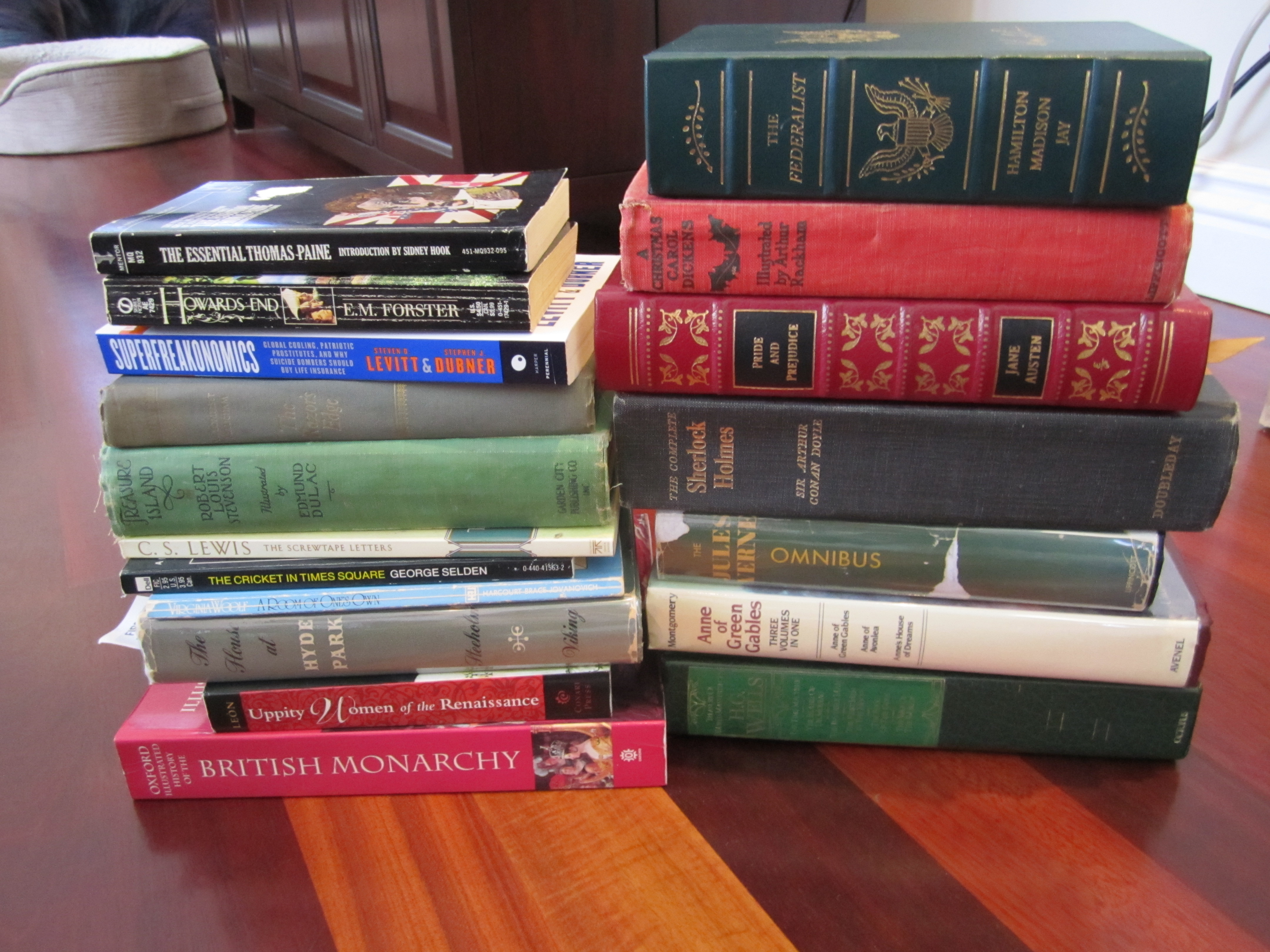
Book worm: a person who cannot imagine an existence without reading.

It just occurred to me the other day that most people are not book worms. I mean, I know that most American adults do not read that many books; in 2007 the media had fun complaining about how 27% of Americans hadn’t read a book in the last year, and looking at that same study, of the remaining 73% of people who did read, 25% of them had only read 1-3 books in the past year.

Sometimes numbers take a while to sink into my brain. But I met someone at a party recently who announced, “I don’t read.” I appreciated his bluntness: no excuse making, no pretending. And I realized these hypothetical people who don’t read (or don’t read much) actually exist. They are all around me, all of the time! My lifestyle, in which books have always featured prominently, is not the way everyone I know lives. What an epiphany to have, right?

I love reading. I feel physically hungry to read more good books. When I purchased William Shakespeare’s complete works for the Kindle, I almost started crying because I can now carry all of Shakespeare’s words wherever I go. I cannot contemplate a life in which I don’t have time to read; my brain cannot even compute the possibility.

Photo by Eneas de Troya

You know you’re a book worm when:

1. You worry when you leave your house and don’t have a book with you.
2. The idea of having hundreds of books on a portable device reduces you to tears of joy.
3. Libraries and bookstores are the most amazing places on the planet because you can experience physical proximity to so many books at once.
4. The idea of having your bedroom lined with bookshelves gives you a cozy feeling.
5. When you think of being stranded on a desert island, your first concern is what books you would choose to have with you (and how you’d survive if you didn’t have any books at all).
6. One of the best parts of planning a vacation is choosing the books you’ll take with you.
7. You buy a special book for your birthday each year so you know you’re guaranteed to have a pleasant day.
8. You know every section of wall in your home that could be used for more bookshelf space in the future. Book storage is one of the most important uses of your home.
9. You have trouble getting rid of books, even duplicates.
10. When called upon to choose between reading a good book and doing another activity, it is a really tough choice. (Or it’s an easy choice; of course you’d rather stay home and read.)
11. Your favorite gift to receive is a gift certificate to buy more books.
12. It is hard to leave a library or bookstore without a large stack of books.


13. You are pretty much always in the middle of at least one book.
14. Your most important criteria when purchasing a purse/bag is how big a book it will fit (the winners are the ones that will accommodate hardcovers).
15. You want to live forever because otherwise, think of all the books you’ll miss!

I love being a book worm. It brings me so much joy. What about you? Are you a book worm? Do any of the above behaviors sound like you too?

Read Full Post »

It’s been a little over a year since I wrote my first Sit at the Table essay, although it feels like exactly a year since it was published the Thursday before FogCon, and guess what today is.

Last week I received word that I sold my story “Man on the Moon Day” to Daily Science Fiction, which was the same market to buy my first story a year ago. First off, hooray! I am really excited for this story to reach the reading public. The timing of the sale also made me realize that in about a year’s time, I’ve gone from having no sales of any kind to making six sales, four of which have paid professional rates. So this is me, taking a moment to pause and tell myself, “Not bad, Amy. Not bad at all.”

All of this has reminded me of sitting at the table, a surprisingly tenacious idea for me to still be contemplating a year later. It’s a powerful idea as well. It’s easy to lose sight of it given the undeniable role that random chance plays in events; so much is out of our control, it can be hard to focus on the parts that we can do something about. But that’s what sitting at the table is all about: being present to take advantage of opportunities as they arise.

Photo by Ben Raynal

Here are some of the things I’ve been doing to sit at the table this last year:

1. Submitting, submitting, submitting. If I don’t submit, there is absolutely ZERO chance of a sale. This is not to say I haven’t taken mental health breaks in my submitting process, because I totally have. But once I’ve enjoyed my breather, I’ve gotten back on that horse and submitted some more.

2. Behaving like a professional. And part of being a professional is believing in our work and our right to sit at the table in the first place. This doesn’t mean blowing up our achievements to encompass more than they do or refusing to accept needed criticism and editorial input. What it does mean is cultivating an inherent feeling that we belong, that we are writers, and acting that way.

3. Picking and choosing the industry-related events I attend, and being there 100%. Happily for me, I adore meeting people in my industry. But I’d be lying if I told you I don’t have moments alone in my hotel room when I feel like there’s no way I can navigate the social scene. I’ve learned to expect those moments, and I leave the room anyway. I feel so grateful to be at these events, I can’t justify giving less than 100%. This pays off in dividends, by the way. I’ve also learned I can’t do All The Things. I can only attend as many events as I have 100% energy to give out.

4. Creating space to write. If I don’t take my writing time seriously, no one else will either. So I’m being much firmer about defending this time. I’ve taken the myth by the horns that because I don’t have a typical job, that means I have loads of free time. Sadly, this is simply not true, and writing time has to come near the top of my list of priorities.

5. Continuous striving for improvement. And with it, embracing its inherent risk. I’m writing by far the most challenging novel I’ve ever written. This January I participated in a flash fiction contest, even though I knew nothing about flash fiction and honestly, my first two attempts were embarrassing. My third attempt sold to the first market to which I sent it. The last short story I wrote, I had specific writing issues of mine in mind that I tried my best to address and practice on. I picked up a few more writing books that I hope to work through in upcoming months. I am always trying to get better, and the more I learn, the more I realize I still have to learn. While this can at times be discouraging, it’s also an amazing realization: there will always be more to learn. And therefore, I can remain fresh and excited and hopefully avoid the enemy: Boredom.

Of course, there are ways in which I’ve failed to sit at the table as well. As in my writing skills, there is (and probably always will be) room for improvement.

How have you sat at the table in the past year? How would you like to sit at the table in the future?


Read Full Post »

I mentioned in my post The Dangers of Advice that among the common writing advice I don’t follow myself is the adage to write every day. Apparently, Jeff VanderMeer doesn’t write every day either, at least not to a specific word count. So you know, yet more evidence that you should studiously ignore all writing advice that doesn’t work for you.

I will add that, even if I’m not churning out word count every day, you can see from my post on Tuesday that I’m constantly engaging in what I am going to call writing mind. It’s more in the forefront these days, but even when I’m not shoulder deep in novel, it is a challenge to turn it off for any length of time. Almost everything I do, think about, read, I experience through a writer’s lens, so that being a writer suffuses my entire life, to the point that constant word count is, to a certain extent, a moot point.

Writing mind: a combination of subconscious processes and experiencing the world through the lens of a writer

In a recent interview, Robin Hobb talks about her experience, which sounds an awful lot like writing mind to me:
But even when I’m not at the keyboard, I’m still writing. I think that’s what the paper notebook taught me. My brain ‘writes’ all the time. It’s just finding the time to sit down at the keyboard and record what is store there!

Certainly one has to write to be a writer, and as a whole the writer community is very insistent on this point given the number of people who say they are writers but don’t write at all. We feel obligated to be prickly about it because there is a wide-spread misconception that writing fiction is easy. But the more I write, the more I am coming to understand that the actual writing is a critical component of the whole, but not the only one.

It is a pleasure, especially for a perfectionist like me who sometimes (often) suffers under an unforgiving work ethic, to realize that the time I spend every morning sitting in front of the fire and staring into space, or feeding my brain with various economic analyses, neuroscience findings, pop psychology, and insights about books and writing is all in service to the writing. Of course if I have a particularly busy day I have to skip right past the brain feeding phase except for a brief brainstorm in the shower and jump right into the heavy lifting, but it’s nice to realize that both parts are necessary and valuable. This insight allows me to be more fully me and to enjoy the process without quite as much of the kicking and screaming (although plenty of that still goes on; you try writing a novel dealing with the mutability of memory and see how you get on).

Being a writer encourages me to keep having interesting thoughts and doing interesting things, which is an aspect of it that I value extremely highly, especially at this time in my life when I can fully appreciate the comfort that comes from slipping into a pleasant routine and avoiding challenge in favor of the pleasures I already know I enjoy. Writing itself keeps me constantly on my toes, but it also rewards me when I decide to get more adventurous.

A few recent examples for you:

  1. I went to see President Obama speak a few weeks ago, not just because it was an amazing opportunity, but because I thought, “Hmm, I’ve never been to a political rally or heard a person with high charisma speak in public. I bet that will come in handy someday in my writing.”
  2.  We are beginning to consider our summer travel, and I provided my husband with a list of places I thought might figure into the settings of my next novel. “Which of these are you interested in?” I asked. Of course, it turned out that he was willing to go to any of them because apparently the heroine of the book has excellent travel taste.
  3. I picked up some novels recently that are not my usual fare, based on recommendations in an article by my friend Damien. Now on my to-read stack: Orlando by Virginia Woolfe, The Glass Bead Game by Herman Hesse, and The Magus by John Fowles. I don’t know if I’ll like them, but at the very least I’ll learn something from them.

To sum up: Jeff VanderMeer doesn’t have a daily word count goal. Robin Hobb describes writing mind well. And writing mind meshes nicely with the desire to see life as an adventure and not settle too easily into general complacency.

Read Full Post »

Tell Me If This Is Art

In our discussion about what it means to be an artist, the question of the definition of art came up more than once. This issue–what exactly IS art?–has been the subject of all kinds of learned debate, study, essays and books. So why not tackle it in a single blog post? The things I do for my readers! (Not that I’m complaining–it gives me the perfect excuse to use this image I found the other day.)

Hmm... is this art?

So what are some factors we can consider?

1. Exposure/size of audience: Has nothing to do with whether something is art. Pop/rock musicians and TV shows reach an audience of millions, whereas new classical music works are sometimes lucky to break into the thousands. We can get into an argument about low vs. high art, but let’s not.

2. Opinions of the experts: Have been proven wrong in the past, and are likely to again in the future. Critical acclaim is great, but who among us hasn’t read the rejection letters from expert editors regarding books that later became classics?

3. The Ka-ching! factor: Has nothing to do with whether something is art. Some people make a lot of money from art they create…and some people really don’t. Take Vincent Van Gogh from Tuesday’s post. He made hardly any money from his art, and is anybody really going to argue with me that Starry Night is not art? Anyone?

4. Skill: So maybe most of us agree that Starry Night is art. But what about that novel you trunked? What about your kid’s crayon drawing of the family that she spent several days on, but that consists of stick figures? What about your first musical performance, when you cracked on that high note? What about that song that consists of three chords? Is that song art if it has a catchy melody as well? What if it has especially original lyrics? What if it’s a parody of another popular song? Yeah, this category is tricky.

5. Artistic freedom: How much control over the work of art does the artist have, and does this affect its classification as art or not-art? For example, is graphic design to a client’s specifications art? What about animating someone else’s graphics/story? (Is that any different from a singer or actor interpreting a song or script? If so, how?) What about a tie-in novel with pre-existing characters and a pre-approved plot? How about if an opera company commissions you to compose an opera? That’s definitely art, right? So how is it different from any of the above scenarios? (I’d argue that in this case, the composer retains most of the artistic vision for the project. But what about portraiture?)

6. Intent: The idea that art can be defined by the intent of its creator. So if I put my dog’s paws into paint and let her walk around a blank canvas, she is not an artist. Maybe I am though, if I had the idea of making art based on this plan. If I’m singing in the shower and not thinking about it, that’s not art, but if I’m performing in front of a room of my students, perhaps it is. What about when I’m practicing that performance by myself? This is the broadest definition of art, and the one I resonate with the most, as a teacher as well as an artist. Were my singing and piano students not artists because they hadn’t achieved mastery yet? No, but I’d argue that some of them were perhaps not artists because they didn’t understand or care about what they were doing (and therefore lacked artistic intent).

7. Art is in the eye of the beholder. In which case it is inherently defined by those experiencing it as opposed to those creating it. Although do you experience it while creating it? What about afterwards?

I know, I’m asking a lot more questions than I’m answering. I’m hoping some of you will be moved to comment and tell me your opinions about the questions I’ve raised. So let me leave you with one final question:

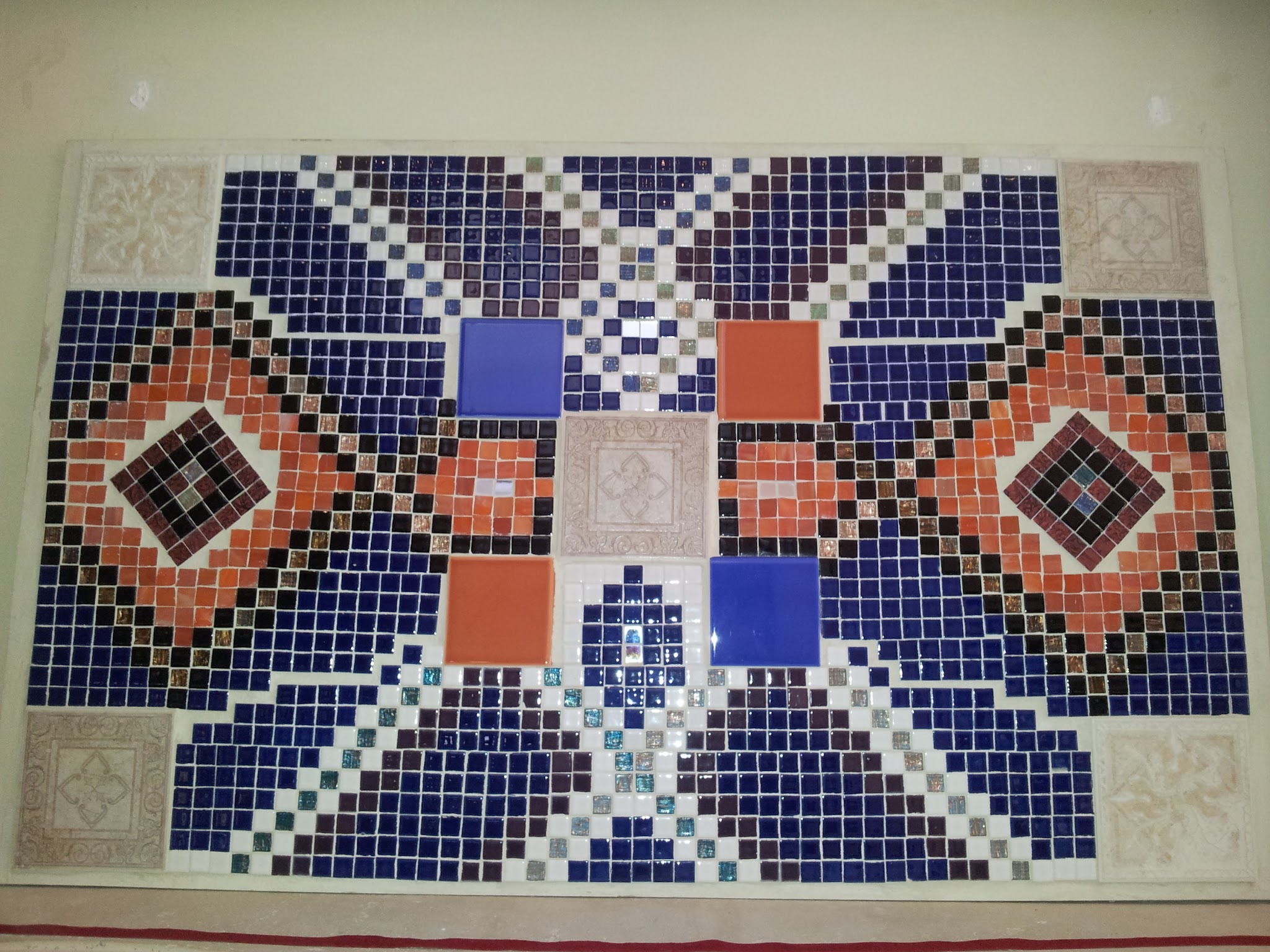
A few years ago, in a sublime and slightly insane act, I decided to create a mosaic as part of the decorations for a Greek/Norse Gods & Goddesses party I was throwing. I don’t know anything about mosaics. I’ve seen a few in Portugal, but that’s about it. So I bought some materials and a book telling me how to do it, and I got to work. I spent hours and hours on this piece. In the middle, I got RSI in my hand from squeezing the glue container (I kid you not) so I had to recruit my husband to squeeze the glue while I painstakingly placed each tile. Here is the finished result:

As I said, I know next to nothing about mosaics, and this was my first attempt and therefore most likely a flawed and amateurish effort. The skill wasn’t there, the money certainly wasn’t, and everyone was so involved in other aspects of the party that they hardly noticed the mosaic (ah, party planning 101). I did, however, have complete artistic freedom and an intention to create art. So my question is, is this mosaic art? Or not art?

I can’t wait to hear your thoughts!

Read Full Post »

What does it mean to be an artist?

I’ve been asking myself this question, in various forms, for most of my life. It’s a question that bears repetition because there are so many possible answers, and my own personal answer sometimes changes. When I first began creating, the question wasn’t clearly formulated and the answer was simple: Joy! As I grew older and awareness of economic realities intruded, the questions became How can I be an artist? and Should I even try?

For a year or two, I chose not to be an artist. Oh, I still dabbled in this and that, but I wasn’t wholly or even halfheartedly invested. It was a dark and boring time.

When I recommitted myself, I felt such a deep sense of relief. I was spending my time the way I was supposed to again. I was focusing on what was important again.

Perhaps that relief, that sense of purpose, is part of what it means to be an artist.


We can judge our artistic success on so many levels:

1. Financial: how much money we make, can we make a living as an artist
2. Recognition/acclaim: receiving opportunities, reviews, awards
3. Size of audience: how many people experience what we are doing
4. Growth as an artist: how we are improving and/or taking risks as an artist
5. Producing a piece or performance that works the way we wished it to

But perhaps being an artist doesn’t have so much to do with traditional success. Some of the most lauded artists labored in obscurity in their lifetimes. Many famous writers self published their own work. Vincent Van Gogh, Jane Austen, Emily Dickinson, Jan Vermeer, Franz Schubert, Henry David Thoreau.

If money and fame are of less importance, then what does it mean to be an artist? It means we create. It means we dream. It means we explore the fundamental question of what it means to be human: what it means to be conscious, what it means to experience emotions because of a painting or a symphony or a poem or a novel, what it means to have the capability for empathy. The exploration is inherently of value, regardless of the outcomes.

Stephen King said, “Life isn’t a support system for art. It’s the other way around.” Art supports life; it creates meaning, some semblance of order created from the complications of existence. It takes us outside of ourselves and pushes us more deeply inside of ourselves. It raises as many questions as it provides answers.

Being an artist, then, is about more than a job or a career. Being an artist becomes a state of mind. 

And the seven-year-old me was right after all. What else does it mean to be an artist? Joy!


Read Full Post »

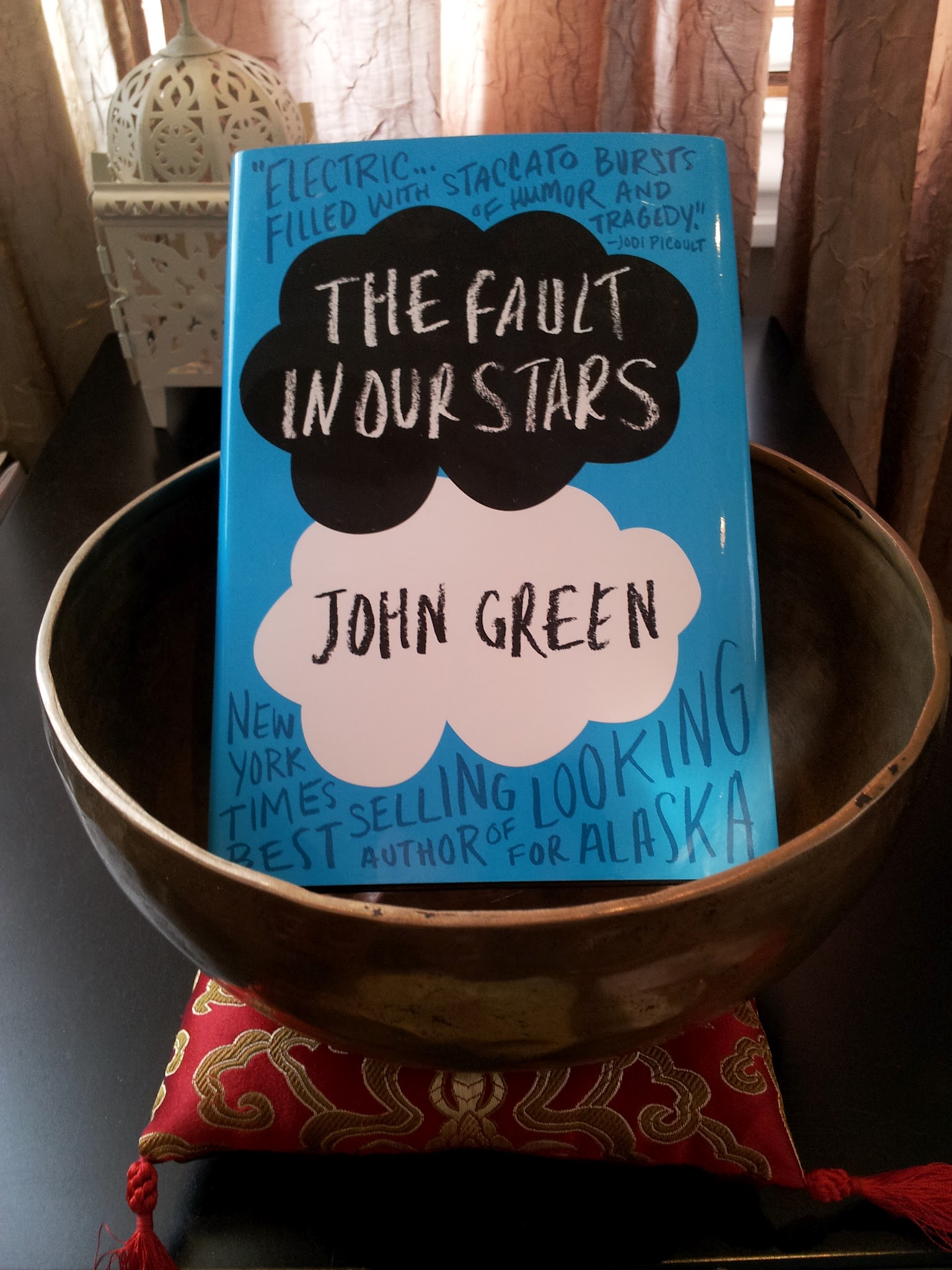
Last week I read John Green’s new novel, The Fault in our Stars.

This is not a review.

After I had read the first twenty-one pages, I told my husband this was going to be the best book I’d read all year.

A little while later I went to the bookstore and bought the hard copy because if Amazon ever disappears and I no longer have access to my e-books, not having this novel would be a particular tragedy. Also, I wanted to hold the tangible printed version in my hands.

When I was twelve, I started writing a novel from the point of view a girl about my age who had been diagnosed as HIV positive. I didn’t get very far with it, but it has lived on in my mind ever since. So when I heard the premise of The Fault in our Stars, I knew I had to read it. It is a novel from the point of view of a girl of sixteen who has terminal cancer. It is a heart sister to the novel I never wrote, that I couldn’t write, and the fact that it exists makes me breathe more freely.

This novel is not a sappy issue book that makes you want to yell at it as if it is conscious before you hurl it across the room and mope.

This novel is not an easy book to read. I can only imagine what it must have been like to write.

This novel is not perfect. Our protagonist says at one point that the movie V for Vendetta is a boy movie. I completely disagree. Of course, one could argue that this slight blemish makes the book even more perfect.

If you talk like either of the two main characters and/or think about the things they think about, I want to be your friend. We can go to a coffee shop every week and have deep existential conversations in between making ironic statements that have us internally rolling on the floor even though on the outside we only cue our mirth with a certain type of smile. If you don’t live nearby, you should move here. It will be worth it.

Also, when you worry about what your life means or may mean or may not mean, I will hold your hand, if you will hold mine.

In the meantime, enjoy this novel. Its construction is a miracle to behold. It has layers upon layers, a story within a story (and then some). It plays with language. It is a brave book. It talks about things that matter that maybe most people don’t want to talk about, like death and dying and illness and meaning and love that lasts through it all. It does not flinch away.

This book punched my heart even while it fed it. Or it filled it up till brimming even while it broke it.

Thank you, John Green.

Read Full Post »

Sometimes when we are on the road to excellence, we get a little tired. We wish we were already there. We wish the road had a literal signpost saying “You have made it, and you can officially stop worrying and consider yourself to be awesome.” We wonder if we should have chosen something easier to do with our time. And we think that maybe there is a magic bullet, something we can do that will–Bibbidi bobbidi boo!–make us more amazing.

Let me make this part of the road simpler for you.

There are no short cuts. There are no magic bullets. There are no sure things. There are no easy paths. So if you want something quick and easy, excellence isn’t the end goal for you.

Photo by Trey Ratcliff

Sure, there are activities beyond diligent practice you can do that will help you progress. In writing, these include attending workshops, reading slush, seeking out critique experiences, reading craft books like The 10% Solution, etc. In singing, these include participating in master classes and workshops, auditioning, obtaining performance opportunities (however humble), studying with different teachers, etc. But none of these methods are foolproof, and not all of them will pan out.

Take the various Clarion workshops, for example. Working professional writers often cite their Clarion experience as being pivotal in their development as writers. These are the stories about Clarion that we hear most often. But then there are the writers like Alexandra MacKenzie, who took ten years after the workshop to be ready to learn from one of her instructors. Because you can’t always control the timing of these sorts of things. And there are also the Clarion attendees who stopped writing altogether; these are the ones we hear about the least, and yet they assuredly exist. Why? Because no way of leveling up is foolproof. No way of advancing works for every single person.

The path to excellence doesn’t often go flat like a plateau only to suddenly rocket steeply upwards into awesomeness. It is a gradual process, a long slow incline upwards. As Seth Godin says, it is a series of hills, one after another. Those who continue to improve keep choosing new hills to climb that are just on the edge of their abilities.

Sometimes the path feels like a flat-line that suddenly springs up, but this is an illusion. I saw it all the time with my students in voice lessons. They would work steadily and gradually improve, so gradually that they didn’t even notice it happening. They would struggle with a concept and it wouldn’t quite be clicking, and they’d get frustrated and discouraged. At this stage in the process, it was my job as the teacher to keep pushing them, keep encouraging them, keep them singing even if they were ready to throw in the towel. And then inevitably, they’d finally understand. Their bodies would finally coordinate correctly, the muscle memory would finally develop, the ideas we were talking about would finally make actual instead of theoretical sense. And they’d experience a leap in ability. A leap that was really a slow mounting of ability all along.

That leap in ability is just around the corner for all of us. If we practice diligently and intelligently (directed practice as opposed to blind repetition), we are pushing ourselves forward along the path. The leap may come next week or it may come next year. It may come after we take a month-long break or it may come after a few weeks of intense practice. We don’t know when it will come. Excellence requires us to have the faith to sustain us while we work.

We must believe the leap will come. But it won’t come because of magic. It will come because of our own hard work.

Read Full Post »

I have devoted my life to the pursuit of excellence. The Greeks called this areté, striving for excellence, living up to the best of one’s potential, and facing challenges with courage and persistence. I wanted to be the best student. I wanted to become a skilled singer. I wanted to travel around the world. I wanted to be an effective teacher. And now I want to be a masterful writer.

Areté has been one of the driving forces of my life. I care about people and relationships, I care about my health (only because I can’t get away with being indifferent to it), and I care about excellence. That’s not to say I don’t have other interests, passions, and concerns, but these three things I think about every single day.

Here’s the thing about mastery: it tends to be all-consuming. It requires commitment to make your practice one of the highest priorities in your life. It requires patience and fortitude while you struggle to improve. It requires the willingness to be bad (especially when starting out) and the strength to fail.

J.S. Bach--an undisputed master of musical composition.

Mastery takes time. It’s not easy to achieve, and anyone who tells you otherwise doesn’t know what they’re talking about (or they’re looking for a snappy headline that will drive page views or book sales). I used to have voice students come in for lessons, expecting to become fabulous singers with a month or two of lessons (and barely any time outside of that devoted to practicing). Guess what? They never became fabulous singers. They learned some basics, and that’s as far as they went. (Strangely, parents understand this about their kids and usually (although not always) insist on more commitment. Adults were by far the most egregious in terms of thinking singing would be an easy skill to acquire.) Sure, some of my students could skate by on their natural skills for a while, only to eventually arrive at the realization that if they wanted serious chops, they’d have to put the effort in.

Mastery takes focus. I’ve always hated it when people ask me what my hobbies are. The question triggers me to think about how I spent my time. For years, the real answer was: I sing in different genres. I play the piano. I love to sight-read. I compose and write songs. I adore musical theater. I think about educational theories and new ways to help my students learn. I think about the psychology of singing.

Nowadays, I write and I read. I analyze and research and think and learn. I go to bookstores and conventions and signings. It’s not that I have no interests outside of writing, but I have to dig deeper to unearth them for casual conversation, and I have a tendency to relate my other interests to writing in one way or another. Have a bad experience? Well, it will be useful for my writing sometime down the line. Like RPGs or theater? Well, they let me study different ways to structure stories. Travel? Broadens my horizons and lets me envision worlds outside my daily one.

Mastery takes diligence. I love this example of Steve Martin. He devoted himself to learning how to perform live comedy and play the banjo. Then he changed over to making movies. Then he changed over to writing fiction. Then he began to focus some more on the banjo again (and won a Grammy for his efforts). The article (which you should go read because it is super interesting) posits that his success is due in no small part to his practice of diligence.

Commitment. Time. Focus. Diligence. And the dream of someday being able to accomplish what you can only imagine right now.

Read Full Post »

So you’re a writer using social media. Either your agent or publisher has persuaded you to do it, or you’ve heard that new writers should start building a platform even before they have a deal on the table, or you’ve decided to take a greater role in publicity for your creative work. Whatever the initial motivation, a writer on social media has to answer the basic question: what am I going to talk about?

A lot of writers fall back on the obvious answer: well, we’ll talk about writing, of course. After all, that’s why we’re here interacting with strangers in the first place. And that’s what we’re passionate about, and what we think about all the time, and what we are closest to being an expert about. From this thinking arises the bottomless pit of word count stats, updates on the WIP, and pleas revealing writerly insecurities, not to mention the massive sharing of articles about writing.

This may come as a big surprise, but the nitty-gritty details of writing? NOT interesting to the average non-writer person. And guess who you’re trying to connect with via social media? Potential readers, many of whom will hopefully be non-writers. See the problem here?

I’m not saying we can never talk about our writing. Indeed, part of why social media is effective is because we can use it to promote our work, whether that be our latest book, short story, or blog post. We can also become more active in a writer community, through which we can learn information about craft and business and be supported by like-minded writers. This is all fabulous and useful. But we also want to be building a network of readers, people who theoretically might be willing to spend money to read our work, and if all we do is post how many words we’ve written today or that we’ve had a good or a bad writing day, these potential readers might get bored.

However, fear not. We are writers, and we are capable of writing engaging content, even if we secretly fear that we are boring. All we need to do is think about our audience (those potential readers I keep talking about), think about ourselves and our interests, and find a place where those two groups intersect. Easy, right?

I’ll use science fiction and fantasy as an example since those are the genres and audience most familiar to me. (YA, unfortunately, is a bit trickier, since the audience and the purchasers are not necessarily the same people.) Subjects to consider discussing via social media if you write sf/f include: books, movies, comics, etc. in the genre (or even outside of it); politics (after all, Lois Bujold says that speculative fiction novels are fantasies of agency, but be aware that discussing politics on the internet has its perils); history (esp. for writers of historical fantasy and alternative history); technology; futurism; science and advances in science; folklore; anthropology; geek culture; gaming (board gaming, RPGing, etc.); costuming; philosophy. The list goes on and on. Not that every writer should talk about every subject mentioned here; we each get to choose subjects that we like and feel comfortable talking about.

So in between posting about your newest story coming out and sharing a great article your friend wrote about writing, you can ALSO muse about some interesting strategy ideas you had during your latest game of Dominion and share an article about a recent awesomesauce scientific discovery or some recent photos from the Mars Rover. And if you’re being especially organized, you can share that great writing article with only your writer friends via your Writers circle on Google+ or your Writers list on Facebook.

And if you want to talk more accessibly about writing, think about what aspects are most intriguing to non-writers. However irritating you might find the oft-asked question about where your ideas come from, the reason that question pops up again and again is because people find it interesting. Think of the more “glamorous” aspects of a writer’s life and write about them: where ideas come from; strange facts you discovered while researching; travel due to conventions, conferences, and book tours. You can also take problems you’ve faced while writing and universalize them to apply to other creative disciplines or develop them into general life lessons.

Finally, the use of key words are essential. People find writers on the internet in a variety of ways, and perhaps the strongest of these is the network effect (aka word of mouth). But there are other ways to connect online. Let’s say I’m obsessed with Dominion and post about it once a week. And let’s say a reader who also happens to be obsessed with Dominion searches for it on Google+ and finds my posts. The reader might start following me not because I’m a writer but because they like to talk to me about Dominion. And then, months later, when I announce my next book is coming out, this Dominion friend of mine might decide to check it out. Why? Because now she knows me and wants to support me. Or she finds me interesting and thinks she might like the book. But this reader would never have found me if I didn’t make myself easy to find by using key words. If you’re talking about something related to psychology, make sure to use the word psychology somewhere in your post. If you’re talking about the Mars Rover, perhaps you can slip in the words “space exploration” into your post. Help people find you.

The community of writers needs its wonderful specialist blogs on the craft and business of writing, and the writers involved in these blogs are providing an invaluable service. Writers also need ways to communicate with and support each other, and networking with industry professionals can provide us with opportunities and expert insight. But when we think of the bigger picture of social media, we need to remember the non-writers too. Think of each social media platform as a cocktail party. We want to be witty, well spoken, and concise. We don’t want to be the prima donna who simply talks about herself all the time or the bore who drones on and on and on; instead we want to ask questions and discuss subjects that are interesting to more than just ourselves.

So ask yourself these questions: what am I interested in besides writing? what do I enjoy talking about? who is my audience? what do we have in common? (The most obvious answer here is, of course, a love of BOOKS. But then dig deeper.) We don’t have to be perfect on social media, and we can’t always be interesting to everybody, but a little bit of effort can make a huge difference.

Read Full Post »

« Newer Posts - Older Posts »