Feeds:
Posts
Comments

Posts Tagged ‘writing’

It’s been a little over a year since I wrote my first Sit at the Table essay, although it feels like exactly a year since it was published the Thursday before FogCon, and guess what today is.

Last week I received word that I sold my story “Man on the Moon Day” to Daily Science Fiction, which was the same market to buy my first story a year ago. First off, hooray! I am really excited for this story to reach the reading public. The timing of the sale also made me realize that in about a year’s time, I’ve gone from having no sales of any kind to making six sales, four of which have paid professional rates. So this is me, taking a moment to pause and tell myself, “Not bad, Amy. Not bad at all.”

All of this has reminded me of sitting at the table, a surprisingly tenacious idea for me to still be contemplating a year later. It’s a powerful idea as well. It’s easy to lose sight of it given the undeniable role that random chance plays in events; so much is out of our control, it can be hard to focus on the parts that we can do something about. But that’s what sitting at the table is all about: being present to take advantage of opportunities as they arise.

Photo by Ben Raynal

Here are some of the things I’ve been doing to sit at the table this last year:

1. Submitting, submitting, submitting. If I don’t submit, there is absolutely ZERO chance of a sale. This is not to say I haven’t taken mental health breaks in my submitting process, because I totally have. But once I’ve enjoyed my breather, I’ve gotten back on that horse and submitted some more.

2. Behaving like a professional. And part of being a professional is believing in our work and our right to sit at the table in the first place. This doesn’t mean blowing up our achievements to encompass more than they do or refusing to accept needed criticism and editorial input. What it does mean is cultivating an inherent feeling that we belong, that we are writers, and acting that way.

3. Picking and choosing the industry-related events I attend, and being there 100%. Happily for me, I adore meeting people in my industry. But I’d be lying if I told you I don’t have moments alone in my hotel room when I feel like there’s no way I can navigate the social scene. I’ve learned to expect those moments, and I leave the room anyway. I feel so grateful to be at these events, I can’t justify giving less than 100%. This pays off in dividends, by the way. I’ve also learned I can’t do All The Things. I can only attend as many events as I have 100% energy to give out.

4. Creating space to write. If I don’t take my writing time seriously, no one else will either. So I’m being much firmer about defending this time. I’ve taken the myth by the horns that because I don’t have a typical job, that means I have loads of free time. Sadly, this is simply not true, and writing time has to come near the top of my list of priorities.

5. Continuous striving for improvement. And with it, embracing its inherent risk. I’m writing by far the most challenging novel I’ve ever written. This January I participated in a flash fiction contest, even though I knew nothing about flash fiction and honestly, my first two attempts were embarrassing. My third attempt sold to the first market to which I sent it. The last short story I wrote, I had specific writing issues of mine in mind that I tried my best to address and practice on. I picked up a few more writing books that I hope to work through in upcoming months. I am always trying to get better, and the more I learn, the more I realize I still have to learn. While this can at times be discouraging, it’s also an amazing realization: there will always be more to learn. And therefore, I can remain fresh and excited and hopefully avoid the enemy: Boredom.

Of course, there are ways in which I’ve failed to sit at the table as well. As in my writing skills, there is (and probably always will be) room for improvement.

How have you sat at the table in the past year? How would you like to sit at the table in the future?

Read Full Post »

Resistance against self publishing has been steadily crumbling. Last week a writer friend of mine who had been vehemently opposed to such ideas no more than a year ago even mentioned that she’d consider self publishing. I never expected to hear those words from her, and it’s a powerful illustration for me of the mainstream acceptance self-publishing has begun to receive.

However, it is still impossible to have a discussion about self publishing without bringing up the question of quality. How will readers find the good books in the mountains of soul-rending slush? How can a writer ensure she is releasing a quality book without a publisher’s stamp of approval?

Well, Kris Rusch hits the answer out of the park in her blog entry last week, so I’m not going to repeat everything she said. In a nutshell, there have been huge numbers of books published for a long time, so the needle in a haystack problem is nothing new and has solutions (or at least aides) firmly in place. Having something come out from a publisher is not a guaranteed mark of quality. And it is possible to hire outside help when self publishing, thereby ameliorating the quality problem.

But it occurs to me that the question we are really asking ourselves as writers is, “How will I know when I’m good enough?”

The answer is, you won’t. You might never be sure you’re good enough, even if you’re traditionally published. Especially if you’re a newer writer without the benefit of years of practice and experience. You just might not know.

I’ve known writers who think they’re seriously good, and I can barely read their prose. I’ve known writers who have won multiple awards and still aren’t convinced they’re any good at what they do. I’ve known writers who were doing all right but got complacent and their work suffered. And I’ve known writers who fall everywhere in the middle.

Have you ever heard of the Dunning-Kruger effect? It’s a cognitive bias wherein people who are less competent overestimate their own abilities. When in doubt, people tend to rate themselves as above average…way more people than could possibly actually be above average at a given skill. It turns out that when people aren’t competent at something, they also lack the knowledge to correctly assess their skill level. On the flip side, people who actually are above average suffer from false consensus effect: the false assumption that their peers are performing about the same as them, as long as they don’t have any evidence to the contrary. So they tend to underestimate their own abilities. This explains why sometimes in a conversation about a subject, the loudest person is someone who obviously doesn’t know what she’s talking about, while the quiet person listening in the corner might really know her stuff.

The problem with these phenomena is that you can’t necessarily tell if they’re happening to you (although if you’re worried about being good enough, that’s probably a positive sign). You can’t know for sure that you’re good enough. And you know what? You can’t know for sure if your novel gets picked up by a small press run by one editor either. And you can’t know for sure if your novel gets picked up by a big house…and then flops. And you can’t know if you sell a story to a big market like Asimov’s because after a few months, you might wonder if you’ll ever write another story that’s good enough.

And at some point in this cognitive tail chase, you have to decide if you are willing to stand behind your work. The answer might be no, and that’s fine. Then you wait and learn and practice and slowly become a better writer. Until the answer is yes, at which point you’re going to have to take the plunge, regardless of your method of publication, without knowing for sure if you are good enough.

And you know what I think? As long as you’re producing the best work you are able, that is good enough for right now.

Read Full Post »

I returned from Washington late Sunday night, only to find I had brought a bad cold back with me. This is the kind of cold that makes me feel like the distance between my neurons has doubled, so that any thinking I might wish to do happens… very… slowly. So even though I don’t usually talk about events much on the blog, because I think maybe that is very boring for anyone who wasn’t at said event, that’s all I’ve got in me today.

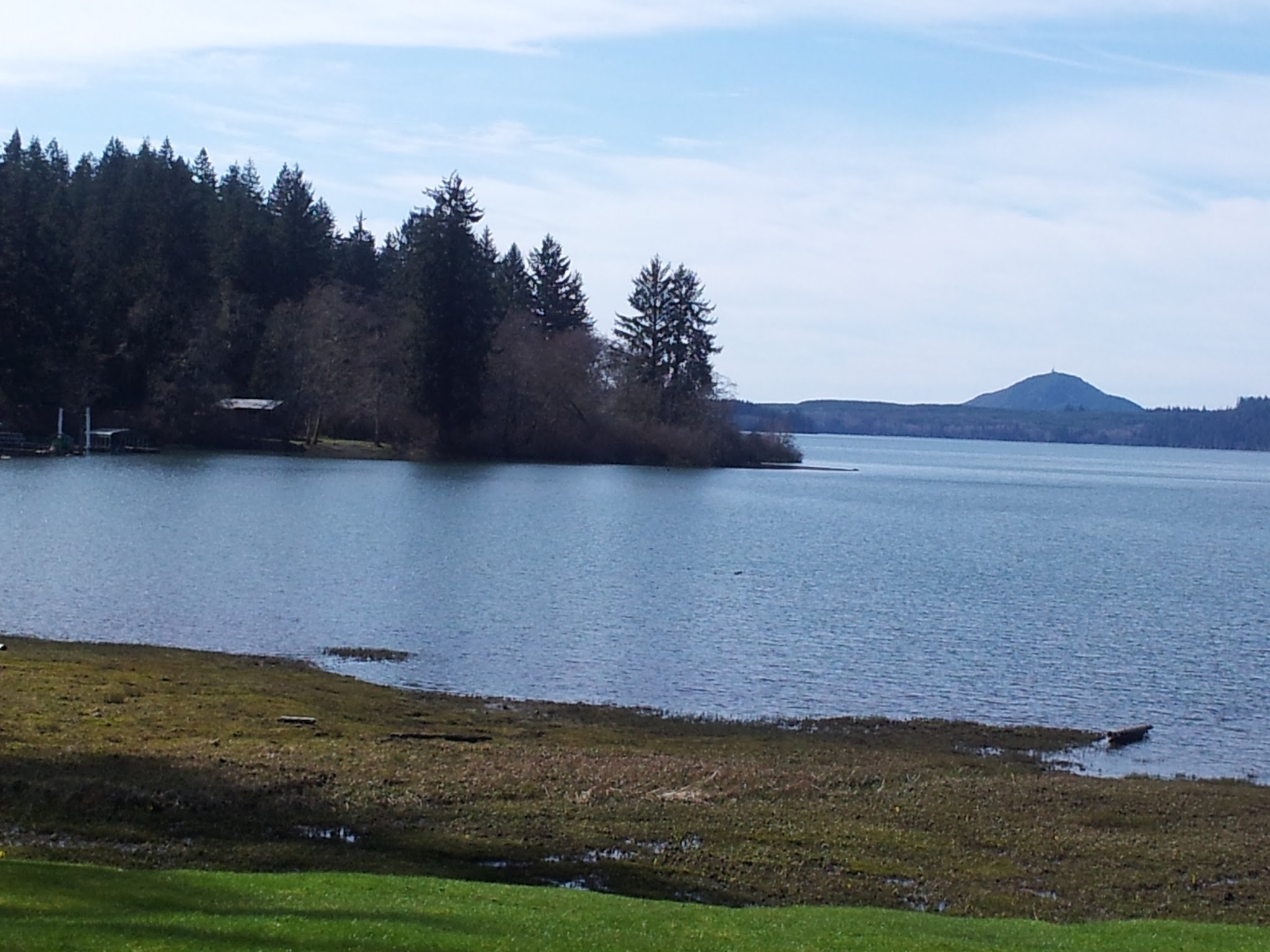
First, a few pictures. The location was truly gorgeous, right on a lake that tended to get misty in the mornings, with the rain forest on the hills behind the buildings. It rained a lot, not surprisingly, which was fine since I was supposed to be writing.

Beautiful Quinault Lake: what a view!

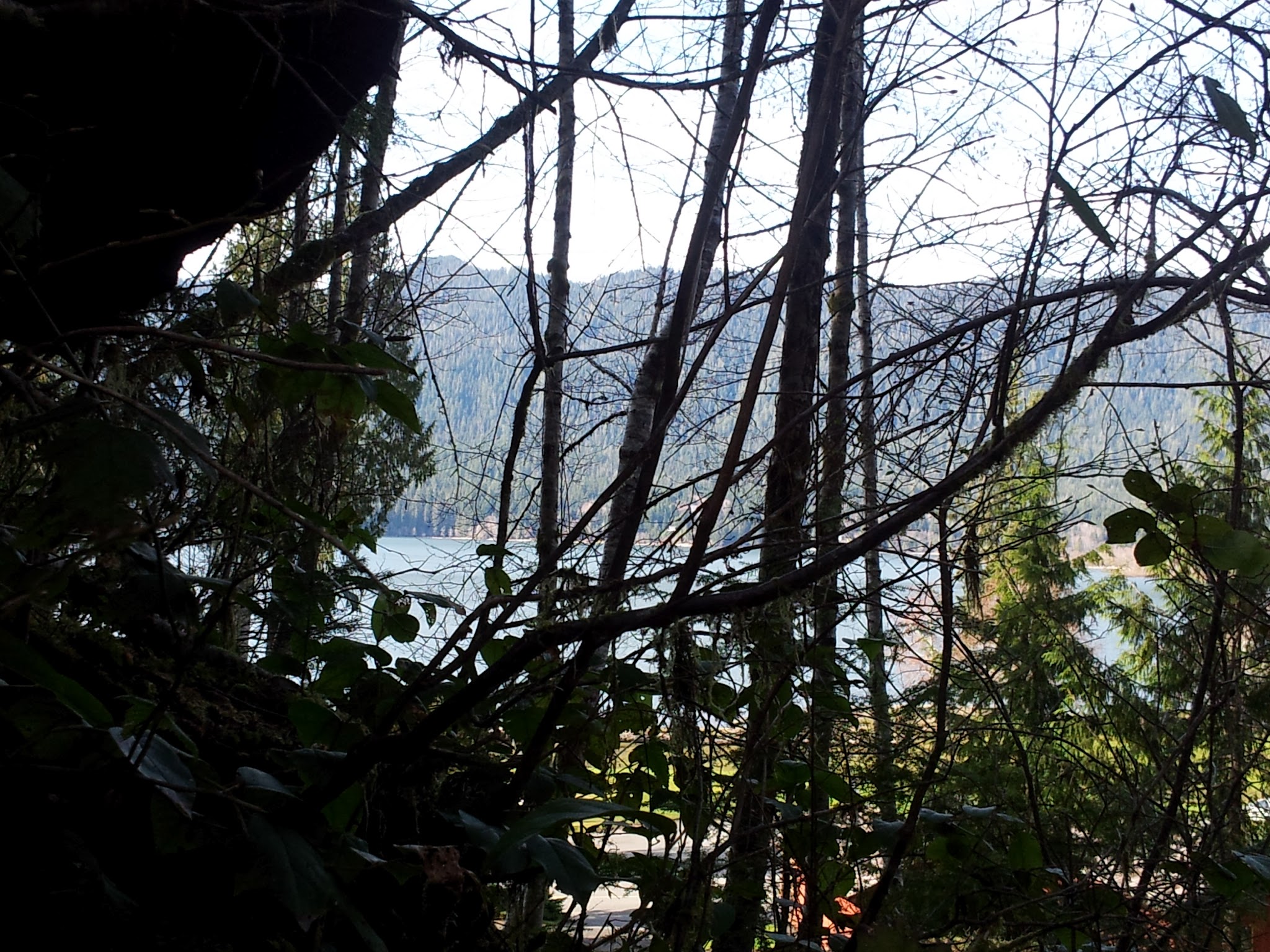
And here's the lake again through the trees.


There was lots of moss in the rain forest.

I was pleased with how much I wrote and found I was able to be more productive than my usual. I wrote until my outline broke. Of course, now I have to fix it before I can start again, and aforementioned neuron difficulties aren’t helping matters any. But figuring out how to fix broken outlines is actually one of the parts of writing I like best, even though I also enjoy complaining about it.

But really the best part of the trip was the people. No big surprise there, of course. Put me in a room full of writers, and the likelihood of me meeting someone who I find fascinating and nice increases exponentially. So do my chances of encountering a kindred spirit, and really, there isn’t much in this world that makes me more happy than making contact with that elusive breed. Except perhaps spending even more time with them. And writing.

I wonder if it’s a matter of depth, a trait all the kindred spirits I’ve met share. I don’t know if people who already have depth are drawn to writing, or if writing requires and develops depth in people. Or perhaps both? I don’t mean to imply that all people who aren’t writers don’t have depth (or contrariwise, that all writers automatically have it), as that is simply not true. But I do think the percentage of writers who have depth (or at least who express themselves in ways that reveal it) tends to be higher than average.

I think I’d like to write more about kindred spirits when my thought processes are in better working order. But in the meantime, I must conclude in order to consume liquids and lay on the sofa like a rag doll. Suffice it to say I thoroughly enjoyed my time in the Quinault Rain Forest.


Read Full Post »

I mentioned in my post The Dangers of Advice that among the common writing advice I don’t follow myself is the adage to write every day. Apparently, Jeff VanderMeer doesn’t write every day either, at least not to a specific word count. So you know, yet more evidence that you should studiously ignore all writing advice that doesn’t work for you.

I will add that, even if I’m not churning out word count every day, you can see from my post on Tuesday that I’m constantly engaging in what I am going to call writing mind. It’s more in the forefront these days, but even when I’m not shoulder deep in novel, it is a challenge to turn it off for any length of time. Almost everything I do, think about, read, I experience through a writer’s lens, so that being a writer suffuses my entire life, to the point that constant word count is, to a certain extent, a moot point.

Writing mind: a combination of subconscious processes and experiencing the world through the lens of a writer

In a recent interview, Robin Hobb talks about her experience, which sounds an awful lot like writing mind to me:
But even when I’m not at the keyboard, I’m still writing. I think that’s what the paper notebook taught me. My brain ‘writes’ all the time. It’s just finding the time to sit down at the keyboard and record what is store there!

Certainly one has to write to be a writer, and as a whole the writer community is very insistent on this point given the number of people who say they are writers but don’t write at all. We feel obligated to be prickly about it because there is a wide-spread misconception that writing fiction is easy. But the more I write, the more I am coming to understand that the actual writing is a critical component of the whole, but not the only one.

It is a pleasure, especially for a perfectionist like me who sometimes (often) suffers under an unforgiving work ethic, to realize that the time I spend every morning sitting in front of the fire and staring into space, or feeding my brain with various economic analyses, neuroscience findings, pop psychology, and insights about books and writing is all in service to the writing. Of course if I have a particularly busy day I have to skip right past the brain feeding phase except for a brief brainstorm in the shower and jump right into the heavy lifting, but it’s nice to realize that both parts are necessary and valuable. This insight allows me to be more fully me and to enjoy the process without quite as much of the kicking and screaming (although plenty of that still goes on; you try writing a novel dealing with the mutability of memory and see how you get on).

Being a writer encourages me to keep having interesting thoughts and doing interesting things, which is an aspect of it that I value extremely highly, especially at this time in my life when I can fully appreciate the comfort that comes from slipping into a pleasant routine and avoiding challenge in favor of the pleasures I already know I enjoy. Writing itself keeps me constantly on my toes, but it also rewards me when I decide to get more adventurous.

A few recent examples for you:

  1. I went to see President Obama speak a few weeks ago, not just because it was an amazing opportunity, but because I thought, “Hmm, I’ve never been to a political rally or heard a person with high charisma speak in public. I bet that will come in handy someday in my writing.”
  2.  We are beginning to consider our summer travel, and I provided my husband with a list of places I thought might figure into the settings of my next novel. “Which of these are you interested in?” I asked. Of course, it turned out that he was willing to go to any of them because apparently the heroine of the book has excellent travel taste.
  3. I picked up some novels recently that are not my usual fare, based on recommendations in an article by my friend Damien. Now on my to-read stack: Orlando by Virginia Woolfe, The Glass Bead Game by Herman Hesse, and The Magus by John Fowles. I don’t know if I’ll like them, but at the very least I’ll learn something from them.

To sum up: Jeff VanderMeer doesn’t have a daily word count goal. Robin Hobb describes writing mind well. And writing mind meshes nicely with the desire to see life as an adventure and not settle too easily into general complacency.

Read Full Post »

My head is in the clouds. Actually, my head is in a fictional boarding school in a remote location in the Canadian Rockies.

In other words, I am obsessed by the novel I am currently writing. And when I’m not completely lost in my obsession, my mind invariably turns to the novel I want to write next.

This makes everyday interaction a bit…problematic. Because there’s a part of me that wants to spend all my time at Lincoln Academy because my god, the amount of tension and drama in the plot right now! I want to find out what happens next. (I mean, I kind of know what happens next, but it’s not the same as when the words are written. Words can be surprising.) There’s a part of me that never wants to leave my house. On days like today, when I don’t have to, I am suffused by a sense of well-being because I can just let my mind go on its haywire creative journey all day long. And I am deeply, deeply happy…even when in the depths of misery because the book will not cooperate, the book is not as good as it should be, the book is making my brain hurt because dealing with an unreliable narrator is even more mind-blowing for the writer than it is for the reader (or so I am learning).

Of course, I can’t spend every minute of every day writing. For that matter, I spend very little time actually writing, and much more time thinking about all things novel-related. But I can’t even do that all the time. However, I am finding it increasingly difficult to clear my mind enough to think or converse intelligently about other topics. I can do it, but it takes significantly more effort than usual. So when I wrote about how writers shouldn’t talk about writing on their blogs all the time, maybe I was being a touch naive. Because right now, what else could I possibly want to talk about?!?!

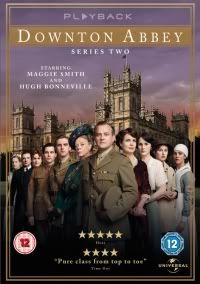
When I need a break from the novel, I do turn to Downton Abbey...

The blog is a particular problem because I choose the topics and the original post is just me talking about what I’m thinking about. In person I get along a bit better, because in general people are quite happy to take over most of the conversation, and I certainly have enough brain space to nod and smile at the correct intervals. I can even make vaguely relevant comments. The people who know me best can still strive for total engagement with strategic introduction of proven Amy-enticing topics: Disneyland, travel, theater, books besides my own, bridge, a sufficiently interesting intellectual topic (with extra points for neuroscience or social trends). Sometimes politics is shocking enough to dart pass my defenses, although this is invariably unpleasant.

But in the end, I am living breathing dreaming and otherwise immersed in my novel. So if I seem somewhat distracted here on the blog, or if you notice a certain, dare I say, sloppiness creeping into my thought processes, well, that is why.

Read Full Post »

I can hear your groans already. Not another social media site!

But I have good news: Pinterest is simple, fun, and pretty. It can be a helpful creative tool. And it is absolutely NOT necessary for a solid writer platform. Use it if you enjoy it, but if you don’t have the time or inclination, this isn’t a make-or-break proposition.

Aren’t you feeling better already?

What is Pinterest?

Most simply, it is a social image-collecting site. You can create “boards” that are collections of various images you have “pinned.” For instance, you can have a “Books I love” board or a “Beautiful photos” board or a “Yummy recipes to try” board. The boards tend to be visually pretty.

You can re-pin images directly from the Pinterest site. You can pin images from other sites, either by adding a “Pin It” link to your browser’s bookmark bar or by copying and pasting the image’s url into Pinterest. You can also upload your own images for your boards.

Finally, you can browse through other people’s boards and images, comment on them, re-pin others’ images, and like others’ images. You can follow other people on a board-by-board basis, and they can follow you. Hence the social media part.

Downsides of the site:

1. Massive time suck. Massive.
2. You can only use the service if you already have either a Facebook or Twitter account. Given my privacy concerns around Facebook, I chose to use my Twitter account. However, that means I can’t look for other friends who use Pinterest, as you can only do that (to my knowledge) by linking to Facebook.
3. You can’t re-arrange the images pinned to your board, so whatever order you enter them, that’s the order you’re stuck with. Hopefully they will eventually add a click and drag sort of interface to make the boards more customizable.
4. The user interface of the site can occasionally be a bit confusing, and the “Pin It” browser button doesn’t always work.
5. As far as I can tell, there is no way to make a board private. So everything you do on the site will be in full public view. Otherwise it would make a great archival/bookmarking tool.

Ways to Use Pinterest as a Writer:

1. Settings boards: Make boards of photographs of various settings in your WIP. I recently wrote a story set in Rio, and I had an entire browser window with twenty tabs devoted to the photos I’d found. I would have loved to have the convenience of pulling all the photos together in a board instead.

2. Blog boards: If you use interesting pictures on your blog, you can pin them all onto your blog board, and have a beautiful visual representation of your blog. You can see mine here.

3. Book boards: I adore books, and it gives me happiness to click on my “Books I Love” board and see all my favorite covers staring back at me. This can also work as a recommendation board or as a record of the books you’ve read this year.

4. Mood boards: I know a lot of writers use music, often carefully crafted set lists, as a tool to get into the mood of their book. For those of us who can’t use music (I find it too distracting), we can make a visual board instead and take a look for inspiration before a writing session.

5. Random inspiration: If you can be disciplined enough to avoid the time sink factor, scrolling through the aesthetically pleasing images can be just the thing to kick-start those creative juices. Also, need an idea for a story? Maybe you can find an image that gives you the first nugget of an idea.

6. Hobbies: If you happen to have an interest in design, fashion, architecture, photography, visual art, cooking, etc., you might find this site fun outside of any writerly benefits it may provide.

Notice that not once do I mention the social aspect? That’s because I really think of Pinterest as more of a creative tool than a social site. And if you’re using it as a tool, the social aspect will follow. You’ll begin re-pinning and liking other users’ images…and they’ll know you did. You’ll find some people who have such awesome boards that you want to follow them. Maybe you’ll have to comment on a particularly thought-provoking image. You get the idea. The social part, I think, can happen organically.

What do you think? Have any more great ideas for ways to use Pinterest? Need to vent some social media angst? I’d love to hear your thoughts.

Read Full Post »

Sometimes when we are on the road to excellence, we get a little tired. We wish we were already there. We wish the road had a literal signpost saying “You have made it, and you can officially stop worrying and consider yourself to be awesome.” We wonder if we should have chosen something easier to do with our time. And we think that maybe there is a magic bullet, something we can do that will–Bibbidi bobbidi boo!–make us more amazing.

Let me make this part of the road simpler for you.

There are no short cuts. There are no magic bullets. There are no sure things. There are no easy paths. So if you want something quick and easy, excellence isn’t the end goal for you.

Photo by Trey Ratcliff

Sure, there are activities beyond diligent practice you can do that will help you progress. In writing, these include attending workshops, reading slush, seeking out critique experiences, reading craft books like The 10% Solution, etc. In singing, these include participating in master classes and workshops, auditioning, obtaining performance opportunities (however humble), studying with different teachers, etc. But none of these methods are foolproof, and not all of them will pan out.

Take the various Clarion workshops, for example. Working professional writers often cite their Clarion experience as being pivotal in their development as writers. These are the stories about Clarion that we hear most often. But then there are the writers like Alexandra MacKenzie, who took ten years after the workshop to be ready to learn from one of her instructors. Because you can’t always control the timing of these sorts of things. And there are also the Clarion attendees who stopped writing altogether; these are the ones we hear about the least, and yet they assuredly exist. Why? Because no way of leveling up is foolproof. No way of advancing works for every single person.

The path to excellence doesn’t often go flat like a plateau only to suddenly rocket steeply upwards into awesomeness. It is a gradual process, a long slow incline upwards. As Seth Godin says, it is a series of hills, one after another. Those who continue to improve keep choosing new hills to climb that are just on the edge of their abilities.

Sometimes the path feels like a flat-line that suddenly springs up, but this is an illusion. I saw it all the time with my students in voice lessons. They would work steadily and gradually improve, so gradually that they didn’t even notice it happening. They would struggle with a concept and it wouldn’t quite be clicking, and they’d get frustrated and discouraged. At this stage in the process, it was my job as the teacher to keep pushing them, keep encouraging them, keep them singing even if they were ready to throw in the towel. And then inevitably, they’d finally understand. Their bodies would finally coordinate correctly, the muscle memory would finally develop, the ideas we were talking about would finally make actual instead of theoretical sense. And they’d experience a leap in ability. A leap that was really a slow mounting of ability all along.

That leap in ability is just around the corner for all of us. If we practice diligently and intelligently (directed practice as opposed to blind repetition), we are pushing ourselves forward along the path. The leap may come next week or it may come next year. It may come after we take a month-long break or it may come after a few weeks of intense practice. We don’t know when it will come. Excellence requires us to have the faith to sustain us while we work.

We must believe the leap will come. But it won’t come because of magic. It will come because of our own hard work.

Read Full Post »

I was talking to a new friend at Epic ConFusion about YA and the difficulties that many newcomers to the genre (especially those writers who started in adult markets) have in identifying it. This may be the reason why we keep getting these awful panels at sf/f cons that devolve into an hour-long discussion trying to differentiate between Middle Grade and YA (even though that is not the topic) or complaining about Twilight (which has gotten to be quite old hat). In an amazing recent SF Signal roundtable (which I hope to blog about more extensively soon-ish), Malinda Lo said, “Perhaps I’m the odd one out, but I guess I don’t think the definition of YA is that hard to pin down. I feel that publishers and the YA community have a pretty clear idea of what it is, and it’s folks who are new to YA who don’t understand and often make assumptions about what it is and who reads it.” Which is exactly the problem: the YA community knows exactly what YA is, but writers from other communities? Maybe not so much.

I’ve spent the last three years reading YA (and a bit of MG on the side) voraciously, and so yes, I have a pretty clear idea of what YA is. I told my friend that many times, the place where writers go wrong when trying to write YA is the voice of their novel. When trying to quantify that more for him, I could only say, “I know it when I see it.”

While it’s nice for me to be able to know it when I see it, that assertion is problematic on a few levels. It means I can say, “No, this isn’t really a YA voice,” but then draw a blank when I have to explain why that is so (not so helpful for other writers, is it?). It also means that I can’t work as concretely on improving my own YA voice. So obviously working to analyze what YA fiction really is and breaking down the different components that contribute to a YA voice is very useful. I’ve always wanted to attend a panel titled “The Differences Between Adult and YA Fiction,” but I haven’t seen it yet. So consider this that panel, and hopefully I can encourage others who know YA well to contribute to the conversation in the comments.

Yay, reading!

So what makes YA different than adult fiction?

1. The age of the protagonist: In YA, the protagonist is almost always a teenager, theoretically 14-18 years old. In practice, I haven’t seen that many 14-year-old protags–they indicate borderline Middle Grade (which is for readers age 8-12, and these kids tend to read up) and tends to read on the youngest side of YA at best. So practically speaking, 15-18. In a novel set in the modern world or its equivalent, the protagonist is always a high schooler. The summer after high school is fair game, but anything beyond that (read: college) is usually not done (which is another post of its own).

2. POV and tense: Arguably the most trendy POV and tense in YA right now is first person present tense (although I’m seeing something of a move away from it recently). First person past tense and limited/close third person past tense are also okay. Omniscient is out of fashion just like it is in adult fiction. Most novels limit themselves to one or two POV characters. If there are two POV characters, they often (but not always) change in alternate chapters. A trend right now is to have one female and one male POV that alternate chapters.

3. Tone: YA fiction can run the gamut between very light and very dark. It’s hard to go too dark, and there are very few taboo subjects.

4. Theme: YA fiction covers many themes, but very often feature some kind of coming-of-age plot. The teenage protagonist vs. society is also very popular (hence the dystopia, for example), as are issues of identity, peer relationships, and romance.

5. Genre: The most popular genres right now are paranormal and dystopian. The dystopias are beginning to show more sf-nal elements (yay for YA in space!), but dystopias and post-apocalypses are still the most common. There are also the high fantasies and the historicals (historicals w/ fantasy elements are probably more popular than the straight ones). In contemporary, we have the “issue” books, the romances, the thrillers, and the just plain contemporary books.

6. Boy books vs. girl books: I hate that this divide exists, but it does. Boy books usually have a male protagonist, and get readers of both genders. Girl books are more likely to have a mostly female audience. Boy books tend to be more externally focused, plot focused, and full of action. They often read a bit younger to me than girl books. Girl books tend to be more internally focused and usually include a romantic element. Some books lie somewhere in the middle and are particularly awesome. For example, John Green tends to write contemporary novels with male protags who are more internally focused, and The Hunger Games has a female protag and is full of action; there is a love triangle, but it’s not the primary focus of the story. (This is also its own blog post, and a super touchy subject, so keep in mind I’m doing a fast and dirty summary, and there are many exceptions. That being said, people in the industry do talk about “boy” books, so it’s a reality in the marketplace right now.)

7. Narrative Voice

We can see from looking at the above list how critical narrative voice actually is. YA is basically a teenage character reflected in the narrative voice of the novel who is embroiled in a plot that is relevant to them. Krista Marino says, “An adult looking back on the teen experience is an adult book.” It follows, then, that a YA novel is filtered through the immediate viewpoint of a teenager. And so much of how that viewpoint is expressed is through voice.

Next time, I’m going to break down voice into various aspects so we can hopefully gain a better understanding of what it is and how it contributes to that YA feel of “I know it when I see it.” In the meantime, please feel free to comment below and tell me your opinion: what I missed, what I got wrong, examples in current YA novels, questions, etc.

Read Full Post »

My husband often reads out loud to me before we go to sleep. We most often read children’s classics and more recent middle grade novels because I want something interesting but not so exciting that I can’t go to sleep. We’d just finished a few books by Bruce Coville (if you’re interested in MG fiction at all, you should run outside RIGHT NOW and buy some of his stuff, because he’s fabulous), and after some pondering, for our next read we’d selected The Absolutely True Diary of a Part-Time Indian, by Sherman Alexie.
Warning: There be spoilers ahead!

My husband began to read, and the book was well written, interesting, and had a sense of humor. But within a few pages it was clear that for his first dramatic incident, the author was going to kill a dog. I told my husband to stop reading because *@*%@*%!!*!! I am so incredibly done with reading about dogs dying.


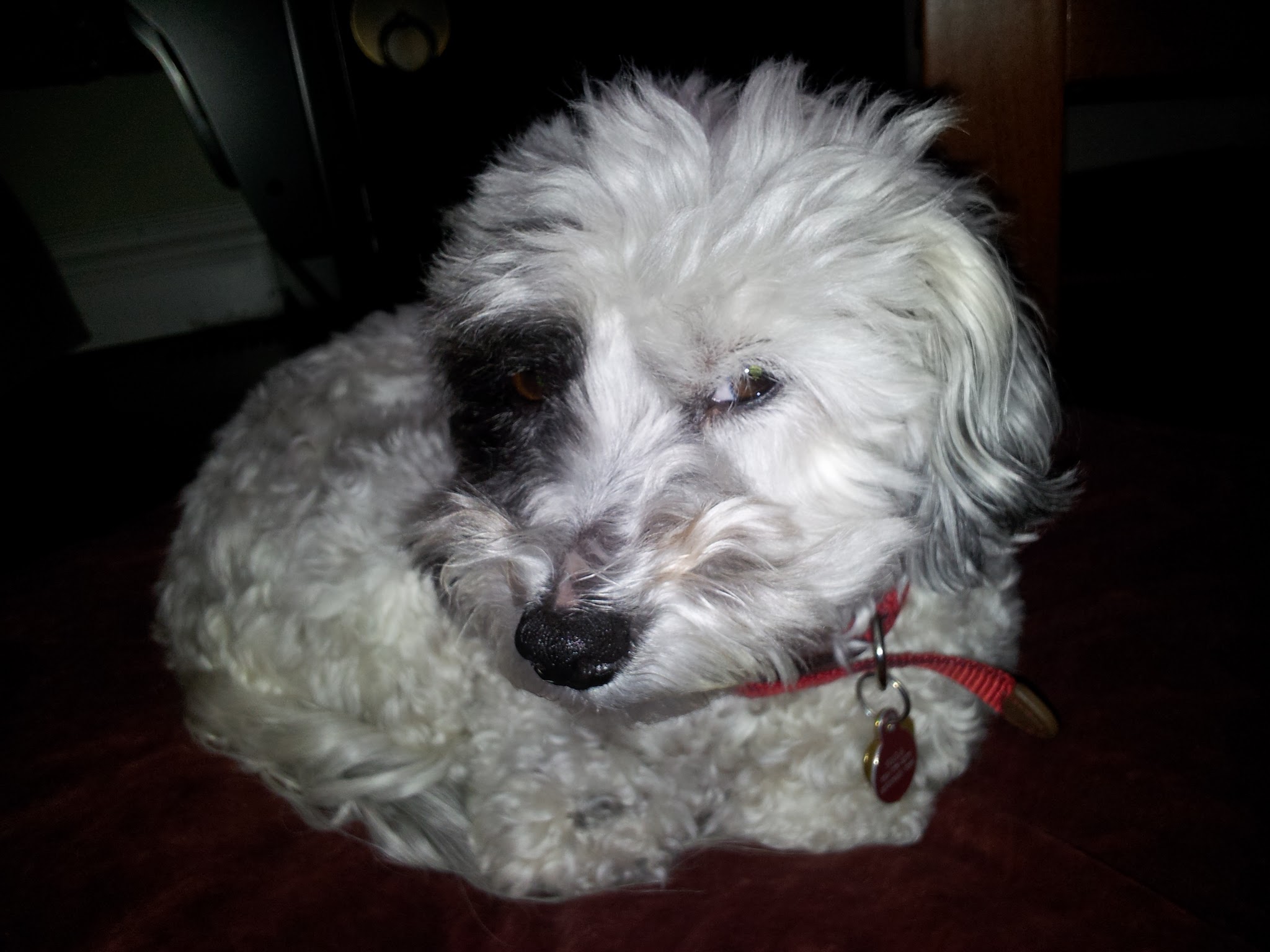
I am TOO CUTE for your shenanigans!

Here is a list of the dying dogs in fiction I have encountered in the past three years: The Knife of Never Letting Go, by Patrick Ness (I was bawling so hard at this one that my husband got worried); a story in Paolo Bacigalupi’s Pump Six; The Big Splash by George Galuschak; “I Can’t Imagine” by Sandra Wickham; and Mama, We Are Zenya, Your Son, by Tom Crosshill. At Taos Toolbox, Nancy Kress told us about her novel Dogs (which I refuse to ever read) and Eric Kelley threatened to kill off the police dog in one of his novels-in-progress. In Working Stiff by Rachel Caine, the dog is threatened, and in Robert Sawyer’s Mindscan, the dog is unable to recognize its master in his new robot body (which completely broke my heart). And these are just the examples I can think of off the top of my head.

Seriously, writers, WE GET IT. Killing off the dog (or pretending you might) is very, very sad. It reliably makes me cry even if I don’t like your story very much otherwise. And it also shows up the bizarreness of human behavior, that we cry when an animal dies and not when a person dies (although to be fair, I often cry when writers kill off people, too…but never for the bad guy, which says something else interesting). So could you please stop now?

Also, do you ever notice how writers don’t seem to kill off cats? (Not that I have anything against cats.) Why all the dog hatred, writers, huh? Why not pick on those of the feline persuasion for a change? Why do you want to violently dispose of sweet little bundles of fur like this?


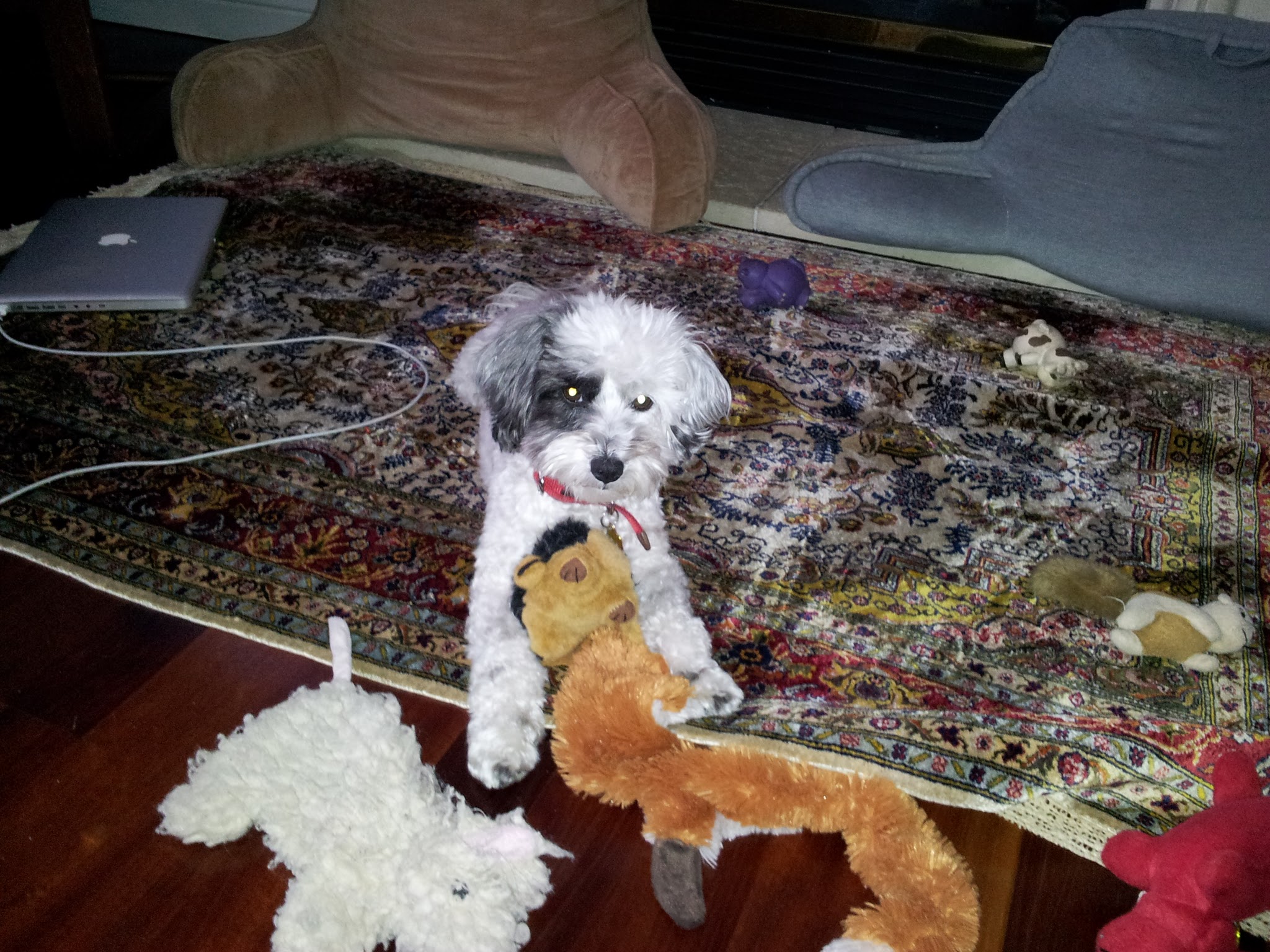
You know you want to pet me!

I’ll admit, the “pick on the cute and loyal dog” thing used to be shocking. But now, it just makes me feel tired. It makes me want to stop reading. It has nothing to do with the merits of the work (if you’re not as sick of dead dogs as I am, you’ll want to check out everything I referenced above). But it’s become even more unpleasant to me than werewolf tropes, and you know, that’s saying something.

So please, the next time you consider killing off the poor innocent puppy to pull some heartstrings, back away slowly. Maybe you can kill off the bratty kid sister or the brooding and boring boyfriend instead. Or, I don’t know, have your protagonist lose a finger or something. Just enough with the dogs.

Thank you.

*****
I’ll be in Detroit this weekend for Epic ConFusion. Say hi to me if you’re there!

Read Full Post »

I was having dinner with a friend the other day, and he mentioned that he hadn’t gotten around to reading any of my stories yet. He followed that up by saying that he was a little nervous to do so because they might reveal that disturbing things go on in my mind. (Newsflash: I’m a writer. That implies a certain level of creativity, which means at least a touch of disturbing is probably going on in there.) He didn’t say he was afraid he wouldn’t like my stories, but I’ve certainly had other people express that worry to me.

This conversation made me realize that what I take for granted, being around writers all the time, might not be so obvious to others. So here is an insider’s guide into how writers deal with each other.

1. Writers read a lot. But we cannot read everything.

Writers are fighting a never-ending war against the gigantic pile of stuff that they’re supposed to be reading. It’s a good thing most of us started out as enthusiastic readers because otherwise we’d drown in the amount of material we try to get through.

We read the novels in our own genre. Some of us have more than one genre, so then we have to read novels in two genres. Plus we are supposed to read novels outside our genre to stay well-rounded, so we have to read those too. Then there is the nonfiction that we have to wade through, some for specific research purposes and some to generally better understand the dynamics of the world we live in. We read short fiction and articles and blog posts. We read magazines about our industry. We beta-read novels for fellow writers, and we read to critique short stories. We read for award season. Sometimes we have students’ work to read, or books to read in order to give a blurb or review. We read and read and read.

We cannot humanly read everything. We cannot even read everything by our dear writer friends. It is impossible.

LESSON: We understand that you might not have time to read what we write, either. We LOVE it when you do, but there is no obligation.

2. Writers don’t always love each other’s work.

One of the first published novelists I got to know told me that it was really awkward to be friends with a writer whose stuff you don’t like.

Happily this has not proven to be true for me, and I don’t think it’s true for many writers. At least I hope not, because every reader (writers included) has her own individual taste, and not everything ever written will fall into that taste. This doesn’t mean that the writers who write stuff not to my taste aren’t fabulous people who I enjoy hanging out with, though.

Writers hardly ever ask each other the following questions: Did you read my latest story? Did you like my latest novel? Do you think I am the most Awesome Sauce Writer that ever lived? Instead, we may congratulate each other on milestones that we are aware of (hey, congrats on winning that award, or congrats on that book deal). If we have actually read and enjoyed a work, we might then say something about it unprompted (hey, I read your book and I loved the protagonist). I have NEVER told a fellow writer that I read their work and then proceeded to tear it to shreds, because that would be completely inappropriate. Mostly, writers spend a lot of time gossiping and talking about each other’s work-in-progress.

LESSON: You don’t need to tell your writer friend whether you read their work unless you did so and would like to share how much you enjoyed it. We know our own work won’t be to everyone’s taste, and most of us know better than to put our friends on the spot.

3. Writers don’t always write stuff that is autobiographical or has deep personal significance.

In the TV show Gossip Girl, there is a budding writer who only writes autobiographical stories and models his characters directly from his life. Everything he writes has deep personal meaning and reveals his true feelings about those around him.

This is FICTION. Many writers do not write autobiographical fiction. That’s not to say there’s not a part of themselves in the work, but often it is very hard to tell which part unless you know them very, very well (in which case, it shouldn’t come as too big a shock). Many writers do not model their characters directly on a real-life person (I don’t know that I’ve ever done this, for example). Many writers do not reveal their deep, dark secrets in the text of their work. Sometimes (often, in fact) they just make stuff up because it will make the story more awesome.

Writers do often re-visit the same themes over and over. For example, I like to write about death and mortality. That fact tells you something about me, but it’s not something I try to keep hidden. Sometimes a writer’s general personality is reflected in their work (although not always), in the sense that when you meet the writer, you think, “Ah yes. I can see how this person would have written that book.” But this is all fairly surface personality kind of stuff, nothing that should be particularly alarming.

LESSON: Writers are not constantly revealing their deepest, darkest secrets in their fiction.

Is there anything I’ve missed? What are some other common misconceptions that might make non-writers uncomfortable when dealing with writers?

Read Full Post »

« Newer Posts - Older Posts »