Feeds:
Posts
Comments

Posts Tagged ‘boundaries’

One of my most popular posts is one I wrote back in September of 2012, entitled “Nice vs. Kind.” And this week I received a note about it from a person I recently met, so I thought it would be interesting to provide an update to you all.

In the post, I talked about the distinction I perceived between being nice and being kind, and I talked about how, while I was making the shift, it could sometimes be difficult for me to be kind at all, because then I’d just fall right back into being nice instead, which was something I was trying to change.

What I neglected to say was it was also difficult to be kind because I was so angry from the decades of not getting most of my needs met and receiving repeated messages of how unimportant I was. In other words, I had to learn to be kind to myself before being able to easily be kind to other people too.

Fast forward almost three years, and it has definitely become easier for me. I’ve created a kind of checklist for dealing with situations that feel fraught and involve setting boundaries. (Because honestly, the rest of the time, it’s not very hard for me to be kind.) This thought process has become mostly habitual at this point.

Photo Credit: a.drian via Compfight cc

Photo Credit: a.drian via Compfight cc

Step 1: Figure out what I need/want.

If I really don’t care, then I get to be laid back, which is lovely.

If I don’t know, then I usually need some time. I’ve gotten better at simply saying I don’t know and getting the time I need to figure things out. Sometimes, when I’m really confused or emotional, I also need to talk things over with one or more friends to understand what it is I really need.

Step 2: Be clear and firm.

Step 3: Be kind.

Steps 2 and 3 are in that order for a reason. They reflect my priority, which is to be clear and firm FIRST, and kind SECOND. This helps prevent me from accidentally falling into niceness and wishy-washy-ness. It also reminds me not to soften or change what I need in order to be nicer, which is pretty much always an idea that crosses my mind at some point. (The Step 1 checking in with friends part is pretty helpful for this too, as it helps me not be too nice to begin with and builds in some accountability.)

I should note that if for some reason Step 3 is not possible, that doesn’t give an automatic pass to being UNkind. In general it is possible to be clear and firm without decimating someone in the process. To me, the main drawback of not being able to engage with Step 3 is it can feel a bit…robotic, but if that’s what necessary to express myself clearly and firmly, well, it’s not so bad. And luckily it doesn’t come up very often.

I should also note that following these steps doesn’t instantly solve all my interpersonal problems. The fact is, if someone wants something and I decide I don’t want to give that thing, then sometimes no amount of clarity or firmness or kindness is going to change the fact that the person isn’t going to be happy.

Still, each of these qualities serves its purpose. I practice clarity so I can get my actual point across with, I hope, fewer misunderstandings. I practice firmness so I’m less likely to have to revisit the same conversation and issue repeatedly or have someone try to change my mind. And the kindness? I believe it is ultimately helpful to the other person, and also, it’s simply the way I want to be.

“Be firm but kind, Amy.” This is the advice that runs through my head now. It isn’t foolproof, but it helps me remember how I want to be.


Read Full Post »

I used to never say “Enough.”

I’d bend over backwards to avoid saying “Enough.” I didn’t know what would happen if I ever did, and I was afraid to find out. Coming from a background in which I was harshly punished for ever expressing inconvenient needs, the idea of saying “Enough” was nigh unthinkable.

Saying “Enough” would mean acknowledging something bad was happening. Something hurtful enough that such a response was warranted.

The first time I really said “Enough” started out small. It was almost accidental. I felt so hurt and so awful I could no longer pretend everything was okay. I gave a tiny weak “Enough.” I hoped it would give me a few weeks of breathing room and recovery time before I had to go back to pretending.

That’s not what ended up happening though. My tiny weak “Enough” got push-back, and I needed that recovery time so desperately, I actually held the line. No one was more surprised about this than me. And every time my “Enough” got pushed on, it got a little bigger. And a little bigger. And it was all so stressful I broke my tooth from clenching my jaw so hard.

Photo Credit: madamepsychosis via Compfight cc

Photo Credit: madamepsychosis via Compfight cc

The hardest part of saying “Enough” is that it forces things into the light. The light is revealing. And you might learn that things aren’t going to change, and yet the light shows that things are intolerable. And you see that all the effort you’ve put in, all the years of swallowing your feelings and smoothing things over and bucking up and keeping a stiff upper lip and hoping for the best and thinking this time things will be different, all of this is the mental equivalent of a dog chasing its tail.

Saying “Enough” is also saying “Please stop hurting me,” and sometimes the answer you will receive is “No.” And with the bullshit stripped away, you then have to respond to this situation.

I wish I could tell you that this first experience with “Enough” taught me how to do it again, but it didn’t. It was just a beginning.

But it did teach me that “Enough” was a possibility.

Anyway, I faffed around for a couple of years, still not able to say “Enough” even when it needed to be said, which was unfortunate on many levels. And little by little I improved, and little by little my courage for speaking up for myself grew. And at the same time I did my best to change my life so I wouldn’t have to say “Enough” so often in the first place.

Last month I had to say “Enough” twice. What I’ve learned is, while it is important to be able to say “Enough” when you need to, if you reach that point, things have already gone a little bit off the rails. So twice in one month is not ideal. For one thing, it is pretty exhausting. For another, it means I was making some less-than-ideal choices, which is never fun to have to acknowledge.

But I can also tell that my choices overall have improved, because one person responded to my “Enough” with a genuine and heartfelt apology and respect for the boundaries I’d requested. This hardly ever happens, in my experience at least, and it is the best possible outcome to a not-so-great situation.

I used to never say “Enough.” But I’m really glad I learned how.

Read Full Post »

I remember wishing for a support system.

I don’t remember exactly when this was. It couldn’t have been high school because I didn’t aspire to anything as lofty as a support system in those years. So it must have been college, when my mom was dying. I needed a support system while she was sick, and I knew I’d need one just as much after she died. I remember writing lists, plotting out how I could create this support system that I so desperately needed.

I failed. I couldn’t find a support group. I couldn’t figure out the mental health services on campus. I found very few peers with whom I could speak openly. My mom had two wonderful volunteers who came to visit her while she was sick and then helped us organize the memorial after she was gone. But then they went back to their regular lives. I desperately wanted my relationship with the rest of my family to be close, but it was not close, and I could not force it to become close, however much I tried.

I didn’t get what I needed.

I tried a few more times later on to create this support system I’d been so convinced was a good idea. Each time I failed. Each time I became less convinced it was even possible. I never completely gave up, but my efforts became more and more half-hearted as time went by.

It occurs to me now, writing this, that when you’re chronically not getting what you need–when, in other words, you are starving–then you’re in no position to set strong boundaries. You’re in no position to set many boundaries at all.

I’ve been thinking about support systems again because the last couple weeks have been on the rocky side, and in the breaks between bumps, I’ve been watching how I handle it.

When I think of the Me of ten years ago, or even three years ago, I don’t recognize myself.

Part of the difference is that I’m now an expert in Amy care. And the rest of the difference? It’s that support system I always wanted. I have it now, and I don’t hesitate to use it. Within a few hours of my first awareness that I wasn’t exactly a happy camper about some things that were going on, I was on the phone with one of my best friends. And every step of the way through the following days, I’ve felt supported, in several different ways, by a wide variety of people and communities (and little dogs).

Granted, these have been relatively little bumps I’ve been experiencing. But I know if they had been bigger, those same people and communities would have been there for me.

I am getting what I need.

Here, then, is a message to Past Me: Your idea about support systems is as good as you think it is. I’m so sorry you don’t already have one, and I know it’s really hard to put one together, but hang in there and keep trying. You’ll eventually figure it out.

You’ll eventually get what you need.

And here is a message to those of you who are part of my support system now:

Thank you for feeding my heart.

Photo Credit: sullen_snowflakes via Compfight cc

Photo Credit: sullen_snowflakes via Compfight cc

Read Full Post »

I like to tell people that one of the most important parts of being a writer is learning how to deal with the emotional baggage of writing, whatever your particular flavor of that is. And part of doing this, for me, is protecting the mental space I need to write.

This protection has been an interesting shift. Certainly when I was a music teacher, there was no need for me to defend certain mental and emotional territory in order to be an effective teacher. But writing is different. It’s tricksy. And the longer I write, the more I recognize how important it is to have boundaries in place that hold a space where I can be productive.

Focus. Photo Credit: Rein -e- Art via Compfight cc

Focus. Photo Credit: Rein -e- Art via Compfight cc

And the more adamant I become about maintaining those boundaries. If I recognize that something (or someone) is having a negative effect on my writing, ameliorating that effect jumps to the very top of my list of priorities.

For me, this manifests in several different ways:

Time. I guard my weekday daytimes with my life. What are those times for? My work. Also some life maintenance. What are those times rarely for? Lots of socializing. Granted, sometimes I have a lull in work and I have a little more spare time during the day, but when I agree to spend time with someone during the day on a weekday, that usually means I’m making them a massive priority. And I don’t do it all that often.

Explaining Writing to Me. When someone, usually a non-writer someone, decides to explain writing to me, whether it be the craft, the process, or the business, I pretty much never want to talk to them about writing again. This can sometimes put a damper on things since I care more about writing than almost anything else.

Dating. If I am dating someone and I start to feel badly about writing because of my interactions with them, I stop dating them. End of story. This is often because they want to explain writing to me (in spite of the fact that most of them are not writers and I haven’t asked for advice or feedback). Sometimes it is because they don’t think writing is valuable, or they want to tell me how some other medium is more valuable. (Like games. Don’t get me wrong, I think games can do interesting narrative things, but, um, I don’t write games so I don’t really want to talk about how they’re better.) Or we have different expectations of how my writing career should go, and then I get really stressed out even though I’m meeting all my goals and deadlines. Or they’re not even remotely interested in my writing, which is fine for a while but ultimately kind of limiting.

Talking about Writing. I tend to be somewhat careful about with whom I will seriously talk about my writing. This is one reason I find it extremely valuable to have trusted writer friends. The thing is, there are many things about writing that a person might not automatically know or understand. Like what the common emotional experience is (rejection is constant, occasional discouragement is par for the course), or what the timeframe is (sloooooow), or how the business works, or what the actual interesting parts of it are. And while I don’t think people should automatically know these things, I do find they often leap to conclusions and are more interested in telling me stuff or sharing unrealistic expectations than in learning how all these things actually work. And managing these responses takes emotional energy that, quite honestly, I’d rather spend elsewhere.

Here’s the thing about being a writer, at least for me. I have to maintain a paradoxical belief in myself and my ability to create. Paradoxical because writing typically requires a long apprenticeship that involves a great deal of rejection and failure and learning and experimentation. And no one can chart a course through that morass except me. I sit alone for long stretches of time, working on projects that are sometimes emotionally taxing to create and which no one sees for months. NO ONE. And then when someone does see it, it is for the purpose of tearing it apart so I can make it again, better. And then there’s a cycle of rejection that typically also takes a long time. Rinse and repeat. And once you get published, you’re exposed to market pressures and more criticism of your work.

In the face of all of this, a writer must hold fast to the belief that what they’re doing is worthwhile and possible. That they will improve. That someday the rejection will turn into the acceptance. That they have something to say. That their work matters.

This is not always easy. Actually, it is usually not easy. Hence the boundaries. It’s hard enough to write without dealing with other people’s baggage around it. And having a clean and safe mental space in which to do the work is invaluable and indispensable.

Of course, protecting this mental workspace is one of the things writers need to learn how to do during their apprenticeships. And over time, I’ve found it has gotten easier as I have gotten clearer.

I need these boundaries in order to write. It’s that simple.

Read Full Post »

There are so many words I have not said.

There is a graveyard of words I store somewhere in the space that encompasses me, buried several corpses deep. Words I couldn’t say. Words I should have said but didn’t. Words that risk and words that respect and words that choke in a throat habituated to silence.

Photo Credit: macieklew via Compfight cc

Photo Credit: macieklew via Compfight cc

I think these words I do not say. Sometimes I think them over and over again. I think about their vulnerability. I think about what they’re in response to. I think, “Is this person insensitive? Am I too sensitive? We’re acting like everything is fine and normal. Are this other person’s words and actions actually fine and normal? Would most people not have the reaction I’m having?”

It’s so easy to forget that at a certain point, those questions lose their significance. This is not about labels. This is not about unwinding the precise reasons, the why’s and the chain of events and the correct place to lay the blame.

Blame doesn’t repair anything.

No, this is about hurt. It is about swallowing it down and hoping I can hide it in a dark enough place it will almost be as if it never existed. It is about refusing to shatter the peaceful object that can be the two of us. It’s the fear of leaving the painful limbo for something worse. Maybe even someplace where you and I no longer exist as you and I.

It keeps you a few football fields at least from where I stand. Maybe with you way over there I’ll feel better. Maybe if I don’t tell you about the hurt, I can prevent it from growing if you ignore what I have to say.

It doesn’t work.

And so I think about transformation. What is the alchemy of turning the hurt into something like self-love? Let me test and tinker, let me write down a precise script of process and ingredients, let me join the ranks of the masters who have already perfected this art.

The question becomes not “Why am I like this?” or “How can I not be like this?” but rather “I am like this, so knowing that is true, how can I best be happy and cared for?”

The response becomes not “Swallow it down, and pretend it never happened” but rather “Let’s talk about this hurt and see how you and I can communicate.”

And if that communication is unfortunate and the hurt is not acknowledged? Especially if this is a pattern of interaction or a newer connection? The response becomes not “What’s wrong with me?” but rather “Perhaps I don’t want to spend much time with this person in future.”

Which, of course, can sometimes hurt like hell, but it’s the pain of the Band-Aid being ripped off. The wound was already there.

Meanwhile, I don’t want you to know who I am. My words reveal me. They let you know I am not a statue of joy and granite but a human of flesh and bone, tears and sweat, idiosyncrasies and flaws.

The whisper inside becomes not “I will never be perfect” but rather “I am enough.”

I believe it is better for the words to be spoken. It is only then we can learn each other.

Read Full Post »

A couple of months ago a friend of mine told me I was a Manic Pixie Dream Girl.

At first I argued with him. But that ended pretty quickly because his argument was actually convincing. My favorite point? “How many men,” he asked me, “have you helped ‘discover their joy’?”

My reaction to that question was, “Oh, shut up.” Although of course, I didn’t actually say that because it wouldn’t have been a discovering the joy kind of thing to say.

So then I thought maybe I could write a memoir called “I Was a Manic Pixie Dream Girl.” Because how much fun would that be?

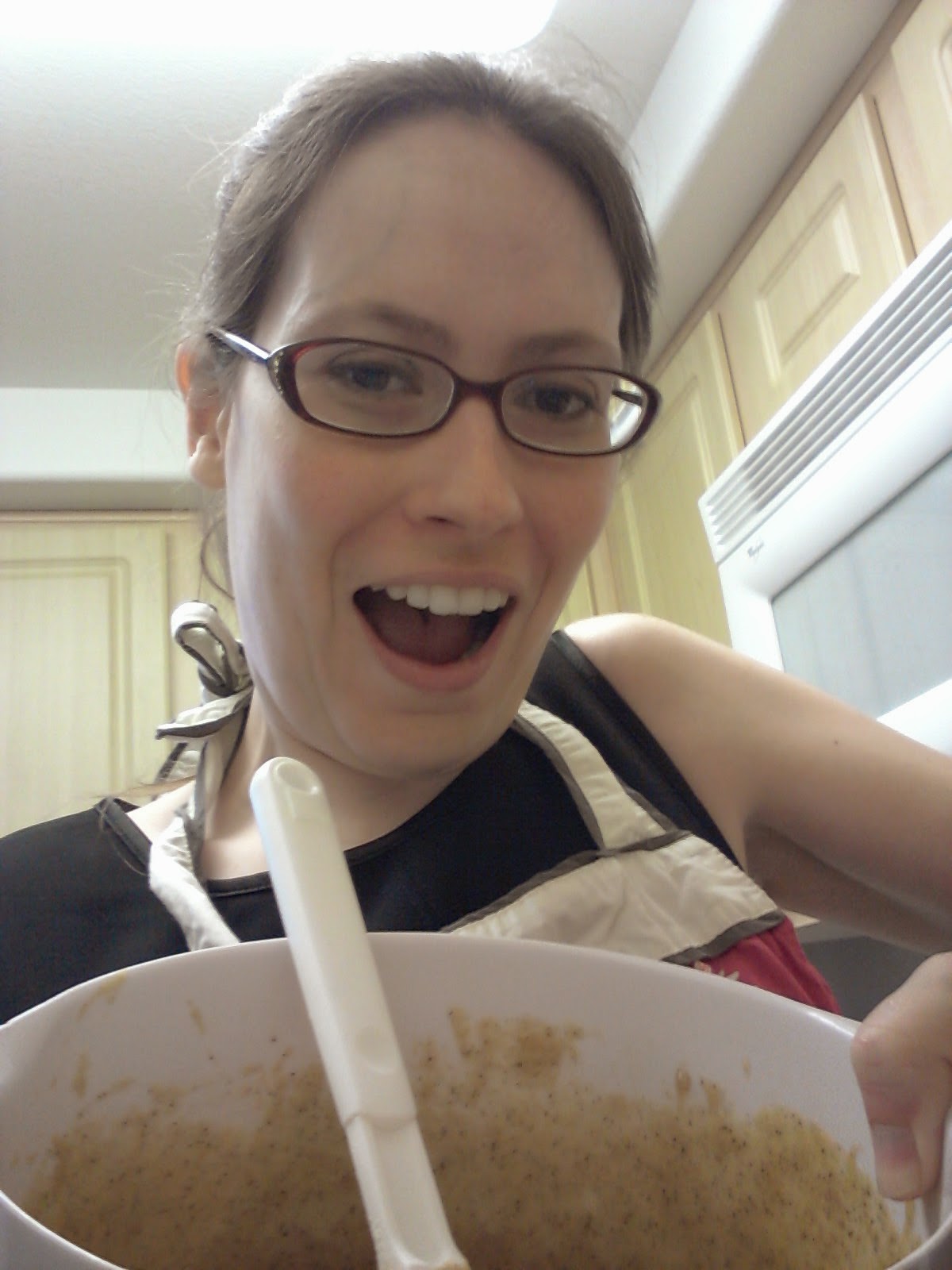
Bringing the joy! With BAKING.

Bringing the joy! With SWEET TREATS.

The idea was shiny but not without its drawbacks. For starters, to write that book properly I’d have to show a lot of the past messes in my life, and even though I know everyone has a lot of mess in their lives at one point or another, it’s still not the most comfortable proposition. Plus I know if I wrote that book the way I wanted to write it, I’d get rape threats for sure. Which, I mean, I kind of feel is inevitable, but it does have a dampening effect on my desire to pursue the project.

Also, I feel the need to point out that yes, we live in a world where female writers think about rape threat potential when planning their careers. Yup.

One of the great things about this hypothetical memoir is that it has a great redemptive arc. And I just read a blog post by Penelope Trunk telling me publishers want redemptive memoirs. (As an aside, I completely agree with her about Jeanette Wallis’s The Glass Castle. I was so disappointed when it ended. I wanted to know how her crazy childhood affected her adult life. To me, that was the interesting part, more so than the redemption. And then the book ended right when we got there!)

Anyway. Note the title of my memoir. I WAS a Manic Pixie Dream Girl. Past tense. Because I don’t really think I am one anymore. How’s that for some redemption?

Why do I think I’ve changed? Well, I’ve been meeting a lot of people for the past several months. Including a lot of guys who I’m sure I could have helped discover their joy. Or at least made myself very unhappy trying. But I’ve lost almost all my interest in doing that. (I mean, okay, not ONE HUNDRED PERCENT of my interest, but hey, no one’s perfect.)

Like, I could never date a workaholic again, and I would be completely happy with that outcome. Ecstatic, really. Workaholics are thick on the ground where I live. And they are the perfect people to help rediscover their joy and the fact there’s a world outside their offices and all that jazz. Also, I totally disagree with their life philosophies. I think they’re more likely than not to regret being workaholics later in life. I mean, look at the top five regrets of dying people. But, I mean, whatever. Maybe they won’t, and in the meantime, it is so amazingly lovely to have that not be my problem.

It is amazing how liberating it is to realize how many things are not my problem. He can’t ask me to do something with a reasonable amount of lead time? Not my problem. He doesn’t see the importance of a social life? Not my problem. He has deep existential pain? Or, you know, some kind of complicated problem? Not my problem. He doesn’t like that I don’t drink? Not my problem. He doesn’t like some detail about my past? Not my problem. He’s unhappy and lost his ability to appreciate the little things? Not my problem. He lacks a sense of wonder? Not my problem. He tends to mansplain? So not my problem. Especially if it’s anything remotely related to writing. I’m currently perfecting my “Why do you think I want to sit here and listen to this?” face. (It needs some work. I’m still way too nice.)

I know to some of you that last paragraph will sound cold. Of course I help when I can and it is appropriate to do so. But refusing to take on other people’s problems means I can take a lot better care of myself. And a lot of that stuff is, frankly, a waste of my time and energy. As it turns out, it really sucks to be a Manic Pixie Dream Girl. It’s a hell of a lot of work for very little reward.

So yes, I was a Manic Pixie Dream Girl. But now I’m just Amy, and I’m pretty happy with that.

Read Full Post »

What does it mean to respect yourself?

That is a question one of my friends asked on my last post, and I’ve been thinking about possible answers ever since. I’ve gotten to the point where I have a good idea of what respecting myself feels like, but as it turns out, putting that feeling into words is not without its challenges.

So I took myself off to the Merriam-Webster dictionary, which defines respect as an act of giving particular attention. When we act with respect, we act with consideration. It’s also defined as high or special regard, i.e. esteem. So when we are talking about respecting ourselves, no surprise, we are talking about self-esteem and self-consideration.

It’s hard to talk about self-respect sometimes because we live in a culture in which confidence is sometimes equated with arrogance and self-consideration is sometimes equated with selfishness. And of course, arrogance and selfishness are attitudes that many of us strive to avoid, to the point that we can end up overcompensating. Which is why Matthew McConaughey’s point that it’s easier to respect others when we’re already respecting ourselves is so critical.

I think of self-respect as fostering a relationship with ourselves. Just as we put in a lot of time and effort building our relationships and friendships with other people, so we can put in time and effort into our relationship with ourselves. Getting to know ourselves, and getting to know how to take care of ourselves and what we need to function well are fundamental acts of self-respect.

20150228_161240 (1)

I can’t talk about self-respect without bringing up boundaries. Setting and keeping healthy boundaries is also an act of self-respect. Some people do this so automatically they don’t even have to think about it. And some of us have to practice and do this a lot more explicitly.

It is harder to maintain self-respect (or learn it in the first place) if you spend a lot of time in an environment in which you are not receiving external respect. When you’re with people who don’t value your opinion, your comfort, or your emotional or even physical boundaries, it becomes easy to internalize these attitudes of disrespect. And of course, it’s in these people’s best interests that you do so, as it is perpetuates the dysfunctional system. This is one of the reasons why mindfully choosing the people with whom we spend time and develop intimacy is so important.

What does self-respect mean to me personally? I’ve made a little list.

  • Taking care of my physical needs, such as doing my best to get enough sleep, eat good food when I’m hungry, rest and recover when I’m sick, etc.
  • Taking care of my emotional needs, such as having people in my life with whom I don’t have to pretend when I’m having a hard time, reaching out for support, doing self-care, fostering supportive connections with others, doing activities that make me happy, taking alone time when necessary, etc.
  • Taking care of my mental needs, like engaging in projects that I find challenging and interesting, trying new things, learning, asking questions, having an artistic outlet, etc.
  • Prioritizing my time and energy for people and activities that are generally positive to my well-being.
  • Setting and enforcing appropriate boundaries, and surrounding myself by people who support this.
  • Protecting myself from the disrespectful behavior of others.
  • Taking ultimate responsibility for my decisions, which also means not being too easily swayed by others’ opinions.
  • Embracing who I am and where I come from.
  • Being kind to myself and relaxing my perfectionism as much as possible; recognizing my own humanity and fallibility.
  • Being my own best friend.

What does self-respect mean to you?

Read Full Post »

This post originally appeared on the SFWA blog, but I know not all of you saw it, so I’m running it here today. As you might expect, given my recent experimentation with this blog, I had several thoughts on the subject. Enjoy!

***

When giving advice on writing blog posts, James Altucher says, “Bleed in the first line.” He talks about blog writing and bleeding a fair amount, actually, so I always think about bleeding when I write blog posts now. But what does that mean, bleeding on the page, and what is the correct way to do it?

As I’ve been experimenting some with my own blog, I’ve also been thinking a lot about sharing and privacy and where to draw the line. It’s something I’ve had to think about often over the years since I do this kind of personal memoir-esque kind of writing, and with opinions flying as to whether it’s a good idea for writers to share their political opinions, it is in the forefront of my mind right now. What is private and what isn’t? What is a great telling detail and what is too much? Where does that line go?

I found some wise advice where I wasn’t expecting it, in Brene Brown’s book Daring Greatly: How the Courage to Be Vulnerable Transforms the Way We Live, Love, Parent, and Lead. (This book is also a great resource both for learning about Dr. Brown’s data and how it pertains to the way humans tick and for managing common emotional difficulties that come up in the writing life.) She gives three guidelines for sharing with the public that I’d like to put into my own words and talk about.

  1. Only share experiences and stories after you’ve worked through them yourself.

I can’t overemphasize this one enough, mostly because it can be so tempting to break. But I do my best to write about things AFTER I’ve already processed them and dealt with the emotions coming from them and learned from them. This can be tricky, as experiences take different amounts of time to process (and of course, sometimes you think you’ve done so only to find out there’s more to do).

For example, I waited over six months to write this post about losing my chosen family. I couldn’t write about it earlier; I couldn’t have done so from a grounded place, and therefore I couldn’t have written a truly effective essay. That is why when people express concern at any of my blog posts, I always feel slightly surprised. By the time I’m writing about something, there is rarely any reason to worry. The stories I tell are a means to an end. Which leads us to the next guideline….

  1. Have a reason to share that serves your readers.

The point of blog writing is not to bleed indiscriminately on the page or to merely shock by flooding your audience with personal details. Every story has a reason to be told. Every shared experience should lead to some kind of revelation.

In some ways, writing blog posts reminds me of teaching. In the process of writing, I reaffirm lessons I’ve already learned and sometimes gain a stronger understanding of my subject matter. But as with teaching, I can’t write about something when I haven’t at least grasped the basics.

And I’m always writing with an end goal in mind: What ideas am I trying to communicate? What do I want my audience to take away from this post?

  1. Avoid sharing in order to get your own needs met (i.e. to receive validation, praise, support, etc.).

We want to publish every blog post from a position of strength, which means publishing it to serve our audience, NOT to get some emotional need met for ourselves. Blog posts aren’t therapy. And as writers, the more we can let go of any expectations we might have as to the response a post will receive, the freer we are to craft a powerful piece.

Sometimes, of course, a post will generate an outpouring of support, and that’s perfectly all right. What we want to avoid is needing or expecting it to do so. The more we depend on the response, the more we’ll become tempted to pander to our audience to receive that response.

These three guidelines boil down to this simple principle: So often when we’re sharing in public as writers, it is not about us. This may seem counterintuitive since we are sharing personal stories and opinions, not to mention letting people know about our work. But blog posts at their best are about not just us as the writers, but the relationship between us and our readers. And sharing personal stories can be a powerful tool for conveying emotions and ideas to our readers, as well as creating a sense of connection.

We don’t always want to hold back from bleeding on the page, but it should be a mindful act. We want to bleed for the right reasons.

Read Full Post »

Last summer I lost my chosen family.

I was really upset. I spent a few days dealing with logistics and trying to finish the things I was supposed to finish. After that I had cleared my schedule to do GISHWHES. But I didn’t really do GISHWHES. Instead I sat around in my living room and stared at stuff. Oh, and I broke up with someone. Then I got a not-very-nice email while shopping for luggage at Marshall’s, and I felt like I might have a panic attack so I went home without buying anything. And then I went to the UK.

When I got back from the UK, I was numb. All my emotions felt muted. Even when I was spending time with people I cared about, I felt like there was this new and unfathomable distance between us. I went to parties and stuff because there were parties and stuff on my calendar. I made plans to hang out with people because I needed new friends and I needed the friends I still had, and friendship doesn’t just spontaneously happen. But I felt like I was going through the motions and waiting for time to pass.

20150130_171056

I was numb for months.

MONTHS.

It felt like years.

I wondered if this was just the way I was going to be from now on.

I wondered how I could seem the same on the outside when I felt completely alien on the inside.

I wondered if I’d ever be able to trust my own judgment.

And then the numbness began to slowly fade. That took awhile too.

And now it’s mostly gone, except when it isn’t, and without the numbness to protect me I’m crying in bathrooms, and I understand why I had to be numb for that time. Because this has been really hard.

At some point a few years ago I thought, well, I couldn’t choose my given family, and that was unfortunate, but now I could have a chosen family of friends so everything was going to be fine.

But everything was NOT fine. Things fell apart. Physical boundaries were violated, emotional boundaries were violated, my words were dropping into a void, and I realized my life hadn’t changed as much as I had hoped. I still didn’t matter the way I wanted to matter.

In my darkest moments this fall I felt I had failed completely and utterly. And I told myself sternly that even if I had, I was not allowed to give up.

I remember writing blasé blog posts in the early years of this blog about how I had been a people pleaser but I was going to change, and how much healthier it would be to not be a people pleaser anymore. What I didn’t know back then is that being a people pleaser is a really effective defense mechanism. And without it? Well, without it, I had to face the painful truth.

Without it, I couldn’t always turn everything back on myself. Without it, I couldn’t keep making excuses for other people’s behavior. Without it, I started setting reasonable boundaries and then standing back to watch the fireworks, instead of not doing it so I could tell myself that if I just did it, everything would be fine. I got to see that sometimes people just do and say shitty things, and there is nothing I can do about it except communicate as clearly as possible, take care of myself, and try to be kind but firm. Especially firm.

I’ve felt like I’ve been hip-deep in bullshit for months. And yet at the same time, I realize that until now, I’ve been nose-deep and barely able to breathe. Changing this has perhaps been the hardest thing I’ve done.

I haven’t written directly about what happened last summer before now because I was worried about what you would think. I was worried about what everyone would think. I was worried that somehow by talking about it, I’d make it even worse. But lately, as I am able to see what’s going on around me more clearly, I don’t care as much as I thought I did. And if I have to choose between caring what you think and writing about what is true, I’ll choose writing about what is true. That’s who I am. That’s what matters to me.

And lately, I have come to realize that maybe, just maybe, I have another chosen family. They don’t look the way I thought they would. They’re scattered all over the place, and they’re not all friends with each other, and they’re very different from one another too. They are the people I trust, or am coming to trust. They are the people who listen. They are the people who respond to boundary setting with respect and patience. They are the people who remind me in a hundred small ways I am not alone.

Last summer I lost my chosen family. But coming out of the numbness now, I see that I am closer to finding myself.

Read Full Post »

Once upon a time there was a whisper, a wish really, running in the back of my head: “Surely there must be something better than this?” I was like a bird captured in a trap, struggling until my body was breaking and I was completely exhausted. And I was still in the freaking trap.

Once upon a time I simply couldn’t continue, and the whisper became a declaration: “I will believe there is something better than this even though that doesn’t even seem possible.” I went all in. I walked away for the first time, and I began to dismantle my life, piece by painstaking piece.

Things got worse.

And worse.

The forest, the cave, whatever you want to call it, it was so dark. And the journey was so slow. And I was afraid, and I doubted.

Photo Credit: eflon via Compfight cc

Photo Credit: eflon via Compfight cc

One of my greatest fears over the last several years has been that it would all be for nothing. That I wouldn’t be able to change myself or my life. That there really wasn’t anything better. That all of the time and effort and my suffering and other people’s suffering, that all the sacrifices I was making, would be fruitless. That my lifelong belief that more is possible for us than we realize would be proven wrong. That in my struggles, I’d end up making everything worse, and then I’d have to live with that.

I was afraid, and I clung onto my belief that I didn’t even really believe in like it was a lifeline. There must be something better than this. And I can do this. I will do this.

I won’t give up, I’ll keep going forward no matter what.

When I think back on 2014 in the future, I will remember it as a difficult year, yes, but I will also remember it as the year I left that cave.

Last month, I wrote about being stuck, and I said: “I’m not waiting for doom to fall down onto my head like an anvil.” I looked at that sentence after I wrote it, and I thought, “Oh shit. Oh shit. That is actually true. I don’t feel like that at all.”

What has changed? I have learned how to prioritize taking care of myself, and as a result, I no longer feel powerless. I don’t take on other people’s problems. When a person repeatedly treats me poorly, I don’t deal with them anymore, and honestly, I don’t care who it is. Because I deserve better than that, and I can have better than that. I work hard to surround myself with people who not only care about me but who are actively good for me. I come home to my lovely apartment with my sweet little dog and my piano and my books and my bathtub and my warm blankets, and for the first time in my life, I feel safe.

So now I know. There was something better the whole time, and I know because I’m living in it.

I’m so relieved. I’m so grateful.

Read Full Post »

« Newer Posts - Older Posts »