Feeds:
Posts
Comments

Revising a Novel

My friend Danielle suggested that I write a post about my novel revision process, and since I just completed revising my most recent novel, now seemed like a good time. And while I’m at it, I’m going to talk about the submission process too. And then you will understand more about how my life works.

I revise very little while I’m writing my rough draft. My main goal is to keep writing and finish the draft. Occasionally I’ll go back and fix some little thing because it’s distracting me. And if something major breaks, then I might have to do more (like add a few scenes or even start over). But in general, my rough draft is not revised as I go.
Once I have the rough, then I print out the entire manuscript and read it to see what I’ve got. While I’m reading, I make a new chapter-by-chapter outline of everything that happens and how many pages each chapter is. (I do this when I’m reading a novel for critique as well. It makes it so much easier to keep track of everything.) I also take a lot of notes. I’ve also probably taken a lot of notes while I was writing the rough draft of things to check on and things to change. So I take care of all those notes and clean the prose up a bit (enough so it won’t be completely embarrassing) and that’s draft 2.

This is the point where I give it to my first reader. He reads for larger scale issues; he is a structure genius, and he also reads for plot, character, world-building, theme, voice, etc., etc. I use his notes to generate a third draft.

Then I hand it to a few more readers. They too read with the big picture in mind, although they also give me more scene-scale notes (and sometimes even smaller scale stuff). They also sanity check how my changes worked out between drafts 2 and 3, which is super helpful since I can’t always tell if I’ve gone too far or not far enough with changes (or nailed them, which does occasionally happen). From their notes, I plan and execute draft 4.

If I’m feeling unsure of draft 4, I will give the novel to a few more readers and make more changes. Once I am confident about the strength of the book, I do final clean up. This involves a novel-wide search for adverbs and another search for the word “that.” I sometimes search for other overused words as well. For this novel, I read the entire book out loud to assist my search for errors and check rhythm, especially of dialogue.

While I’m doing this last clean-up pass, I’m also starting my query letter and my synopsis. The query letter is basically a sales pitch of the novel, sometimes similar to what one would find on the back cover of a book, one page or less. The synopsis summarizes the entire novel, also ideally in about a page. I’m also updating my agent spreadsheet.

Once I am finished with the novel, the query, and the synopsis, I begin querying agents. This means I email my query package to agents (which depends on the agent’s guidelines, but usually includes a customized query letter and perhaps some sample novel pages and/or the synopsis) and keep track of submissions and responses. Depending on how things go, I could spend many months doing this. At the same time, I am beginning my next novel project, generally by doing whatever work I need to do to select the project, and then brainstorming, researching, and outlining.

The length of time all of this takes can vary a lot depending on the length of the manuscript, the extent and number of revisions, the schedules of readers, and how smoothly the rough draft goes. I do have some target dates in mind by the time I begin a rough draft, based on the premise that the project will go fairly smoothly. And since I don’t write a huge amount of words every day, I can generally adapt as I go when there are snags. A lot of my writing time is actually spent thinking.

So this is my writing, revision, and submitting process. Each writer has their own process: some revise a lot as they go, some have readers as they go, some use a lot more readers in the revision process, some use less. The important thing is figuring out what works.

If Not Me, Who?

Once upon a time (last week, if you want to get particular about it), I wasn’t in the best mood. I’d slept poorly, so I was very tired, and I’d just gotten my flu shot, so my arm hurt, and I’d been feeling socially disconnected and it didn’t seem to be getting any better, so I was grumpy.

I was perusing Facebook that afternoon, and I saw a friend’s status message. It was obvious she was feeling as disconnected as I was, and that she was dealing with a lot of hard emotions. I made a comment about my own desire for a tribe and left it at that.

Later that evening, she made a long, clarifying comment on the thread. It was a pretty long thread at this point, with many of her friends offering love, support, Skype time, etc. And I thought, she still sounds pretty upset. Maybe I should call her.

I immediately thought of lots of good reasons why calling her was a terrible idea. It was almost ten p.m., and I’d be putting her on the spot, and I hadn’t phoned her up in years (mostly seeing her at group events), and some people hate talking on the phone, and I was tired, and it might be weird, and she obviously had all these friends from this thread who were offering support, so she didn’t need mine. Who did I think I was, anyway?

But then I thought of Emma Watson’s UN speech on feminism, which I had watched earlier in the week. She’d talked about how she questioned why it was her standing up in front of the UN talking about feminism. And then she’d asked herself these two questions:

If not me, who? If not now, when?

Photo by Amy Sundberg (Hey, that's me!)

Photo by Amy Sundberg (Hey, that’s me!)

Those two questions echoed in my mind. They aren’t particularly original, perhaps, but more importantly, they are pertinent and simple. If I wasn’t willing to reach out to my friend in need, who would? And what did that say about me? And did I really think some vague Facebook comment was sufficient support?

I was afraid of looking stupid and awkward. But was that fear really what was important? I didn’t think so. And I picked up the phone and called her.

I was the only friend that day who did so.

If not me, who? No one, that’s who.

I hope the conversation we had helped my friend, but it ended up being exactly what I needed. It got me out of my head loop and back into reality.

Here’s what I learned or was reminded of:

  1. Appearances can be deceiving. Just because a person looks like they have a million and one friends does not mean they’re getting the support they need. Just because a person looks happy does not mean they’re doing great.
  2. Active reaching out matters. When we’re in a state of overwhelm or emotional overload, sometimes even picking up the phone and deciding who to call or text can be really hard. Making an offer to support a friend is great, but following it up with something concrete is better. (Especially something concrete that can be easily refused, like with a phone call that the person doesn’t have to answer.)
  3. Sometimes helping someone else is the best way to help yourself.
  4. Connection takes courage. I’ve been feeling unsafe in some of my usual social spaces. And it’s so easy to allow that feeling to leach into feeling unsafe in general. And feeling unsafe is such a deeply icky experience. But at some point, I needed to open myself up to the possibility that not all connections will lead to a lack of safety, and to trust in my own ability to deal with inappropriate circumstances should they arise.
  5. Conversation is a give and take. My friend really wanted to hear about similar problems I have been experiencing. Me being willing to be open and vulnerable with her helped her to do the same with me, and vice versa.
  6. Connection starts with me. I can’t expect meaningful connection in my life if I’m not willing to take a risk and give what I wish to receive.
  7. Connection is a state of mind. That phone conversation cracked me wide open, and then I could more easily appreciate all the connections I’m so happy to have in my life.
  8. If not me, who? If not now, when? 

I’ve been very tired lately, so it probably shouldn’t come as a surprise that I’ve come down with a cold. I’m taking it easy for a few days, and I don’t have the brainpower to tackle the post I wanted to write today, so instead it is obviously time for some adorable dog photos.

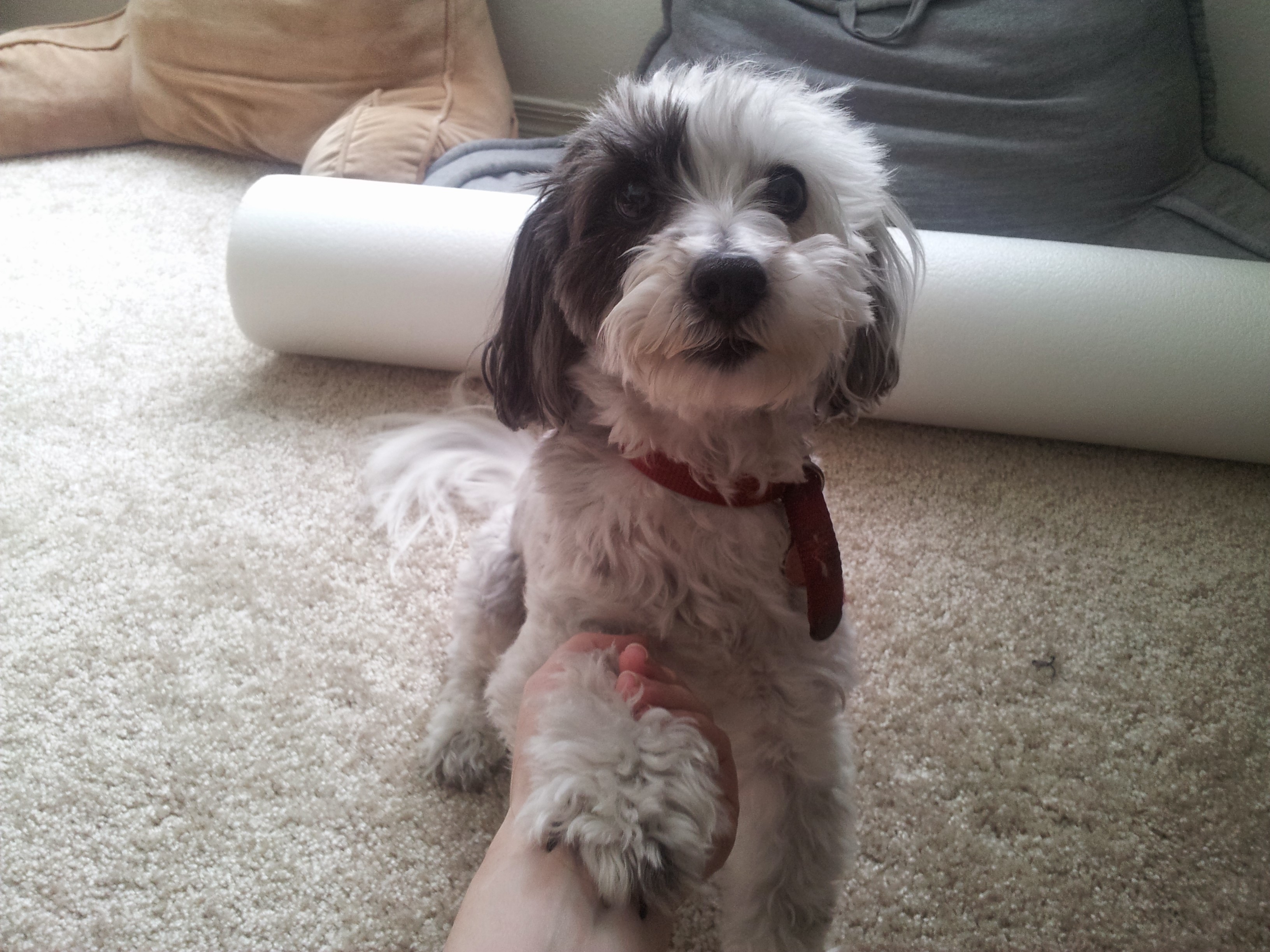
Nala shaking my hand.

Nala shaking my hand.

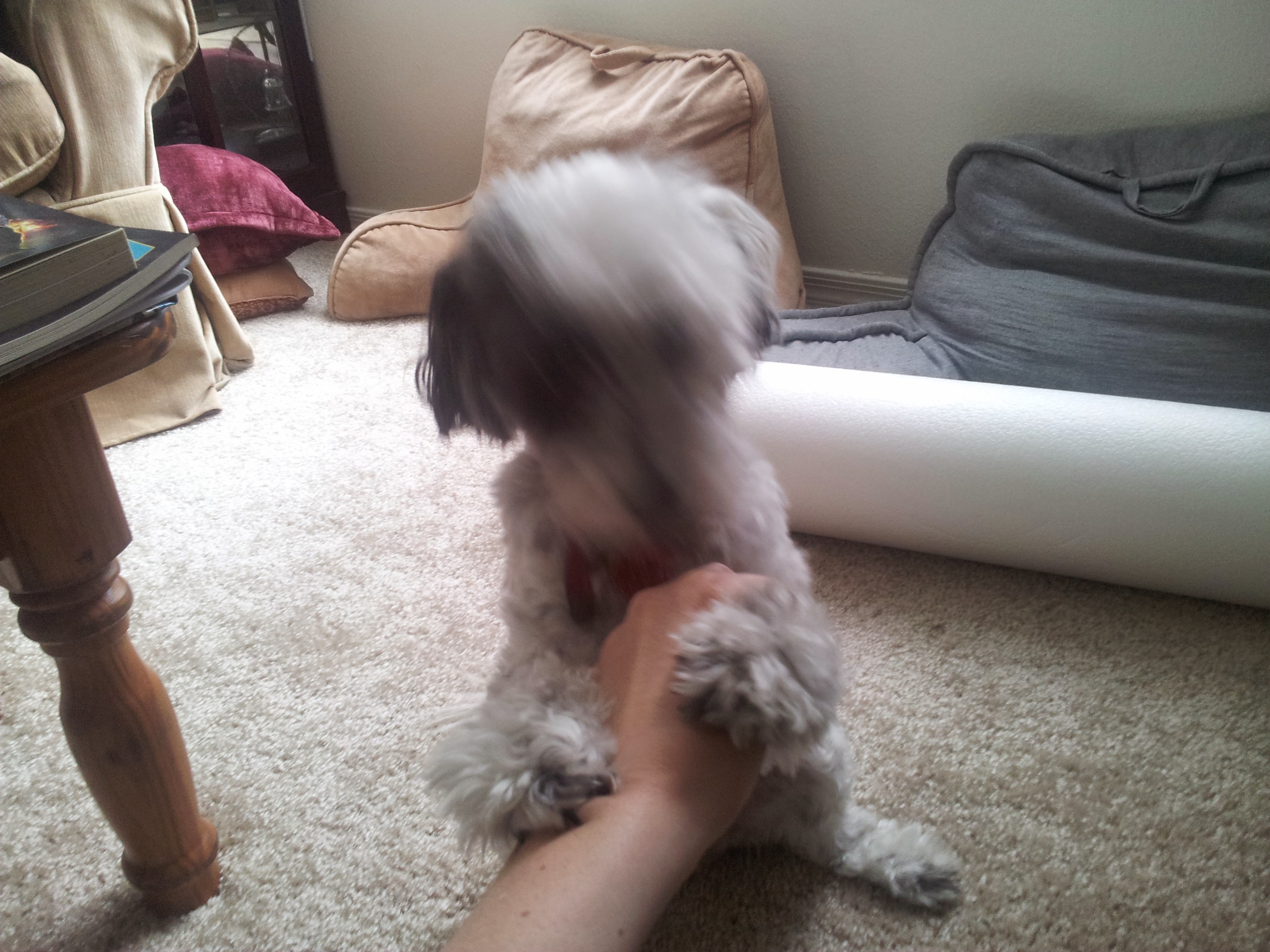
Nala is a very food-motivated dog, so the main problem with doing tricks with her is that she gets so excited, she has trouble focusing enough to figure out which trick I’m asking her to do. Instead she tends to wave her paws wildly in the air and/or wag as fast as she can. But with a little bit of patience, she is happy to shake hands.

The Nala blur.

The Nala blur.

I know this isn’t a great photo, but I love it because it captures how excited Nala gets. She just can’t stay still. This is a different trick in which she grabs my hand with both paws.

In other news, it seems like fall has come along with my cold. When I took Nala outside today, I shivered and realized I’d have to wear heavier clothing if I actually had the capacity to leave my house today. It’s getting dark earlier, and the time change is less than two weeks away. I’m wearing boots again, and the house has held steady at 80 degrees Farenheit today without any A/C. (Yes, I live in a very hot location in a very hot apartment. Who knows what this experience may have done to my already poor temperature regulation abilities.)

I generally dislike cold weather, but for the first time in my life, I am so ready for winter.

I’m also going to take this opportunity to opine on this year’s general disdain towards all things pumpkin spice. I guess it’s supposed to be funny? Are peppermint, egg nog, and gingerbread flavors funny in December? Personally I think they’re tasty, just as I’m happy to be able to order my favorite pumpkin spice chai at the coffee shop again. I’d order that drink all year if I could. As it is, I limp along with the occasional vanilla chai in the spring, but it’s not the same.

Anyway, is the pumpkin spice hatred because of ridiculous marketing? Occasionally I feel like there’s this whole slice of American culture that I’m missing out on because I don’t watch television commercials. I’m pleased to miss it, but once in a while I have a conversation in which I have to plead ignorance and change the subject. In any case, I have trouble seeing how pumpkin spice marketing could reach anywhere near the ridiculousness of Christmas marketing, but I suppose stranger things have happened.

And now it is time for me to rest some more. Until Thursday, my friends.

Life is going forward at a breakneck pace, and I’m feeling kind of tired. So let’s talk about Star Trek today, shall we?

I have very little exposure to Star Trek in my past. The original Star Trek series aired right after the Brady Bunch when I was quite young (maybe around six?) so I saw a few episodes, which didn’t make much sense to me. At some point in my childhood, I also saw the Star Trek movie that has whales in it. In college, I saw a few episodes of Voyager. And this was the extent of my knowledge until the movie reboots came out, at which point I also took it upon myself to watch The Wrath of Khan movie.

Yes, I’ve always been a Star Wars person.

My sparse Star Trek knowledge came up at a party this summer, and a few friends and I hatched a plan to expose me to Star Trek: The Next Generation. Since the beginning of September, we have watched the highlights of Season 1 and are now a few episodes into Season 2.

And suddenly I understand! I’ve heard about the world of Star Trek before, but I’ve never seen a replicator in action. With the little bit of Star Trek I’d been exposed to, it hadn’t really sunk in that it was set in a post-scarcity society. I didn’t know this Enterprise could break into two different ships. I hadn’t thought carefully about the implications of the Prime Directive. I knew Wil Wheaton from Tabletop.

And now that I know them, I’m beginning to notice the references being made to Star Trek around me. They were probably always being made around me and just flying right over my head. This week I met a guy who described what he’s working on as being like the communicators in Star Trek. Before I would have nodded but not really had any image of what he was talking about, but now I know! Someone else referenced some characters from the show, and I got all excited because I knew who they were talking about! It’s like a whole new world of cultural references has been revealed to me.

(And I can’t wait to see Galaxy Quest again because I’m sure there were so many references I completely missed.)

I was afraid I wouldn’t like TNG because it’s pretty much episodic (at least so far), and I tend to enjoy shows with larger arcs. And, um, the plotting (at least so far) is not really all that. It’s pretty predictable, problems are generally solved pretty easily (which, I mean, of course they are because there’s only forty minutes to do it in), and for most of the episodes, I don’t feel a lot of plot-driven tension.

But I reckoned without the characters, the ideas, and the general tone. I don’t know if these are the reasons why other people watch this show, but they certainly are my reasons. Because it is optimistic, and that’s nice to see. And sometimes it’s ridiculous and random and silly (any of the Holodeck episodes, pretty much), and I enjoy the characters’ enjoyment even while I appreciate the absurdity. I love Captain Picard’s speaking voice because how can you not enjoy that diction with that dialogue? It is simultaneously wonderful and hilarious.

And I’ve completely fallen in love with Data. I would watch The Data Show, I really would. I love his expressions, I love his idiosyncracies, I love his desire to understand humanity and become more human himself. It is pure joy to watch him.

So yes, I’m more than twenty-five years late to this party, but even now it’s a great party to find.

I’ve been writing about death a lot. Since my friend Jay died at the beginning of June. Then writer Graham Joyce died about a month ago, and I wrote about that.

Then writer Eugie Foster died a few weeks ago (also from cancer, all three of them from cancer), and I didn’t write about it. Because I felt like I’d been writing about death death death, and also I’d never met her. But her novelette Sinner, Baker, Fabulist, Priest; Red Mask, Black Mask, Gentleman, Beast was one of the first pieces of short fiction that I completely fell in love with after starting to write short fiction myself. It was one of the stories that made me realize how powerful short fiction can be. And also, the title! (Also you can totally go read it right now because it is super good.) So I felt a real sense of loss.

And then a few days ago, Zilpha Keatley Snyder died. I was trying not to write so much about death and grief, but I mean, I have to write about this. So. I tried. And this is what you’re getting.

Zilpha Keatley Snyder was the author I wanted to be when I grew up. She was one of my first author crushes. I loved her name; I loved how dignified it sounded, how I’d never heard the name Zilpha before, how it had three parts instead of only two, and how I could never shorten it because otherwise it didn’t have the right ring. I loved that she lived in the same county that I lived in, which meant writers were real people who lived in real places and I could be one of them someday.

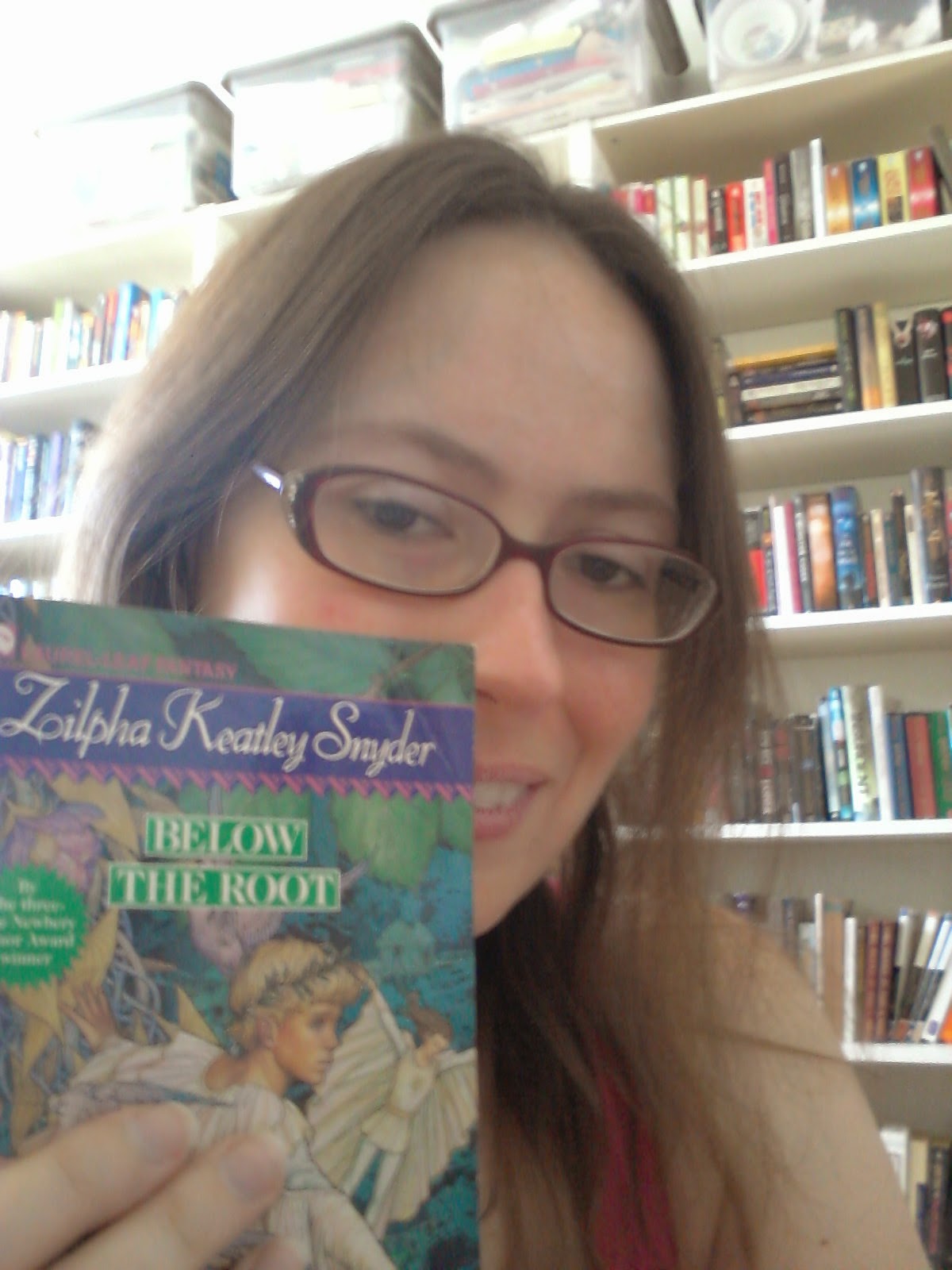
Below the Root, how I love you!

Below the Root, how I love you!

And most of all, I loved her work. I devoured her work. I shared her work with my mom; I’m pretty sure my mom read The Velvet Room out loud to me at some point, and maybe also The Egypt Game, but I can’t remember. I loved the Below the Root series so much, it was one of the books I tried to copy in my own young writing, along with The Wizard of Oz and Anne of Green Gables. I spent about a million hours playing the impossible adventure computer game based on Below the Root. I never beat it, but I got pretty far. Well, at least I thought I did at the time.

And then, just when I might have been getting a little too old to be completely enamored with Zilpha Keatley Snyder’s work (I was probably around 12), I found Libby on Wednesday, which I read repeatedly. Because it was about a girl like me, a girl who was too smart for her own good and didn’t really understand the social maze of middle school and, most of all, wanted to be a writer. I loved that book so hard.

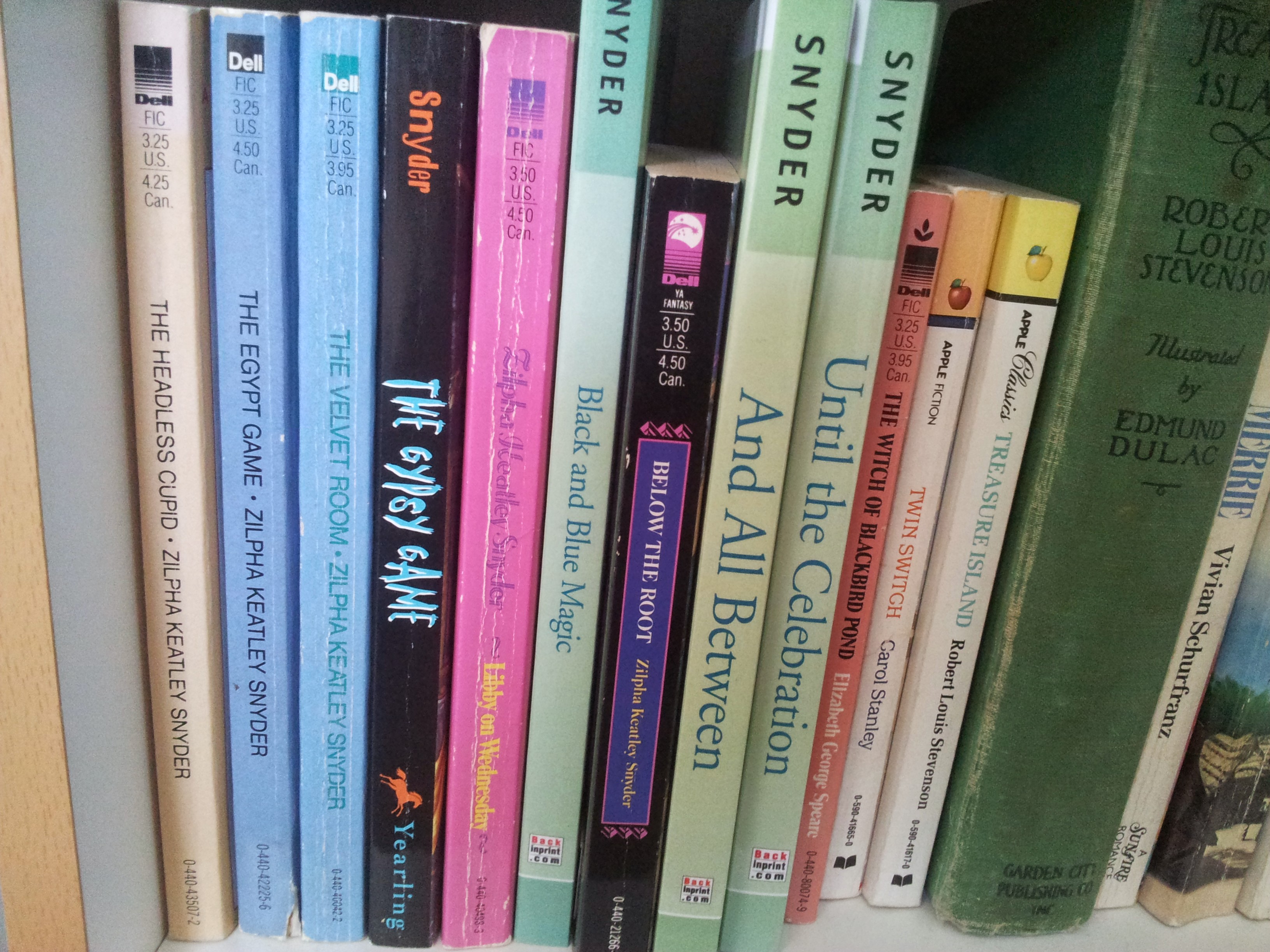
My collection of Zilpha Keatley Snyder novels.

My collection of Zilpha Keatley Snyder novels.

I never met Zilpha Keatley Snyder. But her books meant, and still mean, the world to me. They are a crucial element of my personal book collection. They influenced me both as a writer and as a human being.

I will miss you, Zilpha Keatley Snyder. And I still want to be you when I grow up.

I received a good reminder earlier this week, so I thought I’d share.

If you aren’t familiar with the website Meetup.com, it’s a website where people put together activity groups. So you can join and then find groups in your area that host events that you can attend, and if there isn’t any group in your area, then you can start one yourself! There are hiking groups, book groups, parenting groups, board game groups, support groups, and on and on.

Meetup.com is a website that comes up often in online advice about how to make new friends. The idea is that you can meet people while pursuing your interests and hobbies that you want to do anyway. And you instantly have something in common! I personally know a few people for whom this strategy has worked quite well.

However, I myself tried a Meetup group some years ago now, and I was not impressed. I went to one event, and I didn’t click with any of the people present. It was hard to get there, and then it was all small talk, small talk, small talk, and someone suggested we should arrange meetings to all work out together at the gym, and I threw up a little in my mouth. (To be clear, there is nothing wrong with having a Meetup to hang out at the gym; it is just really not my thing.) I was relieved to go home, and ever since then, I’ve thought, “Oh, Meetup. That totally doesn’t work for me. At all. The end.”

But I still get their emails because I am lazy about getting myself off email lists, and a few weeks ago, I saw a new Meetup group that was exactly my thing. Of course, the first Meetup group I’d tried had also seemed to be exactly my thing and look what happened there, but this was maybe even more so. So I decided I’d try it out.

My first meeting was on Monday evening. I was nervous, and I kept thinking of all the ways in which it might be uncomfortable or boring or plain obnoxious, and I kind of didn’t want to go. But I’d RSVP’d and I’d spent considerable effort preparing for the meeting, and this felt like one of those times I needed to ignore my brain and push myself to go anyway. So I went.

And it was FABULOUS. It was interesting and informative, we had a wide-ranging conversation about topics that I want to learn more about, the people were respectful and articulate and insightful. I was so glad I went.

Nala used to hate her kennel, but now she wants to hang out in there all the time. (Yeah, I might be reaching a tiny bit, but...cute dog photo!)

Nala used to hate her kennel, but now she wants to hang out in there all the time. (Yeah, I might be reaching a tiny bit, but…cute dog photo!)

So here’s the reminder I took away from this experience: Just because you’ve tried something once doesn’t necessarily mean you shouldn’t try it again. Generalizations can sometimes be a useful shorthand, but when they’re formed with too little information and without being aware of variation, they can be inaccurate and potentially harmful.

Also, sometimes brains are overly negative. And sometimes we have to do our best to ignore them until we can prove them wrong. Being able to tell the difference between a real threat or issue and unfounded negativity is an incredibly valuable life skill.

And Meetup.com can sometimes be awesome! Good to know.

On Solitude

I want to write about solitude today, and finding myself uncertain as to how to begin, I looked up some famous quotations on solitude.

From these, I ascertained that people are very divided about the idea of solitude. Some people love solitude, finding it absolutely essential to their well-being, while other people wouldn’t choose solitude if they had another choice. Solitude is simultaneously viewed as exalting and painful, beautiful and tragic.

I found a reference to Rainer Maria Rilke’s Letters to a Young Poet, and I located my copy, given to me when I was a young artist myself, and started flipping through it, and now I want to read the whole thing again. He references solitude several times in its pages. I particularly like this passage:

“Therefore, dear Sir, love your solitude and try to sing out with the pain it causes you. For those who are near you are far away, you write, and this shows that the space around you is beginning to grow vast…be happy about your growth, in which of course you can’t take anyone with you.”

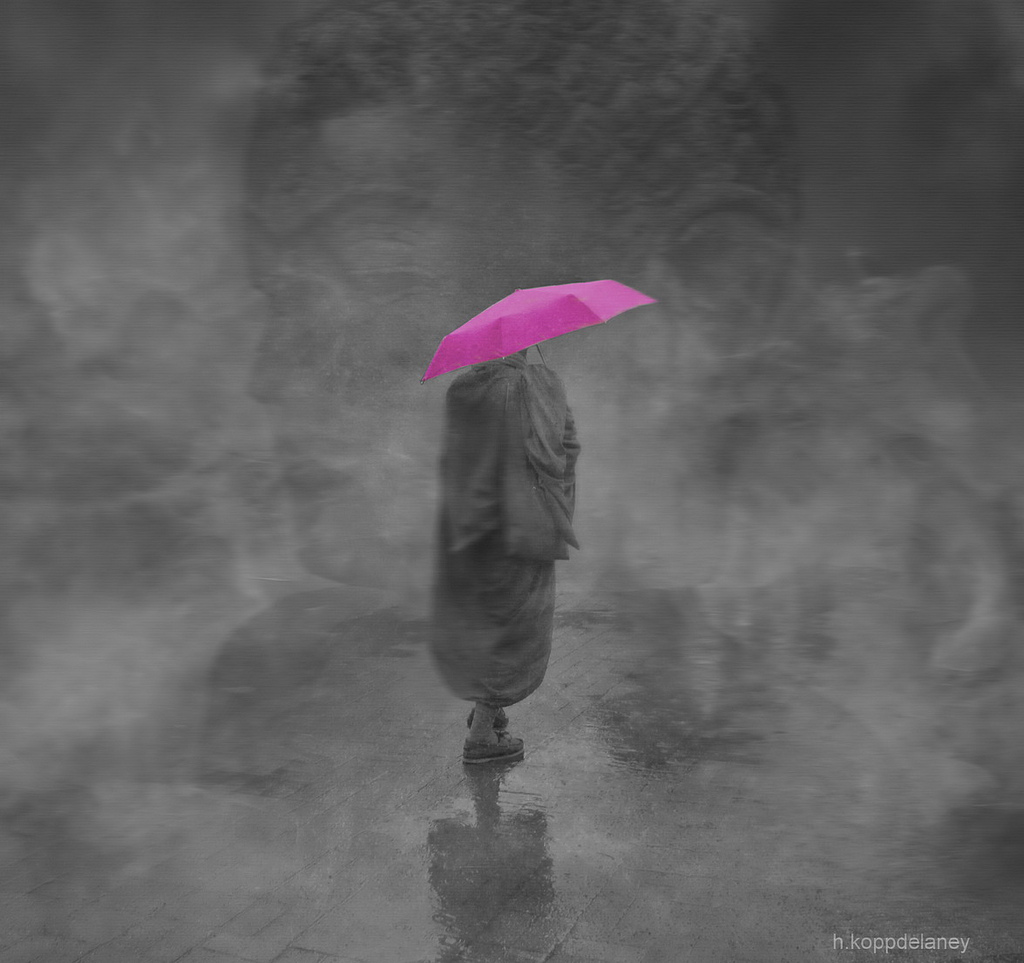
Photo Credit: h.koppdelaney via Compfight cc

Photo Credit: h.koppdelaney via Compfight cc

There is this common idea that solitude is helpful and perhaps even necessary for artists to develop their own voices (and visions) and do the work required of them. Certainly writers have to sit and be focused inside their own heads while writing, even if they are physically surrounded by people. For some other types of artists, solitude is perhaps less critical.

We each have our own capacity for solitude, and that capacity can change over time and in different circumstances. It can be deliberately expanded (meditation retreats, anyone?) and it can be deliberately contracted. Within limits, of course.

I have been craving more solitude recently. I hit the point far more quickly than usual when I must take time for myself. It’s not simply laziness or fatigue, although I am tired; it’s a strong need for the space to introspect and just be. There is so much going on inside of my head right now, and it’s not that it’s so very private in nature but rather that it feels like the kind of thing I need to sort out for myself, with the occasional helping hand along the way.

Perhaps solitude is important not just for creative work but also for personal change. It’s almost as if I need some time to get to know myself again.

I read some writing advice recently that I think is useful both for writers, and for the people who would like to understand what our lives are like a bit more clearly:

“Don’t quit. It’s very easy to quit during the first 10 years. Nobody cares whether you write or not, and it’s very hard to write when nobody cares one way or the other. You can’t get fired if you don’t write, and most of the time you don’t get rewarded if you do. But don’t quit.”

–ANDRE DUBUS

This is so very true. Nobody cares deeply about my writing except me. Which is why I can be kind of a hard-ass when it comes to my schedule. And why I care so very much about my priorities and goals. Because if I don’t care, that’s it. They will never happen. End of story.

Becoming good at things takes a long time. Even if some of it comes easy to you, it takes a long time, just less of a long time. It took me twelve years to become as good at singing as I wanted to be, and really more like fifteen to get it completely secured. I took off maybe a year during that period of my life, and the rest of the time, I sang and sang and sang some more. Even when I knew I sucked. Particularly when I knew I sucked.

This is how Nala practices getting better at writing. Or maybe how she practices becoming even cuter? Unclear.

This is how Nala practices getting better at writing. Or maybe how she practices becoming even cuter? Unclear.

When I first started writing, I wasn’t in it for the long haul. I don’t know if you can be, really, right when you’re starting out. There’s an experimental phase, when you try something out. See if you like it. See if you’re at all good at it. See if it has any meaning to you. See if this is a thing to which you can devote yourself. Because not everything will be. And if it’s not for you, then it’s not only okay to quit but a good idea. This level of commitment is not for everyone.

I noticed the shift when this changed for me. When writing became a true calling. When I realized I’d be writing anyway, even if I couldn’t turn it into a career. When writing became less about the desperation of wanting a particular project to sell and more about doing the work. When the writing became more interesting and all-consuming than what would happen afterwards. When whether this novel sells or not became less important because I’m already thinking about the next several potential novels to write.

Mind you, I’m not saying that I don’t care about my career or that I don’t care about publishing my novels. I do care, and I take the necessary steps towards that goal. But I care about the writing itself more, and knowing this makes doing the business and career stuff much easier. I want to become better not so I will then become published (although that would be great) but because I’m interested in becoming better for its own sake. I no longer have to look for external validation to reinforce my commitment. I’m committed, full stop.

The early stages of becoming a writer are so very much about not quitting. And putting in time and practice, and finishing things. And finding a way to hang in there through the rejection and the failure and the process of becoming better. And falling in love with telling stories, over and over again.

New trendy social media service? Oh yeah, let’s talk about Ello for a bit, shall we?

Ello is the hot social media platform du jour. Some people are saying it could potentially take over for Facebook (especially people who really hate Facebook and who are upset about the legal names thing going on there right now). Some people are saying it could potentially take over for Twitter (especially those who are upset about the new algorithm Twitter has promised is coming that will sort its feed).

My take? It’s way too soon to say, and also, Ello is a bit of a mess right now. Apparently some designers are involved with it, and to say its user interface is not intuitive is probably an understatement. It is difficult to figure out how to do basic things like make a post, reply to a post, and find people. It’s also missing many basic features that we have come to know and love: the ability to share someone else’s posts, the ability to like or favorite a post, privacy and safety settings such as the ability to block a user, non-intrusive notifications, etc. So we’ll have to wait and see how well and how quickly Ello cleans itself up.

I’m also interested in the population that has “seeded” Ello. With Google Plus, Google seeded the service with people their employees invited. Perhaps as a result, the user base of Google Plus skewed heavily male and very technology-based. (Now that it’s been active for more than three years, this might have changed, I’m not sure.) This early community definitely set the “feel” of Google Plus as a site. I don’t know who all is on Ello right now, (the SF/F writers are there experimenting, as we so often are, but ultimately we’re not a huge user group) so I don’t know what “feel” might result from the initial user base, but it will be interesting to watch and see.

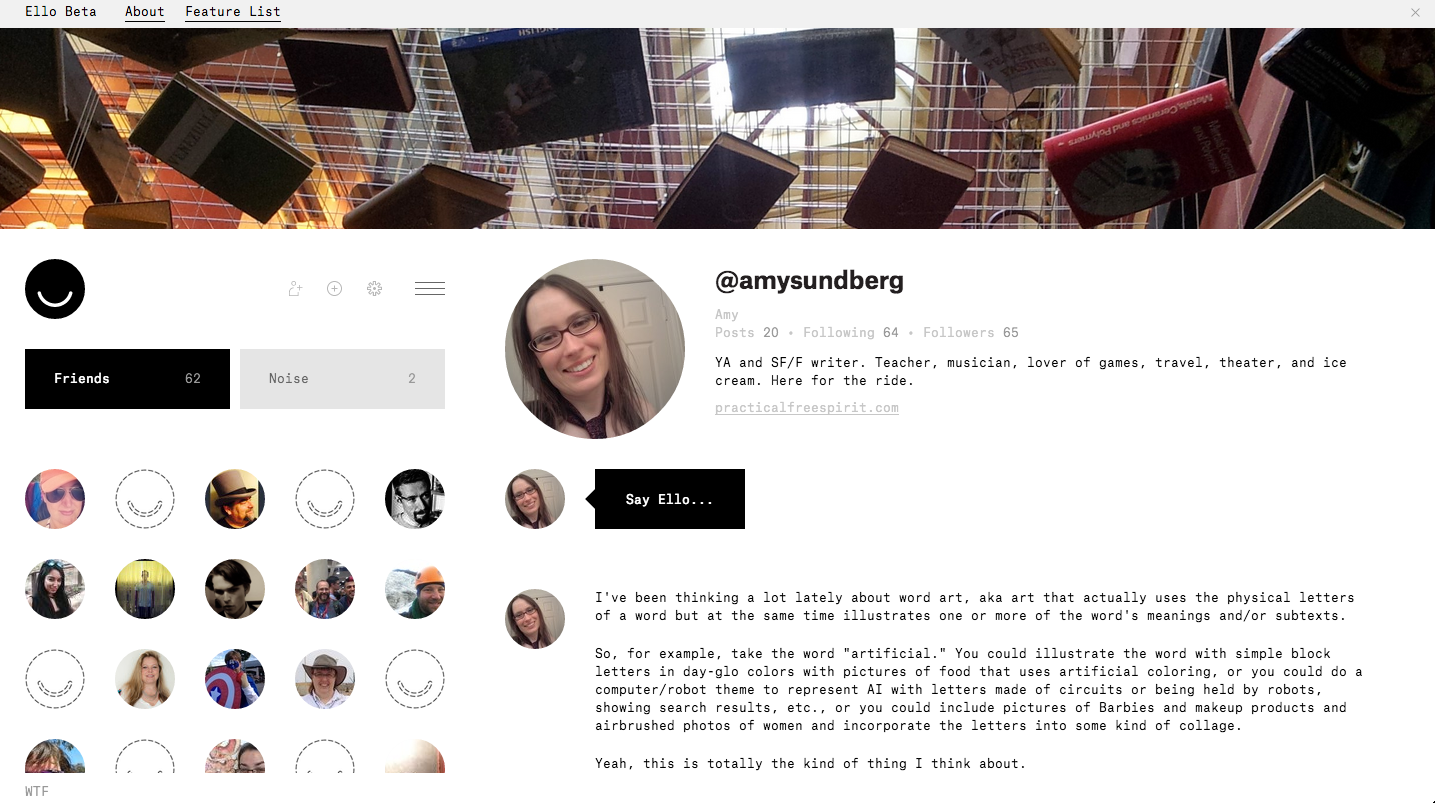
My Ello page.

My Ello page.

As a content creator, one of my main interests is in figuring out what role (if any) Ello could play in my content strategy. I know a lot of people simply cross-post their content everywhere, but as a content consumer, I dislike this strategy. What makes for a decent to good tweet does not necessarily (or even often) make for a good Facebook post, and having to read the same asinine observation twice does not make me twirl around singing about hills being alive before leaving a nunnery in order to join the domestic labor force.

Instead, my reaction to replicated content tends to vary from the passive zombie stare of apathy, complete with string of drool, to a slight irritation that I am wasting my time and maybe should hide some more posts from my feed. The exception to this? When someone has more substantial content to which they’re cross-linking (a blog post, article, new website, or what-have-you). That I don’t mind as much.

But if I don’t want to merely use Ello as yet another cross-posting ground, the question becomes, what is a good Ello post? To what kind of content does it lend itself? What can I enjoy posting on Ello that I won’t be posting somewhere else? And will the engagement received be worth the time to develop the content? I don’t have answers yet. It depends both on how the technology develops and in what directions the user base grows.

In the meantime, Ello users get to experiment. We get to try lots of different types of content, and we get to accidentally delete the comments on our posts (oops!), and we get to poke and prod and complain about how things work. And we also get the opportunity to begin creating content for a new platform that is not quite as clogged with content as all the older social media sites.

Should writers definitely join Ello right now? Eh. Not yet. You might want to reserve your username of choice in case it really takes off. But for right now, it’s primarily for those of us who enjoy playing in the frontiers of social media.

Interesting in experimenting? You can find me @amysundberg or at this link.

I keep a log of all the books I read every year, and when I looked down my list at the end of last year, I noticed something. I was doing a great job reading many women writers. I was happy that I was branching out and reading a variety of books, not just YA and SF&F. But the number of POC writers on my list was low. Eight percent of my total.

I looked at past reading years (I’ve been logging since 2009), and I found that no matter how many books I read each year, the number of POC writers I was reading consistently fell between seven and ten percent. Not completely horrendous, but also not great. So I told myself, I’ll try to pay more attention in 2014 and up that number. (It would require another post to discuss why I think this is important. I’m adding it to my list.)

I did a little bit of research to find more POC writers I thought I might like, and then I did a little bit more. It was more work than I’d thought it would be, because a lot of the lists repeated the same few names over and over again, or they turned out to be about books with POC characters written by white writers, which wasn’t exactly what I was looking for.

And then yesterday I was looking over my reading list so far from the year, almost three-quarters of the way in, and I realized I’m not doing enough. POC writers only account for eleven percent of my reading this year, which is only a few percent higher than years I wasn’t paying any attention at all. I decided I’d have to be more systematic if I was actually going to improve.

So I spent more hours combing through the internet, looking for writers and specific books that I think I might enjoy (sometimes I can be a bit picky). I poured through lists of POC writers, I read some posts from the #weneeddiversebooks campaign from earlier this year, I peered at author photos and read their bios and interviews, and I combed my bookshelves. And I compiled a list.

It is a somewhat strange list. It doesn’t include any books I’ve already read (hence the glaring omission of Octavia Butler, among others). It includes certain books because I already happen to own them. It doesn’t include certain books that I’m not interested in reading right now (this is a list that is supposed to help me read more, not discourage me from doing so). It has lots of different types of books so I can find something I want to read no matter my mood. And I’m going to keep adding to it because I know there are so many more books out there by POC writers that I’d love to read and just don’t know about yet.

Here is the commitment I’m making to myself. I’ve recently joined two book clubs (yeah, I know, I don’t know what I was thinking either), so I can’t control the reading for those. And sometimes I need to read something specific for a writing project I’m working on. But aside from that, the next six books I choose to read will come from this list of works by POC writers. That should bring me to more like twenty percent for the year, given how much I expect to read. And between those six books and my book club reading, that might be about all I have time for.

I’m publishing my list because I don’t think there are enough of these lists out there, and I was surprised at the amount of time it took me to compile it. I’d also love to hear about any books by POC writers that you would like to mention or recommend in the comments.

Adult SF/F:

  1. How to Live Safely in a Science Fictional Universe, by Charles Yu
  2. Falling Sky, by Rajan Khanna (out Oct. 7)
  3. The Killing Moon, by N.K. Jemisin
  4. Babel-17, by Samuel R. Delany
  5. The Deaths of Tao, by Wesley Chu
  6. The Lives of Tao, by Wesley Chu
  7. Mindscape, by Andrea Hairston
  8. Ascension, by Jacqueline Koyanagi
  9. The Best of all Possible Worlds, by Karen Lord
  10. Boy, Snow, Bird, by Helen Oyeyemi
  11. White is for Witching, by Helen Oyeyemi
  12. Midnight Robber, by Nalo Hopkinson
  13. All You Need is Kill, by Hiroshi Sakurazaka
  14. Harmony, by Project Itoh

Other Adult:

  1. Nocturnes, by Kazuo Ishiguro
  2. The Unconsoled, by Kazuo Ishiguro
  3. The Cat’s Table, by Michael Ondaatje
  4. Love in the Time of Cholera, by Gabriel Garcia Marquez
  5. Lullabies, by Lang Leav (poetry)
  6. Follow Her Home, by Steph Cha
  7. Beauty and Sadness, by Yasunari Kawabata
  8. Everything I Never Told You, by Celeste Ng
  9. The Brief Wondrous Life of Oscar Wao, by Junot Diaz
  10. Bitch is the New Black: a Memoir, by Helena Andrews
  11. The Awesome Girl’s Guide to Dating Extraordinary Men, by Ernessa T. Carter

YA:

  1. The Silence of Six, by E.C. Myers (out Nov. 5)
  2. Since You Asked, by Maurene Goo
  3. Pointe, by Brandy Colbert
  4. Charm & Strange, by Stephanie Kuehn
  5. The Young Elites, by Marie Lu (out Oct 7)
  6. To All the Boys I’ve Loved Before, by Jenny Han
  7. Prophecy, by Ellen Oh
  8. Anna Dressed in Blood, by Kendare Blake
  9. Rivals in the City, by YS Lee (out of print)
  10. The Summer Prince, by Alaya Dawn Johnson
  11. Champion, by Marie Lu (this is the 3rd book of the trilogy)
  12. Once We Were, by Kat Zhang (this is the 2nd book of a trilogy)
  13. Memoirs of a Teenage Amnesiac, by Gabrielle Zevin
  14. Control, by Lydia Kang
  15. Unravel Me, by Tahereh Mafi (this is the 2nd book of a trilogy)

And here is a (very partial) list of resources I used to compile this list:

We Need Diverse Books and 27 POC Authors

We Need Diverse Books Summer Reading Series

You Want More Diversity in Your Pop Culture? Here’s How to Find It

100 Books by Black Women Everyone Must Read

Diversity and List of Books by 23 Asian American and Other POC Writers Part I and Part 2

For more information on this campaign, visit weneeddiversebooks.org.