Feeds:
Posts
Comments

Archive for the ‘Writing’ Category

As many of you know, I’m a big Buffy the Vampire Slayer fan. I’ve watched the series more than once. I have a Buffy T-shirt. I even own a replica scythe. So what I’m about to say may shock you.

Buffy the Vampire Slayer is not a feminist show. It is sometimes egregiously sexist, in fact. It showcases repeatedly negative portrayals of female sexuality and engages in blame-placing on female characters (Buffy is accused of leading Spike on, Buffy is blamed for Jenny Calendar’s death even though Angel is the one who did it, etc.) while excusing crazy behavior of male characters (Buffy should obviously instantly forgive Riley for cheating on her with vampire women). There’s the problematic treatment of dismissing rape in Season 7. And I could go on.

However, I strongly disagree with the idea that Buffy is not a strong female character. Indeed, I’ve begun to worry about our culture’s definition of what a strong female character actually is. Yes, we obviously want to get beyond the idea that a strong woman is simply a man with boobs–what a ridiculously simplified idea. But I’ve been seeing some commentary that suggests that strong female characters still have to be…well, perfect and together and always making the right decision. And heaven forbid they ever show emotion or, you know, CRY.
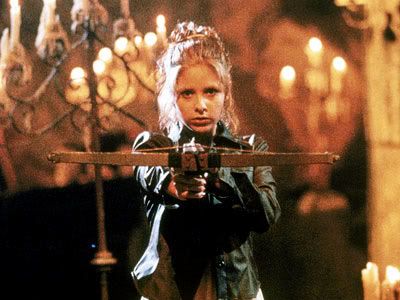
Is Buffy a strong female character?

I’m going to unpack a few of these ideas in relation to Buffy so you can see what I mean. First up is Mur Lafferty’s critique of Buffy the character. (I actually agree with much of this article, especially the part about The Princess Bride, which is an awesome movie if you ignore the horrible female characters and particularly the passive MacGuffin who is Princess Buttercup.) “Buffy failed this test [of emotional strength] when Spike attacked her in Season… 5? Since the attack was sexual in nature, Buffy lost all ability to fight, and just struggled on the floor and cried…we’d seen her kill so many monsters – including her lover – I can’t believe she’d cave under that attack. It didn’t fit with the character.”

Okay, so the attempted rape scene in Season 6 is definitely an emotional moment. But that’s all it is: a moment. Buffy struggles against Spike and cries for all of fifty seconds before she succeeds in pushing him off her. (Yes, I timed it, just to be sure I was remembering correctly.) Not only that, but she does this while already badly injured, after dealing with several months of deep depression, and while dealing with the shock of having a former lover try to rape her. But her reaction time of fifty seconds, no, it’s just not quite good enough for her to be considered emotionally strong? Um… Yeah, it must be because she committed the cardinal sin of crying. (Not to mention this assessment smacks of victim blaming.)
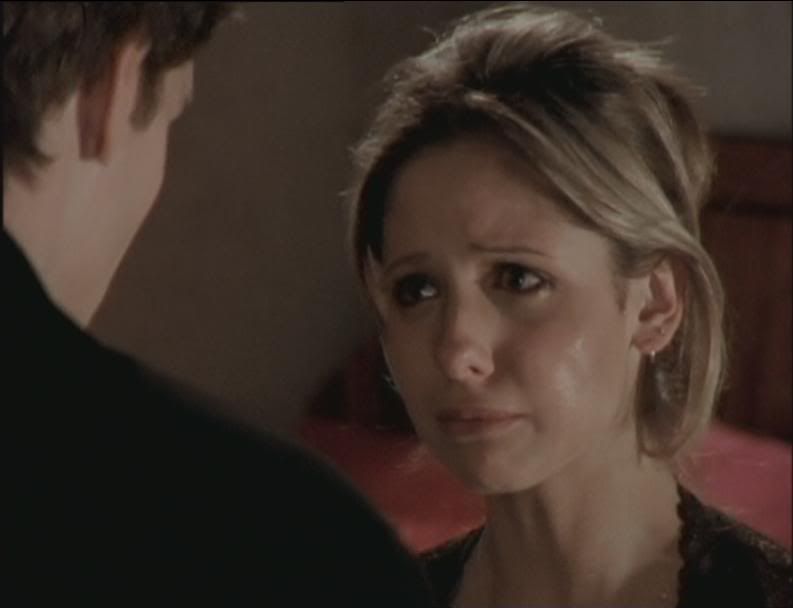
Or does crying automatically make her weak?

Here’s another great one, this time from The Mary Sue (again, this article makes many great points but I quibble about the strong/weak character identifications): “And Buffy is textually weak in all her relationships. She falls apart not only when Angel leaves her, but when Parker (yeah, you don’t remember him, either) doesn’t want to pursue more than a one-night stand with her, too.” It goes on to discuss the badness of Buffy chasing after Riley when he flies off in the helicopter.

So does this mean a strong woman isn’t allowed to have feelings or make mistakes, even out of inexperience (as was the case with Parker)? I mean, are we just supposed to shrug after a painful break-up and decide not to care? After all, Buffy sends the vampire she loves to hell in order to save the world–not an act I’d call particularly weak. Sure, I wasn’t a fan of Buffy running after Riley, but she received bad advice from a trusted friend and had a moment of weakness. But I guess in order to be a strong woman she would have to recognize the sexist parameters of her world at all times and never have a second of doubt, disappointment, or grief… Or maybe it’s the crying.

From the same article: “And inherently problematic is the idea of the Watcher, a predominantly male presence that is the male gaze made manifest – a source of constant looking that is an explicit form of control.”

Yes, the idea of the Watcher is sexist. The origins of the Slayer are deeply problematic. But Buffy fights against this time and time again: she fires her Watcher, she rebels against the Council, she orders them to give her the information she needs about Glory, and at the end of the series, she thwarts their original intent for the Slayer by giving the power to all the Potentials. She is constantly second-guessed and undermined by everyone in her world, friends as much as foes, and yet she continues to fight and to believe in herself. How exactly is this not strong behavior? I really have no idea.

Strong female characters can still be human. They can be flawed, they can have moments of bad judgment, and they can cry. They can feel overwhelmed, and they can have bad taste in men. What they can’t be is only existing because of and judged in relationship to male characters. What they must have is some kind of personal agency. Even, and this is my key point, the agency to make mistakes and be less than perfect.

Rose Lemberg wrote an excellent article on feminist characters, and I really hope you go read the whole thing. She says:“But what we often do in genre is allow men to be uncomfortable and difficult, but erase the women who are less than warm and fuzzy-making.”

Yes. Even to the point of having unnecessarily limited definitions of what makes a strong woman. Buffy is a flawed character, but she exists in her own right, not as some kind of set piece for the male characters on the show and not only as a girlfriend, or friend, or sister, or protegé. She ultimately calls the shots and makes most of the hard decisions. And if anything, the facts that she suffers, that she feels loss and fear, that she cries, these things show how strong she really is.

So what do you think? How do you define strong female characters? And what are examples of them that you think are done well?
Read Full Post »

I returned from Washington late Sunday night, only to find I had brought a bad cold back with me. This is the kind of cold that makes me feel like the distance between my neurons has doubled, so that any thinking I might wish to do happens… very… slowly. So even though I don’t usually talk about events much on the blog, because I think maybe that is very boring for anyone who wasn’t at said event, that’s all I’ve got in me today.

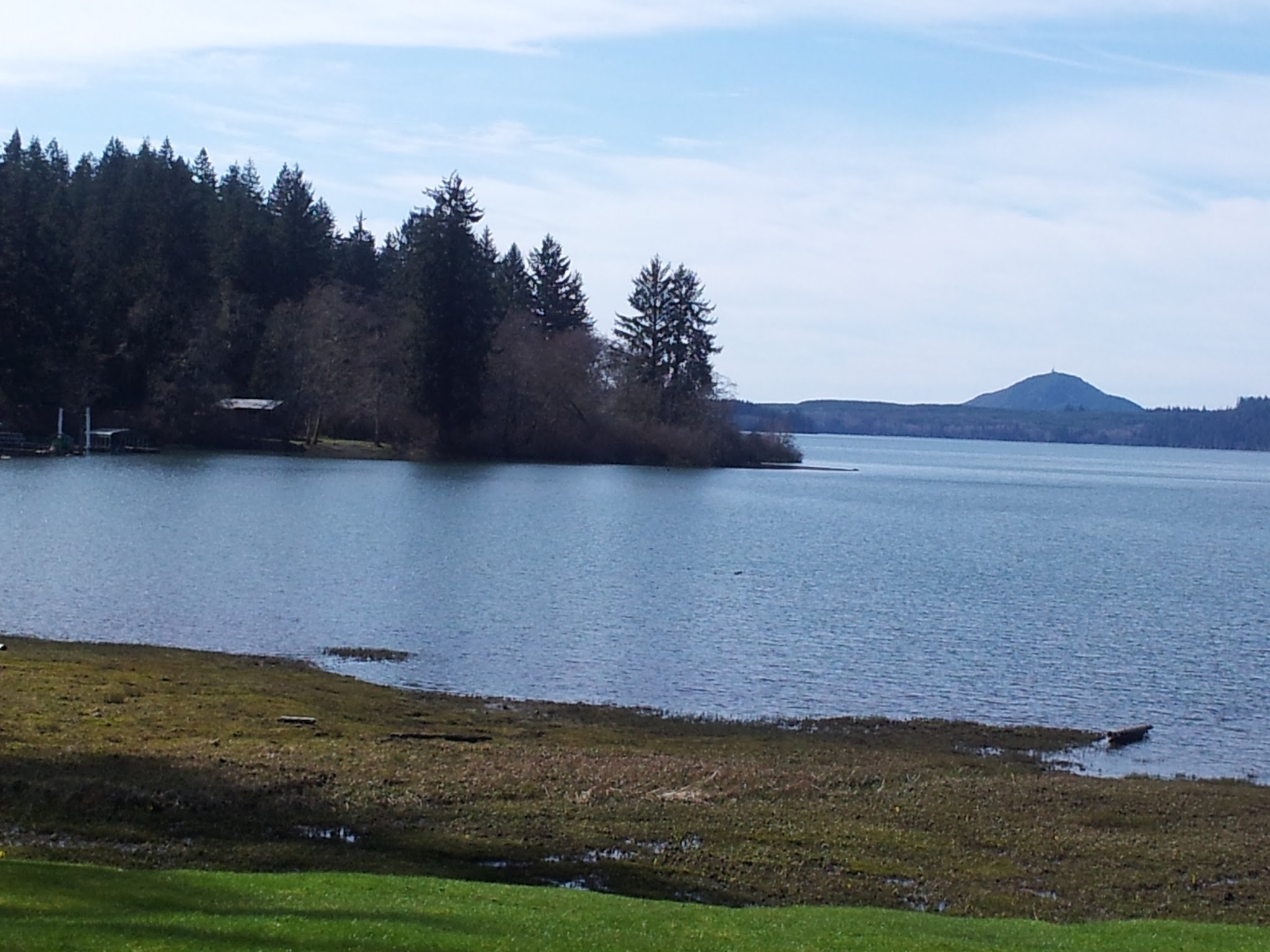
First, a few pictures. The location was truly gorgeous, right on a lake that tended to get misty in the mornings, with the rain forest on the hills behind the buildings. It rained a lot, not surprisingly, which was fine since I was supposed to be writing.

Beautiful Quinault Lake: what a view!

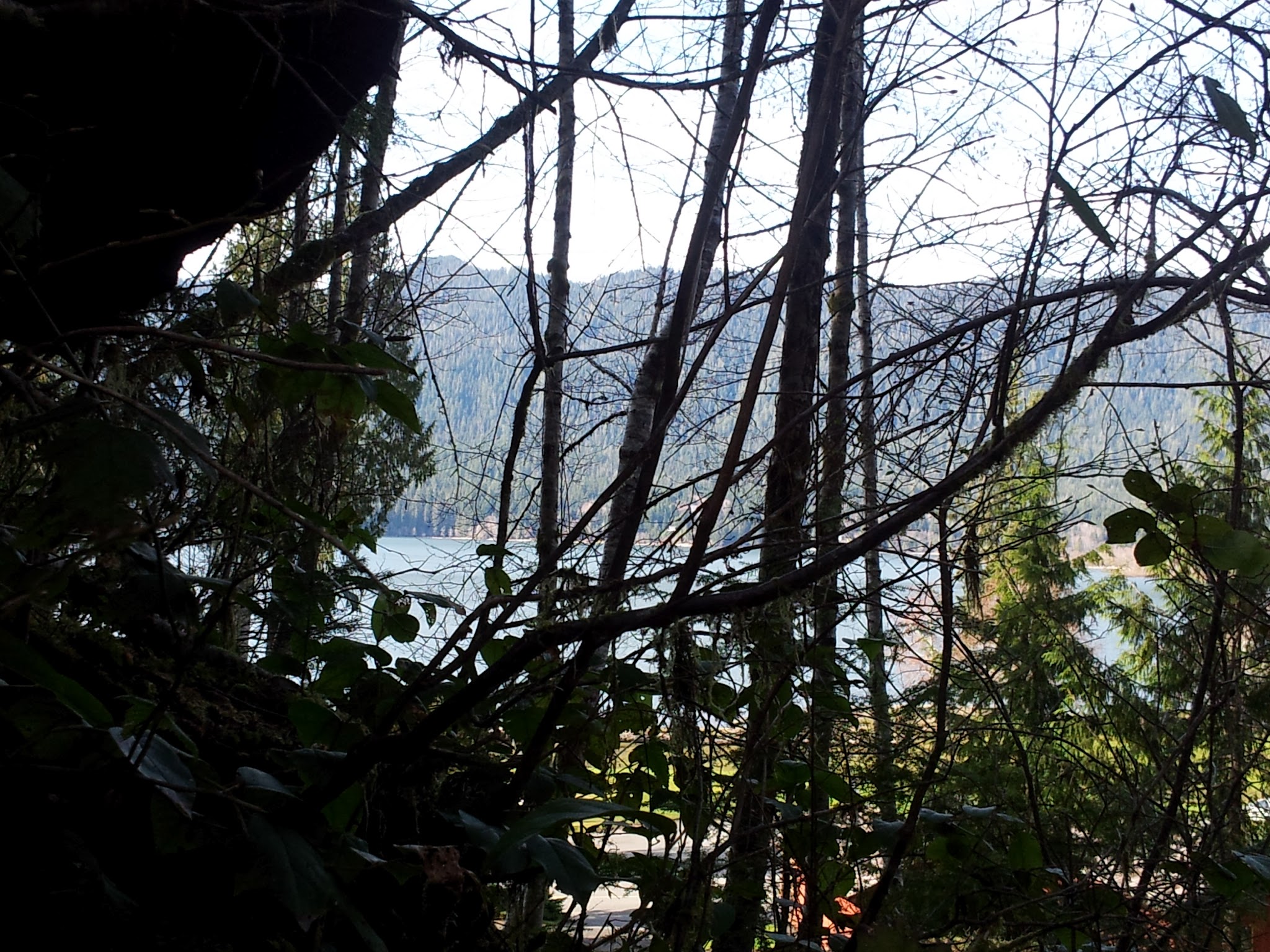
And here's the lake again through the trees.


There was lots of moss in the rain forest.

I was pleased with how much I wrote and found I was able to be more productive than my usual. I wrote until my outline broke. Of course, now I have to fix it before I can start again, and aforementioned neuron difficulties aren’t helping matters any. But figuring out how to fix broken outlines is actually one of the parts of writing I like best, even though I also enjoy complaining about it.

But really the best part of the trip was the people. No big surprise there, of course. Put me in a room full of writers, and the likelihood of me meeting someone who I find fascinating and nice increases exponentially. So do my chances of encountering a kindred spirit, and really, there isn’t much in this world that makes me more happy than making contact with that elusive breed. Except perhaps spending even more time with them. And writing.

I wonder if it’s a matter of depth, a trait all the kindred spirits I’ve met share. I don’t know if people who already have depth are drawn to writing, or if writing requires and develops depth in people. Or perhaps both? I don’t mean to imply that all people who aren’t writers don’t have depth (or contrariwise, that all writers automatically have it), as that is simply not true. But I do think the percentage of writers who have depth (or at least who express themselves in ways that reveal it) tends to be higher than average.

I think I’d like to write more about kindred spirits when my thought processes are in better working order. But in the meantime, I must conclude in order to consume liquids and lay on the sofa like a rag doll. Suffice it to say I thoroughly enjoyed my time in the Quinault Rain Forest.


Read Full Post »

I mentioned in my post The Dangers of Advice that among the common writing advice I don’t follow myself is the adage to write every day. Apparently, Jeff VanderMeer doesn’t write every day either, at least not to a specific word count. So you know, yet more evidence that you should studiously ignore all writing advice that doesn’t work for you.

I will add that, even if I’m not churning out word count every day, you can see from my post on Tuesday that I’m constantly engaging in what I am going to call writing mind. It’s more in the forefront these days, but even when I’m not shoulder deep in novel, it is a challenge to turn it off for any length of time. Almost everything I do, think about, read, I experience through a writer’s lens, so that being a writer suffuses my entire life, to the point that constant word count is, to a certain extent, a moot point.

Writing mind: a combination of subconscious processes and experiencing the world through the lens of a writer

In a recent interview, Robin Hobb talks about her experience, which sounds an awful lot like writing mind to me:
But even when I’m not at the keyboard, I’m still writing. I think that’s what the paper notebook taught me. My brain ‘writes’ all the time. It’s just finding the time to sit down at the keyboard and record what is store there!

Certainly one has to write to be a writer, and as a whole the writer community is very insistent on this point given the number of people who say they are writers but don’t write at all. We feel obligated to be prickly about it because there is a wide-spread misconception that writing fiction is easy. But the more I write, the more I am coming to understand that the actual writing is a critical component of the whole, but not the only one.

It is a pleasure, especially for a perfectionist like me who sometimes (often) suffers under an unforgiving work ethic, to realize that the time I spend every morning sitting in front of the fire and staring into space, or feeding my brain with various economic analyses, neuroscience findings, pop psychology, and insights about books and writing is all in service to the writing. Of course if I have a particularly busy day I have to skip right past the brain feeding phase except for a brief brainstorm in the shower and jump right into the heavy lifting, but it’s nice to realize that both parts are necessary and valuable. This insight allows me to be more fully me and to enjoy the process without quite as much of the kicking and screaming (although plenty of that still goes on; you try writing a novel dealing with the mutability of memory and see how you get on).

Being a writer encourages me to keep having interesting thoughts and doing interesting things, which is an aspect of it that I value extremely highly, especially at this time in my life when I can fully appreciate the comfort that comes from slipping into a pleasant routine and avoiding challenge in favor of the pleasures I already know I enjoy. Writing itself keeps me constantly on my toes, but it also rewards me when I decide to get more adventurous.

A few recent examples for you:

  1. I went to see President Obama speak a few weeks ago, not just because it was an amazing opportunity, but because I thought, “Hmm, I’ve never been to a political rally or heard a person with high charisma speak in public. I bet that will come in handy someday in my writing.”
  2.  We are beginning to consider our summer travel, and I provided my husband with a list of places I thought might figure into the settings of my next novel. “Which of these are you interested in?” I asked. Of course, it turned out that he was willing to go to any of them because apparently the heroine of the book has excellent travel taste.
  3. I picked up some novels recently that are not my usual fare, based on recommendations in an article by my friend Damien. Now on my to-read stack: Orlando by Virginia Woolfe, The Glass Bead Game by Herman Hesse, and The Magus by John Fowles. I don’t know if I’ll like them, but at the very least I’ll learn something from them.

To sum up: Jeff VanderMeer doesn’t have a daily word count goal. Robin Hobb describes writing mind well. And writing mind meshes nicely with the desire to see life as an adventure and not settle too easily into general complacency.

Read Full Post »

My head is in the clouds. Actually, my head is in a fictional boarding school in a remote location in the Canadian Rockies.

In other words, I am obsessed by the novel I am currently writing. And when I’m not completely lost in my obsession, my mind invariably turns to the novel I want to write next.

This makes everyday interaction a bit…problematic. Because there’s a part of me that wants to spend all my time at Lincoln Academy because my god, the amount of tension and drama in the plot right now! I want to find out what happens next. (I mean, I kind of know what happens next, but it’s not the same as when the words are written. Words can be surprising.) There’s a part of me that never wants to leave my house. On days like today, when I don’t have to, I am suffused by a sense of well-being because I can just let my mind go on its haywire creative journey all day long. And I am deeply, deeply happy…even when in the depths of misery because the book will not cooperate, the book is not as good as it should be, the book is making my brain hurt because dealing with an unreliable narrator is even more mind-blowing for the writer than it is for the reader (or so I am learning).

Of course, I can’t spend every minute of every day writing. For that matter, I spend very little time actually writing, and much more time thinking about all things novel-related. But I can’t even do that all the time. However, I am finding it increasingly difficult to clear my mind enough to think or converse intelligently about other topics. I can do it, but it takes significantly more effort than usual. So when I wrote about how writers shouldn’t talk about writing on their blogs all the time, maybe I was being a touch naive. Because right now, what else could I possibly want to talk about?!?!

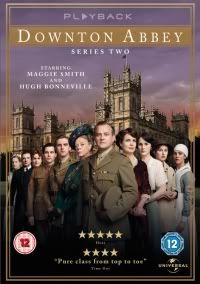
When I need a break from the novel, I do turn to Downton Abbey...

The blog is a particular problem because I choose the topics and the original post is just me talking about what I’m thinking about. In person I get along a bit better, because in general people are quite happy to take over most of the conversation, and I certainly have enough brain space to nod and smile at the correct intervals. I can even make vaguely relevant comments. The people who know me best can still strive for total engagement with strategic introduction of proven Amy-enticing topics: Disneyland, travel, theater, books besides my own, bridge, a sufficiently interesting intellectual topic (with extra points for neuroscience or social trends). Sometimes politics is shocking enough to dart pass my defenses, although this is invariably unpleasant.

But in the end, I am living breathing dreaming and otherwise immersed in my novel. So if I seem somewhat distracted here on the blog, or if you notice a certain, dare I say, sloppiness creeping into my thought processes, well, that is why.

Read Full Post »

Sometimes when we are on the road to excellence, we get a little tired. We wish we were already there. We wish the road had a literal signpost saying “You have made it, and you can officially stop worrying and consider yourself to be awesome.” We wonder if we should have chosen something easier to do with our time. And we think that maybe there is a magic bullet, something we can do that will–Bibbidi bobbidi boo!–make us more amazing.

Let me make this part of the road simpler for you.

There are no short cuts. There are no magic bullets. There are no sure things. There are no easy paths. So if you want something quick and easy, excellence isn’t the end goal for you.

Photo by Trey Ratcliff

Sure, there are activities beyond diligent practice you can do that will help you progress. In writing, these include attending workshops, reading slush, seeking out critique experiences, reading craft books like The 10% Solution, etc. In singing, these include participating in master classes and workshops, auditioning, obtaining performance opportunities (however humble), studying with different teachers, etc. But none of these methods are foolproof, and not all of them will pan out.

Take the various Clarion workshops, for example. Working professional writers often cite their Clarion experience as being pivotal in their development as writers. These are the stories about Clarion that we hear most often. But then there are the writers like Alexandra MacKenzie, who took ten years after the workshop to be ready to learn from one of her instructors. Because you can’t always control the timing of these sorts of things. And there are also the Clarion attendees who stopped writing altogether; these are the ones we hear about the least, and yet they assuredly exist. Why? Because no way of leveling up is foolproof. No way of advancing works for every single person.

The path to excellence doesn’t often go flat like a plateau only to suddenly rocket steeply upwards into awesomeness. It is a gradual process, a long slow incline upwards. As Seth Godin says, it is a series of hills, one after another. Those who continue to improve keep choosing new hills to climb that are just on the edge of their abilities.

Sometimes the path feels like a flat-line that suddenly springs up, but this is an illusion. I saw it all the time with my students in voice lessons. They would work steadily and gradually improve, so gradually that they didn’t even notice it happening. They would struggle with a concept and it wouldn’t quite be clicking, and they’d get frustrated and discouraged. At this stage in the process, it was my job as the teacher to keep pushing them, keep encouraging them, keep them singing even if they were ready to throw in the towel. And then inevitably, they’d finally understand. Their bodies would finally coordinate correctly, the muscle memory would finally develop, the ideas we were talking about would finally make actual instead of theoretical sense. And they’d experience a leap in ability. A leap that was really a slow mounting of ability all along.

That leap in ability is just around the corner for all of us. If we practice diligently and intelligently (directed practice as opposed to blind repetition), we are pushing ourselves forward along the path. The leap may come next week or it may come next year. It may come after we take a month-long break or it may come after a few weeks of intense practice. We don’t know when it will come. Excellence requires us to have the faith to sustain us while we work.

We must believe the leap will come. But it won’t come because of magic. It will come because of our own hard work.

Read Full Post »

I have devoted my life to the pursuit of excellence. The Greeks called this areté, striving for excellence, living up to the best of one’s potential, and facing challenges with courage and persistence. I wanted to be the best student. I wanted to become a skilled singer. I wanted to travel around the world. I wanted to be an effective teacher. And now I want to be a masterful writer.

Areté has been one of the driving forces of my life. I care about people and relationships, I care about my health (only because I can’t get away with being indifferent to it), and I care about excellence. That’s not to say I don’t have other interests, passions, and concerns, but these three things I think about every single day.

Here’s the thing about mastery: it tends to be all-consuming. It requires commitment to make your practice one of the highest priorities in your life. It requires patience and fortitude while you struggle to improve. It requires the willingness to be bad (especially when starting out) and the strength to fail.

J.S. Bach--an undisputed master of musical composition.

Mastery takes time. It’s not easy to achieve, and anyone who tells you otherwise doesn’t know what they’re talking about (or they’re looking for a snappy headline that will drive page views or book sales). I used to have voice students come in for lessons, expecting to become fabulous singers with a month or two of lessons (and barely any time outside of that devoted to practicing). Guess what? They never became fabulous singers. They learned some basics, and that’s as far as they went. (Strangely, parents understand this about their kids and usually (although not always) insist on more commitment. Adults were by far the most egregious in terms of thinking singing would be an easy skill to acquire.) Sure, some of my students could skate by on their natural skills for a while, only to eventually arrive at the realization that if they wanted serious chops, they’d have to put the effort in.

Mastery takes focus. I’ve always hated it when people ask me what my hobbies are. The question triggers me to think about how I spent my time. For years, the real answer was: I sing in different genres. I play the piano. I love to sight-read. I compose and write songs. I adore musical theater. I think about educational theories and new ways to help my students learn. I think about the psychology of singing.

Nowadays, I write and I read. I analyze and research and think and learn. I go to bookstores and conventions and signings. It’s not that I have no interests outside of writing, but I have to dig deeper to unearth them for casual conversation, and I have a tendency to relate my other interests to writing in one way or another. Have a bad experience? Well, it will be useful for my writing sometime down the line. Like RPGs or theater? Well, they let me study different ways to structure stories. Travel? Broadens my horizons and lets me envision worlds outside my daily one.

Mastery takes diligence. I love this example of Steve Martin. He devoted himself to learning how to perform live comedy and play the banjo. Then he changed over to making movies. Then he changed over to writing fiction. Then he began to focus some more on the banjo again (and won a Grammy for his efforts). The article (which you should go read because it is super interesting) posits that his success is due in no small part to his practice of diligence.

Commitment. Time. Focus. Diligence. And the dream of someday being able to accomplish what you can only imagine right now.

Read Full Post »

What is that elusive concept in writing known as voice? Plot, character, setting, world building, theme: all of these aspects of fiction, while complicated in their own right, are at least fairly simple to explain as basic concepts. But for me, voice has always been trickier to talk about in an intelligent way. I know it when I see it, but what is it that I’m noticing?

First, I’d like to differentiate between authorial voice and narrative voice. By authorial voice, I mean a way of writing that is unique to the author, so that you can read a story by him and know who wrote it by how it is written. Ernest Hemingway has a particularly distinctive authorial voice. So does Herman Melville. By narrative voice, I mean the voice of the protaganists in the story. In first person, this voice completely permeates the text, but even in close third, the descriptions and prose will be affected by whose point of view we are in. (Don’t take these definitions as a golden standard, by the way; the internet disagrees about what these terms mean, so I’m merely sharing my own personal definitions so we can understand each other.)

When we talk about voice in YA, the voice we are usually talking about is narrative voice, not authorial voice. The narrative voice will change from novel to novel and story to story by the same author (except in series). For example, the narrative voice in M.T. Anderson’s Feed is very distinct from the narrative voice in his Octavian Nothing novels.

What does the world look like through her eyes?

So what aspects contribute to a specific narrative voice?

1. Vocabulary and word choice, aka diction: What is this character’s likely vocabulary? What words does this character use that may be unique to her world? How much slang is used? How can the choice of words reflect this character’s reality?

2.  Range of language: Possibly a subset of word choice. How does this character speak differently to different sets of people? How does this character’s thoughts differ from what he says out loud? Does the range of language change over the course of the story in reaction to external events?

3. World view/perspective and experience: The perspectives of the character reflect themselves in the voice. This includes her backstory, her priorities (look at how obsessed with food Katniss is in The Hunger Games, for example) and views of the world.

4. Psychic distance (a term coined by John Gardner): This refers to the distance the reader is held from the story and is related to POV. In YA, this distance tends to be close and  immediate, which is why first person is so popular in the genre.

5. Syntax/sentence length and pacing/density of prose: YA tends to be less densely packed than some adult fiction; to see what I mean, compare Ian McDonald’s Planesrunner (MG, but still a good example) to his adult The Dervish House, or Paolo Bacigaluipi’s Shipbreaker with his adult The Wind-up Girl. Pacing in YA tends to be on the faster side, although there is plenty of adult fiction that is paced just as fast or faster (and there are the occasional slow YAs). Boy books in particular tend towards the fast paced.

6. Maturation of voice over the course of the narrative: Because most YAs are, at least in part, coming of age stories, the voice generally changes as a consequence of maturation and realizations. The change is often subtle.

7. Emotional urgency: YA highlights emotional urgency. Everything is a big deal or the end of the world because the protaganist lacks the experience to see things differently. Speculative YA often literalizes the metaphor and deals with the actual end of the world or life and death situations.

8. Dialogue: The dialogue in fiction directly illustrates the characters’ personalities and way of speaking. It allows us to experience their actual out-loud voice.

9. Interior monologue: This is a critical component of voice in YA. It is used to convey a character’s reactions, emotions, judgments, perspective, and sense of humor. It shows how a character feels about herself as well as the world around her. It allows the readers to understand and feel for the protagonist. (And according to agent Krista Marino, this is the aspect of voice that is most often missing from YA manuscripts that she reads.)

As you can see, voice and character are inextricably linked. In order to be effective, the narrative voice must fit the character, sound like the character, and reveal the character. The better you the writer know the character, the more likely an authentic voice will emerge in your work. (Or conversely, sometimes you may grow to know the character through his voice, depending on how you work.) YA voice in particular is very close to the protagonist(s), very emotionally immediate, and reflects the unique experience of a person in her teens. The voice in YA often changes and matures over the course of the story, and spends time focusing on the internal dialogue of the protagonist as well as the external dialogue.

What did I miss? Please feel free to weigh in.

Further Reading/References:

Perfecting Your YA Voice Part 1, by Ingrid Sundberg

Perfecting Your YA Voice Part 2, by Ingrid Sundberg

Evolving Voice in the Young Adult Novel, by Swati Avasthi

YA vs. Adult: Do You Have the Voice?, by Heather Howland

Narrative Voice and Authorial Voice, by Ruth Nestvold and Jay Lake (This article talks about both narrative and authorial voice, but while I’m a bit unclear as to its actual definitions of the terms, I believe they are different than the definitions I use above.)

Read Full Post »

I was talking to a new friend at Epic ConFusion about YA and the difficulties that many newcomers to the genre (especially those writers who started in adult markets) have in identifying it. This may be the reason why we keep getting these awful panels at sf/f cons that devolve into an hour-long discussion trying to differentiate between Middle Grade and YA (even though that is not the topic) or complaining about Twilight (which has gotten to be quite old hat). In an amazing recent SF Signal roundtable (which I hope to blog about more extensively soon-ish), Malinda Lo said, “Perhaps I’m the odd one out, but I guess I don’t think the definition of YA is that hard to pin down. I feel that publishers and the YA community have a pretty clear idea of what it is, and it’s folks who are new to YA who don’t understand and often make assumptions about what it is and who reads it.” Which is exactly the problem: the YA community knows exactly what YA is, but writers from other communities? Maybe not so much.

I’ve spent the last three years reading YA (and a bit of MG on the side) voraciously, and so yes, I have a pretty clear idea of what YA is. I told my friend that many times, the place where writers go wrong when trying to write YA is the voice of their novel. When trying to quantify that more for him, I could only say, “I know it when I see it.”

While it’s nice for me to be able to know it when I see it, that assertion is problematic on a few levels. It means I can say, “No, this isn’t really a YA voice,” but then draw a blank when I have to explain why that is so (not so helpful for other writers, is it?). It also means that I can’t work as concretely on improving my own YA voice. So obviously working to analyze what YA fiction really is and breaking down the different components that contribute to a YA voice is very useful. I’ve always wanted to attend a panel titled “The Differences Between Adult and YA Fiction,” but I haven’t seen it yet. So consider this that panel, and hopefully I can encourage others who know YA well to contribute to the conversation in the comments.

Yay, reading!

So what makes YA different than adult fiction?

1. The age of the protagonist: In YA, the protagonist is almost always a teenager, theoretically 14-18 years old. In practice, I haven’t seen that many 14-year-old protags–they indicate borderline Middle Grade (which is for readers age 8-12, and these kids tend to read up) and tends to read on the youngest side of YA at best. So practically speaking, 15-18. In a novel set in the modern world or its equivalent, the protagonist is always a high schooler. The summer after high school is fair game, but anything beyond that (read: college) is usually not done (which is another post of its own).

2. POV and tense: Arguably the most trendy POV and tense in YA right now is first person present tense (although I’m seeing something of a move away from it recently). First person past tense and limited/close third person past tense are also okay. Omniscient is out of fashion just like it is in adult fiction. Most novels limit themselves to one or two POV characters. If there are two POV characters, they often (but not always) change in alternate chapters. A trend right now is to have one female and one male POV that alternate chapters.

3. Tone: YA fiction can run the gamut between very light and very dark. It’s hard to go too dark, and there are very few taboo subjects.

4. Theme: YA fiction covers many themes, but very often feature some kind of coming-of-age plot. The teenage protagonist vs. society is also very popular (hence the dystopia, for example), as are issues of identity, peer relationships, and romance.

5. Genre: The most popular genres right now are paranormal and dystopian. The dystopias are beginning to show more sf-nal elements (yay for YA in space!), but dystopias and post-apocalypses are still the most common. There are also the high fantasies and the historicals (historicals w/ fantasy elements are probably more popular than the straight ones). In contemporary, we have the “issue” books, the romances, the thrillers, and the just plain contemporary books.

6. Boy books vs. girl books: I hate that this divide exists, but it does. Boy books usually have a male protagonist, and get readers of both genders. Girl books are more likely to have a mostly female audience. Boy books tend to be more externally focused, plot focused, and full of action. They often read a bit younger to me than girl books. Girl books tend to be more internally focused and usually include a romantic element. Some books lie somewhere in the middle and are particularly awesome. For example, John Green tends to write contemporary novels with male protags who are more internally focused, and The Hunger Games has a female protag and is full of action; there is a love triangle, but it’s not the primary focus of the story. (This is also its own blog post, and a super touchy subject, so keep in mind I’m doing a fast and dirty summary, and there are many exceptions. That being said, people in the industry do talk about “boy” books, so it’s a reality in the marketplace right now.)

7. Narrative Voice

We can see from looking at the above list how critical narrative voice actually is. YA is basically a teenage character reflected in the narrative voice of the novel who is embroiled in a plot that is relevant to them. Krista Marino says, “An adult looking back on the teen experience is an adult book.” It follows, then, that a YA novel is filtered through the immediate viewpoint of a teenager. And so much of how that viewpoint is expressed is through voice.

Next time, I’m going to break down voice into various aspects so we can hopefully gain a better understanding of what it is and how it contributes to that YA feel of “I know it when I see it.” In the meantime, please feel free to comment below and tell me your opinion: what I missed, what I got wrong, examples in current YA novels, questions, etc.

Read Full Post »

My husband often reads out loud to me before we go to sleep. We most often read children’s classics and more recent middle grade novels because I want something interesting but not so exciting that I can’t go to sleep. We’d just finished a few books by Bruce Coville (if you’re interested in MG fiction at all, you should run outside RIGHT NOW and buy some of his stuff, because he’s fabulous), and after some pondering, for our next read we’d selected The Absolutely True Diary of a Part-Time Indian, by Sherman Alexie.
Warning: There be spoilers ahead!

My husband began to read, and the book was well written, interesting, and had a sense of humor. But within a few pages it was clear that for his first dramatic incident, the author was going to kill a dog. I told my husband to stop reading because *@*%@*%!!*!! I am so incredibly done with reading about dogs dying.


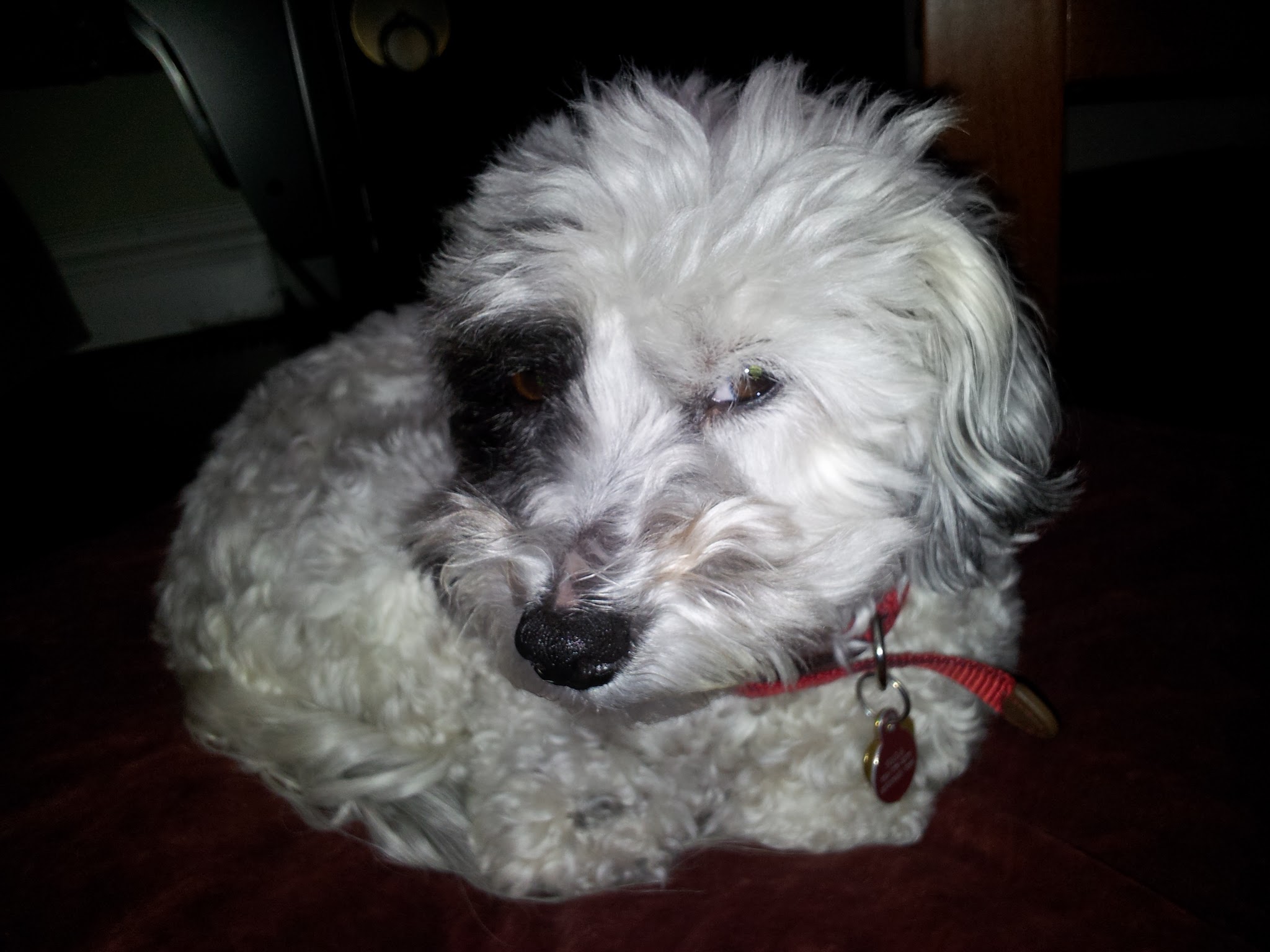
I am TOO CUTE for your shenanigans!

Here is a list of the dying dogs in fiction I have encountered in the past three years: The Knife of Never Letting Go, by Patrick Ness (I was bawling so hard at this one that my husband got worried); a story in Paolo Bacigalupi’s Pump Six; The Big Splash by George Galuschak; “I Can’t Imagine” by Sandra Wickham; and Mama, We Are Zenya, Your Son, by Tom Crosshill. At Taos Toolbox, Nancy Kress told us about her novel Dogs (which I refuse to ever read) and Eric Kelley threatened to kill off the police dog in one of his novels-in-progress. In Working Stiff by Rachel Caine, the dog is threatened, and in Robert Sawyer’s Mindscan, the dog is unable to recognize its master in his new robot body (which completely broke my heart). And these are just the examples I can think of off the top of my head.

Seriously, writers, WE GET IT. Killing off the dog (or pretending you might) is very, very sad. It reliably makes me cry even if I don’t like your story very much otherwise. And it also shows up the bizarreness of human behavior, that we cry when an animal dies and not when a person dies (although to be fair, I often cry when writers kill off people, too…but never for the bad guy, which says something else interesting). So could you please stop now?

Also, do you ever notice how writers don’t seem to kill off cats? (Not that I have anything against cats.) Why all the dog hatred, writers, huh? Why not pick on those of the feline persuasion for a change? Why do you want to violently dispose of sweet little bundles of fur like this?


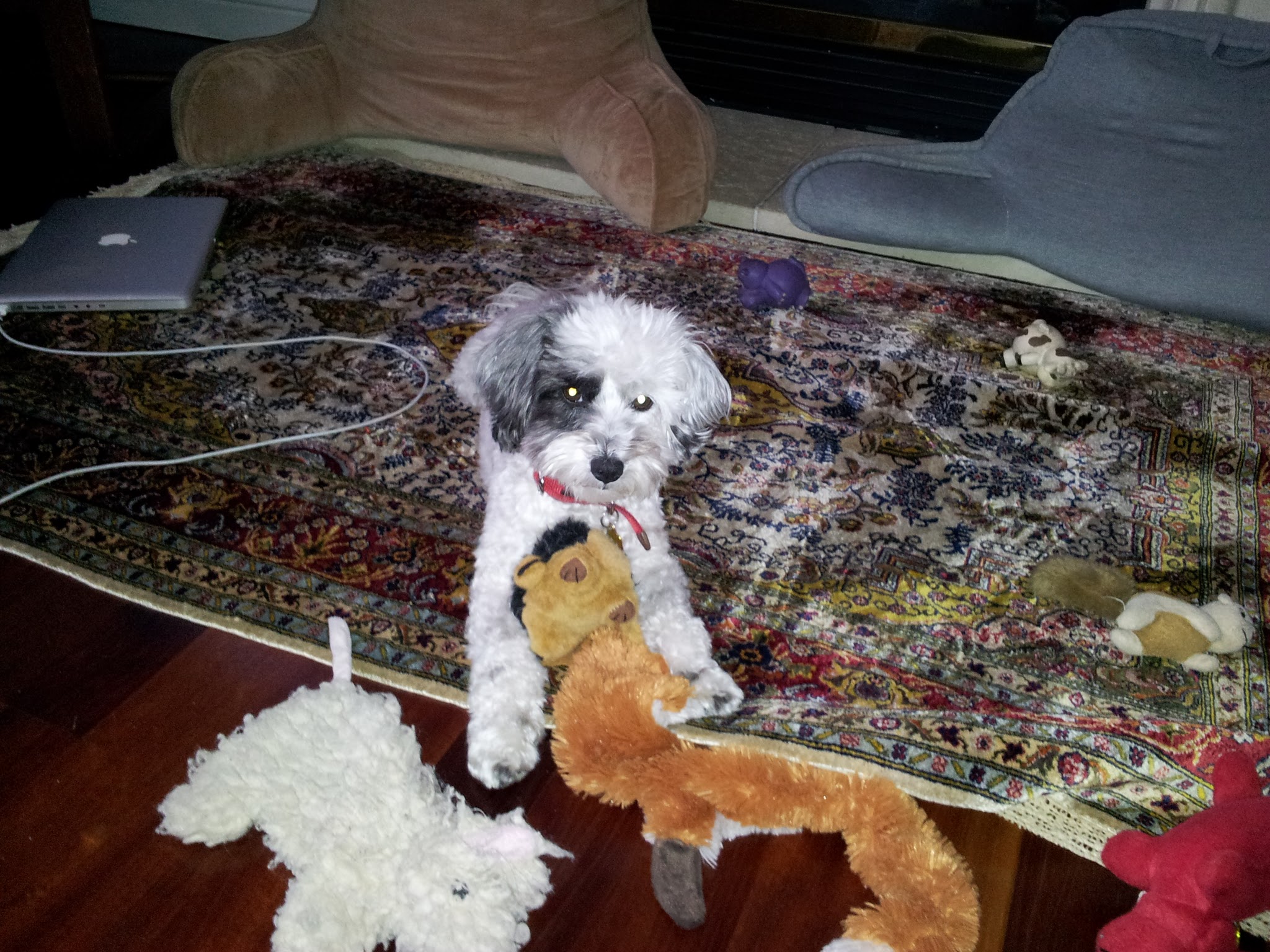
You know you want to pet me!

I’ll admit, the “pick on the cute and loyal dog” thing used to be shocking. But now, it just makes me feel tired. It makes me want to stop reading. It has nothing to do with the merits of the work (if you’re not as sick of dead dogs as I am, you’ll want to check out everything I referenced above). But it’s become even more unpleasant to me than werewolf tropes, and you know, that’s saying something.

So please, the next time you consider killing off the poor innocent puppy to pull some heartstrings, back away slowly. Maybe you can kill off the bratty kid sister or the brooding and boring boyfriend instead. Or, I don’t know, have your protagonist lose a finger or something. Just enough with the dogs.

Thank you.

*****
I’ll be in Detroit this weekend for Epic ConFusion. Say hi to me if you’re there!

Read Full Post »

I was having dinner with a friend the other day, and he mentioned that he hadn’t gotten around to reading any of my stories yet. He followed that up by saying that he was a little nervous to do so because they might reveal that disturbing things go on in my mind. (Newsflash: I’m a writer. That implies a certain level of creativity, which means at least a touch of disturbing is probably going on in there.) He didn’t say he was afraid he wouldn’t like my stories, but I’ve certainly had other people express that worry to me.

This conversation made me realize that what I take for granted, being around writers all the time, might not be so obvious to others. So here is an insider’s guide into how writers deal with each other.

1. Writers read a lot. But we cannot read everything.

Writers are fighting a never-ending war against the gigantic pile of stuff that they’re supposed to be reading. It’s a good thing most of us started out as enthusiastic readers because otherwise we’d drown in the amount of material we try to get through.

We read the novels in our own genre. Some of us have more than one genre, so then we have to read novels in two genres. Plus we are supposed to read novels outside our genre to stay well-rounded, so we have to read those too. Then there is the nonfiction that we have to wade through, some for specific research purposes and some to generally better understand the dynamics of the world we live in. We read short fiction and articles and blog posts. We read magazines about our industry. We beta-read novels for fellow writers, and we read to critique short stories. We read for award season. Sometimes we have students’ work to read, or books to read in order to give a blurb or review. We read and read and read.

We cannot humanly read everything. We cannot even read everything by our dear writer friends. It is impossible.

LESSON: We understand that you might not have time to read what we write, either. We LOVE it when you do, but there is no obligation.

2. Writers don’t always love each other’s work.

One of the first published novelists I got to know told me that it was really awkward to be friends with a writer whose stuff you don’t like.

Happily this has not proven to be true for me, and I don’t think it’s true for many writers. At least I hope not, because every reader (writers included) has her own individual taste, and not everything ever written will fall into that taste. This doesn’t mean that the writers who write stuff not to my taste aren’t fabulous people who I enjoy hanging out with, though.

Writers hardly ever ask each other the following questions: Did you read my latest story? Did you like my latest novel? Do you think I am the most Awesome Sauce Writer that ever lived? Instead, we may congratulate each other on milestones that we are aware of (hey, congrats on winning that award, or congrats on that book deal). If we have actually read and enjoyed a work, we might then say something about it unprompted (hey, I read your book and I loved the protagonist). I have NEVER told a fellow writer that I read their work and then proceeded to tear it to shreds, because that would be completely inappropriate. Mostly, writers spend a lot of time gossiping and talking about each other’s work-in-progress.

LESSON: You don’t need to tell your writer friend whether you read their work unless you did so and would like to share how much you enjoyed it. We know our own work won’t be to everyone’s taste, and most of us know better than to put our friends on the spot.

3. Writers don’t always write stuff that is autobiographical or has deep personal significance.

In the TV show Gossip Girl, there is a budding writer who only writes autobiographical stories and models his characters directly from his life. Everything he writes has deep personal meaning and reveals his true feelings about those around him.

This is FICTION. Many writers do not write autobiographical fiction. That’s not to say there’s not a part of themselves in the work, but often it is very hard to tell which part unless you know them very, very well (in which case, it shouldn’t come as too big a shock). Many writers do not model their characters directly on a real-life person (I don’t know that I’ve ever done this, for example). Many writers do not reveal their deep, dark secrets in the text of their work. Sometimes (often, in fact) they just make stuff up because it will make the story more awesome.

Writers do often re-visit the same themes over and over. For example, I like to write about death and mortality. That fact tells you something about me, but it’s not something I try to keep hidden. Sometimes a writer’s general personality is reflected in their work (although not always), in the sense that when you meet the writer, you think, “Ah yes. I can see how this person would have written that book.” But this is all fairly surface personality kind of stuff, nothing that should be particularly alarming.

LESSON: Writers are not constantly revealing their deepest, darkest secrets in their fiction.

Is there anything I’ve missed? What are some other common misconceptions that might make non-writers uncomfortable when dealing with writers?

Read Full Post »

« Newer Posts - Older Posts »