Feeds:
Posts
Comments

Archive for the ‘Writing’ Category

“So how’s the revising going, Amy?” you might well ask.

Do not be alarmed if your question is greeted with me pulling contorted faces and making strange, growling noises. But never fear; my joy in being asked about what I spend most of my waking hours thinking about will outweigh my need to do an interpretative dance to express my varied ambivalence, sheer joy, and “what was I thinking?” reactions to my current revision process.

To catch you up: At the end of April, I went to Seattle. (Did I already tell you this? I can’t remember.) Bolstered by the excellent company of my comrades-in-arms for many adventures and meals in Seattle, I resisted the urge to play tourist 100% of my time and instead read through the rough draft of my novel The Academy of Forgetting. I took copious notes, rewrote sections, and tried to make sure it was more or less coherent. Then I sent it to my most trusted novel first reader for an opinion.

The magic of revision…oh, who am I kidding? I am totally using this as an excuse to use Trey Ratcliff’s awesome Walt Disney World photo on my blog.

A week later, Daniel sent me his critique, which ran almost 4,500 words long. This was obviously not going to be a small revision pass.

So for the last month, I’ve been thinking. I haven’t wanted to dive headlong into revisions because these changes are complex enough that there is a fair amount to be figured out ahead of time. Plus a few weeks were mostly lost to injury (but oh boy, did I have a lot of time to think) and then I went on vacation, and you know. Life. But I am about ready to start writing new words and begin the simultaneously delicate and destructive task of fixing this book. The prospect fills me with both excitement and dread.

Let me give you an example of one of the changes I’ve been thinking about. There’s a plot twist at the end of the book. It is, in my opinion, a fun plot twist, and one that I looked forward to revealing the entire time I was writing the first draft. Daniel suggested that the twist doesn’t work as it currently stands. It’s not foreshadowed amply enough, for one, but he also suggested the book might be stronger if I completely cut the twist.

So now I have to decide: keep the twist or cut the twist? At first I thought I’d cut it. But then I realized that if I cut it, I’d also be cutting a key bit of information about the narrator and the narrative, which would, in my opinion, take away a large bit of the narrative depth. So then I thought, well, what if I keep it and make these foreshadowing changes, etc.? And I thought about that possibility for a while, but something felt slightly off. And then I had an exciting idea for how I can cut the twist but retain the key insight into the narrative, and I was bouncing up and down in my chair. But then I realized this idea brings up a whole new problem in terms of the plot and how I can make it work…. And on it goes.

I love the revision process because it’s challenging and interesting and convoluted and requires thinking about many things at the same time. But while I think it’s one of the most exciting things ever, it looks like me sitting in a chair and staring into space, with perhaps the occasional spurt of typing or scribbling sentences in my notebook. The writing life is often glamorous in a completely invisible way.

So that’s what I’m doing: getting ready to start a new draft, trying to resist biting my fingernails at the thought that I might demolish something that I actually needed intact, or that I might keep something that turns out to be just an old eyesore. Either of these would be fine in an isolated case, of course, but they can add up so quickly into a manuscript that simply does not work. And I’d like to make this manuscript work, if I can.

Read Full Post »

Exciting news! For those of you who don’t follow me via social media, you may not know that my science fiction story “Daddy’s Girl” appears in this month’s issue of Redstone Science Fiction.

This publication is especially bounce-worthy for a number of reasons. First off, this sale was the one that qualified me to join SFWA (Science Fiction and Fantasy Writers of America) as a full member. Secondly, while this isn’t the first science fiction story I sold, it is the first one to be published where everyone can read it. And it has shown me that I can write stories set in an awesome space setting and sell them, which is a particularly happy thing to know.

I discovered this story’s seed while I was working on a bigger world building project. I was considering writing a YA novel with a space setting, so I sat down to figure out how my milieu would work. At a certain point I pulled my husband in to get answers to all my burning scientific questions (the immense perk of being a writer with a physics PhD and lifelong space enthusiast at my disposal).

We were talking about water, and the difficulties of procuring water in space. And he said something like, “Oh, you could just mine comets for their ice and haul it back in.”

Comets are beautiful.

Mind you, this was a completely tangential issue to anything having to do with the novel I was considering. But my imagination was instantly captured by the idea of an ice ship and the spacers who lived in it, constantly chasing after comets to bring back that oh-so-valuable resource, ice. (I have since learned, from Bill Bryson’s At Home, that there used to be an important market for ice in the past as well, pre-modern refrigerator and especially for shipping/transport issues, but I wasn’t thinking about this at the time.)

So I decided to write a short story to explore my ice ship idea further. At which point I found my character Lolly’s voice, began to understand her story, and was completely hooked.

For those of you interested in process, I wrote this story fairly quickly, did a quick revision and sanity check with my husband, and sent it off to my friend (and frequent commenter) E.F. Kelley to take a look. He identified an important scene that was missing (thanks again, Eric!), I added the scene while revising again, and then sent it off to market. I did one final revision pass before sending the story to Redstone in order to fall within their 4,000-word maximum length limit. (It had previously hovered just a few hundred words above that number, and I’m very happy to have tightened it further.)

Interestingly to me, the whole process was fairly painless, as has been the case with most (all?) of the stories I’ve sold, although certainly not the case for all the stories I have written. I imagine there is a lesson in this fact.

I hope you enjoy!

Read Full Post »

I’ve been somewhat injured the last week or two, so I’ve had some extra time on my hands. So I decided to poke around Kickstarter and see some of the awesome projects artists have in the works.

In case anyone doesn’t know, Kickstarter is a funding platform in which artists put up projects and how much funding they wish to receive, and then their fans and the interested public can pledge money towards those projects, usually for nifty rewards like art, books, tickets to live performances and screenings, etc.

What’s exciting about Kickstarter is it gives artists a viable alternative to get their amazing work out into the world while getting paid for it. Many creative projects require money up front in order to become realities, and Kickstarter allows the artist to get paid directly from their fans instead of finding corporate backing. It definitely works best when an artist already has an established fan base who can both support them financially and spread the word. For writers, a successful Kickstarter mimics the advance system of traditional publishing while allowing the writer to retain complete creative control. Which is all-around awesome sauce.

Here are some of the Kickstarters I decided to back last week:

Tropes vs. Women in Video Games, by Anita Sarkeesian

I’ve been watching all of Anita’s videos ever since she explained to me, complete with relevant examples, what the Bechdel test was. Now she’s taking on the portrayal of women in video games with a lengthy new series. I couldn’t resist backing this project, because this video series NEEDS to exist.

Fireside Magazine Issue Two, by Brian White

This looks like a promising new fiction magazine, with a lot of speculative heavy hitters in the line-up for the next couple of issues. But really I was sold by the opportunity to be drawn by my friend Galen Dara, who is an amazingly talented artist.

Amanda Palmer: the New Record, Art Book, and Tour, by Amanda Palmer

Amanda Palmer is in the process of revolutionizing the way musicians can interact with their fanbase and make a living while doing awesome things. How could I not want to be a part of this? Also, art books are cool.

Crossed Genres Publications, by Bart Lieb

I have a special place in my heart for Crossed Genres. While they weren’t my first sale, they were the first publication who ran one of my stories. Their Kickstarter has been so successful, they are now going to bring the magazine back (it folded recently), and they also have a few very interesting anthologies scheduled for publication in 2013.

I’m Fine, Thanks, by Crank Tank Studios

To make this independent documentary, the filmmakers toured the country and conducted lots of interviews. Their topic? Complacency and the pull to follow a pre-approved script instead of creating your own unique and individual path through life. Can you think of any subject of a documentary that fits in more with the spirit of this blog? Because I can’t. I am so excited a movie like this exists, and I can’t wait to watch it.

I can’t cover all the worthy Kickstarter projects out there in one blog post, so please help me out. What projects have you supported recently? What other cool things are artists out there doing?

Read Full Post »

Conventional blogging wisdom for fiction writers is that we should avoid talking about politics and religion. (Science fiction writers are perhaps the exception to this rule; see John Scalzi, one of the most prominent examples, and on the other side of the American left-right fence, Orson Scott Card.) The idea is that such views can be unnecessarily divisive and that by talking about them openly, we can alienate potential readers.

I have, for the most part, followed this advice. I don’t talk about religion on this blog or anywhere else, really. I rarely talk straight politics, although I couldn’t quite suppress my concerns about habeas corpus. But feminism keeps creeping in through the cracks of this blog and in the material I choose to share on the internet, and isn’t feminism at least partially a political issue? It certainly is a touchy one.

One result is that I’m been forced to rethink the conventional wisdom. I can say without a shadow of a doubt that it is easier not to blog about religion or politics or social justice. And I can understand the choice not to do so when it feels like a livelihood hangs in the balance of what we allow ourselves to discuss. Plus some of us find conflict to be very unpleasant. But at what point does talking about matters of importance become more of a question of conscience?

Does blogging give you a voice?

I’m not talking about being safe here. There’s this trend that happens in the science fiction blogosphere, wherein a few of the really big bloggers share their opinions of a current issue, followed by a quiet ripple of smaller bloggers chiming in with “Me too”s and “basically exactly what has already been said about this issue in almost the same words.” Because when we follow in the footsteps of the big guns, then we’re relatively secure. I’m not saying it’s bad to offer a show of support, but it’s not the same as pushing the discussion forward. The conventional wisdom is consunmately safe.

Let’s talk about danger instead. If, as a writer, we develop a greater reach, then we have to decide how to use that reach. We have a greater ability to help, and an equally heightened ability to harm. We can set the topic of conversation instead of merely echoing and reacting. We can affect the way people view the world, often subconsciously, through our stories and our words. We can decide whether to point something out as problematic or whether to be silent and let it float on in obscurity. And whether we like it or not, these abilities come with certain responsibilities.

We don’t have to blog about politics or religion, not if we don’t want to. We can choose to communicate exclusively through our fiction. But at some point, I think every artist has to ask, “What am I really trying to say here? What do I really need to say about human experience and about the world? What might I be saying by accident that I don’t actually want to be saying?”

But sometimes, we might be compelled to blog about something risky, about something uncomfortable. And sometimes we are willing to pay the price for having a voice. In which case, that conventional wisdom can go right out the window. There are times when safety is not the most important goal.

What do you think? Do you ever talk about politics or religion on your blog or over social media? Are there issues that you feel compelled to talk about, even though they lack an approved-for-fiction-writers (or approved-for-polite-conversation) stamp?

Read Full Post »

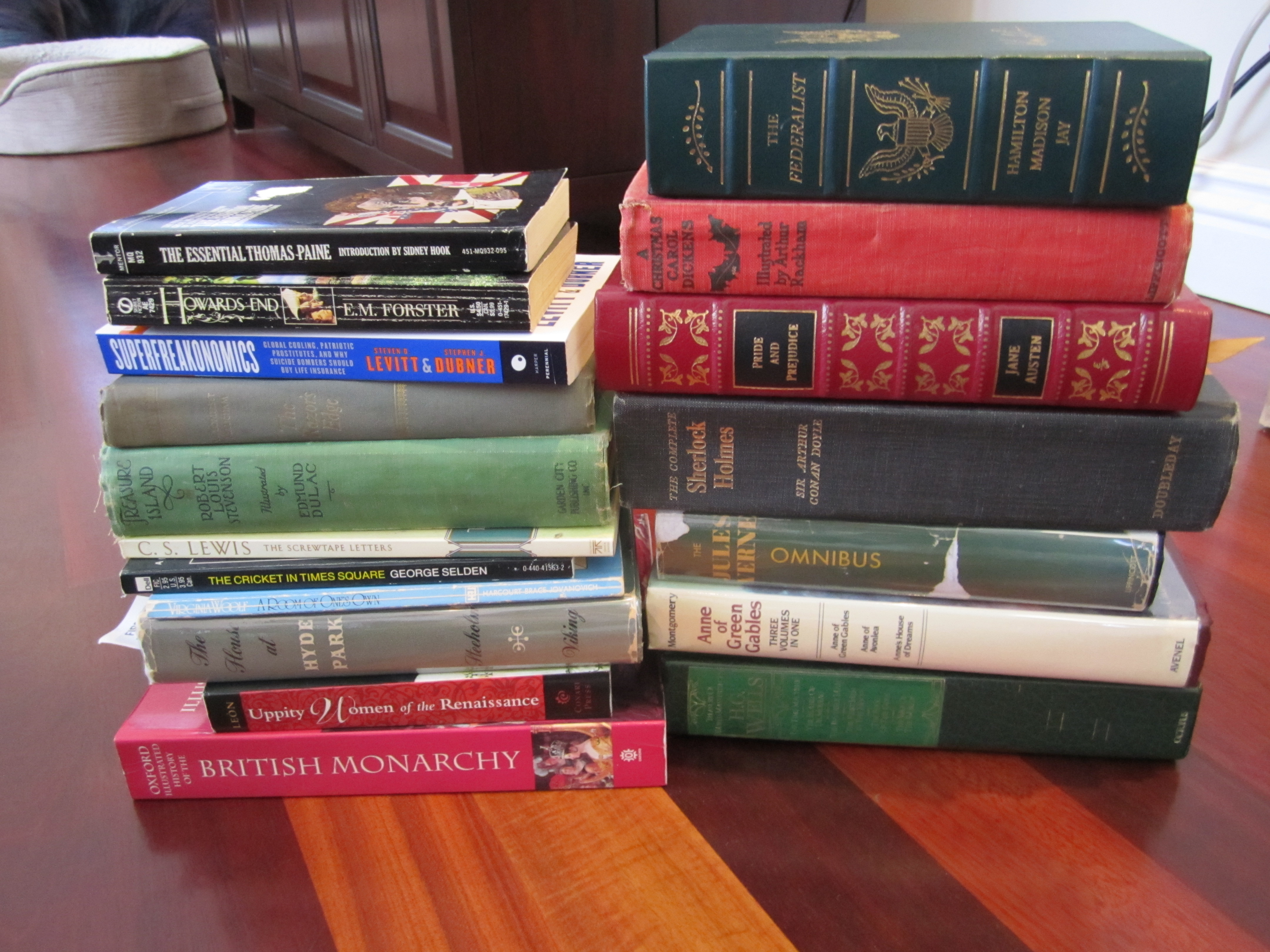
Book worm: a person who cannot imagine an existence without reading.

It just occurred to me the other day that most people are not book worms. I mean, I know that most American adults do not read that many books; in 2007 the media had fun complaining about how 27% of Americans hadn’t read a book in the last year, and looking at that same study, of the remaining 73% of people who did read, 25% of them had only read 1-3 books in the past year.

Sometimes numbers take a while to sink into my brain. But I met someone at a party recently who announced, “I don’t read.” I appreciated his bluntness: no excuse making, no pretending. And I realized these hypothetical people who don’t read (or don’t read much) actually exist. They are all around me, all of the time! My lifestyle, in which books have always featured prominently, is not the way everyone I know lives. What an epiphany to have, right?

I love reading. I feel physically hungry to read more good books. When I purchased William Shakespeare’s complete works for the Kindle, I almost started crying because I can now carry all of Shakespeare’s words wherever I go. I cannot contemplate a life in which I don’t have time to read; my brain cannot even compute the possibility.

Photo by Eneas de Troya

You know you’re a book worm when:

1. You worry when you leave your house and don’t have a book with you.
2. The idea of having hundreds of books on a portable device reduces you to tears of joy.
3. Libraries and bookstores are the most amazing places on the planet because you can experience physical proximity to so many books at once.
4. The idea of having your bedroom lined with bookshelves gives you a cozy feeling.
5. When you think of being stranded on a desert island, your first concern is what books you would choose to have with you (and how you’d survive if you didn’t have any books at all).
6. One of the best parts of planning a vacation is choosing the books you’ll take with you.
7. You buy a special book for your birthday each year so you know you’re guaranteed to have a pleasant day.
8. You know every section of wall in your home that could be used for more bookshelf space in the future. Book storage is one of the most important uses of your home.
9. You have trouble getting rid of books, even duplicates.
10. When called upon to choose between reading a good book and doing another activity, it is a really tough choice. (Or it’s an easy choice; of course you’d rather stay home and read.)
11. Your favorite gift to receive is a gift certificate to buy more books.
12. It is hard to leave a library or bookstore without a large stack of books.


13. You are pretty much always in the middle of at least one book.
14. Your most important criteria when purchasing a purse/bag is how big a book it will fit (the winners are the ones that will accommodate hardcovers).
15. You want to live forever because otherwise, think of all the books you’ll miss!

I love being a book worm. It brings me so much joy. What about you? Are you a book worm? Do any of the above behaviors sound like you too?

Read Full Post »

My short story “The Box in my Pocket” has recently come out in the anthology Fantastic Stories of the Imagination, which is available as a paperback and an e-book. Here it is directly at Amazon (paperback and Kindle e-book) and B&N (for the Nook).

I wrote this story in January of 2011.  I remember thinking of the story seed, writing the first line, and then the story had its hooks in me. I put aside the novel project I was supposed to be working on in order to write this story instead. (And given that I usually become quite single-minded during my novel writing time, this is saying something.)

Yes, that is my name on the cover. 🙂

This story is one of the most personal I have written to date.  The point of view character is a teenage girl who is losing her mother to cancer. This character is not me, but the situation is one with which I am intimately familiar. Well, except for the fantastical element, of course. That part didn’t happen to me. Really.

Normally I shy away from writing anything too autobiographical. Bits of me will inevitably worm their way into the words I write and the telling details I choose; I am never completely separate from my work. But early in my writing days, I found myself defending characters’ behavior in a story I had written, saying, “But this actually happened exactly like this.” It didn’t matter, of course. It didn’t work in the story. Real life doesn’t always translate well into fiction. People don’t always behave in “believable” ways. So now I don’t tend to write with real circumstances in mind.

I do not, however, avoid writing about the emotional truths I have experienced. “The Box in my Pocket” is one emotional truth of what it feels like to lose a mother at a relatively young age. It deals with the dual themes of death and memory, both of which I find myself addressing in my fiction repeatedly; my fascination with them never seems to fade. It asks the questions, how do we deal with loss, and how do we finally let go (or do we hold on forever, and at what price)?

As for the anthology itself, Warren Lapine is its editor, and it includes stories by Mike Resnick, Harlan Ellison, Sharon Lee and Steve Miller, Kelly McCullough, Barry Longyear, and many other writers, so I am in extremely good company.


Read Full Post »

I am happy to report that a week ago today, I finished the rough draft of my latest novel, The Academy of Forgetting. It clocks in at a little less than 77,000 words, which is ideal for a YA novel with a speculative element, and gives me a little breathing room in both directions as far as final length is concerned.

Some of you may remember that I started this novel as part of Theodora Goss’s YA Novel Challenge last summer. I wrote the outline, banged my head against the beginning, and stopped after having written 10,000 words. In retrospect, I believe I wasn’t ready to write the book: my skills weren’t quite at the right level, my concept of the setting and main character weren’t clear enough in my own mind, and some of my ideas regarding the plotting of the beginning of the book needed to be rethought.

This photo makes me want to read my own book by candlelight. Or really just any book.

I started again this January. I threw out the 10,000 words. I kept most of the outline but made some key alterations. I began writing in first person past tense instead of first person present tense, and I conceived of a narrative structure that was very exciting to me. I had some different ideas about the tone I wanted to start with as well. With all these changes, the novel began to form itself in my mind in a new way. And three months later, I have a complete first draft. I am so relieved to have finished!

This novel is definitely the most complicated of the three I’ve completed to date. It’s a psychological thriller with a vastly unreliable narrator that plays around with memory, so it had to be quite twisty and involved by its nature. I really don’t think I could have written it pre-Taos Toolbox, which is a testament to the excellent teaching of Walter Jon Williams and Nancy Kress.

So what happens next? Revise, revise, revise. I’m going to do my own pass first, addressing all the notes I took while writing it, replacing brackets with actual decisions, and adding a soupcon of description along the way (I tend to go too light on description). At the same time I’ll be writing my own scene and chapter summaries for future reference. Then I’ll send it to my amazing friend Daniel, who is the ultimate plot whisperer. And I’ll revise it again. And then I’ll send it to more amazing writer friends. And I’ll revise it again. At some point I’ll write a query letter (which, if I do it well enough, will be somewhat similar to the copy on the back of a book) and a synopsis (which I really detest doing). The whole process will take several months.

But this week, I’m resting and enjoying the feeling of satisfaction that accompanies typing the words “The End.”

Read Full Post »

Writer Susan Kiernan-Lewis wrote a blog post a couple of months ago entitled “The Great Social Media Flim-Flam.” If you want to see writer frustration with having to deal with social media, go on over and read it, because it’s one of the best examples I’ve seen. If you don’t want to read five hundred words of it, here’s a key excerpt:

“Is it possible that the prevailing belief that having an online platform is essential to a book’s success is wrong? Are we all just the cool kids playing with the latest gadgets and wanting them to be essential and really they’re  irrelevant? Is it really the author’s platform that’s important? Is that why YOU buy a book?

Isn’t it about the damn book?”

Okay, first off, yes, it is about the book. If there isn’t something appealing about your book, it doesn’t matter how much time you spend promoting it. Notice I said “something appealing.” I chose those words carefully. Plenty of books that have a lot of problems do well; some of them even do very, very well. But there has to be something about them that makes people want to read them.

However, a key point I think Ms. Kiernan-Lewis may be missing is that social media presence for writers is not about sales.

Yes, I just said that.

Social media is not about sales. We may want it to be about sales because sales are easy to measure. And what writer doesn’t want sales? I’m not saying social media never causes sales; if you look at the pie graph in that blog article, it claims 23.9 percent of book discovery happens via social media (I combined blogs and social networking sites to get that figure). But that’s only a quarter of the whole pie (at least for now), and probably some of those people are going to get the book from the library or borrow it from a friend.

Social media is about marketing. It’s about building brand awareness (and for writers, your brand is YOU). It’s about weak ties and networking and relationships and being a presence. Marketing is important if you are trying to sell something. The problem is, it’s more nebulous to measure than sales. Sure, you can look at your follower count or your blog traffic or count your likes and retweets and +1s. But when you think about what those numbers really mean, well, it’s hard to say. Higher is better, but beyond that? *silence in the room* Yup, that’s marketing for you.

One network example. (by Marc Smith)

Marketing and social media is also for the long haul, which makes it critical to formulate a strategy that works for you. Otherwise, say hello to burn-out. That’s why I recommend using social media in a way that you enjoy, or at least in a way not completely odious to you. If you’re forcing yourself to do something you hate, whether that be daily blogging or tweeting or posting on the service du jour, then it’s time to rethink your strategy. If you feel frayed around the edges from your social media activities, then maybe you need to pull back a bit, rest, and re-group. The ultimate goal is to find a balance that is sustainable for you (and this balance is going to be a little different for each individual). The way to find this balance is through time and experimentation, and it will change as your life changes. For example, I’ve had to adjust my own strategy the last few months when I’ve been deep in novel head space.

I wish I could tell you social media doesn’t matter for writers, that it’s all some mass delusional idea. But it does make a difference. When someone has heard your name several times, they’re more likely to give your book a second look at the store. They’re more likely to click on over to your book on Amazon and read the summary and some reviews. If it looks interesting, they’re more likely to take a chance and buy it. If they’ve read an interesting essay you’ve written, they’re more likely to talk about you and spread the word. Etc., etc. How social media works and helps you is the subject for an entire series of posts, but if you know anything about network theory, then you have an idea of what I’m talking about.

So the real question when thinking about social media isn’t if it matters. It’s figuring out how you can participate in social media without becoming overwhelmed or wanting to throw your computer across the room. It’s figuring out the best use of your time so you also have enough time to write that next novel. It’s experimenting to integrate social media into your life in a way that works for you.

Read Full Post »

It’s been a little over a year since I wrote my first Sit at the Table essay, although it feels like exactly a year since it was published the Thursday before FogCon, and guess what today is.

Last week I received word that I sold my story “Man on the Moon Day” to Daily Science Fiction, which was the same market to buy my first story a year ago. First off, hooray! I am really excited for this story to reach the reading public. The timing of the sale also made me realize that in about a year’s time, I’ve gone from having no sales of any kind to making six sales, four of which have paid professional rates. So this is me, taking a moment to pause and tell myself, “Not bad, Amy. Not bad at all.”

All of this has reminded me of sitting at the table, a surprisingly tenacious idea for me to still be contemplating a year later. It’s a powerful idea as well. It’s easy to lose sight of it given the undeniable role that random chance plays in events; so much is out of our control, it can be hard to focus on the parts that we can do something about. But that’s what sitting at the table is all about: being present to take advantage of opportunities as they arise.

Photo by Ben Raynal

Here are some of the things I’ve been doing to sit at the table this last year:

1. Submitting, submitting, submitting. If I don’t submit, there is absolutely ZERO chance of a sale. This is not to say I haven’t taken mental health breaks in my submitting process, because I totally have. But once I’ve enjoyed my breather, I’ve gotten back on that horse and submitted some more.

2. Behaving like a professional. And part of being a professional is believing in our work and our right to sit at the table in the first place. This doesn’t mean blowing up our achievements to encompass more than they do or refusing to accept needed criticism and editorial input. What it does mean is cultivating an inherent feeling that we belong, that we are writers, and acting that way.

3. Picking and choosing the industry-related events I attend, and being there 100%. Happily for me, I adore meeting people in my industry. But I’d be lying if I told you I don’t have moments alone in my hotel room when I feel like there’s no way I can navigate the social scene. I’ve learned to expect those moments, and I leave the room anyway. I feel so grateful to be at these events, I can’t justify giving less than 100%. This pays off in dividends, by the way. I’ve also learned I can’t do All The Things. I can only attend as many events as I have 100% energy to give out.

4. Creating space to write. If I don’t take my writing time seriously, no one else will either. So I’m being much firmer about defending this time. I’ve taken the myth by the horns that because I don’t have a typical job, that means I have loads of free time. Sadly, this is simply not true, and writing time has to come near the top of my list of priorities.

5. Continuous striving for improvement. And with it, embracing its inherent risk. I’m writing by far the most challenging novel I’ve ever written. This January I participated in a flash fiction contest, even though I knew nothing about flash fiction and honestly, my first two attempts were embarrassing. My third attempt sold to the first market to which I sent it. The last short story I wrote, I had specific writing issues of mine in mind that I tried my best to address and practice on. I picked up a few more writing books that I hope to work through in upcoming months. I am always trying to get better, and the more I learn, the more I realize I still have to learn. While this can at times be discouraging, it’s also an amazing realization: there will always be more to learn. And therefore, I can remain fresh and excited and hopefully avoid the enemy: Boredom.

Of course, there are ways in which I’ve failed to sit at the table as well. As in my writing skills, there is (and probably always will be) room for improvement.

How have you sat at the table in the past year? How would you like to sit at the table in the future?


Read Full Post »

Resistance against self publishing has been steadily crumbling. Last week a writer friend of mine who had been vehemently opposed to such ideas no more than a year ago even mentioned that she’d consider self publishing. I never expected to hear those words from her, and it’s a powerful illustration for me of the mainstream acceptance self-publishing has begun to receive.

However, it is still impossible to have a discussion about self publishing without bringing up the question of quality. How will readers find the good books in the mountains of soul-rending slush? How can a writer ensure she is releasing a quality book without a publisher’s stamp of approval?

Well, Kris Rusch hits the answer out of the park in her blog entry last week, so I’m not going to repeat everything she said. In a nutshell, there have been huge numbers of books published for a long time, so the needle in a haystack problem is nothing new and has solutions (or at least aides) firmly in place. Having something come out from a publisher is not a guaranteed mark of quality. And it is possible to hire outside help when self publishing, thereby ameliorating the quality problem.

But it occurs to me that the question we are really asking ourselves as writers is, “How will I know when I’m good enough?”

The answer is, you won’t. You might never be sure you’re good enough, even if you’re traditionally published. Especially if you’re a newer writer without the benefit of years of practice and experience. You just might not know.

I’ve known writers who think they’re seriously good, and I can barely read their prose. I’ve known writers who have won multiple awards and still aren’t convinced they’re any good at what they do. I’ve known writers who were doing all right but got complacent and their work suffered. And I’ve known writers who fall everywhere in the middle.

Have you ever heard of the Dunning-Kruger effect? It’s a cognitive bias wherein people who are less competent overestimate their own abilities. When in doubt, people tend to rate themselves as above average…way more people than could possibly actually be above average at a given skill. It turns out that when people aren’t competent at something, they also lack the knowledge to correctly assess their skill level. On the flip side, people who actually are above average suffer from false consensus effect: the false assumption that their peers are performing about the same as them, as long as they don’t have any evidence to the contrary. So they tend to underestimate their own abilities. This explains why sometimes in a conversation about a subject, the loudest person is someone who obviously doesn’t know what she’s talking about, while the quiet person listening in the corner might really know her stuff.

The problem with these phenomena is that you can’t necessarily tell if they’re happening to you (although if you’re worried about being good enough, that’s probably a positive sign). You can’t know for sure that you’re good enough. And you know what? You can’t know for sure if your novel gets picked up by a small press run by one editor either. And you can’t know for sure if your novel gets picked up by a big house…and then flops. And you can’t know if you sell a story to a big market like Asimov’s because after a few months, you might wonder if you’ll ever write another story that’s good enough.

And at some point in this cognitive tail chase, you have to decide if you are willing to stand behind your work. The answer might be no, and that’s fine. Then you wait and learn and practice and slowly become a better writer. Until the answer is yes, at which point you’re going to have to take the plunge, regardless of your method of publication, without knowing for sure if you are good enough.

And you know what I think? As long as you’re producing the best work you are able, that is good enough for right now.

Read Full Post »

« Newer Posts - Older Posts »