Feeds:
Posts
Comments

Archive for the ‘Writing’ Category

When I was a teenager, I enjoyed dreaming big. I wanted to be a novelist, I wanted to work on animated features at Disney, I wanted to write games at Sierra (this was back when they were still doing cool stuff like Quest for Glory, Castle of Dr. Brain, and the King’s Quest series). I wanted to be a singer and actress and perform in musicals, I wanted to write musicals, I wanted to direct musicals. I knew that many of these aspirations were unrealistic and difficult, but I wanted them all anyway.

However, a family member who shall remain nameless said something to me one day, perhaps just an offhand remark, that became fully lodged in my young impressionable brain. “Amy,” the person said, “you have delusions of grandeur.” They might as well have said, “Why try, because the only possible outcome is failure.” Even today, half my lifetime later, whenever I think of trying something daring or risky or simply ambitious, those words go through my mind. “I don’t know if I can do this,” I say to my husband, “because so-and-so said.” And then he has to go through the work of convincing me to do whatever it is anyway.

Photo by Tony Fischer


I was reminded of this when I read Christie Yant’s recent essay, Lessons from the Slushpile: Good vs. Great. She discusses what distinguishes the great stories (and incidentally, the ones that are bought) from the rest, and one of the distinctions she’s made is that truly great stories have something to say. They say something that matters, that makes us as readers think or question or feel. They are ambitious, meant to illuminate as well as entertain.In my limited experience, these kinds of ambitious stories are rare, but it was by finding them that I first learned to appreciate, and later to love, short stories as a form.So why are these stories thin on the ground? Perhaps for one or more of these reasons (and there might well be others):

1. It’s difficult to come up with something to say in the first place.
2. Even if you’ve got something to say, it’s difficult to express it in a clear and original fashion.
3. Writing such a story means that on some level, you’ve got to have delusions of grandeur.

I think I had it right as a teenager. Delusions of grandeur are what allow us to strive, to push ourselves beyond our perceived capabilities, to dive into projects of vast scope. They give us permission to take risks, do things that make us uncomfortable, and ignore those who don’t believe we can do it. Delusions of grandeur are what allow us to become great.

So right now, I’m going to finish up this essay, and then I’m going to sit down and work on a short story that scares the pants off me. It makes me uncomfortable, it kind of makes me want to cry, I’m not quite sure I know where it’s going, and even if I did, I’m pretty sure I don’t want to follow it there. All I can do is believe in its potential, as I believe in my own.

Delusions of grandeur are the necessary caterpillars if we want our words to fly.

Read Full Post »

A few days ago, I read the excellent article “Writing and Mortality” by Rachel Swirsky, and I’ve been thinking about it ever since.  I recommend reading it and coming back here, but since I don’t always do that myself, I’ll summarize. She talks about some advice she read about writing, how if the project you’re working on is not the project you’d be working on if you only had six weeks to live, then it’s the wrong project. Rachel calls foul on this advice, saying that if she had only six weeks, she’d be busy spending time with her loved ones. “Artists,” she says, “aren’t only real artists if they would spend their last few days creating art.” 

I agree with Rachel one hundred percent. Creating art is a high priority for me; in fact, I’ve structured my life around increasing my time to do so. But it’s not my highest priority, and that’s okay. This truth was brought home to me recently when I was suffering from root canal complications.  Mostly I was thinking, “My god, the pain, the pain, please make it stop, I’ll do whatever it takes to stop the pain.”  But when I could focus beyond the immediate suffering, what did I care about the most?  I wanted to spend time with my husband and my little dog, and I wanted to write long e-mails to my best friend.  I’m an ambitious person, but when it came down to it, I wasn’t thinking about my writing anymore.  What mattered to me was the people I love.

Taking a step back, this entire discussion was sparked from a piece of writing advice. I read a lot of writing advice every week.  I even occasionally write some writing advice.  It’s amazing how much helpful information about writing I can learn from the internet (although at this point, a lot of the advice I read is a reminder more than a revelation).

But this advice is not infallible, and it cannot be followed blindly.  Each piece of advice requires consideration, and if you find it doesn’t work well for you, that doesn’t mean you’re wrong or a bad writer or anything else.  It means that advice is not for you, full stop.

People try to give me advice all the time (and not just about writing, either).  Here are some examples of advice I do not take:

1. You should write every day. Yeah, I don’t write every day.  I usually take weekends off, and then I come back to the computer on Monday full of fresh ideas and vigor.  That’s what works for me, for now.
2. You should write what you know. Sorry, I don’t actually live in a world with working magic or a world set in the future, but I still write about them.  (Yes, this advice has deeper connotations that are more helpful, but its phrasing can be misleading.)
3. You should write x words every day. Unfortunately, only I know how many words I can write per day, and this number changes over time and depending on circumstances (like, for instance, a root canal or quitting the day job).
4. You should only submit to pro paying markets. I actually kind of follow this one, but the more I think about it, the more I think it’s silly.  Really I should submit to any markets I feel like submitting to, right?  If I’d be happy seeing my work at a certain publication, then I’ll submit.  If I won’t feel happy or I think the publication is shady in some way, then I won’t submit.  So this advice isn’t for me.
5. You should/shouldn’t outline. Um, really good writers go both ways on this one.  So I’ll do whatever I like, and experiment with both.  (For those wondering, yes, I outline for novels.  For short stories, it really depends.)

I could go on, but you get the idea.  Advice is in the eye of the beholder.  People give advice about what works for them as individuals.  But we are not cookie cutter people, and therefore some of this advice will not work for you.  The trick is to learn what you can, and then adapt that learning to fit your own lifestyle, your own priorities, your own artistic strengths and weaknesses, and your own voice.

I would love it if you would comment with some advice you have read or received (writing advice or otherwise) that doesn’t work for you.  It can even be something that I have said here on the blog (gasp). I can’t wait to see what you all come up with!

Read Full Post »

A Year of Meaning

When I started this blog six months ago, I made a private deal with myself.  “Self,” I said, “it might be very difficult to get a blog started.  Maybe no one will read it for a long time, plus I might run out of things to write about.  Plus I won’t want to write essays when I’m having a bad day.  I’d better make a commitment so that I don’t wimp out on myself.”  I decided not to give up for at least six months.  Any less than that didn’t seem like a real attempt.

Writers are often encouraged to start blogs.  Publicity (blah blah blah) promotion (murph) building a fan base/tribe (blah blah) building discipline (blah de blah) marketing (gack).  Okay, I actually think all those things can be pretty interesting at times, but the truth is that none of them provided the motivation for starting this blog.  They’re just a whole lot of cherries on top.

What I realized back in the spring, when I was first conceptualizing this blog and what I wanted it to be, was that for me, being a writer meant having something to say.  I say “for me” because I’m not sure if this is true for all writers (feel free to chime in and tell me!)   And I realized that with internet technology at the stage it’s in, not being published yet was no excuse for me to be silent.  If I was a real writer, I thought, I’d say what I felt was important to say, publishing contract or no.

Photo by Robin Ducker

Working on this blog has been a transformative experience for me.  It reminds me twice a week that, yes, I want to be the kind of person who has something to say.  It makes me stretch myself in directions I wouldn’t expect because some days I sit down to write and I have to force myself to say something, anything, and I don’t even have an inkling of where to start. And some days I get a comment from one of my readers that makes me realize what I said made a difference to someone, and I feel full to bursting.

Ultimately this blog has turned me into a writer by my definition of the word, and that’s what matters most to me.

So I will be continuing this little experiment for another six-month period.  In conversation, a few people have called this a writer’s blog, and my immediate reaction has been, “What?  No, it’s not a writer’s blog.  I don’t talk a lot about craft (only a little, I swear!) or promote my projects or give you word counts.”  But of course, I’m completely wrong.  This is a writer’s blog by definition because I am a writer, and that fact shapes the conversation here.

I’ve also spent some time worrying about writing on theme.  If you’ve ever read any blogs about blogging, you will have noticed that they always suggest finding a theme and writing to that.  For instance, I could write about creativity and the processes that surround that.  Or I could write about parenting, or I could write about training show dogs.  Or whatever.  Writing on theme gives your audience some idea what to expect from you; it also narrows down your writing options to more manageable proportions and gives you a frame for whatever you decide to talk about.

But since I’m embracing the fact that this is a writer’s blog, I can also play fast and loose with my theme.  So what is this blog about?  It’s about the things that are so important that I want to write about them.  It’s about creativity and art, sure, and it’s about how to live a dream, and it’s about optimism and how to be happier, and it’s about trying to pull together patterns to make the world coalesce in a different way.  Because this is what writers do.  We take a character’s life, full of random chance and mundane moments, and we polish it until it says something.  We create meaning.

So that is what I’m wishing: for 2011 to be, for me and for you, a year in which we can create meaning together.

Read Full Post »

Guest Post and Follow-up

Today I have a guest post up over at the Parking Lot Confessional, wherein I discuss how having the courage to experiment can help you with your singing or your writing … or really any artistic discipline you might be pursuing.  Go ahead and check it out, and feel free to leave a comment over there as well.

*****

I also have follow-up news on a previous post, regarding “Bob” who was preparing to have risky heart surgery.  My friend informs me that post-surgery Bob is doing well, which is truly fabulous news.

*****

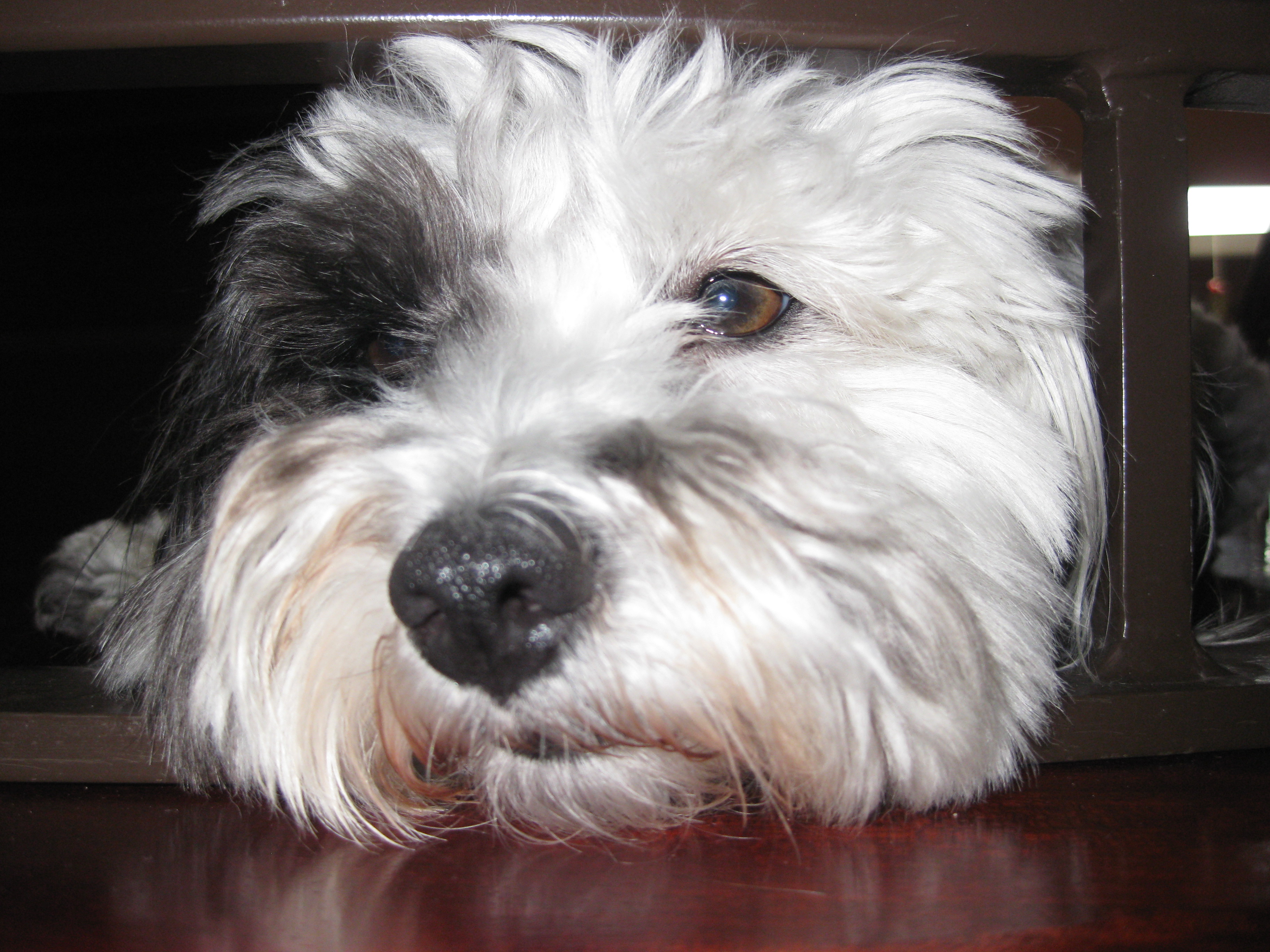
Finally, have a photo of Nala the Hound and her gigantic head:

Nala the Hound

Read Full Post »

My friend Sean Craven recently wrote an essay about practice.  (Has anyone not heard of Ericsson’s 10,000 hours of practice makes an expert theory?)  The entire essay is interesting, but what particularly struck me was this section:

But I have noticed not just in myself, but in most of the serious beginning writers I know, a sense of stern duty, of feeling that we must steel ourselves for the rigors to come. Writing these days feels like a polar expedition, where we expect to lose a finger or nose to frostbite in the process of starving to death while surrounded by bears.

I laughed out loud in recognition, of both myself and many of my writer friends.  In the last few months, I’ve lost contact with that touchstone of living an artistic life: remembering that I love what I do, and making sure I continue to love it.

It’s so easy to become concentrated on the duty aspects of learning a craft.  I must practice this many hours per week, or I must meet this minimum daily word count.  I must write x number of short stories, or add x number of songs to my repertoire.  I must work diligently on mastering a, b, and c issues that I know are holding me back from being the artist I want to be.  I need to submit or audition more, write better and faster, keep up with Writer K who seems to be achieving SO MUCH MORE than me in the same period of time.  And maybe I should consider attending another workshop or masterclass.

It’s not that these goals are inherently wrong or bad (except possibly for keeping up with Writer K, which is a slippery slope filled with disappointment).  But when your brain is filled with the ear-splitting chorus of duty, sometimes it becomes hard to remember why you started in the first place.  In other words, once a beloved hobby transitions into being “work”, how do we keep the fire going?

I faced a similar transition when I moved from office work to teaching music.  I worried that by making my living with music, I might lose my love for it.  This fear proved to be  unfounded because:

1. Teaching music was infinitely better than the office work I had previously been doing.

2. I really like teaching and working with kids and teens.

3. I really do love music and singing and particularly musical theater that much.

4. Finally, and I think this point is crucial, my job was to spread a passion for music, so I was constantly reminding myself of how cool and amazing music was and pointing out these elements to others.

I had to make some small adjustments to keep myself going: I transitioned away from teaching how to sing pop music, for example, because it began boring me to tears.  And my job was certainly not free of duty, not by a long shot.  But when I closed my studio this summer, I still loved music, singing, and musical theater just as much as when I started.  Thinking about this now, I realize I achieved no small feat in keeping my passion alive.

It is my belief that I love writing, fiction, and narrative just as much as I love singing and musical theater.  I’m just so weighed down by duty that I forget to think about the positive, and unlike at my studio, one of my principle duties isn’t to show how amazing writing can be.  On the contrary, I sometimes feel a certain amount of grumbling is required just so people understand that I’m actually working at all.

So I’m going to be trying out a little experiment for the next few weeks.  When I sit down to list my five happy things, I’m going to add something to the end: reminding myself of concrete reasons why I love to write.  My hope is that this exercise will allow me to enjoy writing more thoroughly, not because it’s an item on my to-do list but for the sheer joy of it.  When I stop and think, it doesn’t take me long to realize what a privilege it is for me to have artistic and challenging work.  I’m officially giving myself the time to remember.

Read Full Post »

I’ve had many people ask me about Taos Toolbox, the speculative fiction writer’s workshop I attended this past summer of 2010.  Here’s the scoop on what my experience was like.  Please note, however, that every year will inevitably be different, both in terms of participants, lectures, and details.

Taos Toolbox is a two-week residential workshop in the high mountains above Taos.  It is run by Walter Jon Williams, who teaches with one other writer (for my year, this was Nancy Kress, who will also be teaching in 2011).  During this time, each attendee has the chance to have two pieces critiqued.

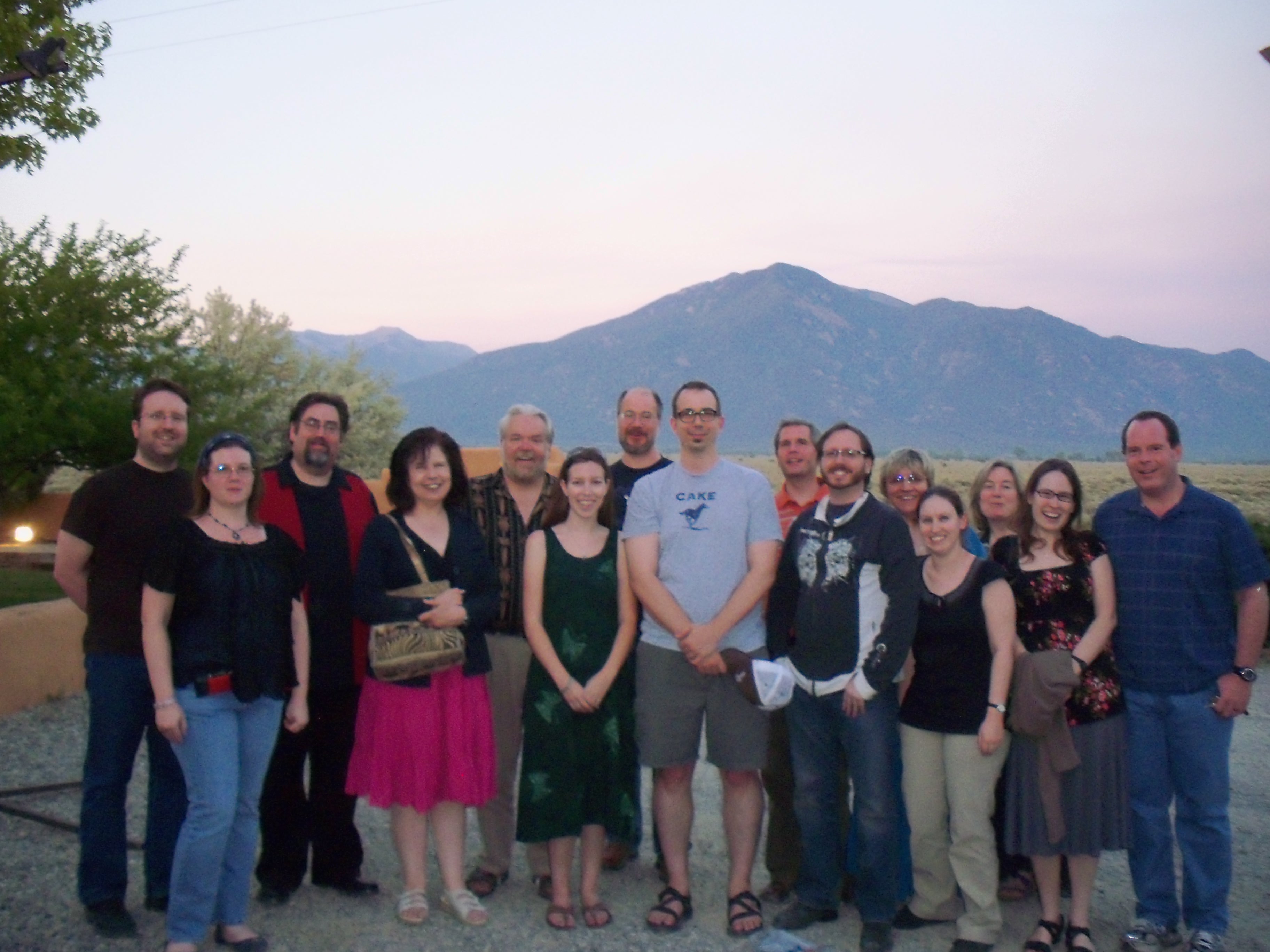
My Taos Toolbox classmates

Pros of Taos Toolbox:

1. The shorter time (2 weeks) is easier to fit into life without massive restructuring.

2. Participants can work on either short stories OR novels.  Both lengths are addressed in lecture.  In my year, I’d say about two-thirds of the attendees presented the first section of a novel plus a synopsis for at least one of their two pieces.  However, I opted to turn in two different short stories and also received valuable feedback.  So there’s flexibility here.

3. Walter Jon Williams and Nancy Kress are both experienced writers AND teachers.  Not everyone who can write can teach, but these two certainly can.  I learned a great deal about many aspects of craft and business during my two weeks.

4. Because the two teachers are teaching together and present for each other’s lectures, that means you get two different views on many subjects.  Walter and Nancy are perfect for this because they don’t have the same writing process at all.

5. The location is gorgeous and secluded.  You really do feel like you’ve gotten away from it all.  But there was (in my year, at least) still internet and cell service, so you’re not completely cut off.

6. As with other workshops, by the end of the two weeks the group had really bonded and I now have many new wonderful writer friends.  We’re still regularly in touch both one-on-one via email and social media, and through our email list.  I see Danielle every few weeks for coffee.  We’re planning other writing and critiquing events and hang out at conventions.  We even read each other’s blogs (hi guys!)

Potential Downsides:

1. Yes, it’s a wee bit expensive.  But do remember that your fee covers the instruction and critiques from two top pros, most of your meals (except for a few dinners), and your lodging.  Personally, I felt like it was worth every penny.

2. The altitude can be a killer, so be warned.  In retrospect, I wish I had come a day earlier and slept in Albuquerque for a night to help my body adjust.

3. It’s intense and involves a lot of critiquing.  A lot. Happily I learned a lot from all the critiques, whether on my own or other people’s work.  However, if you are not comfortable receiving criticism, this might not be the workshop for you.

Format and Logistics:

Every weekday, we’d gather at 10am and usually meet until around 3 or 3:30pm, with a lunch break somewhere in the middle.  During this time, we’d listen to two lectures, one from each teacher, and go through that day’s critiques, Milford style.  Each student had a two-minute time limit on critique-giving, although Walter and Nancy could speak for as long as necessary.  We were also assigned various writing exercises.

Afterwards we’d have free time to write or critique.  Many people took advantage of the free time to go down to Taos for sundries or take hikes in the surrounding mountains.  There was also much hanging out, playing music (Rich brought his guitar), soaking in the hot tub, and movie watching.  (Walter does a plot breakdown of The Maltese Falcon that shouldn’t be missed.)  We were provided with three meals a day during the week, and everyone had their own room.

I will add that I was unsure if I was qualified enough to attend the workshop, being unpublished and never having attended other workshops in the past.  Obviously it worked out well for me, and I’d encourage you to apply if you’re interested and let Walter and Nancy decide if you’re at a level that could benefit from the instruction.

Topics of Instruction:

  • Cleaning up prose
  • Story and structure
  • Writing in scenes
  • Plotting (WJW and NK have fairly different approaches to this.)
  • Literary elements and rhetorical devices
  • Plotting elements and maintaining suspense
  • Narrative modes
  • Analysis of specific works
  • Opening Scenes
  • Writing description
  • Characterization
  • World building
  • Business and contracts
  • Commercial fiction, genre, and issues specifically relating to spec fic

I would say that overall, the greatest focus was on plot and structure (and related topics).

What I Learned:

Do I think my writing improved due to my Taos experience?  Yes, indeed.  One of my critique group members back at home even commented on the difference.  My understanding of the various elements of writing fiction has been deepened in a variety of big and subtle ways.  For example, when I arrived at Taos, I was relying on intuition and my experiences as a reader to work with plot.  It feels like I was fumbling around in the dark compared with how I think about plot now.  My awareness of some of my most pressing issues has been heightened, and I now have tools to deal with these weaknesses and to gradually improve my skills.  I’ve also become more comfortable experimenting with my writing, which I think will ultimately speed up my learning process.  Combine all of these writing lessons with the fabulous friends I made, and I think of my time at Taos as a once-in-a-lifetime experience.

Final Note:

If you apply to Taos Toolbox before the end of the year, Walter is offering a discount on the cost of the workshop.  So if you’re interested, consider applying early.  Walter and Nancy are accepting applications for 2011 starting on December 1.

More questions about Taos Toolbox?  Please feel free to email me or ask away in the comments.

Read Full Post »

Writing Life: Fringe Benefits

I’ve talked in general about disappointment, I’ve mentioned the rigors associated with beginning to write.   Today I’d like to talk about some of the upsides of being a writer, and specifically of living the “writing life”.

What is the writing life?  The answer varies from person to person.  For some writers, it can mean getting up at 5am to write for two hours before going to work and then coming home in the evening to play with the kids.  For others, it can be working part-time and spending the extra hours writing.  Some writers are the full-time caretakers of their kids and also write.  And some writers are writing full time.

I don’t mean to romanticize the writing life or downplay any of the real difficulties involved in being a writer.  Sometimes, though, it’s good to remember the positives.  So without further ado, here are some of the side benefits of being a writer:

1. Schedule flexibility: Writing doesn’t need to happen during business hours, so this means you can squeeze it into your schedule however you please.  Sure, the squeeze might be difficult to manage at times, but it’s amazing how versatile some writers become.  You have the early 5am writer mentioned above and the late-at-night I-don’t-start-writing-til-midnight writer.  Some writers work during school hours and some write in ten minute increments around their other obligations.  There are the weekend warrior writers and the write-every-day-without-fail writers.  Ultimately, you get to decide what works for you.

2.  Working from home (or anywhere else you want): Some people don’t like working from home, but I love it.  It means I get to hang out with my dog, be surrounded by useful books and reference materials, and pop in a quick load of laundry while I work.  I also love that I can grab my laptop and work from anywhere.  The muse struck me in Maui, so I sat outside on the lanai and wrote a story.  I feel like getting out of the house, so I pop over to a local café.  Flexibility of location is a major perk.

3.  Writing community: This is one of my favorite fringe benefits.  I love writers.  Yes, I am completely biased, but the writers I’ve met have, on the whole, been intelligent, curious, and supportive.  They are my fellow dream spinners, tale tellers, and idea unfolders.  The process of narrative is about creating meaning and order from chaos, and the people engaged in such a process tend to have thought about aspects of life and the world very deeply.  Also writers often know lots of random and interesting facts, so they make great party guests.

4.  Research: Mmm, research.  A wonderful and enabling reason to go on non-fiction shopping sprees on Amazon, spend way too much time surfing the internet, or make a trip to a shiny university library.  Plus research gives you an excuse to try activities you’d never otherwise do or travel to places you wouldn’t have gone (budget allowing, of course).  Plus sometimes you learn more than you expected.

5.  Challenge: I love a good challenge.  In college, I sometimes said the reason I’d decided to study music was because it was difficult enough that it kept me continuously engaged and striving to be better.  Writing is the same way.  There’s always something new to learn, some new technique to try, some aspect of your writing that can be improved, a new story to tell.  I’m constantly able (and even encouraged) to stretch my brain and explore my capabilities further, which means I stay excited about the work.

6.  Regular Creation: I had to end with this one, which is, of course, not a side benefit but rather a main cause of becoming a writer in the first place.  One of the best parts of being a writer, in my mind, is the satisfaction that comes with writing a daily word goal or time quota, finishing that story or novel, or brainstorming a new promising idea.  The writing life ultimately revolves around—you guessed it—sitting down and writing.  And if you love the process, then it can be a rewarding life indeed.

Thinking about a benefit of the writing life that I’ve missed?  Comment and let me know.

Read Full Post »

I was flipping through the November issue of Locus a few days ago, ensconced on my couch and trying to get over an unpleasant cold, when I came across Gardener Dozois’s review of “Dream of the Arrow,” a mainstream story by Jay Lake that was in Subterranean’s Summer 2010 Issue.  Mr. Dozois says this story is:

…a story good enough to suggest that Lake’s talents may be wasted working in the genre, as he has the literary chops to make it as a significant mainstream author instead.”

Since I’ve become more educated in the field, I have grown accustomed to the speculative genre being dismissed and marginalized.  I had no idea of any such stigma before my decision to pursue writing seriously, in spite of spending nearly twenty years making a beeline to the science fiction section of any library or bookstore I happened to enter, but I’m certainly not arguing that it doesn’t exist.  Usually when I encounter such sentiments, I blink, shrug, and move on.

But I was actually shocked when I read the above quotation in Locus.  For those of you who aren’t deeply involved in the science fiction and fantasy community, Locus is the trade magazine of the field, and Mr. Dozois is a highly respected writer, editor, and anthologist in the field.  He’s won twenty Hugo awards for his work in professional editing, which should give you some idea of his stature.  And yet, even so, his comment seems to imply that genre writing is in some way not as inherently worthwhile as mainstream (aka literary) writing.

Let’s unpack this quote a little further, shall we?  If it were merely a question of suggesting that Lake might consider a career as a mainstream author due to his particular talent for it, I wouldn’t have paused.  I have no doubt Lake has the abilities to become a literary author if that’s what he wants to do (whether or not he would achieve critical acclaim for it is another question, but not one connected to his abilities as a writer).  There is also no discussion of the possible merits of Lake’s speculative novels being shelved in the general fiction shelves as have books by such crossover successes as Susanna Clarke, Isabel Allende, and Kazuo Ishiguro.

What we get instead is the idea that Lake is wasting his talents working in science fiction and fantasy, and with this idea, I must respectfully disagree.  As a reader, I want variety in my speculative fiction, and I want to read speculative books written by authors with literary chops.  I balk at the implication (perhaps unintended) that writers only work in the science fiction field because they don’t have the ability to do otherwise.  The last thing our field needs is internal ghettoization; we get enough flak from the outside.

I’m proud to be a science fiction and fantasy writer, and I don’t write in those genres because I think it’s easier.  For me personally, writing in the speculative genres is more difficult (world building, I’m looking at you).  I don’t feel the need to apologize for the kinds of stories, worlds, and structures I find interesting and compelling.

Now Lake, of course, can do whatever he wants.  An author makes the decision on what genre to write within based on any of a number of factors (financial gain, critical acclaim, artistic inspiration or satisfaction, etc.)  If Lake wishes to make the leap over into mainstream fiction, I would certainly support that decision (and really, it’s none of my business).  But if he spends his entire career writing in the speculative genres, I believe his creative contribution will be just as valuable.

Read Full Post »

Two years ago, I had no idea that science fiction and fantasy conventions existed.  I only had a vague sense of the beast known as “fandom” and I didn’t know what anyone was saying about any of the books I was or wasn’t reading.  When I imagined a writer’s life, it pretty much consisted of me in front of my computer screen typing.  And in fact, that is exactly what I did with my first novel.  I sat in front of my screen and typed.  I didn’t talk about it much, considering how all-consuming a project it was.

It wasn’t until after I completed my rough draft that I began to learn about the social side of writing.  I learned that I was supposed to attend these events called “conventions”.  And given that I had decided to throw all in on the writing dream this time around, I dutifully bought a plane ticket and headed out.  I had no idea what to expect.

A year and a half after that first convention (Wiscon 2009, for those keeping track), I pretty much do know what to expect.  And having just returned from World Fantasy and having the convention scene firmly in mind, I’m going to share what I’ve learned.

Go to panels. People will tell you they never go to panels because they’re too busy hanging out with friends in the bar.  Don’t feel bad about this.  Go to the panels that you find interesting.  You’ll probably find less of the panels interesting later on, since you’ll have already attended many of them, so take advantage of them now.  Someday you will know enough people that you too can spend the entire con at the bar.  The fact that you don’t magically know that many people after one day (or a couple of cons) doesn’t reflect negatively on you.

Corollary: when you do start spending all of your time hanging out at the bar, enjoy it to the fullest.  Sit at the bar with glee, before it too becomes old hat.

Find your people. At every convention and conference I’ve attended, I end up spending the most time with a few people who I think are the most awesome people ever.  They might be people you knew ahead of time, although they often aren’t (they’re often the people the people you knew ahead of time introduce you to, though).

Corollary: Try not to smother your people.  That’s why you’ll ideally need more than one.  This is another good reason to attend panels and readings, giving them space, and then you can catch up with them later.

Don’t be afraid to talk to people. I know, I know, if you are an introvert, this is the most painful thing ever.  But everyone else is also there to meet people, so most of them will be nice to you.  This is yet another good reason to attend the panels and readings, because then you’ll have an automatic topic for conversation if this sort of thing is hard for you.  Sometimes the best opportunities for talking come at in-between times: in the meeting room right after the panel ends, or when you’re waiting in line outside a reading that’s about to start, or when people are randomly hanging out in the halls.

Corollary: This doesn’t mean you’re allowed to be a stalking crazy-fan person.  The established authors, editors, and agents are there to work and see their colleagues whom they only get to see a few times a year.  You can talk to them, sure, but don’t be alarmed or surprised if they can’t talk for long.

Go to parties. No con experience is complete without shoving yourself into a hot, stinky party room, forever popular for the free booze and high skill level involved to actually hear a word anyone else is saying.  However, unless you absolutely cannot avoid it, don’t go alone.  This is a time to start out with your people (which is why you craftily gave them space earlier in the day while you were busy — you got it — attending panels).  Hopefully your people will introduce you to more people, or you can be especially bold and introduce yourself to more people.  This is, after all, the main purpose of parties (I know some people who would argue with me on this point, but I’m sticking to my guns).

Corollary:  Keep your expectations low: you are, after all, in a crowded noisy place where many of the people you are trying to talk to are sleep-deprived and intoxicated.    Or their feet hurt.  (This would be me.  If you’re ever talking to me at a con party, it’s almost a sure thing that my feet are killing me.)

Remember people. I wish I could tell you that you could count on others to remember you too, but the truth is, sometimes they won’t.  The onus falls on you to maintain the connection.  Most people being confronted with a smiling person saying “Oh, it’s so great to see you again!” will in fact pretend to remember you, thereby renewing the connection.  If you can help them out further by tactfully reminding them of where you’ve met before or referencing a previous conversation, all the better.  Business card exchanges can be helpful, but only if you’ve actually had a real conversation with the person.  Otherwise, they’ll just throw your card away.  Remembering names long enough to later add the person onto your social network of choice is also good (or remembering who introduced you, so you can look at their list of contacts to jog your memory).

Corollary:  People remember better when they’ve received multiple impressions of the same thing (or in this case, person).  Repeated short interactions over the course of a convention weekend can assist others in remembering you.  Also, after you attend a few conventions, you will begin to look familiar to the other regulars and they will think you’ve met even if you haven’t.  Then you can pretend to remember them instead of the other way around.

Every con is different. You’ll be in a different stage of your career, different people will be there, maybe this time you’ll know a ton more people because you just attended Clarion or joined an online workshop or whatever.  Or maybe everyone will want to talk to you because you just won a Nebula.  The trick is to be prepared to go with whatever opportunities might present themselves while remaining outwardly calm and gracious.

And there you have it, all the con-going wisdom I have gleaned in the last year and a half.  Questions?  Snark?  Completely different con experiences?   Comment and let me know.

Read Full Post »

Over the past two years, since my entering into this crazy fiction-writing world, I’ve noticed that many of my compatriots are often discouraged, depressed, worn out, or feeling hopeless about their writing.  Serious devotion to writing as a calling and career seems to take quite the emotional toll.  And two years has been enough time for me to experience this emotional stress firsthand.

What is interesting to me is that I come from an arts background in music.  I did musical theater, got a BA in music, played my own music publicly in London, etc.  And my experience with music and being a pre-professional musician was in no way as brutal as my experience now of being a pre-professional writer.

Please note this is not because I think writing is inherently harder than playing music.  If anything, I think I have slightly more of a natural knack for writing than I do for music.  And I don’t think being a professional musician, especially one who makes her entire income through performance, is any easier than being a professional writer who makes his entire income through writing fiction.  But on the whole and in my own experience, being a pre-professional musician was easier than being a pre-professional writer.1 Here’s why:

1. Higher barrier to entry: Most American adults can sit down and write a sentence without having to practice first.  But have you ever heard someone pick up a violin for the first time and draw the bow across the strings?  If you haven’t, count yourself lucky because the results can be painful to the ear.  This basic difference means that being an aspiring musician generates more respect than being an aspiring writer.  It also weeds out most of the wannabe and non-serious musicians right out the gate, because to achieve even a basic level of musical competence requires non-trivial amounts of practice time.  This is not so with writing.

2. Simple mentorship system: As a musician, it’s common to have a private teacher who will mentor you, give you tons of individual attention, and keep you on the straight and narrow in terms of continuing practice and improvement.  Or you might even have several teachers for different instruments (for instance, at various times I’ve had private piano teachers, voice teachers, and composition teachers).  A good teacher will keep you encouraged and inspired most of the time, and kick you in the ass when you really need it.  There are many resources available for finding a teacher, and you pay a set fee for the privilege of study.  This contrasts to finding a writing mentor, which I don’t know how to do and which has no set way to achieve.  Interest one of the teachers at your workshop or your writing class, perhaps?  But once the class ends, then what?  There’s not a clearly defined business model for this as there is in music.

3. A more respected educational system: It is also common wisdom that a writer should major in something besides creative writing, and the opponents of the usefulness of an MFA in creative writing seem to be as numerous as the proponents.  While I’m not arguing these points one way or another, it stands in marked contrast to music’s mentorship system (discussed above) and higher educational system.  While if you’re doing certain kinds of music, a degree might not be necessary, most music programs help develop skills that will obviously come in handy later on, and musicians don’t tend to argue about their usefulness.  This means if you know that you need to build skills as a musician, you can have the institutional support of a university music program while not constantly worrying that you might be wasting your money.  I’m not saying there aren’t MFA programs that are fabulous, just that general opinion is mixed.  And thank goodness for workshops like Clarion, Odyssey, and Taos Toolbox and organizations like SCBWI that take up some of the slack here.  But workshops and organizations don’t generally offer the same consistency as a four-year program.

4. More emphasis on collaboration: As a musician, I had many opportunities to perform with various groups.  I was taught how to work with other musicians and had group performance opportunities in choirs, musicals, and operas.  Instrumentalists have orchestras, bands, and chamber music ensembles.  And then there are jazz bands and ensembles and rock or pop bands.  Finding other musicians to make music with tends to be pretty easy.  Writing, on the other hand, is a fairly solitary experience, and while one could argue that the critique group is the equivalent of a band, a lot of critique groups don’t meet as often and/or aren’t working together as closely.  The result of this can be a lack of deep working relationships.

5.  Possibilities to practice art in the real world: Speaking of performance, not only did I have many opportunities, both during college and afterwards, but it was highly encouraged, even expected.  A young and inexperienced musician went out and gigged, auditioned, joined a band, whatever.  And if you weren’t paid for your efforts for awhile, well, that was the norm while building up your chops.  Contrast this to writing, in which well-respected writers advise new writers not to submit to markets that pay less than five cents a word (the current “pro” rate).  Leaving aside the absurdity that a couple of cents per word one way or another isn’t going to make a difference in quitting your day job anytime soon, this attitude means that new writers are actively discouraged from showing their work in public unless it can hit the bar and taste of the few pro markets.  This in turn lowers motivation and increases both pressure to improve at unattainable rates of speed and accompanying feelings of futility and isolation.  For the pre-professional artist, any recognition, however small, is powerful incentive to continue, and in writing, there just don’t seem to be as many of these opportunities.

6. The stigma (or lack thereof) of indie artists: The indie music scene is vibrant, exciting, and most importantly, not overtly stigmatized.  In fact, it’s hip to be an indie musician.  Sure, you might have trouble paying your bills, but in return you get to make the music you want to make, thumb your nose at The Man, and live a musical life.  Most other musicians will either be actively supportive or not care one way or another.  Cutting your band’s own CD has gotten a lot easier with recent technology, and bands do it all the freaking time.  Contrast this with the indie writer scene (otherwise known as self-publishing).  You may have a hard time paying your bills this way too (or you may have an easier time if your name is J.A. Konrath), but regardless, other writers will sneer at you.  I’m not kidding.  The stigma against self publishing of any sort is incredibly strong.  It’s so strong that a lot of established professional writers aren’t putting their backlists (the rights of which have reverted to them) up on all the electronic platforms.  Now this might just be lack of business sense, lack of interest, or technophobia, but I find it very striking.  To me, this doesn’t even count as real self publishing because the work has already been published with a publishing house and received the full traditional treatment.  But I digress.  Most writers I’ve met are firmly in the “traditional-publishing-deal-or-bust” camp, even though distribution channels and producing a final e-edition of a novel have gotten much easier with recent technology, just as producing CDs is now easier.  The main effects of this attitude are less options for writers of all levels, not just the pre-professionals, and less emphasis on business innovation and experimentation with new business models.  Meanwhile, there are already huge amounts of self-published material flooding the marketplace with no gatekeeper, and somehow readers seem to be surviving the onslaught just fine.

All this said, I’m incredibly grateful for the assistance I’ve received from the writing communities I belong to.  My friendships and discussions with other writers have been some of the highest points of my writing life.  If anything, this analysis shows how critical these communities and fellow writers truly are.  But if nothing else, I hope this comparison between pre-professional musicians and writers will serve to illustrate the difficulty of the writing path, and encourage us to be supportive, patient, and kind to one another.

For those of us who are nonconformists, it can also act as a reminder that change may be coming, but change isn’t always such a terrible thing.

1 Note that I am most familiar with the speculative and YA communities in writing, and have at least passing familiarity with Classical, jazz, rock/pop, and musical theater in music.  What I’m talking about may not hold true in other genres or styles.

Read Full Post »

« Newer Posts - Older Posts »